


 English
 Español
 عربى
عربى

Get Social
Choose DEIF for the perfect blend of
performance and aesthetics.
 Get Free Sample

Content
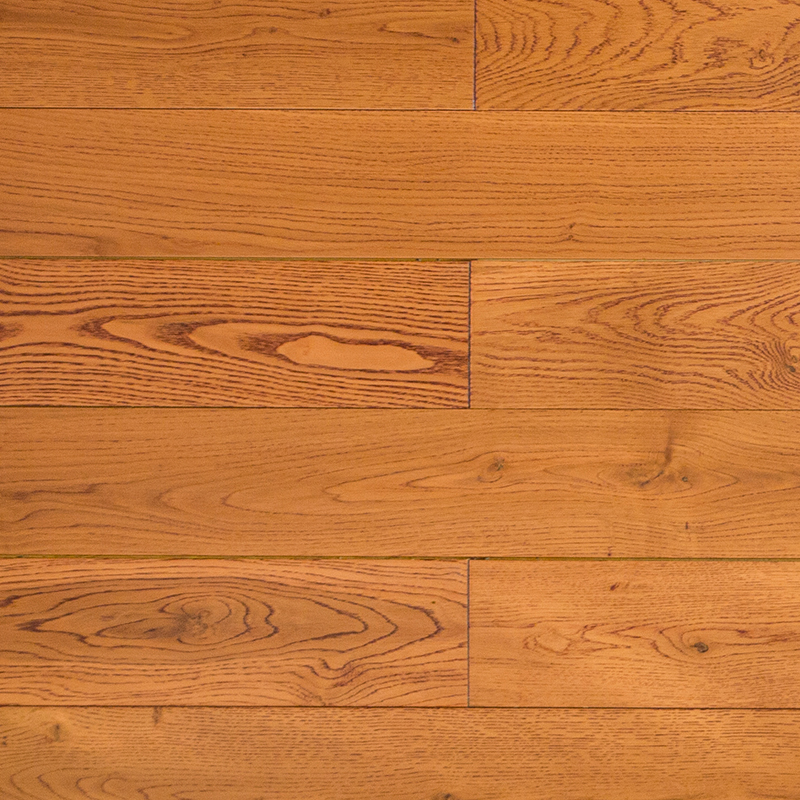
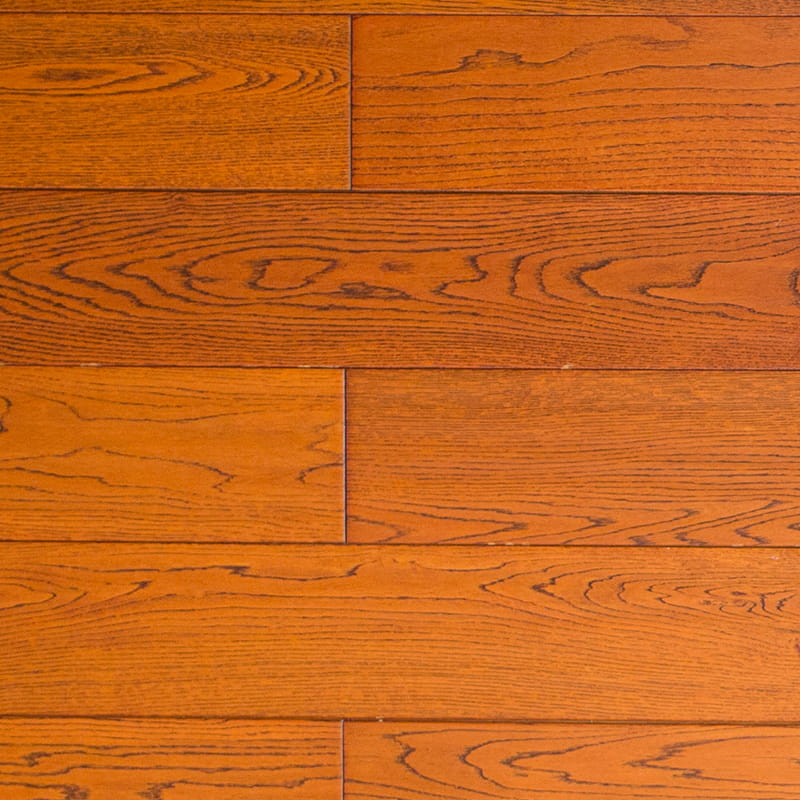
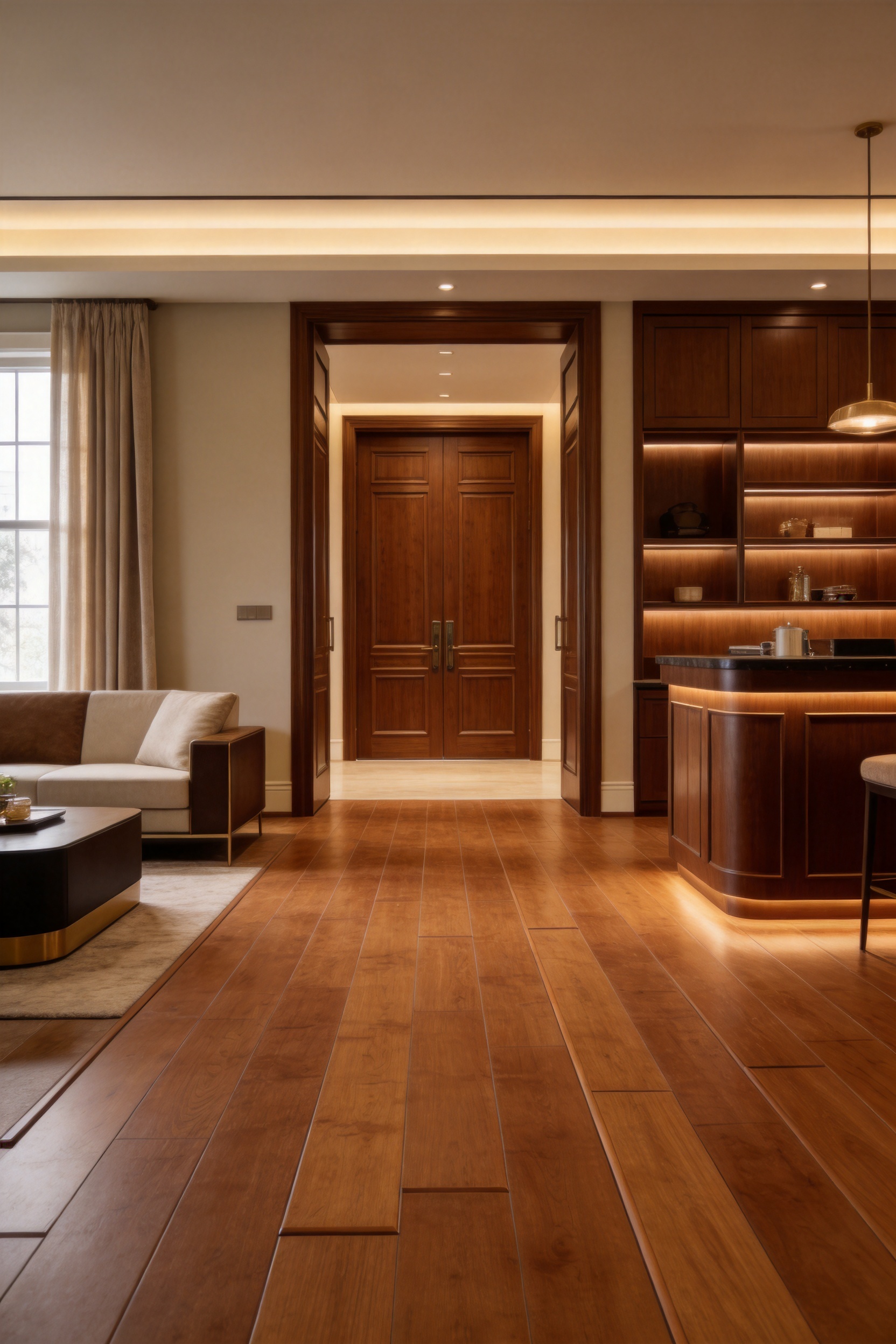
Warm brown solid oak flooring is designed for interiors that need natural beauty, reliable performance, and a welcoming atmosphere. The product discussed in this article is a solid oak wood flooring solution with a warm brown tone, a 100% solid hardwood core, a tongue-and-groove profile, customizable surface textures, and finish options that can support residential and light commercial applications. It is especially suitable for living rooms, family bedrooms, playrooms, hospitality spaces, boutique retail areas, and project interiors where warmth, authenticity, and long-term usability are essential.
Unlike flooring materials that imitate wood through printed layers, solid oak flooring is made from real hardwood from top to bottom. This gives every plank natural grain, depth, texture, and a sense of material honesty that is difficult for synthetic flooring to reproduce. The warm brown color creates an intimate visual effect, making large rooms feel softer and smaller spaces feel more refined. For homeowners, designers, contractors, and distributors, this combination of beauty and practicality makes solid oak flooring a strong choice for premium interiors.
The flooring uses a solid wood core and is produced to meet E0 environmental standards, with formaldehyde emission controlled at a very low level. It is also designed with a tongue-and-groove system for secure plank connection and efficient installation. The product can be customized in surface texture, finish, size, and color, allowing it to serve different design concepts and project specifications. With CE and FSC-related compliance support, it is suitable for markets where environmental responsibility, material traceability, and construction quality are important.
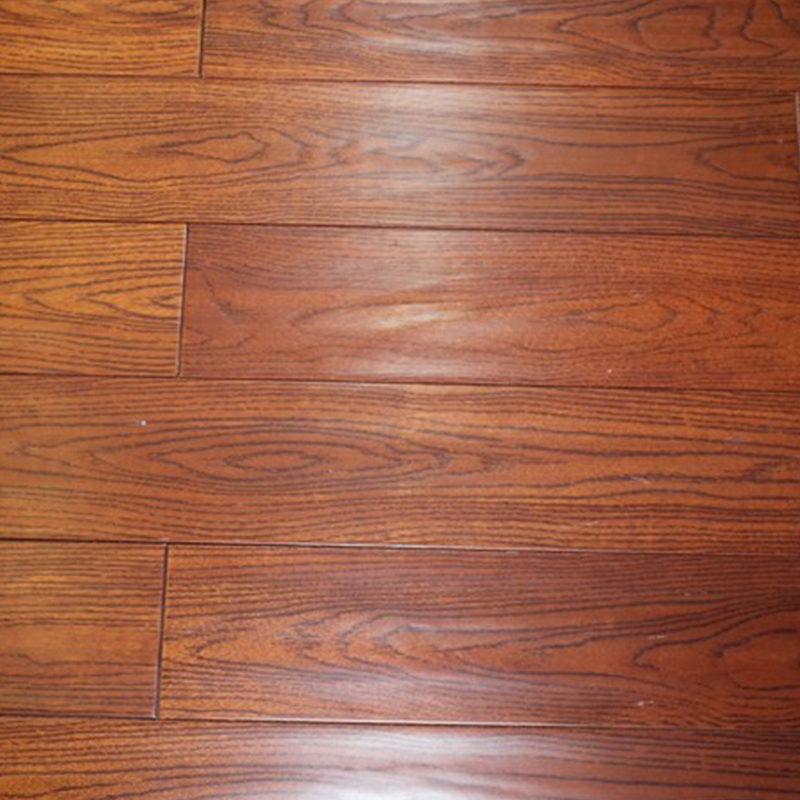
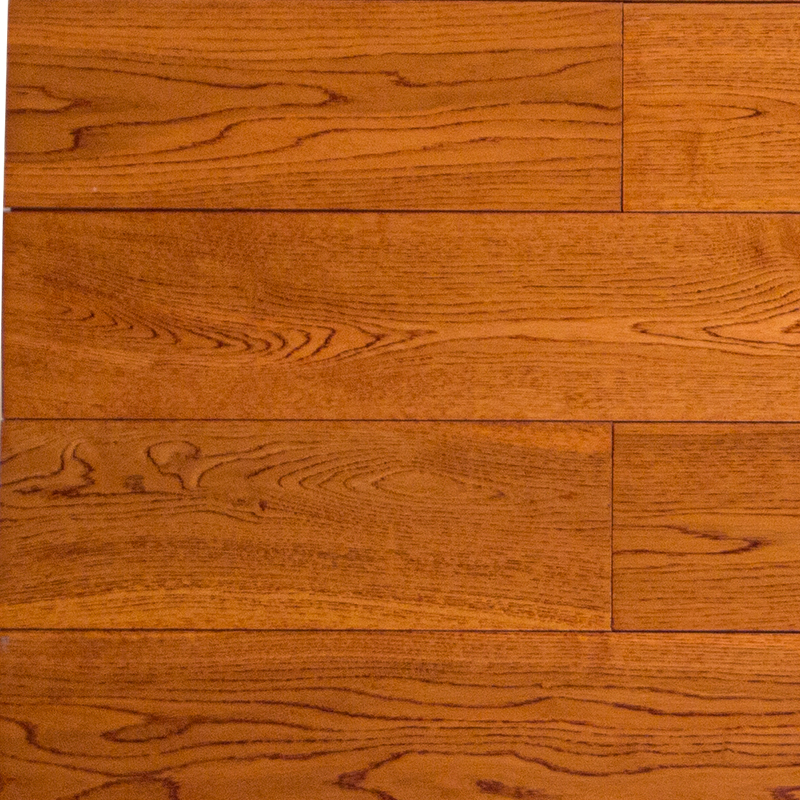
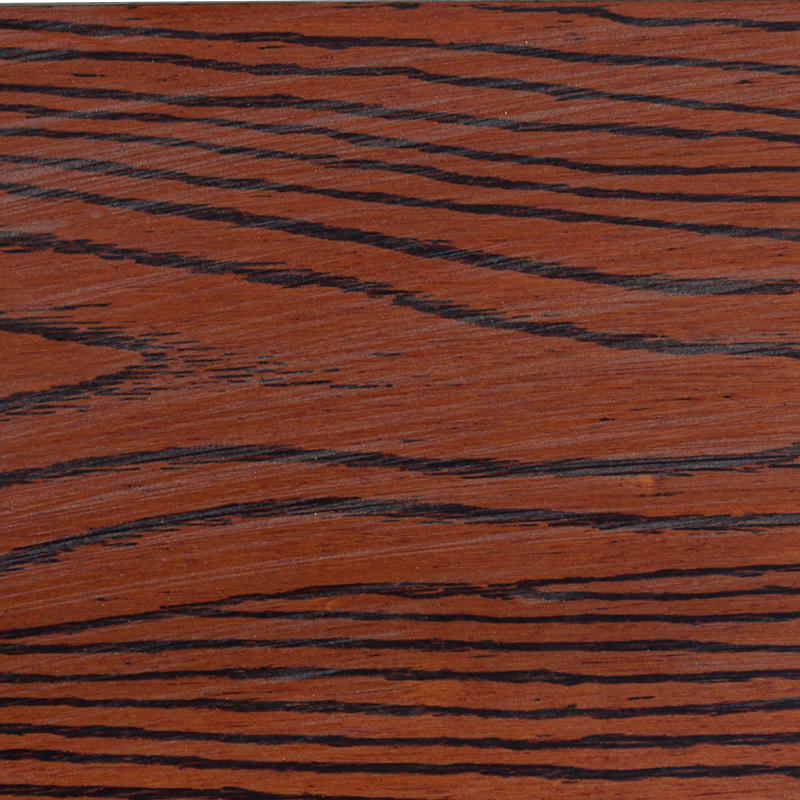
This warm brown solid oak flooring belongs to the category of solid oak wood flooring. Its visual character is calm, natural, and family-oriented. The tone is not too yellow, not too red, and not too dark, making it versatile for both modern and classic interiors. The oak grain brings fine linear patterns, subtle knots, and character markings depending on grading, while the warm brown shade creates a comfortable foundation for furniture, textiles, wall finishes, and decorative lighting.
The product is built with a 100% solid hardwood core. This means the flooring is not a multi-layer engineered construction and does not rely on an imitation top surface. The real oak body gives the material its authentic hardness, warmth underfoot, and ability to age naturally over time. Solid wood flooring is valued because it can become part of the long-term identity of a building. When properly maintained, it can remain serviceable and attractive for many years.
The product specification includes imperial dimensions of approximately 35.83 inches by 6.02 inches by 0.71 inches. In metric terms, this is a compact and practical plank size suitable for many residential and commercial layouts. The profile is tongue-and-groove on four sides with a micro-beveled edge. The bevel improves visual separation between planks, adds texture, and helps create a more dimensional floor surface.
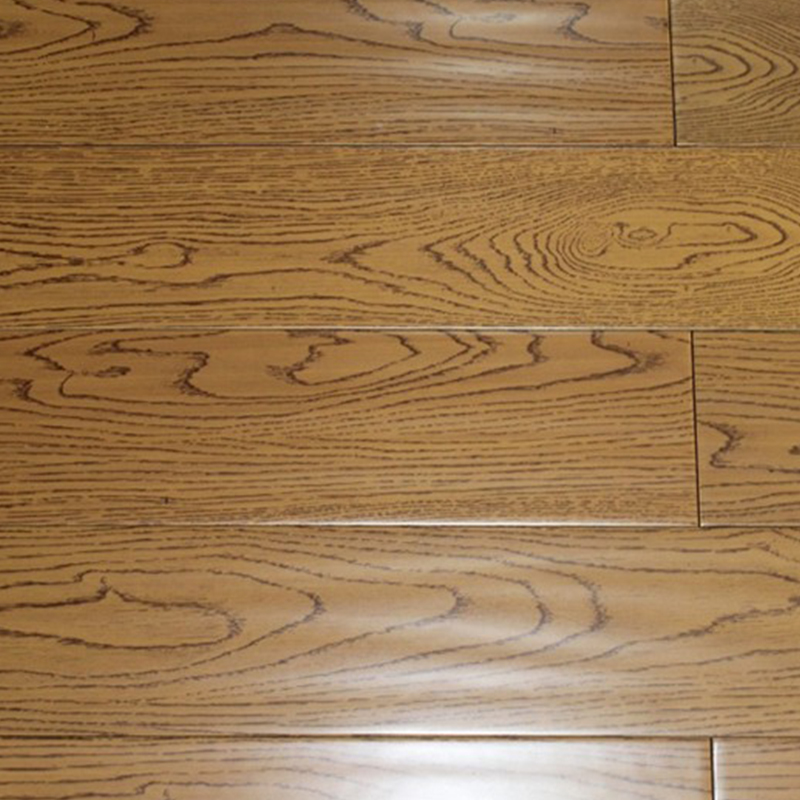
Available surface textures include wire brushed, handscraped, and smooth sanded. These options allow the same warm brown oak concept to be adapted to different aesthetics. A wire-brushed surface emphasizes the natural grain and creates a tactile, slightly rustic impression. A handscraped surface adds artisanal variation and can work well in farmhouse, lodge, or vintage-style interiors. A smooth sanded surface supports modern, minimalist, Scandinavian, and refined luxury spaces.
Finish options include UV lacquer, UV oil, and hardwax oil. UV lacquer offers strong surface protection and convenient maintenance. UV oil enhances wood texture while providing a more natural matte appearance. Hardwax oil gives a breathable, tactile surface that appeals to clients who prefer a close-to-nature finish. Because finish preferences vary by market and application, this customization is an important advantage for distributors and project buyers.
| Product Type | Warm Brown Solid Oak Wood Flooring |
| Wood Species | Oak |
| Core Structure | 100% Solid Hardwood Core |
| Dimensions | 35.83" x 6.02" x 0.71" |
| Surface Texture | Customizable: Wire Brushed, Handscraped, Smooth Sanded |
| Surface Finish | Customizable: UV Lacquer, UV Oil, Hardwax Oil |
| Profile Detail | Tongue-and-Groove on 4 Sides, Micro-Bevel |
| Grade | ABCD Grade Character |
| Pieces Per Carton | 10 |
| Area Per Carton | 1.39 sq.m / 14.99 sq.ft |
| Weight Per Carton | 18.8 kg |
| Moisture Content | 8%-10% with tolerance of +/- 2% |
| Installation Methods | Glue or Staple, with T&G Configuration |
| Environmental Standard | E0, Formaldehyde Emission ≤ 0.05 mg/m³ |
| Certifications | CE, FSC, and related quality management support |
The warm brown tone is one of the strongest selling points of this flooring. In interior design, floor color has a major influence on the emotional experience of a room. Very light flooring can feel open and airy, but it may lack intimacy. Very dark flooring can feel luxurious, but it may make rooms feel visually heavy. Warm brown oak provides a balanced middle point: it creates comfort without darkness, elegance without coldness, and natural richness without excessive rusticity.
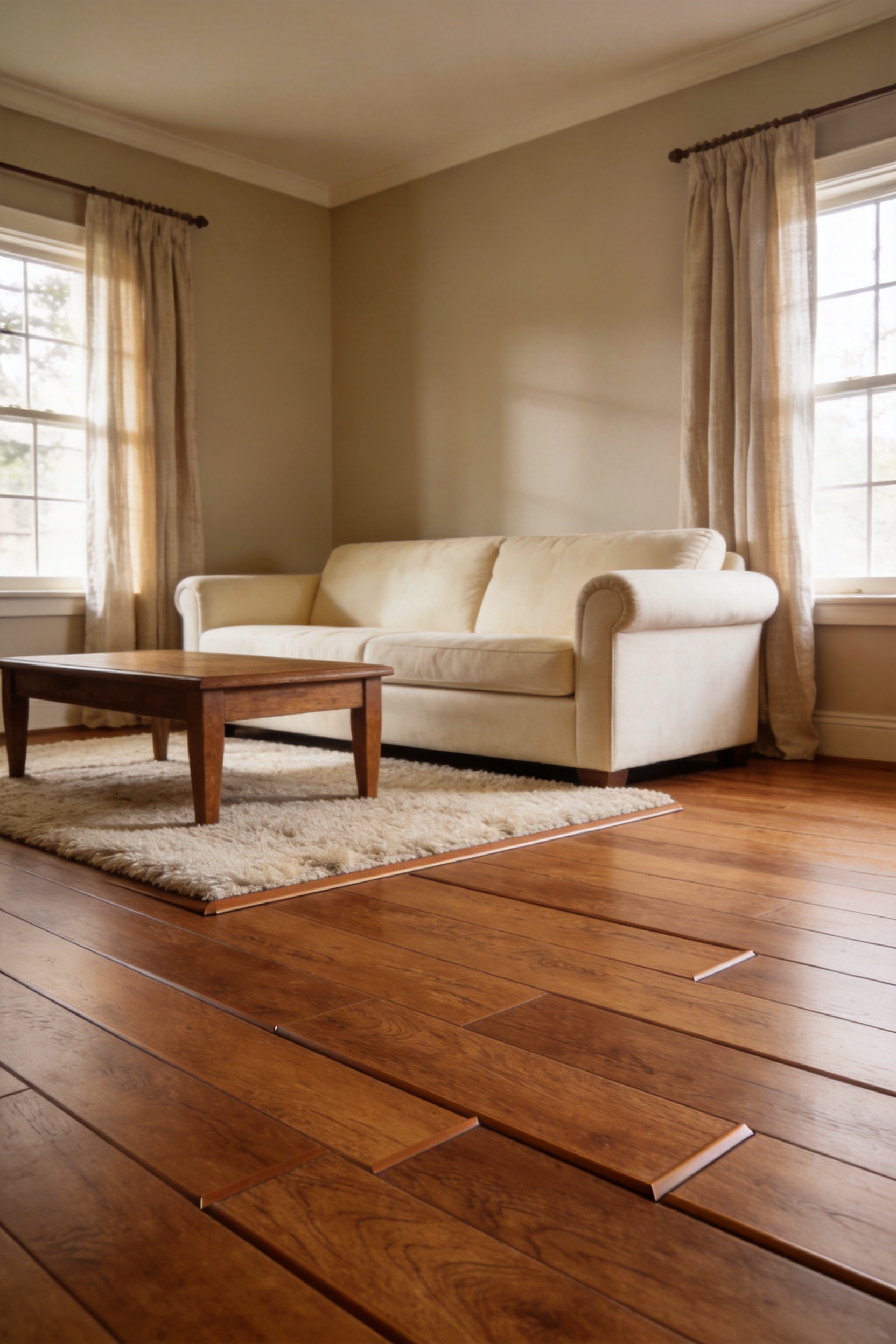
This color works well with fabric sofas, plush rugs, wooden toys, linen curtains, leather chairs, cream walls, soft gray cabinetry, matte black hardware, and natural stone accents. In family spaces, it produces a “hugging” effect, visually wrapping the room in warmth. This makes it especially suitable for living rooms and children’s areas where people want a safe, relaxed, and emotionally comfortable environment.
The oak species contributes to this effect through its grain. Oak is known for a distinctive yet controlled visual pattern. It offers more personality than very plain woods, but it is not as dramatic as some highly figured species. This makes oak a favorite for long-term interiors because it can support changing furniture styles over time. A client may redesign a living room after several years, replace furniture, or repaint walls, yet warm brown oak remains compatible with many new directions.
Compared with gray-toned floors, warm brown oak feels more timeless and less trend-dependent. Gray flooring has been popular in many markets, but it can sometimes create a cold or commercial atmosphere. Warm brown flooring is easier to pair with natural materials and softer interior palettes. It also supports wellness-focused spaces because it visually reconnects occupants with natural wood color and texture.
The flooring is made with a 100% solid hardwood core. This is a major difference from laminate flooring, vinyl flooring, wood-look tiles, and many multi-layer composite products. While those alternatives can be practical in certain environments, they do not provide the same authentic material identity as solid oak. Every part of a solid oak plank is real wood, which means the surface and body share the same natural origin.
This structure gives the floor a warm underfoot feeling. Wood has natural insulating properties, so it feels more comfortable than stone or ceramic tile in normal indoor conditions. In family homes, this makes everyday activities more pleasant, whether people are walking barefoot, children are playing on the floor, or a living room is used for relaxation after work.
Solid oak also provides material density and resistance to regular wear. Oak is widely selected for flooring because it offers a strong balance of hardness, workability, stability, and appearance. It can withstand common household movement, furniture placement, and daily activity when installed and maintained correctly. The lacquer, oil, or hardwax oil surface further protects the wood against scratches and routine abrasion.
Another advantage of solid wood is the possibility of long-term renewal. Depending on wear depth, finish system, and site conditions, solid wood floors can often be professionally sanded and refinished in the future. This gives them a lifecycle advantage over thin-surface or printed flooring materials that must be replaced once the surface layer is damaged. For property owners and project developers, long-term serviceability can reduce replacement frequency and support more sustainable material use.
The product is produced to an E0 environmental standard, with formaldehyde emission controlled at ≤ 0.05 mg/m³. Indoor air quality is increasingly important in residential, hospitality, education, and healthcare-adjacent interiors. Clients want materials that support healthy living spaces and comply with stricter expectations for low-emission construction products.
Because this flooring uses a solid wood core rather than composite layers, it avoids many concerns associated with adhesives used in layered or board-based products. The low-emission standard helps reassure buyers who are sensitive to odor, chemical exposure, and indoor environmental comfort. Water-based lacquer options also reduce odor and support healthier interior application.
FSC certification support indicates responsible sourcing practices connected to forest management and wood traceability. For distributors, contractors, architects, and project owners, this is important because green building requirements often ask for documentation of wood origin and environmental compliance. CE certification support also assists market acceptance in regions where product conformity and safety documentation matter.
In competitive comparison, many low-cost flooring products focus mainly on price and visual imitation. However, price-focused products may not provide the same assurance regarding emissions, sourcing, moisture control, finishing consistency, or long-term performance. A solid oak floor with documented environmental standards offers a more complete value proposition: it provides natural beauty, performance, compliance, and peace of mind.
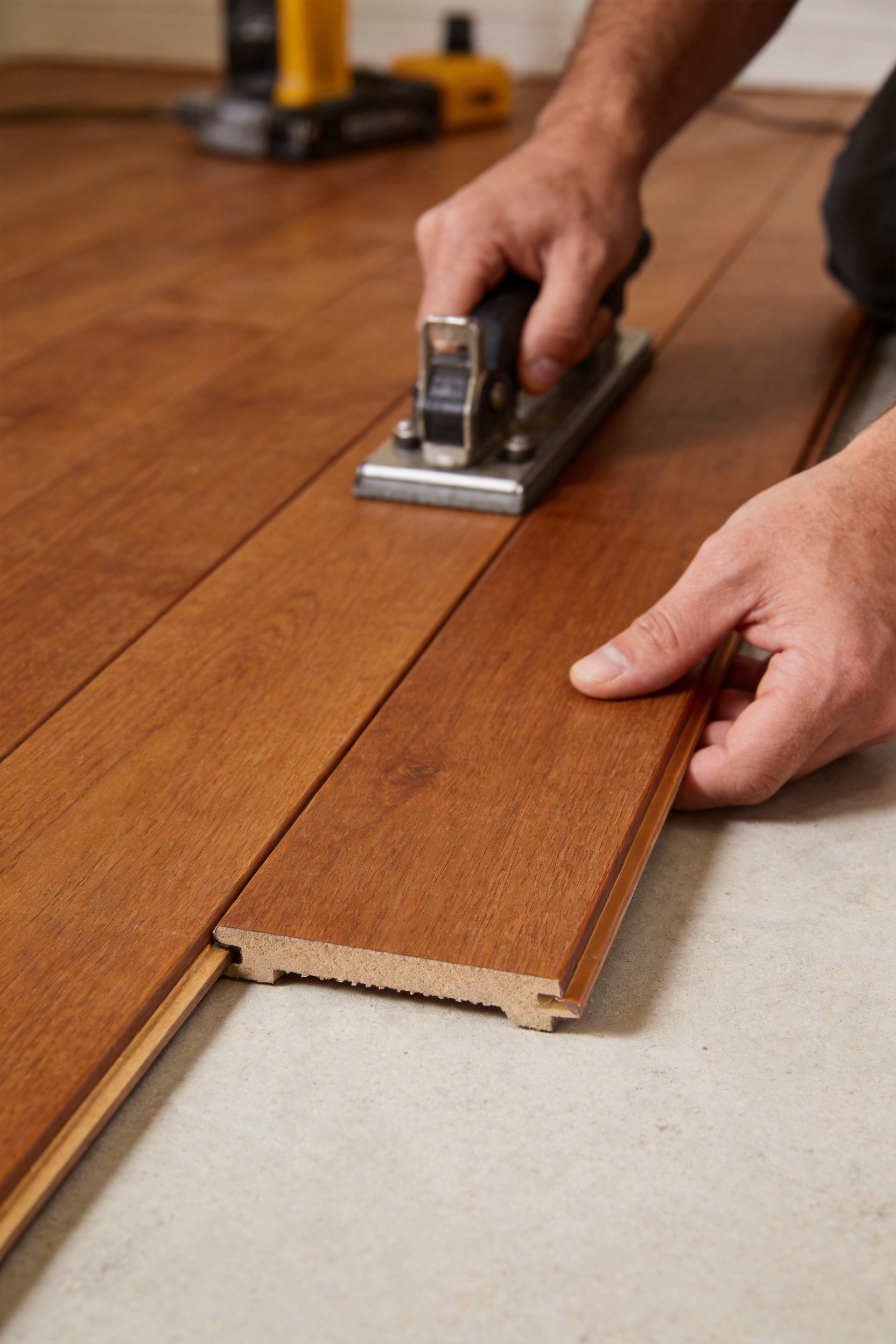
The flooring uses a tongue-and-groove structure on four sides. This profile allows adjacent boards to connect accurately and helps create a stable finished surface. The tongue-and-groove system is a proven standard in wood flooring because it supports alignment, reduces vertical movement, and contributes to a clean installation appearance.
Installation methods include glue and staple, depending on site requirements, subfloor type, project specification, and local installation practice. For professional contractors, this flexibility is valuable. Some projects require direct adhesive installation over suitable substrates, while others may use mechanical fastening over wood-based subfloor systems. A well-machined tongue-and-groove profile improves efficiency because the boards fit together consistently and reduce time spent correcting joint irregularities.
The micro-beveled edge adds both aesthetic and practical benefits. Visually, it defines each plank and adds shadow detail, helping the natural oak grain stand out. Practically, it can make tiny height variations less noticeable than a completely square-edge floor. In real-world construction, even carefully prepared subfloors may have minor variations, so a micro-bevel can improve the finished impression.
Because solid wood reacts to humidity and temperature, professional acclimation and installation control are important. The stated moisture content range of 8%-10% with tolerance helps support stability when flooring is delivered and installed under appropriate conditions. Installers should ensure that jobsite humidity, subfloor moisture, and room temperature are within acceptable wood flooring standards before installation. This attention to site conditions is not a weakness of solid wood; it is part of proper craftsmanship and long-term performance management.
Surface finish determines how the floor looks, feels, and performs during daily use. The product can be supplied with UV lacquer, UV oil, or hardwax oil, allowing buyers to choose the finish that best matches their target customers or project brief.
UV lacquer is a strong choice for busy homes, apartments, and light commercial spaces. It creates a protective film over the wood surface and offers good resistance against daily wear. It is easy to clean, which is helpful for families with children or pets. A lacquered surface is also suitable for distributors who want a practical product for broad market use.
UV oil provides a more natural appearance because it penetrates and enhances the wood rather than simply forming a surface film. It can bring out the grain and provide a matte, organic look. Designers often prefer oil finishes when they want the floor to feel less artificial and more connected to natural wood character.
Hardwax oil combines oil penetration with wax protection, creating a tactile, breathable surface. It is often appreciated in premium residential and boutique commercial projects. Hardwax oil surfaces may require more care than high-build lacquer systems, but they deliver a refined natural feel that many high-end clients value.
This finish flexibility is a competitive advantage. Some manufacturers offer only one standard finish, forcing buyers to adapt their project design to the product. A customizable finish system works in the opposite direction: the flooring can be adapted to the project. This is particularly important for OEM and ODM customers, private label distributors, interior designers, and contractors handling multiple design styles.
The surface texture can be wire brushed, handscraped, or smooth sanded. Each texture changes how the floor interacts with light, touch, and furniture style.
Wire brushing removes softer grain areas and emphasizes the harder wood structure. The result is a surface with depth and texture. It is useful for hiding minor everyday marks and creating a more natural, lived-in appearance. Wire-brushed warm brown oak pairs well with linen fabrics, wool rugs, metal accents, and open-plan interiors.
Handscraped texture creates a crafted appearance. It introduces irregularity that makes the floor look less industrial and more artisanal. This can be ideal for countryside villas, family homes, restaurants, boutique hotels, and interiors where warmth and character are more important than minimalist perfection.
Smooth sanding produces a clean, refined surface. It is suitable for modern apartments, luxury residences, offices, and interiors with simple furniture lines. Smooth warm brown oak can look elegant without becoming formal, especially when paired with matte finishes and subtle lighting.
The ability to select texture gives buyers a clear advantage in market positioning. A distributor can use the same wood species and base color to build several product lines for different customer segments. A contractor can match the floor to the architectural style of each project. A designer can control both visual and tactile experience.
This flooring is suitable for residential use and light commercial applications. In homes, it can be installed in living rooms, family bedrooms, hallways, playrooms, and other dry interior areas. In light commercial settings, it can work in private offices, small boutiques, design studios, hotel rooms, and reception areas where traffic is controlled and maintenance is properly managed.
The solid oak structure and protective surface finish provide resistance against daily wear. The floor can handle normal family movement, furniture use, and routine cleaning. The durable lacquer coating option is especially helpful for households where the floor must resist scratches from regular activity. However, like all real wood flooring, it should be protected from standing water, heavy impact, sharp objects, and unmanaged humidity extremes.
One of the performance advantages of solid oak flooring is the way it ages. Many synthetic materials look best on the day they are installed and then slowly deteriorate. Real wood, by contrast, can develop natural character over time. Small signs of use may blend into the grain and contribute to a lived-in beauty. With proper cleaning and maintenance, the floor can remain attractive and emotionally valuable for many years.
For family interiors, warmth underfoot is also a meaningful performance feature. Comfort is not only about durability; it is also about how people feel when using the room. A warm brown oak floor supports quiet mornings, children playing, relaxed evenings, and social gatherings. It turns the floor from a basic surface into a central element of the home experience.
The product is described as suitable for underfloor heating when configured and installed according to project requirements. This is a valuable feature because underfloor heating is increasingly common in modern residential and hospitality interiors. It provides even heat distribution and allows rooms to remain comfortable without visible radiators.
When using solid wood flooring over underfloor heating, careful technical control is essential. The heating system should be designed for wood flooring, temperature changes should be gradual, and surface temperature limits should be respected. Jobsite humidity should also remain within appropriate ranges. These measures help reduce excessive expansion, contraction, cupping, or cracking.
Oak is often chosen for heated floors because it has better dimensional behavior than many less stable species. The correct moisture content, precise manufacturing, and appropriate installation method all contribute to performance. Buyers should always confirm project conditions before installation and follow professional flooring standards.
Compared with competitors that cannot support underfloor heating or lack clear moisture control, a properly manufactured oak floor provides more project flexibility. Developers and contractors can specify natural wood flooring without automatically excluding heated floor systems. This expands the product’s usefulness in colder climates and premium housing markets.
The quality of solid wood flooring depends heavily on manufacturing discipline. A beautiful wood species is only the beginning. Proper sourcing, drying, machining, finishing, grading, inspection, packaging, and documentation all influence the final result. The manufacturer behind this product has more than 20 years of expertise in wood solutions, including flooring, wooden doors, and custom cabinets. This broad interior woodwork experience supports a deeper understanding of material behavior, design consistency, and project requirements.
Founded in 1999, the company operates with large-scale production facilities of approximately 20,000 square meters and has more than 10 years of export experience. It serves over 100 global partners across Europe, North America, and Southeast Asia. This international background is important because flooring requirements vary by region. Export markets often demand strict moisture control, stable packaging, compliance documentation, accurate labeling, and consistent quality across repeated orders.
The company’s annual flooring production capacity reaches approximately 2,400,000 square meters, supported by advanced production lines and automated quality control systems. Large capacity allows stable supply for distributors and project buyers. For commercial projects, delayed flooring delivery can affect the entire construction schedule. A manufacturer with strong production capacity reduces this risk and supports long-term cooperation.
German imported production lines help improve machining accuracy, surface consistency, and finishing control. Precision is especially important for tongue-and-groove flooring. If the profile is loose, uneven, or poorly cut, installers may face gaps, squeaks, alignment problems, or wasted material. Accurate equipment contributes to better joint fit and smoother installation.
The company also provides OEM and ODM customization. This means customers can request custom sizes, colors, surface textures, finishes, and packaging concepts. For distributors, private label programs can be developed. For architects and contractors, project-specific requirements can be addressed. For interior brands, product identity can be differentiated in competitive markets.
A strict three-step quality inspection process supports reliable product delivery. Although every manufacturing system has its own internal procedures, a strong wood flooring quality process generally includes incoming material inspection, in-process production inspection, and final product inspection before shipment.
Incoming inspection focuses on raw wood quality. Oak boards must be checked for defects, moisture level, species consistency, color range, grain character, and structural suitability. Because this product uses ABCD character grade, natural variation is expected and welcomed, but variation must still be controlled within the agreed standard. Character grade flooring should look natural and expressive, not random or defective.
In-process inspection monitors kiln drying, cutting, profiling, sanding, coloring, and finishing. Moisture control is critical because wood expands and contracts with humidity. If wood is too wet or too dry during manufacturing, it may behave poorly after installation. Machining must also be precise so that tongue-and-groove joints fit correctly. Sanding must be even to avoid visible surface waves. Finishing must be consistent to prevent color difference, gloss variation, or weak protection.
Final inspection checks dimensions, surface appearance, finish quality, carton quantity, labeling, packaging strength, and order consistency. For export orders, packaging must protect the floor during long-distance transportation. Cartons should be stable, clearly marked, and suitable for container loading. These details are not always visible in product photos, but they matter greatly to distributors and contractors who depend on predictable deliveries.
Compared with small workshops or low-cost suppliers that may lack systematic inspection, a structured quality process provides a major competitive edge. Buyers reduce the risk of complaints, installation delays, mixed batches, and inconsistent color. In the flooring business, reliability is often as important as appearance.
The company offers 72-hour rapid prototyping, which is valuable for customers who need to make quick decisions. In flooring projects, designers often require physical samples before approving color, texture, finish, and plank dimension. Digital images cannot fully communicate the depth of real wood grain or the feel of a surface finish. A fast sample response helps shorten decision cycles and improves project coordination.
For distributors, rapid prototyping supports new product launches. A buyer may want a warm brown oak floor in several finish levels, such as matte lacquer, brushed oil, and hardwax oil. The ability to quickly produce sample variations makes it easier to test market preferences before committing to large inventory.
For architects and contractors, rapid prototyping helps align the flooring with other interior elements such as cabinets, doors, wall panels, stairs, and furniture. Since the manufacturer also specializes in wooden doors and custom cabinets, it can better understand whole-interior coordination. This cross-category capability can help create consistent wood tones across a project.
Customization is not merely about changing color. It includes plank size, surface texture, finish chemistry, edge profile, grade selection, carton packing, and compliance documentation. A manufacturer with flexible OEM and ODM ability can serve multiple market levels, from standard residential flooring to project-specific architectural floor covering solutions.
Warm brown solid oak flooring competes with many flooring categories, including laminate, luxury vinyl tile, ceramic wood-look tile, engineered wood, bamboo, and low-cost hardwood alternatives. Each category has its place, but solid oak offers unique benefits for buyers who prioritize authenticity, warmth, and long-term value.
Compared with laminate flooring, solid oak provides real wood throughout the plank. Laminate relies on a printed decorative layer over a core board. While high-quality laminate can be visually appealing, it cannot offer the same natural variation, underfoot warmth, or refinishing potential as solid wood. Once the printed surface is damaged, repair options are limited.
Compared with vinyl flooring, solid oak delivers a more premium natural material experience. Vinyl can be waterproof and economical, but it is a synthetic product. In high-end residential and hospitality interiors, clients often prefer real wood because it communicates quality and authenticity. Solid oak also avoids the plastic feel that some buyers associate with vinyl.
Compared with ceramic wood-look tiles, oak flooring is warmer and more comfortable underfoot. Tile is hard, cold, and acoustically reflective. It can be excellent in wet areas, but in living rooms and bedrooms, real wood creates a softer and more inviting atmosphere. Warm brown oak also provides natural grain depth that printed tile patterns may not fully reproduce.
Compared with low-cost hardwood products, this flooring offers stronger environmental documentation, customization, export experience, production capacity, and quality control. A cheaper floor may appear attractive at first, but inconsistent milling, unstable moisture content, weak finishing, or poor packaging can create expensive problems later. A reliable manufacturer reduces total project risk.
Compared with some engineered wood floors, solid oak provides a single-species hardwood body rather than a thin top layer over plywood or other backing materials. Engineered flooring can be dimensionally stable and useful in certain settings, but solid wood appeals to buyers who want traditional authenticity and long-term renewal potential.
In living rooms, warm brown oak flooring creates a relaxed foundation for family gatherings. It pairs well with cream sofas, wool carpets, oak coffee tables, woven baskets, and warm white lighting. The floor helps the space feel grounded without looking heavy. For open-plan layouts, the tone can connect dining, lounge, and circulation areas in a unified way.
In family bedrooms, the flooring supports comfort and calm. The natural wood grain adds visual softness, while the warm brown color works well with linen bedding, muted green walls, beige curtains, and simple wooden furniture. It can create a restful mood without relying on overly dark colors.
In playrooms, the warm tone makes the room feel friendly and safe. Wood toys, soft rugs, fabric storage boxes, and low shelving all match naturally with oak flooring. A durable lacquer finish can provide practical protection for daily activity, while regular cleaning remains simple.
In boutique commercial interiors, the floor can communicate quality and hospitality. A small retail store, design showroom, private office, or hotel room can benefit from real wood because it creates a premium impression. The warm brown shade is welcoming to customers and guests, while the oak grain avoids excessive formality.
In architectural projects, the flooring can coordinate with wooden doors and custom cabinets. When a manufacturer can provide multiple wood interior solutions, designers can control tone harmony across the entire space. This is useful for villas, apartments, hotels, offices, and branded commercial environments.
Proper maintenance helps preserve the beauty and performance of warm brown solid oak flooring. Daily cleaning can be done by vacuuming or dry mopping. Dust and grit should be removed regularly because small particles can act like abrasives underfoot. A soft broom, microfiber mop, or vacuum with a wood-floor-safe attachment is recommended.
Spills should be cleaned immediately with a damp cloth and mild soap if needed. Standing water should not remain on the floor. Although the finish provides protection, real wood is still sensitive to excessive moisture. Wet mopping, steam cleaning, or harsh chemical cleaners should be avoided unless the finish supplier specifically allows them.
Furniture pads should be placed under chair and table legs to reduce scratching. Rugs can be used in high-traffic areas, but long-term use of rubber-backed mats should be avoided because rubber may cause discoloration or finish reaction. Rugs should be breathable and periodically moved or cleaned.
Indoor humidity should be managed according to professional wood flooring recommendations. Very dry air may cause shrinkage gaps, while excessive humidity may cause expansion. Stable indoor conditions are especially important in homes with underfloor heating. Gradual seasonal adjustment helps the floor perform better over time.
With these simple care habits, the flooring can maintain its warm appearance, comfortable touch, and structural stability. Maintenance is not complicated, but consistency matters. Real wood rewards careful use with long-lasting beauty.
For distributors, the product offers a combination of marketable design, flexible customization, credible compliance, and stable manufacturing support. Warm brown oak is easy to sell because it fits many interior styles and customer preferences. It is neither too trend-specific nor too plain. The natural oak identity gives it premium appeal, while the customizable finishes and textures allow distributors to build differentiated product ranges.
For contractors, the tongue-and-groove profile, controlled moisture content, carton specifications, and export manufacturing experience support predictable installation planning. Contractors need products that arrive correctly packed, consistently milled, and aligned with order expectations. A flooring product may look good in a showroom, but jobsite performance determines whether it becomes a preferred material.
For architects and designers, the product offers real material depth, warm color, and design adaptability. It can be specified for family residences, apartments, hospitality rooms, boutique commercial spaces, and custom interior projects. The availability of matching wood solutions such as doors and cabinetry also supports integrated design thinking.
For homeowners, the floor provides a comfortable, natural, and long-lasting surface. It supports daily family life while adding value and beauty to the home. Its warm brown tone creates emotional comfort, and its solid oak construction offers authenticity that imitation materials cannot fully replace.
The manufacturer is a global wood solutions supplier specializing in wood flooring, wooden doors, and custom cabinets. With more than two decades of industry experience, large production facilities, export capabilities, and automated quality systems, it is positioned to support both standard orders and project-based customization.
Its annual flooring capacity of approximately 2,400,000 square meters provides confidence for large-volume cooperation. The ability to produce thousands of door sets and custom cabinet solutions further shows broad woodworking capability. German imported production lines and automated quality control systems support consistent output, while compliance with CE, FSC, CARB P2, and ISO 9001 standards strengthens international market readiness.
Global buyers often need more than a product; they need a manufacturing partner. They need sample speed, customization, documentation, consistent communication, and problem-solving ability. The company’s OEM and ODM services, 72-hour prototyping, strict quality inspection, and export experience help meet these needs.
This is especially important for commercial wood flooring and architectural floor covering projects. In project work, specification accuracy, delivery schedules, and batch consistency can affect profitability and reputation. A manufacturer with established processes reduces uncertainty and supports long-term partnership.
Warm brown solid oak flooring is made from real hardwood, not a printed decorative layer. This gives it natural grain, authentic texture, warmth underfoot, and long-term renewal potential. Imitation products may copy the look of wood, but they cannot fully reproduce the depth, feel, and aging character of genuine oak.
Yes. The warm brown tone creates a cozy and comfortable atmosphere, making it suitable for living rooms, bedrooms, playrooms, and other family spaces. The durable surface finish options help resist daily wear, while the natural wood texture supports a welcoming home environment.
Yes. The flooring can be supplied with wire brushed, handscraped, or smooth sanded textures. Wire brushed surfaces emphasize grain, handscraped surfaces create artisanal character, and smooth sanded surfaces provide a refined modern appearance.
Available finish options include UV lacquer, UV oil, and hardwax oil. UV lacquer is practical and protective, UV oil enhances natural wood appearance, and hardwax oil provides a tactile premium feel. The best option depends on the target market, design style, and maintenance expectations.
The product is produced to meet E0 environmental standards, with formaldehyde emission controlled at ≤ 0.05 mg/m³. It also supports CE and FSC certification requirements, helping buyers meet environmental and compliance expectations in many markets.
Yes, it can be suitable for underfloor heating when the flooring is properly configured, installed, and maintained under professional conditions. Temperature control, moisture control, and gradual heating adjustments are important for solid wood floors installed over heating systems.
The flooring uses a tongue-and-groove profile and can be installed by glue or staple methods depending on the subfloor and project requirements. Professional installation is recommended to ensure acclimation, moisture testing, expansion allowance, and correct fastening or adhesive use.
Daily cleaning should be done with vacuuming or dry mopping. Spills should be wiped immediately with a damp cloth and mild soap if needed. Excessive water, steam mops, harsh chemicals, and long-term rubber mat placement should be avoided.
Oak is popular because it offers an excellent balance of hardness, beauty, workability, and stability. Its grain is distinctive but versatile, making it suitable for many interior styles. Warm brown oak is especially effective in creating comfortable and timeless spaces.
The manufacturer offers over 20 years of wood product expertise, large production capacity, export experience, OEM and ODM customization, rapid prototyping, automated quality control, and international compliance support. These capabilities reduce project risk and help ensure consistent supply.
Warm brown solid oak flooring is a strong solution for interiors that require authentic wood beauty, comfort, durability, and design flexibility. Its 100% solid hardwood core provides genuine material value, while the warm brown tone creates a cozy and welcoming atmosphere. Customizable textures and finishes allow the product to serve different markets and interior styles, from modern apartments to family homes and boutique commercial spaces.
The flooring’s advantages extend beyond appearance. E0 environmental performance, CE and FSC certification support, tongue-and-groove profiling, micro-beveled edges, controlled moisture content, and underfloor heating compatibility all contribute to practical value. Compared with laminate, vinyl, tile, and lower-grade wood alternatives, solid oak offers authenticity, warmth, long-term serviceability, and premium market appeal.
Behind the product is a manufacturer with advanced production capability, broad wood solutions experience, rapid prototyping, OEM and ODM customization, and strict quality inspection. These strengths are essential for distributors, contractors, architects, and global buyers who need more than a beautiful floor. They need dependable manufacturing, consistent quality, and flexible support.
For residential flooring, commercial wood flooring, and architectural floor covering projects, warm brown solid oak flooring provides a balanced combination of emotional comfort, technical performance, and long-term value. It is not merely a surface to walk on; it is a natural foundation for better interiors.
National Wood Flooring Association. Wood Flooring Installation Guidelines and Methods.
Forest Stewardship Council. Principles of Responsible Forest Management and Chain of Custody Certification.
European Committee for Standardization. Wood Flooring Performance and Product Conformity Standards.
International Organization for Standardization. ISO 9001 Quality Management Systems.
U.S. Environmental Protection Agency. Indoor Air Quality and Formaldehyde Emission Guidance.
Architectural Woodwork Institute. Wood Material Selection and Interior Woodwork Quality Practices.

We provide customers with sustainable and eco-friendly
engineered wood solutions and services.
Choose DEIF for the perfect blend of
performance and aesthetics.
