


 English
 Español
 عربى
عربى

Get Social
Choose DEIF for the perfect blend of
performance and aesthetics.
 Get Free Sample

Content
Modern interior spaces increasingly demand flooring that can balance beauty, durability, environmental responsibility, easy installation, and cost-efficient project delivery. Rice White Oka Grain AC3 Laminate Flooring is designed to answer these requirements with a clean off-white oak visual, a realistic wood-grain surface, a stable high-density HDF core, and a practical click-lock installation system. It is especially suitable for residential interiors, apartments, bedrooms, children’s rooms, living spaces, and other daily-use areas where brightness, comfort, and reliable wear performance are important.
This flooring is part of the waterproof laminate flooring category and is engineered for customers who want the warmth and natural appearance of oak without the higher cost, maintenance sensitivity, and dimensional instability often associated with traditional solid wood flooring. Its light rice-white tone helps expand the visual perception of space, making rooms appear cleaner, larger, and more open. The oak grain pattern brings a natural feeling, while the melamine wear layer with aluminum oxide improves surface resistance against daily abrasion.
The product’s AC3 wear rating makes it a strong choice for general residential use and high-frequency household environments. In real life, flooring is not only walked on; it is cleaned, touched by furniture, exposed to dust, affected by changing indoor humidity, and expected to maintain an attractive appearance over time. This laminate flooring is developed to perform in those ordinary but demanding conditions. It combines an attractive surface with practical structural engineering, allowing interior projects to achieve a fresh visual effect and dependable usability.
Beyond the product itself, the manufacturing background behind this flooring adds important value. The producer has decades of experience in wood solutions, large-scale production facilities, automated quality control systems, OEM and ODM customization ability, and international compliance credentials. These advantages make the product suitable not only for individual homes but also for distributors, contractors, designers, and project buyers who require stable quality, repeatable supply, and flexible specification support.
Rice White Oka Grain AC3 Laminate Flooring
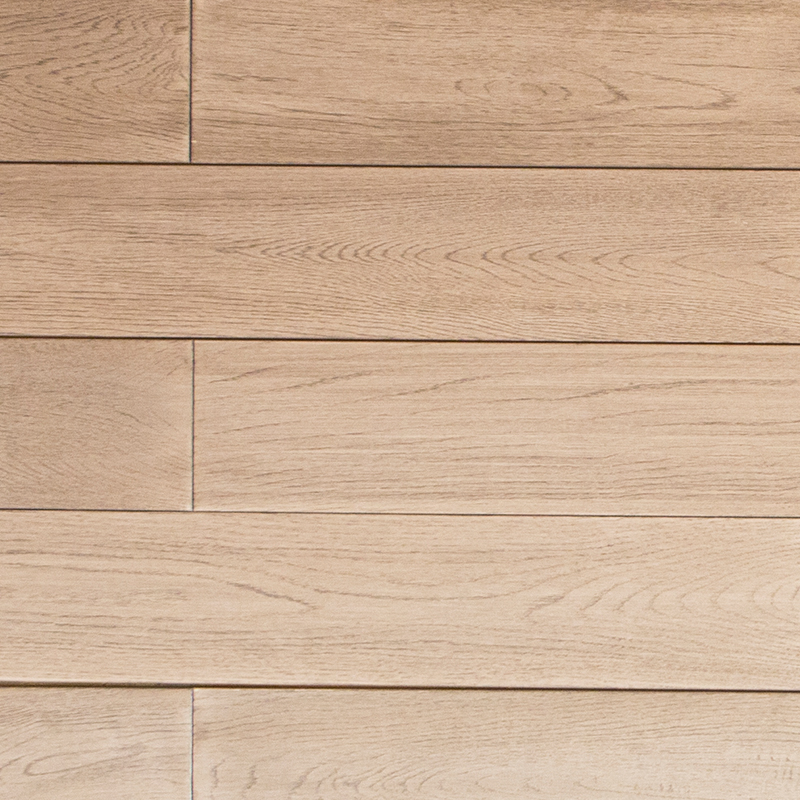
Rice White Oka Grain AC3 Laminate Flooring is a decorative wood-look floor covering built with an HDF core, a wood grain decorative paper layer, and a durable melamine wear layer reinforced with aluminum oxide. Its visual character is clean, refined, and versatile. The off-white oak color is not overly cold or plain; instead, it offers a soft natural tone that can coordinate with Scandinavian interiors, minimalist apartments, modern family homes, hospitality spaces, and bright commercial-style residential projects.
The dimensions are 70.9 inches by 7.9 inches by 3/8 inch, providing a long-plank appearance that contributes to a more continuous and spacious floor layout. Longer planks are often favored in modern design because they reduce visual fragmentation and help create a smoother flow across rooms. The micro-bevel profile on all four sides gives each plank a subtle definition, adding depth to the installed surface while preserving a clean and elegant appearance.
The surface texture is smooth, which makes daily cleaning easier and supports a refined visual effect. A smooth surface is suitable for interiors where simplicity and ease of maintenance are important. While deeply embossed flooring can emphasize rustic character, a smooth rice-white oak floor is more appropriate for contemporary spaces that seek brightness, calmness, and visual order. It can pair well with white walls, black metal accents, warm wooden furniture, soft textiles, or light stone-like decoration.
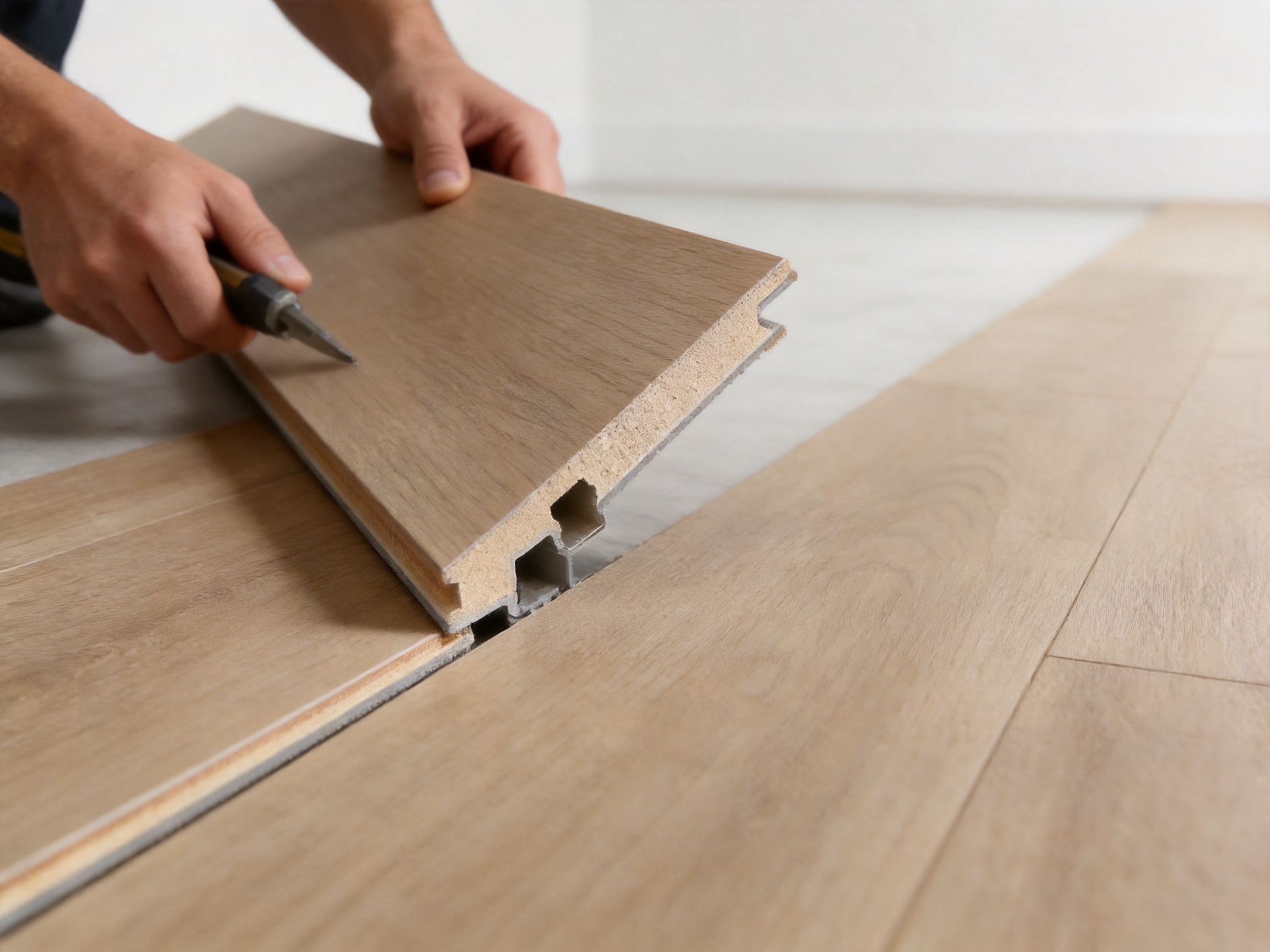
The click system allows floating installation, reducing the need for complex auxiliary materials and helping installers complete projects efficiently. Floating installation can be especially useful in renovation projects because it minimizes construction disruption. For homeowners and project contractors, this can mean faster completion, lower labor intensity, and more predictable installation quality.
| Product Attribute | Specification |
| Product Type | Waterproof laminate flooring |
| Visual Style | Rice white oak grain |
| Dimensions | 70.9" x 7.9" x 3/8" |
| Core Construction | High-density HDF |
| Wear Rating | AC3 |
| Surface Finish | Melamine wear layer with aluminum oxide |
| Surface Texture | Smooth |
| Edge Profile | Micro-bevel on all four sides |
| Installation Method | Floating installation with click system |
| Compliance | TSCA Title VI / CARB Phase 2 compliant |
| Packaging | 6 pieces per carton, 2.16 square meters per carton, 23.25 square feet per carton |
The most immediate advantage of this flooring is its bright and refreshing visual effect. Flooring occupies a large surface area in any room, so its color strongly influences the atmosphere of the entire interior. Dark flooring may create elegance and contrast, but it can also visually compress small rooms. Strong yellow or red wood tones may bring warmth, but they may not suit modern minimalist styles. Rice white oak offers a balanced solution by combining natural grain with a lighter, cleaner color palette.
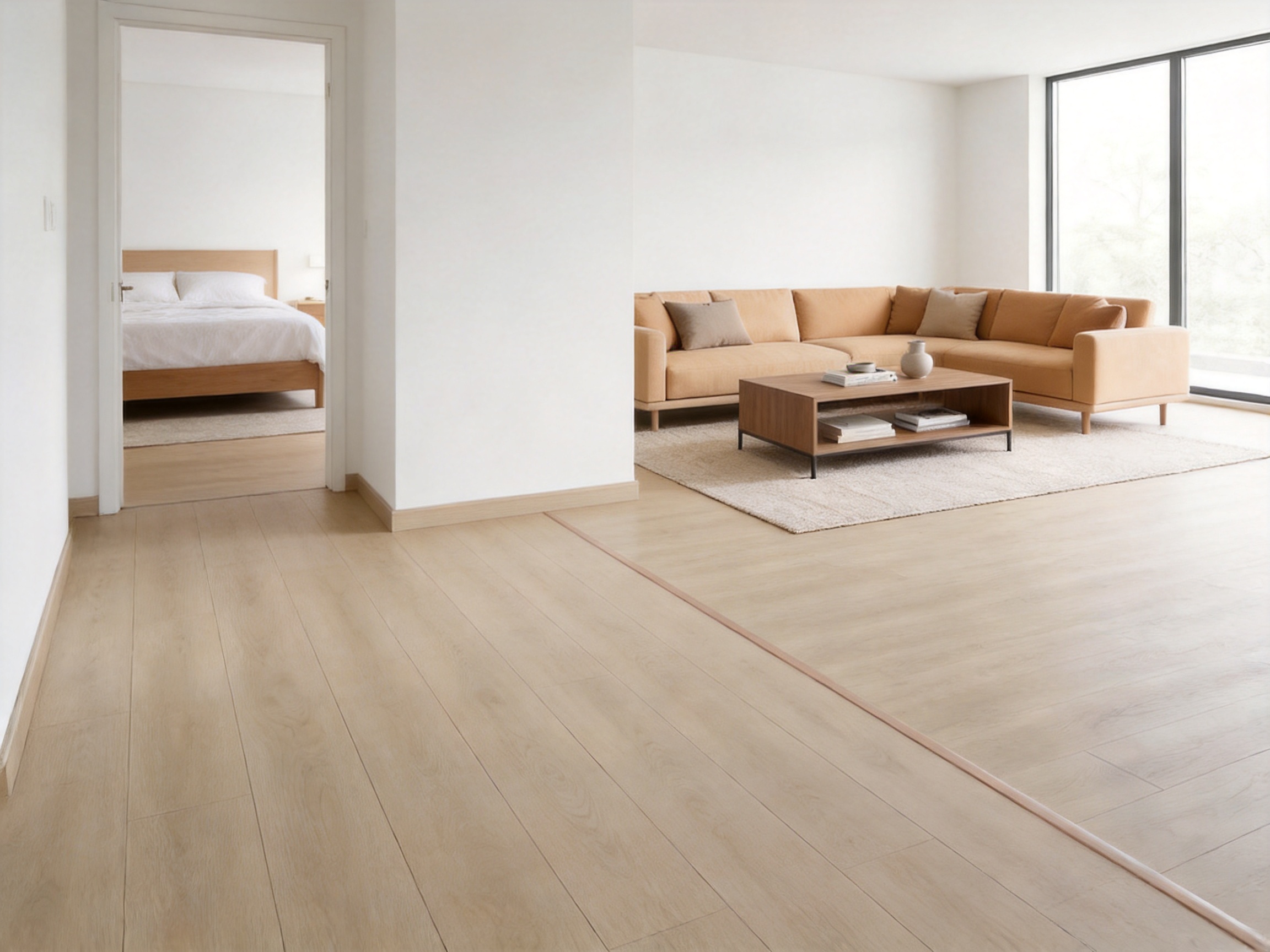
In bedrooms, the soft tone creates a calming environment. In children’s rooms, it helps maintain a bright and cheerful atmosphere. In apartments, where natural light may be limited, the floor can reflect light and help make the space feel more open. In living rooms, it provides a neutral base that allows furniture, rugs, artwork, and wall colors to stand out without visual conflict.
The oak grain design is also important. A plain white floor can sometimes feel artificial or sterile, while a natural wood grain adds warmth and texture. This product uses a realistic wood-grain finish to reproduce the feeling of natural oak. The grain gives subtle movement across the floor, preventing the surface from appearing flat or lifeless. This balance of light color and natural wood detail is a key reason why rice white oak flooring has become popular in contemporary interiors.
Compared with traditional solid oak flooring, this laminate option provides more consistent visual control. Natural wood can vary widely in color, knots, mineral streaks, and board-to-board appearance. Those variations can be beautiful, but they can also make project results less predictable. Laminate flooring uses decorative paper technology, allowing a more controlled visual style. For developers, designers, and distributors, this consistency is valuable because it helps maintain a unified look across multiple rooms, apartments, or project phases.
The AC3 wear rating indicates that this product is suitable for general residential use and high-frequency household areas. In daily use, flooring must resist foot traffic, cleaning routines, children’s activity, light furniture movement, and ordinary household abrasion. The AC3 wear-resistant layer provides reliable protection for these conditions, making the flooring practical for bedrooms, children’s rooms, apartments, living areas, and similar spaces.
The surface finish uses a melamine wear layer with aluminum oxide. Aluminum oxide is commonly used in flooring wear layers because it contributes to abrasion resistance and helps extend the attractive life of the surface. This is an important advantage over low-quality decorative flooring products that may look appealing at first but quickly show dullness, scratches, or worn pathways. The protective surface helps maintain the rice-white oak visual under normal household use.
In competitive comparisons, some budget laminate floors may reduce cost by using weaker wear layers, lower-density cores, or inconsistent surface finishing. These products can become vulnerable to premature wear, edge damage, or surface fading. Rice White Oka Grain AC3 Laminate Flooring is positioned as a practical and dependable product, not merely a decorative panel. Its combination of AC3 rating, HDF structure, and aluminum oxide wear layer provides a better balance of appearance and performance.
For many homeowners, the most visible flooring problem over time is not immediate breakage but gradual wear. A hallway path may become dull; chair movement may leave visible marks; dust may make a surface appear aged. A properly engineered laminate surface helps reduce these issues. While all floors require reasonable care, this product is designed for ordinary modern life rather than delicate showroom-only use.
The core material is high-density HDF, which provides the structural foundation of the plank. HDF, or high-density fiberboard, is widely used in quality laminate flooring because it offers good dimensional consistency, machining precision, and locking strength. A stable core is essential for installation performance and long-term floor integrity. If the core is too weak or inconsistent, click joints may be less secure, plank edges may be more vulnerable, and the installed floor may not remain flat and tight.
Moisture-resistant HDF improves general resistance to everyday indoor humidity and incidental moisture. This is especially important in modern homes where floors may be cleaned regularly, where seasonal humidity changes occur, or where minor spills may happen. Although laminate flooring should not be soaked for long periods, a moisture-resistant core provides added confidence for daily use compared with more sensitive materials.
Compared with solid wood flooring, laminate flooring is often easier to maintain in environments with normal humidity variation. Solid wood naturally expands and contracts because it is a single natural material. This can result in gaps, cupping, or movement if conditions are not carefully controlled. Laminate flooring with an engineered HDF core offers improved dimensional control for many indoor applications. This makes it an attractive choice for apartment projects, rental homes, and family spaces where predictable performance matters.
The precision of the HDF core also supports the click-lock system. A floor with an inaccurate core cannot deliver a smooth installation experience, even if the visual layer is attractive. The locking profiles must be machined accurately so that planks connect securely and remain aligned. Advanced manufacturing capability is therefore directly connected to product performance. The quality of the core, the accuracy of the cutting process, and the consistency of the locking profile all affect the final installed result.
The click system is a major advantage for installers, contractors, and homeowners. Traditional flooring installation can involve glue, nails, complicated surface preparation, and longer curing or adjustment times. A floating click-lock floor simplifies the process by allowing planks to connect mechanically. This can reduce installation complexity and improve project speed, especially in renovation environments where time and cleanliness are important.
For distributors and contractors, installation efficiency can influence overall project cost. Labor is often one of the most significant expenses in flooring work. A reliable click system can help reduce labor time, minimize installation errors, and support repeatable results across multiple job sites. It also makes the product more accessible to professional installers who need fast turnover for apartments, hotels, model rooms, and residential developments.
The micro-bevel profile on all four sides further supports the installed appearance. Beveled edges create subtle plank definition and can help make slight height differences less noticeable. They also enhance the realistic wood plank effect, because natural timber flooring is commonly perceived as individual boards rather than a completely flat sheet. The result is a balance between refined modern smoothness and authentic plank character.
When compared with low-cost flooring products that have weak locking profiles, this product offers stronger practical value. Poor click systems may break during installation, leave gaps, or create an unstable walking feel. A properly engineered click system contributes to both installation speed and long-term satisfaction. In project-based purchasing, this matters because installation failure can generate replacement costs, delays, and customer complaints.
Indoor air quality has become a major concern for homeowners, builders, and regulators. Flooring is a large interior material, so its emissions and compliance standards are important. Rice White Oka Grain AC3 Laminate Flooring is manufactured to meet TSCA Title VI and CARB Phase 2 compliance requirements. These standards are associated with formaldehyde emission control in composite wood products and are important for markets that demand regulated material safety.
The product is also described with E0 environmental standard positioning and no added formaldehyde messaging for general use. For families, especially those with children or sensitive occupants, low-emission flooring is an important purchasing factor. For distributors and project buyers, compliance documentation helps reduce risk and supports market entry in regions with strict requirements.
Environmental responsibility is not only about emissions. It also includes manufacturing control, resource efficiency, product durability, and responsible sourcing practices. A durable floor that maintains its appearance longer can reduce premature replacement. Consistent manufacturing reduces waste. Certifications such as FSC and ISO-related systems support confidence in responsible operations and quality management.
Compared with non-compliant or poorly documented products, compliant laminate flooring provides stronger assurance for professional buyers. Some low-price alternatives may appear attractive initially but can create regulatory, reputational, or health-related concerns. In contrast, a product supported by recognized compliance standards is better suited for long-term business relationships, international distribution, and residential projects that require dependable documentation.
Rice White Oka Grain AC3 Laminate Flooring competes with several flooring categories, including solid wood, engineered wood, basic laminate, vinyl flooring, and ceramic tile. Each material has its own strengths, but this product offers a highly practical balance for buyers who need wood-look beauty, manageable cost, efficient installation, and reliable daily performance.
Compared with solid wood flooring, this laminate floor offers better affordability, more consistent color control, easier daily cleaning, and improved resistance to common household stains. Solid wood is valued for authenticity, but it requires more careful maintenance and can be affected by humidity changes. Laminate flooring gives customers the desired oak appearance with less sensitivity and more predictable project results.
Compared with low-end laminate flooring, this product benefits from its AC3 wear rating, high-density HDF core, aluminum oxide wear layer, micro-bevel edges, and compliance credentials. The difference may not always be obvious in a small sample, but it becomes important after installation and during daily use. Better core density, surface protection, and locking accuracy contribute to fewer complaints and longer satisfaction.
Compared with vinyl flooring, laminate often provides a more rigid plank feel and a wood-based structure that some customers prefer. Vinyl can be very water-resistant, but buyers seeking a wood-derived core and a more traditional laminate walking feel may prefer HDF laminate. The rice-white oak visual also offers a refined decorative appearance that fits modern residential design.
Compared with ceramic tile, laminate flooring is warmer underfoot, easier to install in many renovation settings, and generally more comfortable for bedrooms and living spaces. Tile is durable and water-resistant, but it can feel cold and hard. For spaces where comfort and warmth are important, laminate flooring is often more inviting.
| Comparison Area | Rice White Oka Grain AC3 Laminate Flooring | Common Competing Option |
| Visual Brightness | Light rice-white oak tone enhances spaciousness and interior brightness | Darker floors may make rooms feel smaller or heavier |
| Surface Performance | AC3 wear layer with aluminum oxide supports daily residential use | Low-end laminate may show wear more quickly |
| Installation | Click system supports fast floating installation | Glue-down or nail-down systems can require more time and labor |
| Maintenance | Smooth surface is easy to clean with dry mop and damp cloth for stains | Solid wood may require more careful moisture and finish maintenance |
| Design Consistency | Controlled decorative oak grain supports uniform project appearance | Natural wood may have unpredictable color and grain variation |
| Compliance Support | TSCA Title VI / CARB Phase 2 compliant | Undocumented products may create purchasing risk |
A flooring product is only as reliable as the manufacturing system behind it. The producer of this flooring has a strong background in wood solutions, including wood flooring, wooden doors, and custom cabinet solutions. Founded in 1999, the company has more than 20 years of production experience and more than 10 years of export experience. This long operational history matters because flooring manufacturing requires stable material selection, process control, technical knowledge, and quality discipline.
The production facilities cover approximately 20,000 square meters, supporting large-scale manufacturing and consistent supply. Annual production capacity reaches 2,400,000 square meters of flooring and 5,000 sets of doors. For international buyers, capacity is not just a number; it indicates whether a supplier can handle repeat orders, project deadlines, container shipments, and seasonal demand fluctuations. A small or unstable factory may produce acceptable samples but struggle with large orders. A mature manufacturing base provides stronger confidence.
German imported production lines and automated quality control systems support accuracy and consistency. In laminate flooring, precision affects every layer: the core board, decorative surface, wear layer, edge profiling, and locking system. Advanced equipment helps control thickness tolerance, surface bonding, cutting accuracy, and packaging consistency. These details determine whether cartons install smoothly and whether the finished floor performs as expected.
The company also offers OEM and ODM customization, which is valuable for distributors, private-label brands, contractors, and architects. Customizable sizes and colors allow buyers to adapt products to local market trends or project requirements. A buyer may need a slightly different oak tone, plank width, packaging design, or specification mix. A manufacturer with customization ability can support these requirements rather than forcing every customer into a single fixed product.
Rapid prototyping within 72 hours further strengthens project responsiveness. In competitive construction and distribution markets, speed matters. Designers may need samples quickly for client approval. Distributors may need to test market colors. Contractors may need confirmation before submitting bids. Rapid prototyping shortens the communication cycle and helps move projects forward.
The company’s strict three-step quality inspection process is an important advantage for buyers who need repeatable results. Quality inspection in flooring manufacturing should not be limited to checking the final carton. It must begin with raw material control, continue through production monitoring, and finish with final product inspection. This layered approach helps prevent defects before they reach customers.
Raw material inspection can include evaluation of HDF core quality, decorative paper consistency, wear layer material, and environmental compliance documentation. If the core material is unstable or the decorative layer is inconsistent, the final floor cannot achieve reliable performance. Early-stage control reduces the risk of warping, color mismatch, weak bonding, or emission issues.
Production-stage inspection focuses on pressing quality, surface alignment, cutting precision, edge profiling, and locking accuracy. Laminate flooring involves multiple layers that must bond correctly under controlled conditions. Temperature, pressure, timing, and material positioning all influence final quality. Automated systems help maintain consistency, but trained quality teams are also needed to identify details that machines may not fully evaluate.
Final inspection can include dimensional checks, surface appearance evaluation, locking tests, carton weight verification, packaging checks, and random sampling. For export buyers, packaging is especially important because flooring must survive long-distance transportation, warehouse handling, and site delivery. A product that leaves the factory in good condition must still arrive ready for installation.
This structured quality process differentiates the product from competitors that rely mainly on visual inspection or inconsistent manual checks. Professional buyers understand that quality is not accidental. It is created through systems, records, equipment, training, and accountability. The manufacturing strength behind this flooring helps reduce project risk and supports long-term cooperation.
Customization is a major advantage in today’s flooring market. Regional design preferences vary widely. Some markets prefer cooler white oak tones, while others prefer warmer beige oak. Some customers want long planks for premium residential interiors, while others need standard sizes for cost control. Some distributors require private-label packaging, and some project clients require documentation for compliance and submittal approval.
This flooring already offers a highly versatile rice-white oak appearance, but the manufacturer’s OEM and ODM capabilities allow broader adaptation. Custom sizes and colors are available, enabling customers to create product lines that fit local market demand. For example, a distributor may use this rice-white oak product as part of a modern light-tone collection, alongside natural oak, grey oak, and warm beige options. A contractor may request a specific plank specification for a multi-unit housing project.
Architects and interior designers benefit from stable color and sample consistency. When a designer approves a sample, the delivered product should match the design intent. Manufacturing control and customization systems help reduce the risk of mismatch. For project-based work, this can save time and prevent disputes.
Customization also extends beyond aesthetics. Packaging, carton configuration, documentation, labeling, and compliance support may all be important depending on the buyer. A supplier with export experience understands these practical requirements. Serving more than 100 global partners across Europe, North America, and Southeast Asia demonstrates experience with different market expectations and business standards.
Rice White Oka Grain AC3 Laminate Flooring is especially well suited for residential spaces that need comfort, brightness, and daily practicality. In bedrooms, the light oak tone creates a peaceful foundation. It works well with soft fabrics, neutral walls, wooden bed frames, and warm lighting. Because bedrooms are not typically exposed to heavy footwear or extreme traffic, the AC3 rating provides suitable performance for normal use.
In children’s rooms, the floor’s brightness helps create an energetic and clean feeling. The smooth surface supports easier cleaning of dust and ordinary stains. Parents often prefer flooring that does not require complicated maintenance, and laminate flooring offers a practical solution. While heavy impacts and standing water should always be avoided, the product is designed for real household activity.
In apartments, light flooring is especially useful because it makes compact interiors appear larger. A long-plank rice-white oak surface can visually extend the room and reduce the sense of clutter. This is valuable for rental apartments, urban homes, and model units where first impressions matter. A bright floor can make photography more attractive and help potential buyers or tenants perceive the space as modern and well maintained.
In living rooms, the flooring creates a neutral base for many decorating styles. It can support minimalist interiors with white and grey tones, Scandinavian interiors with light wood furniture, or transitional interiors with warmer textiles and soft colors. The oak grain prevents the space from feeling too plain, while the light tone keeps the atmosphere open.
The product description emphasizes suitability for apartments and high-frequency use areas within home environments. This is an important distinction. Some floors are designed only for low-traffic rooms, while others are built for demanding commercial settings. AC3 laminate flooring sits in a practical middle area for residential interiors that experience regular daily movement.
Apartment owners and property managers often need flooring that looks attractive, installs quickly, and can be maintained without specialized treatment. The click system supports efficient installation between tenants or during renovation. The surface can be cleaned with a dry mop and damp cloth when necessary. The light color helps apartments feel fresh and ready for occupancy.
For multi-room installations, consistency across cartons and production batches is critical. The manufacturing background behind this product helps support uniform quality, which is important when flooring is used across multiple units or repeat projects. If a distributor supplies flooring to apartment developers, inconsistent color or locking quality can create major problems. Reliable manufacturing reduces that risk.
Although the product is suitable for high-frequency household use, proper care remains important. Furniture should be fitted with protective pads, sharp objects should be avoided, and spills should be wiped promptly. These simple practices help preserve the floor’s surface and edges over time.
One of the practical strengths of this flooring is its easy maintenance. The smooth surface and light oak tone make regular cleaning straightforward. For daily care, a dry mop, soft broom, or vacuum suitable for hard floors can remove dust and small particles. This prevents abrasive debris from being dragged across the surface during walking.
For stains, a slightly damp cloth can be used to wipe the area gently. The key is to avoid long-term soaking with water. Although the product has moisture-resistant characteristics, laminate flooring should not be treated like an outdoor waterproof surface or submerged material. Prompt cleaning and reasonable moisture control help maintain flooring stability and surface quality.
Harsh chemicals, abrasive pads, excessive water, steam cleaning, and strong solvent cleaners should be avoided unless specifically approved by the flooring supplier. These methods may damage the surface finish or affect the plank joints. For best results, cleaning should be simple and consistent rather than aggressive.
Preventive care is also useful. Entrance mats can reduce sand and grit. Furniture pads can prevent scratching from chair and table movement. Maintaining normal indoor humidity supports dimensional stability. These basic steps help the floor perform well and retain its attractive rice-white oak appearance.
Light-colored laminate flooring has strong market appeal because it aligns with contemporary interior trends. Many homeowners now prefer clean, bright, and flexible interiors rather than heavy traditional styles. Rice white oak flooring supports this preference by offering a fresh base that can adapt to different furniture and decoration choices over time.
For distributors, a light oak product can be easier to market because it suits many customer groups. Young homeowners may use it in minimalist apartments. Families may choose it for children’s rooms and bedrooms. Designers may select it for model homes. Contractors may use it in renovation projects where a neutral color is needed to appeal to future occupants.
Another market advantage is that light surfaces can make dust and minor stains less visually obvious than very dark flooring. Dark floors often show dust, footprints, and pet hair clearly. A rice-white oak surface can be more forgiving in daily life, helping interiors appear clean with normal maintenance. This practical visual advantage improves user satisfaction.
The product’s combination of light color, realistic grain, AC3 performance, click installation, and compliance support gives it broad commercial potential. It is not a niche design that only fits one style. Instead, it functions as a versatile flooring solution for many residential and project-based applications.
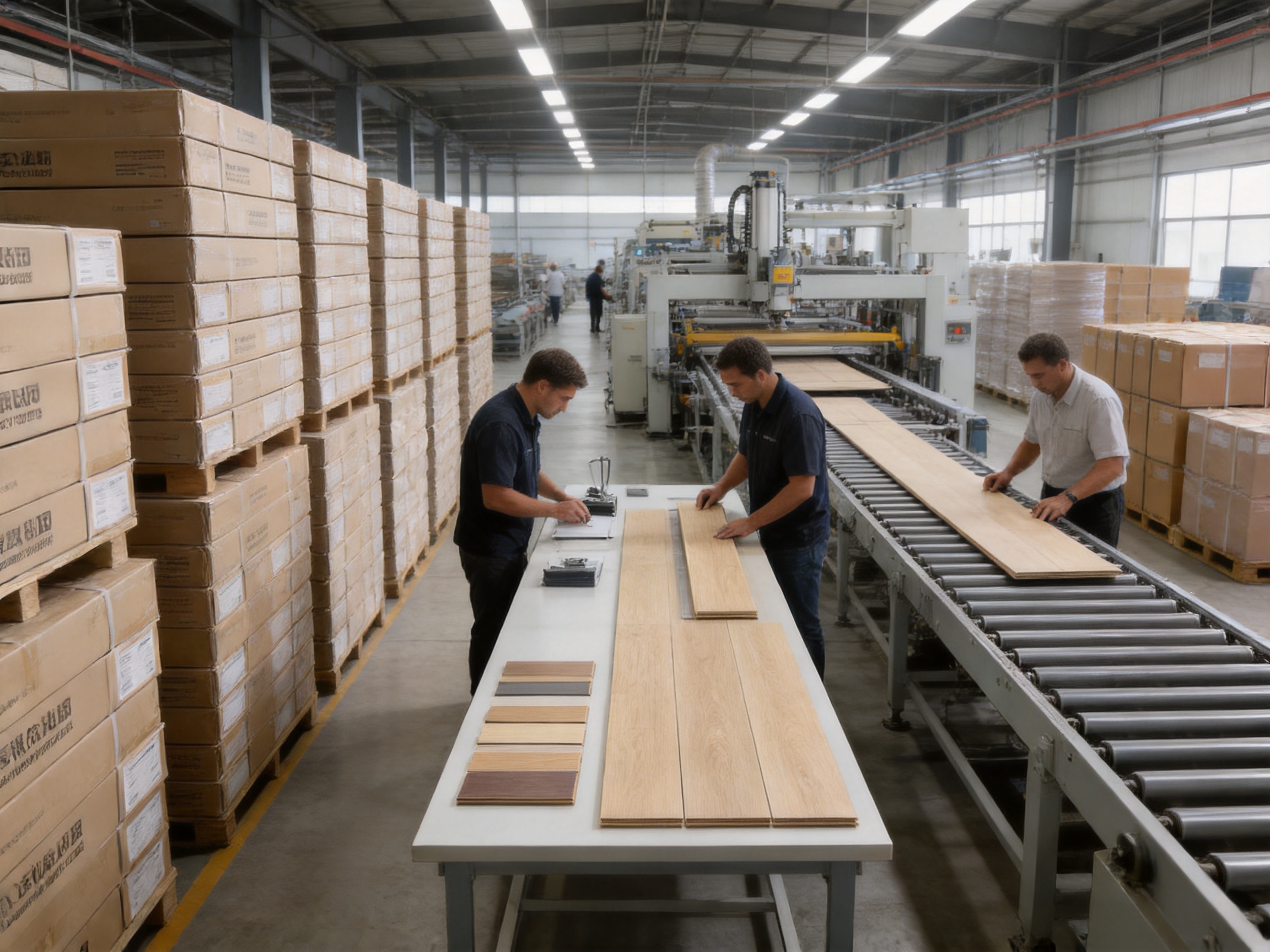
Packaging details are important for flooring buyers because they affect transportation, warehousing, cost calculation, and installation planning. This product is packed with 6 pieces per carton, covering 2.16 square meters or 23.25 square feet per carton, with a carton weight of approximately 19 kilograms. These specifications help distributors and contractors estimate order quantities, container loading, storage needs, and labor handling.
Consistent carton coverage simplifies project planning. Installers can calculate the number of cartons required for each room, including recommended waste allowance. Distributors can manage inventory more efficiently when carton dimensions and coverage are stable. For export business, accurate packaging information supports shipping documentation and cost analysis.
The manufacturer’s export experience is also valuable. International flooring supply requires more than producing boards. It requires suitable packaging, labeling, documentation, schedule control, and communication. A company that has served more than 100 global partners understands the importance of shipment reliability and market-specific expectations.
Stable supply is especially important for project buyers. If a project runs short of flooring, delays can be costly. If a later batch does not match the first batch, visual problems may occur. Working with a manufacturer that has significant capacity and process control helps reduce these risks.
Although this flooring is primarily positioned for residential and high-frequency household use, it also has commercial relevance for professionals who serve residential projects. Distributors can include it in product collections for light oak laminate demand. Contractors can use it for renovation projects, apartment upgrades, and model rooms. Architects can specify it where a clean wood-look floor is required with practical installation and compliance support.
The product’s bright oak appearance can help developers present interiors as modern and move-in ready. In competitive real estate markets, interior finishes influence perceived value. Flooring that looks clean, durable, and contemporary can improve buyer impressions without requiring the cost of natural hardwood.
For rental housing, durability and maintenance matter strongly. A floor that is difficult to clean or easily damaged can increase turnover costs. This laminate flooring offers a balance between attractive appearance and manageable upkeep. The click system can also simplify replacement of affected areas compared with some permanent installation systems, depending on site conditions and installation method.
For retail flooring businesses, the product offers clear selling points: rice-white oak style, AC3 wear rating, HDF core, click installation, low-emission compliance, smooth surface, micro-bevel edges, and customization options. These features are easy to communicate to homeowners and project buyers because they connect directly to common concerns: appearance, durability, safety, installation, and maintenance.
Global flooring buyers increasingly require documentation and compliance. Standards such as TSCA Title VI and CARB Phase 2 are not merely technical labels; they help buyers meet regulatory expectations and protect end users. Products without clear compliance may face import challenges, sales restrictions, or customer distrust.
The company’s broader compliance profile includes CE, FSC, CARB P2, and ISO 9001 standards. These credentials support confidence in quality management, responsible sourcing, product safety, and suitability for international markets. For distributors, this makes the product easier to introduce to professional customers. For contractors, it supports project submittals. For architects, it helps align material selection with responsible design requirements.
Compliance also reflects manufacturing maturity. Factories that maintain certification systems usually have better documentation, process discipline, and quality awareness. This does not replace product evaluation, but it strengthens buyer confidence. When combined with physical product advantages, compliance becomes a meaningful competitive differentiator.
The AC3 rating should be understood in the context of intended use. It is suitable for general residential and high-frequency household applications, but buyers should not confuse it with heavy commercial flooring ratings. This honesty is important because the best flooring choice depends on the correct match between product and environment. For bedrooms, children’s rooms, apartments, and daily residential areas, AC3 offers a practical balance of durability and value.
The HDF core supports rigidity and plank stability. This gives the flooring a firm feel underfoot compared with softer surfaces. The wood grain decorative paper creates the visual design, while the melamine wear layer protects the design from direct wear. The aluminum oxide reinforcement further improves abrasion resistance.
The smooth surface texture offers easy cleaning and a modern look. Some users prefer embossed-in-register textures for a more tactile wood feel, while others prefer smooth surfaces for simplicity and cleaning convenience. This product’s smooth texture is well matched to its clean rice-white design. It provides a refined appearance rather than a rustic heavy texture.
The micro-bevel profile creates plank definition without excessive grooves. This is useful because deep grooves can trap dirt, while completely square edges may reveal minor installation imperfections more clearly. A micro-bevel is a balanced edge treatment for modern laminate flooring.
Rice white oak flooring can be styled in multiple ways. For a minimalist interior, pair it with white walls, matte black hardware, low-profile furniture, and simple lighting. The floor will keep the room bright while the black accents add structure. For Scandinavian design, combine it with natural fabrics, pale wood furniture, soft grey textiles, and warm lighting. The oak grain will reinforce a natural atmosphere.
For family homes, the floor can work with beige sofas, light curtains, painted cabinets, and warm-toned rugs. Because the floor is neutral, it allows seasonal decoration changes without clashing. For children’s rooms, pastel colors, white furniture, and colorful storage items can be used without making the room feel visually crowded.
In small apartments, using the same flooring across several rooms can create continuity. Visual continuity reduces the feeling of separation and makes compact spaces appear larger. The long-plank format supports this effect by drawing the eye across the room.
For model homes and real estate staging, rice-white oak flooring can create a clean photographic effect. Bright floors often perform well in marketing images because they reflect light and make interiors appear fresh. This can be a subtle but valuable advantage for developers and property sellers.
Professional buyers should evaluate flooring based on more than surface appearance. Important factors include wear rating, core density, locking quality, compliance, packaging, batch consistency, supplier capacity, customization ability, and after-sales communication. Rice White Oka Grain AC3 Laminate Flooring addresses many of these factors through its specification and manufacturing background.
Distributors should consider how the product fits within a broader collection. Its light oak tone can serve as a core bestseller color because of its broad design compatibility. Contractors should consider installation efficiency and project documentation. Architects should evaluate the visual effect, compliance support, and suitability for intended spaces.
Buyers should also confirm installation conditions, subfloor requirements, expansion gaps, underlayment selection, and maintenance guidelines before project use. Even high-quality laminate flooring requires correct installation to perform well. The click system simplifies installation, but it does not eliminate the need for proper site preparation.
When comparing quotes, buyers should avoid focusing only on the lowest price. A cheaper product with weak locking, poor surface resistance, or unclear compliance may create higher costs later. The stronger value is often found in a product that balances competitive pricing with dependable manufacturing and verified performance.
It is a waterproof laminate flooring product with a rice-white oak grain appearance, an HDF core, a decorative wood-grain paper layer, and a melamine wear layer reinforced with aluminum oxide.
It is suitable for bedrooms, children’s rooms, apartments, living areas, and high-frequency household environments where a bright appearance, easy cleaning, and practical wear resistance are needed.
AC3 indicates that the flooring is designed for general residential use and frequent household traffic. It provides good resistance to daily wear but should be matched with appropriate indoor applications rather than heavy commercial abuse.
Yes. The product uses a click system for floating installation, helping installers connect planks efficiently without complicated auxiliary materials. Proper subfloor preparation and expansion spacing are still necessary.
Use a dry mop, soft broom, or hard-floor vacuum for daily dust removal. For stains, wipe gently with a damp cloth. Avoid long-term soaking, steam cleaning, abrasive tools, and harsh chemicals.
The light oak tone helps rooms appear brighter, cleaner, and more spacious. The natural grain prevents the surface from looking plain, creating a balanced modern wood appearance.
It offers a wood-look appearance with easier maintenance, more consistent color, click installation, and improved affordability. Solid wood has natural authenticity but usually requires more careful humidity and surface maintenance.
Yes. The product is listed as TSCA Title VI / CARB Phase 2 compliant and is associated with low-emission environmental expectations, supporting safer indoor material selection.
Yes. Custom sizes and colors are available, and the manufacturer supports OEM and ODM services for distributors, contractors, architects, and project buyers.
Manufacturing strength affects core quality, surface bonding, locking precision, color consistency, packaging reliability, compliance documentation, and long-term supply stability. A strong production system reduces project risk and improves buyer confidence.
Rice White Oka Grain AC3 Laminate Flooring is a practical and attractive solution for modern interiors that require brightness, comfort, durability, and efficient installation. Its rice-white oak appearance creates a clean and spacious visual effect, while the realistic wood grain adds natural warmth. The AC3 wear rating, HDF core, melamine wear layer with aluminum oxide, micro-bevel edges, and click-lock system work together to provide reliable performance for daily residential use.
The product’s advantages are not limited to the plank itself. The manufacturing company behind it brings more than 20 years of wood solutions experience, large-scale production capacity, German imported production lines, automated quality control systems, OEM and ODM customization, rapid prototyping, international export experience, and recognized compliance credentials. These strengths support stable supply, consistent quality, and flexible service for global partners.
Compared with solid wood, low-end laminate, vinyl, and tile, this flooring offers a strong balance of visual appeal, maintenance convenience, installation speed, and project value. It is especially suitable for bedrooms, children’s rooms, apartments, living spaces, rental housing upgrades, and residential projects seeking a bright oak aesthetic.
For homeowners, it provides a fresh and comfortable floor that is easy to live with. For distributors, it offers a marketable light oak design with solid technical features. For contractors and architects, it provides a dependable specification supported by manufacturing capability and compliance. In a competitive flooring market, Rice White Oka Grain AC3 Laminate Flooring stands out as a well-rounded choice for bright, durable, and modern interiors.
European Producers of Laminate Flooring. Technical Bulletin on Laminate Flooring Performance Classes.
California Air Resources Board. Composite Wood Products Airborne Toxic Control Measure Guidance.
United States Environmental Protection Agency. Formaldehyde Emission Standards for Composite Wood Products.
International Organization for Standardization. ISO 9001 Quality Management Systems Principles.
Forest Stewardship Council. Principles of Responsible Forest Management and Chain of Custody Certification.
North American Laminate Flooring Association. General Installation and Maintenance Recommendations for Laminate Flooring.

We provide customers with sustainable and eco-friendly
engineered wood solutions and services.
Choose DEIF for the perfect blend of
performance and aesthetics.
