


 English
 Español
 عربى
عربى

Get Social
Choose DEIF for the perfect blend of
performance and aesthetics.
 Get Free Sample

Content
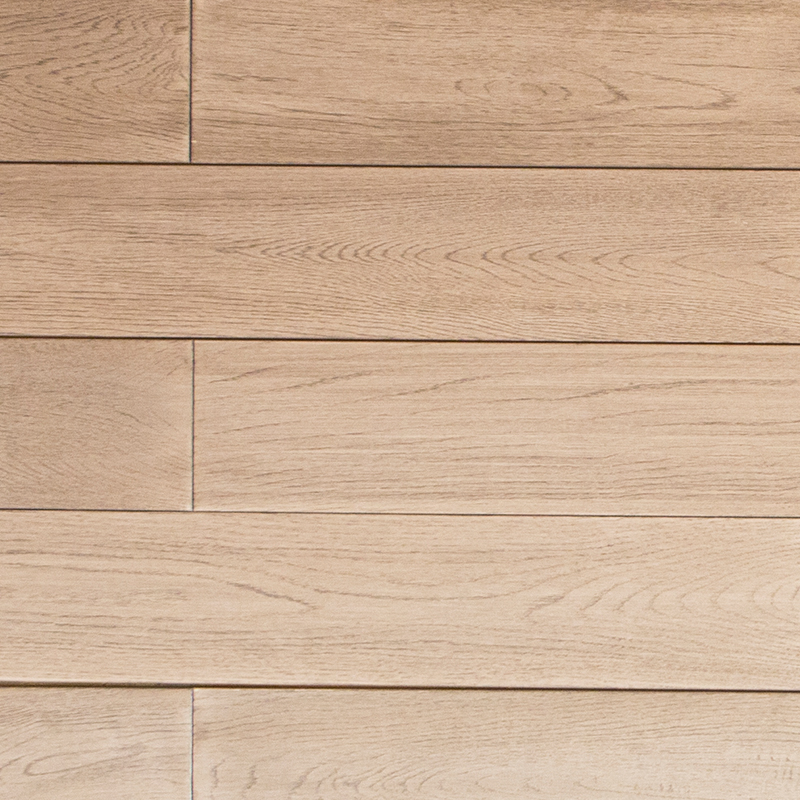
The 3-layer oak light tan natural grain surface click engineered wood flooring is designed for interiors that need the warmth of real wood, the dimensional stability of engineered construction, and the installation efficiency of a modern click-lock system. With a soft brown-yellow oak tone, visible natural grain, and a clean micro-beveled profile, this flooring solution brings a calm, welcoming character to bedrooms, living rooms, apartments, villas, boutique hotels, offices, and light commercial spaces.
Unlike ordinary laminate or low-grade engineered flooring, this product uses a natural wood veneer surface and a stable 3-layer engineered structure. The top layer presents the authentic appearance of oak, while the spruce or pine core helps resist warping, cracking, and seasonal movement. The floor is also supported by a 7-layer UV coating option for improved wear resistance, scratch resistance, and daily maintenance performance.
For distributors, contractors, designers, and project buyers, this flooring combines practical specification flexibility with reliable manufacturing support. It can be customized in wood species, veneer thickness, grade, finish, texture, dimensions, and installation method. This makes it suitable not only for standard residential projects, but also for customized interior programs where color harmony, plank stability, and supply consistency are essential.
3-Layer Oka Light Tan Natural Grain Surface Click Engineered Wood Flooring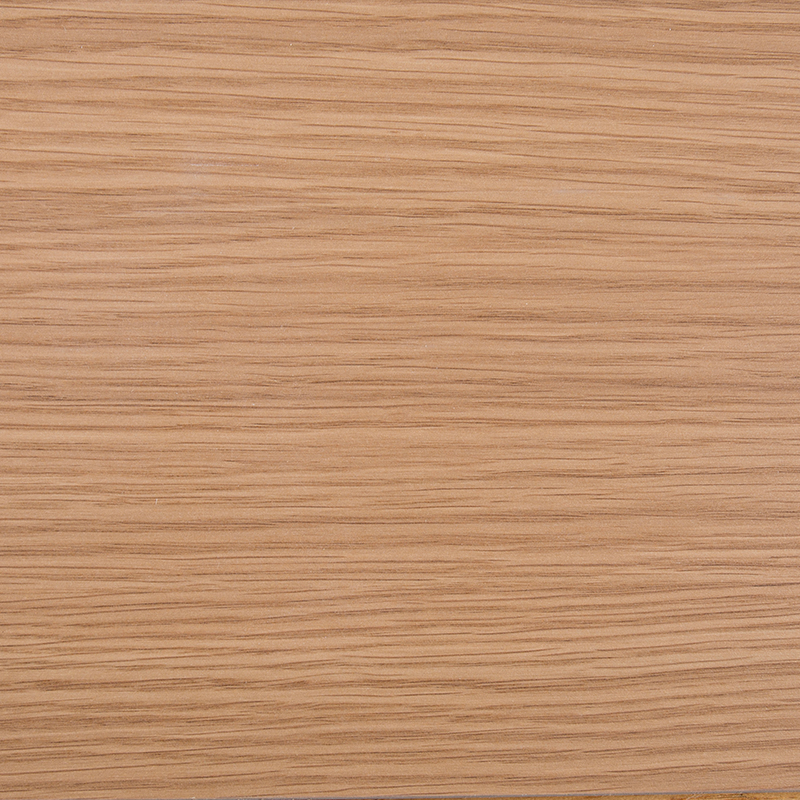
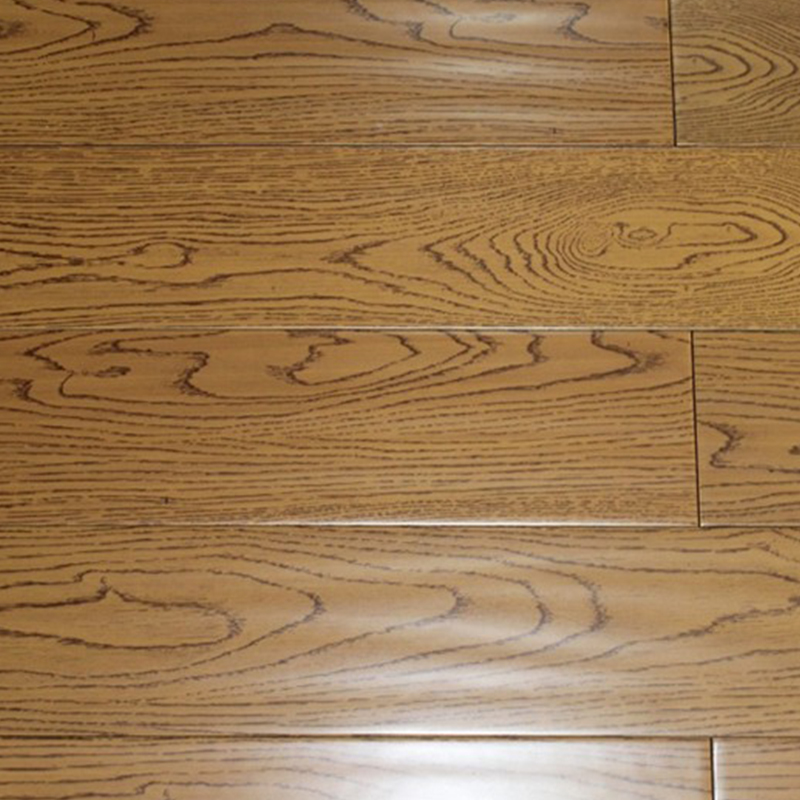
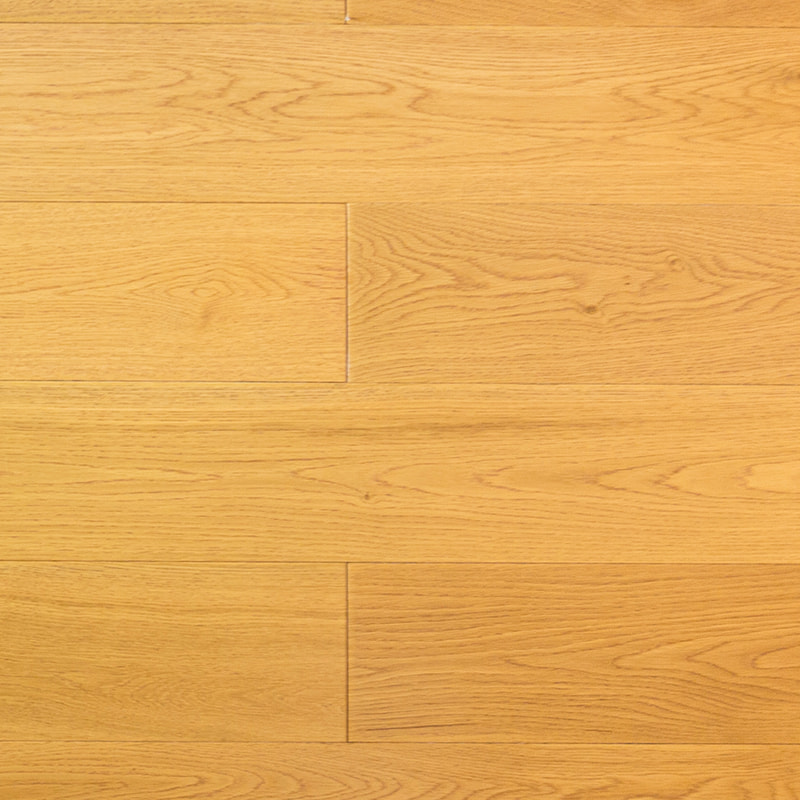
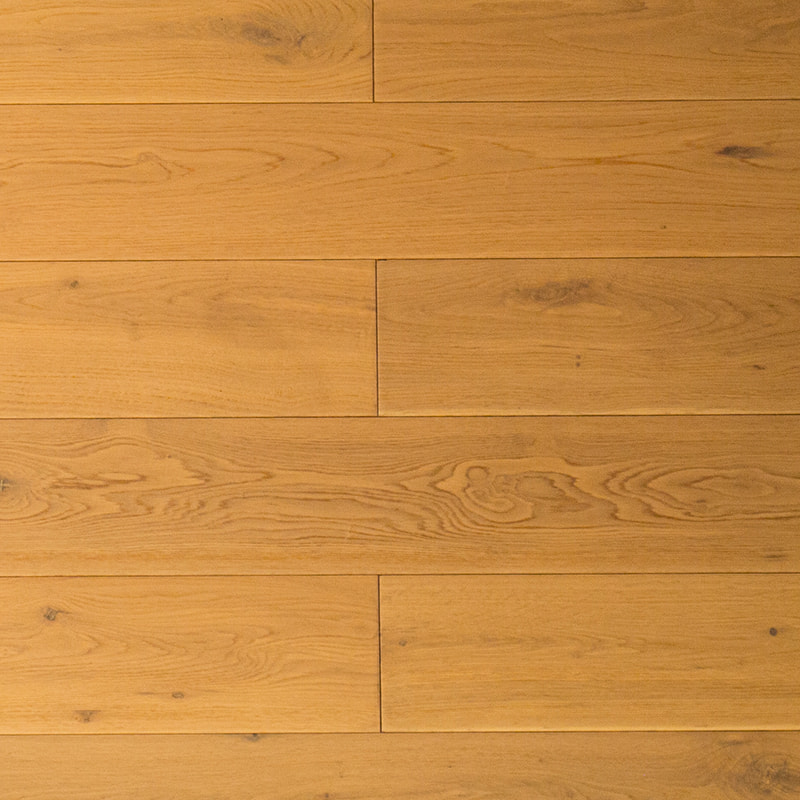
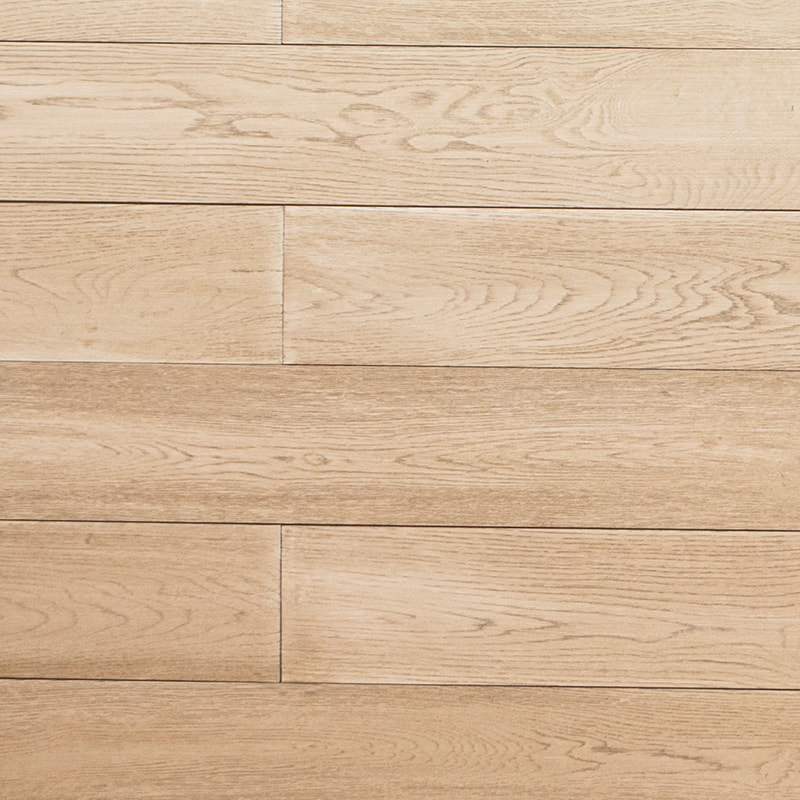
The product is a 3-layer engineered wood flooring with an oak light tan natural grain surface and a click-lock installation system. Its visual identity is soft, clean, and timeless. The light tan shade sits between natural oak, warm beige, and gentle honey brown, making it easy to coordinate with cream interiors, Nordic furniture, minimalist walls, stone textures, warm lighting, and soft textile decorations.
The natural grain surface is one of the main reasons this flooring stands out. Because the face layer is real wood veneer, each plank has organic variation rather than a printed pattern. This gives the floor a more genuine and architectural appearance compared with synthetic flooring surfaces. The grain can appear straight, flowing, or slightly cathedral-like depending on the veneer cut and oak characteristics, creating a balanced natural rhythm across the room.
The core construction is engineered for stability. In a 3-layer format, the top veneer, core layer, and backing layer are arranged to reduce the effect of wood’s natural expansion and contraction. This is important in interiors where temperature and humidity may change across seasons. A conventional solid wood plank can move more noticeably when the environment changes, while a well-built engineered plank offers improved dimensional control.
The click system is another important feature. It allows fast and tight interlocking between planks, reducing installation time and lowering labor requirements. Depending on site conditions and project requirements, the flooring can be installed by floating, glue-down, or staple methods. This flexibility gives contractors more freedom when dealing with different subfloors, budgets, and project schedules.
| Product Type | 3-Layer Engineered Wood Flooring |
| Surface Appearance | Oak Light Tan Natural Grain |
| Common Dimension | 48.0 in × 7.7 in × 5/8 in |
| Face Veneer Options | Oak, Walnut, Ash, Teak |
| Veneer Thickness Options | 2 mm, 3 mm, 4 mm, 6 mm |
| Core Construction | 3-Layer Engineered Wood |
| Core Layer | Spruce or Pine |
| Veneer Grade Options | AB, ABC, ABCD, CD |
| Veneer Cut | Sliced Veneer |
| Finish Options | UV Lacquer, UV Oil, Hardwax Oil |
| Texture Options | Wire Brushed, Handscraped, Smooth Sanded |
| Profile Detail | Micro-Bevel on Four Sides |
| Locking System | Click System |
| Pieces Per Carton | 10 |
| Coverage Per Carton | 2.03 sq.m / 21.85 sq.ft |
| Weight Per Carton | Approximately 24 kg |
| Installation Methods | Float, Glue, Staple |
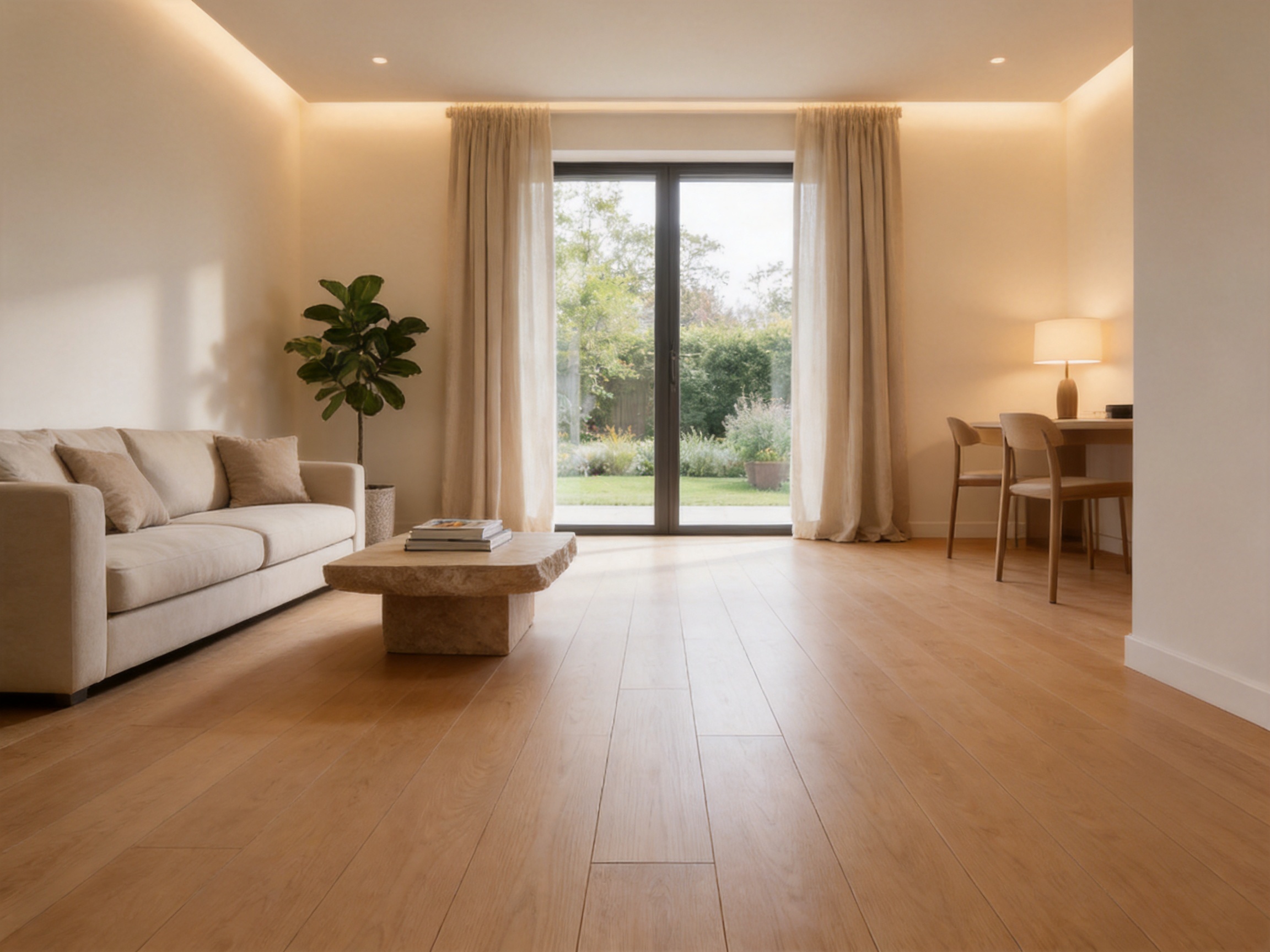
The light tan oak color is highly versatile because it can work in both warm and neutral interiors. In cream-style homes, it reinforces softness and comfort. In Nordic-style rooms, it adds natural warmth without making the space feel heavy. In modern apartments, it provides a clean wood foundation that complements white walls, black accents, beige sofas, linen curtains, and natural stone surfaces.
Compared with darker flooring, light tan oak makes rooms feel larger and brighter. It reflects more light and creates a relaxed visual atmosphere. For compact bedrooms, apartments, and corridors, this can be especially valuable. The floor does not dominate the design; instead, it supports the whole interior scheme and allows furniture, lighting, and decorative materials to stand out.
Compared with very pale whitewashed flooring, this light tan surface feels warmer and more natural. Whitewashed products can sometimes look cold or overly processed, while this oak surface maintains a clear wood identity. The natural grain ensures that the floor still feels authentic, tactile, and connected to nature.
The micro-beveled edges contribute to the final look. A micro-bevel defines each plank subtly, giving the floor a refined linear structure without creating large grooves that collect dust. This detail helps the finished floor look sophisticated while still being easy to maintain.
The surface layer is one of the most important differences between high-quality engineered wood flooring and cheaper alternatives. This product uses a natural wood veneer surface, with optional veneer thicknesses from 2 mm to 6 mm according to customization requirements. A real wood veneer provides the color depth, grain variation, and tactile character that artificial materials cannot fully duplicate.
In many competing flooring products, the surface may be a printed film, thin decorative layer, or low-quality veneer with limited sanding and finishing potential. Such floors may look uniform at first, but they often lack the depth and uniqueness of natural timber. By contrast, a real oak veneer gives each plank individual character while maintaining an overall coordinated appearance.
The veneer grade can be selected according to the project’s design target. AB grade provides a cleaner and more uniform surface for premium interiors. ABC and ABCD grades allow more natural variation, which can be ideal for rustic, relaxed, or character-rich spaces. CD grade can be suitable for projects where expressive wood features are desired. This grading flexibility gives designers and buyers more control over final appearance and cost.
The sliced veneer method helps preserve the natural visual continuity of the wood. It produces a refined surface that shows authentic grain movement. When combined with UV lacquer, UV oil, or hardwax oil, the veneer can be finished to meet different design and performance requirements.
Wood is a natural material, and natural materials respond to their environment. Temperature changes, humidity fluctuation, and building ventilation can all influence how wood expands or contracts. The purpose of engineered wood construction is to preserve the beauty of real wood while improving dimensional stability.
This flooring uses a 3-layer construction. The top layer is the natural wood veneer, the middle layer is typically spruce or pine, and the bottom layer balances the plank. The layers are bonded in a cross-laminated structure so that the movement tendency of one layer is controlled by the other layers. This reduces the risk of cupping, warping, and cracking compared with many solid wood floors.
Competitor products made with unstable cores, poor adhesive systems, or insufficient moisture control may experience problems after installation. These problems may include gaps between planks, edge lifting, surface checking, and uneven locking. A stable 3-layer structure helps minimize these risks when the product is installed and maintained correctly.
The spruce or pine core also gives the plank a comfortable underfoot feel. It supports the surface layer while keeping the structure lighter and more manageable than some dense alternatives. For installers, this can make handling easier. For end users, it contributes to a pleasant walking experience.
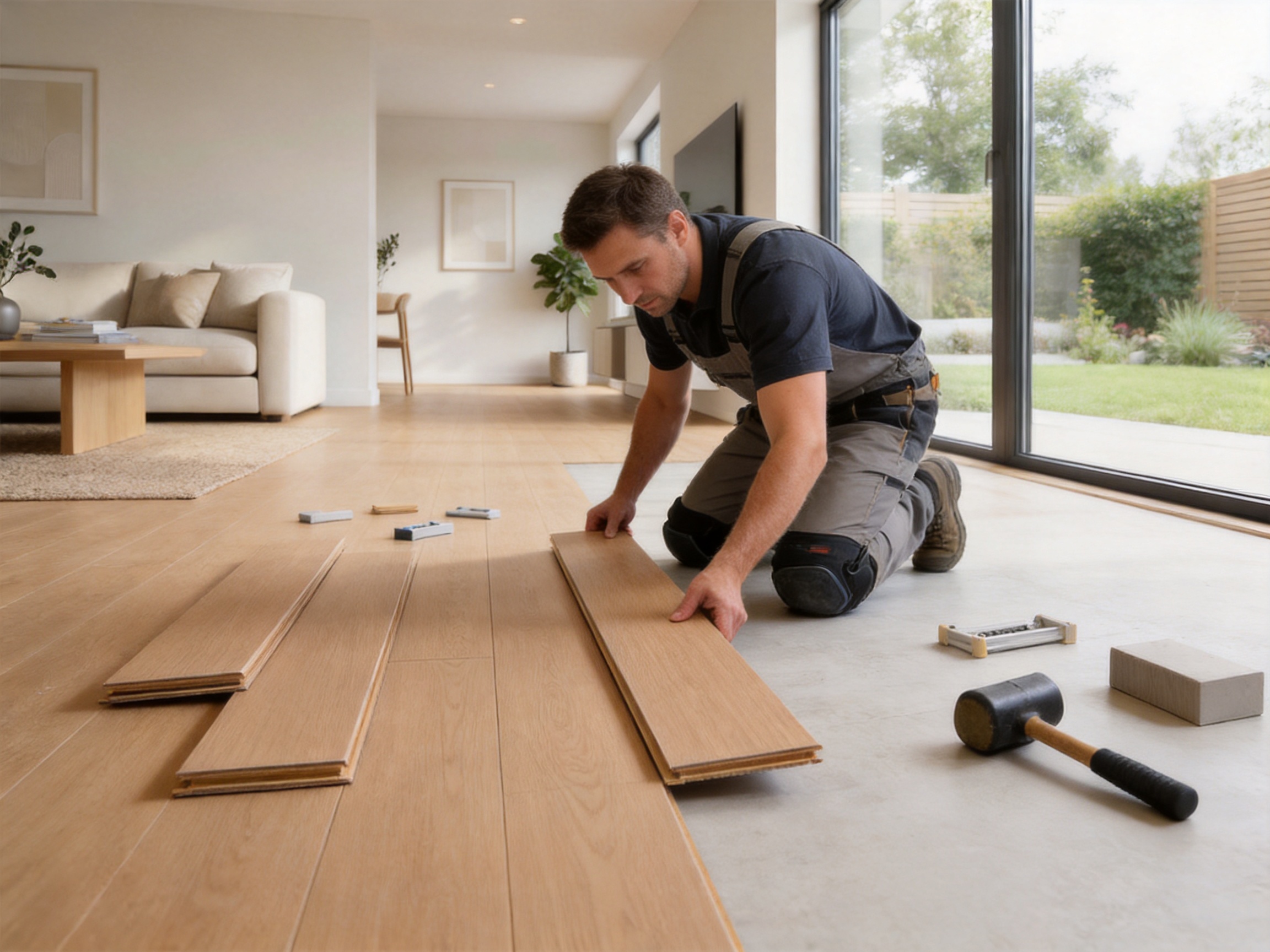
The click-lock system is designed to simplify installation and improve joint tightness. Traditional tongue-and-groove wood flooring often requires more adhesive, more precise manual adjustment, and longer installation time. The click system allows planks to interlock mechanically, making the process faster and cleaner.
For residential projects, this means homeowners can experience less disruption during renovation. For contractors, it means faster work progress and better control of labor costs. For large projects such as apartments, serviced residences, hotels, and office interiors, installation efficiency can directly influence the total project schedule.
The product can be installed as a floating floor, glued down, or stapled, depending on project conditions. Floating installation is often selected for speed and convenience. Glue-down installation can provide a firmer feel and may be preferred in certain commercial or high-specification interiors. Staple installation may be chosen for suitable wood subfloors. This installation flexibility is a competitive advantage because it allows one product platform to serve multiple construction scenarios.
A high-quality locking profile is also important for long-term performance. Poorly machined click systems can lead to open joints, squeaking, and uneven surfaces. Precision milling and strict quality control help ensure that the planks connect securely and remain visually consistent after installation.
The flooring can be supplied with UV lacquer, UV oil, or hardwax oil finishes. Each finish has a different appearance and performance profile. UV lacquer creates a durable protective film on the surface and is often selected for easier cleaning and stronger resistance to daily wear. UV oil penetrates and enhances the natural wood feeling while still providing protection. Hardwax oil gives a matte, tactile, and natural look that many designers prefer for warm residential spaces.
The 7-layer UV coating option is especially valuable for projects that require reliable wear and scratch resistance. Multiple coating layers help protect the wood surface from common household abrasion, foot traffic, furniture movement, and cleaning activity. While no real wood floor is completely scratch-proof, a well-applied UV coating improves daily durability and helps the floor retain its appearance longer.
Compared with low-cost engineered flooring that uses thin or uneven coatings, this product offers stronger finish consistency. In cheaper products, coating defects may include dull areas, weak adhesion, orange peel texture, or poor stain resistance. Advanced finishing lines and controlled curing processes help reduce these problems and create a smoother, more reliable surface.
The surface texture can also be customized. Smooth sanded texture provides a clean contemporary appearance. Wire brushed texture removes softer wood fibers and emphasizes grain, creating a more tactile natural surface. Handscraped texture gives a crafted, traditional appearance suitable for rustic or character interiors. This range allows buyers to match the product with different markets and design preferences.
Suzhou Dicosbo Wood Co., Ltd. manufactures wood flooring, wooden doors, and custom cabinet solutions with long-term industry experience. The company was founded in 1999 and has developed more than 20 years of expertise in wood processing, engineered construction, surface finishing, and export supply. This background is important because engineered wood flooring depends not only on good materials, but also on disciplined manufacturing.
The company operates approximately 20,000 square meters of production facilities and has more than 10 years of export experience. It serves over 100 global partners across Europe, North America, and Southeast Asia. This international experience helps the company understand the performance expectations, documentation requirements, packaging standards, and customization needs of different markets.
Annual production capacity reaches approximately 2,400,000 square meters of flooring and 5,000 sets of doors. This scale provides supply stability for distributors and project buyers. For commercial projects, consistency of supply is essential. A supplier may have an attractive sample, but if it cannot deliver stable batches on time, project risk increases. Large production capacity helps reduce that risk.
The manufacturing system includes German imported production lines and automated quality control systems. Advanced equipment supports accurate milling, consistent plank dimensions, stable profiling, and controlled finishing. This is especially important for click engineered flooring because small dimensional errors can affect installation quality. Precision equipment improves product repeatability from carton to carton and batch to batch.
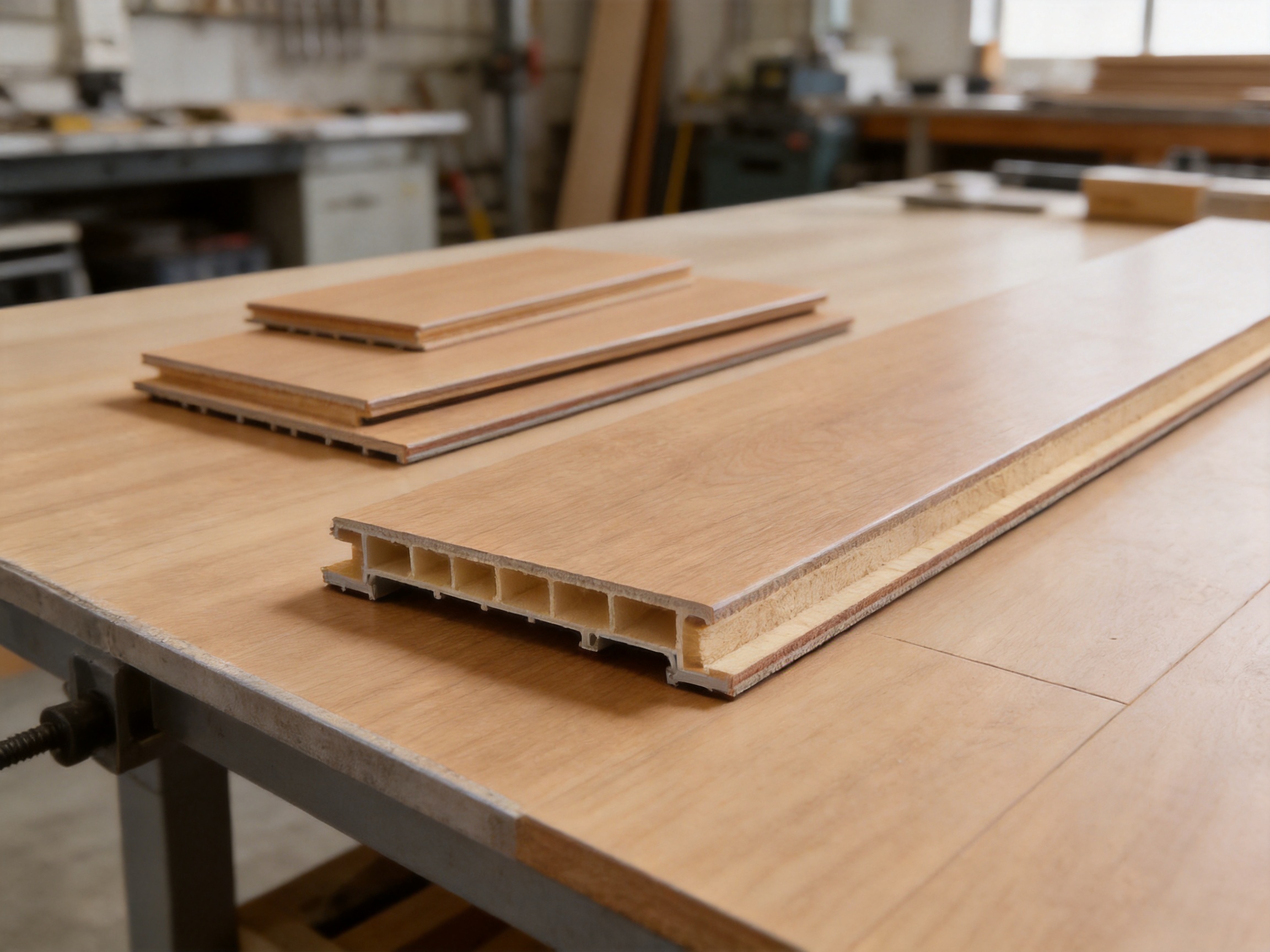
A high-quality engineered wood floor begins with raw material selection. The veneer must be chosen for suitable grain, color, moisture condition, and structural soundness. The core material must also be stable and properly prepared. If the moisture content is not controlled before pressing and profiling, the finished floor may move after installation.
After material selection, the veneer and core layers are processed and bonded. Adhesive application must be uniform, and pressing conditions must be carefully controlled. Pressure, temperature, and time all influence bonding strength. A weak bond may cause delamination, hollow sounds, or structural failure. Strong bonding is therefore one of the foundations of long-term flooring quality.
Once the board structure is formed, the planks are conditioned and machined. Precision sanding creates a smooth and even surface. Profiling equipment forms the click-lock edges and micro-beveled sides. This stage requires tight tolerances. If the milling is too loose, joints may separate. If it is too tight, installation becomes difficult and may damage the edge. Proper machining creates the balance between easy installation and secure locking.
The finishing process then protects and beautifies the floor. Depending on specification, the surface may receive UV lacquer, UV oil, or hardwax oil. In a 7-layer UV coating system, each coating layer must be applied evenly and cured correctly. This creates a stronger surface and improves resistance to wear, stains, and scratches. Finish control also ensures that sheen level and color tone remain consistent across production batches.
Before packaging, quality inspection is essential. The company uses a strict 3-step quality inspection process. Inspection may cover raw material quality, dimensional accuracy, surface appearance, locking performance, moisture content, coating adhesion, carton labeling, and packaging integrity. This reduces the chance of defects reaching the jobsite and supports smoother installation.
This flooring offers several advantages over many competing products in the engineered wood flooring market. The first advantage is the combination of real wood appearance and engineered stability. Some competitors offer solid wood with high natural beauty but weaker dimensional stability. Others offer laminate or vinyl flooring with good stability but less authentic texture. This product balances both needs by using a natural wood veneer over a stable engineered core.
The second advantage is customization. Many mass-market flooring products are limited to fixed colors, fixed veneer thicknesses, fixed grades, and fixed finishes. This can be restrictive for distributors or architects who need to meet different project specifications. This flooring can be customized in face veneer, veneer thickness, veneer grade, surface finish, surface texture, size, and color. That makes it more adaptable for private-label programs, project tenders, and design-led interiors.
The third advantage is installation versatility. Some floors are designed only for floating installation, while others require glue-down methods. This product supports floating, glue, and staple installation. That flexibility helps contractors adapt to site conditions and client preferences.
The fourth advantage is manufacturing reliability. Competitors with limited production capacity may struggle with delivery schedules, inconsistent color matching, or quality variation between batches. The manufacturer’s large facility, export experience, imported production lines, automated quality systems, and annual flooring capacity provide stronger support for professional buyers.
The fifth advantage is compliance awareness. The product line is supported by certifications and standards such as CE, FSC, CARB P2, and ISO 9001. For international buyers, this is important because flooring is not judged only by appearance. It must also satisfy regulatory, environmental, and quality management expectations.
The sixth advantage is the balance between performance and natural style. Some highly coated floors look plastic or artificial, while some natural oil floors may require more frequent maintenance. With UV lacquer, UV oil, and hardwax oil options, buyers can choose the right balance of durability, natural feel, sheen, and maintenance requirements.
In residential interiors, the flooring provides a warm foundation for daily living. Bedrooms benefit from the soft tone because it creates a calm atmosphere. Living rooms benefit from the natural grain because it adds depth without overwhelming the design. Dining areas and family spaces benefit from the engineered stability and protective surface finish.
The click system is useful for renovation projects where time and cleanliness matter. Home renovations often require fast installation because occupants want to return to normal living quickly. A floating click installation can reduce adhesive use and shorten the process. When the subfloor is properly prepared, the result can be clean, efficient, and attractive.
The light tan oak appearance is also practical for long-term interior design. Very trendy colors may become outdated quickly, but natural oak tones remain relevant across changing styles. This makes the product a safer choice for homeowners and developers who want lasting appeal.
For families, the surface is easier to maintain than unfinished or poorly sealed wood. Regular dry cleaning with a soft cloth or dust mop is usually sufficient for daily care. Spills should be wiped promptly, and excessive moisture should be avoided. With reasonable maintenance, the floor can keep its beauty for many years.
Although the product is especially suitable for residential spaces, it can also serve selected commercial and project applications. Boutique hotels, offices, showrooms, serviced apartments, design studios, and reception areas often need flooring that feels warmer than ceramic tile and more premium than synthetic alternatives. Natural engineered wood can help create that atmosphere.
For commercial use, specification selection is important. A thicker veneer, suitable finish, and proper installation method should be chosen according to traffic level. UV lacquer may be preferred where cleaning convenience and wear resistance are priorities. Glue-down installation may be selected where a firmer acoustic and walking feel is desired.
Project buyers also benefit from carton coverage data and stable packaging. Each carton contains 10 pieces and covers approximately 2.03 square meters or 21.85 square feet. This helps quantity calculation and logistics planning. A carton weight of approximately 24 kg supports practical handling while still reflecting a substantial wood product.
For multi-room projects, consistent color control is important. Natural wood always has variation, but professional manufacturing can manage grading, sorting, and finishing to create predictable results. This is where supplier experience becomes valuable. A manufacturer familiar with export and project needs can better support batch consistency and documentation.
Sustainability is increasingly important in flooring selection. Buyers, architects, and end users want materials that are beautiful, durable, and responsibly sourced. This flooring is supported by FSC certification options, which can help demonstrate responsible forest management in the supply chain.
Engineered wood construction also uses valuable hardwood resources efficiently. Instead of making the full plank from solid oak, the product uses a natural oak veneer over a stable core. This allows the beauty of premium wood to be applied where it matters most: the visible surface. The core can use suitable structural wood species, helping optimize resource use.
Compliance with CE and CARB P2 standards supports international market acceptance. CARB P2 is especially important for buyers concerned with formaldehyde emissions and indoor air quality. ISO 9001 reflects quality management discipline. These certifications give distributors, contractors, and architects greater confidence when specifying the product for professional projects.
Compared with uncertified or poorly documented flooring, a compliant product reduces procurement risk. Buyers can present certification information to clients, project managers, or regulatory reviewers when required. This is particularly important in export markets where product documentation may influence customs clearance, project approval, or client trust.
One of the strongest product advantages is customization. The flooring can be adapted for different design languages and market positions. For premium interiors, buyers may choose oak face veneer, thicker veneer, AB grade, smooth sanding, and matte UV lacquer. For rustic interiors, they may choose ABCD grade, wire brushing, and hardwax oil. For cost-sensitive projects, another veneer grade or specification can be selected while still maintaining engineered construction benefits.
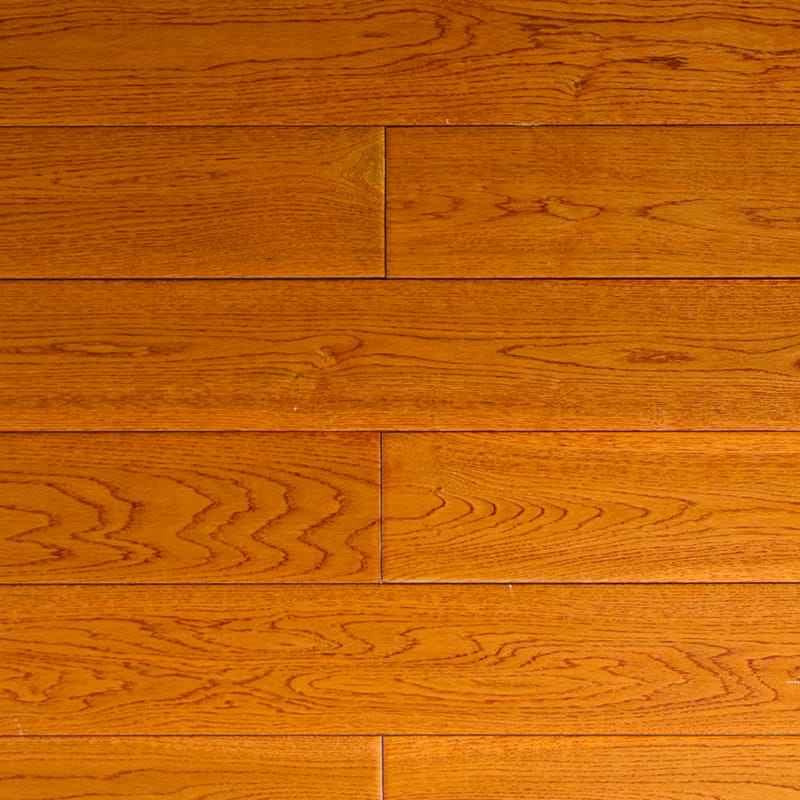
Wood species options include oak, walnut, ash, and teak. Oak is versatile and widely accepted. Walnut provides a darker, more luxurious appearance. Ash can offer a lighter and more expressive grain. Teak brings a rich tone associated with durability and premium design. These options allow the same manufacturing platform to support different product collections.
Veneer thickness options from 2 mm to 6 mm provide another level of control. A thicker veneer may support longer service life and more premium positioning. A thinner veneer may be appropriate when budget efficiency is more important. The right choice depends on project expectations, traffic conditions, target price, and market segment.
Surface texture also changes the emotional effect of the floor. Smooth sanded oak looks clean and modern. Wire brushed oak feels more natural and hides minor daily marks better. Handscraped oak creates a handcrafted appearance with stronger character. This flexibility is valuable for distributors building product lines for different customers.
Color customization is equally important. While the light tan natural grain tone is highly marketable, project designers may require warmer, cooler, darker, or more muted variations. Custom colors help match doors, cabinets, wall panels, stairs, and furniture, especially in full interior woodwork projects.
The manufacturer’s broader capability in wooden doors and custom cabinets adds value for interior projects. Flooring does not exist in isolation. It must coordinate with doors, skirting, cabinetry, wall panels, stairs, and furniture finishes. When a supplier understands multiple woodwork categories, it can better support whole-space material coordination.
For developers and contractors, this can reduce communication complexity. Instead of sourcing flooring from one factory, doors from another, and cabinetry from a third, buyers may coordinate a more unified wood solution. This can improve color matching, reduce procurement time, and create a more cohesive interior result.
For designers, coordinated wood solutions make it easier to build a consistent design language. A light tan oak floor may be paired with natural oak doors, cream cabinets, or walnut accent cabinetry. Because the company supports OEM and ODM customization, it can respond to specific project concepts and brand requirements.
Quality control is one of the most important differences between professional engineered flooring and unreliable alternatives. A floor may look acceptable in a small sample, but true quality is proven through batch stability, installation performance, and long-term use. The manufacturer’s 3-step quality inspection process helps reduce risk at each stage.
Raw material inspection helps prevent defective veneer, unstable core material, or improper moisture content from entering production. In-process inspection checks pressing, sanding, profiling, and finishing. Final inspection confirms appearance, dimensions, locking accuracy, coating condition, packaging, and labeling.
Automated quality control systems also improve consistency. Human inspection is important, but automated systems can support repeatable measurement and reduce variation. In flooring, even small differences in thickness, width, or locking profile can affect installation. Consistency is therefore a practical advantage, not just a manufacturing claim.
Good packaging is also part of quality. Engineered wood flooring must be protected during transport and storage. Export packaging should consider moisture, impact, carton strength, and pallet stability. A manufacturer with export experience is better prepared to meet these requirements.
Daily maintenance is straightforward. The floor should be cleaned with a soft cloth, dust mop, or vacuum suitable for wood flooring. Dry cleaning is recommended for routine care. Excessive water should be avoided because standing moisture can harm real wood surfaces and joints.
For stains, a mild detergent and soft cloth can be used. Harsh chemicals, abrasive pads, and strong solvents should be avoided because they may damage the finish. Spills should be cleaned quickly, especially liquids such as wine, coffee, oil, or colored beverages.
Furniture pads are recommended under chair legs, tables, and heavy furniture. Entrance mats can reduce sand and grit from shoes. In areas with strong direct sunlight, curtains or blinds can reduce long-term discoloration. Indoor humidity should be kept within a reasonable range to protect the wood from excessive expansion or contraction.
The care requirements are typical for real wood flooring. Compared with ceramic tile or some vinyl flooring, wood requires more awareness of moisture and scratching. However, the reward is a warmer, more natural, and more premium surface. With proper care, engineered wood flooring can provide long-term comfort and visual value.
Professional buyers need more than attractive product photos. They need stable supply, reliable specifications, flexible customization, consistent quality, and credible documentation. This 3-layer oak light tan natural grain click engineered wood flooring addresses those needs through product design and manufacturing support.
For distributors, the product offers a marketable color, genuine wood surface, and specification flexibility. It can be positioned in residential, renovation, and light commercial collections. The light tan oak tone has broad consumer appeal, making it easier to sell across different interior styles.
For contractors, the click-lock system and multiple installation methods support jobsite efficiency. Stable engineered construction reduces the risk of movement-related problems when installed properly. Carton coverage and manageable packaging help with project planning.
For architects and designers, the natural veneer, finish options, grade choices, and color customization provide creative flexibility. The floor can support minimal, Nordic, rustic, cream, contemporary, and hospitality interiors. Certifications also support responsible specification.
For developers, the manufacturer’s production scale and export experience provide confidence. A supplier with annual flooring capacity, advanced production lines, automated quality control, and rapid prototyping capability is better prepared to support repeated orders and project timelines.
This flooring is recommended for bedrooms, living rooms, family rooms, corridors, apartments, villas, model homes, serviced apartments, boutique hotels, small offices, design studios, and selected retail interiors. It is especially effective in spaces that need warmth, brightness, and a natural wood feeling.
It pairs well with cream walls, beige furniture, white cabinets, oak doors, linen textiles, matte black hardware, stone countertops, and soft warm lighting. It can also be used as a neutral foundation for bolder interior accents such as dark walnut furniture, green plants, terracotta accessories, or textured wall finishes.
For high-moisture areas such as bathrooms, wet kitchens, laundry rooms, or basements with moisture problems, careful evaluation is necessary. Like all real wood flooring, it should not be exposed to standing water or uncontrolled humidity. Correct subfloor preparation and environmental control are essential for long-term performance.
This product has a natural wood veneer surface, while laminate flooring usually uses a printed decorative layer. The real wood surface provides authentic grain, natural variation, and a warmer touch. Laminate may offer good cost efficiency, but it does not deliver the same genuine wood character.
Yes. The 3-layer engineered structure is designed to improve dimensional stability. The cross-laminated construction helps reduce warping, cracking, and seasonal movement compared with many solid wood floors, especially in environments where temperature and humidity fluctuate.
Yes. Customization options include face veneer species, veneer thickness, veneer grade, surface finish, surface texture, plank size, and color. This makes it suitable for distributors, contractors, architects, and OEM or ODM programs.
Available finish options include UV lacquer, UV oil, and hardwax oil. UV lacquer is often chosen for durability and easy cleaning. UV oil and hardwax oil are selected when a more natural matte appearance and tactile wood feeling are desired.
The flooring can be installed by floating, glue-down, or staple methods, depending on the subfloor and project requirements. The click system supports efficient installation and tight plank connection.
It can be suitable for selected light commercial and project applications such as boutique hotels, offices, showrooms, and serviced apartments. For heavier traffic areas, buyers should choose the appropriate veneer thickness, finish, and installation method.
Daily cleaning should be done with a soft cloth, dust mop, or suitable vacuum. Excessive moisture should be avoided. Stains can be cleaned with a mild detergent and soft cloth. Harsh chemicals and abrasive tools should not be used.
The product line is supported by FSC certification options and international compliance standards. Engineered construction also uses hardwood resources efficiently by placing premium wood where it is most visible, on the surface layer.
The click system improves installation speed and joint consistency. It can reduce labor time and help create a secure connection between planks. This is especially useful in renovation and large-scale project work.
It works well with cream, Nordic, minimalist, rustic modern, contemporary, and warm natural interiors. Its neutral light tan tone makes it easy to coordinate with many wall colors, furniture materials, and decorative finishes.
The 3-layer oak light tan natural grain surface click engineered wood flooring is a strong choice for buyers who want authentic wood beauty, stable engineered performance, easy installation, and customization flexibility. Its light tan oak appearance brings warmth and brightness to modern interiors, while the natural veneer provides genuine grain and tactile depth.
The 3-layer spruce or pine core improves resistance to warping and cracking, and the click-lock system supports efficient installation. Finish options such as UV lacquer, UV oil, and hardwax oil allow the product to meet different performance and design needs. Micro-beveled edges, customizable veneer grades, and texture choices further enhance its professional value.
Beyond the product itself, the manufacturer’s strengths add significant confidence. With more than 20 years of wood industry experience, large-scale production facilities, export capability, German imported production lines, automated quality control, OEM and ODM customization, rapid prototyping, and international certifications, the company can support distributors, contractors, designers, and project buyers with reliable wood flooring solutions.
In a competitive market, this flooring stands out because it does not force buyers to choose between beauty and practicality. It offers the natural elegance of real oak, the stability of engineered construction, the speed of click installation, and the support of advanced manufacturing. For residential and selected commercial interiors, it provides a durable, warm, and timeless foundation.
Forest Stewardship Council. FSC Principles and Criteria for Responsible Forest Management.
European Committee for Standardization. CE Marking Requirements for Wood Flooring and Construction Products.
California Air Resources Board. Airborne Toxic Control Measure for Composite Wood Products.
International Organization for Standardization. ISO 9001 Quality Management Systems Requirements.
National Wood Flooring Association. Wood Flooring Installation Guidelines and Methods.
European Federation of the Parquet Industry. Technical Information on Engineered Wood Flooring Performance.

We provide customers with sustainable and eco-friendly
engineered wood solutions and services.
Choose DEIF for the perfect blend of
performance and aesthetics.
