


 English
 Español
 عربى


Get Social
Choose DEIF for the perfect blend of
performance and aesthetics.
 Get Free Sample

Content
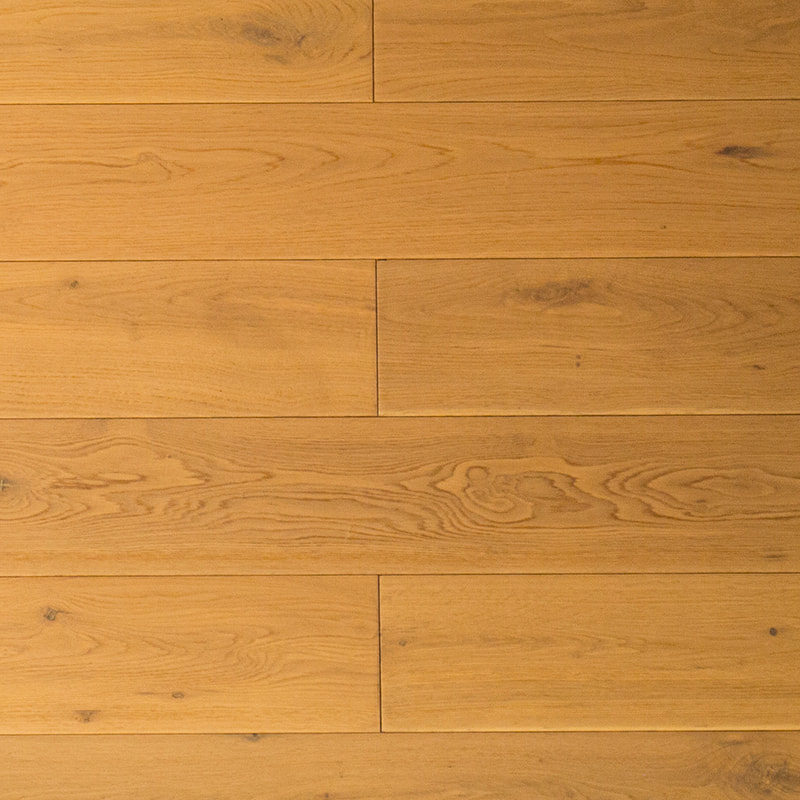
Oak Light Caramel Smooth Surface Click Solid Wood Flooring is designed for customers who want the authenticity of natural hardwood, the visual softness of a light caramel tone, and a practical installation system suitable for modern interiors. Combining a 100% solid oak core, a smooth sanded surface, four-sided click-system detailing, and customizable finishing options, this flooring provides a balanced solution for residential developments, hospitality projects, offices, retail environments, and other interior applications.
The product is identified as DS-R801 and belongs to the solid oak wood flooring collection. Its standard listed dimensions are 35.83 inches long, 5.71 inches wide, and 0.71 inches thick, equivalent to approximately 910 mm × 145 mm × 18 mm. Each carton contains 10 pieces and covers approximately 1.39 square meters, or 14.99 square feet. With a carton weight of approximately 18.8 kilograms, the product is suitable for professional distribution, project purchasing, and organized installation planning.
Unlike engineered flooring, laminate flooring, or vinyl imitations, this product is made from a solid hardwood core. The entire plank is composed of oak rather than a decorative wood layer attached to a composite substrate. As a result, users can experience the natural visual depth, tactile warmth, and authentic grain movement associated with solid timber flooring.
Oak remains one of the most widely selected hardwood species for interior flooring because it offers a reliable combination of strength, stability, attractive grain, and broad design compatibility. The Oak Light Caramel Smooth Surface Click Solid Wood Flooring uses the natural character of oak as the foundation of its appearance while introducing a soft light caramel color that is easy to coordinate with furniture, wall finishes, cabinetry, textiles, and architectural details.
The light caramel tone creates a warmer impression than pale unfinished oak while remaining lighter and more open than many dark stained floors. This makes the product suitable for interiors that require an inviting atmosphere without sacrificing brightness. It can support Scandinavian, contemporary, transitional, classic, minimalist, rustic, and boutique hospitality schemes.
Oak grain is naturally recognizable, with flowing lines, visible pores, and a balanced mixture of straight and cathedral patterns. Depending on the selected grade and individual plank, the flooring may display knots, mineral streaks, color variation, and other natural characteristics. These details are not defects; they are part of the visual identity of real hardwood. The ABCD character grade specification allows the material to retain a natural and expressive appearance rather than presenting an overly uniform printed pattern.
For architects and interior designers, this natural variation can be valuable. A floor with genuine wood movement generally appears more dimensional than a synthetic surface that repeats at regular intervals. Each installation can therefore achieve a distinctive visual rhythm, particularly when planks are arranged in a conventional staggered layout or integrated with custom patterns.
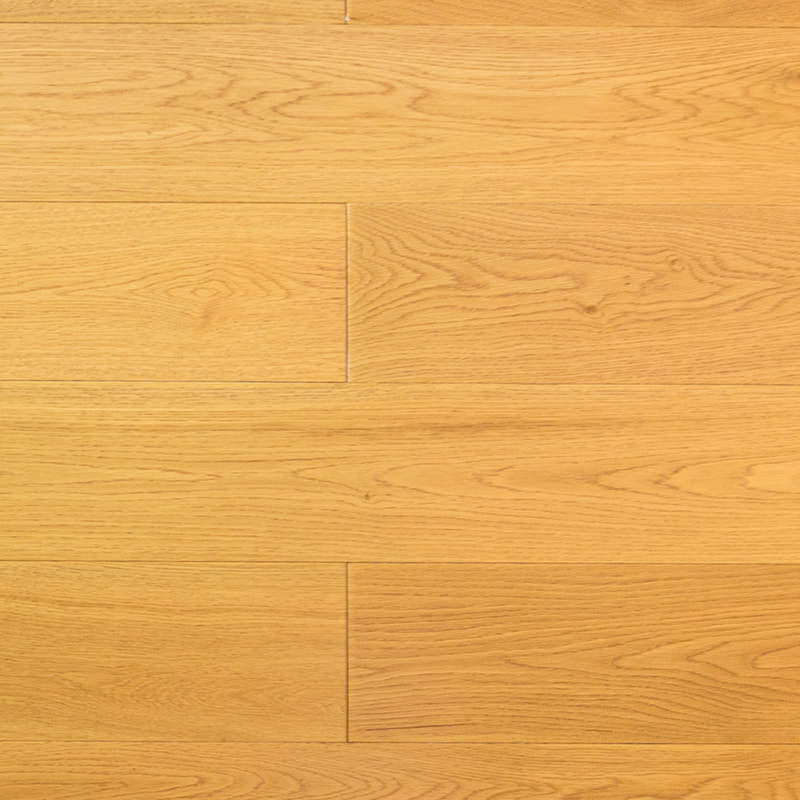
Oak Light Caramel Smooth Surface Click Solid Wood Flooring
The core advantage of this flooring is its solid hardwood construction. The product information specifies a 100% solid hardwood core, with oak selected for this model. There are no composite layers and no artificial decorative film. The result is a genuine timber product with a consistent natural material identity from the upper surface through the body of the plank.
Solid oak offers several practical benefits over lower-cost flooring categories. It provides a substantial, stable feel underfoot and contributes to a sense of permanence within the room. Its natural density supports everyday residential use and selected light commercial applications when the subfloor, installation method, maintenance program, and traffic levels are properly assessed.
Solid wood also offers a different sensory experience from synthetic alternatives. It does not merely reproduce the visual appearance of timber; it provides the texture, temperature response, grain depth, and acoustic character associated with natural wood. In bedrooms, living rooms, studies, and hospitality suites, these qualities can contribute to a more comfortable and welcoming environment.
Another important benefit is the long-term service potential of a solid wood floor. Subject to sufficient wear-layer thickness, correct installation, and professional assessment, solid timber flooring may be refinished during its service life. Refinishing requirements depend on the actual wear condition and the selected surface treatment, so customers should consult installation and maintenance professionals before sanding or recoating.
Engineered flooring can provide useful dimensional performance and may be appropriate for certain moisture-sensitive or technically demanding applications. However, it is constructed from multiple layers and normally uses a hardwood wear layer over a composite or cross-laminated base. The Oak Light Caramel flooring takes a different approach by emphasizing full solid wood construction.
For buyers who prioritize authentic material content, natural tactile quality, and the possibility of future surface renovation, solid oak can be a more compelling choice. It is especially attractive for projects where the flooring is part of the architectural identity rather than simply a functional covering.
Laminate and luxury vinyl products can offer cost-effective visual alternatives, but their appearance is generated through printed layers or digitally reproduced patterns. They do not provide the same natural grain depth or solid timber composition. Over time, some printed surfaces may also reveal repetition that is less apparent in genuine oak.
The solid oak flooring is therefore positioned for customers who want material authenticity, premium presentation, and a more enduring interior specification. Its value is not based only on initial purchase price. It also reflects the quality of the raw material, manufacturing precision, customization potential, and the ability to create a high-end visual environment.
The standard product description identifies a smooth surface that emphasizes the natural beauty of the oak while simplifying routine cleaning. A smooth sanded finish offers a refined appearance with fewer pronounced ridges than wire-brushed or handscraped textures. This makes it suitable for modern interiors where clean lines, visual continuity, and understated detailing are important.
A smooth surface can help the light caramel tone appear more even across the installation. Light reflects gently across the sanded boards, creating a calm and spacious impression. This effect can be particularly useful in apartments, open-plan living spaces, hotel rooms, executive offices, and showrooms where designers want the floor to support other elements without overwhelming them.
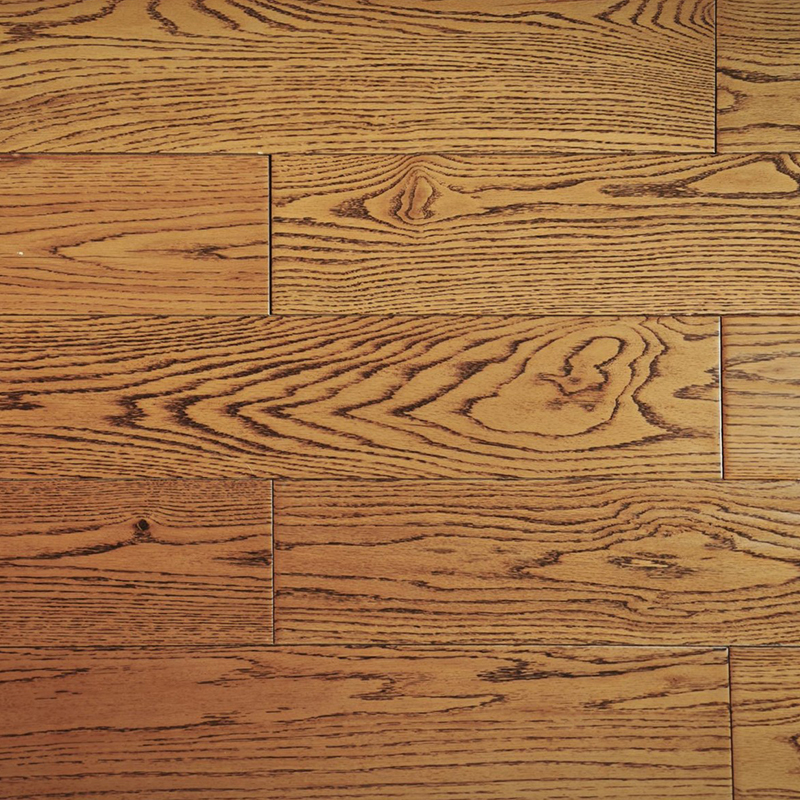
The product specifications also indicate that the surface texture can be customized. Customers may request wire-brushed, handscraped, or smooth sanded finishes depending on the desired design direction. Wire brushing can highlight the natural grain and create a more tactile rustic appearance. Handscraping can introduce handcrafted visual movement. Smooth sanding produces a cleaner and more contemporary result.
Surface finish options include UV lacquer, UV oil, and hardwax oil. These alternatives allow project teams to adjust the balance among sheen, tactile feel, maintenance expectations, and visual character.
UV lacquer creates a cured protective surface that can support routine cleaning and everyday use. It is often selected for projects that require a consistent appearance and an efficient factory-applied finish. Depending on the specified product system, the final sheen may be adjusted from a more natural low-gloss appearance to a brighter finish.
UV oil combines oil-based visual depth with factory-curing technology. It can preserve a natural wood appearance while providing a practical factory finish. This option may be preferred when the design brief requires a less plastic-looking surface and a stronger connection with the natural character of the timber.
Hardwax oil is commonly selected for customers who value a natural tactile experience and a soft, authentic visual effect. It allows the grain to remain visually prominent and can be suitable for projects where future maintenance is planned as part of the flooring specification.
The best finish depends on the building type, expected traffic, cleaning regime, design objective, and local installation conditions. Customers should confirm the final finish, sheen, maintenance instructions, and warranty conditions before production.
The flooring is described as using a click-lock system on four sides, with a V-bevel profile. Four-sided clicking can help create tight plank connections and a visually defined installation. The click profile is designed to support efficient assembly and reduce the time associated with traditional adhesive-only fitting, provided the subfloor is correctly prepared and the chosen installation method is approved for the project.
A click system can be particularly valuable in large projects where installation speed influences labor planning and overall project scheduling. It may also simplify replacement planning because individual boards can potentially be removed and exchanged more efficiently than fully bonded boards, subject to the specific locking profile and installation method.
The V-bevel adds a subtle line between planks. Rather than making the entire floor appear like one uninterrupted sheet, the bevel defines the individual boards and reinforces the authentic appearance of a solid timber installation. It can also provide a visual transition between planks when natural color and grain variations are present.
The supplied information lists tongue-and-groove installation as a product feature, while the technical table identifies glue and staple installation methods. These specifications indicate that installation can be configured according to the approved project requirement. Because installation methods may vary by subfloor, climate, heating system, and local building practice, the final method should be confirmed with the manufacturer, distributor, and qualified installer before work begins.
| Product Attribute | Specification or Available Option | Project Benefit |
| Product code | DS-R801 | Supports product identification and purchasing control |
| Wood species | Oak | Natural grain, durability, and broad design compatibility |
| Construction | 100% solid hardwood core | Authentic timber composition and substantial underfoot feel |
| Standard dimensions | 35.83 in × 5.71 in × 0.71 in | Balanced plank proportion for residential and project layouts |
| Surface texture | Smooth sanded, wire brushed, or handscraped | Allows matching with different interior styles |
| Surface finish | UV lacquer, UV oil, or hardwax oil | Provides finish selection according to design and maintenance needs |
| Profile | Four-sided click system with V-bevel | Efficient fitting and clearly defined plank edges |
| Grade | ABCD character grade | Retains natural knots and visual variation |
| Moisture content | 8%–10% with ±2% tolerance | Supports responsible acclimatization and installation planning |
| Carton quantity | 10 pieces | Convenient packaging for distribution and project calculation |
| Coverage per carton | 1.39 m² or 14.99 ft² | Helps estimate quantity, waste, and logistics |
| Installation options | Glue or staple, subject to project configuration | Provides flexibility for different subfloor conditions |
| Customization | Sizes, colors, textures, finishes, and craftsmanship | Supports OEM and project-specific design requirements |
In residential settings, Oak Light Caramel Smooth Surface Click Solid Wood Flooring can be used in living rooms, bedrooms, studies, dining spaces, corridors, and selected entrance areas. The warm tone helps create a comfortable domestic atmosphere, while the oak grain adds visual detail without requiring elaborate decorative treatments.
In living rooms, the flooring can serve as a neutral yet characterful foundation for upholstered furniture, timber tables, painted cabinetry, and natural textiles. Its light caramel color works well with warm white, beige, gray, olive, terracotta, navy, and muted black accents.
In bedrooms, natural oak can provide a softer visual environment than ceramic or stone surfaces. Wood is also often perceived as warmer underfoot, making it suitable for spaces where comfort is a priority. Rugs may be used to introduce additional softness, but the floor remains visually effective when left substantially exposed.
In studies and home offices, the smooth surface creates a professional background for desks, bookshelves, and built-in cabinetry. The floor can support both traditional and contemporary office styles, particularly when the surrounding woodwork is coordinated by tone rather than matched exactly.
Residential performance depends on correct moisture management, furniture protection, cleaning practices, and control of indoor humidity. Solid wood responds naturally to environmental changes, so allowing the material to acclimatize and maintaining suitable interior conditions are essential parts of responsible use.
The product is also suitable for selected commercial environments, including boutique hotels, private offices, premium retail areas, reception zones, meeting rooms, and upscale residential developments. Its solid oak composition and customizable appearance allow designers to create an elevated material palette that communicates quality and permanence.
In boutique hotels, the light caramel tone can help establish a welcoming guest-room atmosphere. The product may be coordinated with upholstered headboards, natural stone, brass fittings, painted walls, or custom casework. The smooth finish is especially suitable for interiors where designers want the flooring to look refined and easy to maintain.
In offices, wood flooring can reduce the institutional impression sometimes associated with hard commercial surfaces. It can be used in executive suites, boardrooms, reception areas, and other locations where appearance is especially important. For higher-traffic zones, the selected finish and maintenance plan should be carefully reviewed.
In retail environments, the flooring can help create an approachable and premium atmosphere. Its natural grain may be particularly effective in fashion, furniture, lifestyle, and specialty retail settings. However, high-traffic commercial applications should be assessed individually, including requirements for entrance matting, protective coatings, cleaning frequency, and replacement planning.
Architects and contractors should also coordinate flooring movement joints, transitions, door clearances, skirting details, and moisture barriers during design development. These technical details influence the final performance of any solid wood floor.
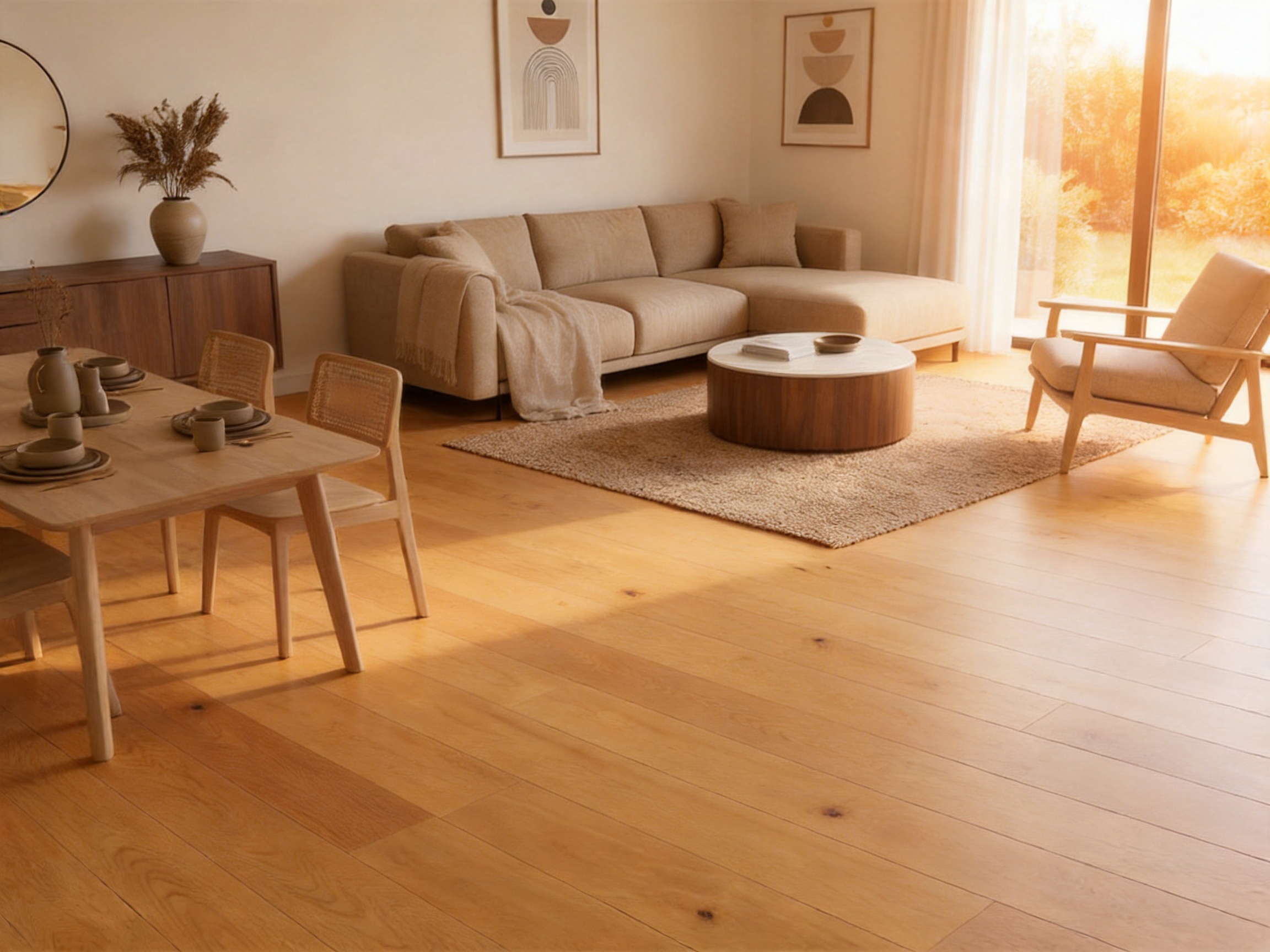
The product information identifies this flooring as suitable for underfloor heating. This feature can increase design flexibility in modern residential and hospitality projects, especially where radiant heating is preferred over wall-mounted radiators.
However, underfloor heating must be designed and operated correctly when used with solid wood. Timber reacts to changes in temperature and relative humidity. The heating system should therefore be commissioned gradually, and the floor should be installed only after the screed or subfloor meets the required moisture criteria.
Installation teams should verify the heating system type, maximum surface temperature, moisture level, expansion requirements, and approved fixing method. The surface temperature should remain within the limits specified by the flooring and heating-system suppliers. Sudden temperature increases or excessive drying can increase the risk of gaps, shrinkage, or deformation.
Underfloor heating compatibility should be treated as a coordinated system requirement rather than a standalone product claim. The flooring, subfloor, adhesive or fastener, heating system, and indoor climate must all work together. Professional installation is strongly recommended for these applications.
The flooring is specified as meeting the E0 environmental standard, with formaldehyde emissions listed as no more than 0.05 mg/m³ for the applicable solid wood flooring category. It is also identified as CE and FSC certified. These certifications and environmental claims provide important information for buyers evaluating material responsibility, regulatory requirements, and sustainable sourcing.
FSC certification is associated with responsible forest management and chain-of-custody controls when properly applied to the certified product and documentation. Project purchasers should request current certification documents and verify that the specific order is covered by the relevant certificate scope.
CE marking indicates conformity with applicable European requirements when the product falls under the relevant regulatory framework. The exact documentation should be reviewed according to the intended market, product configuration, and project specification.
The E0 classification addresses formaldehyde emission performance. This is especially relevant for interior environments such as homes, schools, offices, and hospitality spaces. Low-emission materials can support healthier indoor air objectives, although the complete indoor-air result also depends on adhesives, coatings, furniture, wall materials, ventilation, and cleaning products.
The manufacturer’s stated compliance portfolio also includes CARB P2 and ISO 9001 references for applicable products and systems. Buyers should obtain current test reports, certificates, and declarations for the exact product configuration before including them in formal project documentation.
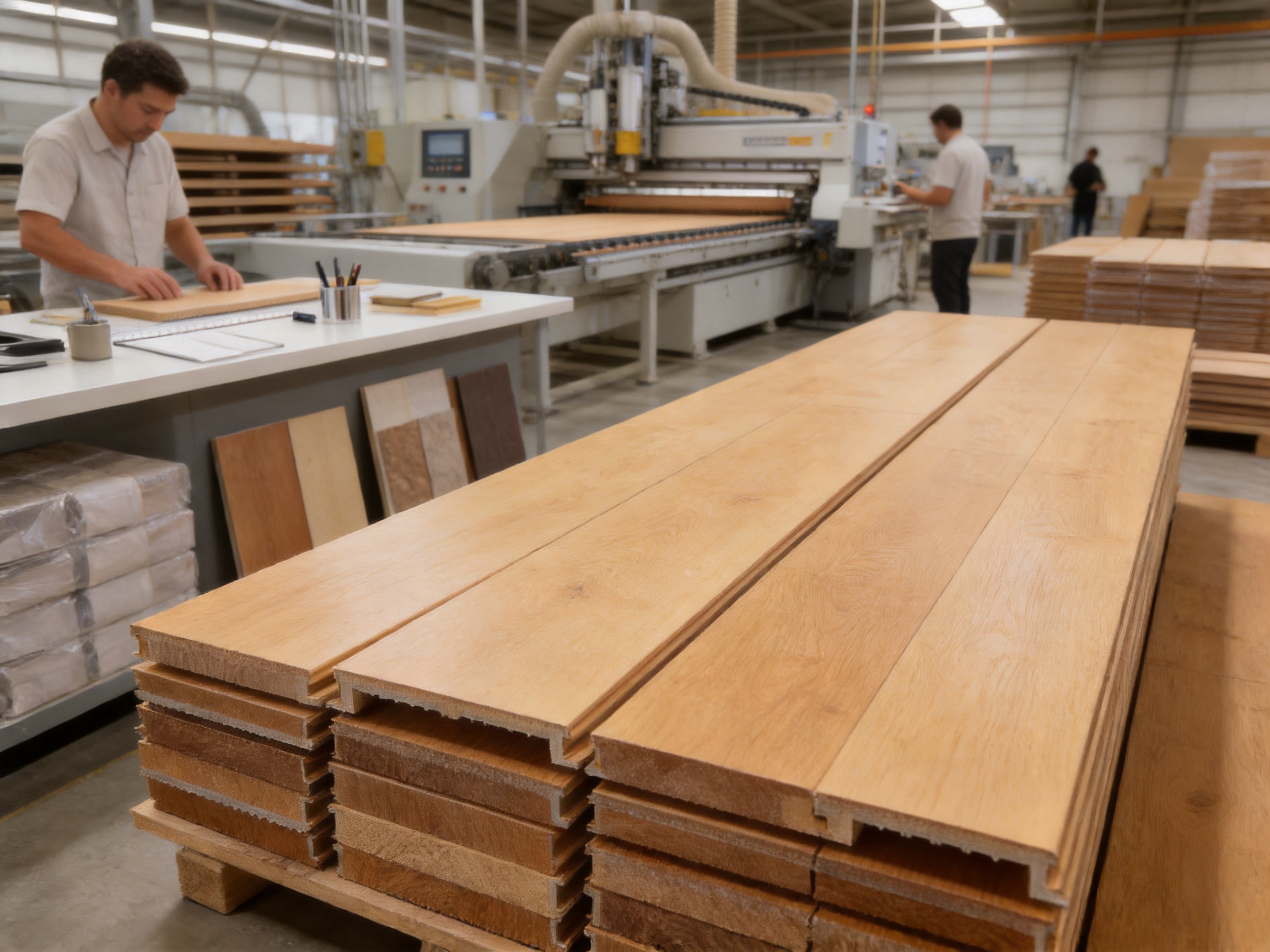
The company behind the product has operated in the wood manufacturing sector since 1999 and maintains production facilities covering approximately 20,000 square meters. Its product portfolio includes wood flooring, wooden doors, and custom cabinet solutions. This broader manufacturing background is important because flooring projects often require coordination with doors, wall panels, cabinetry, stair components, and other interior woodwork.
The company reports more than 10 years of export experience and serves partners across Europe, North America, and Southeast Asia. International experience can help support documentation management, packaging requirements, communication across time zones, shipping coordination, and adaptation to different project expectations.
Reported annual capacity includes approximately 2,400,000 square meters of flooring and 5,000 sets of doors. Production capacity of this scale can be beneficial for distributors, developers, contractors, and large project teams that require repeatable supply rather than one-off sampling only.
The use of German imported production lines and automated quality control systems indicates an emphasis on manufacturing consistency. Flooring production requires control of board dimensions, moisture content, surface preparation, finish application, profile machining, packaging, and final inspection. Automated systems can improve repeatability, while skilled personnel remain essential for grading, visual selection, process supervision, and corrective action.
The company describes a three-step quality inspection process. Although exact internal checkpoints should be confirmed in the supplier’s quality documentation, a robust flooring inspection system typically covers incoming raw material evaluation, in-process manufacturing control, and final product inspection.
Incoming inspection may evaluate species, board dimensions, moisture condition, visible defects, and grading suitability. This stage helps prevent unsuitable raw materials from entering production.
In-process inspection may check machining accuracy, tongue-and-groove or click-profile performance, sanding quality, surface uniformity, finish adhesion, color consistency, and dimensional tolerances. Detecting issues during production allows corrective action before packaging.
Final inspection may include appearance review, carton quantity verification, moisture checks, labeling, packaging integrity, and sampling of finished boards. For export orders, final inspection should also confirm that the product matches approved samples, purchase specifications, and packing instructions.
The company reports 72-hour rapid prototyping capability and OEM/ODM customization. This is valuable for architects, developers, flooring distributors, and interior brands that need to evaluate a new color, texture, plank dimension, or surface finish before committing to mass production.
Customization may include color matching, surface texture, finish selection, thickness, width, length, edge treatment, packaging, and labeling. The supplied product information specifically identifies customizable veneer, craftsmanship, thickness, sizes, and colors. While the product is solid oak rather than a veneered composite system, the customization reference indicates that the final appearance and processing details can be developed according to the project brief.
Rapid samples can help project teams compare the flooring with wall paint, furniture finishes, countertops, doors, cabinetry, lighting temperatures, and textiles. It also allows potential issues involving color variation, gloss level, grain emphasis, or edge detailing to be identified before full production.
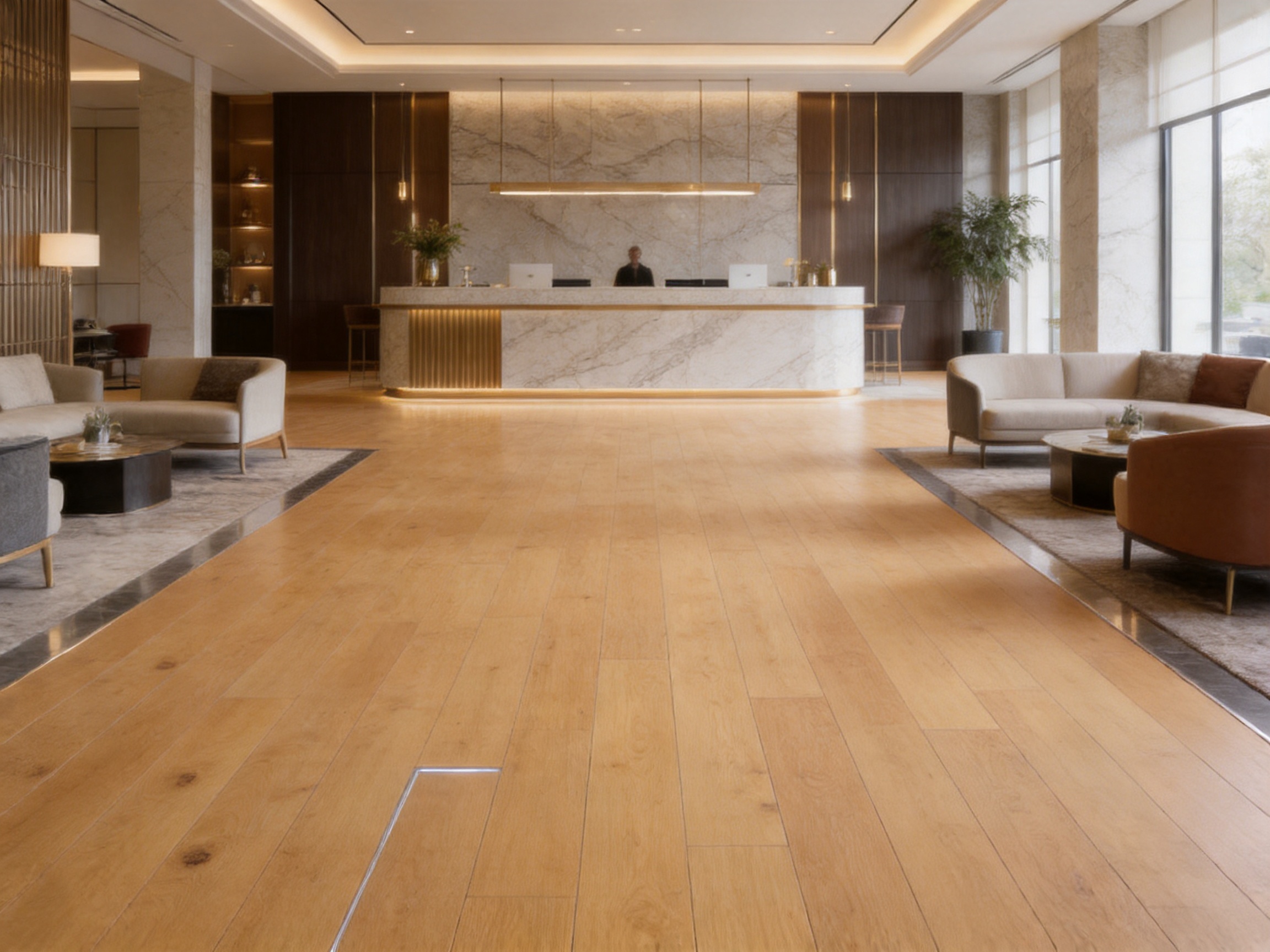
The most important competitive advantage is the combination of solid oak construction and customization. Many competing products offer either natural hardwood with limited options or inexpensive flooring with broad decorative choices but less authentic material content. This product aims to combine both qualities.
Compared with laminate and vinyl alternatives, the flooring offers genuine oak throughout its core. Customers receive natural grain and material depth rather than a printed representation. Compared with many engineered floors, the product provides a full solid hardwood structure.
The light caramel color and smooth surface create a high-end appearance while remaining relatively easy to coordinate and clean. The surface can be specified with several finish systems, allowing buyers to select the visual and maintenance characteristics appropriate for the project.
The four-sided click system can support faster installation and accurate plank alignment. This may help reduce installation complexity compared with traditional solid planks that require more extensive site fastening, although the correct method must be confirmed for each project.
Wire-brushed, handscraped, and smooth sanded textures, combined with UV lacquer, UV oil, and hardwax oil finishes, provide more design flexibility than a single fixed product specification. Custom sizes and colors can further support brand identity, hospitality concepts, and architectural coordination.
CE, FSC, E0, CARB P2, and ISO 9001 references can support customers who require documented compliance and quality systems. Certification should always be verified for the specific product and order, but the stated compliance framework is useful for global procurement discussions.
Because the manufacturer also produces wooden doors and custom cabinets, customers may be able to coordinate multiple interior woodwork categories through one supply partner. This can simplify color development, sample management, production communication, and project scheduling.
Before ordering, project teams should confirm the final product specification in writing. The standard reference includes a plank size of 35.83 inches × 5.71 inches × 0.71 inches, ABCD character grade, a four-sided click system, V-bevel edges, and moisture content of 8%–10% with a stated tolerance of plus or minus 2%.
Quantity planning should include the net floor area, installation pattern, cutting waste, replacement boards, and future maintenance needs. Each carton covers approximately 1.39 square meters or 14.99 square feet. The actual quantity required will depend on room geometry, plank direction, diagonal layouts, thresholds, closets, and the selected waste allowance.
For standard straight-lay installations, a project may require a moderate waste allowance. More complex patterns, irregular rooms, angled layouts, or multiple transitions may require additional material. A small quantity of spare boards should be retained after installation for future repairs or localized replacement.
Color variation should be considered before installation. Natural oak is not visually identical from board to board. Installers should open multiple cartons and blend planks from different packages to achieve a balanced overall appearance. Boards with concentrated color variation should be distributed rather than grouped in one location.
Solid wood flooring should be installed by qualified professionals who understand timber movement and local building conditions. The subfloor must be structurally sound, clean, dry, level, and free from contaminants that could affect adhesion or fastening.
Moisture testing is essential. Concrete, screed, timber subfloors, and other substrates require different testing procedures and acceptable moisture limits. The flooring should not be installed simply because the surface appears dry. Moisture migration from below can cause cupping, gaps, adhesive failure, or other problems after installation.
Material acclimatization is also important. Cartons should be stored in a protected interior environment according to the supplier’s instructions. The flooring should be allowed to adjust to the installation environment before fitting. Storage areas should be dry, secure, and protected from direct sunlight, rain, standing water, and extreme temperature changes.
Expansion allowances should be provided around walls, columns, door frames, fixed cabinets, and other vertical obstructions. These gaps are normally concealed by skirting, trim, or transition profiles. The exact allowance depends on the flooring, room dimensions, indoor climate, and installation method.
For click installation, the installer should inspect the locking profile before work begins and avoid forcing boards that do not align correctly. Damaged or visibly unsuitable boards should be set aside. For glue or staple installation, the adhesive or fastener type must be compatible with the flooring and subfloor.
Doors and cabinets should be coordinated before installation. Heavy fixed cabinetry placed over a floating floor may restrict natural movement, while door clearances may be affected by the 18 mm nominal board thickness. These details should be resolved during the design and construction coordination stage.
Daily care is straightforward when the floor is kept free from abrasive dirt and excessive moisture. Dry cleaning with a soft cloth, microfiber mop, or suitable vacuum attachment can help preserve the natural luster of the surface.
Spills should be removed promptly. Excess water, wet mopping, steam cleaning, and standing moisture should be avoided unless specifically approved for the selected finish. Solid wood can absorb moisture through joints and exposed edges, potentially leading to swelling, staining, or deformation.
Entrance mats can reduce the amount of grit carried onto the floor. Felt pads under furniture legs can help minimize scratches, while heavy furniture should be moved by lifting rather than dragging. Rolling chairs should use suitable protective mats if the floor is installed in a home office or commercial workspace.
Indoor humidity should be managed within a stable and reasonable range. Excessively dry conditions can contribute to shrinkage and visible gaps, while excessive humidity can encourage expansion and deformation. Seasonal movement is a natural characteristic of solid wood and should be considered in the design and maintenance plan.
Professional maintenance may include inspection, cleaning, recoating, or other finish-specific treatment. The correct procedure depends on whether the surface uses UV lacquer, UV oil, or hardwax oil. Products intended for one finish system should not automatically be used on another.
The flooring is well suited to living rooms, bedrooms, studies, dining areas, premium apartments, boutique hotels, executive offices, showrooms, and light commercial interiors. It is particularly appropriate where natural material quality and visual warmth are central to the design concept.
It may be less suitable for continuously wet areas, bathrooms with uncontrolled moisture, outdoor applications, industrial workshops, or environments subject to extreme humidity and heavy mechanical abuse. Special commercial applications should be evaluated based on traffic classification, rolling loads, cleaning chemicals, and maintenance resources.
Pet-friendly and family-oriented installations are possible, but surface scratches and localized wear should be considered. A suitable finish, entrance protection, regular cleaning, and prompt spill removal can help preserve the appearance.
Customers should begin by confirming the intended application, room conditions, traffic level, and preferred design style. They should then select the wood grade, surface texture, surface finish, color, plank dimensions, edge profile, and installation method.
Before placing a production order, request an approved physical sample. Digital images may not accurately represent the actual caramel tone, gloss level, grain contrast, or surface texture. The sample should be viewed in the project’s lighting conditions and compared with adjacent materials.
Confirm whether the order will use the standard DS-R801 configuration or a customized variation. Any change to thickness, profile, finish, color, or packaging should be documented because customized products may have different production lead times, minimum order quantities, testing requirements, and maintenance instructions.
Request current technical data, certificate information, installation guidelines, packing details, carton dimensions, and quality-control procedures. For commercial projects, also confirm the required test methods and documentation format before production begins.
Finally, coordinate delivery timing with the construction program. Flooring should arrive only when the building is weather-tight, wet trades are complete, and the interior environment is ready for safe storage and acclimatization.
This flooring is made from a 100% solid oak hardwood core rather than a printed decorative layer over a synthetic or composite base. Its natural grain, tactile quality, and solid timber composition give it a more authentic material character.
Oak Light Caramel is a warm, soft wood tone positioned between pale natural oak and deeper honey-colored finishes. The final appearance can vary according to the selected finish, lighting, grain structure, and natural variation among boards.
The featured DS-R801 design has a smooth surface, but the product range can be customized with smooth sanded, wire-brushed, or handscraped textures. The preferred texture should be specified before production.
The listed options are UV lacquer, UV oil, and hardwax oil. Each finish provides a different visual and maintenance profile. Customers should select the finish according to project traffic, desired sheen, tactile effect, and care requirements.
Yes. The specification identifies a four-sided click system with a V-bevel profile. The supplied technical information also lists glue and staple installation methods, so the final installation method should be confirmed for the specific project and subfloor.
The product is identified as compatible with underfloor heating. The heating system must be properly commissioned, the subfloor must meet moisture requirements, and the surface temperature must remain within the approved limits. Professional installation is recommended.
ABCD character grade indicates that the flooring retains natural oak features such as knots, grain variation, mineral streaks, and color movement. It is intended to create a natural and expressive appearance rather than a completely uniform one.
One carton contains 10 pieces and covers approximately 1.39 square meters, or 14.99 square feet. Additional material should be ordered for cutting waste, layout requirements, and future repairs.
The listed moisture content is 8%–10%, with a stated tolerance of plus or minus 2%. The flooring still requires appropriate acclimatization because the final moisture balance depends on the project’s climate and interior conditions.
The product information identifies E0 environmental performance, CE certification, and FSC certification. Buyers should request current documentation confirming the certification scope for the exact product, finish, and order.
Yes. Available customization may include colors, sizes, thicknesses, surface textures, finish systems, craftsmanship, and packaging. Custom options should be agreed in writing before sampling and production.
It is suitable for residential rooms, premium apartments, boutique hotels, offices, showrooms, and selected light commercial environments. Wet areas, outdoor use, and very heavy-duty applications require separate technical assessment.
Routine cleaning should use a dry cloth, soft microfiber mop, or suitable vacuum attachment. Excess moisture, steam cleaning, abrasive products, and unapproved chemicals should be avoided. Maintenance must follow the instructions for the selected finish.
Solid wood floors may offer refinishing potential, but the feasibility depends on the actual wear condition, remaining wood thickness, surface treatment, and professional assessment. Refinishing should not be assumed without inspection.
Oak Light Caramel Smooth Surface Click Solid Wood Flooring provides a strong combination of natural material quality, warm visual character, installation flexibility, and project customization. Its 100% solid oak construction distinguishes it from printed wood-look products, while the light caramel tone and smooth surface make it adaptable to a wide range of interior styles.
The four-sided click system, V-bevel profile, customizable texture options, and multiple finish choices support efficient specification for residential and commercial projects. Compatibility with underfloor heating, low-emission positioning, and stated CE and FSC certification further increase its relevance for contemporary construction and interior design requirements.
Its value is strengthened by the manufacturer’s long operating history, substantial production facilities, international export experience, OEM/ODM capability, rapid prototyping, automated production equipment, and three-step quality inspection approach. The additional ability to supply wooden doors and custom cabinets can help project teams coordinate several woodwork categories through one experienced manufacturing partner.
For the best result, the product should be specified with careful attention to subfloor preparation, moisture control, acclimatization, installation method, indoor humidity, maintenance, and certification documentation. When these factors are managed correctly, this solid oak flooring can provide a durable, comfortable, and visually distinctive foundation for high-quality interior spaces.
1. Product technical information for DS-R801 Oak Light Caramel Smooth Surface Click Solid Wood Flooring.
2. Manufacturer-provided specifications for solid oak construction, dimensions, moisture content, surface finishes, and installation options.
3. General principles of solid hardwood flooring installation, acclimatization, subfloor moisture assessment, and expansion planning.
4. General guidance on responsible forest sourcing, FSC chain-of-custody documentation, and timber product procurement.
5. General European product conformity and CE documentation principles for applicable interior building products.
6. General indoor-air-quality considerations for formaldehyde emissions and low-emission interior materials.
7. General technical guidance for timber flooring installed above underfloor heating systems.
8. General flooring maintenance principles for lacquered, oiled, and hardwax-oiled wood surfaces.

We provide customers with sustainable and eco-friendly
engineered wood solutions and services.
Choose DEIF for the perfect blend of
performance and aesthetics.
