


 English
 Español
 عربى


Get Social
Choose DEIF for the perfect blend of
performance and aesthetics.
 Get Free Sample

Content
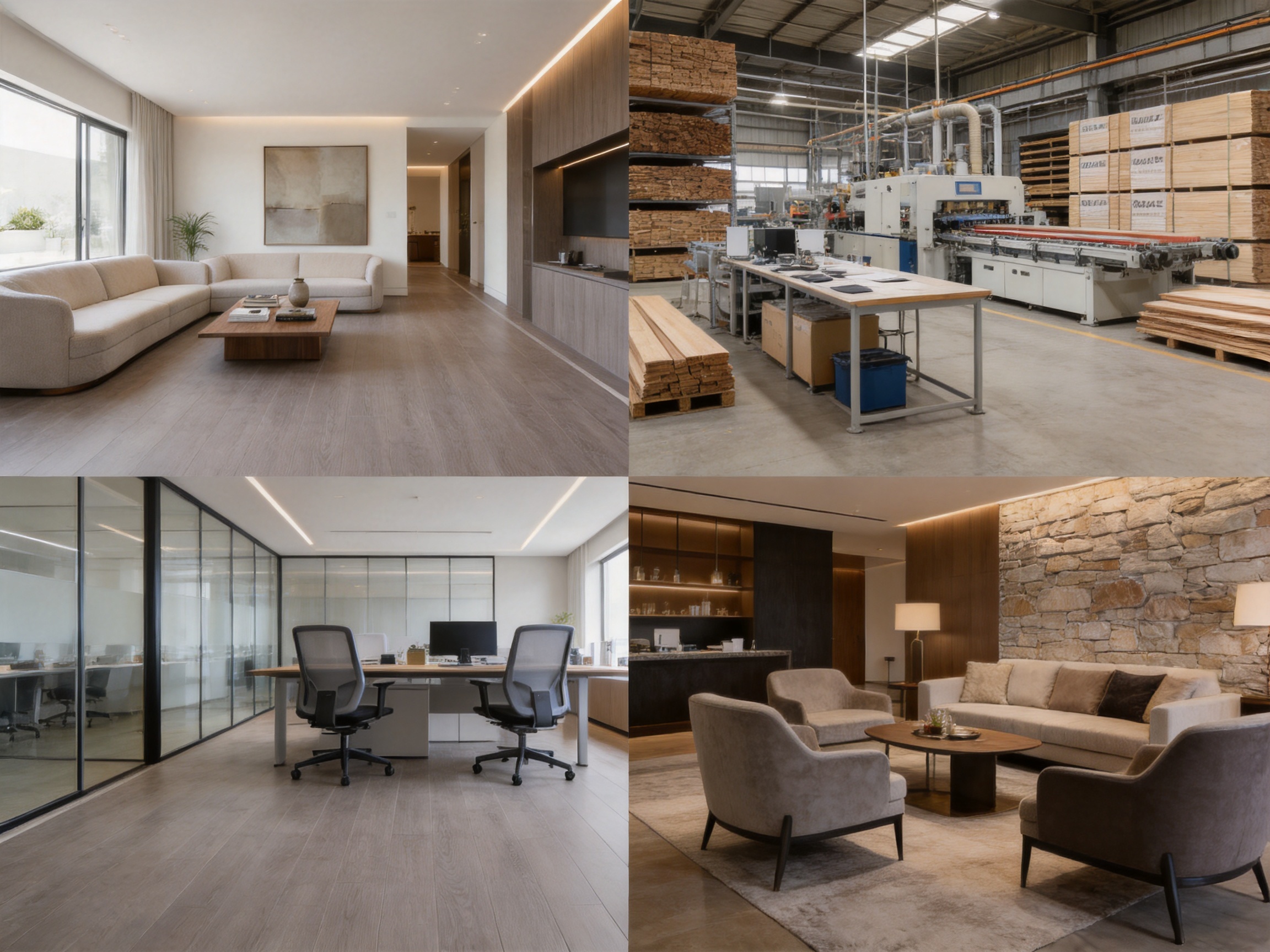
Choosing the right wood flooring involves far more than selecting an attractive color. A high-quality floor must combine natural beauty, dimensional stability, reliable installation, surface protection, responsible material sourcing, and consistent manufacturing quality. The 3-Layer Oak Light Gray Natural Texture Round Lock Engineered Wood Flooring, identified as SCQ09, is designed to address these requirements in one coordinated flooring solution.
With its soft light gray oak surface, natural grain expression, three-layer cross-laminated construction, round lock click system, and customizable specifications, SCQ09 is suitable for residential interiors, offices, studies, hospitality projects, and other spaces that require a calm visual atmosphere together with dependable performance. Its appearance is particularly compatible with modern minimalist, contemporary, Nordic-inspired, and Wabi-sabi interiors, where subtle texture and natural materials are valued.
Behind the visible oak surface is an engineered structure created to improve stability compared with many conventional solid wood flooring products. A sliced oak veneer is bonded to a spruce or pine core in a three-layer construction. The crossing direction of the layers helps reduce the effects of temperature and humidity changes, limiting the risk of warping, cracking, and deformation during normal use. The flooring can also be customized in veneer thickness, wood species, grade, surface finish, texture, dimensions, and installation method.
Manufactured by Suzhou Dicosbo Wood Co., Ltd., the product benefits from a production system developed around flooring, wooden doors, and custom cabinet solutions. The company operates approximately 20,000 square meters of production facilities, uses German imported production lines and automated quality control systems, and supports OEM and ODM projects with rapid prototyping and a structured inspection process. These capabilities allow the flooring to serve both standard distribution requirements and larger architectural or commercial specifications.
SCQ09 is a three-layer engineered oak flooring product with a light gray natural appearance and a round lock, or click, installation profile. The standard listed dimensions are 48.0 inches in length, 7.7 inches in width, and 5/8 inch in total thickness. Each carton contains 10 pieces and covers approximately 2.03 square meters, or 21.85 square feet. The carton weight is approximately 24 kilograms.
The product is designed around a natural wood veneer surface. Oak is the featured surface species for SCQ09, although the manufacturing program also supports other face veneer options, including walnut, ash, and teak. Veneer thickness can be customized from approximately 2 millimeters to 6 millimeters, depending on the required balance between visual depth, project budget, refinishing potential, and application requirements.
The core is a three-layer engineered wood construction using spruce or pine. This cross-laminated arrangement provides a more balanced structure than a single solid timber board. As wood naturally responds to moisture and temperature, the orientation of the core layers helps distribute internal stresses. This contributes to a more reliable floor surface in environments where seasonal or indoor climate changes may occur.
The standard face profile includes a micro-bevel on all four sides. This small edge detail can emphasize the outline of each plank and create a refined, structured appearance after installation. The click system supports efficient joining between boards and can contribute to a clean, continuous floor surface when the subfloor is properly prepared.
| Product Identification | SCQ09 |
| Product Category | Three-Layer Engineered Wood Flooring |
| Featured Surface | Oak natural wood veneer |
| Color Direction | Light gray natural texture |
| Standard Dimensions | 48.0 inches × 7.7 inches × 5/8 inch |
| Core Construction | Three-layer engineered wood |
| Core Material | Spruce or pine |
| Veneer Cut | Sliced veneer |
| Edge Profile | Micro-bevel on all four sides |
| Locking System | Click system |
| Installation Options | Floating, glue-down, or staple installation |
| Surface Options | UV lacquer, UV oil, or hardwax oil |
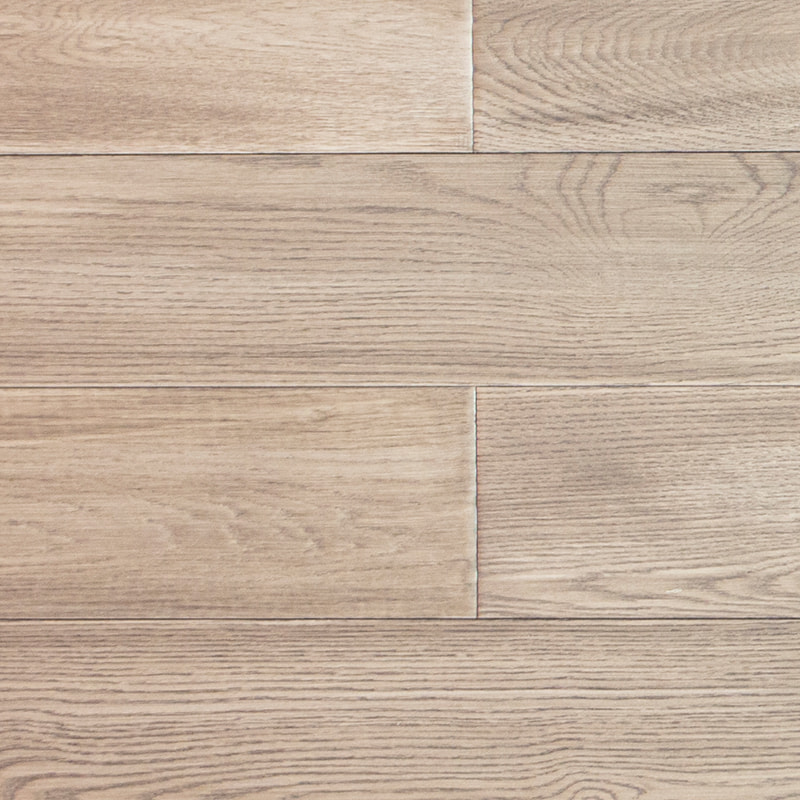
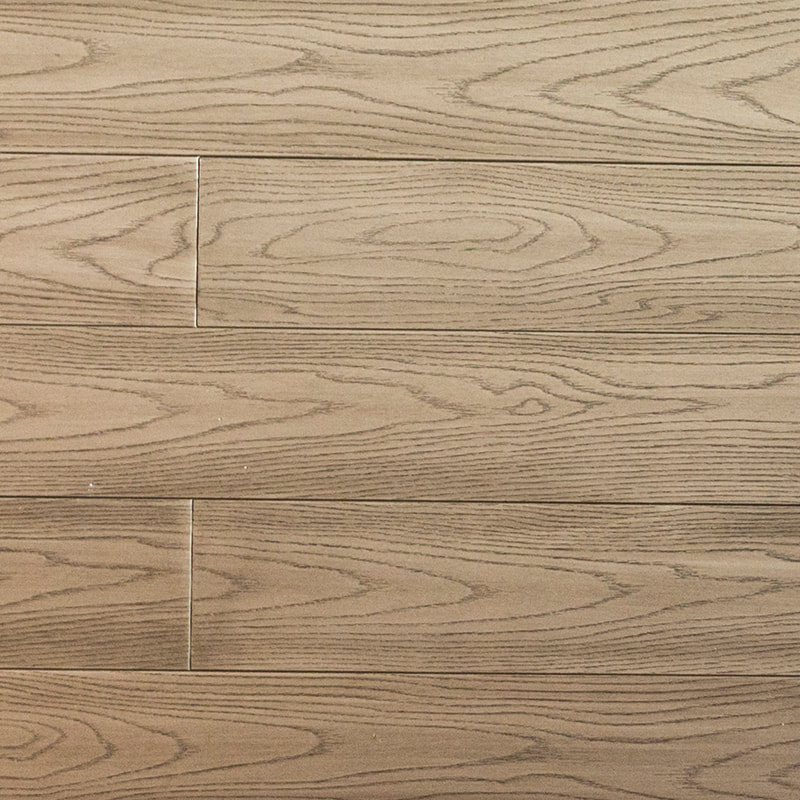
The defining characteristic of SCQ09 is its restrained light gray oak appearance. Instead of using a highly saturated or strongly contrasting color, the floor presents a soft neutral tone that allows the natural grain to remain visible. This balance gives the product a calm, contemporary character while preserving the warmth associated with real wood.
Light gray flooring can make an interior feel visually open and composed. It works effectively with white walls, warm beige textiles, black metal accents, natural stone, concrete finishes, and muted green or blue furnishings. The restrained color also provides flexibility for future interior updates. Furniture, artwork, and decorative elements can be changed without creating a strong conflict with the flooring.
The natural oak texture adds variation across the floor. Because the surface is made with real sliced veneer, the appearance has the authentic grain movement and tonal differences associated with natural timber. This is different from a printed imitation that repeats a digital pattern at regular intervals. Natural veneer can offer a more organic and sophisticated visual result, especially when installed across large areas.
The design is particularly suitable for modern minimalist interiors, where every material must contribute to the overall atmosphere without appearing excessive. It is also suitable for Wabi-sabi-inspired spaces that emphasize natural imperfections, quiet colors, tactile surfaces, and a connection with organic materials. In both design directions, SCQ09 can provide visual continuity while preventing the room from appearing cold or overly industrial.
The oak surface also supports a wide range of architectural styles. In a traditional setting, it can soften dark furniture and formal detailing. In a contemporary apartment, it can complement clean cabinetry and simple lighting. In an office, it can create a more welcoming alternative to highly uniform commercial flooring. This adaptability is one of the product’s important advantages for distributors, designers, and project contractors.

3-Layer Oak Light Gray Natural Texture Round Lock Engineered Wood Flooring
Solid wood expands and contracts as its moisture content changes. This is a natural property of timber, but it can create challenges when boards are exposed to substantial fluctuations in indoor humidity or temperature. Engineered flooring addresses this issue by combining wood layers in a way that balances movement within the board.
SCQ09 uses a three-layer structure based on spruce or pine. The layers are arranged in a cross-laminated configuration, meaning the grain direction of one layer is oriented differently from the adjacent layer. This construction helps counteract directional movement and improves the board’s dimensional stability.
The result is a floor that is better prepared for normal residential and commercial conditions than many single-piece solid wood alternatives. The construction helps reduce the likelihood of excessive cupping, bowing, cracking, and deformation when the floor is correctly installed and maintained. It does not eliminate the natural behavior of wood, but it creates a more controlled and dependable product structure.
Engineered construction can also offer practical benefits during renovation and new construction projects. The 5/8-inch standard thickness provides a substantial wood flooring profile while remaining suitable for a variety of interior floor assemblies. Depending on the project requirements and subfloor conditions, the boards can be installed using floating, glue-down, or staple methods.
For professional buyers, the three-layer construction also creates a clear product position between entry-level laminated products and thicker, more expensive solid wood floors. It provides a genuine wood surface and a stable engineered body, offering an attractive balance between appearance, performance, and cost control.
Spruce and pine are commonly used in engineered wood structures because they provide a practical combination of weight, workability, and structural performance. When properly selected, dried, layered, bonded, and processed, these softwood materials can form a reliable flooring core that supports the natural hardwood veneer above.
The core is not simply a hidden filler. It plays an important role in the board’s resistance to movement, the accuracy of the locking profile, and the stability of the installed floor. Consistent core preparation helps ensure that the finished boards can be machined to accurate dimensions and joined effectively during installation.
The three-layer design also makes efficient use of wood resources. A decorative oak surface can be combined with a structurally appropriate core, avoiding the need to manufacture the entire board from thick oak. This supports a more resource-conscious approach while preserving the visual and tactile qualities expected from an oak floor.
The face veneer is the most visible part of an engineered floor, so its quality directly influences the character of the finished interior. SCQ09 uses sliced oak veneer, which reveals the natural grain structure of the timber. The veneer can be specified in different thicknesses, including approximately 2, 3, 4, and 6 millimeters.
A thinner veneer can be appropriate for projects where cost efficiency and a refined natural appearance are primary priorities. A thicker veneer can provide increased material depth and may be selected for projects that require a more substantial wood surface. The best choice depends on the intended application, maintenance expectations, budget, and project specification.
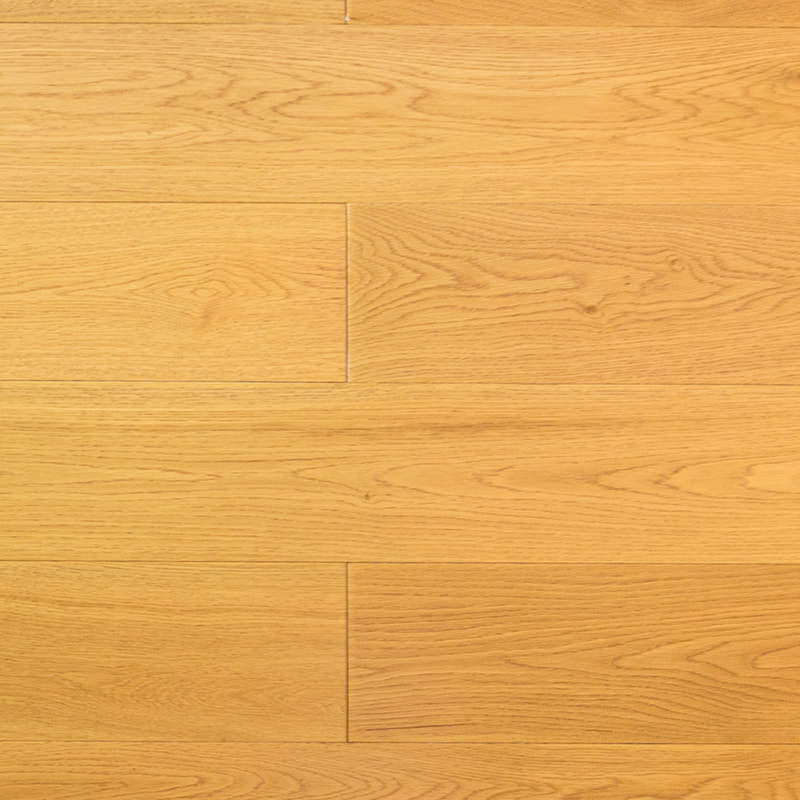
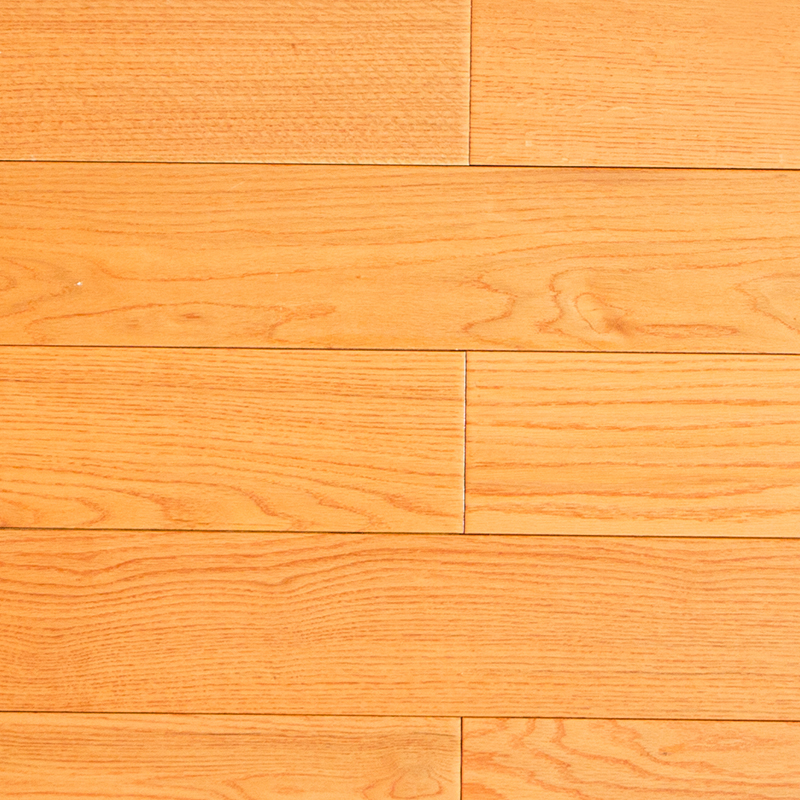
Although SCQ09 is presented in light gray oak, color development can be adjusted for different design programs. Custom colors may help distributors create a private-label collection or allow architects to coordinate the floor with a specific interior palette. The ability to customize also supports hotel projects, residential developments, retail environments, and branded commercial spaces that need a consistent visual identity.
Veneer grades can be customized as AB, ABC, ABCD, or CD. Different grades allow buyers to select the level of natural variation, knots, mineral streaks, and tonal character appropriate for the project. A cleaner grade may suit premium minimalist interiors, while a more character-rich grade may be preferred for rustic, industrial, or Wabi-sabi designs.
The available surface finish options include UV lacquer, UV oil, and hardwax oil. Each finish creates a different balance of appearance, tactile quality, maintenance behavior, and project positioning.
UV lacquer forms a protective surface layer that supports resistance to everyday wear and scratching. It can be suitable for busy residential areas, offices, and other spaces where routine traffic is expected. The listed product structure includes a seven-layer UV coating option, giving the floor an additional protective focus.
UV oil can preserve a more natural visual impression while adding surface protection. It may be selected when the project requires an oiled appearance together with the efficiency of factory-applied curing technology. Hardwax oil can provide a tactile, low-gloss finish that emphasizes the natural feel of the oak surface and works well in understated interiors.
Surface texture can also be customized. Options include wire brushing, hand scraping, and smooth sanding. Wire brushing can emphasize the grain and create a more tactile appearance. Hand scraping can provide a handcrafted effect with greater visual character. Smooth sanding offers a cleaner, more uniform look suitable for contemporary and minimalist applications.
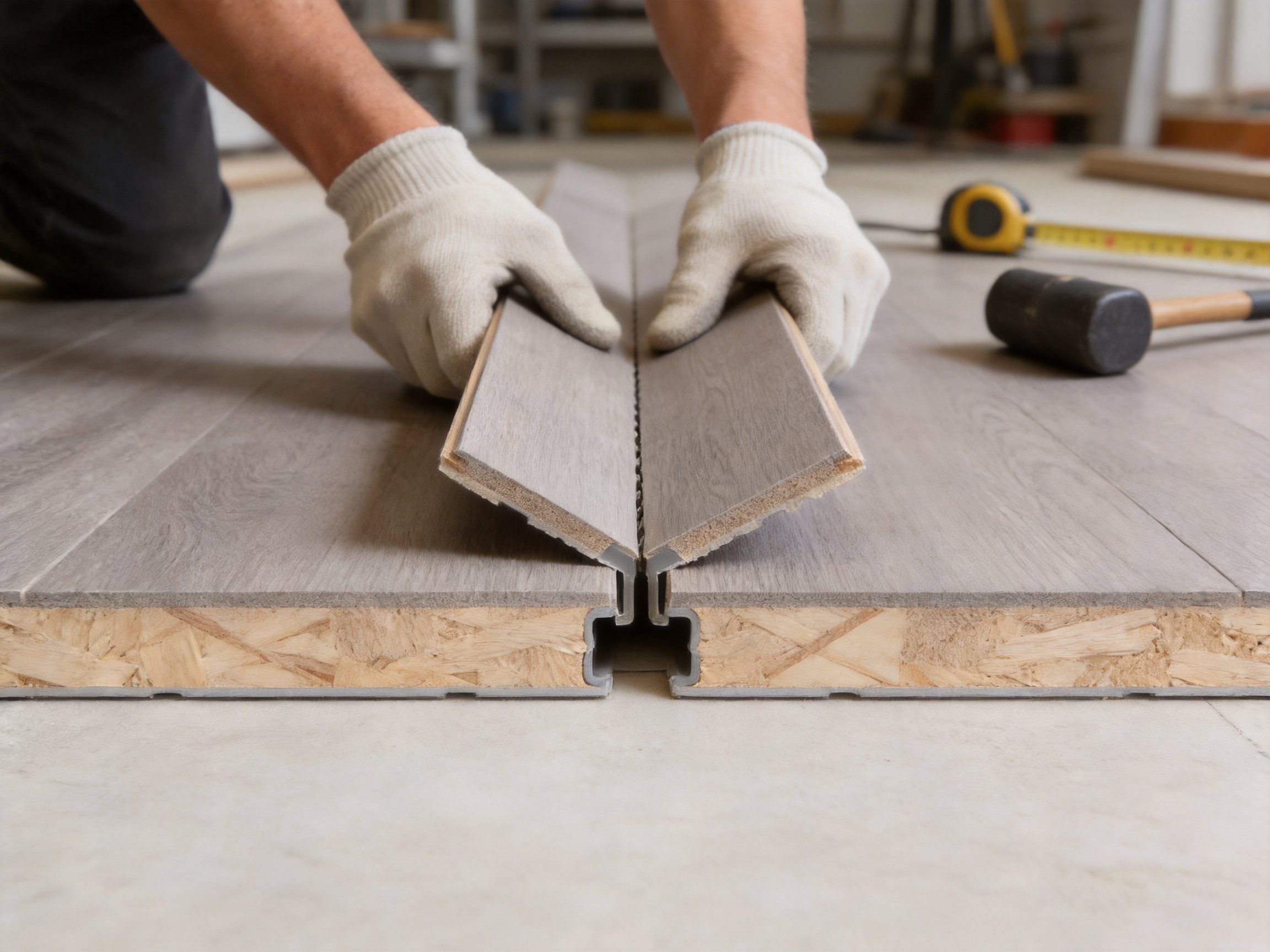
Installation quality has a direct impact on the final appearance and service performance of any wood floor. SCQ09 uses a round lock click system designed to create secure joints between adjoining boards. The click connection supports efficient installation and helps maintain a clean, continuous surface.
Compared with traditional tongue-and-groove systems that may require more adhesive or mechanical fastening, a click system can simplify the installation workflow. It can reduce assembly time in suitable applications and help installers achieve more consistent board alignment. The actual installation method should always be determined by the site conditions, subfloor requirements, local building practices, and project specifications.
The flooring supports floating, glue-down, and staple installation. A floating installation may be appropriate for certain residential projects where speed and future accessibility are important. Glue-down installation can provide a more fixed feel and may be selected for areas where sound control or movement reduction is a priority. Staple installation can be suitable when the subfloor and construction method allow mechanical fastening.
Proper subfloor preparation remains essential regardless of the chosen method. The subfloor should be clean, structurally sound, level, and appropriately dry. Expansion allowances should be provided around walls, fixed objects, and other boundaries. The flooring should also be acclimatized according to the manufacturer’s technical instructions and the environmental conditions of the installation site.
The micro-beveled edges help define individual planks after installation. This can make minor natural variations less visually noticeable and add a subtle plank-by-plank rhythm to the floor. When combined with the light gray color and natural grain, the profile creates an appearance that is refined without being overly formal.
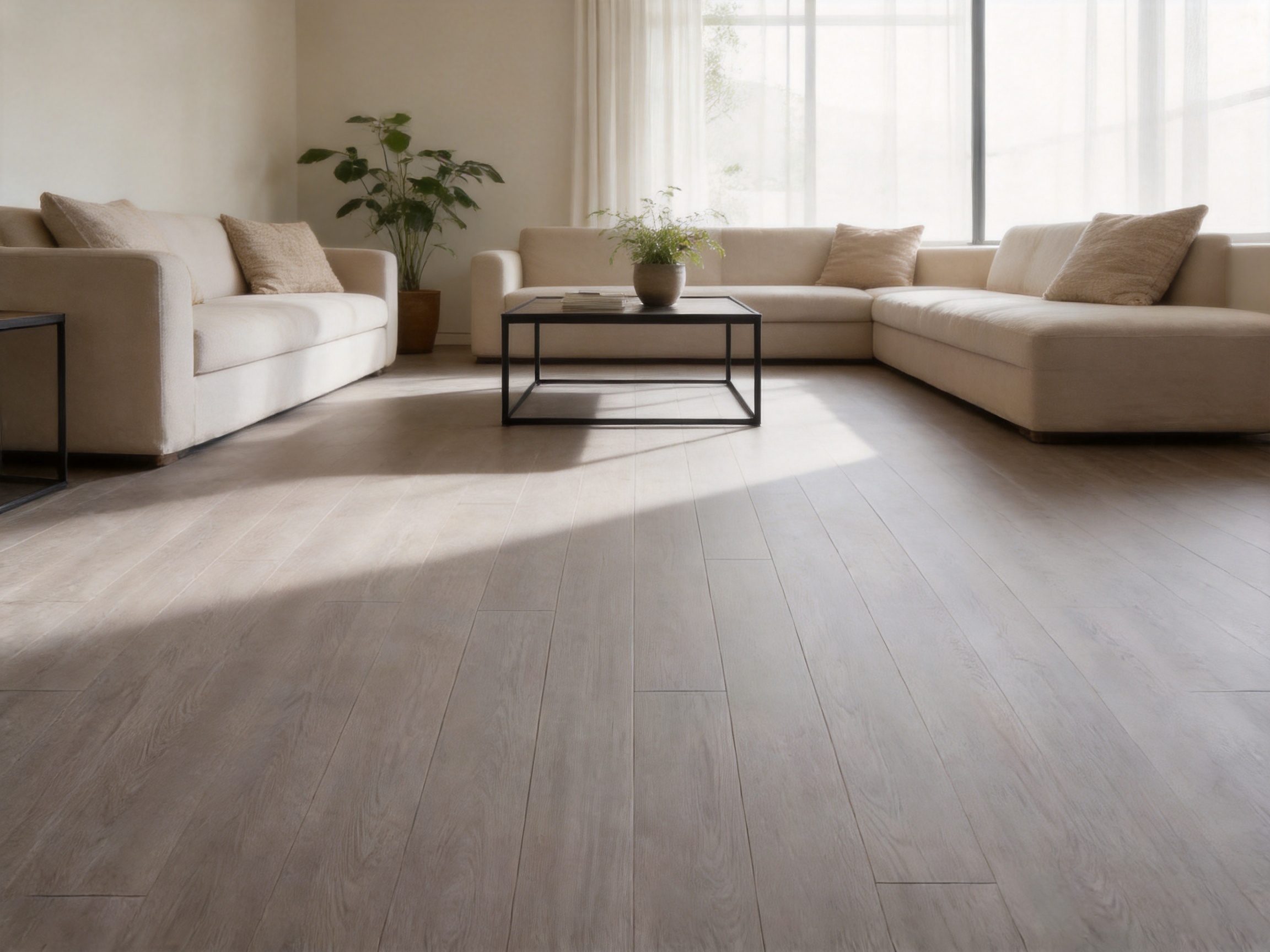
Wood flooring in real interiors must tolerate regular walking, furniture movement, cleaning, and changes in indoor conditions. SCQ09 is specified with a seven-layer UV coating option designed to improve resistance to wear and scratches during daily use. The coating helps protect the decorative oak veneer while supporting a consistent appearance over time.
Protective coating performance depends on the complete flooring system, including the selected finish, veneer preparation, curing process, installation quality, furniture protection, and cleaning routine. No wood floor is completely immune to scratches or surface wear. However, a properly applied factory finish can provide a more uniform and reliable protective layer than an inconsistent site-applied coating.
For routine care, the recommended approach is simple cleaning with a dry cloth or suitable dry mop. Excess water should be avoided because standing moisture can enter joints or affect the wood structure. Harsh cleaning agents, abrasive tools, steam cleaning, and excessive scrubbing may damage the finish and should not be used unless specifically approved for the selected surface system.
Indoor humidity should be controlled as part of normal building maintenance. A dry, well-ventilated environment helps preserve the quality of the wood floor. Prolonged exposure to high humidity, leaks, wet cleaning, or uncontrolled moisture can affect any wood-based product. Promptly removing spills and maintaining appropriate ventilation are practical ways to support long-term performance.
Place protective pads beneath furniture legs, especially beneath chairs and tables that move frequently. Use entrance mats to limit the amount of sand and grit carried onto the floor. Avoid dragging heavy furniture directly across the surface. If furniture must be moved, lift it whenever possible or use clean protective boards and suitable moving pads.
Daily dust and loose particles can act as abrasives when walked across the surface. Regular dry cleaning helps preserve the finish and reduces the risk of fine scratching. When damp cleaning is necessary, use a carefully wrung cloth and avoid leaving visible moisture on the floor.
Direct sunlight can gradually influence the color of natural wood. Curtains, blinds, ultraviolet-control glazing, or changes in furniture placement can help reduce uneven exposure. Some tonal development is a normal characteristic of real wood and should be considered part of the material’s natural aging process.
SCQ09 is well suited to bedrooms, living rooms, dining areas, studies, and private home offices. Its soft light gray tone can make bedrooms feel quiet and restful, particularly when paired with natural textiles, simple furniture, and warm indirect lighting.
In living rooms, the oak texture introduces warmth without visually dominating the space. It can support both light and dark furniture schemes, from pale upholstered seating to walnut tables or black metal shelving. The neutral base also allows rugs and artwork to provide controlled color accents.
In a study or home office, the floor can create a clean and focused background. The natural wood surface offers a more comfortable visual atmosphere than a highly reflective hard surface, while the engineered construction provides a practical solution for everyday use.
For apartments and modern housing developments, the standard plank dimension can help create a balanced visual rhythm across open-plan areas. The click profile can also support efficient installation schedules, which may be valuable when multiple units need to be completed within a defined construction program.
Commercial environments require flooring that combines design quality with repeatable supply and specification flexibility. SCQ09 can be considered for boutique offices, executive rooms, private clinics, meeting rooms, hospitality interiors, showrooms, and selected retail spaces.
In office environments, the light gray oak appearance can create a professional but approachable atmosphere. It complements glass partitions, neutral upholstery, natural stone, and painted metal. In meeting rooms and executive areas, the real wood surface can communicate warmth and quality without appearing excessively decorative.
In hospitality projects, the floor can help establish a calm, refined guest experience. Its Wabi-sabi and minimalist compatibility makes it suitable for boutique hotels, wellness spaces, restaurants, and private dining areas where natural materials are central to the design concept.
For architects and interior designers, customization is an important advantage. The ability to select veneer species, veneer grade, thickness, finish, surface texture, color, and dimensions allows the product to be adapted to a broader range of design briefs. A single manufacturing partner can therefore support multiple collections or project zones while maintaining a consistent technical foundation.
Commercial buyers should confirm the required performance classification, fire-related requirements, acoustic expectations, slip considerations, and maintenance program for each project. Product selection should be coordinated with the full building specification and local regulations.
Suzhou Dicosbo Wood Co., Ltd. is a wood solutions manufacturer specializing in wood flooring, wooden doors, and custom cabinet solutions. Established in 1999, the company has developed more than two decades of experience in wood product manufacturing and international supply.
The company operates approximately 20,000 square meters of production facilities and has more than 10 years of export experience. Its customer base includes partners across Europe, North America, and Southeast Asia. This international orientation is important for buyers who need experience with export documentation, packaging standards, project communication, and cross-border quality expectations.
Reported annual capacity includes approximately 2,400,000 square meters of flooring and 5,000 sets of doors. Such capacity can support distributors, contractors, developers, and architectural procurement teams that require stable supply over repeated orders. Capacity alone does not guarantee product quality, but it can provide a stronger foundation for production planning and volume projects when combined with process control.
The use of German imported production lines supports accurate processing and repeatability in key manufacturing stages. Engineered flooring requires precise cutting, bonding, pressing, sanding, profiling, finishing, and packaging. Dimensional variation at any of these stages can affect installation quality and final appearance.
Modern production equipment helps control board dimensions, veneer preparation, core assembly, surface treatment, and locking profile machining. Automated or semi-automated processes can reduce dependence on inconsistent manual operations while improving production efficiency. The goal is to create boards that fit together reliably and maintain a consistent visual standard across an order.
Production technology is particularly important for customized products. When a customer specifies a particular veneer thickness, finish, texture, edge detail, or color, the factory must be able to reproduce the specification accurately. A capable production line allows customized orders to remain manageable rather than treating each order as an entirely new manufacturing challenge.
Automated quality control systems help identify and reduce variations during production. For engineered flooring, quality checks may include board dimensions, flatness, surface appearance, coating consistency, locking accuracy, bonding integrity, moisture condition, and packaging protection.
Automated systems are most effective when combined with trained technical personnel and documented inspection standards. The manufacturer reports a strict three-step quality inspection process. A multi-stage approach can help detect problems before boards reach the next manufacturing stage and before finished cartons are released for shipment.
For professional buyers, a defined inspection process provides greater confidence than a general statement that products are checked. Buyers may also request inspection records, approved samples, technical data, production photographs, or pre-shipment inspection arrangements according to project requirements.
DEIF offers OEM and ODM customization and reports a 72-hour rapid prototyping capability. Rapid prototyping can be valuable for designers and distributors who need to review a new color, texture, veneer combination, or surface finish before committing to a larger production order.
For a private-label flooring collection, the development process may include selecting the wood species, defining the grade, matching the target color, confirming the surface texture, choosing the finish, preparing samples, and reviewing packaging or labeling. A responsive prototype process can shorten the time between initial concept and commercial evaluation.
ODM support can also help customers develop a product with a distinctive market position. Rather than selecting only from an existing catalog, buyers can collaborate with the manufacturer on a coordinated specification. This may be particularly useful for regional distributors, residential developers, hospitality groups, and design brands that need an exclusive or semi-exclusive product range.
The product information identifies EU CE and FSC certification support, together with ISO-related manufacturing credentials. The company also states that its products comply with CE, FSC, CARB P2, and ISO 9001 standards. The exact certification scope, certificate validity, product coverage, and applicable test reports should be confirmed for each order and market.
CE-related documentation can be relevant when products are supplied into applicable European construction and product contexts. FSC certification is associated with responsible forest management and chain-of-custody requirements when the relevant materials and supply chain are covered by valid certification. ISO 9001 relates to quality management systems and can support a more structured approach to process control.
CARB P2 compliance is particularly relevant for formaldehyde emission requirements in certain markets and applications. Buyers should request current documentation and verify that the specific flooring construction, adhesive system, surface finish, and production batch are covered by the applicable test evidence.
Responsible sourcing is increasingly important to architects, developers, retailers, and end users. A genuine wood surface combined with an engineered core can support efficient material use, while responsible certification and controlled manufacturing can provide additional assurance. Environmental performance should be evaluated through the complete product life cycle, including raw materials, adhesives, finishes, packaging, transportation, installation, maintenance, and end-of-life considerations.
SCQ09 offers several advantages when compared with common alternative flooring categories, although the most appropriate choice depends on the project’s budget, use conditions, and technical requirements.
Compared with many solid wood floors, the three-layer engineered structure offers improved dimensional stability and can be more adaptable to normal changes in indoor temperature and humidity. It also uses a hardwood veneer over a structured core, which can reduce the amount of premium oak required for the overall board.
Compared with laminate flooring, SCQ09 provides a real oak veneer rather than a printed decorative layer. This gives the surface authentic wood grain, natural tonal variation, and a more tactile material presence. Laminate may offer advantages in certain cost-sensitive or high-abrasion applications, but it does not provide the same type of genuine wood surface.
Compared with thin multi-layer products, the three-layer construction can offer a substantial and stable board structure. Compared with some basic engineered floors, the available veneer thickness, finish options, texture choices, click system, and customization program provide greater flexibility for design and procurement.
Compared with site-finished flooring, factory-applied UV lacquer, UV oil, or hardwax oil can provide a more controlled and consistent finish. Factory finishing can also reduce the amount of finishing work required at the project site, supporting faster completion and more predictable appearance.
| Comparison Factor | SCQ09 Three-Layer Oak Flooring | Typical Solid Wood Flooring | Typical Laminate Flooring |
| Surface Material | Real sliced oak veneer | Solid timber throughout | Printed decorative layer |
| Dimensional Stability | Improved through cross-laminated construction | More sensitive to environmental movement | Generally stable, depending on construction |
| Design Flexibility | Custom species, grades, colors, finishes, and textures | Depends on available solid timber products | Usually based on printed pattern collections |
| Installation Methods | Floating, glue, or staple | Often site and subfloor dependent | Commonly floating, depending on product |
| Natural Material Character | Visible real wood grain and variation | Strong natural character | Pattern-controlled visual effect |
| Factory Finish Options | UV lacquer, UV oil, or hardwax oil | Varies by product | Factory decorative and protective layer |
Before ordering SCQ09 or a customized version, buyers should confirm the intended application, expected traffic level, installation method, subfloor type, indoor climate, and local regulatory requirements. Sample approval is recommended because natural wood varies in grain, color, knots, and texture.
The approved sample should identify the selected veneer species, grade, color, finish, texture, bevel detail, board dimensions, locking profile, and packaging format. If the product is part of a larger project, the buyer should also establish acceptable variation limits and procedures for handling natural material differences.
For container or project orders, packaging should protect the boards from impact, dust, and moisture during handling and transportation. Carton markings should identify the product code, dimensions, quantity, batch details, and any installation or storage instructions required by the buyer.
Storage before installation is also important. Cartons should be kept flat in a clean, dry, and ventilated area. They should not be placed directly on damp floors or exposed to rain, condensation, or uncontrolled temperature changes. Acclimatization should follow the manufacturer’s written instructions and the conditions of the installation site.
Distributors should consider whether the standard 48.0-inch by 7.7-inch format is suitable for their market or whether a custom size would be more appropriate. The manufacturer can discuss customized dimensions and colors for specific collections or projects.
A successful installation begins with an appropriate subfloor. The surface should be stable, level, clean, and dry. Moisture testing should be carried out using a method suitable for the subfloor type. Any structural or moisture problems should be corrected before the wood flooring is delivered or installed.
The flooring should be inspected before installation. Boards with visible damage, abnormal defects, or incorrect specifications should be separated and reported before they are installed. Once boards have been permanently installed, claims related to visible pre-installation defects may be more difficult to resolve.
Expansion allowances should be provided at the perimeter and around fixed structures. The required allowance depends on the room size, environmental conditions, installation method, and local practice. Doorways, transitions, heating systems, and large open areas may require additional planning.
After installation, maintain a stable indoor environment. Sudden changes in humidity can increase stress on wood flooring. Heating, ventilation, and air-conditioning systems should be operated in a way that avoids prolonged extremes. In regions with very dry winters or humid summers, humidity control may be necessary.
Routine cleaning should be gentle and controlled. Dry sweeping or vacuuming with a suitable floor attachment can remove particles. Use only approved cleaning products and avoid soaking the surface. Spills should be removed promptly, particularly near joints and edges.
Professional flooring buyers often need more than an attractive sample. They need a manufacturer capable of maintaining specifications, communicating clearly, delivering consistent quality, and supporting customization. SCQ09 is positioned to meet these needs through a combination of natural oak design, engineered construction, flexible options, and organized production capabilities.
The product’s light gray color gives it a strong design identity without limiting its use to one narrow style. The three-layer core addresses dimensional stability, while the click system supports practical installation. The finish and texture options allow the same technical platform to be adapted for different market segments.
DEIF’s experience in flooring, doors, and custom cabinets also gives it a broader understanding of interior woodwork. This can be valuable when a project requires coordination between floors, doors, wall elements, and cabinetry. A supplier with multiple wood product categories may help simplify procurement and improve visual consistency across an interior program.
The company’s reported production capacity, export experience, certification portfolio, rapid prototyping service, and three-step quality inspection process provide a foundation for international cooperation. Buyers should still complete their own technical review, request current documentation, and confirm the exact specification before placing a production order.
SCQ09 is a three-layer engineered wood flooring product with a natural oak veneer surface, a spruce or pine core, a light gray color direction, and a round lock click system.
Yes. The surface is made from sliced natural wood veneer. Oak is the featured surface species for this product, with other species available for customized orders.
The listed standard dimensions are 48.0 inches long, 7.7 inches wide, and 5/8 inch thick. Custom dimensions may be discussed for specific projects.
Yes. The manufacturer indicates that colors can be customized. The final color should be confirmed through an approved physical sample because natural wood and surface finishes can vary.
Veneer thickness can be customized. Listed options range from approximately 2 millimeters to 6 millimeters, including 2, 3, 4, and 6 millimeters.
The three-layer core uses spruce or pine. The cross-laminated structure is intended to improve dimensional stability and reduce the risk of deformation and cracking under normal conditions.
The product supports floating, glue-down, and staple installation. The correct method depends on the subfloor, project conditions, local requirements, and the installer’s technical assessment.
Available finish options include UV lacquer, UV oil, and hardwax oil. The product information also identifies a seven-layer UV coating option for wear and scratch resistance.
Yes. Available texture options include wire brushed, hand scraped, and smooth sanded. The selected texture should be approved with a physical sample before production.
Yes. The soft light gray tone and visible oak grain are well suited to modern minimalist, contemporary, Nordic-inspired, and Wabi-sabi-style interiors.
It can be considered for bedrooms, living rooms, studies, home offices, commercial offices, meeting rooms, hospitality interiors, showrooms, and other suitable residential or project-based applications.
Routine cleaning should use a dry cloth, dry mop, or suitable vacuum attachment. Avoid excess water, harsh chemicals, abrasive tools, and steam cleaning unless specifically approved for the selected finish.
Use entrance mats, protective furniture pads, and suitable floor protectors. Do not drag heavy furniture across the surface, and remove spills promptly.
Yes. The company provides OEM and ODM customization, including options for species, grade, veneer thickness, surface finish, texture, color, and dimensions.
The provided information identifies CE, FSC, ISO 9001, and CARB P2 compliance or certification support. Buyers should request current certificates and confirm that the specific product specification is covered.
Buyers should request physical samples, technical specifications, certification documents, packaging information, inspection procedures, and a written confirmation of the approved production standard before placing a larger order.
3-Layer Oak Light Gray Natural Texture Round Lock Engineered Wood Flooring provides a balanced combination of authentic oak appearance, engineered stability, installation flexibility, and customization potential. Its soft gray tone supports calm and contemporary interiors, while the visible grain preserves the warmth and individuality of natural wood.
The three-layer spruce or pine core is designed to reduce the movement associated with changing environmental conditions. The round lock click system supports efficient installation, and the available floating, glue-down, and staple methods give contractors flexibility. UV lacquer, UV oil, hardwax oil, wire brushing, hand scraping, smooth sanding, and multiple veneer grades allow the product to be adapted to different design and performance expectations.
For professional buyers, the product is strengthened by the manufacturing capabilities of Suzhou Dicosbo Wood Co., Ltd. The company combines long-term wood industry experience, international export activity, German imported production lines, automated quality control, OEM and ODM support, rapid prototyping, and a reported three-step inspection process. Its flooring capacity and broader interior woodwork portfolio make it suitable for distributors, contractors, architects, developers, and design-led project teams.
When correctly specified, installed, and maintained, SCQ09 can provide a durable and visually adaptable flooring solution for residential and commercial interiors. Its combination of natural material character and engineered performance makes it a practical alternative for projects seeking more than a basic floor covering.
1. Product Technical Information for SCQ09 Three-Layer Oak Light Gray Natural Texture Round Lock Engineered Wood Flooring.
2. Manufacturer Product Specifications: Veneer Options, Core Construction, Surface Finishes, Textures, Dimensions, and Installation Methods.
3. General Wood Flooring Installation and Maintenance Principles for Engineered Timber Floors.
4. European Conformity and Construction Product Documentation Principles.
5. Forest Stewardship Council Chain-of-Custody and Responsible Wood Sourcing Principles.
6. ISO 9001 Quality Management System Principles.
7. CARB Phase 2 Formaldehyde Emission Compliance Principles for Composite Wood Products.
8. General Architectural Material Selection Guidelines for Residential and Commercial Interior Flooring.

We provide customers with sustainable and eco-friendly
engineered wood solutions and services.
Choose DEIF for the perfect blend of
performance and aesthetics.
