


 English
 Español
 عربى


Get Social
Choose DEIF for the perfect blend of
performance and aesthetics.
 Get Free Sample

Content
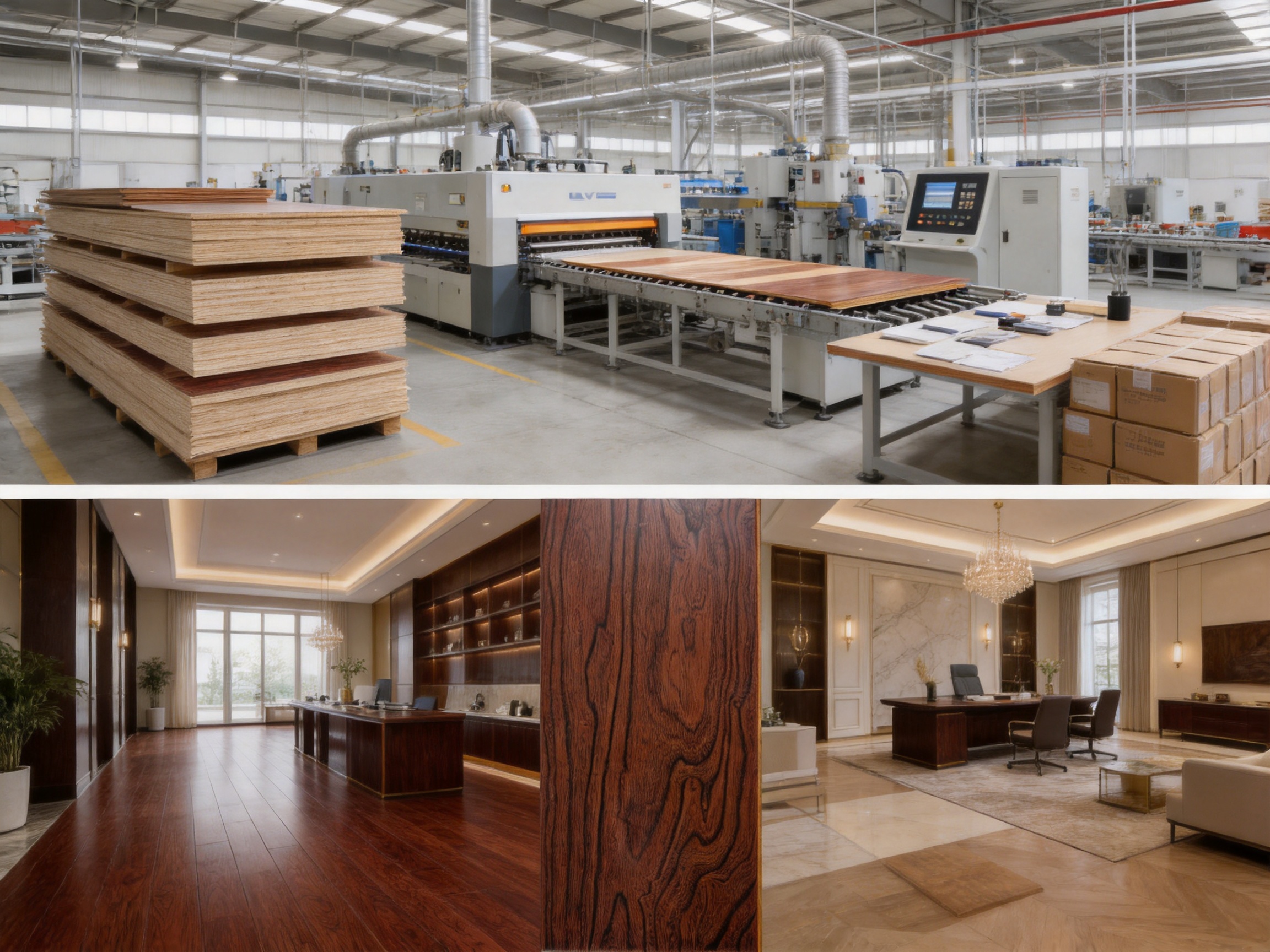
Flooring is one of the most influential elements in an interior. It covers a large visual area, supports daily activity, affects acoustic and thermal comfort, and contributes to the long-term character of a room. For this reason, choosing an engineered wood floor requires more than selecting an attractive color. The construction of the board, the quality of the surface veneer, the stability of the core, the coating system, the installation profile, and the manufacturer’s quality controls all influence the final result.
The Multi-Ply Ebony Dark Brown Black Grain Smooth Surface Click Engineered Wood Flooring, identified as DS-Y005, is designed to combine a refined natural appearance with the structural performance required for contemporary residential and commercial interiors. Its dark ebony-style veneer presents a rich brown foundation with distinctive black grain, while its multi-layer eucalyptus or birch plywood core provides dimensional stability. A smooth sanded surface, protective UV coating options, micro-beveled edges, and a click installation system complete a flooring solution intended for design-conscious projects.
This product belongs to the multi-ply engineered flooring category. Unlike solid wood boards, which are made from a single direction of natural timber, multi-ply engineered boards use several layers arranged to improve resistance to movement. This layered approach helps reduce the risks associated with seasonal humidity changes, including warping, cupping, deformation, and cracking. At the same time, the natural wood veneer preserves the visual warmth and authentic grain that designers and property owners expect from real wood flooring.
Manufactured by Suzhou Dicosbo Wood Co., Ltd., the flooring is supported by a broader wood products platform specializing in wood flooring, wooden doors, and custom cabinet solutions. The company combines OEM and ODM capabilities, automated quality control, imported production equipment, and a three-step inspection process to serve distributors, contractors, architects, and project owners in international markets.

Multi-Ply Ebony Dark Brown Black Grain Smooth Surface Click Engineered Wood Flooring
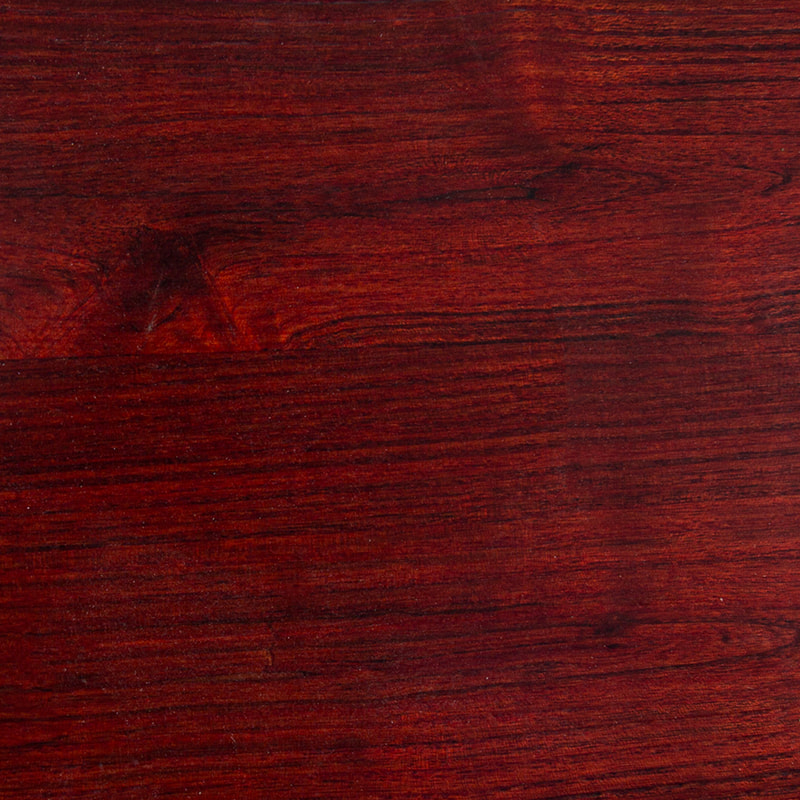
The first defining quality of DS-Y005 is its visual depth. The dark brown surface is enriched by black grain lines that create movement without overwhelming the room. Rather than appearing uniformly black, the floor maintains variations in tone and grain that reveal the natural character of the veneer. This balance allows it to function as a dramatic design feature while retaining the authenticity associated with natural timber.
The smooth surface emphasizes the delicacy of the grain. With fewer pronounced surface irregularities than heavily wire-brushed or hand-scraped flooring, a smooth finish creates a clean and polished appearance. It is particularly suitable for interiors where furniture, lighting, wall finishes, and architectural details need to remain visually coordinated. The flooring can support modern, minimalist, contemporary, luxury, and transitional design styles.
Dark wood flooring is often selected when a project requires an atmosphere of sophistication and permanence. In a private residence, the ebony-inspired tone can create a warm and intimate backdrop for bedrooms, studies, living rooms, dining rooms, and high-end entertainment areas. In commercial settings, it can help establish a refined identity in club lobbies, executive offices, boutique hospitality spaces, showrooms, and premium reception areas.
The black grain adds an important design advantage. A completely uniform dark surface may look artificial or visually flat, while natural grain variation introduces depth. The contrast between the deep brown field and darker grain details allows the floor to interact with both natural and artificial light. Under soft lighting, the board appears warm and elegant. Under brighter directional lighting, the grain becomes more prominent and creates a subtle linear rhythm across the floor.
Because natural veneer is used on the surface, each plank can display individual variations in grain structure, color intensity, and figure. These variations are not defects; they are part of the character of natural wood. Proper installation planning can distribute the tones evenly throughout a room or intentionally create a more expressive visual composition, depending on the design objective.
Wood is a hygroscopic material, meaning that it naturally exchanges moisture with the surrounding environment. When indoor humidity changes, wood can expand or contract. Solid wood flooring can perform successfully when correctly specified and installed, but its movement is influenced by the direction of the grain and the environmental conditions. Multi-ply engineered flooring addresses this behavior by constructing the board from several layers with alternating grain directions.
DS-Y005 uses a multi-layer eucalyptus or birch plywood core. These species are selected for their structural performance, reliable availability, and ability to form a stable engineered substrate. The layered core helps distribute internal stresses across the board. As one layer responds to humidity, adjacent layers with different grain orientations counterbalance some of that movement. The result is a floor designed to resist deformation more effectively than many single-piece wood boards.
Dimensional stability is particularly important in modern buildings. Homes and commercial spaces may be equipped with heating, air conditioning, underfloor systems, large windows, or mechanical ventilation. These features can create changes in temperature and relative humidity. A stable engineered structure is therefore valuable for maintaining tighter board connections and a more consistent appearance over time.
The multi-ply design also supports a range of installation methods. The product can be installed as a floating floor, fully glued to the subfloor, or secured with staples where the project and subfloor specification permit. This versatility gives flooring contractors greater freedom when responding to site conditions, building types, and project schedules.
Compared with lower-quality engineered boards, a carefully produced multi-ply floor can offer better resistance to cupping, twisting, and joint stress. The quality of the plywood, the bonding process, the moisture content of each component, and the accuracy of pressing are all important. The flooring’s performance is therefore not based only on the number of layers. It depends on how consistently those layers are selected, assembled, bonded, pressed, machined, and inspected.
The standard core for this multi-ply category is eucalyptus or birch plywood. Both materials can provide a strong foundation for the natural veneer surface. Eucalyptus is widely valued for its hardness, fast-growing supply characteristics, and structural suitability in engineered wood applications. Birch is appreciated for its uniformity, clean appearance in plywood construction, and dependable bonding performance.
The core configuration can be adapted according to project requirements. Thickness, layer arrangement, veneer species, veneer grade, finish, and surface treatment may be discussed during product development. This flexibility is particularly useful for distributors and project buyers who need a consistent product family with different visual options or technical specifications.
The provided standard dimensions are 48.0 inches by 6.8 inches by 5/8 inch. These proportions create a balanced plank format. The length is sufficient to establish a strong directional flow, while the width provides enough surface area for the ebony grain to be appreciated. The 5/8-inch thickness gives the board a substantial feel and supports a range of professional installation systems.
The visible surface is made from natural wood veneer. Available veneer thicknesses can range from 0.6 millimeters to 6.0 millimeters depending on the category and application, while the listed customization options include 2, 3, 4, and 6 millimeters. This range allows buyers to balance the desired appearance, budget, wear expectations, and future maintenance strategy.
A thicker wear layer may be considered for projects where long service life and future refinishing potential are priorities. A thinner veneer may be appropriate for applications where the flooring is carefully managed and the primary requirement is a natural wood appearance over a stable engineered base. The correct specification should be selected in consultation with the manufacturer and project team.
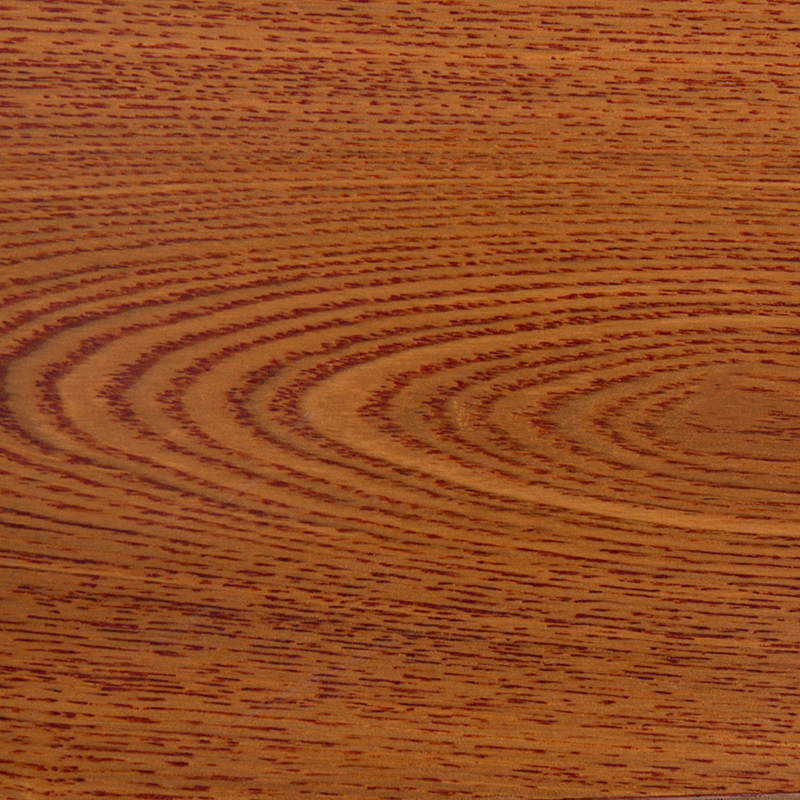
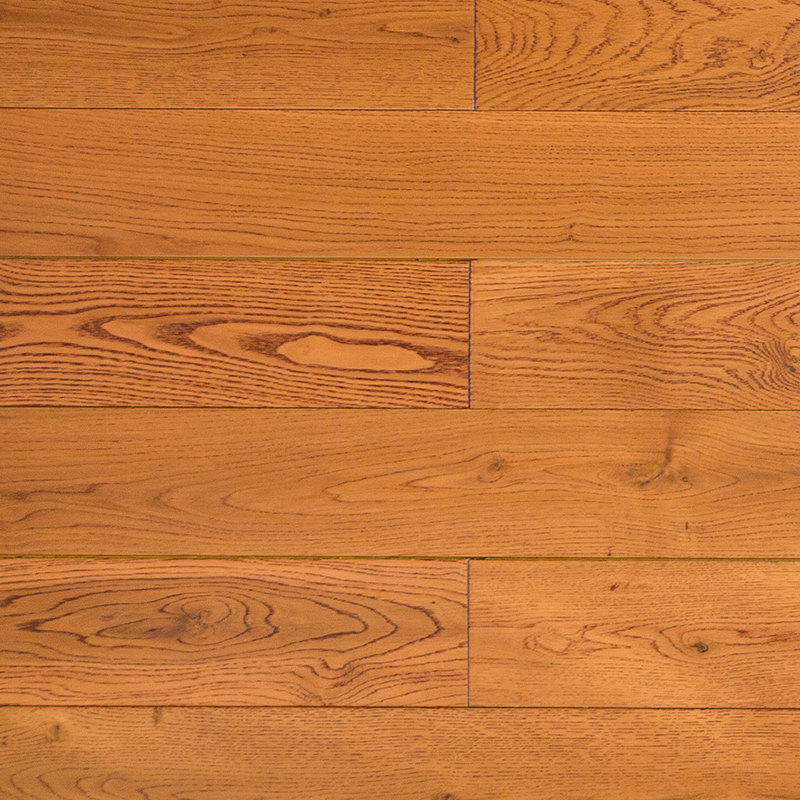
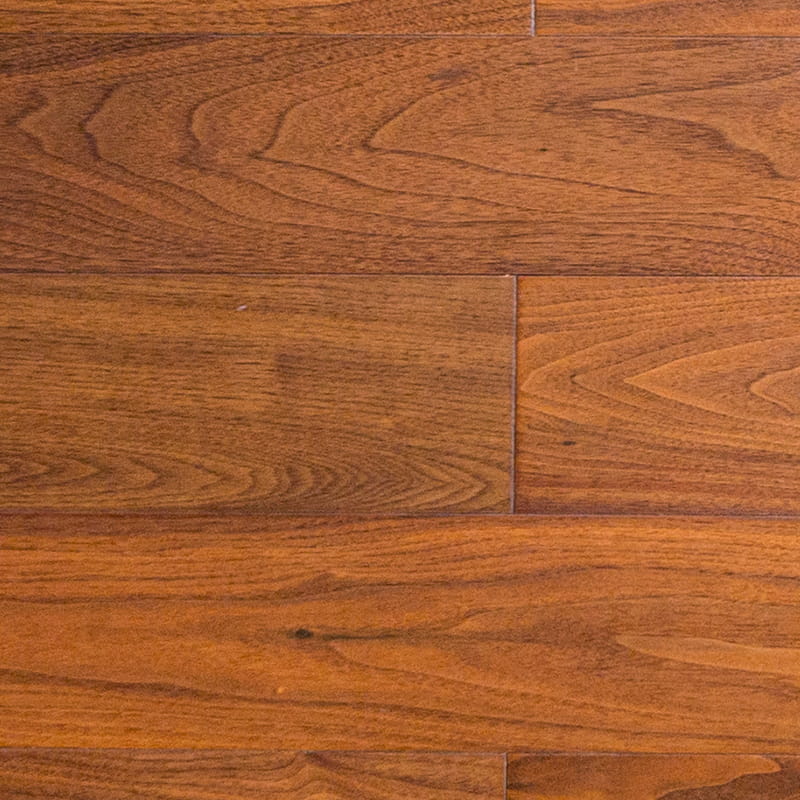
Although DS-Y005 is presented with an ebony dark brown and black grain appearance, the manufacturer can also support other face veneer options, including oak, walnut, ash, and teak. This enables the same multi-ply platform to serve several interior styles. Oak can provide a more familiar and versatile grain. Walnut can create a warm, premium appearance. Ash can offer a lighter and more open visual effect. Teak can introduce distinctive natural color and grain characteristics.
Veneer grades may be customized as AB, ABC, ABCD, or CD. These grades generally relate to the level of natural variation, knots, color differences, and other visual characteristics permitted on the face. A more uniform grade may be preferred for formal commercial interiors or minimalist residences. A more character-rich grade may be chosen for hospitality, rustic-modern, or nature-inspired environments.
The veneer cut is sliced veneer. Slicing reveals a broad representation of the timber’s natural grain and can create a consistent visual direction across a floor installation. As with all natural wood products, sample approval is recommended because actual boards will contain authentic variation that cannot be fully represented by digital images.
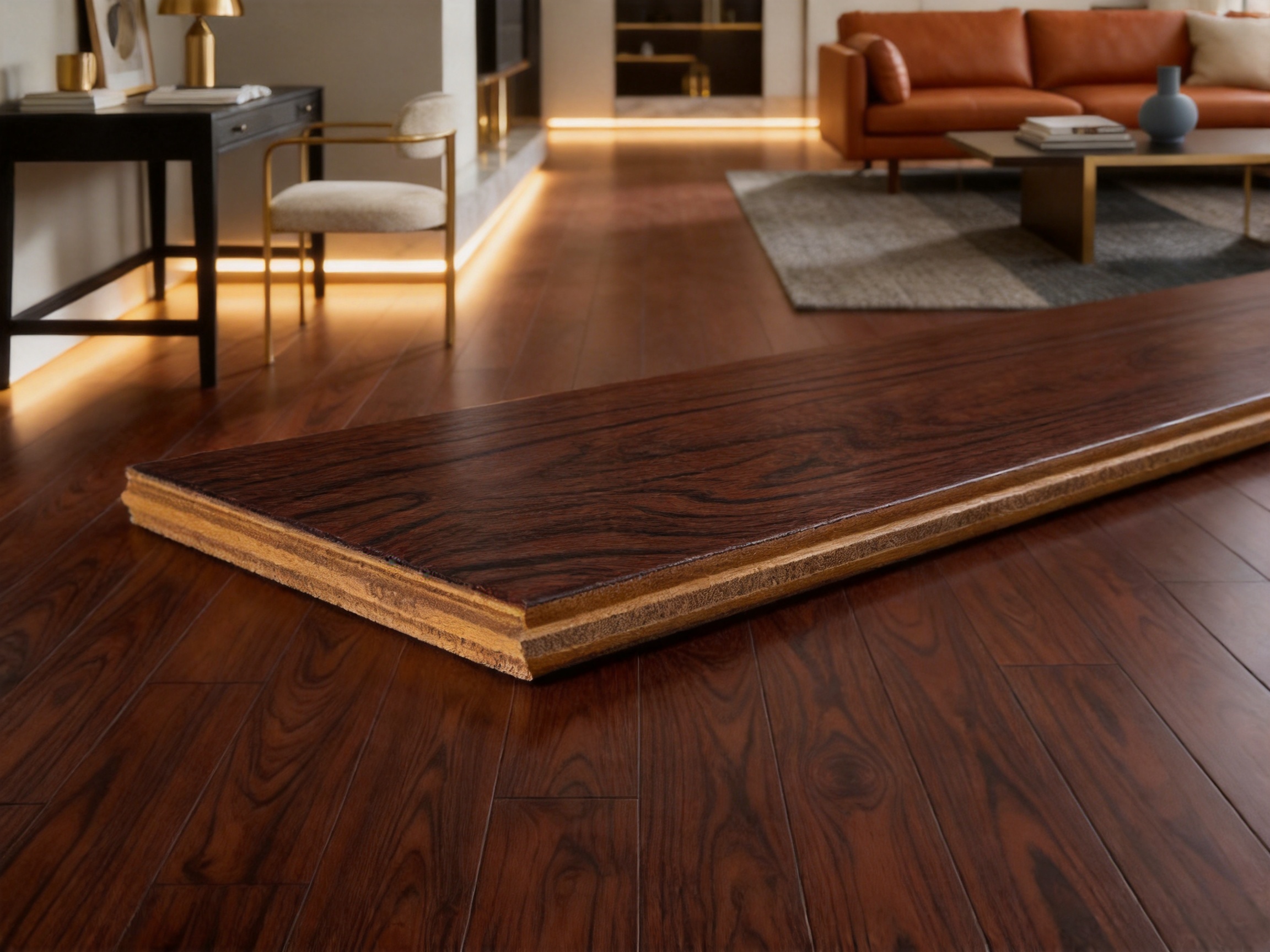
The standard product concept includes a smooth surface designed to show the natural grain clearly and provide a refined tactile experience. The surface finish can be customized as UV lacquer, UV oil, or hardwax oil. Each option creates a different balance of appearance, touch, maintenance, and repair characteristics.
UV lacquer forms a cured protective film over the wood surface. It can provide a consistent sheen, resistance to everyday abrasion, and a practical cleaning surface. For commercial projects where routine maintenance and appearance retention are important, a properly specified lacquer system can be an efficient choice.
UV oil combines oil-based visual qualities with ultraviolet curing technology. It can preserve a more natural-looking appearance while adding practical protection. The finish may emphasize the grain and provide a softer visual impression than a high-gloss lacquer, depending on the selected formulation and sheen level.
Hardwax oil is often selected for its natural tactile character and ease of localized maintenance. It allows the wood to retain a more open and authentic appearance. As with any finish, maintenance frequency depends on traffic, cleaning methods, entrance protection, furniture movement, and environmental conditions.
The product information describes a seven-layer UV coating for general-use configurations. This coating system is intended to improve resistance to wear and scratches during normal use. It does not make the floor completely immune to damage. Heavy impacts, sharp furniture legs, abrasive particles, standing moisture, and unsuitable cleaning chemicals can affect any natural wood surface. However, a carefully applied multi-layer finish provides a stronger protective barrier than an inadequately coated board.
The smooth sanded surface is also advantageous from a cleaning perspective. Dust and fine particles can be removed with a dry cloth, soft broom, or suitable vacuum attachment. The absence of deep texture makes routine cleaning straightforward and helps preserve the visual clarity of the dark surface.
Daily or regular cleaning should begin with the removal of loose dirt and grit. Small particles carried indoors on footwear can act as abrasives under foot traffic. Entrance mats, protective pads, and a regular cleaning schedule can reduce this risk.
A dry cloth or a lightly damp cleaning tool may be used according to the finish supplier’s recommendations. Excess water should be avoided. Wood flooring should not be saturated, and spills should be removed promptly. Strong alkaline cleaners, abrasive powders, solvents, and unapproved chemical products may damage the coating or alter the appearance of the veneer.
Waxing or finish maintenance may be considered every six to twelve months, depending on traffic and the selected surface system. The interval should be determined by the actual condition of the floor rather than applied mechanically to every project. Before using any maintenance product, the care instructions for the specific finish should be confirmed.
Direct sunlight can gradually affect the color of natural wood. Long-term exposure through large windows may contribute to fading or uneven color development. Curtains, blinds, solar-control glass, and rearrangement of rugs or furniture can help distribute exposure more evenly. Some color change is a natural part of wood aging, but proper shading can reduce extreme differences.
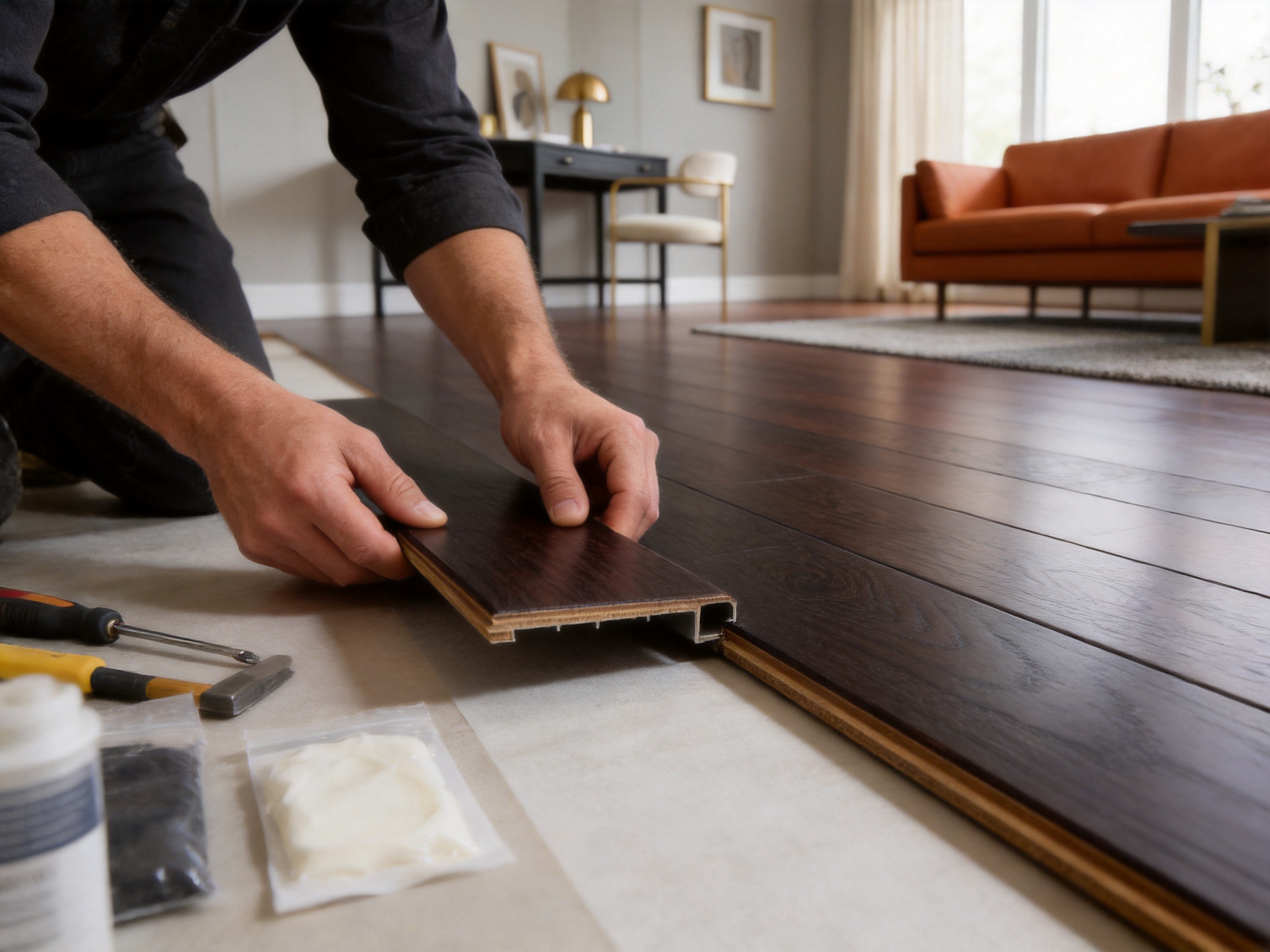
DS-Y005 uses a click system with a round arc locking profile. The locking design is intended to create secure connections between adjacent planks while simplifying installation. A well-machined profile supports alignment, reduces visible gaps, and helps installers work efficiently across larger areas.
Click flooring can be installed using floating, full-glue, or staple methods, subject to the recommendations of the manufacturer, the subfloor condition, local building requirements, and the selected project specification. The floating method can reduce installation time and may be useful where the project requires a comparatively clean and reversible process. Full-glue installation can improve acoustic performance and provide a firm connection to the subfloor. Staple installation may be appropriate for compatible wood subfloors and professional installation systems.
Installation should always begin with a suitable site assessment. The subfloor needs to be clean, sound, level, and sufficiently dry. Uneven areas may transfer stress to the boards and affect the final appearance. Moisture testing is also important, especially over concrete slabs or in areas where the floor is close to exterior walls or ground level.
Acclimatization is another important step. Engineered wood flooring should be stored and acclimatized according to the manufacturer’s instructions and the indoor conditions expected during use. Boxes should be protected from moisture and direct sunlight. Installation should not proceed until the site environment is suitable and other wet construction activities have been completed.
Expansion allowances should be provided around walls, columns, door frames, fixed cabinets, and other vertical obstructions. The exact requirement depends on board dimensions, room size, installation method, and climate. Professional installers should follow the technical instructions issued for the selected product configuration.
The click profile provides an advantage over boards requiring more complicated site joining. Faster assembly can reduce labor time and help maintain project schedules. Nevertheless, efficiency should not replace precision. Randomized end joints, correct board orientation, careful inspection of each carton, and protection of the completed floor remain essential.
| Specification | DS-Y005 Multi-Ply Engineered Flooring |
|---|---|
| Marketing collection | Multi-Ply Engineered Flooring |
| Standard dimensions | 48.0 inches × 6.8 inches × 5/8 inch |
| Face veneer | Ebony-style dark brown veneer with black grain; oak, walnut, ash, and teak options available |
| Veneer thickness | Customizable: 2 mm, 3 mm, 4 mm, or 6 mm; other category options may range from 0.6 mm to 6.0 mm |
| Core construction | Multi-layer engineered wood |
| Core material | Eucalyptus or birch plywood |
| Veneer grade | Customizable: AB, ABC, ABCD, or CD |
| Veneer cut | Sliced veneer |
| Surface finish | UV lacquer, UV oil, or hardwax oil |
| Surface texture | Smooth sanded as presented; wire-brushed and hand-scraped options may be customized |
| Edge profile | Micro-bevel on all four sides |
| Locking system | Click system with round arc locking profile |
| Installation methods | Float, full glue, or staple |
| Pieces per carton | 10 |
| Coverage per carton | 2.03 square meters or 21.85 square feet |
| Approximate carton weight | 24 kilograms |
The micro-bevel on all four sides adds definition to each plank. Rather than creating a completely seamless visual field, the bevel introduces a fine line between boards. This can help emphasize the plank format and support the appearance of a carefully crafted wood floor. On a dark surface, the effect can range from subtle to pronounced depending on lighting and the selected finish.
Not all engineered wood flooring is manufactured to the same standard. Products can vary significantly in veneer quality, core construction, bonding consistency, machining accuracy, coating thickness, and packaging protection. DS-Y005 is positioned to offer several advantages over basic or lower-specification alternatives.
The use of a real wood veneer gives the floor a natural grain structure and authentic variation. Printed laminate surfaces can reproduce the general appearance of timber, but they do not provide the same depth, touch, or individual board character. For projects where material authenticity contributes to the design concept, natural veneer is a significant advantage.
The eucalyptus or birch multi-ply core is designed to reduce the movement associated with changing environmental conditions. Compared with a single solid piece of wood of the same general format, cross-layer construction can provide improved dimensional control. This is valuable in rooms with heating, cooling, large glazed areas, or moderate seasonal humidity changes.
The option to select UV lacquer, UV oil, or hardwax oil allows the floor to be matched to the project’s design and maintenance strategy. A distributor may therefore offer different surface experiences from the same product platform. The choice can be based on sheen, tactile character, traffic expectations, and the preferences of the architect or property owner.
The click system supports faster installation and can reduce the dependence on specialized joining methods. Its compatibility with floating, glued, and stapled approaches also gives contractors more flexibility. This can be especially useful for renovation projects, phased commercial work, and developments with varied subfloor conditions.
Many standard flooring products are available only in fixed colors, grades, dimensions, and finishes. This product family supports customization in veneer species, veneer grade, veneer thickness, finish, texture, and color. Custom manufacturing allows project buyers to create a closer relationship between the floor and the wider interior specification.
The performance of engineered flooring begins long before the finished carton reaches a construction site. Manufacturing consistency is essential because small variations in moisture, adhesive application, pressing pressure, or machining can affect the floor’s stability and appearance.
Production starts with the selection of suitable veneer and core materials. Natural veneer should be checked for species, color, grain direction, thickness, and visual grade. Core layers should be inspected for density, structural integrity, moisture content, and surface quality. Material selection must balance appearance with technical performance.
Wood components require controlled moisture management. If veneer or plywood enters production with unsuitable moisture content, later changes may produce tension within the board. Conditioning and storage procedures help establish more consistent behavior during pressing, machining, packaging, transport, and installation.
The multi-ply structure is assembled by arranging layers in a controlled orientation. Adhesive application must be even and accurately dosed. Insufficient adhesive may weaken the bond, while excessive adhesive can affect pressing, weight, curing, or surface flatness. Industrial pressing equipment applies controlled pressure and temperature to create a stable panel structure.
The natural veneer is positioned over the engineered substrate with attention to grain direction, alignment, and bonding. This stage determines much of the finished product’s visual quality. Consistent veneer placement is particularly important for dark flooring, where irregular gaps, misalignment, or inconsistent cutting can be highly visible.
After the panel has stabilized, it is machined into individual planks. The edges are profiled to create the micro-bevel and click connection. Accurate machining is required so that boards connect correctly without excessive force or unwanted looseness. Dimensional tolerances should be monitored throughout production rather than checked only at the end.
The boards are sanded to create the smooth surface specified for DS-Y005. Sanding must be controlled carefully. Excessive removal can reduce veneer thickness or create unevenness, while insufficient sanding can affect finish adhesion and tactile quality. The prepared surface is inspected before coating.
The selected coating is applied in multiple controlled stages. The seven-layer UV coating concept provides successive protective layers designed to improve wear and scratch resistance. Ultraviolet curing helps the coating achieve a stable finish efficiently within the production line. The result should be a uniform surface with consistent sheen, coverage, and adhesion.
Finished boards are checked for appearance, dimensions, locking profile, surface defects, coating consistency, and packaging quantity. The company describes a strict three-step quality inspection process. Multi-stage inspection helps identify issues earlier and reduces the risk that nonconforming products will proceed to shipment.
Packaging is also important. Flooring can be affected by impacts, humidity, and handling during transport. Proper carton protection and organized palletization help preserve the boards until they arrive at the installation site. For international supply, production planning and packaging need to account for long-distance logistics and different climate conditions.
Suzhou Dicosbo Wood Co., Ltd. operates as a wood solutions manufacturer with experience in flooring, wooden doors, and custom cabinets. The company was founded in 1999 and has more than two decades of industry experience. Its production facilities cover approximately 20,000 square meters, providing a manufacturing base for customized and repeat-order programs.
The company reports more than ten years of export experience and serves over 100 global partners across Europe, North America, and Southeast Asia. This international orientation is relevant for buyers who require communication across different time zones, export documentation, packaging coordination, and product consistency between shipments.
Annual capacity is described as approximately 2,400,000 square meters of flooring and 5,000 sets of doors. Capacity at this level can support larger distributor programs, multi-phase property developments, hospitality projects, and architectural specifications that require repeatable supply. Capacity alone does not guarantee quality, but it can help a manufacturer organize production planning and allocate resources to long-term partnerships.
German imported production lines and automated quality control systems are used to support manufacturing accuracy. Automation can improve repeatability in processes such as panel pressing, machining, coating, and inspection. At the same time, natural wood products still require experienced personnel because veneer variation, grain quality, color matching, and visual grading cannot be evaluated solely by machines.
OEM and ODM customization is another important strength. OEM production allows buyers to specify products under their own brand or project program. ODM cooperation can involve the development of new colors, surface treatments, dimensions, packaging, or construction details. The company also reports a 72-hour rapid prototyping capability, which can help architects, distributors, and project teams evaluate a concept before committing to larger production quantities.
Compliance and certification are important considerations for international buyers. The company’s stated certifications and standards include EU CE, FSC, CARB P2, and ISO 9001. These qualifications can support procurement processes where documentation, responsible material sourcing, emissions control, and quality management are required. Buyers should request current certificates and confirm that the specific product configuration is covered by the relevant documentation.
The deep brown surface can create a calm, enveloping atmosphere in bedrooms. It pairs well with neutral textiles, warm metals, natural stone, cream-colored walls, and soft indirect lighting. The smooth finish is comfortable underfoot and provides a clean background for custom furniture and built-in cabinetry.
In open-plan homes, the long plank format can establish visual continuity between living, dining, and circulation spaces. The dark color can define the floor as a central design element while allowing lighter furniture and walls to create contrast. Area rugs may be used to organize seating zones without hiding the entire surface.
Commercial offices often need materials that communicate quality without appearing excessively decorative. Ebony-inspired flooring can support an executive atmosphere when combined with wood veneer walls, glass partitions, leather furniture, and restrained lighting. The click system and multiple installation options can assist with efficient fit-out scheduling.
Club lobbies, boutique hotels, private lounges, and premium reception spaces can use dark natural wood to create a strong first impression. The black grain introduces visual identity and can coordinate with stone, metal, textiles, and architectural lighting. For high-traffic applications, the selected finish and maintenance program should be reviewed carefully.
A refined floor can influence how products and displays are perceived. The dark background may make lighter furniture, fashion, artwork, and decorative objects stand out. However, display layouts should include protection for areas where heavy fixtures are installed or frequently moved.
Dark wood flooring is visually powerful, so the surrounding materials should be selected with balance. Light walls can create contrast and make the room feel more spacious. Warm neutral walls can produce a softer, more integrated appearance. Dark walls and dark furniture can create a dramatic interior, but adequate lighting and variation in texture are necessary to prevent the room from feeling visually compressed.
Metal finishes such as brushed brass, bronze, black steel, and satin nickel can all work with the ebony-inspired surface. The best choice depends on the desired atmosphere. Warm metals emphasize the brown undertones, while black metal creates a coordinated and contemporary appearance.
Natural stone, porcelain tile, textured fabrics, leather, and glass can be used to create contrast. A combination of smooth wood, rough stone, and soft textiles gives the interior sensory variety. Designers should also consider the direction of the planks. Laying boards parallel to the longest wall can emphasize length, while changing direction at thresholds can help distinguish functional zones.
Samples should be evaluated under the actual project lighting. Dark flooring may appear different in daylight, warm artificial light, and cool LED illumination. A sample should also be viewed alongside the intended wall paint, cabinetry, countertops, and furniture materials. Because natural veneer varies, approval should be based on a representative sample set rather than a single isolated board whenever possible.
Engineered flooring can contribute to responsible material use by placing a natural veneer over a structurally efficient core. This approach allows the appearance of premium timber to be achieved while using the face material more efficiently than a board made entirely from a single valuable wood species.
Responsible sourcing is especially important for international construction projects. FSC certification can provide support for procurement policies that require traceable and responsibly managed forest resources. Buyers should verify the validity and scope of certification for the particular supply chain and product order.
Long service life is also part of sustainability. A floor that remains attractive and structurally sound for many years can reduce the need for replacement. Stable multi-ply construction, protective coatings, suitable maintenance, and correct installation all contribute to service life. Sustainability should therefore be considered as a combination of material sourcing, manufacturing efficiency, product durability, maintenance, and end-of-life planning.
Low-emission requirements may also be relevant to residential and commercial projects. The company identifies CARB P2 and other international compliance credentials among its standards. Project teams should request the applicable test reports and confirm that adhesives, coatings, core materials, and finished flooring meet the requirements of the intended market.
Before placing an order, buyers should confirm the required plank dimensions, veneer thickness, grade, finish, color, texture, edge profile, locking system, packaging quantity, and installation method. Custom specifications should be recorded in an approved product sheet to reduce the possibility of misunderstandings between sampling and mass production.
Quantity calculations should include the net installation area plus a reasonable allowance for cutting, grading, room geometry, and future repairs. The appropriate allowance depends on the layout. Straight installations with simple rectangular rooms may require less extra material than rooms with angled walls, multiple doorways, curved features, or complex patterns.
Lead time should account for sample approval, color confirmation, production scheduling, inspection, packaging, export documentation, shipping, customs clearance, and site delivery. Early communication is particularly important for projects with fixed opening dates or phased installation schedules.
Storage conditions should be agreed with the contractor. Cartons should be kept flat, dry, protected from direct sunlight, and away from active construction moisture. The site should be ready before delivery whenever possible. If boards are delivered too early and stored in unsuitable conditions, even a well-manufactured product may be affected.
Multi-ply engineered flooring consists of a natural wood veneer bonded to several layers of engineered wood arranged for improved stability. Solid wood flooring is made from a single piece or single-direction timber structure. The multi-ply construction is designed to reduce movement caused by changes in humidity and temperature.
The product uses a natural wood veneer surface with an ebony-inspired dark brown and black grain appearance. Since natural veneer is used, each plank may show authentic differences in grain, tone, and figure.
Yes. Customization options include veneer species, veneer thickness, veneer grade, surface finish, surface texture, color, and dimensions. Oak, walnut, ash, and teak are listed as alternative face veneer options.
The product can support floating, full-glue, or staple installation, depending on the selected configuration, subfloor, project conditions, and professional installation recommendations.
The click system connects adjacent boards through a precisely machined locking profile. It is intended to simplify installation, improve alignment, and create tighter connections between planks.
It can be suitable for offices, luxury club lobbies, showrooms, hospitality interiors, and other commercial applications when the correct veneer thickness, coating, installation method, and maintenance plan are selected. Traffic levels and local project requirements should be evaluated before specification.
Routine cleaning should use a dry cloth, soft broom, or suitable vacuum attachment. Spills should be removed quickly, and excessive water or harsh cleaning agents should be avoided. Maintenance products should be compatible with the selected surface finish.
A general maintenance interval of six to twelve months is indicated, but the actual schedule depends on traffic, finish type, cleaning practices, and the floor’s condition. The finish supplier’s maintenance instructions should take priority.
Prolonged direct sunlight may cause natural wood to fade or change color unevenly. Window coverings, solar-control measures, and periodic rearrangement of rugs or furniture can reduce uneven exposure.
The company identifies EU CE, FSC, CARB P2, and ISO 9001 among its compliance and quality credentials. Buyers should request current documentation and verify the scope of each certification for the intended product.
The company offers OEM and ODM services, rapid prototyping, multiple wood product categories, automated quality control, imported production lines, international export experience, and stated annual flooring capacity of approximately 2,400,000 square meters.
The Multi-Ply Ebony Dark Brown Black Grain Smooth Surface Click Engineered Wood Flooring is designed for projects that require a strong combination of natural appearance, structural stability, installation flexibility, and customization. Its dark ebony-inspired veneer creates a sophisticated visual identity, while the multi-layer eucalyptus or birch core helps reduce the risks of deformation and cracking associated with changing environmental conditions.
The smooth sanded surface highlights the delicate grain, and the available UV lacquer, UV oil, and hardwax oil options allow the floor to be matched to different design and maintenance objectives. The micro-beveled four-sided profile adds plank definition, while the click system supports efficient floating, glued, or stapled installation according to project requirements.
Its advantages are strengthened by the manufacturing capabilities behind the product. Natural material selection, controlled bonding, precision machining, multi-layer UV coating, automated quality systems, and three-step inspection contribute to a consistent engineered flooring solution. The manufacturer’s experience in flooring, doors, and custom cabinets also supports coordinated interior woodwork programs.
For distributors, architects, contractors, and property developers, DS-Y005 offers a practical platform for refined residential interiors and premium commercial applications. When correctly specified, professionally installed, and properly maintained, it can provide the visual depth of natural wood with the stability and flexibility expected from modern engineered flooring.
1. Product specification and technical information for DS-Y005 Multi-Ply Engineered Flooring.
2. Manufacturer-provided information on veneer options, multi-layer eucalyptus and birch plywood construction, coatings, click profiles, packaging, and installation methods.
3. General principles of engineered wood flooring construction, dimensional stability, moisture management, and professional installation practice.
4. General guidance on natural wood veneer selection, visual grading, surface finishing, cleaning, and maintenance.
5. Manufacturer-provided company information concerning production capacity, export experience, OEM and ODM services, quality inspection, and compliance standards.
6. General procurement considerations for sustainable wood products, responsible sourcing, emissions documentation, and project-based material specification.

We provide customers with sustainable and eco-friendly
engineered wood solutions and services.
Choose DEIF for the perfect blend of
performance and aesthetics.
