


 English
 Español
 عربى
عربى

Get Social
Choose DEIF for the perfect blend of
performance and aesthetics.
 Get Free Sample

Content
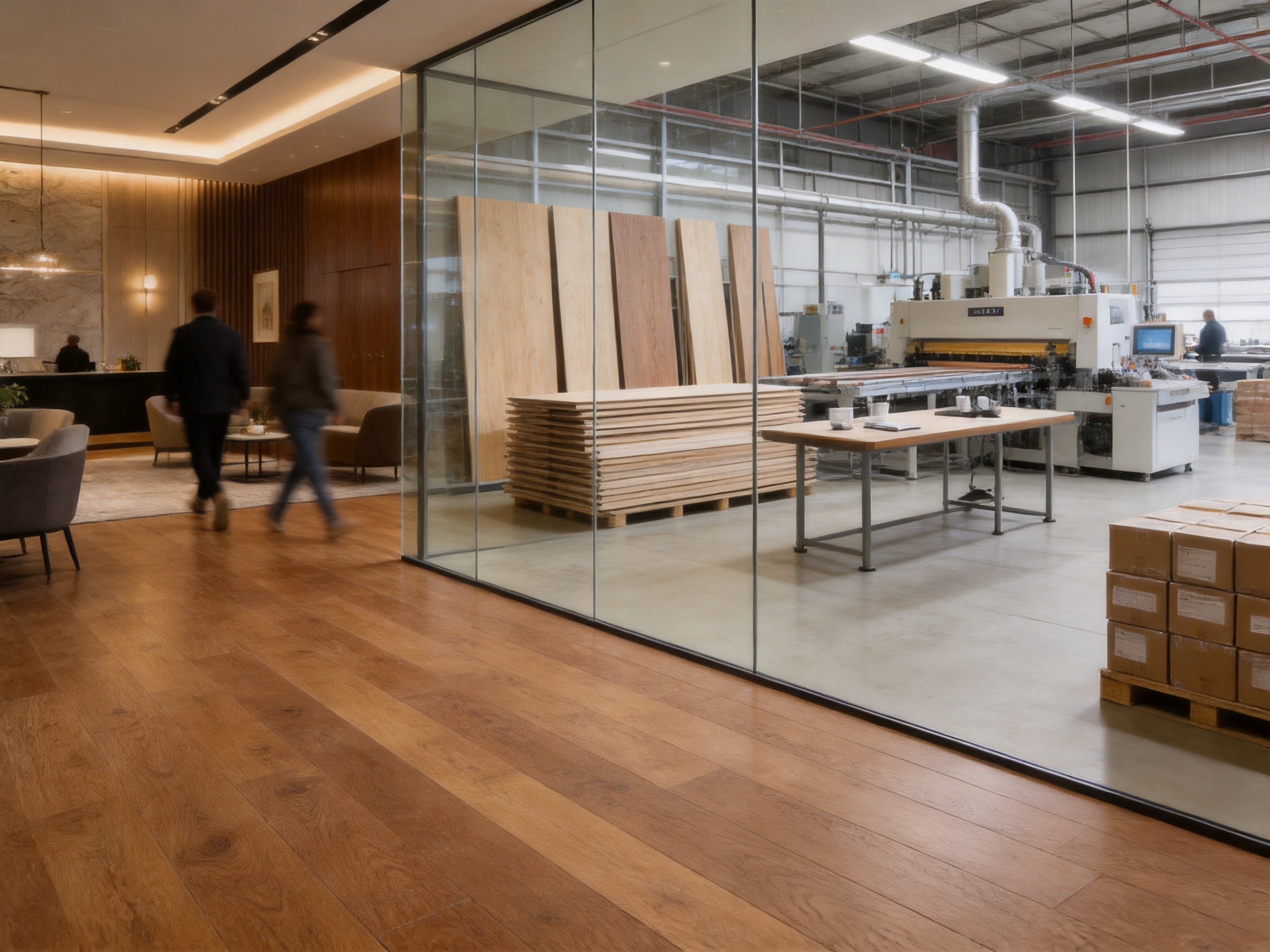
Wood flooring remains one of the most effective ways to add warmth, character, and long-term value to an interior. However, modern flooring buyers are no longer choosing products based only on color or appearance. They also want dimensional stability, reliable installation, responsible material sourcing, surface durability, design flexibility, and dependable supply. The DC-X1211 3-layer oak tan natural grain surface click engineered wood flooring is designed to address these requirements through a combination of authentic oak appearance, cross-laminated construction, precision manufacturing, and customizable specifications.
With its warm brown-yellow tone and visible oak grain, the flooring creates a refined natural atmosphere without appearing overly formal. It is suitable for modern light luxury interiors, contemporary residential spaces, new Chinese-style homes, hospitality environments, offices, retail locations, and other commercial projects where designers need both visual quality and practical performance. Its click-lock installation system, four-sided micro-bevel profile, and compatibility with floating, glue-down, and staple installation give contractors and project managers greater flexibility during installation.
The product is part of a broader wood solutions portfolio that includes wood flooring, wooden doors, and custom cabinets. Its manufacturing background combines more than two decades of experience, modern production equipment, export capability, and quality inspection procedures. This combination allows the flooring to serve not only individual residential buyers but also distributors, architects, contractors, developers, and project-based procurement teams.
The DC-X1211 is a three-layer engineered wood floor featuring an oak face veneer, a spruce or pine core, and a stable engineered construction. The standard listed dimensions are 48.0 inches long by 7.7 inches wide and 5/8 inch thick. The product is supplied in cartons of 10 pieces, covering approximately 2.03 square meters or 21.85 square feet per carton, with an approximate carton weight of 24 kilograms.
The surface is based on sliced natural oak veneer. Depending on project requirements, veneer thickness can be customized from approximately 2 millimeters to 6 millimeters, while the broader product specification supports options from 0.6 millimeters to 6.0 millimeters for suitable applications. Oak is the featured face material for the DC-X1211, although the same manufacturing platform can support other species such as walnut, ash, and teak.
The product uses a click system with an arc-shaped locking profile. This design supports tight board connections and can simplify installation compared with traditional tongue-and-groove methods that may require more adjustment or site preparation. The four-sided micro-bevel adds definition between boards, helping each plank retain a distinct, carefully crafted appearance after installation.
| Specification | Product Detail |
|---|---|
| Product Code | DC-X1211 |
| Product Category | 3-Layer Engineered Flooring |
| Standard Dimensions | 48.0 inches × 7.7 inches × 5/8 inch |
| Face Veneer | Oak; walnut, ash, and teak also available for customization |
| Veneer Thickness | Customizable options including 2 mm, 3 mm, 4 mm, and 6 mm |
| Core Construction | Three-layer engineered wood |
| Core Material | Spruce or pine |
| Veneer Grade | AB, ABC, ABCD, or CD, depending on project requirements |
| Veneer Cut | Sliced veneer |
| Surface Finish | UV lacquer, UV oil, or hardwax oil |
| Surface Texture | Wire-brushed, hand-scraped, or smooth sanded |
| Edge Profile | Micro-bevel on all four sides |
| Locking System | Click system |
| Installation Methods | Floating, glue-down, or staple installation |
| Pieces per Carton | 10 |
| Coverage per Carton | Approximately 2.03 square meters or 21.85 square feet |
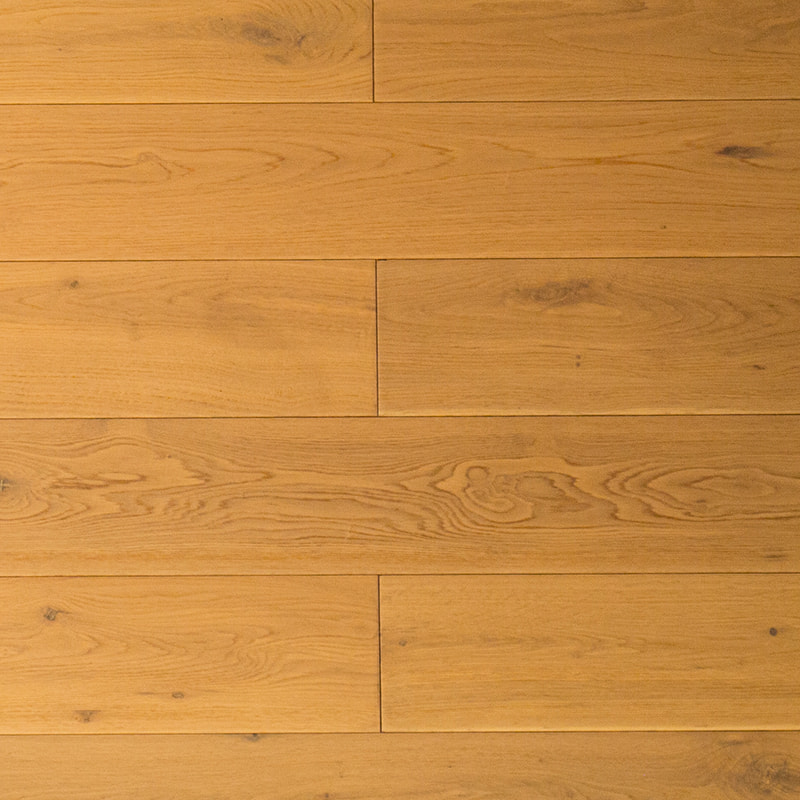
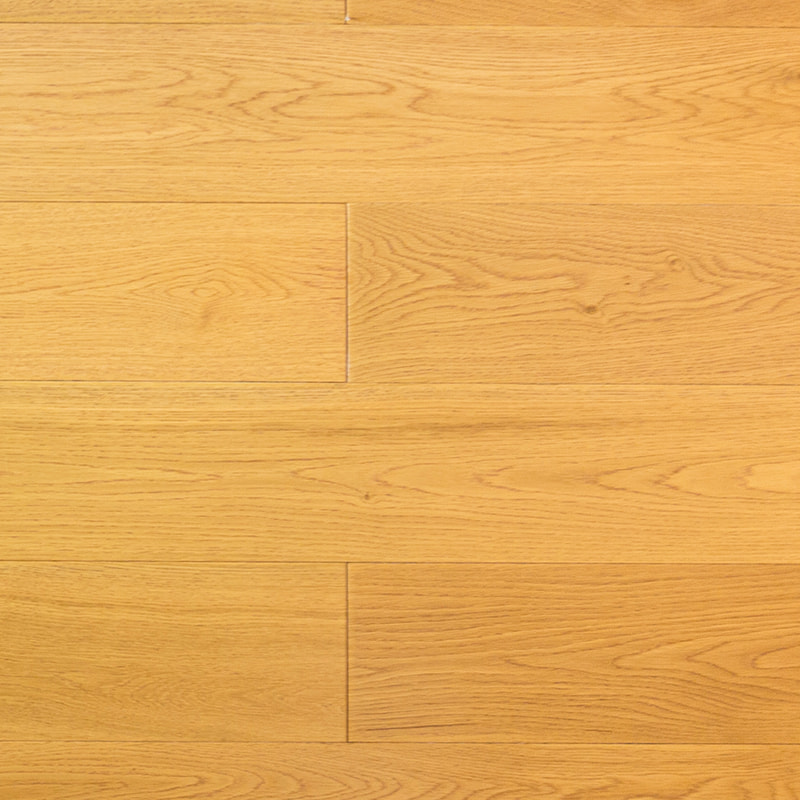
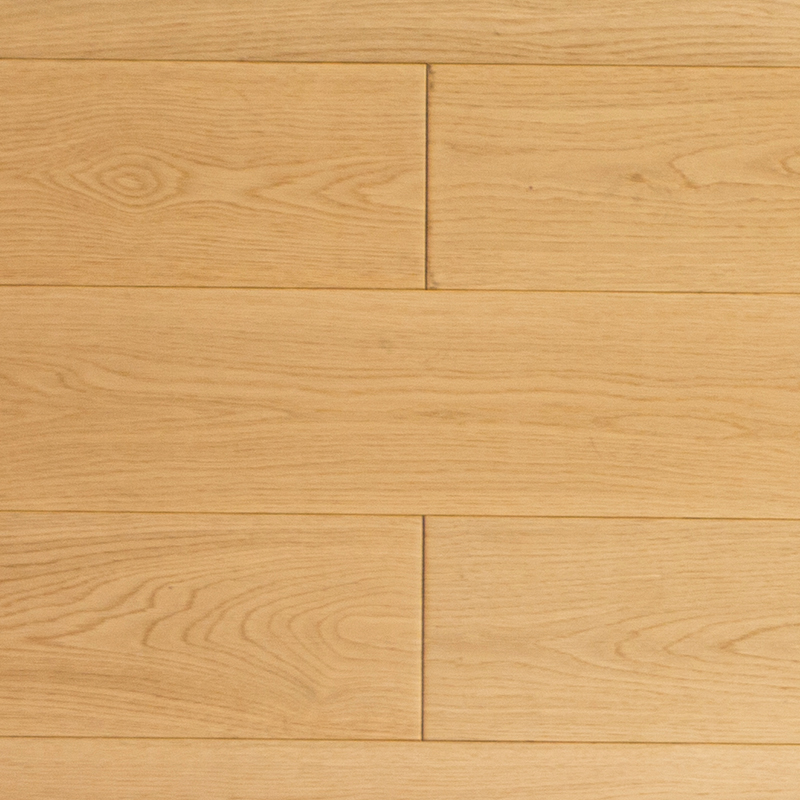
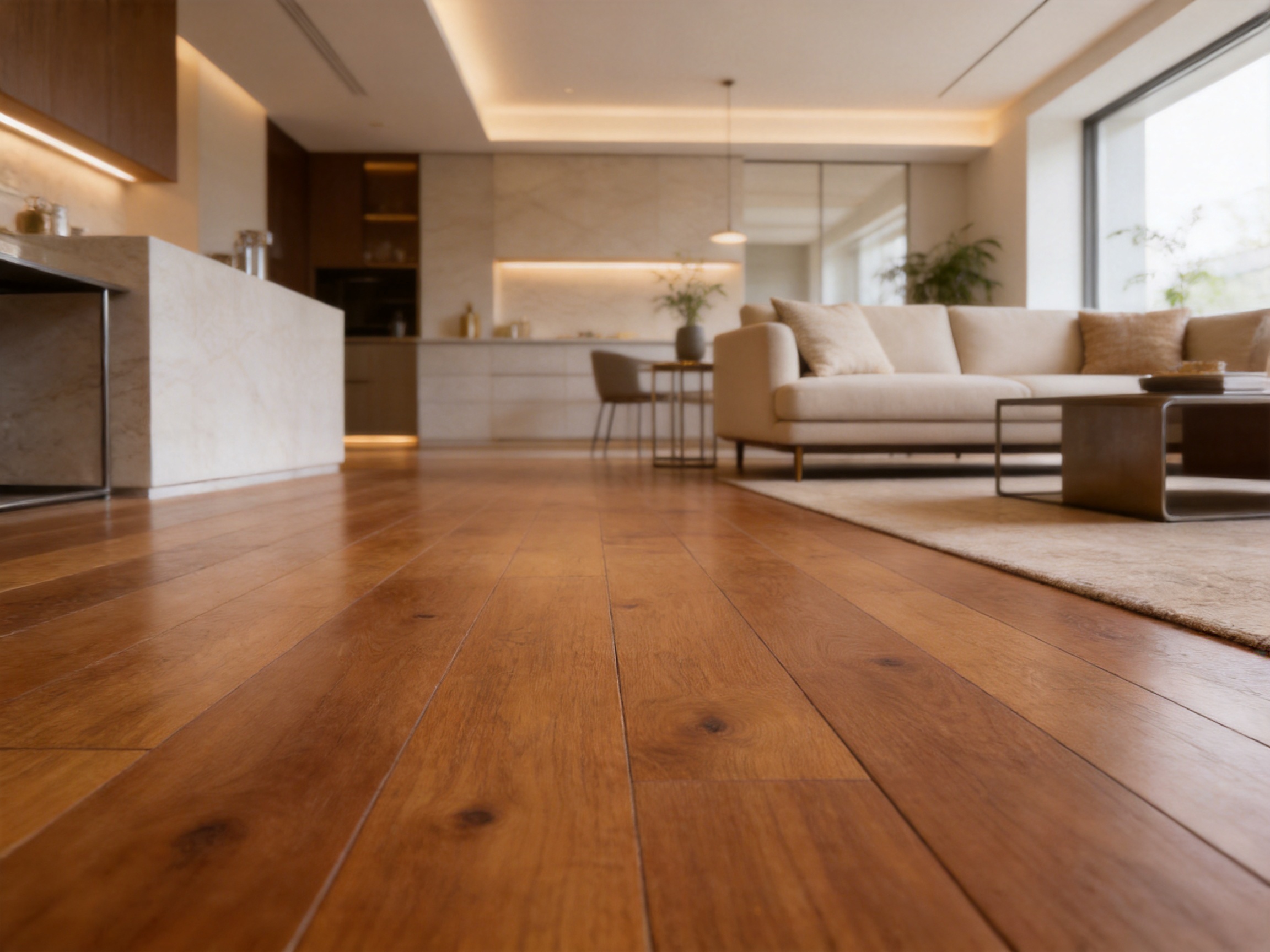
The defining visual feature of the DC-X1211 is its oak tan color. The warm brown-yellow tone provides a balanced alternative to very pale wood floors and dark espresso finishes. It can make a room feel comfortable and welcoming while maintaining a clean, contemporary appearance. Because the color is neither excessively yellow nor strongly red, it can coordinate with a wide range of furniture, wall finishes, textiles, and architectural materials.
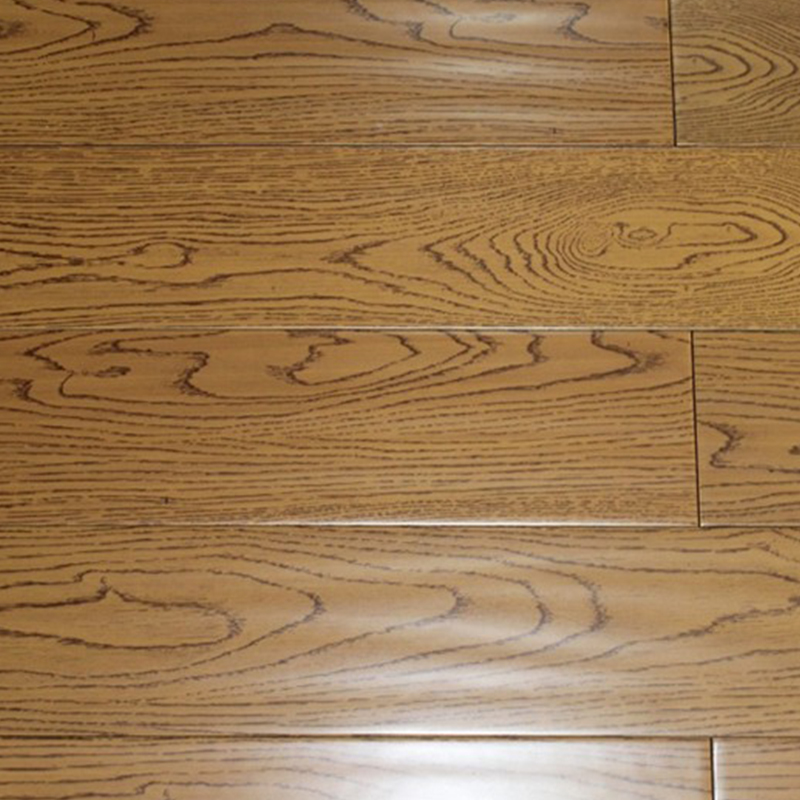
The natural grain surface preserves the visual movement of real oak. Instead of relying on a printed pattern, the floor uses a genuine wood veneer, allowing the grain direction, mineral variation, knots, and tonal changes associated with oak to contribute to the finished appearance. This gives the flooring a more authentic visual and tactile quality than many decorative floor coverings that imitate wood through surface printing alone.
Oak is particularly suitable for design schemes that depend on material authenticity. In a light luxury interior, the flooring can soften metal accents, stone surfaces, and glass details. In a new Chinese-style interior, it can complement natural fabrics, restrained wood furniture, warm neutral walls, and carefully selected decorative elements. In a modern home, its moderate tone can connect open-plan living, dining, and kitchen zones into a visually unified composition.
The natural grain also helps reduce the visual impact of minor day-to-day marks. On a highly uniform, dark, or glossy floor, small dust particles and superficial signs of use may be immediately visible. A naturally varied oak surface tends to provide more visual depth, allowing the floor to maintain a welcoming appearance between routine cleaning cycles.
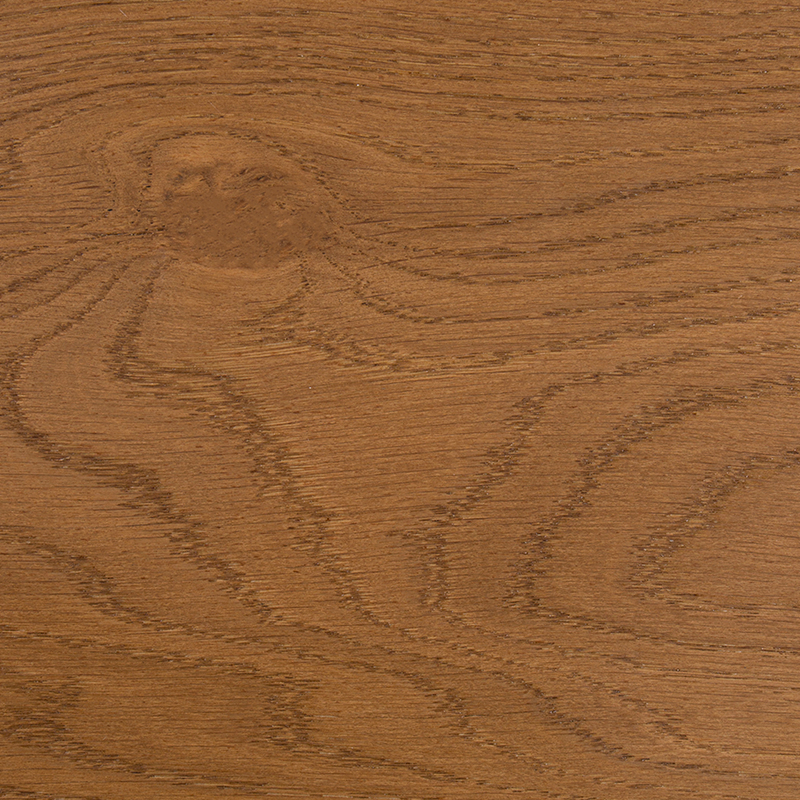
3-Layer Oak Tan Natural Grain Surface Click Engineered Wood Flooring
Solid wood flooring is valued for its natural character, but solid boards can respond significantly to changes in humidity and temperature. Wood absorbs and releases moisture according to its surrounding environment. When movement is not properly managed, boards may expand, contract, cup, warp, or develop gaps. Engineered wood flooring is designed to control this movement through a layered construction.
The DC-X1211 uses a three-layer structure. The oak veneer provides the visible surface and natural wood character. Beneath it, the spruce or pine core is arranged as an engineered support structure. Cross-oriented layers help distribute internal stresses more evenly than a single solid piece of wood. This construction improves resistance to deformation and cracking, making the floor more suitable for varied indoor environments.
The core materials are selected for their balance of workability, stability, and structural support. Spruce and pine are commonly used in engineered flooring because they can provide a practical substrate for the face veneer while helping maintain an efficient overall construction. The quality of the final product depends not only on the species but also on moisture control, layer preparation, adhesive application, pressing accuracy, machining, sanding, and finishing.
Compared with many basic single-layer wood products, a properly manufactured three-layer floor can offer more predictable performance in changing interior conditions. This is an important advantage for projects in regions where heating systems, air conditioning, seasonal humidity, or coastal conditions may place additional stress on wood materials.
The three-layer format also provides a substantial natural wood surface while using the raw material more efficiently than producing every board from a thick solid oak section. This can support responsible material utilization and gives project buyers access to an authentic oak appearance with an engineered construction intended for modern building conditions.
Dimensional stability is one of the most important performance factors in wood flooring. A visually attractive floor can become difficult to maintain if boards move excessively, joints open, or edges rise over time. The cross-laminated structure of the DC-X1211 is intended to reduce these risks by balancing the movement of individual layers.
This does not mean that engineered flooring is unaffected by its environment. Correct acclimation, subfloor preparation, expansion allowances, moisture testing, and installation procedures remain essential. Nevertheless, the layered structure provides a stronger starting point for controlling movement than many conventional wood formats. The result is a floor designed to maintain tighter joints and a more stable surface during normal indoor use.
For commercial projects, this stability can be especially valuable. Retail stores, offices, hospitality spaces, and public-facing interiors may experience frequent foot traffic and more demanding maintenance routines. A stable engineered floor can help reduce the risk of visible movement and support a more consistent appearance across larger installation areas.
The DC-X1211 is available with a seven-layer UV coating for general wear and scratch resistance. UV-cured finishing systems are produced through controlled curing processes that harden the finish and create a protective surface over the wood veneer. The coating helps protect the floor from routine abrasion, surface marks, and the effects of daily use.
Surface finishing does more than protect the floor. It also influences color depth, sheen, tactile quality, cleaning behavior, and the way the oak grain is perceived. Buyers can select from UV lacquer, UV oil, or hardwax oil according to project objectives. A lacquer finish may be preferred when a sealed, easy-care surface is required. UV oil can emphasize the natural appearance of the wood while providing a practical protective layer. Hardwax oil can offer a more tactile, low-gloss character that suits natural and premium interiors.
Texture options include wire-brushed, hand-scraped, and smooth sanded surfaces. A wire-brushed texture highlights the grain and gives the surface a subtly tactile finish. Hand-scraped treatment can create a more artisanal and expressive appearance. Smooth sanding produces a cleaner, more restrained surface suitable for minimalist interiors or projects where a refined flat finish is preferred.
These options allow the same basic flooring platform to serve different design directions. A hotel project may select a low-sheen brushed texture to create a calm, natural atmosphere. A residential project may choose smooth sanding for a contemporary appearance. A premium villa or restaurant may prefer hand-scraped oak with hardwax oil to emphasize craftsmanship and material depth.
| Option Area | Available Choices | Typical Design Effect |
|---|---|---|
| Finish | UV lacquer | Sealed appearance and practical routine maintenance |
| Finish | UV oil | Natural visual depth with a refined protective surface |
| Finish | Hardwax oil | Tactile, low-gloss, and natural-looking character |
| Texture | Wire-brushed | Emphasizes grain and adds subtle surface relief |
| Texture | Hand-scraped | Creates an artisanal, individually crafted appearance |
| Texture | Smooth sanded | Provides a clean and understated modern finish |
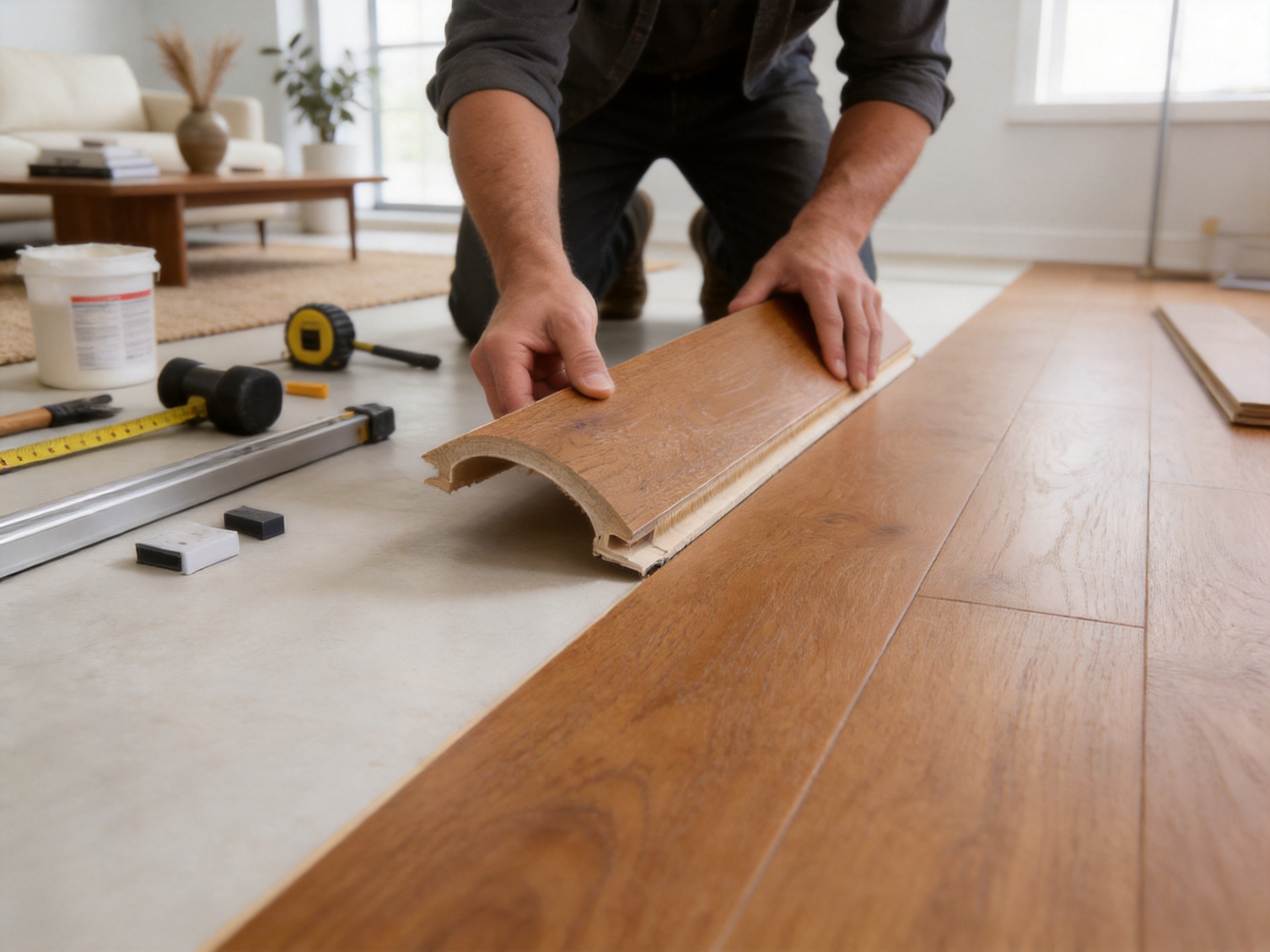
Installation efficiency is a major consideration when selecting flooring for a home, renovation, commercial project, or multi-unit development. The DC-X1211 uses a click-lock system designed to connect boards securely and simplify the installation process. The arc-shaped click profile helps create tight joints while reducing the need for extensive on-site fitting.
Click installation can be especially useful for projects with strict scheduling requirements. Contractors can work more efficiently when boards are designed for accurate connection and do not require excessive adhesive application or complex mechanical fastening. A floating installation may also allow a faster process in suitable interior conditions, while glue-down and staple methods remain available where the subfloor, specification, or project design calls for them.
Installation method should always be selected according to the subfloor, building conditions, local regulations, manufacturer instructions, and project requirements. The subfloor must be clean, dry, level, and structurally sound. Moisture levels should be checked before installation, and appropriate underlayment or adhesive should be used where required. Expansion gaps around walls, columns, door frames, and fixed objects are also necessary to accommodate natural wood movement.
The four-sided micro-bevel supports the visual structure of the finished floor. Instead of appearing as one uninterrupted surface, each plank has a subtle edge definition. This can enhance the character of long boards and make the installation pattern more legible. It can also complement both classic plank layouts and contemporary open-plan interiors.
Buyers comparing flooring products often evaluate solid wood, laminate, luxury vinyl, and different forms of engineered wood. Each category has its own strengths, but the DC-X1211 offers a specific combination of features that can be difficult to achieve in a basic product.
The main advantage over conventional solid wood flooring is the engineered three-layer structure. Solid wood provides a thick natural material throughout the board, but it can be more sensitive to changes in moisture and temperature. The cross-laminated structure of the DC-X1211 is designed to improve dimensional stability while retaining a genuine oak surface.
The engineered format can also provide more flexibility in installation. Depending on site conditions, the floor can be floated, glued, or stapled. Solid wood flooring may require more specialized installation planning, particularly in areas with environmental fluctuations or over certain subfloor systems.
Printed wood-look flooring can reproduce the general appearance of oak, but it does not provide the same natural veneer surface. The DC-X1211 uses real sliced oak veneer, so the grain has authentic variation and a natural tactile quality. This distinction is important in premium residential, hospitality, and architectural interiors where the authenticity of materials contributes to the overall design concept.
Natural oak also ages in a way that can remain visually convincing over time. Printed patterns may repeat or appear uniform, while genuine veneer offers natural differences from board to board. These variations create a more individual floor and can make large surfaces feel less artificial.
Not all engineered flooring products use the same construction, veneer thickness, finish system, or quality controls. Entry-level products may offer limited color choices, fewer surface treatments, thinner face materials, or less flexibility in grade and dimensions. The DC-X1211 is positioned as a customizable engineered flooring solution, with options for veneer thickness, grade, finish, texture, wood species, and color.
The seven-layer UV coating, micro-bevel profile, click system, and three-layer core provide a more complete specification than a basic board with a simple factory finish. For distributors and project buyers, this broader configuration range can make it easier to align one flooring platform with multiple market segments.
Highly glossy floors can look polished when newly installed, but they may show dust, footprints, and superficial marks more readily. The natural oak grain and available low-sheen finishing options of the DC-X1211 support a softer and more practical visual effect. This is particularly useful in family homes, hospitality areas, offices, and retail environments where the flooring must look attractive throughout regular daily use.
Customization is a central feature of the product. The standard DC-X1211 has a warm oak tan appearance, but buyers can adjust multiple elements according to design, performance, budget, and regional preferences. Available face veneer species include oak, walnut, ash, and teak. Veneer grades can be selected from AB, ABC, ABCD, and CD, allowing projects to balance clean appearance with natural variation.
Veneer thickness options include 2 millimeters, 3 millimeters, 4 millimeters, and 6 millimeters. A thicker veneer may be appropriate when a project places greater emphasis on natural wood presence, future refinishing potential, or a more substantial premium specification. A thinner veneer may be suitable for applications where cost efficiency and resource utilization are priority considerations. The correct choice depends on the intended use, maintenance plan, installation environment, and project budget.
Color customization allows the flooring to be coordinated with a project’s architectural palette. The warm tan base can be adjusted toward lighter, more neutral, richer, or more weathered appearances. This is valuable for developers and design studios that need a consistent floor concept across different room types or want a private-label collection for a specific market.
Surface texture can also be customized. Wire brushing, hand scraping, and smooth sanding each create a different relationship between light and grain. In addition, buyers can select UV lacquer, UV oil, or hardwax oil. These options make it possible to produce flooring for a broad range of design styles without changing the fundamental engineered structure.
Custom dimensions may be available for qualified projects. Length, width, thickness, packaging, grading, and finish can be discussed during product development. Customization is particularly useful for hospitality developments, branded residential projects, office fit-outs, retail chains, and distributors seeking a differentiated product range.
The DC-X1211 is well suited to living rooms, bedrooms, studies, dining areas, hallways, and other interior spaces where warmth and natural character are important. Its tan oak color can make a room feel visually comfortable without reducing the sense of space. The moderate plank width and balanced grain can work in both compact rooms and larger open-plan areas.
In a modern living room, the flooring can support neutral sofas, natural textiles, matte metal details, and light-colored walls. In a study, it can create a calm material background for wood furniture, bookshelves, and soft lighting. In a bedroom, the natural oak surface can contribute to a restful atmosphere, especially when paired with warm white, beige, gray, or muted green tones.
The floor also complements new Chinese-style interiors. This design direction often combines modern proportions with natural materials, restrained decoration, and a strong relationship between wood, stone, fabric, and light. The oak grain introduces warmth while the engineered construction supports the practical demands of contemporary living.
For residential renovations, the click-lock system can help reduce installation complexity. Depending on the site and subfloor, a floating installation may limit construction disruption. However, professional assessment is recommended before installation to confirm compatibility, moisture conditions, expansion requirements, and acoustic considerations.
Commercial interiors require a careful balance of appearance, durability, installation efficiency, and maintenance. The DC-X1211 can be considered for offices, boutique retail spaces, restaurants, showrooms, hospitality interiors, model rooms, and selected public-facing areas.
In a boutique store, the natural oak surface can create a warm and inviting customer experience. In an office, it can soften the technical appearance of workstations, glass partitions, and metal systems. In a hotel or serviced apartment, it can support a residential sense of comfort while offering the consistency needed across multiple rooms or floors.
Commercial buyers can benefit from the product’s configurable specification. A project may require a harder-wearing UV lacquer, while another may prioritize a natural hardwax oil appearance. Some projects may select a more uniform AB grade, whereas others may prefer ABCD or CD grading to show stronger natural variation. The ability to adjust these details helps architects and procurement teams avoid choosing between a small number of fixed products.
For larger projects, reliable packaging and supply coordination are also important. Each carton contains 10 pieces and covers approximately 21.85 square feet. This information supports quantity planning, pallet calculations, shipping estimates, site delivery schedules, and installation sequencing. Final quantities should include an appropriate allowance for cutting, layout selection, and site conditions.
The manufacturer behind the product has operated in the wood solutions sector since 1999. Its portfolio includes wood flooring, wooden doors, and custom cabinet solutions, creating a broader understanding of interior wood materials and architectural applications. More than 20 years of experience provides a foundation for material selection, product development, production management, and export coordination.
The company operates production facilities covering approximately 20,000 square meters and reports more than 10 years of export experience. Its customer base includes more than 100 global partners across Europe, North America, and Southeast Asia. This international experience is valuable because wood products must often meet different market expectations regarding appearance, packaging, documentation, installation, and regulatory compliance.
Annual production capacity is stated at approximately 2,400,000 square meters of flooring and 5,000 sets of doors. This capacity can support both regular distribution programs and project-based requirements. For importers and contractors, production scale may reduce the risk associated with inconsistent supply, especially when a product must be delivered in repeat batches over an extended project schedule.
The production system includes German imported production lines and automated quality control equipment. Advanced machinery can improve machining accuracy, board consistency, profile precision, sanding quality, and finishing uniformity. These factors are particularly important for click-lock flooring because small deviations in dimensions or locking profiles can affect installation performance and visual alignment.
Automated production can also support repeatability. When a distributor orders the same product in multiple batches, consistent processing helps reduce differences in thickness, edge treatment, surface finish, and board connection. While natural wood will always contain legitimate variation, controlled production can help ensure that variation remains within the intended grade and specification.
The company applies a three-step quality inspection process. A structured inspection approach can cover incoming material evaluation, in-process production checks, and final product verification. Incoming inspection may examine veneer quality, core material, moisture condition, and visual grade. In-process inspection may focus on bonding, pressing, machining, sanding, profile accuracy, and finish application. Final inspection may review dimensions, appearance, locking performance, packaging, and labeling.
Quality inspection is especially important for engineered flooring because performance depends on the interaction of several layers and processes. A high-quality oak veneer cannot compensate for an unstable core. A stable core cannot deliver a satisfactory result if the click profile is inaccurate. A precisely machined board still requires a consistent finish and suitable packaging. The three-step approach helps address these elements as part of one production system.
The product information identifies EU CE and FSC certification for general use, while the company information also references CARB P2 and ISO 9001 compliance. These certifications and standards can support international procurement, but buyers should confirm the exact certificate scope, validity, product coverage, and documentation applicable to the specific order.
CE-related documentation may be relevant when products are supplied into markets requiring applicable European conformity information. FSC certification can support responsible forest product procurement when the specific product and supply chain are covered by the appropriate certification claim. CARB P2 is associated with formaldehyde emission requirements for certain composite wood products, while ISO 9001 relates to quality management systems.
For architects and contractors, compliance documentation can simplify specification writing and project approval. For distributors, it can support product registration, customer communication, and market positioning. Nevertheless, certifications should be evaluated together with technical data sheets, test reports, installation instructions, packaging information, and local building requirements.
Engineered flooring quality begins with the selection and preparation of raw materials. Oak veneer should be evaluated for species identity, thickness, grain quality, moisture condition, and visual grade. Core lamellas should be checked for dimensions, defects, moisture balance, and suitability for structural bonding. Adhesives must be applied consistently to create reliable connections between layers.
Pressing is another critical stage. Sufficient pressure, time, and temperature are required to produce a stable panel or board structure. Inadequate pressing may result in weak bonding, while incorrect conditions can affect the veneer or core. Production controls must therefore be matched to the materials, adhesive system, board thickness, and factory environment.
After pressing, the boards are machined to the required dimensions and locking profile. The click system must connect smoothly while maintaining sufficient joint strength. Four-sided micro-beveling must be accurately positioned so that the visual lines between boards remain consistent after installation. Sanding and surface preparation then create the base required for a uniform finish.
The seven-layer UV coating process requires controlled application and curing. Uneven coating thickness, contamination, or incomplete curing can affect appearance and surface performance. Automated equipment and final inspection help maintain a more consistent result across production batches.
Packaging protects the product during storage and transportation. Flooring must be shielded from excessive moisture, impact, contamination, and handling damage. Correct carton labeling is also important for identifying product code, grade, finish, dimensions, batch information, and installation orientation where required.
Before installation, the flooring should be delivered to a clean, dry, enclosed interior environment. Boards should be stored flat and protected from direct moisture. Acclimation requirements depend on the product, building conditions, local climate, and installation method. The installer should follow the applicable technical instructions and confirm that the flooring has reached a suitable moisture balance before work begins.
The subfloor should be structurally sound, clean, dry, and sufficiently level. Uneven areas can place stress on joints and create movement or sound after installation. Concrete subfloors may require moisture testing and an appropriate moisture barrier. Wooden subfloors should be checked for stability, ventilation, fastener security, and moisture condition.
During layout, installers should inspect boards and plan the distribution of color, grain, end joints, and natural features. Mixing boards from different cartons can help create a balanced overall appearance. End joints should be staggered according to installation guidance, and boards should not be forced into position if the subfloor or locking profile is obstructed.
Floating installation can be efficient where the building conditions and underlayment are suitable. Glue-down installation may provide a more fixed feel and can be appropriate for certain subfloors or acoustic specifications. Staple installation may be selected for compatible wooden substrates. The choice should be made by a qualified installer rather than determined only by convenience.
Expansion gaps are essential around the perimeter and at fixed vertical objects. Large rooms, transitions, doorways, and changes in flooring direction may require additional movement provisions. Skirting boards, trims, or transition profiles can conceal these gaps while allowing the floor to respond naturally to environmental changes.
Daily care for the DC-X1211 is straightforward. Dust and loose particles can be removed with a soft broom, vacuum cleaner designed for hard floors, or dry microfiber cloth. Regular removal of grit helps reduce the possibility of fine scratches caused by particles being moved under footwear or furniture.
Spills should be wiped promptly. Although the finish offers surface protection, engineered wood flooring is not intended for prolonged standing water or continuous exposure to excessive moisture. Wet mopping, steam cleaning, and harsh chemical products should be avoided unless specifically approved for the selected finish.
Furniture legs should be fitted with suitable protective pads. Heavy furniture should be lifted rather than dragged across the floor. Entrance mats can reduce the amount of sand, grit, and moisture brought into the interior. In areas exposed to strong sunlight, curtains, blinds, or other shading measures may help reduce uneven color change over long periods.
Maintenance procedures should reflect the selected finish. UV lacquer, UV oil, and hardwax oil may require different cleaning products and periodic care. The building owner or facility manager should keep a record of the installed finish and use compatible maintenance materials. When properly maintained, the natural oak surface can continue to contribute warmth and visual value for many years.
International buyers often need more than a visually attractive sample. They require a supplier capable of managing technical communication, customization, quality consistency, production scheduling, packaging, and export documentation. The manufacturer’s experience serving partners in Europe, North America, and Southeast Asia supports these requirements.
OEM and ODM services allow customers to develop flooring collections under their own market identity or project specification. A distributor may request a custom color series, while an architectural firm may need a particular veneer grade, texture, and finish. A developer may require coordinated flooring, doors, and cabinet materials for a complete interior package.
The company also reports a 72-hour rapid prototyping capability. Rapid sampling can help designers and procurement teams evaluate colors, veneer selections, surface textures, and finish options before committing to larger quantities. Although final production timing depends on project complexity and order volume, faster prototype development can shorten the decision-making cycle.
Stable supply is supported by the company’s production scale and integrated quality management. Buyers can discuss standard products or customized specifications according to their target market. This flexibility is useful for wholesalers, flooring retailers, construction companies, interior designers, and project contractors that serve different customer groups.
Choosing the correct configuration begins with the intended application. Residential buyers may prioritize natural appearance, easy maintenance, and a comfortable finish. Commercial buyers may place greater emphasis on surface protection, repeatable supply, installation speed, and documentation. Distributors may need a balanced combination of visual appeal, customization, packaging efficiency, and market differentiation.
| Project Priority | Recommended Consideration |
|---|---|
| Natural visual character | Select oak veneer with wire-brushed or hand-scraped texture and a natural-looking oil finish |
| Clean contemporary appearance | Consider a smoother sanded surface with a restrained UV lacquer or UV oil finish |
| Higher visual uniformity | Evaluate AB or ABC veneer grading |
| More pronounced natural variation | Evaluate ABCD or CD grading |
| Additional face material | Discuss thicker veneer options such as 4 mm or 6 mm |
| Efficient installation | Use the click system with a suitable floating, glue-down, or staple method |
| Commercial routine use | Consider a suitable UV lacquer or other finish based on traffic and maintenance requirements |
| Private-label distribution | Discuss custom colors, dimensions, packaging, grades, and surface treatments |
Every project should also assess climate, heating and cooling systems, moisture conditions, expected traffic, acoustic requirements, subfloor type, maintenance capacity, and local regulations. A product specification that performs well in one building may require adjustment in another. Professional technical review is therefore recommended before final approval.
The DC-X1211 is a three-layer engineered wood floor with a natural oak veneer surface, a spruce or pine core, a seven-layer UV coating option, a four-sided micro-bevel, and a click-lock installation system. It is designed for residential, commercial, and project-based interior applications.
The standard design features a warm oak tan color with brown-yellow undertones and visible natural grain. Custom colors can be discussed for projects that require a lighter, darker, more neutral, or specially coordinated appearance.
Yes. The product uses natural sliced wood veneer. Oak is the main face veneer for the DC-X1211, while walnut, ash, and teak can also be considered for customized versions.
The cross-laminated structure helps distribute internal stresses between layers. This is designed to improve stability and resistance to deformation and cracking compared with less structured wood flooring formats. Correct installation and environmental control are still necessary for reliable performance.
Common customization options include 2 millimeters, 3 millimeters, 4 millimeters, and 6 millimeters. The broader product information also identifies optional veneer thicknesses from approximately 0.6 millimeters to 6.0 millimeters, depending on the specific configuration.
Available finish options include UV lacquer, UV oil, and hardwax oil. The most appropriate option depends on the desired appearance, tactile character, maintenance plan, and project performance requirements.
Yes. The available texture choices include wire-brushed, hand-scraped, and smooth sanded surfaces. Each treatment produces a different visual and tactile effect.
The listed installation methods are floating, glue-down, and staple installation. The correct method depends on the subfloor, building conditions, applicable instructions, and the requirements of the project.
It can be suitable for selected commercial environments such as offices, boutique retail spaces, showrooms, hospitality interiors, restaurants, and model rooms. The finish, grade, installation method, and maintenance plan should be selected according to expected traffic and site conditions.
Each carton contains 10 pieces and covers approximately 2.03 square meters or 21.85 square feet. The approximate carton weight is 24 kilograms.
The product information references EU CE and FSC certification for general use. The company information also references CARB P2 and ISO 9001 compliance. Buyers should request current documentation and verify that the applicable certificates cover the exact product and order.
Routine cleaning can be carried out with a dry cloth, soft broom, or suitable hard-floor vacuum. Spills should be removed promptly, and prolonged water exposure, sharp objects, abrasive tools, and unapproved cleaning chemicals should be avoided.
Yes. The manufacturer offers OEM and ODM customization, including options related to wood species, veneer thickness, grade, color, surface finish, texture, dimensions, and packaging, subject to project requirements and production confirmation.
Distributors, flooring retailers, architects, interior designers, contractors, developers, hospitality suppliers, and homeowners may all benefit from the product. Its configurable specifications make it suitable for both standard collections and customized projects.
The DC-X1211 3-layer oak tan natural grain surface click engineered wood flooring combines genuine oak character with a practical engineered structure. Its warm tan tone supports a wide range of interior styles, while the natural veneer provides the authenticity expected from a premium wood floor. The three-layer construction is designed to improve dimensional stability and resistance to deformation and cracking, and the seven-layer UV coating helps protect the surface during regular use.
The click-lock profile and four-sided micro-bevel support efficient installation and a clearly defined plank appearance. Floating, glue-down, and staple installation options offer flexibility for different project conditions. Customizable veneer species, thicknesses, grades, finishes, textures, sizes, and colors allow buyers to develop specifications for residential, commercial, and private-label applications.
Behind the product is a manufacturer with a long operating history, substantial production facilities, international export experience, OEM and ODM capability, rapid prototyping, automated equipment, and a three-step quality inspection process. Its broader portfolio of flooring, doors, and cabinets also supports coordinated interior wood solutions.
For buyers seeking a natural oak appearance with engineered stability, installation flexibility, and supply customization, the DC-X1211 provides a well-rounded platform for modern interior projects. Final selection should be based on technical review, environmental conditions, installation planning, finish requirements, and confirmation of current certification and quality documentation.
1. Product specification and technical information for DC-X1211 three-layer engineered wood flooring.
2. Manufacturer-provided information regarding natural wood veneer, engineered core construction, surface finishes, click-lock installation, and customization options.
3. Manufacturer-provided company profile covering production facilities, export experience, OEM and ODM services, quality inspection procedures, and production capacity.
4. General principles of engineered wood flooring construction, moisture management, installation planning, and routine floor maintenance.
5. General certification references concerning CE conformity, FSC forest product certification, CARB P2 emission requirements, and ISO 9001 quality management systems.

We provide customers with sustainable and eco-friendly
engineered wood solutions and services.
Choose DEIF for the perfect blend of
performance and aesthetics.
