


 English
 Español
 عربى
عربى

Get Social
Choose DEIF for the perfect blend of
performance and aesthetics.
 Get Free Sample

Content
Interior flooring does far more than provide a durable walking surface. It establishes the visual rhythm of a room, influences how natural and artificial light are reflected, contributes to acoustic comfort, and helps define the character of a residential or commercial environment. The White Oak Herringbone Dark Brown Retro Matte Parquet Flooring is designed for projects that require a combination of natural material quality, handcrafted detail, durable performance, and a strong decorative identity.
With its dark brown retro tone, distressed matte surface, and flowing herringbone arrangement, this flooring brings warmth and depth to contemporary interiors without appearing overly polished or artificial. It is suitable for luxury residences, boutique hospitality settings, commercial showrooms, cafes, guesthouses, leisure spaces, and other projects where the floor is expected to become an important part of the interior concept.
The product is identified as DF-Y1816 and is based on white oak, a species valued for its strength, attractive grain, wear resistance, and long service life. Its visual appearance is further enhanced by a vintage-inspired finish that gives each plank a subtly aged impression. Instead of presenting a uniform new-wood appearance, the surface creates a more established and lived-in atmosphere, making it particularly appropriate for retro, rustic, industrial, transitional, and character-rich design schemes.
Beyond its appearance, this parquet flooring is supported by a structured manufacturing system that combines solid wood material selection, precision processing, handcrafted assembly, quality inspection, and customization capability. The result is a flooring solution suitable for buyers who need more than a standard off-the-shelf product.
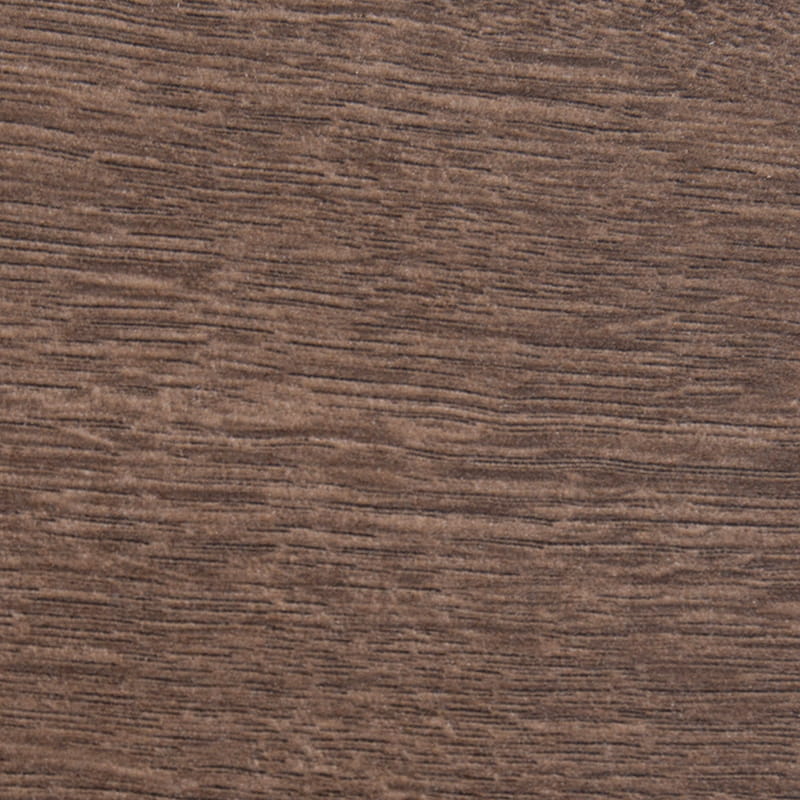
White Oak Herringbone Dark Brown Retro Matte Parquet Flooring
The White Oak Herringbone Dark Brown Retro Matte Parquet Flooring is a decorative wood flooring product developed around three key design elements: white oak, a dark brown distressed color treatment, and a herringbone parquet layout. Each element contributes to the product’s overall personality.
White oak provides a natural grain foundation with visible variation and a strong, durable structure. The grain is refined enough for premium interiors but expressive enough to remain visually noticeable after finishing. This makes the flooring appropriate for spaces where the authenticity of real wood is important.
The dark brown tone gives the product a deeper and more atmospheric appearance than light natural oak floors. It can visually anchor large rooms, complement neutral walls, and create contrast with lighter upholstery, metal accents, stone surfaces, or painted cabinetry. The retro color is not limited to traditional interiors. When combined with modern furniture, clean lighting, and minimal architectural details, it can create a sophisticated contemporary look with a sense of heritage.
The matte distressed finish reduces excessive surface reflection and helps conceal minor visual marks that may occur during everyday use. Its texture is intended to resemble naturally aged wood rather than a highly glossy factory coating. This finish is especially valuable in hospitality and commercial applications, where a floor must maintain a composed appearance under changing light conditions and regular foot traffic.
The herringbone pattern introduces directional movement. Individual planks are arranged in a repeated zigzag structure, generating a strong geometric rhythm without relying on printed decoration. The pattern can make a room feel more crafted and established, while its repeated lines help guide the eye through corridors, living areas, dining spaces, reception zones, and display environments.
Although the product title identifies a herringbone design, the related collection information also supports chevron options at 45-degree and 60-degree angles. This gives architects, designers, distributors, and project purchasers flexibility when developing a broader parquet program. The specific pattern, angle, plank size, and packing configuration can be confirmed during project consultation and production planning.
The use of white oak provides a natural foundation that is more visually distinctive than many printed or synthetic flooring alternatives. Oak grain contributes variation from plank to plank, helping the completed floor avoid a repetitive or artificial appearance. Properly selected white oak also offers a strong balance between hardness, workability, and long-term stability.
For residential projects, this means the floor can remain visually relevant as interior preferences change. For commercial projects, the natural grain adds material credibility and can support a premium design narrative. Unlike decorative surfaces that imitate wood only through a photographic layer, real oak offers tactile depth and a more convincing connection to natural material.
The distressed matte surface is one of the product’s most recognizable advantages. High-gloss flooring can create sharp reflections and may emphasize dust, footprints, or minor surface irregularities. A matte finish produces a softer visual effect and is often easier to integrate with natural textiles, aged metals, stone, leather, and wood furniture.
The dark brown color treatment gives the floor a mature appearance from the beginning. It can reduce the visual coldness sometimes associated with newly installed floors and help create a comfortable atmosphere in living rooms, lounges, hotel lobbies, restaurants, libraries, and reception areas. The distressed effect is intentionally decorative rather than random, allowing the flooring to maintain a consistent overall identity across a larger installation.
Parquet flooring depends heavily on the precision of its individual components. A pattern can lose its visual impact when joints are inconsistent, edges are poorly aligned, or the surface plane varies significantly from one piece to another. This product incorporates handcrafted splicing technology alongside controlled manufacturing processes to achieve tight joints and a high level of flatness.
Hand assembly adds an important layer of attention to detail. Skilled workers can identify visual transitions, check the alignment of the pattern, and manage the appearance of selected boards before packing. This does not replace modern production equipment; instead, it complements precision machinery with human judgment at stages where color, grain continuity, and pattern presentation matter.
The product information specifies a four-sided click system with V-bevel detailing. A click connection is designed to simplify the installation process by allowing compatible planks to connect mechanically. It can reduce the need for complex site cutting and help maintain a consistent relationship between adjacent pieces.
The click system may also support floating installation, which is listed among the available installation methods. This can be useful for projects that require efficient installation scheduling or want to limit the use of wet adhesives. However, the subfloor must be properly prepared, clean, dry, level, and structurally sound. Installation should always follow the approved technical instructions and local construction requirements.
One of the product’s strongest commercial advantages is its customization capability. Buyers can request different parquet sizes, colors, surface treatments, wood species, veneer grades, wear-layer thicknesses, and finish systems according to the project’s functional and aesthetic requirements.
Available face veneer options in the supplied specification include oak, walnut, ash, and teak. Veneer grades may be customized as AB, ABC, ABCD, or CD. Wear-layer thicknesses may include 2 millimeters, 3 millimeters, 4 millimeters, or 6 millimeters. Surface finishing can be specified as UV lacquer, UV oil, or wood wax oil, while surface texture may be wire brushed, handscraped, or smooth sanded.
This range allows the same manufacturing partner to support different design directions. A residential developer may require a calm, lightly brushed surface, while a hospitality project may prefer a stronger handscraped texture. A distributor may need several price and grade levels, while a design studio may require a custom color developed around a specific furniture or wall finish.
Responsible sourcing has become increasingly important in architectural specifications and procurement decisions. The product is presented with FSC-certified sustainable material, supporting projects that require documented attention to responsible forestry and supply-chain considerations.
Certification does not replace the need for responsible installation, maintenance, and end-of-life planning, but it provides an important basis for sustainability-focused purchasing. It can also support green building documentation and help project teams communicate a more responsible material strategy to property owners, tenants, and end users.
The following information summarizes the principal configuration described for the parquet flooring collection. Because many parameters are customizable, final values should be confirmed before quotation, sample approval, and production.
| Product Code | DF-Y1816 |
| Product Type | Herringbone parquet flooring |
| Primary Material | White oak; alternative face veneers may be available |
| Reference Dimensions | 20.1 inches × 4.0 inches × 19/32 inch |
| Pattern Options | Herringbone; related collection options include 45-degree and 60-degree chevron |
| Veneer Grade Options | AB, ABC, ABCD, or CD |
| Wear-Layer Options | 2 millimeters, 3 millimeters, 4 millimeters, or 6 millimeters |
| Core Construction | Eucalyptus or birch plywood, subject to configuration |
| Veneer Cut | Sliced veneer |
| Surface Finish Options | UV lacquer, UV oil, or wood wax oil |
| Surface Texture Options | Wire brushed, handscraped, or smooth sanded |
| Profile | Four-sided click system with V-bevel |
| Installation Method | Floating installation is available for the listed configuration |
| Pieces Per Carton | 32 pieces |
| Coverage Per Carton | 1.665 square meters or approximately 17.92 square feet |
| Approximate Carton Weight | 18 kilograms |
| Packaging Configuration | Left and right planks supplied in separate boxes where applicable |
The use of separate left and right plank boxes can help installers organize the pattern more efficiently. Herringbone and chevron layouts depend on directional components, so clear packing and correct site organization are important for reducing installation errors and material delays.
The performance and appearance of a parquet floor are determined long before the product reaches the installation site. Material selection, moisture management, machining accuracy, surface treatment, assembly, inspection, and packaging all contribute to the final result. The manufacturer’s production system is structured to combine modern equipment with skilled craftsmanship.
Production begins with the selection of suitable wood materials. White oak is assessed for grain quality, structural soundness, color consistency, and suitability for the intended product grade. Depending on the requested grade, certain natural characteristics may be accepted as part of the design, while more demanding specifications may require tighter selection.
Material selection is especially important for dark distressed flooring. A darker color can unify a collection, but the underlying grain still affects how each board absorbs stain or finish. Consistent preparation helps the manufacturer achieve a balanced overall appearance while preserving the natural variation that makes real wood attractive.
Wood is a natural material that responds to environmental humidity and temperature. Professional flooring production therefore requires careful moisture management before machining and assembly. Properly conditioned material is more suitable for precision profiling and can reduce the likelihood of excessive movement after installation.
Dimensional control is particularly important in parquet because small variations can become more visible when repeated across a geometric pattern. The production team must manage board thickness, width, length, edge accuracy, and profile consistency so that the pieces work together as a unified system.
Modern production lines are used to cut and profile the flooring components. The specified click system requires accurate machining along the connecting edges. Consistent profiles help the planks engage correctly and support a more even finished surface.
The V-bevel detail adds a visual separation between individual elements. When the floor is assembled, the bevel can emphasize the herringbone rhythm and make the pattern easier to read. Precise profiling is essential because inconsistent bevels or edge dimensions can interrupt the intended visual flow.
Before the final color and protective finish are applied, the wood surface is prepared through sanding and other appropriate operations. Depending on the selected configuration, the surface may be smooth sanded, wire brushed, or handscraped.
A smooth sanded surface emphasizes clean grain and a more refined appearance. Wire brushing brings out the softer portions of the grain and creates a tactile texture. Handscraping provides a more visibly handcrafted character and can support a stronger rustic or vintage design direction. These options allow the surface to be matched to the intended application rather than forcing every project into one standard appearance.
The dark brown retro effect is achieved through a controlled finishing process. The goal is to create an aged appearance while retaining the natural identity of the white oak. Color should be applied consistently enough to form a coherent floor but not so uniformly that every plank appears identical.
Depending on project needs, the final surface may use UV lacquer, UV oil, or wood wax oil. UV lacquer can provide a firm protective film and efficient factory curing. UV oil can preserve a more natural tactile impression while providing surface protection. Wood wax oil is often selected when the desired result emphasizes a soft, natural, furniture-like appearance.
Finish selection influences maintenance, sheen, touch, repair procedures, and long-term appearance. For this reason, project purchasers should evaluate physical samples under the actual lighting conditions of the intended space. A dark brown finish can appear warmer under incandescent or warm LED lighting and cooler under daylight or neutral commercial lighting.
After machining and surface treatment, the parquet components are assembled and inspected. Handcrafted splicing technology helps workers monitor joint tightness, pattern alignment, edge quality, and the relationship between adjacent grain patterns.
In premium flooring, craftsmanship is visible in small details. The points where the herringbone units meet should appear intentional and controlled. The surface should remain flat, while the transitions between planks should support the overall geometric design. Skilled assembly helps reduce the visual inconsistencies that can occur when complex parquet is treated as a simple linear flooring product.
The company describes a strict three-step quality inspection process. While individual project inspection standards may vary, a structured inspection system generally includes checks of incoming materials, in-process production, and finished goods before shipment.
Incoming inspection can verify wood condition, moisture, grade, and dimensional suitability. In-process inspection can review machining, click profiles, surface preparation, color development, and assembly. Final inspection can evaluate appearance, flatness, joint performance, packing, labeling, quantity, and documentation.
This layered approach is stronger than relying only on a final visual check. Problems identified at an early stage can be corrected before they affect a larger batch. It also creates a more stable basis for repeat orders, which is important for distributors, hospitality groups, and multi-phase construction projects.
The manufacturer operates approximately 20,000 square meters of production facilities and uses German-imported production lines together with automated quality-control systems. This combination supports repeatable processing, higher production efficiency, and improved control over complex flooring components.
Automation is valuable for maintaining consistent dimensions and profiles across a large order. At the same time, the continued role of experienced workers is important for finish evaluation, visual sorting, handcrafted assembly, and project-specific adjustments. The combination of equipment and human expertise is especially appropriate for a product that must deliver both technical precision and natural material character.
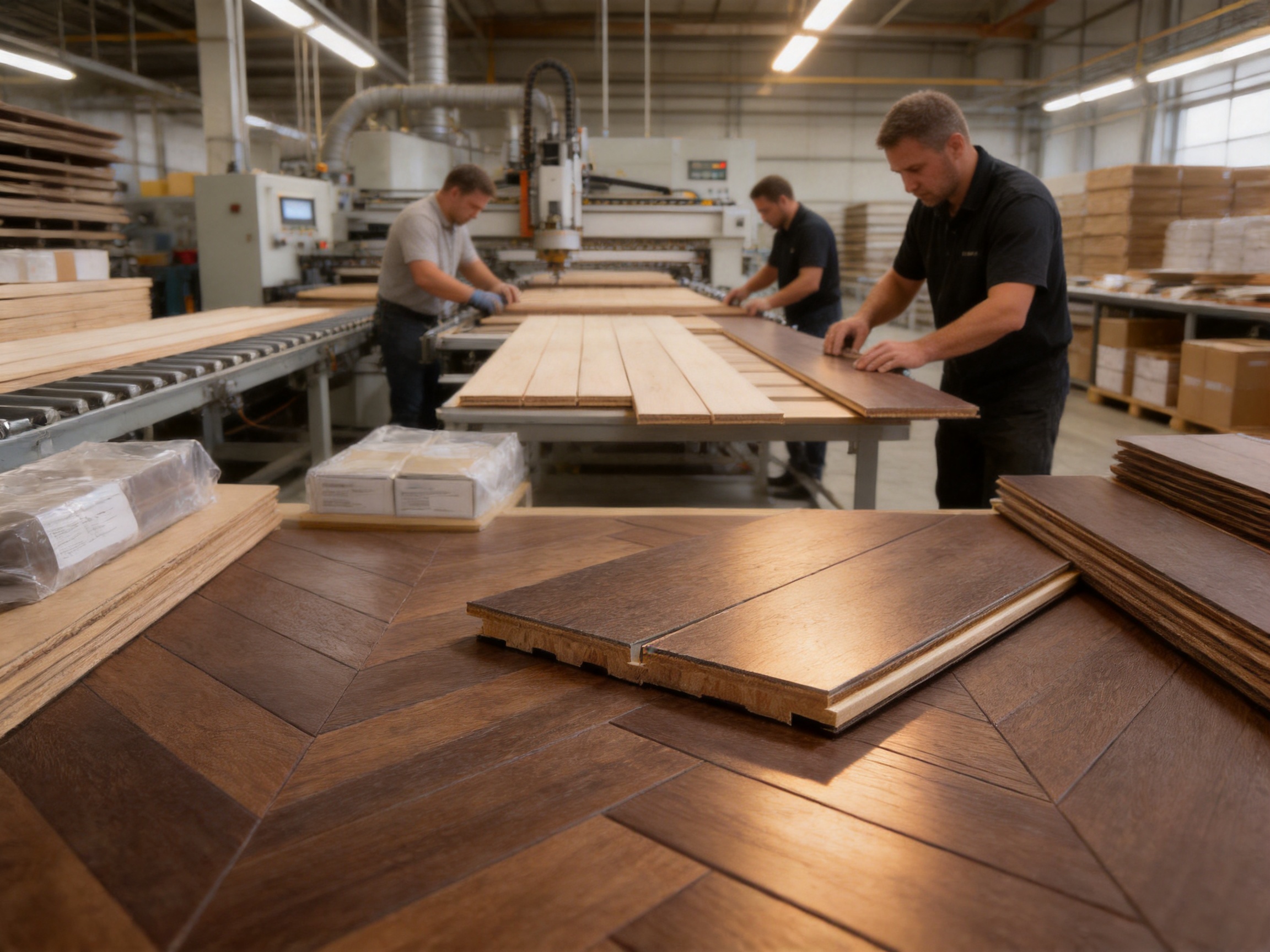
Many competing flooring products reproduce a wood appearance through a printed decorative layer. Such products can provide economical performance, but they may lack the depth, tactile variation, and natural grain behavior associated with genuine wood. The white oak parquet solution uses a real wood face, giving the floor a more convincing material presence.
For projects where visitors interact closely with the floor, authenticity can affect perceived value. Hotel guests, showroom customers, homeowners, and commercial clients can see and feel the difference between a natural wood surface and a purely printed image. The product’s grain variation also allows the floor to integrate more naturally with other real materials.
Standard clear finishes often present a clean, new, and uniform appearance. That style is appropriate for many interiors, but it may not provide the desired depth for vintage, industrial, or rustic concepts. The dark brown distressed matte finish introduces visual character from the first day of installation.
Because the finish is matte and intentionally aged in appearance, minor signs of daily use may blend more naturally into the design. This can be an advantage in spaces where maintaining a perfectly untouched high-gloss appearance would be difficult.
Straight plank flooring is versatile and easy to coordinate, but parquet patterns offer a stronger architectural statement. Herringbone creates directional energy and can make a simple room appear more carefully designed. It can be used to distinguish a feature area, define a circulation zone, or create continuity across an open-plan interior.
The pattern also offers multiple installation directions and border possibilities. Designers can run the pattern along the main axis of a room, use it to emphasize a central area, or combine it with a perimeter frame for a more formal composition.
Many mass-market flooring ranges provide only one color, one thickness, one grade, and one surface treatment. The customization options associated with this product allow professional buyers to adjust the specification according to design, budget, wear expectations, and installation requirements.
Customization is particularly useful when the flooring must coordinate with custom cabinetry, wooden doors, wall paneling, stair components, or furniture. Instead of treating each interior element as a separate purchase, a project team can develop a more coherent material palette through coordinated wood solutions.
Commercial buyers often require more than product availability. They need reliable communication, documentation, sample development, repeatability, packing control, and production capacity. The manufacturer reports more than 10 years of export experience and service to over 100 global partners across Europe, North America, and Southeast Asia.
Its annual capacity of approximately 2,400,000 square meters of flooring supports larger distribution and project requirements. This capacity can be useful for hotel developments, residential communities, retail programs, and commercial fit-outs that require consistent supply across multiple spaces or construction phases.
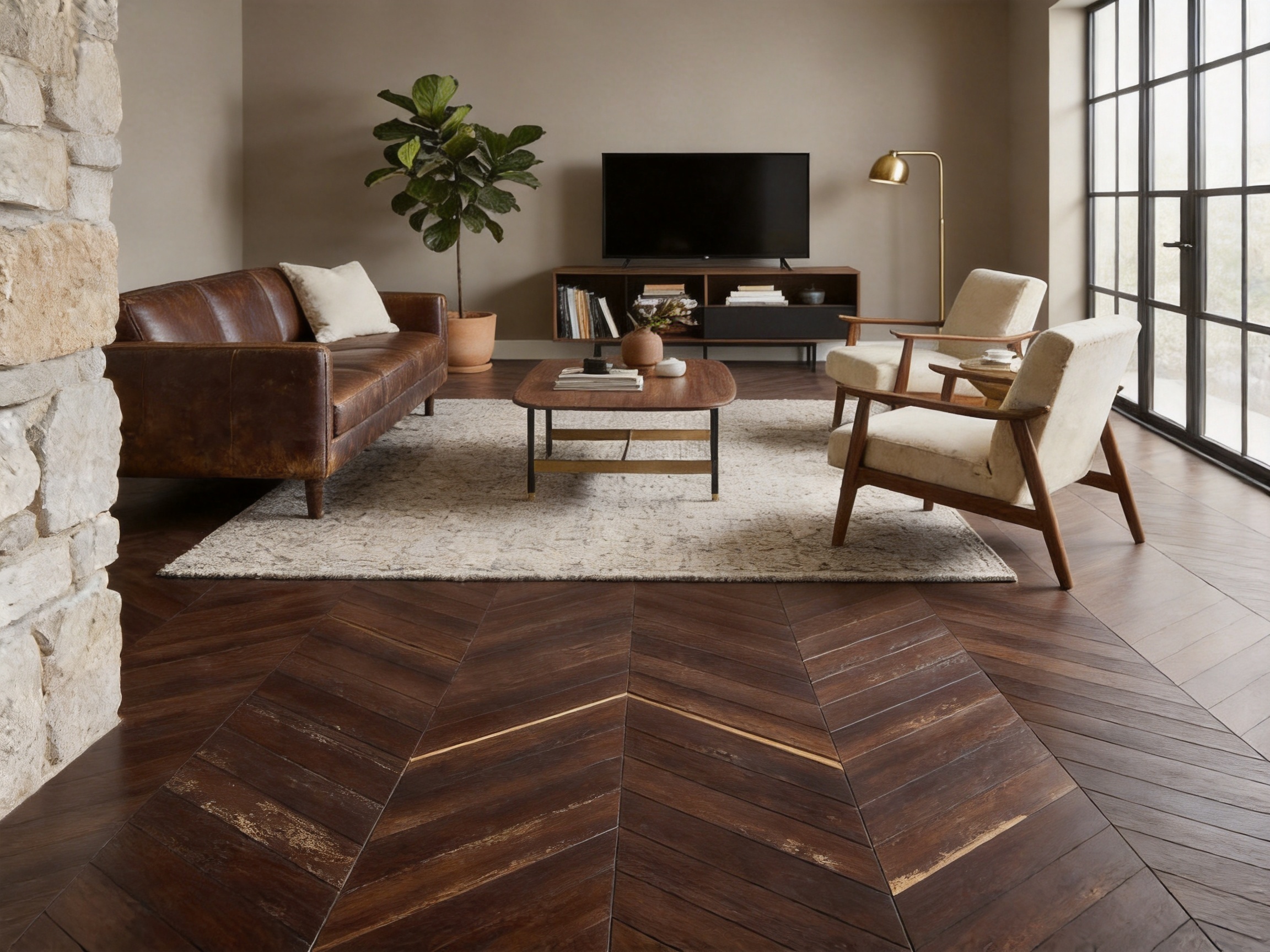
In a living room, the dark brown herringbone floor can serve as a visual foundation for sofas, lounge chairs, bookshelves, and low-profile tables. Its retro character pairs well with linen, leather, wool, natural stone, and aged metal. Light-colored walls and ceiling finishes can provide contrast, while darker furniture can create a more intimate atmosphere.
In larger living areas, the herringbone pattern can help create movement without requiring additional decorative flooring borders. In smaller rooms, the installation direction should be considered carefully. Running the pattern toward the longest visual axis can help establish a sense of flow, while a contrasting border may make a compact space feel more structured.
The warm brown tone is well suited to dining spaces, where the floor can complement timber tables, upholstered chairs, ceramic lighting, and textured wall finishes. When used near a kitchen, the flooring should be coordinated with the moisture conditions and maintenance requirements of the specific environment.
Where the floor meets tile, stone, or another material, transition details should be planned before installation. Expansion allowances, thresholds, and changes in floor height should be coordinated with cabinetry and appliances to achieve a clean result.
Guesthouses, reading rooms, lounges, and private leisure spaces can benefit from the product’s established appearance. The distressed matte surface helps create a welcoming atmosphere that feels less formal than a highly polished floor. Combined with warm lighting and natural fabrics, the flooring can support a relaxed, residential hospitality concept.
In high-end homes, flooring is often expected to coordinate with a wide range of custom interior elements. The available options for wood species, grade, finish, texture, and color make the product suitable for bespoke residential programs.
It may be used across living rooms, corridors, studies, bedrooms, dressing areas, and entertainment rooms. Designers can also use the flooring selectively, applying the herringbone pattern in primary spaces while choosing a related wood product for bedrooms, staircases, or wall applications.
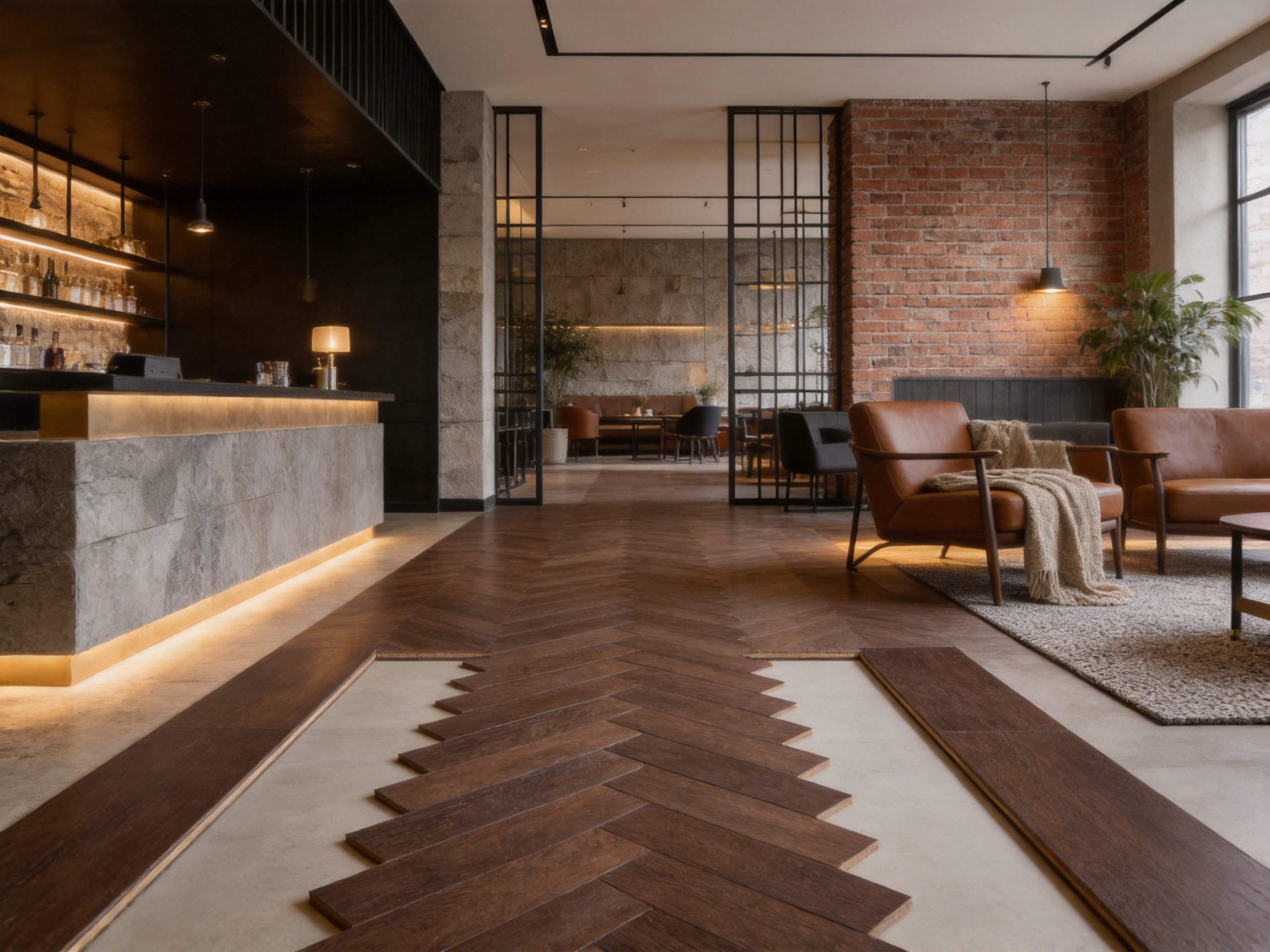
A hotel lobby must communicate quality quickly and withstand continuous movement. The dark brown retro floor can provide a strong first impression while supporting furniture and lighting concepts based on warmth, heritage, and craftsmanship.
In a lobby, pattern orientation can be used to direct guests toward reception desks, elevators, lounges, or circulation paths. A perimeter frame or contrasting color can further distinguish functional areas. Because commercial foot traffic can be demanding, the selected wear layer, finish, installation method, and maintenance program should be specified according to expected use.
Boutique hotels often rely on a distinctive interior identity rather than a standardized corporate appearance. The aged white oak look can support concepts inspired by local history, converted industrial buildings, European interiors, classic libraries, or contemporary rustic design.
Using the same or coordinated flooring across guest rooms and public spaces can strengthen brand consistency at the property level. Alternatively, different textures or colors can be used to separate public circulation zones from more private accommodation areas.
Showrooms need a floor that supports the products on display without becoming visually insignificant. The herringbone arrangement gives the floor enough design presence to communicate quality, while the dark matte tone can provide a restrained background for furniture, lighting, fashion, interior products, or architectural materials.
The floor can also help create zones within an open showroom. Pattern direction, color variation, and transition detailing can distinguish presentation areas, consultation zones, reception spaces, and circulation routes without requiring excessive partitions.
Retro and industrial cafes frequently use dark wood, exposed metal, brick, leather, and textured fabrics. This parquet flooring can complement these materials and help create a recognizable atmosphere. A matte finish is often visually appropriate in dining environments because it avoids excessive glare from overhead lighting.
Restaurant owners and designers should evaluate cleaning schedules, spill exposure, entrance protection, chair movement, and maintenance access before selecting the final finish. Proper entrance mats, prompt spill removal, and furniture protection can significantly extend the visual life of the floor.
Reception areas and creative offices increasingly use residential-style materials to create more comfortable and distinctive environments. A dark brown herringbone floor can bring warmth to a reception desk, meeting lounge, design studio, or executive office.
It can be paired with black-framed glass, painted cabinetry, wool upholstery, acoustic panels, and natural stone. The combination can create an environment that feels professional without becoming cold or overly corporate.
The flooring naturally supports vintage interiors with aged furniture, traditional lighting, patterned textiles, and warm wall colors. Its distressed appearance can connect newer construction with a historical or collected design language.
In industrial spaces, the floor can soften concrete, exposed brick, steel, and dark metal. The natural oak surface adds warmth and helps prevent the interior from appearing too hard or utilitarian. The herringbone pattern also introduces a level of craftsmanship that balances industrial structural elements.
The product’s tactile texture and deep color are compatible with rustic interiors featuring natural stone, plaster, timber beams, woven fabrics, and handmade accessories. In modern rustic applications, simple furniture and restrained decoration can prevent the distressed surface from appearing visually heavy.
Although the flooring has a retro identity, it can be used in contemporary spaces. The key is to create contrast. Minimal furniture, clear architectural lines, neutral walls, and controlled lighting can allow the parquet pattern to become the primary decorative element.
The dark brown floor coordinates effectively with cream, warm white, taupe, olive, charcoal, muted blue, and terracotta. Brass, bronze, black steel, and aged silver can be used as accent metals. For a lighter visual balance, designers may combine the floor with pale oak furniture, natural linen upholstery, or light stone surfaces.
When pairing the floor with other wood products, the goal does not need to be exact color matching. Coordinated undertones and a controlled level of contrast often create a more natural result. Custom color development can be considered when a project requires closer alignment with wooden doors, cabinets, or wall panels.
Successful parquet installation begins with site preparation. The subfloor should be structurally sound, sufficiently dry, clean, and level within the tolerances recommended for the selected flooring system. Irregularities can affect joint engagement, surface flatness, and long-term performance.
Wood flooring should be delivered and acclimatized according to the manufacturer’s technical instructions and the conditions of the installation environment. Temperature and humidity should be stable before installation begins. The site should also be protected from excess moisture and active construction work that could damage the finished surface.
Because herringbone flooring uses left and right components, installers should organize cartons carefully. Separate boxes should be clearly identified and distributed across the work area to maintain the correct pattern. A dry layout or pattern planning stage is recommended for complex rooms, irregular walls, door openings, columns, and transitions.
Expansion allowances should be provided where required around walls, fixed objects, thresholds, and vertical obstructions. The exact allowance depends on the flooring construction, room dimensions, climate, and installation instructions. The click system should not be forced, and damaged or visibly defective pieces should be set aside for review before installation.
For floating installations, underlayment selection can affect acoustic performance, comfort, moisture protection, and the behavior of the click system. The underlayment must be compatible with the flooring and the subfloor. In commercial applications, project teams should also review fire, acoustic, accessibility, and local building requirements.
Professional installation is strongly recommended for large or technically demanding projects. Experienced installers understand how to center a parquet pattern, distribute visual variation, manage perimeter cuts, and coordinate transitions with other finishes.
Routine maintenance is straightforward when the correct procedures are followed. Dust and loose particles should be removed regularly using a soft broom, vacuum suitable for wood flooring, or dry microfiber mop. Abrasive particles can act like sandpaper under footwear and furniture, so frequent removal is beneficial.
The supplied care guidance recommends regularly wiping the surface with a dry cloth to maintain the matte finish. When damp cleaning is necessary, use a well-wrung cloth and a cleaning product approved for the selected finish. Excess water should not be allowed to remain on the surface or enter joints.
Spills should be cleaned promptly. Although the finish provides protection, prolonged exposure to water, oils, colored liquids, or chemical products may affect the appearance of the wood. Strong household cleaners, abrasive powders, steam cleaning, and excessive moisture should be avoided unless specifically approved for the product.
Furniture legs should be fitted with suitable protective pads. Heavy objects should be lifted rather than dragged. Rolling chairs may require a compatible protective mat, particularly in offices or commercial spaces. Entrance mats can help reduce the amount of grit and moisture brought onto the floor.
The product information recommends applying vintage wood oil once a month to preserve texture and sheen. The actual frequency should be determined by the selected surface finish, traffic level, manufacturer’s maintenance instructions, and the condition of the floor. Over-application can create buildup, so the oil should be applied sparingly and tested in an inconspicuous area when required.
Sharp objects, pet claws, high-heeled footwear, and unprotected metal furniture can scratch the surface. A matte distressed finish is designed to accommodate a certain degree of visual variation, but preventative care remains important for preserving the floor’s structure and decorative quality.
Project-specific customization is a central part of the product offering. OEM and ODM services allow distributors, contractors, architects, developers, and interior brands to create flooring specifications aligned with their own market requirements.
Customization can begin with the wood species and grade. White oak is the reference material for DF-Y1816, while oak, walnut, ash, and teak are listed as possible face veneer options for related configurations. This enables buyers to develop coordinated collections or offer different price levels.
Dimensions can also be adapted. A larger plank may create a calmer pattern in a spacious hotel lobby, while a smaller component may suit a compact residential room or detailed border composition. Pattern angle can influence the visual direction and density of the finished floor, making 45-degree and 60-degree chevron options useful for different architectural layouts.
Surface texture is another important design variable. Wire brushing can emphasize grain, handscraping can create a more artisanal appearance, and smooth sanding can provide a cleaner, more restrained surface. Finish options influence sheen, tactile quality, cleaning practices, and the way the color develops over time.
The company reports a 72-hour rapid prototyping capability. Fast sample development can help project teams evaluate color, texture, plank proportions, and pattern behavior before committing to a full production order. Samples should be reviewed under realistic lighting and, when possible, alongside the other materials proposed for the interior.
Customization is most successful when technical and visual requirements are documented in a clear product approval sheet. This should include approved color, grade, dimensions, finish, texture, click profile, packaging, inspection criteria, and acceptable natural variation. Such documentation helps protect consistency across repeat orders.
Suzhou Dicosbo Wood Co., Ltd. is presented as a global wood solutions manufacturer specializing in wood flooring, wooden doors, and custom cabinet solutions. The company was founded in 1999 and has more than two decades of industry experience, including over 10 years of export activity.
Its product range is supported by approximately 20,000 square meters of production facilities and an annual flooring capacity of about 2,400,000 square meters. The reported annual door capacity is approximately 5,000 sets. These figures indicate an infrastructure capable of supporting both specialized custom orders and larger commercial supply programs.
The company serves partners in Europe, North America, Southeast Asia, and other international markets. Experience across different regions can be valuable because flooring projects may involve varied packaging expectations, documentation requirements, climate conditions, installation practices, and regulatory standards.
DEIF also offers wooden doors and custom cabinets, allowing project clients to coordinate several interior woodwork categories through one manufacturing source. This can simplify communication and improve material consistency across floors, doors, cabinetry, and other interior elements.
The company reports compliance or certification related to CE, FSC, CARB Phase 2, and ISO 9001. The precise applicability of each certification should be verified for the specific product, market, and order. Nevertheless, these standards and certifications can provide an important foundation for international procurement, quality management, responsible material sourcing, and emissions-conscious project planning.
A manufacturer with an integrated production system can offer advantages beyond unit pricing. It can support sample approval, specification development, production scheduling, quality documentation, packing coordination, and repeat-order management. These services are especially important for architects, distributors, and contractors who need reliable results across multiple projects.
Before placing an order, buyers should define the project’s intended use, expected traffic level, room conditions, visual requirements, and installation schedule. A residential bedroom, hotel lobby, and retail showroom may all use the same design language but require different technical specifications.
The wear-layer thickness should be selected according to the anticipated use and future maintenance strategy. A thicker wear layer may provide greater flexibility for certain refinishing or long-term service requirements, while a thinner configuration may be appropriate for specific budget or construction conditions. Technical advice should be obtained before final selection.
Buyers should request physical samples rather than relying solely on digital images. Dark brown tones can vary significantly across screens, lighting environments, and photographic settings. A sample allows the team to evaluate grain, distressing, matte reflectance, texture, edge detail, and color compatibility with adjacent materials.
Order quantities should include an appropriate allowance for cuts, layout adjustments, future repairs, and natural selection. The required allowance depends on room geometry and installation complexity. Herringbone and chevron patterns may require more careful planning than straight plank installations, especially around angled walls, columns, stairs, and irregular architectural features.
Packaging and labeling should be reviewed before shipment. Left and right components must be clearly identified where separate boxes are used. Carton coverage, carton weight, pallet configuration, loading conditions, and storage instructions should be confirmed with the supplier and logistics provider.
For multi-phase projects, buyers should discuss batch consistency. Wood is natural, and small variations may occur between production periods. A retained reference sample, approved color standard, and documented finish specification can help manage expectations for future orders.
Wood flooring can contribute to a long-term interior strategy when it is responsibly sourced, properly manufactured, correctly installed, and maintained. Natural wood has a durable visual quality that can remain relevant through changing design trends. Rather than requiring replacement when a printed decorative style becomes outdated, a well-selected oak floor can continue to support different furniture and color schemes.
The FSC certification associated with the product supports responsible forestry considerations. The use of durable materials and repairable surface systems may also contribute to longer service life. Long-term value should be evaluated not only through initial price but also through serviceability, replacement availability, maintenance requirements, and the ability to adapt the floor to future interior updates.
Manufacturing quality also has environmental relevance. Accurate processing reduces unnecessary waste, while structured inspection helps prevent large quantities of defective product from reaching the installation stage. Efficient packaging, responsible logistics planning, and clear project measurement can further reduce avoidable material consumption.
Buyers seeking sustainability documentation should request current certification information, product declarations, emissions data, and market-specific compliance documents where applicable. These documents should be reviewed by the project’s sustainability consultant or procurement department before they are used in formal building certification submissions.
The dark brown distressed matte finish is particularly suitable for retro, industrial, rustic, vintage, transitional, and modern rustic interiors. It can also be used in contemporary spaces when paired with simple furniture and restrained architectural details.
The reference product uses white oak as its natural wood material. The supplied specification describes a sliced veneer construction with eucalyptus or birch plywood core options for the related collection configuration. Final construction should be confirmed on the approved technical sheet for the selected order.
Yes. Custom colors are available. A physical sample approval process is recommended because the final appearance depends on the wood species, grade, grain, texture, finish system, lighting, and application method.
Yes. Parquet sizes are customizable according to project requirements. The available dimensions, minimum order quantity, tooling conditions, and production lead time should be confirmed before ordering.
The supplied collection specification includes chevron options at 45-degree and 60-degree angles. The featured product is identified as herringbone, so the exact pattern should be confirmed during quotation and sample approval.
Available options include UV lacquer, UV oil, and wood wax oil. Each finish provides a different balance of protection, sheen, touch, maintenance, and visual character.
Customers may select wire brushed, handscraped, or smooth sanded textures, subject to the chosen product configuration. The texture should be evaluated together with the color because brushing and scraping can change how light interacts with the grain.
The listed configuration uses a four-sided click system with a V-bevel. The click connection is intended to support efficient installation, including the listed floating installation method, when the subfloor and site conditions meet the required standards.
Professional installation is recommended, especially for large commercial areas or rooms with complex geometry. Correct subfloor preparation, pattern alignment, expansion allowances, component organization, and transition detailing are essential to achieving a successful result.
Regularly remove dust and grit with a soft broom, suitable vacuum, or dry microfiber mop. Use minimal moisture for occasional damp cleaning and select products compatible with the approved finish. Spills should be removed promptly.
The supplied care guidance recommends vintage wood oil once a month to help preserve texture and sheen. The correct frequency depends on the finish, traffic, and manufacturer’s technical maintenance instructions. Excessive application should be avoided.
The product information identifies FSC-certified sustainable material. Buyers should request current certification documentation applicable to the specific product and destination market.
The company reports product or management compliance related to CE, FSC, CARB Phase 2, and ISO 9001. The exact certificate scope and applicability should be verified for each order and market.
Yes. It is suitable for commercial showrooms, hotel lobbies, boutique hotels, cafes, offices, and other moderate- to high-traffic environments when the technical configuration, finish, installation system, and maintenance program are selected appropriately.
The listed packaging contains 32 pieces and covers approximately 1.665 square meters, or 17.92 square feet. The approximate carton weight is 18 kilograms.
Buyers should approve the wood species, grade, color, texture, finish, dimensions, pattern, click profile, packaging, labeling, inspection criteria, and acceptable natural variation. A signed sample or technical approval sheet can help ensure alignment between all parties.
The White Oak Herringbone Dark Brown Retro Matte Parquet Flooring combines natural white oak, handcrafted parquet assembly, a distinctive distressed matte finish, and a flexible customization program. Its dark brown retro appearance gives interiors warmth and character, while the herringbone pattern creates a refined architectural rhythm suitable for both residential and commercial applications.
Its advantages over conventional alternatives include the authenticity of real wood, the tactile depth of a natural grain surface, the visual resilience of a matte distressed finish, the design impact of parquet geometry, and the flexibility of custom sizes, colors, grades, textures, and finish systems. The four-sided click system and floating installation option can support efficient project execution when the site is properly prepared.
Equally important is the manufacturing support behind the product. The manufacturer combines modern imported production lines, automated quality-control systems, handcrafted assembly, structured inspection, export experience, rapid prototyping, and substantial production capacity. Its broader expertise in flooring, wooden doors, and custom cabinets can also help clients coordinate multiple interior woodwork requirements.
For architects, designers, distributors, contractors, developers, and homeowners seeking a floor with genuine material character and a strong decorative identity, DF-Y1816 offers a practical foundation for distinctive interiors. With correct specification, professional installation, and consistent maintenance, it can provide a durable and visually expressive surface for spaces intended to feel warm, established, and carefully considered.
1. Product technical information for DF-Y1816 White Oak Herringbone Dark Brown Retro Matte Parquet Flooring.
2. Manufacturer-provided information on wood flooring materials, surface finishes, click systems, packaging, and customization options.
3. Manufacturer-provided information on production facilities, export experience, OEM/ODM services, rapid prototyping, and quality inspection procedures.
4. Forest Stewardship Council, principles and criteria for responsible forest management and certified material supply chains.
5. International Organization for Standardization, quality management system principles associated with ISO 9001.
6. Relevant professional guidance on wood flooring installation, subfloor preparation, moisture control, expansion allowances, and routine maintenance.

We provide customers with sustainable and eco-friendly
engineered wood solutions and services.
Choose DEIF for the perfect blend of
performance and aesthetics.
