


 English
 Español
 عربى
عربى

Get Social
Choose DEIF for the perfect blend of
performance and aesthetics.
 Get Free Sample

Content
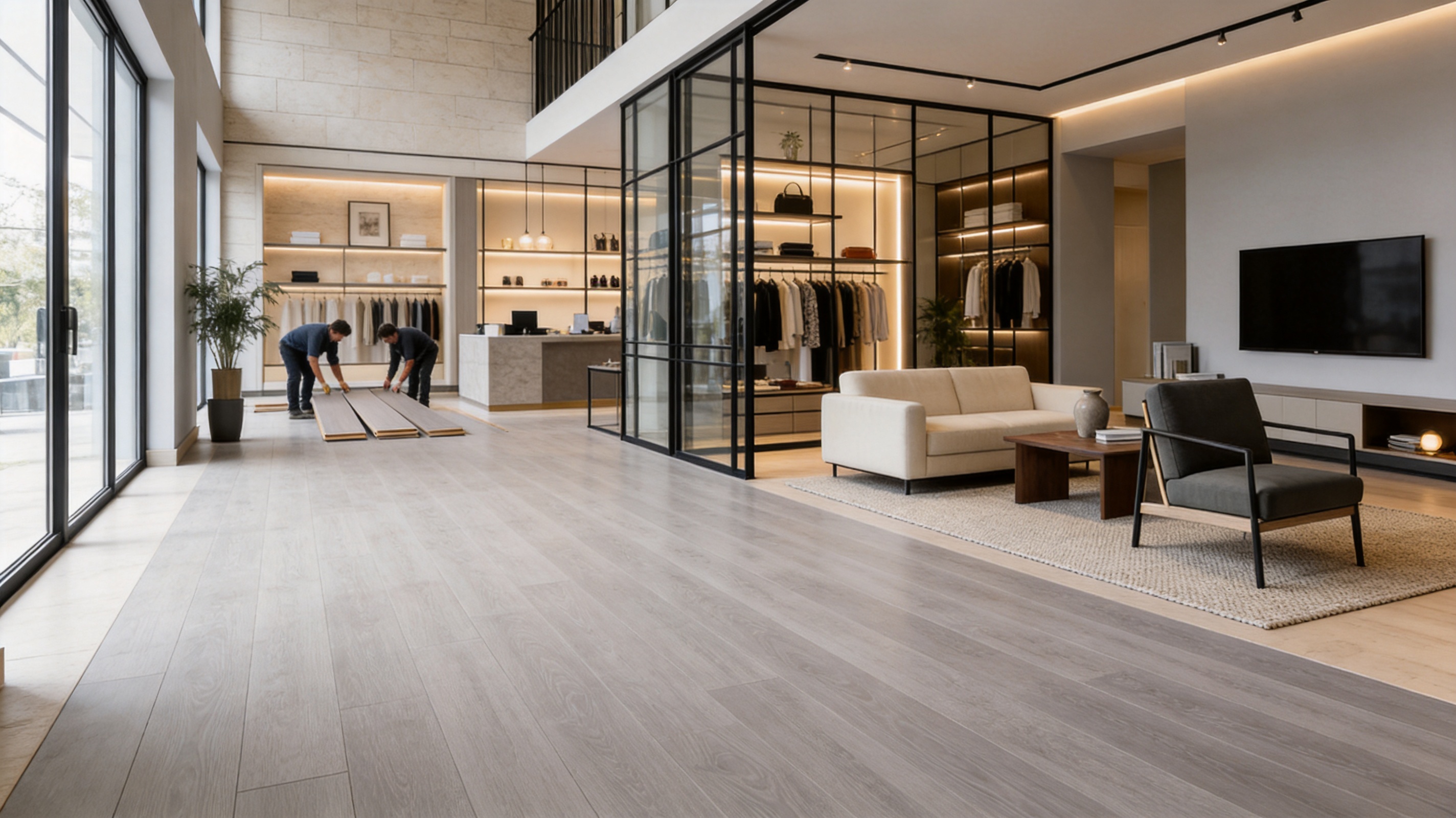
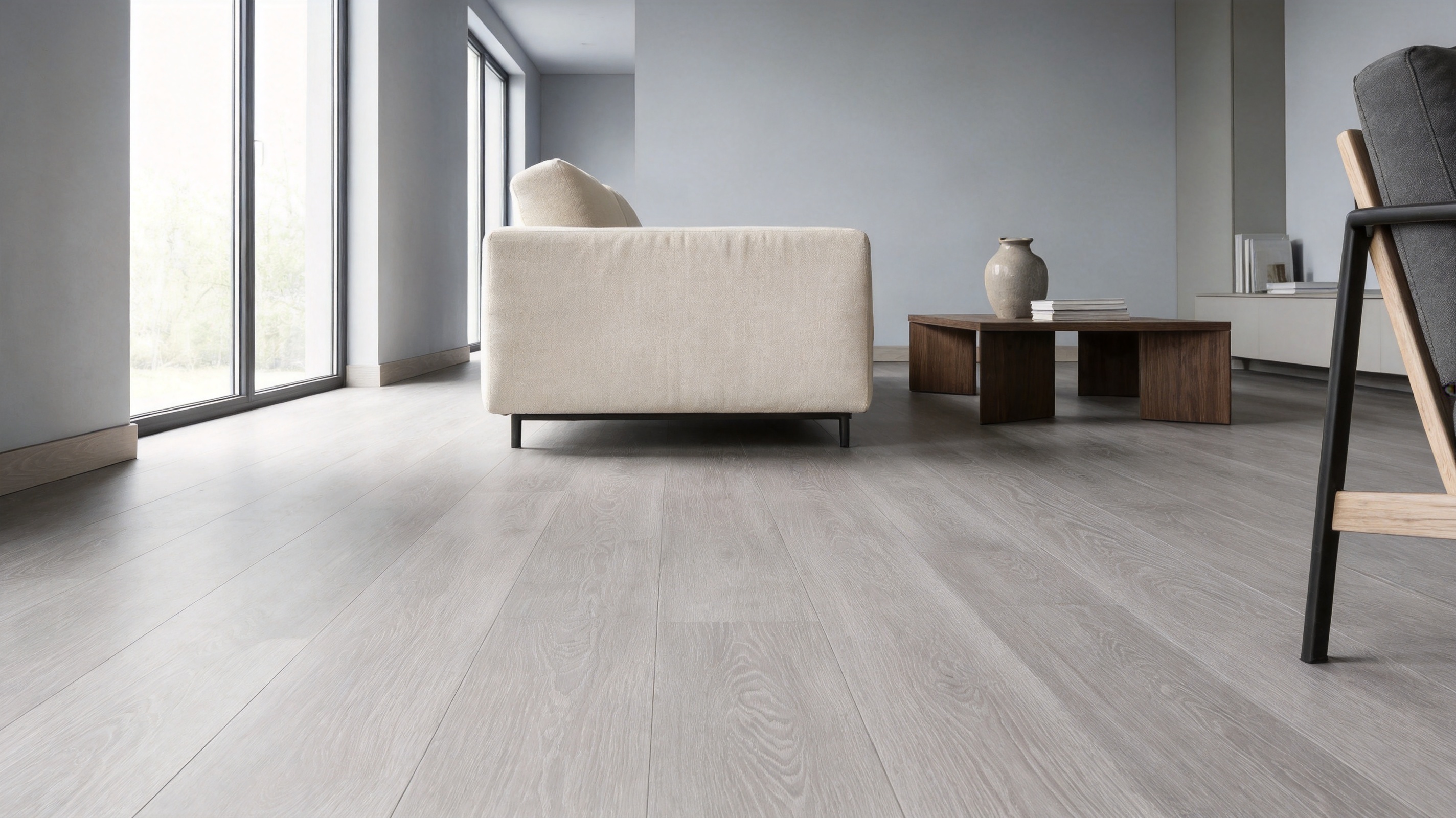
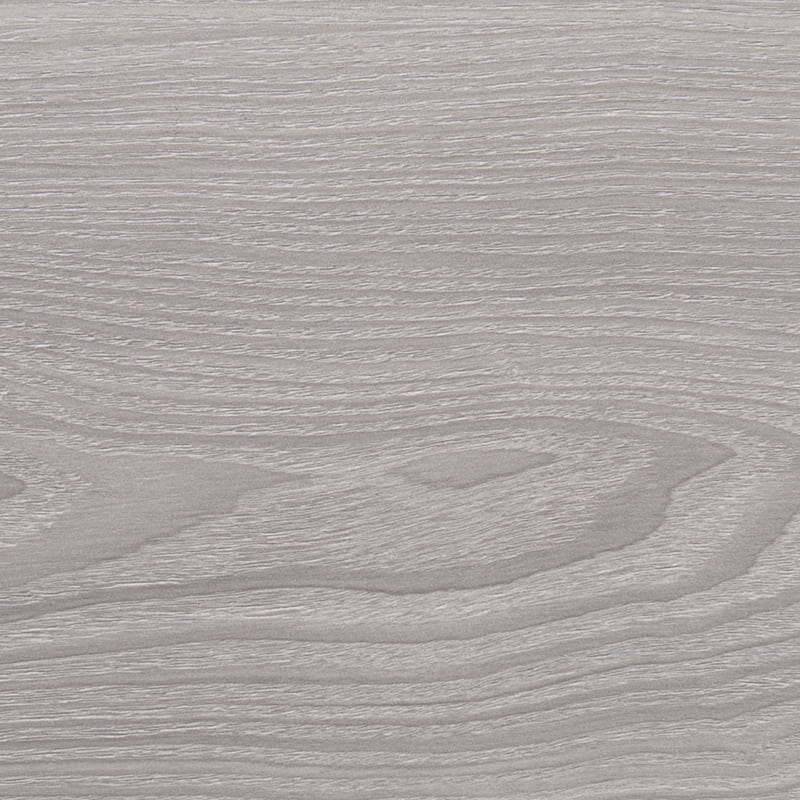
3-Layer Light Grey Straight Grain Lock DIV Engineered Wood Flooring
Light grey straight grain engineered wood flooring has become an increasingly popular choice for residential, hospitality, retail, and office interiors. It combines the natural character of real timber with the dimensional stability required by contemporary construction. The 3-layer light grey straight grain lock DIV engineered wood flooring described in this article is designed for buyers who want a clean architectural appearance, dependable performance, flexible customization, and efficient installation.
With its pale grey color, straight-grain appearance, micro-beveled edges, and secure click-lock profile, this flooring creates an understated foundation for modern interior schemes. It is suitable for minimalist rooms, Scandinavian-inspired homes, commercial spaces, premium apartments, boutique stores, offices, studies, and hospitality projects. Its appearance is refined rather than visually busy, allowing furniture, lighting, wall finishes, and architectural details to remain the focus.
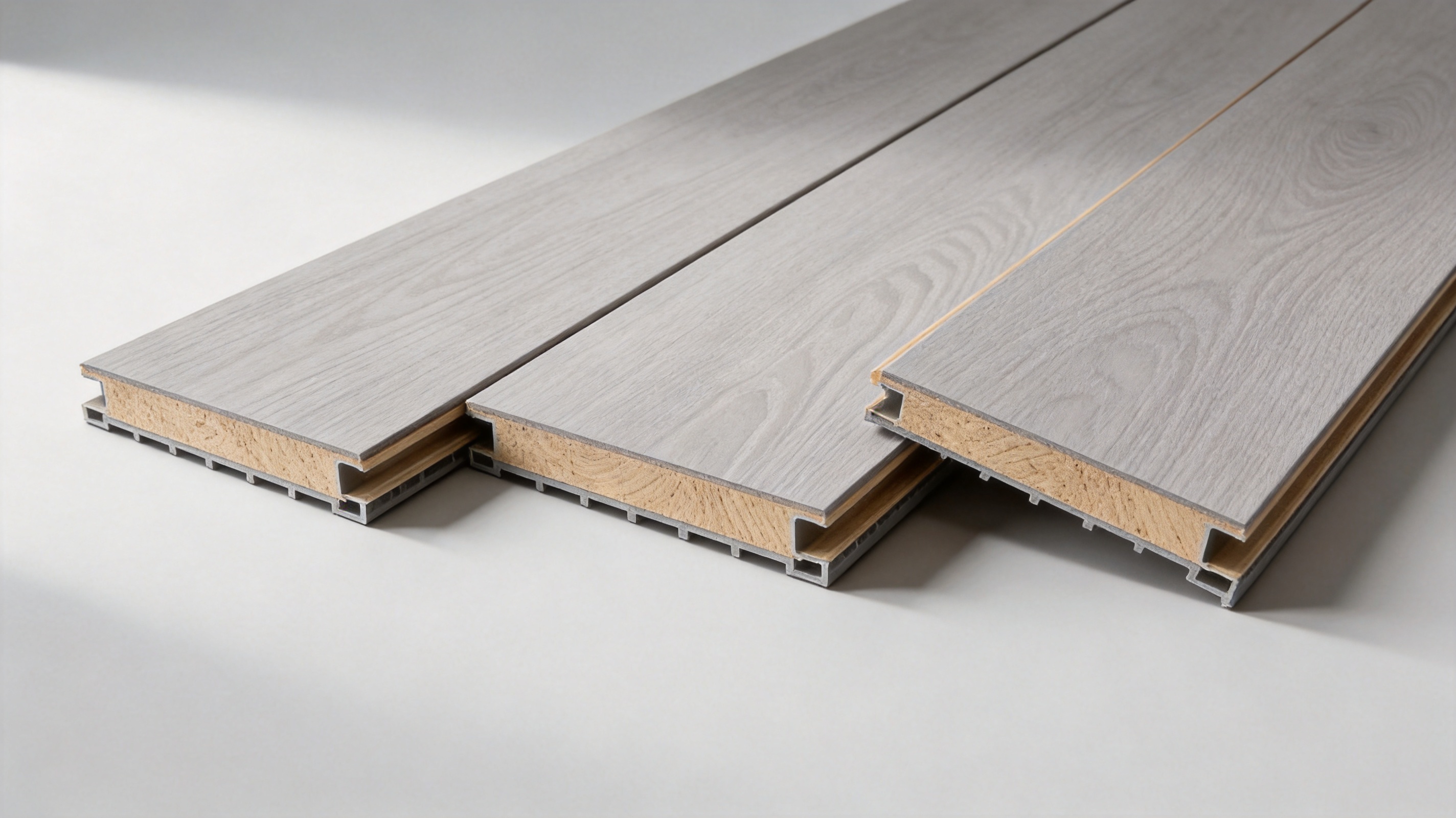
The product is manufactured as a three-layer engineered wood floor using a natural wood veneer surface and a stable spruce or pine core. The construction is designed to reduce the movement commonly associated with solid wood flooring. Depending on the project specification, buyers can select different veneer species, veneer grades, thicknesses, surface treatments, textures, dimensions, and installation methods.
More than a decorative flooring product, this collection represents a complete supply solution for distributors, contractors, architects, developers, and interior design professionals. It combines real wood aesthetics with industrial manufacturing control, customizable specifications, recognized certifications, rapid product development, and production capacity suitable for both standard orders and project-based requirements.
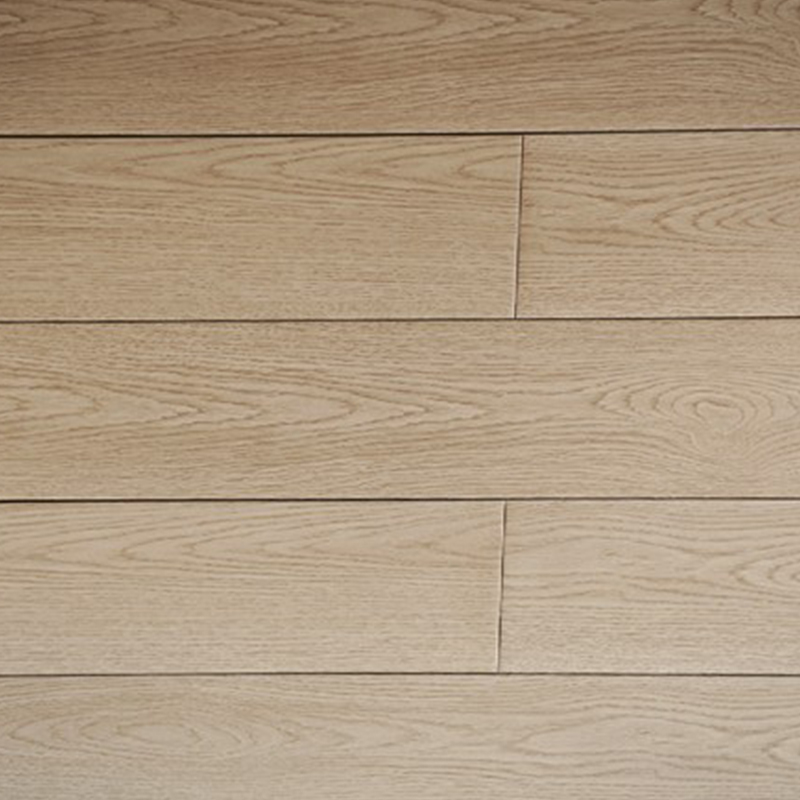
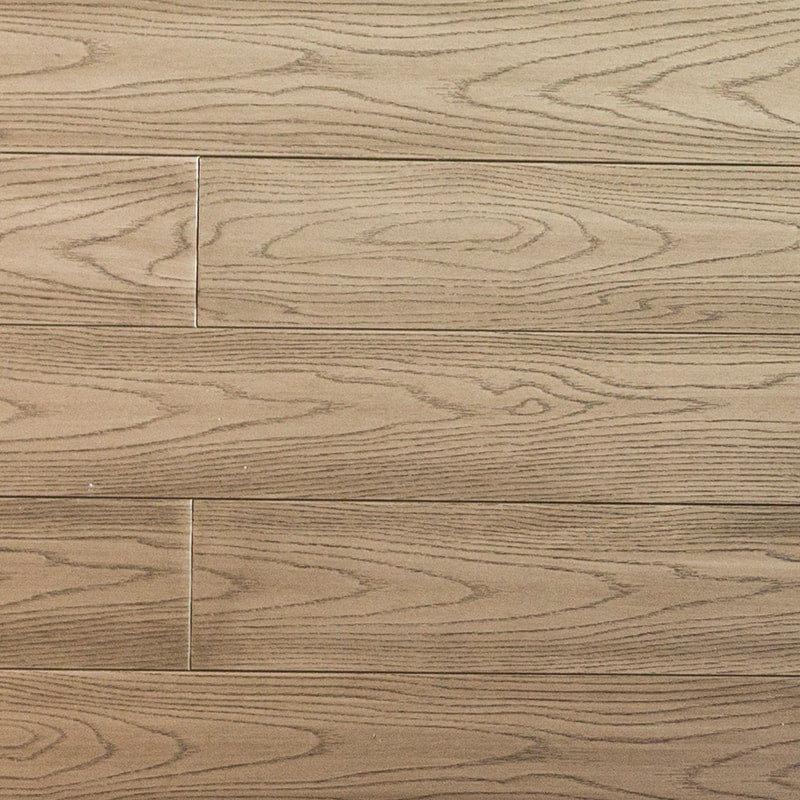
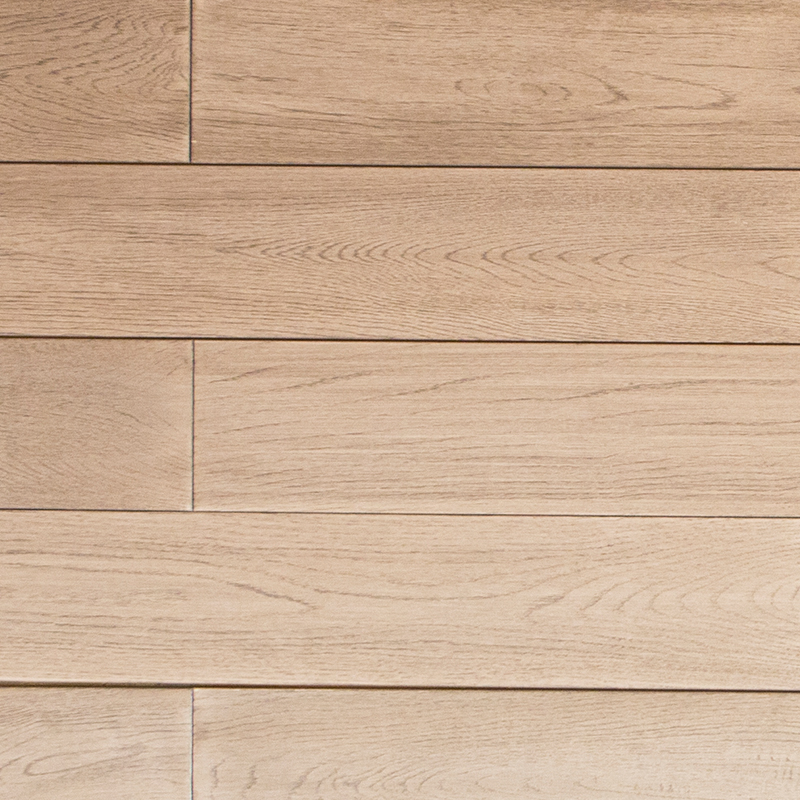
The product reference for this flooring is DF-F2675. It belongs to the 3-layer engineered flooring category and is presented in a light grey straight-grain design with a DIV locking system. The visual concept is inspired by the clean, linear appearance of ash wood. The restrained grain direction makes rooms feel orderly and spacious, while the soft grey tone provides greater flexibility than strongly colored or highly rustic flooring.
The standard product format is approximately 48.6 inches long, 7.8 inches wide, and 9/16 inch thick. This format provides a useful balance between visual scale and installation practicality. Long boards can create a more continuous appearance across a floor, while the moderate width works well in both compact rooms and larger open-plan spaces.
The flooring uses a sliced natural wood veneer surface. Veneer thickness can be customized from approximately 2 mm to 6 mm, depending on the required appearance, wear expectations, refinishing considerations, and project budget. A thinner decorative veneer can be suitable for cost-conscious applications, while a thicker surface can provide a more substantial natural wood layer for premium projects.
The core is constructed from three layers of spruce or pine. These layers are arranged to improve stability and reduce the risk of excessive expansion, contraction, warping, or cracking. The product can be installed using floating, glue-down, or staple installation methods, subject to site conditions, subfloor requirements, and professional installation recommendations.
The surface may be supplied with UV lacquer, UV oil, or hardwax oil. Buyers can also choose a wire-brushed, hand-scraped, or smooth-sanded texture. These options allow the same basic flooring concept to be adapted to different design directions, from clean contemporary interiors to more tactile and natural environments.
Flooring occupies a large visual area, so its color and grain have a strong effect on how a room is perceived. Dark floors can create warmth and drama, but they may make smaller rooms appear more enclosed. Highly varied rustic floors can add character, but their strong pattern may compete with furniture or architectural elements. The light grey straight-grain design offers a middle ground: it is expressive enough to show that it is genuine wood, yet controlled enough to support a calm and spacious interior.
The pale grey tone is particularly suitable for modern residential projects. It works with white walls, natural stone, concrete-effect surfaces, black metal, brushed brass, warm textiles, and neutral upholstery. It can also be used with natural oak furniture, walnut accents, painted cabinetry, and contemporary kitchen systems.
Straight grain contributes to a sense of visual continuity. When boards are installed in the same direction, the linear pattern can guide the eye through a room or toward a significant architectural feature. In long corridors, open-plan living areas, and commercial interiors, this directionality can support a more organized and expansive appearance.
The design is also practical for renovation projects. A light floor can help reflect available daylight, especially in apartments with limited window exposure. In offices and retail environments, it provides a neutral base that can accommodate frequent changes in furniture, displays, branding, and interior styling.
Unlike printed wood-look flooring, a natural veneer provides genuine timber variation. Each board can retain subtle differences in grain, tone, and texture. These variations help prevent the repetitive appearance sometimes associated with photographic flooring surfaces. At the same time, the engineered construction gives manufacturers greater control over board performance than many traditional solid wood formats.
The central performance advantage of this flooring is its engineered three-layer structure. Solid wood expands and contracts as moisture conditions change. This natural movement is not a defect, but it must be managed through suitable construction, acclimatization, installation, and indoor climate control. An engineered structure helps distribute movement across multiple layers, improving overall dimensional stability.
The top layer is a real wood veneer. It provides the visible species, grain, color, and tactile character of the floor. Depending on the specification, the veneer may be oak, walnut, ash, or teak. The light grey straight-grain model is primarily presented as an ash-inspired appearance, while the broader product platform can be adapted with additional species options.
The middle and lower layers are formed from spruce or pine components. The grain directions are arranged to support the board and counteract excessive movement. This cross-layer approach helps create a more stable panel than a single solid timber board of equivalent dimensions.
A stable structure is particularly valuable in regions where indoor humidity changes across the year. It can also benefit projects using underfloor heating, provided that the selected floor specification, adhesive system, installation method, and heating controls are compatible. Professional assessment is recommended before installation in technically demanding environments.
The three-layer construction also supports production efficiency. It allows the manufacturer to use premium natural wood on the visible surface while using structurally suitable timber in the core. This can reduce material waste and provide a more consistent supply than manufacturing every board entirely from one premium species.
The standard core material is spruce or pine. These softwood species are widely used in engineered flooring because they offer a practical combination of low weight, workability, stability, and availability. The core can be engineered to support the veneer while keeping the product manageable during transportation and installation.
For projects requiring different constructions, the broader manufacturing platform can also support multilayer options using eucalyptus or birch cores. This distinction is important for buyers: the featured product is a three-layer spruce or pine construction, while alternative product categories may use seven-layer configurations and different core materials.
Veneer selection affects the appearance, price, and character of the flooring. Oak offers broad market appeal and visible natural grain. Walnut provides a richer and deeper visual effect. Ash supports a straighter and more open grain appearance, making it suitable for the light grey design. Teak can provide a warmer and more distinctive expression for customized collections.
Veneer grades can be specified as AB, ABC, ABCD, or CD. These grades generally reflect the acceptable level of natural features, color variation, knots, and visual consistency. A higher visual grade may be preferred for minimalist interiors or large commercial areas where a uniform appearance is important. More character-rich grades may be suitable for hospitality, residential, or rustic design concepts.
The surface finish influences both appearance and maintenance. UV lacquer creates a protective film over the timber and can provide resistance to everyday wear and scratching. It is a practical option for many residential and commercial applications because it is relatively easy to clean and supports consistent factory finishing.
UV oil provides a different visual and tactile result. It can preserve a more natural appearance while offering factory-applied protection. The surface may appear less heavily coated than a traditional lacquered floor, depending on the selected formulation and sheen level.
Hardwax oil is another option for buyers who prefer a natural-feeling surface. It penetrates and protects the wood while maintaining visible grain and a tactile finish. Maintenance requirements may differ from lacquered flooring, so the appropriate cleaning and renewal schedule should be confirmed for each project.
Surface texture can be smooth sanded, wire brushed, or hand scraped. Smooth sanding supports a clean and contemporary appearance and is especially suitable for the light grey straight-grain concept. Wire brushing emphasizes the natural grain and adds subtle texture under changing light. Hand scraping creates a more artisanal and visibly tactile finish.
The product platform therefore provides a useful balance between standardization and customization. Buyers can retain the recognizable light grey straight-grain concept while adjusting sheen, texture, veneer species, and grade to suit a particular collection or project identity.
The DIV locking system is designed to provide tight interlocking between adjacent boards. A reliable click connection helps minimize unnecessary gaps, uneven transitions, and visible movement during installation. It also supports faster laying compared with some traditional tongue-and-groove systems.
For contractors, installation efficiency can have a significant impact on project cost. A secure click profile can reduce the time required for alignment and help installers create a consistent surface across larger areas. It can also simplify replacement work if individual boards need to be removed in certain floating installation applications.
The product includes a micro-bevel on all four sides. This small edge detail creates a subtle visual separation between boards. It can emphasize the plank format and add definition without producing an exaggerated rustic appearance. The result is appropriate for both contemporary and transitional interiors.
Three installation methods are available: floating, glue, and staple. Floating installation may be selected for suitable residential or commercial applications where installation speed and future accessibility are important. Glue-down installation can provide a firm connection to the subfloor and may be preferred for specific acoustic, thermal, or movement-control requirements. Staple installation may be selected when the subfloor and construction method support mechanical fastening.
Installation should always be based on site conditions. The subfloor should be structurally sound, clean, dry, and sufficiently level. Boards should be acclimatized according to the product and project conditions. Expansion allowances should be maintained around walls, columns, door frames, and fixed objects. Appropriate underlay, adhesive, fasteners, and moisture-control systems should be selected by qualified professionals.
| Specification | Product Information |
|---|---|
| Product Reference | DF-F2675 |
| Product Category | Three-layer engineered wood flooring |
| Design | Light grey straight grain |
| Standard Dimensions | 48.6 inches × 7.8 inches × 9/16 inch |
| Face Veneer | Customizable oak, walnut, ash, or teak |
| Veneer Thickness | Customizable approximately 2 mm, 3 mm, 4 mm, or 6 mm |
| Core Construction | Three-layer engineered wood |
| Core Material | Spruce or pine |
| Veneer Grade | AB, ABC, ABCD, or CD options |
| Veneer Cut | Sliced veneer |
| Surface Finish | UV lacquer, UV oil, or hardwax oil |
| Surface Texture | Wire brushed, hand scraped, or smooth sanded |
| Edge Profile | Micro-bevel on all four sides |
| Locking System | DIV click system |
| Pieces per Carton | 11 pieces |
| Coverage per Carton | Approximately 2.7 square meters or 29.06 square feet |
| Weight per Carton | Approximately 24 kilograms |
| Installation Methods | Floating, glue-down, or staple |
The specifications above describe the standard product configuration and available customization range. Final dimensions, packaging, surface treatment, grade, and construction should be confirmed before production because project requirements may change the final specification.
One of the most important advantages is the use of a real natural wood veneer. Printed laminate and synthetic wood-look products can offer attractive graphics, but they do not reproduce the exact depth, variation, and tactile response of real timber. Natural veneer provides authentic grain and subtle board-to-board variation that can be appreciated in both residential and commercial interiors.
Natural wood can also age more gracefully when properly maintained. Minor changes in tone and surface character may contribute to the floor’s appearance rather than making it look visibly artificial. For premium projects, the authenticity of genuine wood can support a stronger design narrative and a higher perceived value.
Compared with traditional solid wood boards, a three-layer engineered construction can provide improved dimensional stability. This is especially valuable for wide boards, changing indoor climates, and projects where installation speed and predictable performance are important.
Solid wood remains a respected flooring material, but it can be more sensitive to environmental changes. Engineered flooring reduces some of these challenges by combining a real wood face with a cross-layer core. This makes it a practical alternative for modern construction where performance consistency is a priority.
Many competing products are available only in fixed colors, dimensions, and surface treatments. This product platform offers a wider range of customization. Buyers can select veneer species, veneer thickness, visual grade, surface finish, surface texture, and color direction. Custom sizes and colors can also be discussed for suitable quantities and project requirements.
Customization is especially valuable for architects, developers, hospitality brands, and distributors who need a distinct collection rather than a generic catalog item. It allows the floor to coordinate with doors, cabinetry, wall panels, and other interior woodwork.
The DIV click system is designed to make installation more efficient and consistent. A well-engineered locking profile can reduce alignment problems and provide a cleaner result than systems that require extensive manual fitting. This benefit is particularly relevant for large projects with multiple installation teams.
The flooring is supported by compliance and management certifications including EU CE, FSC, and ISO 9001 references. The company also identifies compliance with CARB Phase 2 requirements for applicable products. Certification requirements should be verified for the exact product and shipment, but documented standards provide buyers with a stronger basis for procurement than an unverified supply chain.
Product performance depends not only on the design but also on the consistency of manufacturing. Suzhou Dicosbo Wood Co., Ltd. operates as a wood solutions manufacturer specializing in flooring, wooden doors, and custom cabinet products. The business has more than two decades of industry experience and operates production facilities covering approximately 20,000 square meters.
The company uses German imported production lines and automated quality control systems. Modern equipment can improve machining accuracy, profile consistency, surface preparation, coating uniformity, and production repeatability. These factors are important for click-lock flooring because even small dimensional variations can affect installation quality.
A three-step quality inspection process is used to support production control. Although the exact inspection points may vary by order and product type, a structured inspection system typically covers raw material review, in-process manufacturing checks, and final product assessment. This approach can help identify problems before goods are packed and shipped.
Raw material control begins with the selection of veneer and core timber. Veneer should be checked for species, moisture condition, visual grade, thickness, and defects. Core components should be assessed for dimensions, bonding suitability, and structural consistency. Careful selection at this stage supports a more uniform final product.
In-process inspection can include checks on panel bonding, board thickness, length and width, squareness, profile machining, surface sanding, and coating application. Click-lock products require particular attention to the precision of the locking edges. Accurate machining helps boards connect properly and reduces the likelihood of gaps or height differences.
Final inspection may review appearance, color consistency, finish quality, dimensions, packaging, labeling, and carton coverage. For export orders, packaging quality is also important because flooring must withstand handling, loading, unloading, and long-distance transportation.
The manufacturer reports annual production capacity of approximately 2,400,000 square meters of flooring and 5,000 sets of doors. This capacity supports both regular distribution orders and larger project-based requirements. A supplier with meaningful production scale can often provide more stable delivery planning than a small workshop with limited machinery and labor resources.
Scale does not eliminate the need for order-specific quality control, but it can improve access to raw materials, technical support, packaging resources, and production scheduling. It also enables the manufacturer to support multiple categories of interior woodwork under one supply relationship.
The company offers OEM and ODM customization, with a stated rapid prototyping capability of approximately 72 hours for suitable development requests. Rapid prototyping can help architects and product managers evaluate a color, texture, veneer, edge profile, or finish before placing a larger production order.
For flooring buyers, a prototype is useful for comparing the sample with furniture, cabinet fronts, wall colors, lighting, and other materials. It can also help identify how a surface treatment appears under natural and artificial light. Early sample approval reduces the risk of disagreement after mass production.
OEM support is valuable when a distributor needs private labeling, specific packaging, or an established specification under its own market identity. ODM support is more appropriate when the buyer needs assistance developing a new flooring collection or adapting an existing product to a target market.
Wood flooring buyers increasingly consider the environmental origin of timber, emissions, production waste, and product service life. The company identifies FSC certification among its compliance credentials. FSC certification is associated with responsible forest management and chain-of-custody controls when the relevant product and documentation are covered by the certification.
The use of a veneer-faced engineered structure can also support more efficient use of premium wood species. A thin decorative layer can deliver the visual quality of valuable timber while the structural core uses appropriate supporting materials. This does not replace the need for responsible sourcing, but it can contribute to material efficiency.
CE marking is relevant to applicable European product requirements and indicates that the product is assessed against the standards declared by the manufacturer. ISO 9001 relates to quality management systems and supports a systematic approach to process control. CARB Phase 2 is associated with limits on formaldehyde emissions from composite wood products in the applicable market context.
Buyers should request current certificates, declarations, test reports, and product-specific documentation for the exact order. Requirements can differ by country, building type, installation method, and project specification. Certification is most useful when it is supported by traceable documentation and consistent quality-control procedures.
In living rooms, the light grey straight-grain floor creates a calm and contemporary base. It can make an open-plan area appear larger and can coordinate with neutral sofas, timber coffee tables, woven rugs, and modern lighting. The natural veneer prevents the room from feeling cold or overly industrial.
The soft color and restrained grain are well suited to bedrooms. The design contributes to a quiet atmosphere and can be paired with warm textiles, upholstered furniture, natural linen, and muted wall colors. A matte or hardwax oil finish may be selected when a more natural tactile character is desired.
In a study, straight grain can reinforce a sense of order and concentration. The floor works well with built-in bookcases, custom desks, acoustic wall treatments, and understated lighting. Its neutral color also allows the room to change function without requiring a complete flooring redesign.
Retail environments require flooring that supports product presentation without competing with displays. The light grey tone can create a clean background for fashion, furniture, lifestyle, and design-oriented retail concepts. The available finish and texture choices allow the floor to be matched with a brand’s desired atmosphere.
Modern offices often combine natural materials with glass, metal, acoustic panels, and digital workspaces. Engineered wood flooring can soften the visual character of these environments while maintaining a professional appearance. For high-traffic applications, the selected finish, maintenance plan, entrance matting, and traffic management should be carefully considered.
Hotels, restaurants, serviced apartments, and boutique hospitality spaces can use the flooring to create a welcoming but contemporary setting. The ability to customize veneer, surface texture, and color makes it possible to coordinate the floor with reception counters, doors, wall panels, and cabinetry.
Correct maintenance helps preserve the appearance and service life of engineered wood flooring. Daily care should begin with the removal of dust, grit, and loose particles. Dry mopping, sweeping with a soft brush, or vacuuming with a suitable floor attachment can reduce the abrasive particles that cause gradual surface wear.
Spills should be removed promptly using a soft, lightly damp cloth. Excess water should not be left standing on the floor. Wood products respond to moisture, and prolonged wet conditions may affect joints, edges, coatings, or the core structure.
For stubborn stains, a neutral wood-floor cleaning product and a soft cloth may be used in accordance with the finish manufacturer’s instructions. Strong solvents, abrasive powders, steam cleaning, and excessive detergent should be avoided unless specifically approved for the selected surface system.
Direct sunlight can gradually change the appearance of natural wood. Curtains, blinds, ultraviolet-control glazing, and sensible furniture rotation can help reduce uneven fading. Some natural color change is normal, particularly during the early life of a timber floor.
Protective pads should be fitted beneath furniture legs. Heavy items should be lifted rather than dragged. Entry mats can reduce the amount of sand and moisture brought into the building. In commercial areas, cleaning frequency should be adjusted to traffic levels and the type of activity taking place.
Waxing or surface renewal may be considered every six to twelve months when appropriate for the selected finish. This interval is a general guide rather than a universal rule. UV lacquer, UV oil, and hardwax oil have different maintenance requirements, so the care program should follow the technical instructions for the actual product.
Before ordering, buyers should define the intended application, expected traffic level, preferred installation method, subfloor construction, local climate, and required compliance documentation. These factors influence the appropriate veneer thickness, finish, grade, packaging, and delivery schedule.
Color approval should be based on physical samples rather than digital images alone. Lighting conditions, screen settings, and camera exposure can change the apparent color of a light grey floor. A sample board or assembled panel provides a more reliable basis for approval.
Buyers should also confirm whether the design requires a consistent straight grain or a more natural distribution of grain variation. The acceptable range of knots, sapwood, color movement, and mineral streaks should be documented before production. Veneer grade selections such as AB, ABC, ABCD, or CD can help define these expectations.
Packaging requirements should be discussed for export orders. Carton labels may need to include product reference, dimensions, batch information, installation instructions, certifications, barcode data, or private-label details. Pallet configuration and container loading should be planned according to the destination market and handling conditions.
For larger projects, buyers should request a pre-production sample, a color approval panel, technical data, installation guidance, maintenance instructions, and a quality acceptance standard. These documents help align the manufacturer, distributor, contractor, architect, and end customer.
A flooring supplier that also manufactures wooden doors and custom cabinets can offer advantages for coordinated interior projects. Flooring, doors, cabinetry, wall panels, and other woodwork can be developed around compatible veneers, colors, textures, and finishing systems.
This integrated capability can simplify communication. Instead of coordinating separate suppliers for every wood element, a project team may work with one manufacturer for multiple interior components. This can reduce the risk of mismatched tones and inconsistent surface treatments.
It can also support value engineering. If a project budget changes, the manufacturer can discuss alternative veneer thicknesses, core constructions, finish systems, or grades while retaining the overall visual direction. Such adjustments are easier when the supplier understands the complete product range and production process.
DEIF’s experience across flooring, doors, and cabinetry provides a foundation for OEM and ODM cooperation. Its export experience of more than ten years and network of partners across Europe, North America, and Southeast Asia indicate familiarity with international project coordination, packaging, and documentation requirements.
The light grey floor can be coordinated with light oak doors for a soft tonal interior. Alternatively, walnut doors or cabinetry can create contrast and visual depth. Ash veneer can reinforce the straight-grain concept, while painted cabinet fronts can allow the floor to remain the main natural material in the room.
For a minimalist project, the floor may be paired with flush doors, handleless cabinets, concealed storage, and smooth-sanded surfaces. For a warmer scheme, wire-brushed flooring can be combined with textured timber doors and open-grain cabinetry.
Color coordination does not require every wood surface to be identical. A well-designed interior can use related tones with differences in grain scale, sheen, and texture. The available finish options make it possible to create either a closely matched collection or a carefully controlled contrast.
Engineered flooring provides strong performance potential, but no wood floor is completely unaffected by moisture, temperature, impact, or neglect. The best results come from matching the product to the application and following correct installation and care practices.
High-traffic projects should consider entrance protection, cleaning frequency, furniture loading, rolling loads, and the possibility of localized repairs. Residential projects should consider pets, children, footwear, indoor humidity, and exposure to sunlight. These conditions should be reviewed when choosing the surface finish and veneer grade.
The three-layer construction is designed to resist deformation and cracking under normal suitable conditions. However, installation over damp subfloors, exposure to standing water, inadequate expansion gaps, or rapid environmental changes can affect any wood-based floor. Product quality and installation quality should therefore be treated as equally important.
For underfloor heating, the installer should confirm maximum surface temperature, heating start-up procedures, moisture content, adhesive compatibility, and seasonal operating conditions. A written installation specification is recommended for commercial and technically demanding projects.
The product uses a genuine natural wood veneer rather than only a printed decorative image. Its three-layer engineered construction provides a real timber appearance while supporting greater dimensional stability than many solid wood alternatives. The surface, texture, veneer, and color can also be customized for project requirements.
The DIV system is a click-lock profile designed to connect adjacent boards securely. It helps installers achieve tight joints and can reduce the risk of visible gaps or uneven board alignment when the subfloor and installation process are properly prepared.
Yes, the flooring can be specified for offices, retail stores, hospitality spaces, and other commercial interiors. The appropriate veneer, finish, grade, installation method, maintenance plan, and traffic protection should be selected according to the expected intensity of use.
Customization options include oak, walnut, ash, and teak veneers; several veneer thicknesses; AB, ABC, ABCD, and CD grades; UV lacquer, UV oil, or hardwax oil; wire-brushed, hand-scraped, or smooth-sanded textures; and project-specific colors or sizes where applicable.
The listed standard size is approximately 48.6 inches long, 7.8 inches wide, and 9/16 inch thick. Other dimensions may be available depending on the project, order quantity, production requirements, and technical feasibility.
The veneer can be customized in approximately 2 mm, 3 mm, 4 mm, or 6 mm options. The appropriate thickness depends on the appearance, budget, project use, and long-term maintenance expectations.
The featured product uses a three-layer spruce or pine core. Other engineered flooring categories from the manufacturer may use different multilayer constructions, including eucalyptus or birch components.
It may be suitable for compatible underfloor heating systems, but this must be confirmed for the final product specification and installation method. The subfloor, moisture level, adhesive, heating controls, and maximum surface temperature should all be reviewed by qualified professionals.
The product can be installed by floating, glue-down, or staple methods, depending on the site conditions and project specification. The installer should follow the relevant technical instructions and maintain required expansion allowances.
Regular dry mopping, sweeping, or careful vacuuming removes dust and grit. Spills should be wiped promptly. A neutral cleaner and soft cloth can be used for stubborn marks when compatible with the selected finish. Excess water and abrasive products should be avoided.
Natural wood may gradually change color when exposed to prolonged direct sunlight. Curtains, blinds, ultraviolet-control glazing, and sensible furniture movement can help minimize uneven exposure and fading.
The company identifies EU CE, FSC, ISO 9001, and CARB Phase 2-related compliance among its credentials. Buyers should request current, product-specific certificates and declarations for the exact order and destination market.
The company offers OEM and ODM services. These may include customized product specifications, colors, packaging, labeling, and development support, subject to order requirements and production feasibility.
The manufacturer states that suitable rapid prototyping requests may be completed in approximately 72 hours. The actual time depends on the complexity of the sample, material availability, finish requirements, and approval process.
The 3-layer light grey straight grain lock DIV engineered wood flooring is designed for buyers seeking the visual authenticity of natural timber, the stability of engineered construction, and the convenience of a modern click-lock installation system. Its light grey appearance supports spacious, calm, and contemporary interiors, while the straight-grain design provides a controlled architectural character.
Its key technical advantages include a spruce or pine three-layer core, natural sliced veneer, customizable veneer thickness, multiple surface finishes, selectable textures, four-sided micro-beveling, and floating, glue-down, or staple installation options. These features make the product adaptable to residential, commercial, hospitality, retail, and architectural applications.
Compared with fixed-format competing products, the flooring offers a broader customization platform. Compared with printed imitations, it provides genuine wood character. Compared with traditional solid wood, its engineered structure can offer improved dimensional stability. Compared with less controlled suppliers, its manufacturing environment, production scale, inspection process, and certification framework provide a stronger foundation for consistent procurement.
Supported by more than twenty years of industry experience, approximately 20,000 square meters of production facilities, German imported production lines, automated quality control, OEM and ODM services, and international export experience, the manufacturer is positioned to support both standard distribution and demanding project requirements.
For architects, contractors, distributors, developers, and interior brands, this flooring offers more than a single color option. It provides a configurable wood surface that can be adapted to a broader interior language, coordinated with doors and cabinets, and produced through a structured manufacturing system. With correct specification, professional installation, and regular maintenance, it can provide a durable and visually refined foundation for modern spaces.
1. Product specification sheet for DF-F2675 three-layer engineered wood flooring.
2. Manufacturer-provided technical information on natural wood veneer, spruce and pine core construction, surface finishes, click-lock profiles, and installation methods.
3. General principles of engineered wood flooring design, dimensional stability, moisture management, and professional installation practice.
4. European conformity and product documentation principles associated with CE-marked building products.
5. FSC principles concerning responsible forest management and chain-of-custody certification.
6. ISO 9001 quality management system principles for manufacturing organizations.
7. General indoor air-quality and composite wood emission requirements associated with CARB Phase 2.
8. Manufacturer information concerning OEM and ODM customization, production capacity, quality inspection, export experience, and rapid prototyping services.

We provide customers with sustainable and eco-friendly
engineered wood solutions and services.
Choose DEIF for the perfect blend of
performance and aesthetics.
