


 English
 Español
 عربى


Get Social
Choose DEIF for the perfect blend of
performance and aesthetics.
 Get Free Sample

Content
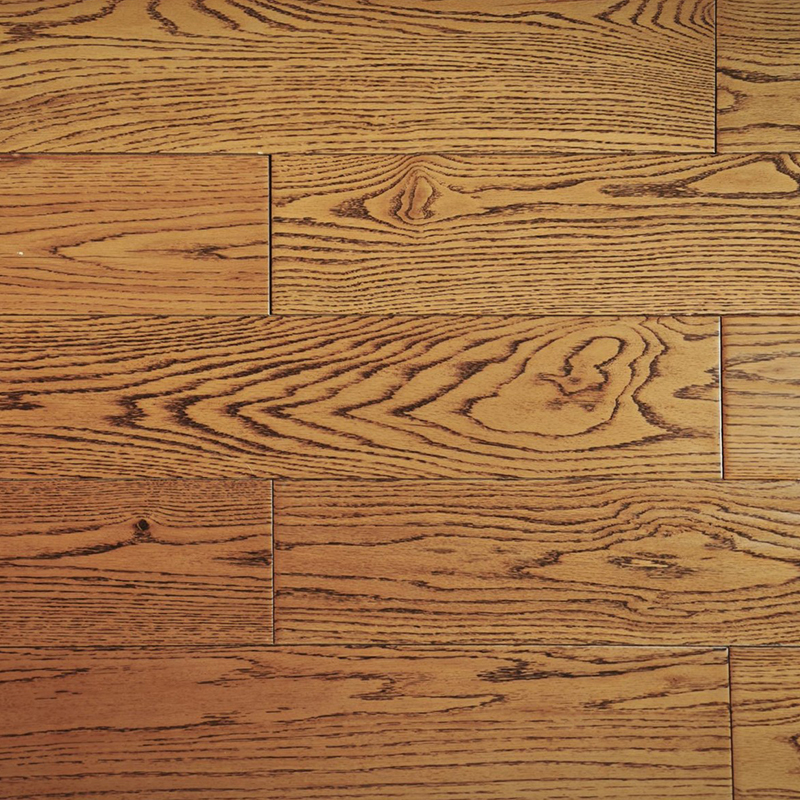
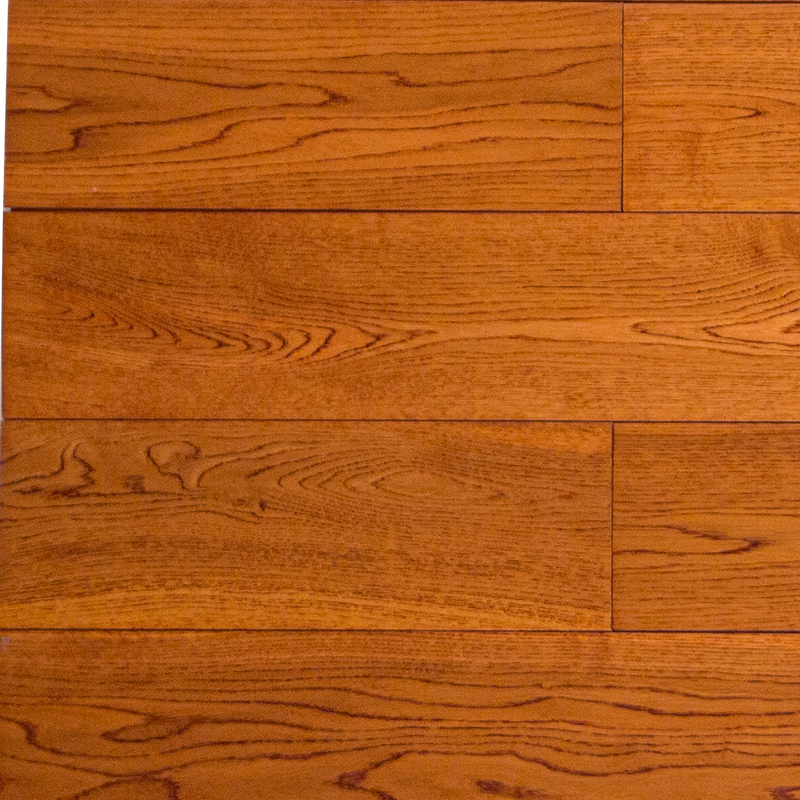
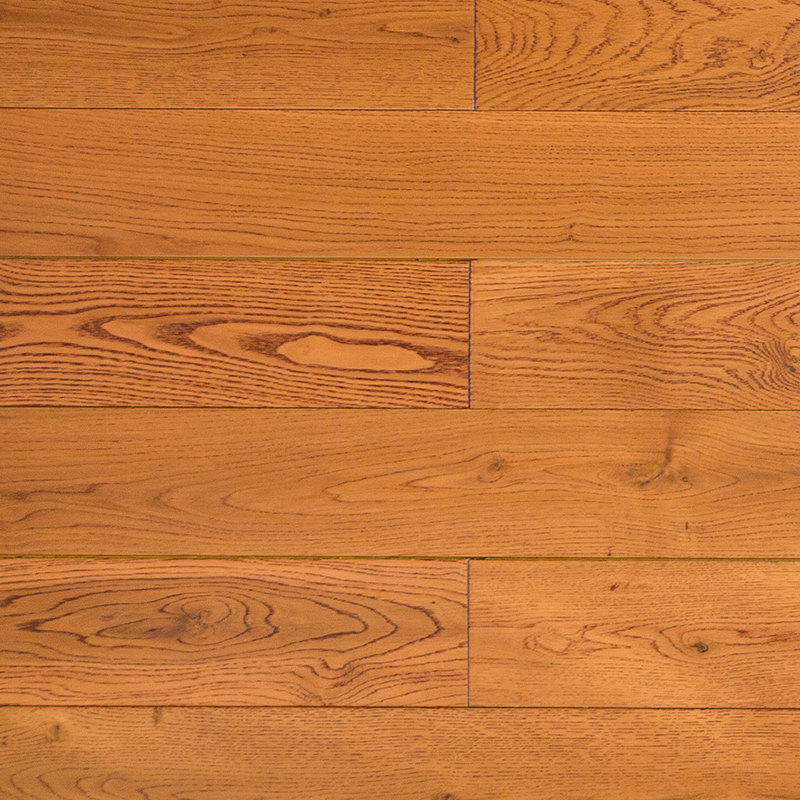
American Red Oak Natural Brown Wide Plank Solid Wood Flooring is designed for projects that require authentic natural material, strong visual continuity, and dependable long-term performance. With its warm brown appearance, 155 mm wide plank format, solid hardwood construction, and customizable surface treatments, this flooring solution is suitable for luxury residences, villas, large living rooms, open-plan interiors, hospitality environments, and selected light commercial applications.
Unlike engineered or composite flooring products that combine multiple layers of different materials, this flooring uses a 100% solid hardwood core. The solid construction allows the natural character of oak to remain visible from the surface through the body of the board. The result is a floor with genuine wood grain, a warm underfoot feel, and a substantial material presence that supports high-end interior design concepts.
The product is identified as DF-SM06 and belongs to the Solid Oak Wood Flooring collection. Its natural brown color provides a balanced foundation for modern, classic, transitional, rustic, and luxury interiors. The wide plank design reduces the number of visible joints across a floor area, creating a calmer and more expansive visual effect than narrow-format flooring.
For buyers, distributors, architects, contractors, and developers, the flooring offers more than an attractive surface. It combines a solid wood core, E0 environmental positioning, tongue-and-groove construction, customizable finishes, certified production, and the supply capabilities of an experienced wood solutions manufacturer. This makes it appropriate for both standardized product programs and customized project requirements.
The flooring is produced from American red oak, described in the supplied product information as “Red Oka.” In professional product communication, the material is generally presented as American red oak. Oak is widely valued for its recognizable grain structure, natural strength, and ability to accept a broad range of stains, oils, lacquers, brushing techniques, and handcrafted textures.
The natural brown tone is deliberately versatile. It can be paired with light walls, stone, leather, metal, glass, or dark cabinetry. It can also soften contemporary spaces that might otherwise appear too severe or industrial. In traditional interiors, the same color supports a sense of warmth and continuity without overpowering furniture, architectural details, or decorative finishes.
| Product Name | American Red Oak Natural Brown Wide Plank Solid Wood Flooring |
| Product Code | DF-SM06 |
| Product Category | Solid Oak Wood Flooring |
| Construction | 100% solid hardwood core |
| Nominal Dimensions | 35.83 inches long x 6.22 or 6.61 inches wide x 0.71 inches thick |
| Metric Approximation | 910 mm long x 158 or 168 mm wide x 18 mm thick |
| Wood Species | American red oak |
| Grade | ABCD character grade |
| Profile | Tongue and groove on four sides with micro-beveled edges |
| Moisture Content | 8% to 10%, with a tolerance of approximately plus or minus 2% |
| Carton Quantity | 10 pieces per carton |
| Coverage | Approximately 1.48 square meters or 15.97 square feet per carton |
| Carton Weight | Approximately 19.8 kilograms |
| Installation Options | Glue or staple installation, configured according to project requirements |
| Surface Options | Wire brushed, handscraped, or smooth sanded |
| Finish Options | UV lacquer, UV oil, or hardwax oil |
Flooring format has a direct influence on how a room is perceived. Narrow boards introduce more repeated lines and more frequent joints. While this can create a traditional or lively appearance, it may also make a large floor appear visually fragmented. Wide plank flooring uses fewer boards across the same area, allowing the grain and color of each individual plank to contribute to a more continuous composition.
The 155 mm nominal width of this product is particularly effective in large rooms. In a villa living room, open-plan dining area, entrance hall, or spacious suite, the broader format can help the floor feel more intentional and architectural. The eye travels across longer uninterrupted sections of wood, which can make the room appear wider, calmer, and more cohesive.
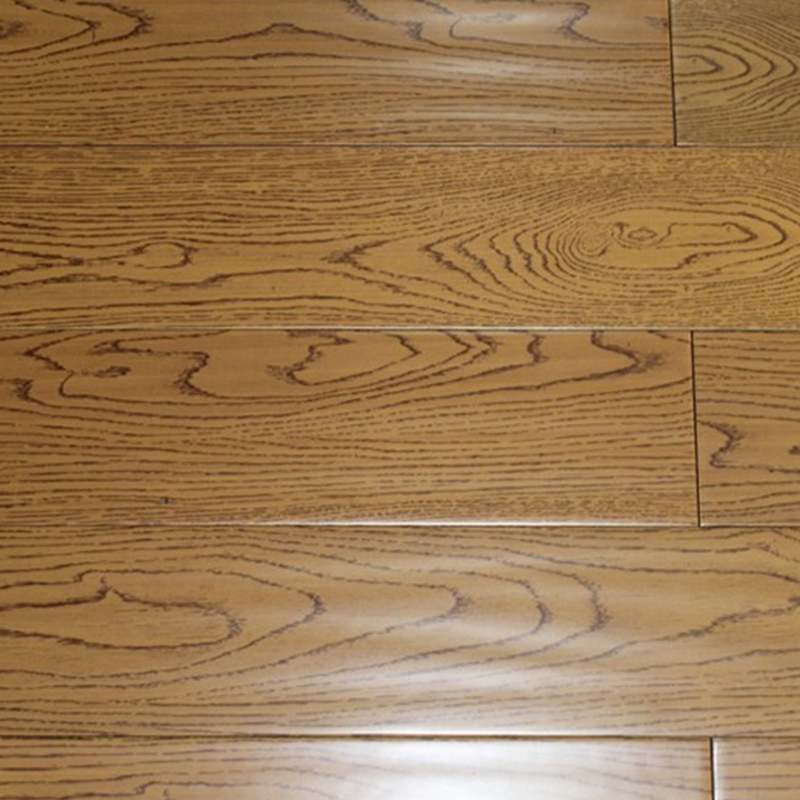
Wide planks also provide more space for natural oak character to be appreciated. Cathedral grain, mineral streaks, subtle knots, and tonal variation are easier to see than they would be on narrow boards. Because the product is supplied in an ABCD character grade, the floor can retain a visibly authentic wood appearance rather than presenting an overly uniform or artificial surface.
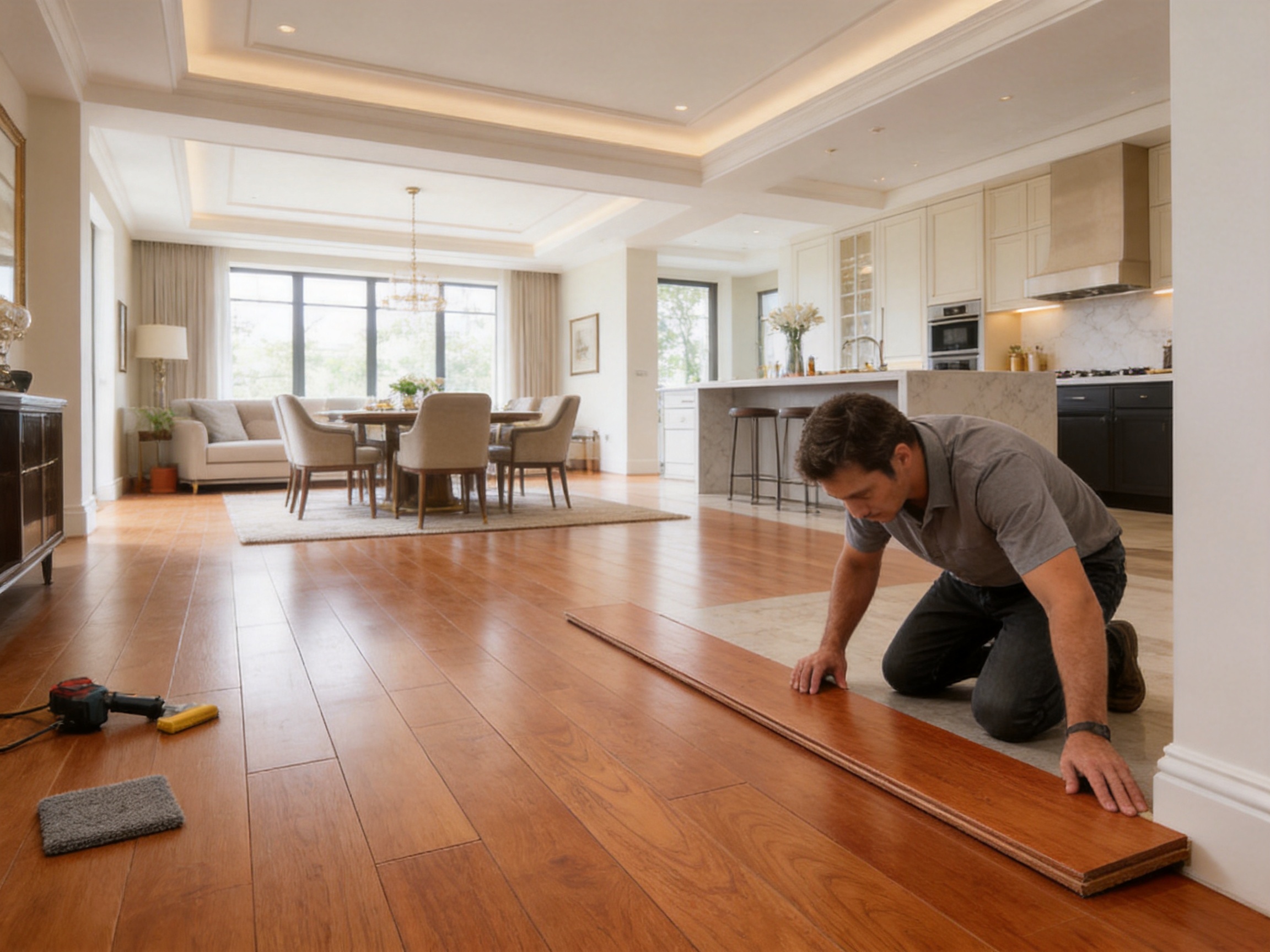
The visual effect is especially valuable in open-concept interiors. When the living, dining, kitchen, and circulation areas share the same flooring direction and finish, the floor becomes a unifying architectural element. It helps connect separate functional zones without requiring walls, thresholds, or visual breaks.
Wide planks can also support furniture planning. Large sofas, dining tables, islands, freestanding bathtubs, and statement fireplaces often look more proportionate when placed over a floor with substantial board dimensions. The broad format creates a visual foundation that matches the scale of premium furniture and architectural features.
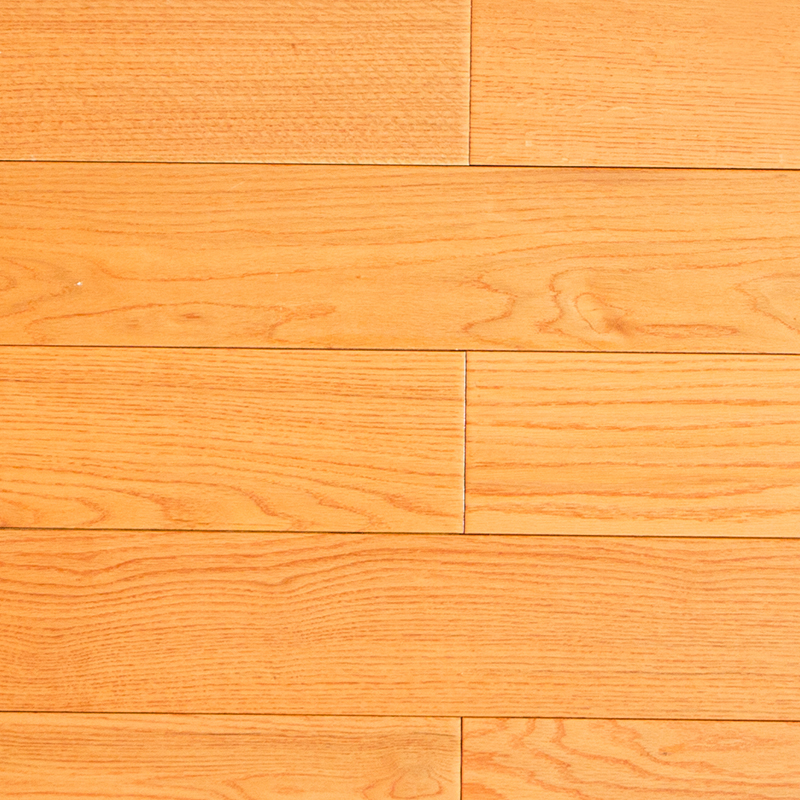
American Red Oak Natural Brown Wide Plank Solid Wood Flooring
The defining feature of DF-SM06 is its solid hardwood core. Every board is made from solid wood rather than a composite base covered with a thin decorative veneer. This construction offers a direct, authentic connection between the visible surface and the material throughout the board.
Solid wood provides a distinctive tactile quality. Underfoot, it feels warm and natural rather than synthetic. The surface presents genuine grain depth and a material character that develops over time. In carefully maintained interiors, the floor can become more attractive as the finish matures and the wood gains a richer patina.
Another benefit is the design flexibility associated with solid oak. Depending on the specification and project conditions, solid wood flooring can support future maintenance processes such as professional refinishing. The precise number of refinishing cycles depends on the thickness of the usable wear layer, the sanding method, the installation condition, and the recommendations of the flooring specialist. Buyers should always confirm refinishing requirements before installation.
Solid construction also supports consistency within a product category. The supplied product information states that the hardwood species is matched to the flooring type. This helps maintain a coherent material identity across an order and reduces the visual inconsistency that may occur when unrelated wood species are combined in one flooring system.
Compared with many multi-layer alternatives, solid flooring offers a stronger perception of value. Customers can see and feel that the product is made from a substantial natural material. For luxury residential developments, boutique hospitality spaces, and premium renovation projects, this authenticity can be an important selling point.
Composite and engineered flooring can provide useful dimensional solutions for certain applications, but they are not identical to solid hardwood flooring. A composite board relies on multiple layers, often including a core made from a different wood product or fiber-based material. DF-SM06, by contrast, is specified with no composite layers and a 100% solid hardwood core.
This difference influences appearance, touch, repair expectations, and product positioning. Solid oak emphasizes natural material authenticity and long-term value. It is particularly suitable when the client wants the floor to be a central design feature rather than a background covering.
Solid wood does require responsible moisture management and professional installation. Natural wood responds to changes in humidity, temperature, and building conditions. For that reason, the strength of the product should be considered together with correct acclimatization, subfloor preparation, expansion planning, and ongoing maintenance.
The natural brown color of the floor is one of its most commercially useful characteristics. It is warm enough to prevent an interior from feeling cold, yet neutral enough to work with a wide selection of materials and colors. This balance makes the floor appropriate for projects where the design scheme may change from room to room or where furniture collections may be updated over time.
In contemporary interiors, natural brown oak can soften white walls, black metal, concrete surfaces, and minimalist cabinetry. In classic interiors, it complements moldings, paneled walls, brass hardware, and upholstered furniture. In rustic or country-inspired spaces, the visible grain and character grade reinforce a connection with natural materials.
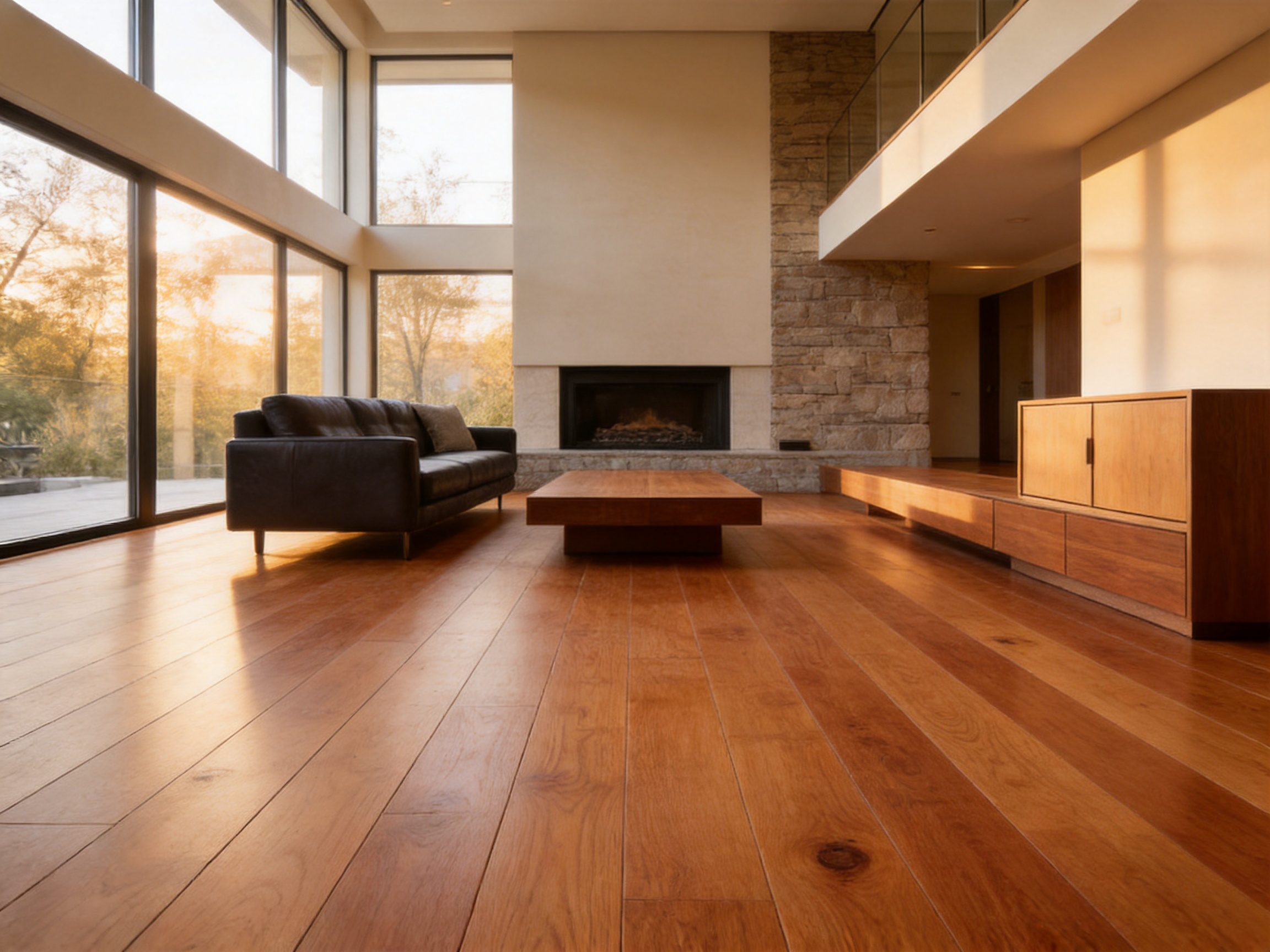
The floor is also suitable for layered luxury schemes. Leather sofas, chandeliers, stone fireplaces, brushed metal fixtures, and carefully selected textiles can be used to create a refined atmosphere. The floor does not need to dominate the room; its role can be to provide a stable, warm, and continuous platform for the rest of the design.
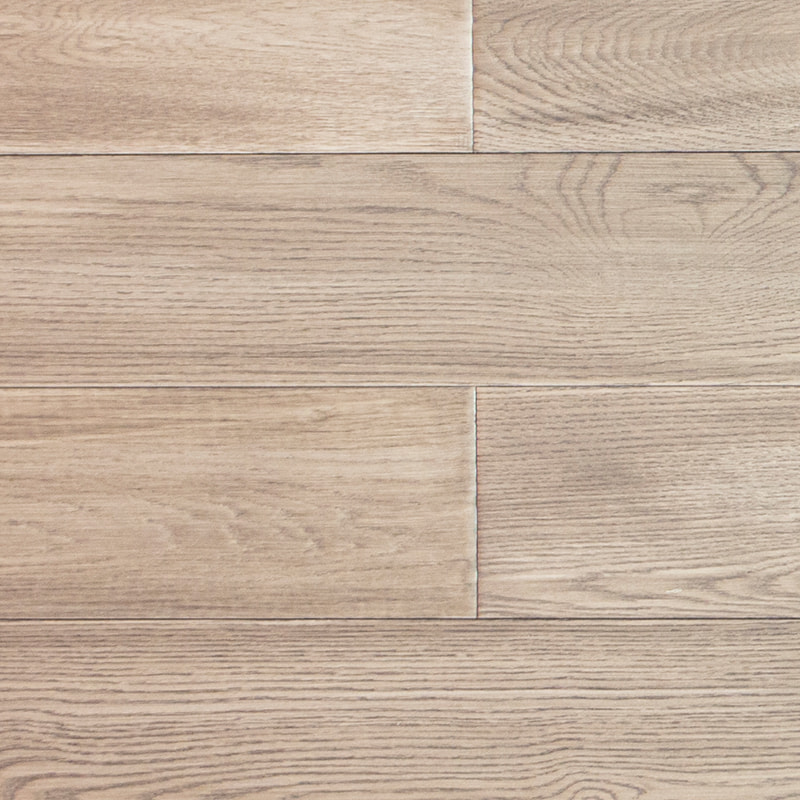
Because the surface tone can be customized through finishing, buyers may request a color direction that is more golden, deeper brown, lightly smoked, or more understated, subject to production confirmation and sample approval. Custom color development should always be evaluated using physical samples under the lighting conditions of the intended project.
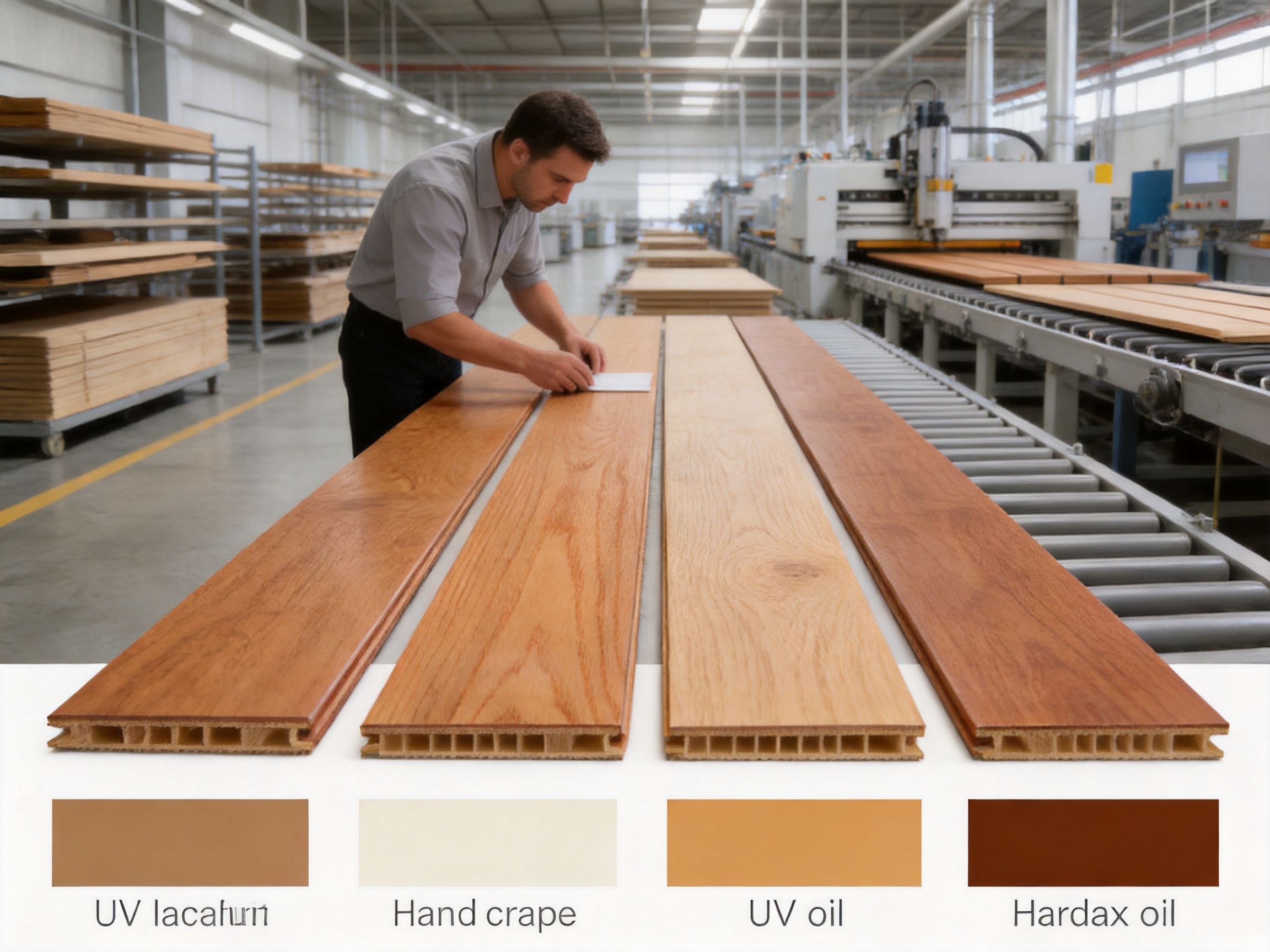
One of the product’s major advantages over standard off-the-shelf flooring is its range of surface options. The listed textures include wire brushed, handscraped, and smooth sanded treatments. Each treatment changes the way light interacts with the wood and influences the character of the finished interior.
Wire brushing accentuates the softer grain areas of oak and creates a tactile surface with visible linear texture. It is well suited to contemporary rustic, Scandinavian, modern farmhouse, and natural luxury interiors. The texture can help make everyday marks less visually prominent while strengthening the authentic appearance of the wood.
Handscraped treatment produces a more expressive and artisanal appearance. Subtle variations in the surface can give each board a handcrafted quality, making the floor appropriate for projects that seek individuality rather than perfect uniformity. Handscraped flooring works especially well with aged leather, textured fabrics, reclaimed-style furniture, and traditional architectural elements.
Smooth sanding presents a cleaner and more restrained appearance. It allows the natural oak grain and brown color to remain visible without strong relief. This option is useful for modern apartments, executive interiors, premium offices, and projects where a refined low-texture finish is preferred.
The listed finish choices include UV lacquer, UV oil, and hardwax oil. UV lacquer can provide a protective surface with consistent visual clarity and a practical maintenance profile. UV oil emphasizes the natural appearance of the wood while offering a soft, authentic feel. Hardwax oil combines a natural tactile impression with a protective treatment suitable for carefully maintained residential and project interiors.
The correct finish depends on the expected traffic, cleaning routine, appearance requirements, and maintenance resources of the project. A professional product sample should be reviewed before final approval because the same brown color can appear different depending on the texture and finish system selected.
DF-SM06 is specified with a tongue-and-groove profile on four sides and a micro-beveled edge. The tongue-and-groove system allows adjacent boards to interlock along their edges, supporting orderly alignment and a stable floor layout. The product information describes the system as suitable for glue-free configuration when required, while the listed installation methods are glue and staple. The final installation method should be selected according to the subfloor, site conditions, project specification, and professional installer guidance.
The micro-beveled edge creates a subtle visual line between boards. This detail can reduce the visual impact of minor dimensional variation and small installation gaps, while also emphasizing the individual character of each plank. Compared with a completely square-edged floor, the micro-bevel can provide a more forgiving and clearly articulated appearance.
Wide plank installation requires careful planning. The subfloor must be clean, dry, level, and structurally sound. Moisture readings should be taken before installation, and the building should be enclosed with the appropriate heating, ventilation, and humidity conditions in place. Flooring should be acclimatized in accordance with the installer’s technical procedure and the conditions specified for the project.
Board direction can influence the perceived proportions of a room. Installing planks along the longest dimension may enhance a sense of length, while crossing the primary direction may create a more balanced composition. In open-plan areas, the installation direction should be coordinated with doorways, sight lines, staircases, kitchen islands, and transitions to other materials.
Underfloor heating compatibility is listed among the product features. However, solid wood flooring requires careful system coordination because natural wood responds to heat and moisture changes. The heating system should be approved for use with solid wood flooring, temperature changes should be gradual, and the installer should confirm maximum surface temperatures and humidity limits before work begins.
Responsible material selection is increasingly important for homeowners, developers, architects, and commercial buyers. This flooring is described as meeting the E0 environmental standard, with formaldehyde emissions stated as no more than 0.05 mg per cubic meter where applicable to the solid wood flooring range. The product information also identifies CE and FSC certification within the company’s compliance and product documentation.
The solid wood structure is relevant to environmental communication because the flooring does not use composite layers in its construction. A natural wood product can support biophilic design goals and create a closer visual relationship between interior spaces and natural materials. For sustainability claims, however, project buyers should request the specific documentation required in their market, including certification scope, chain-of-custody information, test reports, and applicable declarations.
FSC certification is associated with responsible forest management and traceability requirements when the relevant product and supply chain are covered by the certification. CE marking relates to applicable European conformity requirements. Certification documents should be checked against the precise product specification and shipment rather than assumed solely from a general company statement.
Environmental performance should also be considered across the product life cycle. Durable flooring that is properly installed and maintained may remain in service for many years. A long service life can reduce the frequency of replacement and help preserve the value of the original materials. Correct cleaning, humidity control, protection from furniture movement, and timely maintenance all contribute to this objective.
The product is supplied by Suzhou Dicosbo Wood Co., Ltd., operating under the DEIF wood solutions identity. The company was founded in 1999 and has more than two decades of experience in wood product manufacturing. Its stated production infrastructure includes approximately 20,000 square meters of facilities, German-imported production lines, and automated quality control systems.
These capabilities are important when evaluating a wide plank solid wood product. Wide boards require control over moisture content, machining accuracy, profile consistency, surface preparation, finish application, and packaging. Variations in any of these areas can become visible across a large floor installation. A manufacturer with established production systems is better positioned to manage repeatability across batches and project quantities.
The company reports a three-step quality inspection process. A structured inspection sequence can include incoming material assessment, in-process dimensional and surface checks, and final inspection before packing. Specific inspection procedures should be confirmed for each order, but the principle is valuable: quality must be controlled throughout production rather than checked only at the end.
Wood selection is the foundation of flooring quality. Boards must be evaluated for species identity, grain character, defects, moisture condition, and suitability for the requested grade. For an ABCD character grade, natural features are part of the design, but unacceptable structural defects must still be excluded or controlled according to the agreed specification.
Consistent sorting is particularly important for natural brown flooring. The objective is not to eliminate every variation, because that would undermine the authentic character of oak. Instead, the material should be sorted so that the overall shipment achieves a balanced visual range appropriate for the intended project.
The listed moisture content is 8% to 10%, with an indicated tolerance of approximately plus or minus 2%. Moisture management helps reduce the risk of excessive movement after installation. Solid wood will naturally respond to the relative humidity of its environment, so factory control must be followed by correct site storage and acclimatization.
Moisture meters, controlled storage, sealed packaging, and documented inspection procedures can all contribute to stable product delivery. Buyers should communicate the destination climate and installation environment early in the ordering process, especially for overseas projects or buildings with significant seasonal humidity changes.
Tongue-and-groove flooring depends on accurate machining. The tongue, groove, board thickness, width, and end profile must be produced consistently so that boards can be assembled without excessive force or irregular alignment. The four-sided T&G specification supports installation efficiency and helps maintain a uniform surface when the subfloor and installation method are correctly prepared.
Micro-beveled edges also require repeatable machining. If the bevel varies from board to board, the floor can lose visual consistency. Automated production lines and process inspection are therefore valuable for large orders, hospitality projects, multi-unit residential developments, and distributor programs.
Texture and finish application must be coordinated carefully. Wire brushing and handscraping need to be controlled so that the intended grain relief is achieved without weakening the board or creating unwanted roughness. Smooth sanding requires a consistent surface profile to ensure even absorption and finish appearance.
UV lacquer, UV oil, and hardwax oil each have different application requirements. A reliable finishing process controls coating quantity, curing, surface cleanliness, color uniformity, and adhesion. Production samples and approval boards can help buyers confirm the expected appearance before the full order is manufactured.
Each carton is listed as containing 10 pieces, with approximately 1.48 square meters or 15.97 square feet of coverage and a weight of about 19.8 kilograms. Correct packaging protects finished surfaces during handling, storage, and international transport. Labels should clearly identify product code, dimensions, grade, finish, batch information, quantity, and handling instructions when required.
The company reports more than 10 years of export experience and serves partners in Europe, North America, and Southeast Asia. Export experience can support communication regarding documentation, packing standards, shipping coordination, and market-specific product requirements. Buyers should still confirm all import, fire, emissions, labeling, and installation requirements for the destination country.
Customization is a major advantage for buyers who do not want to select from a limited standard range. The product information states that custom sizes and colors are available, while the surface texture, finish, and installation profile can also be configured according to project requirements.
For a residential project, customization may involve coordinating the floor with cabinetry, doors, wall panels, stair components, or furniture. A developer may require one consistent color across several unit types, while a private homeowner may request a more distinctive handscraped surface. In a commercial setting, customization can help align the flooring with a brand environment, hospitality concept, or architectural material schedule.
OEM and ODM services extend this flexibility. OEM production is useful when a distributor or project company needs products under its own brand or specification. ODM support can help customers develop a product from an existing manufacturing platform while adjusting dimensions, colors, textures, packaging, or technical details.
The company also states that it can provide rapid prototyping within 72 hours. Prototype timing depends on the complexity of the requested design, sample availability, and approval process, but fast sample development can reduce delays during design coordination. It allows architects, interior designers, and purchasing teams to review physical finishes before committing to mass production.
Customization should be managed through a documented approval procedure. The final specification should identify species, grade, dimensions, moisture content, profile, edge detail, surface texture, finish, color, packaging, tolerances, and inspection standards. A signed sample or approved control board is valuable for reducing misunderstandings between design, production, and installation teams.
The wide plank format is well suited to villas with large living spaces, double-height rooms, private libraries, master suites, and formal dining areas. The natural brown tone can provide continuity between public and private zones, while the solid oak construction contributes to a sense of permanence.
In a large living room, the floor can be coordinated with a stone fireplace, leather seating, a sculptural chandelier, and dark or light cabinetry. Laying the planks toward the main view may lengthen the room visually, while a carefully designed border or transition can define seating areas without interrupting the main field.
Open interiors benefit from flooring that links different functions. The broad boards reduce visual noise and allow the kitchen, dining, and living areas to read as one connected environment. Areas exposed to water or heavy spills should be evaluated carefully, and protective measures should be used around sinks, entrances, and food preparation zones.
Boutique hotels, private clubs, restaurants, and premium offices may use the product where natural materials are central to the guest experience. The selection of finish should reflect traffic levels and maintenance capacity. High-traffic areas may require more frequent inspections and a clearly documented care program.
The product information identifies general suitability for residential and light commercial use. Before specifying it in a commercial project, buyers should evaluate expected foot traffic, rolling loads, furniture movement, cleaning chemicals, accessibility requirements, and local building codes. The floor should be matched to the actual use rather than selected on appearance alone.
Daily maintenance is straightforward when the floor is protected from excessive moisture and abrasive dirt. The recommended approach is to remove loose dust and grit regularly and use a damp cloth or carefully controlled damp mop for routine cleaning. The floor should not be soaked with excessive water because moisture can penetrate joints and affect solid wood movement.
Entrance mats can reduce the amount of sand and moisture brought into the room. Felt pads or protective sliders should be fitted to furniture legs. Heavy furniture should not be dragged directly across the surface. When items must be moved, they should be lifted where possible or moved using appropriate protective equipment.
Annual maintenance oil is recommended in high-traffic areas when the selected finish requires it. The timing may vary according to the surface finish, traffic level, cleaning routine, and manufacturer’s maintenance instructions. Hardwax oil and oil-finished floors generally require different care from lacquered floors, so the cleaning products should be compatible with the installed finish.
Indoor climate control is also important. Large fluctuations in relative humidity can encourage gaps, cupping, crowning, or other movement in natural wood flooring. Maintaining a stable indoor environment, especially during seasonal heating or cooling, can help preserve the floor’s appearance and performance.
Any spills should be removed promptly. Rubber-backed mats, adhesive tapes, harsh chemicals, steam cleaners, and unsuitable detergents may damage the finish or discolor the wood. A maintenance plan should be provided to occupants, cleaning staff, and facility managers before the floor is put into service.
The product’s competitive position is based on a combination of features rather than a single attribute. Compared with narrow plank flooring, it delivers a more expansive visual effect. Compared with printed or synthetic surfaces, it provides authentic solid oak material. Compared with fixed standard products, it offers customization in size, color, texture, and finish.
Its 100% solid hardwood core is a clear differentiator for customers who prioritize natural construction. The E0 environmental positioning and stated CE and FSC compliance add value for buyers who need documented environmental and market conformity considerations. The T&G profile, micro-beveled edges, and multiple installation options support professional project execution.
The product also benefits from manufacturing scale. A stated annual production capacity of approximately 2,400,000 square meters of flooring allows the company to support larger programs, while the reported capacity of 5,000 sets of doors reflects broader woodworking expertise. Production capacity alone does not guarantee quality, but when combined with inspection procedures, automated control, and export experience, it can support stable supply for qualified orders.
Another competitive advantage is the company’s ability to coordinate related wood products. Because DEIF specializes in wood flooring, wooden doors, and custom cabinet solutions, project buyers may be able to develop a more coherent interior material package through one manufacturing partner. This can simplify communication regarding wood species, colors, surface treatments, and overall design direction.
Before ordering, buyers should define the intended application, installation environment, required quantity, destination market, and desired appearance. The product code DF-SM06 should be used together with the complete technical specification to avoid confusion between similar colors or formats.
A project specification should include the following information:
Wood species and material grade.
Board length, width, and thickness.
Permitted dimensional tolerances.
ABCD character grade requirements.
Moisture content and allowable tolerance.
Surface texture, such as wire brushed, handscraped, or smooth sanded.
Finish type, such as UV lacquer, UV oil, or hardwax oil.
Color reference and approved control sample.
Tongue-and-groove profile and micro-bevel details.
Installation method, including glue or staple requirements.
Carton quantity, coverage, packaging, and labeling.
Required environmental and conformity documentation.
Inspection, sampling, and acceptance criteria.
Installation guidance should be reviewed with the contractor before shipment. The subfloor, moisture conditions, heating system, expansion allowances, transitions, stair details, and waste percentage should be planned in advance. Wide plank floors may require careful layout planning to distribute color and character naturally throughout the installation.
Suzhou Dicosbo Wood Co., Ltd. is presented as a global wood solutions manufacturer serving distributors, contractors, architects, and project partners. Its facilities in Suzhou, Jiangsu Province, support the production of wood flooring, wooden doors, and custom cabinets.
The company reports more than 20 years of manufacturing experience, over 10 years of export experience, and a network of more than 100 global partners across Europe, North America, and Southeast Asia. These capabilities are relevant to buyers who need communication across different time zones, export documentation, repeat order management, and coordination between design and production teams.
Its stated compliance portfolio includes CE, FSC, CARB P2, and ISO 9001 standards. The precise applicability of each certificate should be confirmed for the individual product, factory, and shipment. For professional procurement, documentation review should be part of the normal approval process.
The company’s mission is described as creating durable and sustainable wood products that improve interior environments worldwide. Its combination of flooring, doors, and cabinet manufacturing enables it to support broader interior woodwork programs rather than supplying only one isolated product category.
The product combines a 100% solid American red oak core with a wide plank format, natural brown color, four-sided tongue-and-groove construction, micro-beveled edges, and customizable textures and finishes. Its solid construction and project customization options distinguish it from many basic or composite flooring products.
Yes. The supplied specification identifies a 100% solid hardwood core and states that the product has no composite layers. The wood species is matched to the flooring type, with this product marketed as American red oak.
The listed dimensions are approximately 35.83 inches long, 6.22 or 6.61 inches wide, and 0.71 inches thick. Metric dimensions are approximately 910 mm long, 158 or 168 mm wide, and 18 mm thick. Buyers should confirm final production dimensions and tolerances before ordering.
ABCD character grade indicates that the floor is intended to retain natural wood features and visible character. The exact grading rules should be confirmed in the approved product specification, but character grading generally allows more natural variation than a highly selective clear grade.
Yes. Custom colors are listed as available. A physical sample or control board should be approved before mass production because lighting, surface texture, and finish type can affect the final appearance.
The listed options are wire brushed, handscraped, and smooth sanded. Each option creates a different tactile and visual effect and should be selected according to the design concept and maintenance expectations.
The listed finish systems are UV lacquer, UV oil, and hardwax oil. The best option depends on the desired appearance, traffic level, cleaning program, and maintenance resources.
Underfloor heating compatibility is listed among the product features. Because this is solid wood flooring, the heating system and installation method must be reviewed by qualified professionals. The installer should confirm temperature limits, moisture conditions, acclimatization, and operating procedures before installation.
The product uses a four-sided tongue-and-groove profile. The listed installation methods are glue and staple, and the locking system can be configured as required. The correct method depends on the subfloor, site conditions, project requirements, and professional installation guidance.
It is identified as suitable for residential and light commercial use. For a commercial project, the buyer should evaluate traffic, rolling loads, furniture movement, cleaning chemicals, local regulations, and maintenance capacity before final approval.
Use regular dust removal and a carefully controlled damp cloth or mop. Avoid soaking the floor with excessive water. Spills should be removed promptly, and cleaning products should be compatible with the selected finish.
Reapplying wood maintenance oil annually in high-traffic areas is recommended where appropriate for the selected finish. Maintenance frequency should be adjusted according to traffic and the technical instructions for the finish system.
DEIF manufactures wood flooring, wooden doors, and custom cabinets. Buyers may discuss coordinated colors, species, and surface treatments for broader interior woodwork programs. Final matching should be based on approved physical samples.
Yes. The company provides OEM and ODM customization, including custom sizes and colors. It also reports rapid prototyping capabilities, with sample development that may be completed within 72 hours depending on the project requirements.
Buyers should request technical data, physical samples, finish samples, certification documents, packing details, installation guidance, inspection criteria, and a written quotation that identifies all agreed specifications. For large projects, a signed control sample is strongly recommended.
American Red Oak Natural Brown Wide Plank Solid Wood Flooring offers a balanced combination of natural material quality, broad visual appeal, customization, and manufacturing support. Its 100% solid hardwood core gives the floor an authentic character and warm underfoot feel, while the 155 mm wide plank format creates a more continuous visual effect in large interiors.
The product’s natural brown tone is compatible with a wide range of design styles. Wire-brushed, handscraped, and smooth-sanded surfaces provide different levels of texture, while UV lacquer, UV oil, and hardwax oil allow buyers to tailor appearance and maintenance characteristics. The four-sided tongue-and-groove profile and micro-beveled edges support professional installation and a refined finished appearance.
For project buyers, the value extends beyond the board itself. The manufacturer offers OEM and ODM support, custom sizes and colors, rapid prototyping, export experience, quality inspection procedures, automated production systems, and a broader portfolio of doors and cabinets. These strengths can help distributors, architects, contractors, and developers manage customized woodwork programs with greater consistency.
As with any natural solid wood product, successful performance depends on correct specification, acclimatization, installation, indoor climate control, and maintenance. When these factors are properly managed, DF-SM06 can serve as a durable and visually substantial flooring solution for premium residential interiors, open-plan spaces, villas, and suitable light commercial applications.
1. Product Technical Specification: American Red Oak Natural Brown Wide Plank Solid Wood Flooring, Product Code DF-SM06.
2. Solid Wood Flooring Installation and Maintenance Guidance, manufacturer-provided technical information.
3. European Conformity Requirements for Applicable Construction and Interior Products.
4. Forest Stewardship Council Principles and Criteria for Responsible Forest Management.
5. ISO 9001 Quality Management Systems: Requirements and Implementation Principles.
6. General Technical Guidance for Wood Flooring Moisture Control, Acclimatization, and Indoor Climate Management.
7. Manufacturer Information on OEM, ODM, Production Capacity, Quality Inspection, and Export Operations.

We provide customers with sustainable and eco-friendly
engineered wood solutions and services.
Choose DEIF for the perfect blend of
performance and aesthetics.
