


 English
 Español
 عربى
عربى

Get Social
Choose DEIF for the perfect blend of
performance and aesthetics.
 Get Free Sample

Content
Engineered ash wood flooring has become a preferred choice for interior projects that require the warmth of natural timber, the dimensional reliability of modern construction, and the design flexibility expected by architects, contractors, distributors, and homeowners. The product presented here is designed around a natural wood surface, a stable multi-layer or solid wood construction option, a durable protective finish system, and project-ready customization in dimensions, color, texture, and coating. It brings together the visual character of ash with manufacturing controls that support consistent quality for residential interiors, light commercial spaces, hospitality areas, offices, showrooms, and customized architectural projects.
In a competitive flooring market, many products appear similar at first glance. However, performance differences become clear after installation, seasonal humidity changes, daily foot traffic, cleaning cycles, and long-term use. A flooring product must not only look attractive in a showroom; it must remain stable, wear-resistant, safe, and easy to integrate into different design schemes. This engineered ash wood flooring solution is developed to address those practical expectations. It combines natural grain beauty with resistance to deformation and cracking, a 7-layer UV coating option, E0-level environmental performance, CE and FSC compliance, and flexible surface treatments such as wire brushing, hand scraping, smooth sanding, UV lacquer, UV oil, and hardwax oil.
For project buyers, the flooring also offers an important commercial advantage: it is supported by an experienced wood solutions manufacturer with more than two decades of industry expertise, 20,000 square meters of production facilities, export experience, OEM and ODM customization capability, 72-hour rapid prototyping, automated quality control systems, German imported production lines, and a strict three-step inspection process. This combination of product performance and manufacturing strength makes the flooring suitable not only for single residential installations but also for larger supply programs where consistency, documentation, and delivery reliability matter.
The flooring is positioned as an engineered wood flooring solution with an ash surface and a stable internal structure. Depending on project requirements, the construction can be specified with a natural wood veneer surface over a solid multi-layer fir or pine base, or configured within a broader solid ash wood flooring collection. This flexibility allows buyers to align performance, budget, thickness, installation method, and design expectations with the realities of their market.
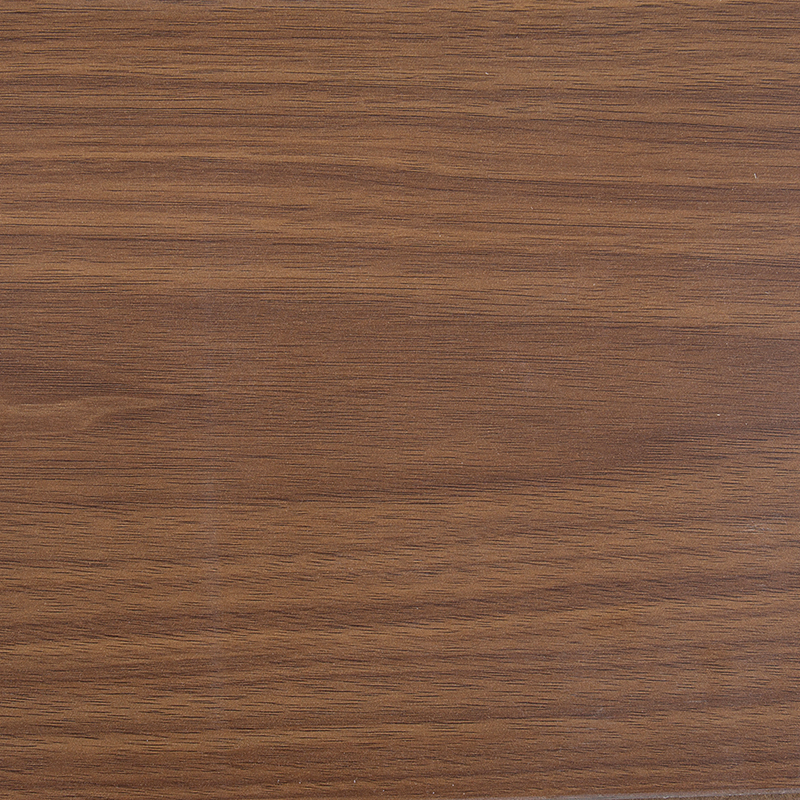
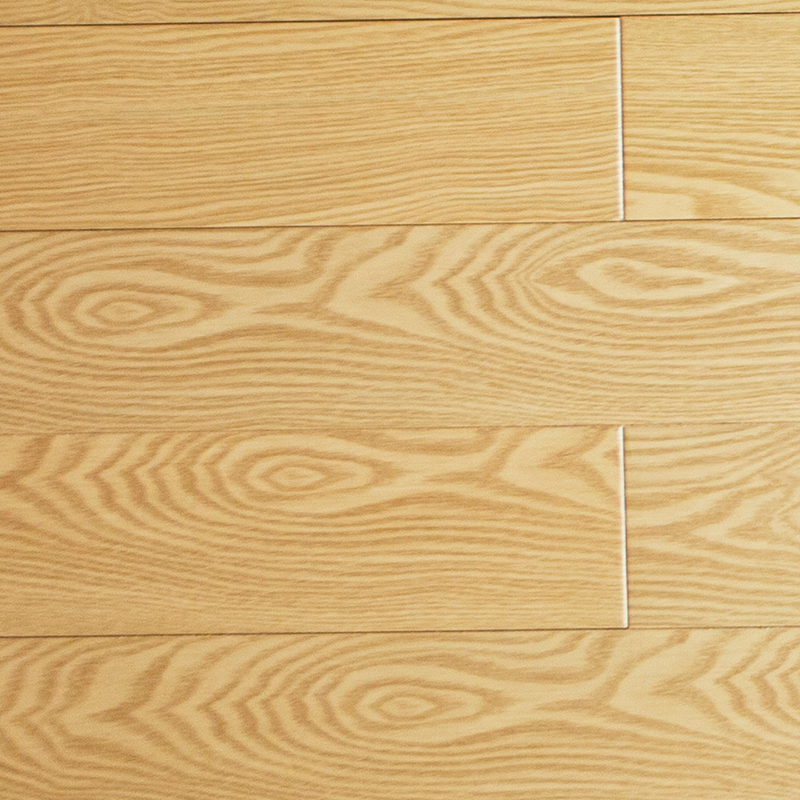
Ash is widely appreciated for its lively grain, light-to-medium tonal range, good hardness, and elegant natural movement. Unlike artificial printed surfaces, real ash provides depth and variation that cannot be fully replicated by synthetic flooring. Each plank carries individual grain expression, allowing the installed floor to feel authentic rather than repetitive. For interiors that need warmth without excessive darkness, ash is especially useful. It can be finished in light natural shades, smoked tones, grey-wash effects, vintage brown colors, or custom colors created for specific design themes.
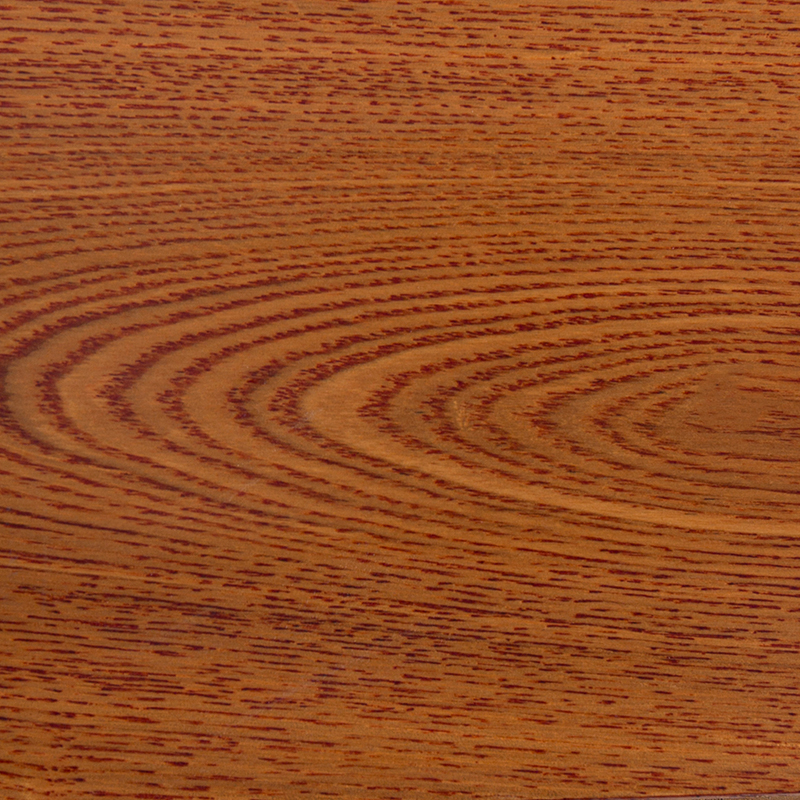
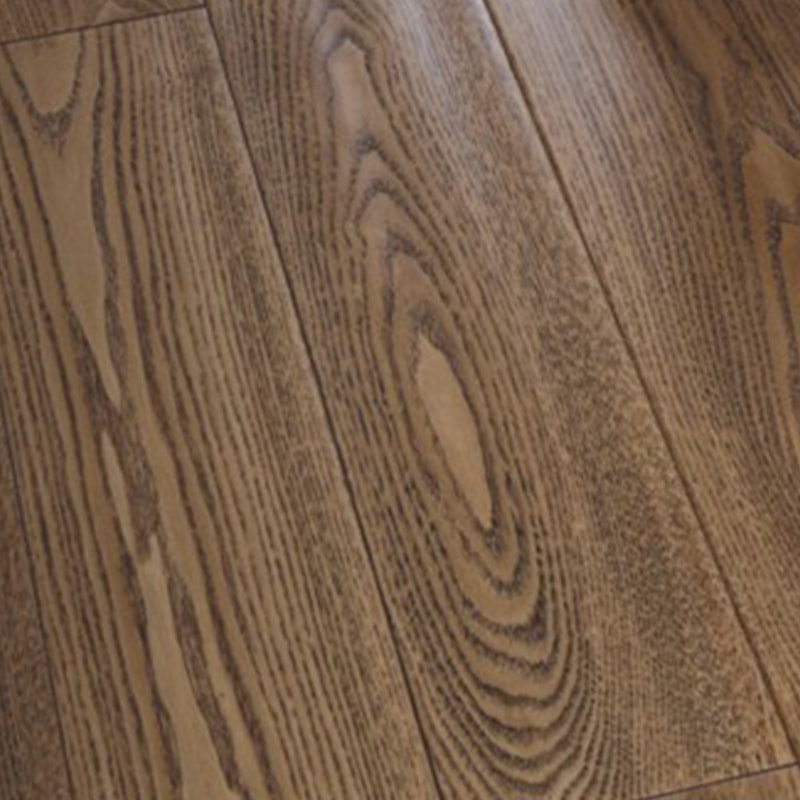
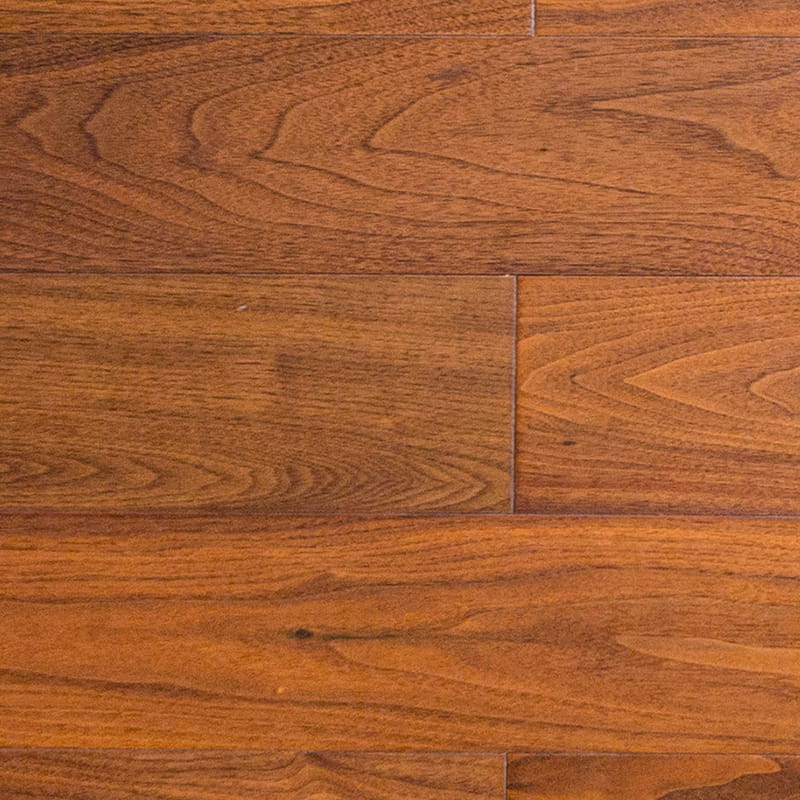
The product information highlights a vintage brown distressed ash style, which demonstrates the ability of the flooring to carry a strong design identity. The vintage brown tone, combined with the natural ash grain, creates visual depth beyond ordinary brown flooring. A hand-worked distressed texture can recreate the charm of aged timber, making the surface suitable for rustic interiors, farmhouses, industrial-style apartments, boutique retail spaces, cafes, and relaxed hospitality environments. At the same time, the flooring can be produced with smoother, more contemporary treatments for minimalist residences, modern offices, and premium commercial interiors.
One of the key advantages of engineered ash flooring is its balance between authenticity and stability. A pure solid wood plank responds strongly to humidity and temperature fluctuations, especially when installed in regions with seasonal climate changes or underfloor heating. A carefully constructed engineered plank can reduce movement while still maintaining a real wood surface. The multi-layer base helps distribute internal stress, improves resistance to cupping and warping, and supports long-term dimensional stability. For project environments where flooring must perform across different climates and installation conditions, this is a decisive advantage over lower-grade solid planks and many inexpensive alternatives.
The flooring combines a set of features that address both appearance and performance. Its natural wood veneer surface provides real timber character. The solid 3-layer or 7-layer fir or pine base material can be selected to improve structural balance and resistance to deformation. A 7-layer UV coating system is available to increase wear resistance and protect the visible wood surface. The product can comply with EU CE and FSC requirements, supporting responsible sourcing and international project standards. It can also be customized in size and color, allowing distributors and contractors to develop collections tailored to local market demand.
The product is also described with an E0 environmental standard, with formaldehyde emission of no more than 0.05 mg per cubic meter, which is an important factor for indoor air quality. In markets where families, schools, hotels, offices, and health-conscious commercial clients increasingly ask about emissions, this level of environmental performance provides a strong selling point. Flooring is installed across large surface areas, so emission control is not a minor detail. Choosing a floor with low formaldehyde emissions helps protect occupants and supports compliance with modern building expectations.
The T&G profile on four sides with micro-bevels supports a clean, professional appearance after installation. Tongue-and-groove construction is familiar to installers and can support stable plank alignment. Depending on site conditions and specification, glue or staple installation methods may be used. This practical installation compatibility helps contractors manage different subfloor situations and project schedules. In many real-world projects, flexibility in installation is as valuable as beauty, because delays and site constraints can increase costs.
Another advantage is the product’s suitability for residential and light commercial use. The high hardness and wear-resistant coating support daily foot traffic, furniture movement, cleaning, and lifestyle demands. In living rooms, bedrooms, corridors, hotel rooms, offices, and boutique retail spaces, the flooring can deliver the feeling of natural wood while maintaining a protective surface. When correctly specified and installed, it can also be compatible with underfloor heating, which is increasingly common in modern housing and hospitality projects.
| Item | Specification | Project Benefit |
| Product Type | Engineered ash wood flooring / solid ash collection option | Combines natural wood appearance with structural stability and flexible specification |
| Marketing Collection | Solid Ash Wood Flooring | Provides a recognizable natural hardwood category for distributors and designers |
| Dimensions | 35.83 inches x 4.92 or 6.02 inches x 0.71 inches | Suitable plank size for residential and light commercial interior layouts |
| Wood Species | Ash | Attractive grain, good hardness, adaptable color finishing |
| Surface Texture | Wire brushed, handscraped, or smooth sanded | Supports rustic, transitional, and modern design styles |
| Surface Finish | UV lacquer, UV oil, or hardwax oil | Allows different looks, touch effects, and maintenance preferences |
| Profile Detail | T&G four sides with micro-bevel | Helps installation alignment and creates a refined plank edge |
| Locking System | T&G | Familiar and reliable connection method for professional installers |
| Grade | ABCD Grade, character grade | Provides natural variation and expressive wood personality |
| Pieces Per Carton | 14 pieces | Supports organized packing and site handling |
| Square Meters Per Carton | 1.77 square meters | Useful for quantity planning and project logistics |
| Weight Per Carton | 21.7 kilograms | Practical handling weight for warehousing and installation teams |
| Moisture Content | 8 percent to 10 percent, plus or minus 2 percent | Supports dimensional control when matched to appropriate climate conditions |
| Installation Methods | Glue or staple | Allows installers to choose a method suitable for the subfloor and project |
| Certifications | CE and FSC available | Supports international compliance and responsible procurement |
Ash has long been used in flooring, furniture, interior millwork, and tool handles because of its combination of strength, flexibility, and distinctive grain. In flooring applications, ash offers a visually active pattern that can make a room feel natural and energetic. Its grain is generally more pronounced than maple and often lighter than walnut, giving designers a useful middle ground between subtle and dramatic hardwoods. This makes ash highly versatile for both residential and commercial environments.
In a natural finish, ash can brighten interior spaces while still providing the warmth expected from wood. In a stained finish, it can accept colors ranging from pale whitewash to deep brown, smoky grey, and vintage effects. The flooring described in the product materials includes a vintage brown distressed concept that shows how ash can take on a time-worn appearance while still retaining its original grain identity. This is valuable for designers who want character without using reclaimed wood, which may be inconsistent, expensive, limited in supply, or difficult to certify.
Compared with many low-cost hardwood options, ash offers a more refined balance of durability and design flexibility. It is visually stronger than plain-grain softwood and often more cost-effective than high-end exotic species. It can be processed into a range of surface textures, allowing the same species to serve multiple collections. A wire-brushed ash floor can emphasize grain and improve tactile interest. A smooth sanded floor can feel cleaner and more contemporary. A handscraped or distressed version can bring warmth and historic character to lifestyle interiors.
Another advantage of ash is its compatibility with customization. Because the grain has enough contrast to remain visible after finishing, custom colors do not easily make the surface look flat. This is important for distributors and design firms that need private-label flooring collections. A color sample can be developed, adjusted, approved, and then reproduced in production under controlled conditions. With the manufacturer’s rapid prototyping capability, buyers can test market-specific finishes more efficiently and reduce the time between concept and launch.
Many flooring buyers compare engineered wood with solid wood, laminate, vinyl, and low-cost composite products. Each category has a place, but engineered wood offers a unique combination of real wood beauty and improved stability. Laminate and vinyl can imitate wood, but their visual pattern is printed or digitally created. Even when the surface image is realistic, it cannot deliver the same depth, grain variation, or long-term emotional value as real timber. For clients who want an authentic natural material, engineered wood is more persuasive.
Compared with traditional solid wood, engineered construction can offer greater dimensional stability. Solid wood expands and contracts across the width of the plank when humidity changes. In climates with dry winters and humid summers, this movement may create gaps, cupping, or stress. Engineered flooring uses a balanced structure that helps reduce this movement. The product’s 3-layer or 7-layer base options, using fir or pine materials, are intended to improve resistance to deformation and cracking. This makes the flooring suitable for a broader range of interior environments than many conventional solid planks.
Compared with low-end engineered flooring, this product emphasizes a natural wood surface, controlled base materials, formaldehyde performance, certification, and coating quality. Many competitors focus mainly on a low purchase price. That can result in thin wear layers, weak bonding, poor moisture control, inconsistent machining, unstable profiles, or coatings that scratch too easily. The cost difference may appear small per square meter, but the risk of claims, installation problems, and customer dissatisfaction can be much higher. A better-engineered flooring product reduces these risks by combining material selection, precision production, and quality inspection.
For distributors, the advantage is also commercial. A stable, customizable, certified flooring line is easier to sell into multiple market segments. One base product can be adapted with different colors, textures, finishes, and dimensions. This helps wholesalers and project suppliers manage inventory while responding to local design preferences. Instead of relying on a single generic floor, they can develop a collection that includes rustic, modern, natural, grey, brown, brushed, and smooth options with consistent technical support.
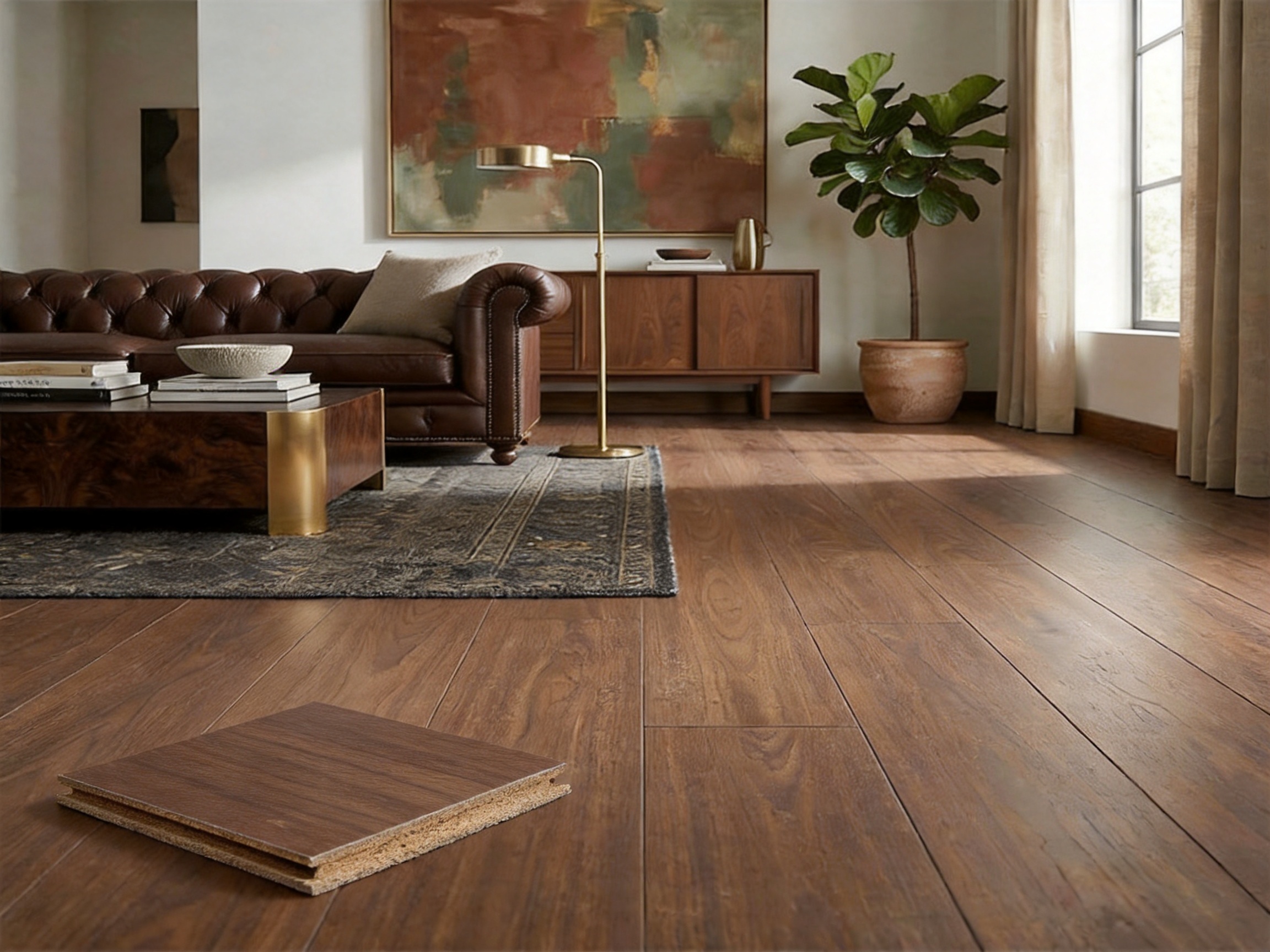
The flooring can be produced with wire brushed, handscraped, or smooth sanded surfaces. Each texture changes how light interacts with the wood and how users experience the floor underfoot. Texture is not simply decoration. It affects perceived quality, maintenance, slip feel, and the way a room communicates style.
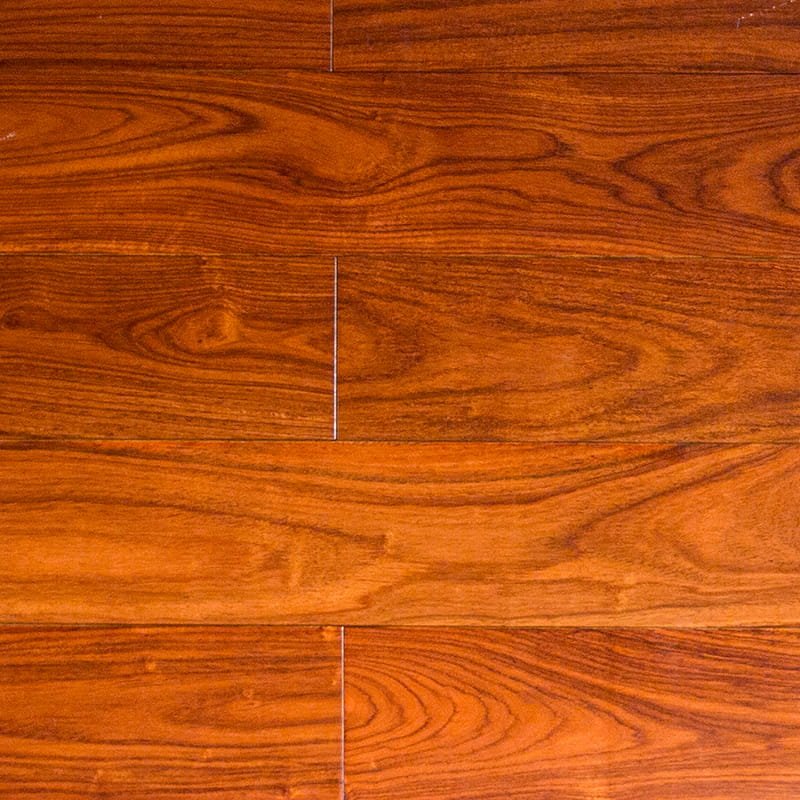
A wire-brushed surface removes softer grain portions and leaves the harder grain slightly raised. This highlights the natural structure of ash and can help disguise minor marks from daily use. It is a strong option for homes with active families, hospitality rooms, retail areas, and interiors that need both texture and durability. Wire brushing pairs well with matte UV oil, hardwax oil, and natural or smoked color finishes.
A handscraped or distressed surface provides a crafted, aged appearance. This is especially suited to the vintage brown distressed ash design described in the product information. Distressing helps recreate the charm of time-worn wood surfaces, adding subtle irregularity and character. It can make a new installation feel established and welcoming. For rustic farmhouses, industrial apartments, boutique cafes, wine bars, and themed hospitality spaces, this surface can become a major part of the interior identity.
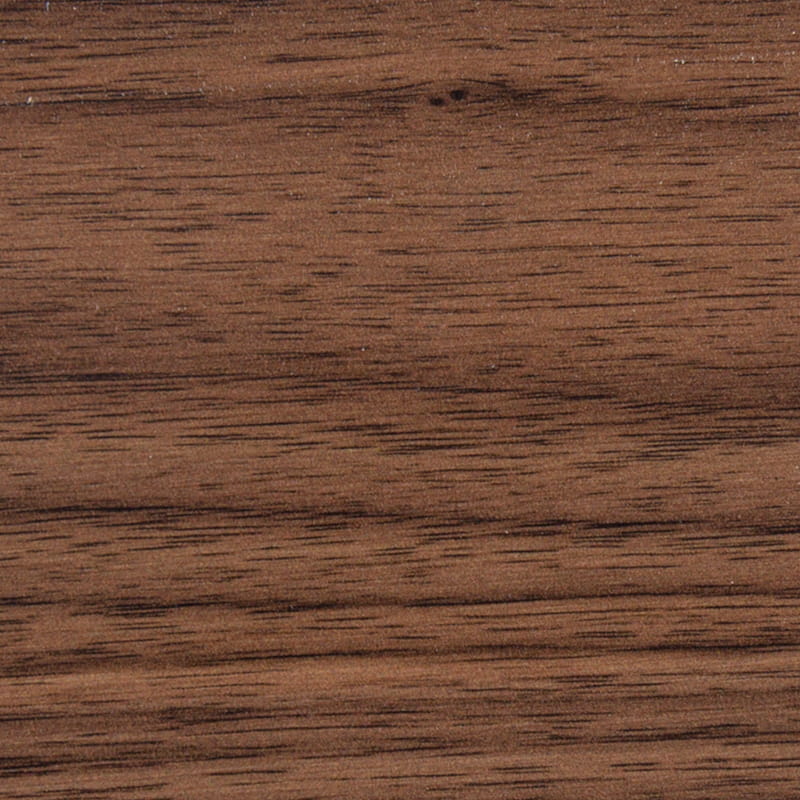
A smooth sanded surface is ideal for modern, minimalist, and refined interiors. It allows the natural ash grain to remain visible while keeping the floor sleek and understated. Smooth flooring often works well in contemporary homes, office spaces, showrooms, and high-end apartments. When combined with a clear UV lacquer or a light natural oil tone, smooth ash can make interiors feel open, clean, and elegant.
Because the manufacturer supports customization, buyers are not restricted to a single standard surface. They can match surface texture to target clients, climate, maintenance expectations, and local design trends. This flexibility is an advantage over many mass-market flooring suppliers that offer limited finishes and cannot adapt quickly to project requirements.
The surface finish is one of the most important performance components of wood flooring. It protects the wood from abrasion, stains, moisture contact, and cleaning wear, while also shaping the floor’s appearance and touch. This product can be finished with UV lacquer, UV oil, or hardwax oil, allowing buyers to select the best finish for their market or project.
UV lacquer is a strong option when buyers want high surface protection and relatively easy maintenance. The product information highlights a 7-layer UV coating system, which is a significant advantage over basic coating systems. Multiple coating layers can improve coverage, wear resistance, visual uniformity, and resistance to daily use. A well-executed UV lacquer finish can help protect the surface in homes, apartments, offices, hotel rooms, and light commercial environments.
UV oil provides a more natural look and touch. It can enhance the grain while keeping the floor visually closer to raw or lightly treated wood. For design markets that prefer matte, natural, and tactile surfaces, UV oil can be attractive. It may require different maintenance habits than lacquer, but it can deliver a premium wood feel that many interior designers appreciate.
Hardwax oil combines natural appearance with protective performance. It penetrates and protects the surface while leaving a warm, breathable character. Hardwax oil is often selected for higher-end residential interiors, boutique projects, and clients who value a handcrafted wood sensation. The ability to offer hardwax oil as a customizable finish allows the flooring to compete in premium design segments rather than only in basic commodity flooring.
Competitors that provide only one finish type limit the buyer’s ability to serve different customers. By offering several finish systems, this flooring solution becomes more adaptable. A distributor can create a practical lacquered line for mainstream sales, an oiled line for natural design markets, and a hardwax oil line for premium projects, all based on consistent production expertise.
Wood is a natural material, and all natural wood responds to moisture. Professional flooring manufacturing must therefore control moisture content carefully. The specified moisture content of 8 percent to 10 percent, with a tolerance of plus or minus 2 percent, indicates an approach designed for controlled interior use. Correct moisture content helps reduce the risk of shrinking, swelling, cupping, or checking after installation.
Dimensional stability is one of the most important reasons to choose engineered flooring. The multi-layer structure helps resist deformation and cracking by balancing the movement of the natural wood surface. In a 3-layer or 7-layer structure, the base material can be arranged to reduce internal stress. Fir or pine base materials are practical for this purpose because they offer stability, workability, and good bonding characteristics when properly dried and processed.
The product’s stability advantages are especially relevant for global distribution. Flooring may be manufactured in one climate, shipped across oceans, stored in warehouses, and installed in regions with different humidity conditions. Poorly dried or poorly balanced flooring can fail during this journey. A manufacturer with export experience, automated quality control, and a strict inspection process is better positioned to manage these risks than small workshops or purely price-driven suppliers.
For underfloor heating, stability is even more important. Heat changes moisture behavior, and flooring must be suitable for the temperature and installation conditions specified by the project. Engineered ash flooring, when produced and installed correctly, can be used in underfloor heating environments. Proper acclimation, subfloor preparation, heating system control, and installation method remain essential, but the product’s stable construction supports this application better than many traditional solid wood floors.
The flooring is produced with T&G profiling on four sides and a micro-bevel. Tongue-and-groove edges are widely recognized by professional installers because they provide mechanical alignment between planks. The micro-bevel helps define each plank visually and can reduce the appearance of very small height differences that may occur in real installation environments. This creates a refined installed appearance while preserving the natural plank effect.
Installation methods include glue and staple options. A glue-down installation can provide a solid feel underfoot and is commonly used where acoustic performance, stability, or subfloor compatibility is important. Staple installation may be suitable for wood subfloors and can be efficient for certain residential projects. Having both options gives contractors flexibility, which is an advantage over flooring systems that require only one installation method.
For commercial project managers, installation reliability affects project cost. Flooring that is difficult to align, has inconsistent profiles, or arrives with warped boards can slow down installers and create waste. Precision machining and carton consistency help reduce these problems. The manufacturer’s production capability and quality inspection process are therefore not abstract claims; they directly influence installation speed, labor cost, and the final appearance of the floor.
Compared with click systems, T&G installation may be preferred for projects that require a more traditional, secure, and professional installation method. Click systems can be fast, but they vary in strength and may not be ideal for every engineered wood structure or site condition. T&G remains a dependable solution for many wood flooring projects, especially when glue-down or staple methods are specified.
Modern flooring buyers increasingly ask about environmental performance, responsible sourcing, and indoor air quality. This product addresses those concerns through E0-level formaldehyde performance, CE and FSC certification availability, and manufacturing practices that support international compliance. For residential projects, schools, hotels, offices, and healthcare-adjacent interiors, low emissions are especially important because flooring covers large areas and remains in place for many years.
The E0 environmental standard described in the product information indicates formaldehyde emission of no more than 0.05 mg per cubic meter. This positions the product as a healthier interior material compared with many lower-grade wood products that may use inferior adhesives or less controlled production methods. Low-emission flooring can help distributors and contractors answer customer questions with confidence.
FSC certification supports responsible forest resource management. For architects and developers, FSC materials may be required or preferred in sustainable building programs. CE certification supports access to European project expectations and demonstrates that the product can be aligned with recognized standards. In addition, the company’s broader compliance capabilities include CARB P2 and ISO 9001, which are important references for global buyers evaluating supplier reliability.
Environmental responsibility also includes durability. A floor that lasts longer creates less waste than a cheaper floor that must be replaced quickly. By combining real wood, stable construction, protective coating, and repairable or maintainable finish options, engineered ash flooring can support a longer service life. This long-term value is an important sustainability advantage over disposable flooring products.
The flooring is supported by Suzhou Dicosbo Wood Co., Ltd., a wood solutions manufacturer with a history dating to 1999. With more than 20 years of expertise, the company has developed capabilities across wood flooring, wooden doors, and custom cabinet solutions. This broader wood manufacturing background is important because it shows experience not only in plank production but also in material selection, machining, finishing, dimensional control, and project customization.
The company operates 20,000 square meters of production facilities and has more than 10 years of export experience. It serves over 100 global partners across Europe, North America, and Southeast Asia. This export background is valuable for buyers because international supply requires more than making a good sample. It requires stable quality across batches, documentation, packaging reliability, compliance knowledge, communication, and the ability to understand different market expectations.
Annual production capacity reaches 2,400,000 square meters of flooring and 5,000 sets of doors. This level of capacity gives distributors and contractors confidence that the supplier can support both regular replenishment and project-based orders. For large developments, hotel programs, or multi-store distribution, capacity matters. A supplier with limited production capability may struggle to deliver consistent batches on time, especially during peak seasons.
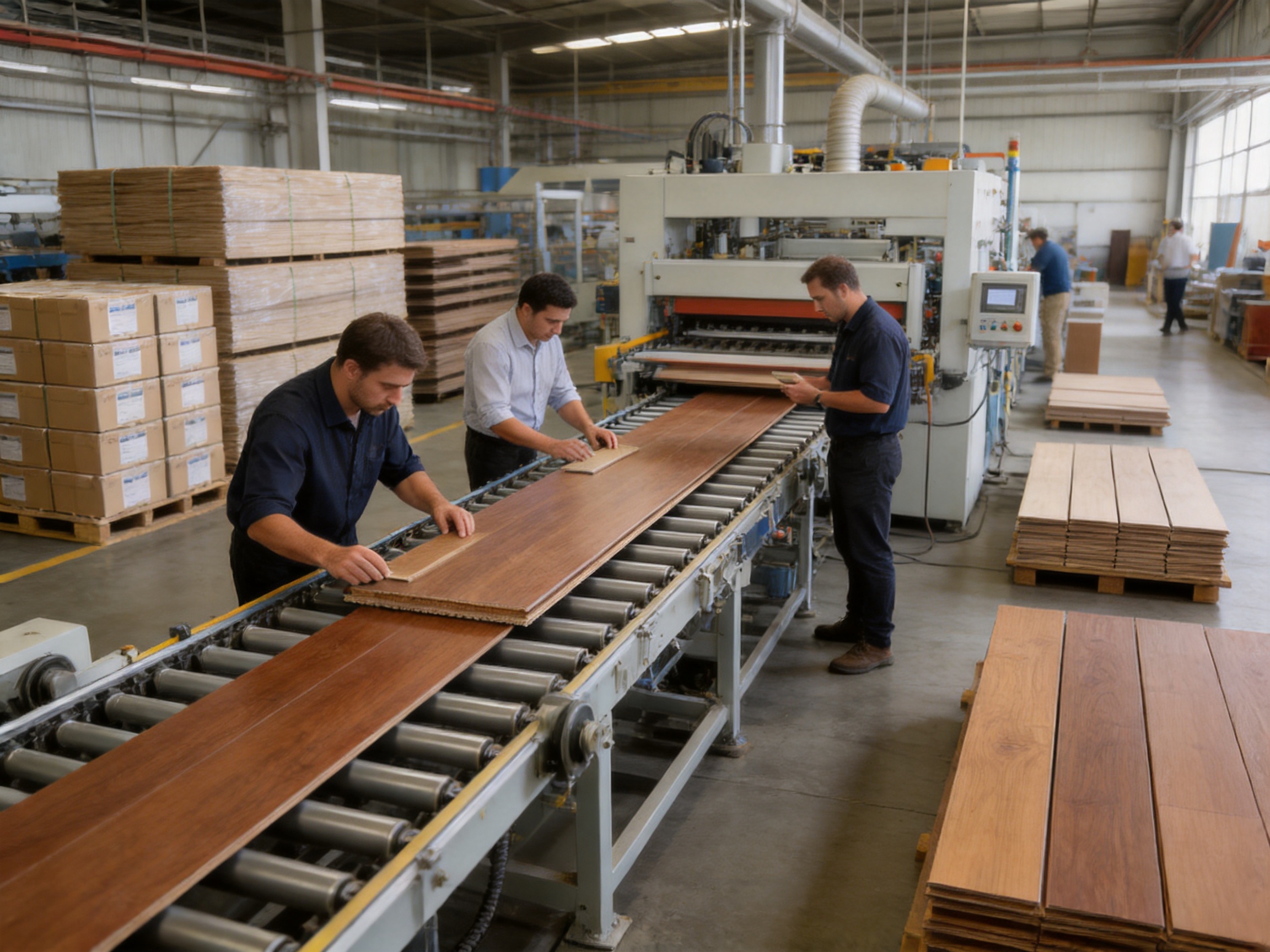
The company is equipped with German imported production lines and automated quality control systems. Advanced machinery improves precision in cutting, profiling, sanding, coating, and sorting. Automated controls help reduce human error and increase consistency. In wood flooring, small variations in thickness, profile, moisture content, or coating can create visible or functional problems. High-quality equipment and process discipline therefore provide a real competitive advantage.
The company also uses a strict three-step quality inspection process. Although the exact internal workflow may vary by order, a strong inspection system typically includes raw material evaluation, in-process control, and final product inspection before packaging or shipment. This multi-stage approach helps detect issues early, reduce waste, and prevent defective products from reaching customers. For project buyers, this means fewer claims, fewer installation delays, and greater confidence in the delivered product.
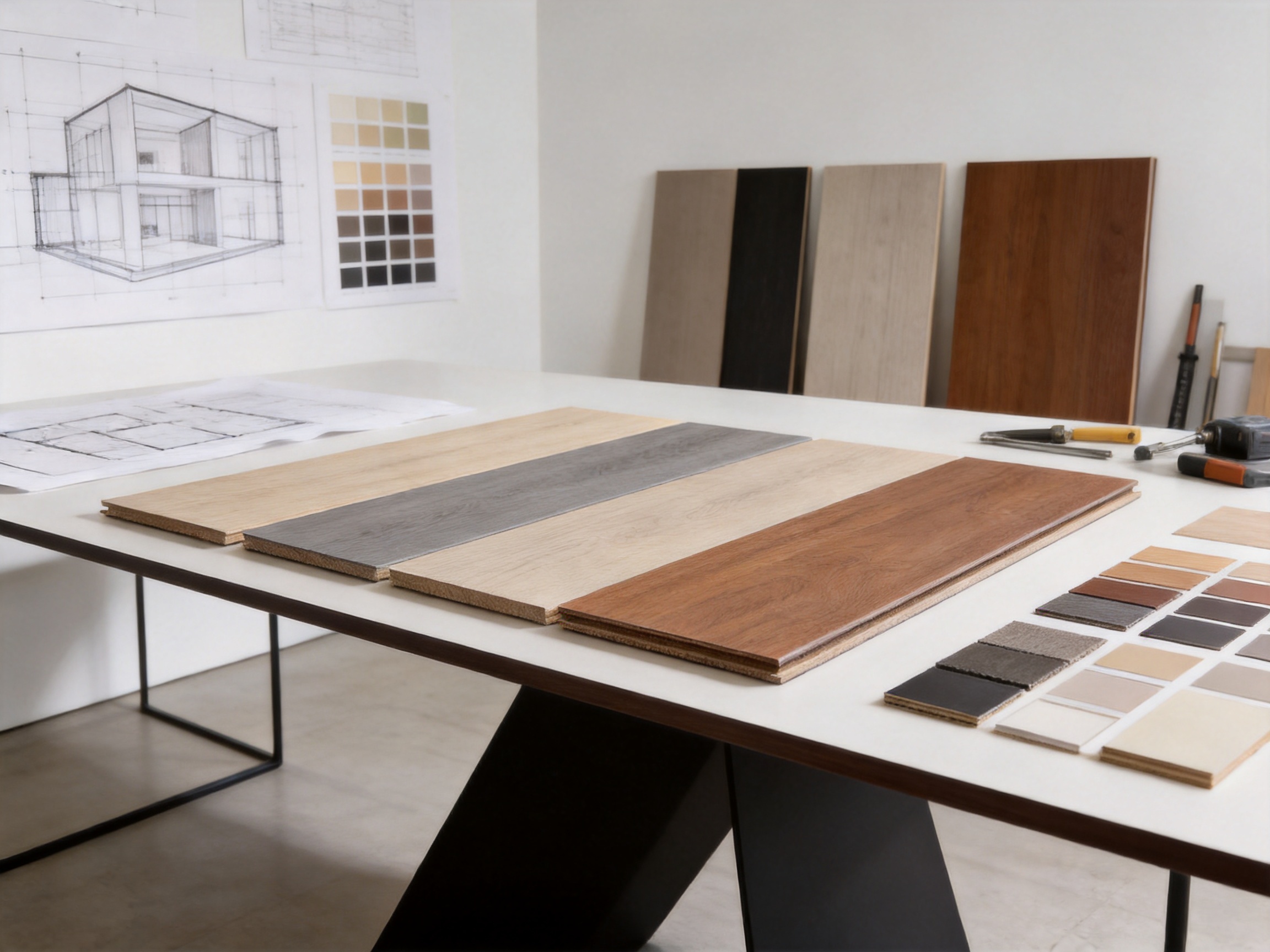
One of the strongest advantages of this flooring solution is customization. Buyers can request different sizes, colors, textures, finishes, and product configurations. OEM and ODM services allow distributors, retailers, contractors, and architects to develop flooring lines that match their brand positioning or project requirements. This is especially important in the wood flooring industry, where local preferences vary widely by country, region, and design trend.
In some markets, light natural ash and matte finishes are popular because they support Scandinavian and minimalist interiors. In other markets, darker brown, smoked, or distressed flooring may sell better because it creates warmth and character. Commercial projects may require more neutral tones that coordinate with furniture, wall systems, and lighting. The ability to customize color and surface effect allows one manufacturer to serve all these needs without forcing buyers into a narrow catalog.
The company’s 72-hour rapid prototyping capability is particularly valuable. Product development can be slow when buyers must wait weeks for samples, revisions, and approvals. Faster prototyping helps accelerate decision-making, support seasonal collection launches, and respond to project deadlines. For architects, it allows a design concept to be translated into a physical flooring sample quickly. For distributors, it reduces the time needed to test new colors and build sales tools.
Customization also extends to packaging, grade selection, and finish combinations when agreed within production feasibility. The ABCD character grade provides natural variation, which is attractive for many markets. Some buyers may prefer more rustic character; others may prefer cleaner sorting. A capable manufacturer can guide buyers toward realistic specifications that balance beauty, yield, cost, and market expectations.
Compared with competitors that only sell fixed stock products, a customization-oriented manufacturer provides strategic value. Buyers can avoid direct price competition on generic items by creating distinctive collections. They can adjust products based on customer feedback, climate needs, installation habits, and design trends. This makes the supplier a development partner rather than merely a factory.
The flooring’s design range is broad because ash responds well to different finishes. The vintage brown distressed version is ideal for spaces that need warmth and visual history. In a farmhouse interior, it can coordinate with exposed beams, linen fabrics, black iron hardware, and natural stone. In an industrial apartment, it can soften exposed brick, metal shelves, concrete textures, and leather furniture. In a boutique retail space, it can create a comfortable atmosphere that encourages customers to stay longer.
For contemporary interiors, smooth sanded ash in a natural or light tone can make rooms feel larger and brighter. It works well with white walls, modern cabinetry, glass partitions, and understated furniture. In apartments and urban residences, this can create a clean foundation without making the space feel cold. Unlike grey synthetic flooring, natural ash brings organic warmth and grain variation.
For transitional interiors, wire-brushed ash in medium brown or warm neutral tones offers a balanced look. It can work with traditional furniture, modern lighting, and soft wall colors. The texture adds interest but does not dominate the room. This makes it a safe and attractive choice for developers, landlords, and design-build companies that need broad appeal.
In hospitality applications, the flooring can help define brand atmosphere. A boutique hotel may use distressed brown ash for comfort and character. A serviced apartment may use UV lacquered smooth ash for easier maintenance. A cafe or lounge may choose wire brushing and matte oil to create a relaxed, natural mood. Because the product can be customized, designers can align the flooring with the emotional message of the space.
In commercial environments, flooring must also support practical operation. The coating, installation method, and maintenance plan should be selected according to traffic level. For light commercial spaces such as offices, showrooms, private studios, hotel rooms, and select retail zones, engineered ash flooring can provide a premium natural material experience while meeting daily performance expectations.
This engineered ash flooring offers several competitive advantages when compared with ordinary wood flooring, laminate, vinyl, and low-grade engineered products. The first is authenticity. A real ash surface provides natural grain and tactile value that printed products cannot fully match. For customers who care about genuine materials, this difference is immediate and persuasive.
The second advantage is stability. The engineered structure helps resist deformation and cracking. This is especially important in changing climates, heated interiors, and export markets. Many low-cost solid floors may look appealing initially but can develop movement problems if the wood is not properly dried or if the structure is not suitable for the environment. Engineered construction reduces this risk.
The third advantage is finish quality. A 7-layer UV coating option offers stronger protection than simple single-layer treatments. Buyers may not always see coating quality at first, but they experience it over time through scratch resistance, stain resistance, cleaning performance, and surface appearance. Better coating extends product value and customer satisfaction.
The fourth advantage is environmental performance. E0-level formaldehyde emission, FSC availability, CE compliance, and broader manufacturing standards give the product credibility in markets where safety and documentation matter. Cheap flooring may lack trustworthy certification or consistent emission control, creating risk for distributors and project buyers.
The fifth advantage is customization. Many competitors sell standard colors in fixed dimensions. This product can be developed in multiple sizes, colors, textures, and finishes. That allows buyers to create differentiated lines and respond to project specifications. In a market where design trends change quickly, customization is a powerful commercial advantage.
The sixth advantage is supplier capability. Advanced manufacturing equipment, German imported production lines, automated quality control, rapid prototyping, large capacity, and export experience all contribute to supply reliability. A beautiful sample is not enough. A professional buyer needs a supplier that can reproduce the sample at scale, pack it correctly, ship it reliably, and maintain quality across orders.
Quality begins with raw material selection. Ash surface material must be evaluated for grain, color, defects, moisture, and suitability for the desired grade. Base materials such as fir or pine must be properly dried and prepared. If raw materials are unstable, no later process can fully correct the problem. This is why experienced sourcing and inspection are essential.
During production, precision machining controls thickness, width, length, profile accuracy, and surface flatness. Sanding must be consistent so that the finish absorbs evenly and the final surface feels refined. Profiling must be accurate so that tongue-and-groove joints fit properly during installation. Coating must be applied evenly, cured correctly, and inspected for surface defects.
The three-step inspection process helps control these stages. In-process inspections can identify machining issues before large volumes are affected. Final inspection can review appearance, dimensions, moisture content, coating quality, carton quantity, labeling, and packaging condition. For export orders, packaging strength is also critical because flooring may travel long distances through changing temperature and humidity conditions.
Automated quality control systems add another layer of reliability. While skilled workers remain essential, automation can improve measurement consistency and reduce subjective variation. For flooring buyers, consistent quality means fewer complaints, lower replacement costs, and stronger customer trust. This is particularly important for distributors that sell under their own brand name.
The product is packed with 14 pieces per carton and approximately 1.77 square meters per carton. Each carton weighs about 21.7 kilograms, which is manageable for warehouse handling and jobsite movement. Clear carton planning helps contractors estimate quantities, reduce waste, and organize installation schedules.
For international buyers, logistics reliability is a major part of product value. Flooring must be protected from impact, moisture, and carton collapse during transportation. Consistent packing, accurate labeling, and stable batch control help prevent confusion on site. When several colors, grades, or dimensions are shipped together, professional packaging and documentation become even more important.
The manufacturer’s export experience across Europe, North America, and Southeast Asia supports these needs. Different regions may require different documentation, packaging expectations, moisture considerations, and compliance references. A supplier familiar with global shipment practices can help buyers reduce risk and improve procurement efficiency.
For project-based applications, stable supply is essential. If a project requires additional flooring after installation begins, color and batch consistency become important. A manufacturer with larger capacity and organized production systems is better positioned to manage replenishment or staged delivery. This is another advantage over small suppliers that may not be able to reproduce the same product consistently.
Wood flooring performs best when maintained properly. Regular sweeping or vacuuming removes abrasive dust and grit. Damp cleaning should be controlled, avoiding excessive water. Protective pads under furniture can reduce scratches, and entrance mats can reduce dirt carried into the room. These simple practices help preserve the beauty and finish of the flooring.
The maintenance approach depends partly on the selected finish. UV lacquer generally offers easier routine cleaning and strong surface protection. UV oil and hardwax oil provide a more natural look and may require periodic care products to refresh the surface. Buyers should choose the finish based on the expected users, traffic level, and maintenance culture of the market.
Long-term value comes from the combination of natural material, stable construction, protective finishing, and quality manufacturing. A cheaper floor may reduce initial cost but can create higher long-term expenses if it fails, wears quickly, or produces customer complaints. A well-made engineered ash floor supports customer satisfaction over a longer period, which is valuable for homeowners, developers, distributors, and contractors.
For commercial buyers, long-term value also includes brand reputation. When a distributor supplies flooring that performs well, installers and end users are more likely to return for future projects. When a contractor installs stable and attractive flooring, the finished project reflects positively on their workmanship. Product quality therefore supports the entire supply chain.
When specifying this flooring, buyers should consider the target environment first. Residential bedrooms, living rooms, and private spaces may allow a wider range of finishes. Light commercial spaces require stronger attention to wear resistance, cleaning, and traffic patterns. Underfloor heating projects require careful installation guidance and climate control.
Buyers should also choose the surface texture according to the design style and maintenance expectations. Wire brushed surfaces can hide minor wear better and emphasize grain. Smooth surfaces provide a clean modern look. Handscraped or distressed surfaces create rustic charm and visual warmth. Each option has a different selling story and should be matched to the intended customer.
Color selection should be based on market trends, furniture coordination, and sample approval under real lighting. Wood flooring can look different under warm lighting, cool lighting, daylight, and showroom lighting. The company’s rapid prototyping capability can help buyers evaluate samples before finalizing large orders.
Installation method should be determined by the subfloor, climate, acoustic needs, and installer preference. Glue-down and staple methods both have advantages. Professional installation, proper acclimation, subfloor moisture testing, and correct expansion planning remain essential for long-term performance.
Finally, buyers should evaluate supplier capability, not only product price. Certifications, production capacity, inspection process, export experience, and customization support are all part of total value. A reliable flooring partner can help reduce procurement risk, improve product differentiation, and support long-term business growth.
This flooring uses a real ash wood surface, while laminate and vinyl typically use printed decorative layers. Real wood provides natural grain depth, authentic texture, and unique plank variation. It also offers a premium material identity that synthetic flooring cannot fully reproduce.
Engineered construction improves dimensional stability by using a balanced base structure. This helps reduce deformation, cracking, cupping, and excessive movement caused by humidity changes. It is especially useful for export markets, underfloor heating conditions, and interiors with seasonal climate variation.
Yes. The flooring can be customized in sizes, colors, textures, and finishes. Options include wire brushed, handscraped, and smooth sanded surfaces, as well as UV lacquer, UV oil, and hardwax oil finishes. OEM and ODM development is available for distributors, contractors, and project buyers.
The product is designed to be suitable for underfloor heating when the correct specification, installation method, acclimation process, and heating system controls are used. Professional installation guidance should always be followed to protect wood flooring performance.
The flooring can meet E0 environmental performance with formaldehyde emission no higher than 0.05 mg per cubic meter. CE and FSC certification are available, and the manufacturer’s broader compliance capabilities include CARB P2 and ISO 9001 standards.
The flooring uses a T&G profile and can be installed by glue or staple methods depending on the site conditions and project specification. The four-side T&G profile with micro-bevel supports professional alignment and a refined installed appearance.
UV lacquer is practical for easy maintenance and strong surface protection. UV oil is suitable for a more natural matte appearance. Hardwax oil is ideal for a warm, premium wood feel. The best choice depends on design preference, traffic level, and maintenance expectations.
The manufacturer provides large production capacity, advanced production lines, automated quality control, export experience, rapid prototyping, and a strict three-step inspection process. These strengths support consistent supply, custom development, and reliable project delivery.
Yes. Ash offers attractive grain, good hardness, strong design flexibility, and compatibility with many colors and surface textures. It can be used for rustic, modern, transitional, and commercial interior styles.
A multi-layer UV coating system improves surface protection, wear resistance, visual consistency, and durability. It helps the flooring handle daily use more effectively than basic coating systems commonly found on lower-grade products.
Engineered ash wood flooring offers a strong balance of natural beauty, structural stability, customization, and professional manufacturing support. Its real ash surface provides authentic grain and warmth, while its engineered construction improves resistance to deformation and cracking. Surface options such as wire brushing, handscraping, and smooth sanding allow the same product platform to serve rustic, modern, and transitional interiors. Finish choices including UV lacquer, UV oil, and hardwax oil give buyers flexibility in performance, appearance, and maintenance.
The product’s advantages are strengthened by low-emission environmental performance, CE and FSC certification availability, T&G profiling, glue or staple installation compatibility, and suitability for residential and light commercial use. Compared with ordinary competitors, it offers more than a decorative surface. It provides a complete flooring solution supported by controlled materials, precision manufacturing, advanced coating, customization, and export-ready quality management.
Behind the product is a manufacturer with more than 20 years of wood industry experience, 20,000 square meters of facilities, German imported production lines, automated quality control systems, large annual flooring capacity, rapid prototyping, OEM and ODM services, and a strict three-step inspection process. These strengths make the flooring a reliable choice for distributors, contractors, architects, and project owners who need both attractive design and dependable supply.
For interior spaces that require durable natural character, flexible specification, and long-term value, engineered ash wood flooring is a practical and visually rewarding solution. It can transform standard rooms into warm, distinctive spaces while giving professional buyers the technical confidence required for modern residential and commercial projects.
Forest Products Laboratory. Wood Handbook: Wood as an Engineering Material. United States Department of Agriculture.
European Committee for Standardization. Wood Flooring Standards and Performance Guidelines.
International Organization for Standardization. ISO 9001 Quality Management Systems: Requirements.
Forest Stewardship Council. Principles and Criteria for Responsible Forest Management.
California Air Resources Board. Composite Wood Products Airborne Toxic Control Measure Technical Guidance.
National Wood Flooring Association. Wood Flooring Installation Guidelines and Methods.
European Union Construction Products Regulation. CE Marking Principles for Building Products.

We provide customers with sustainable and eco-friendly
engineered wood solutions and services.
Choose DEIF for the perfect blend of
performance and aesthetics.
