


 English
 Español
 عربى
عربى

Get Social
Choose DEIF for the perfect blend of
performance and aesthetics.
 Get Free Sample

Content
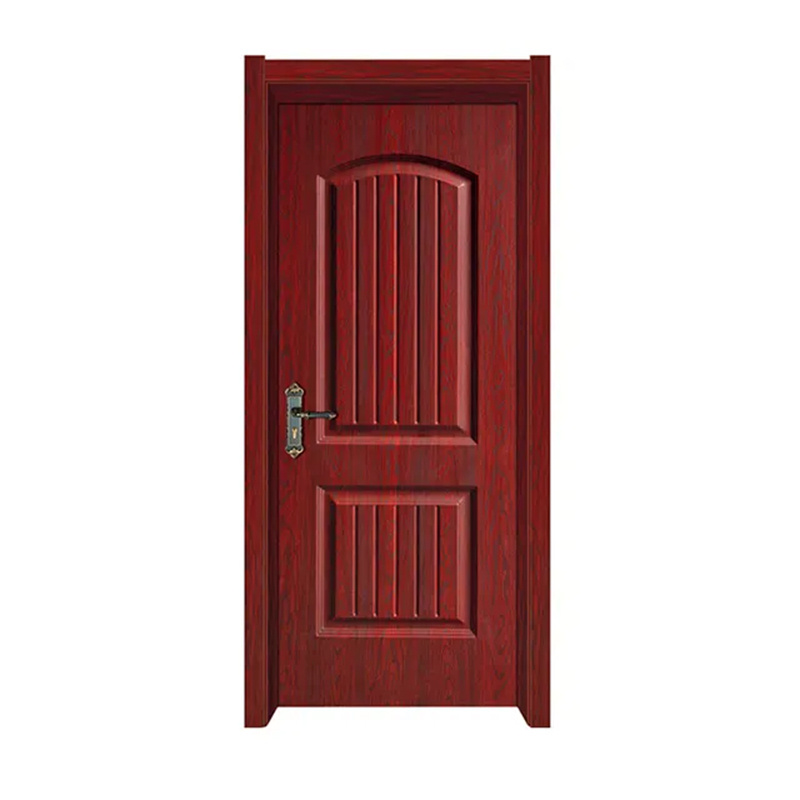
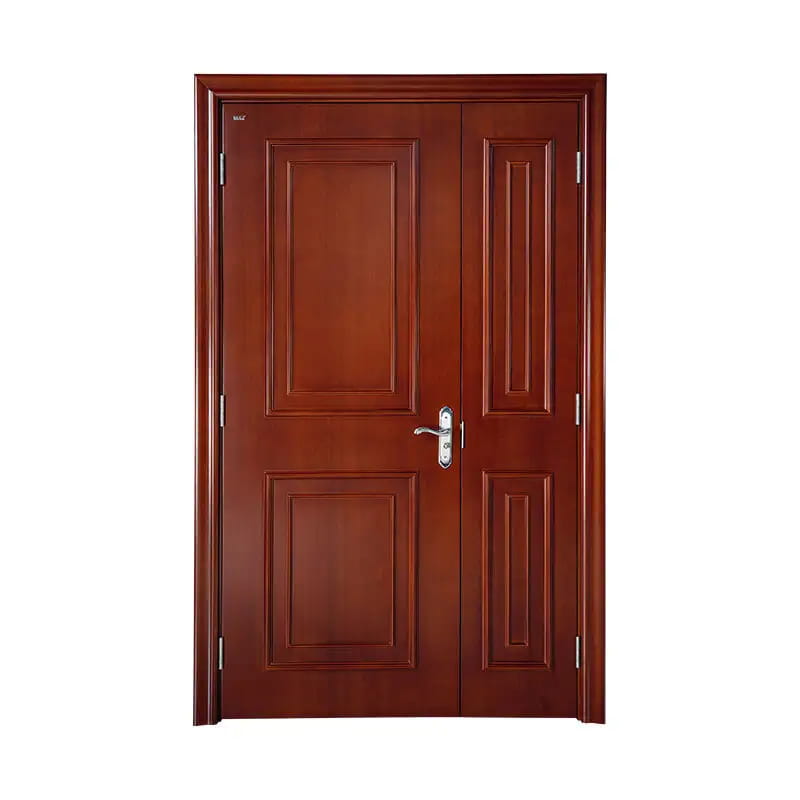
Classic Vertical Groove Mahogany Interior Door
A well-made interior door does far more than close an opening. It defines privacy, contributes to acoustic comfort, supports the interior design language, and influences the long-term durability of a building project. The Classic Vertical Groove Mahogany Interior Door is designed for projects that require a refined balance of classic warmth, modern simplicity, and dependable structural performance. With its rich mahogany-inspired tone, clean vertical groove detailing, and solid wood core construction, this door offers a calm yet sophisticated appearance suitable for villas, apartments, hotels, offices, studies, bedrooms, and other high-quality interiors.
The product belongs to the category of solid wood interior doors, which means it is engineered to deliver a stronger, heavier, and more lasting experience than many hollow-core or low-density alternatives. Its design is not overly decorative, yet it is not plain. The vertical grooves create visual rhythm, height, and depth, while the mahogany-toned finish brings a sense of warmth and maturity. This combination makes the door especially suitable for spaces where designers want to achieve an understated luxury effect without excessive ornamentation.
In addition to its visual value, the door is built around practical performance. It uses a solid wood core, a stable structure, customizable finishes, and carefully controlled moisture content. The product supports customized sizes, opening directions, frame requirements, surface treatments, and pre-drilling for hinges and locks. For contractors, distributors, architects, and project owners, this flexibility reduces installation uncertainty and helps the door align with project-specific architectural conditions.
Behind the product is a manufacturing system supported by more than two decades of wood processing experience, a large-scale production facility, export knowledge, advanced equipment, and strict inspection procedures. The manufacturer specializes in wood flooring, wooden doors, and custom cabinet solutions, giving it a broad understanding of interior wood applications. This cross-category expertise is valuable because a door is rarely an isolated element. It must coordinate with flooring, wall panels, cabinets, furniture, and hardware. A supplier with comprehensive wood solution capability can help projects achieve stronger design consistency and more reliable supply coordination.
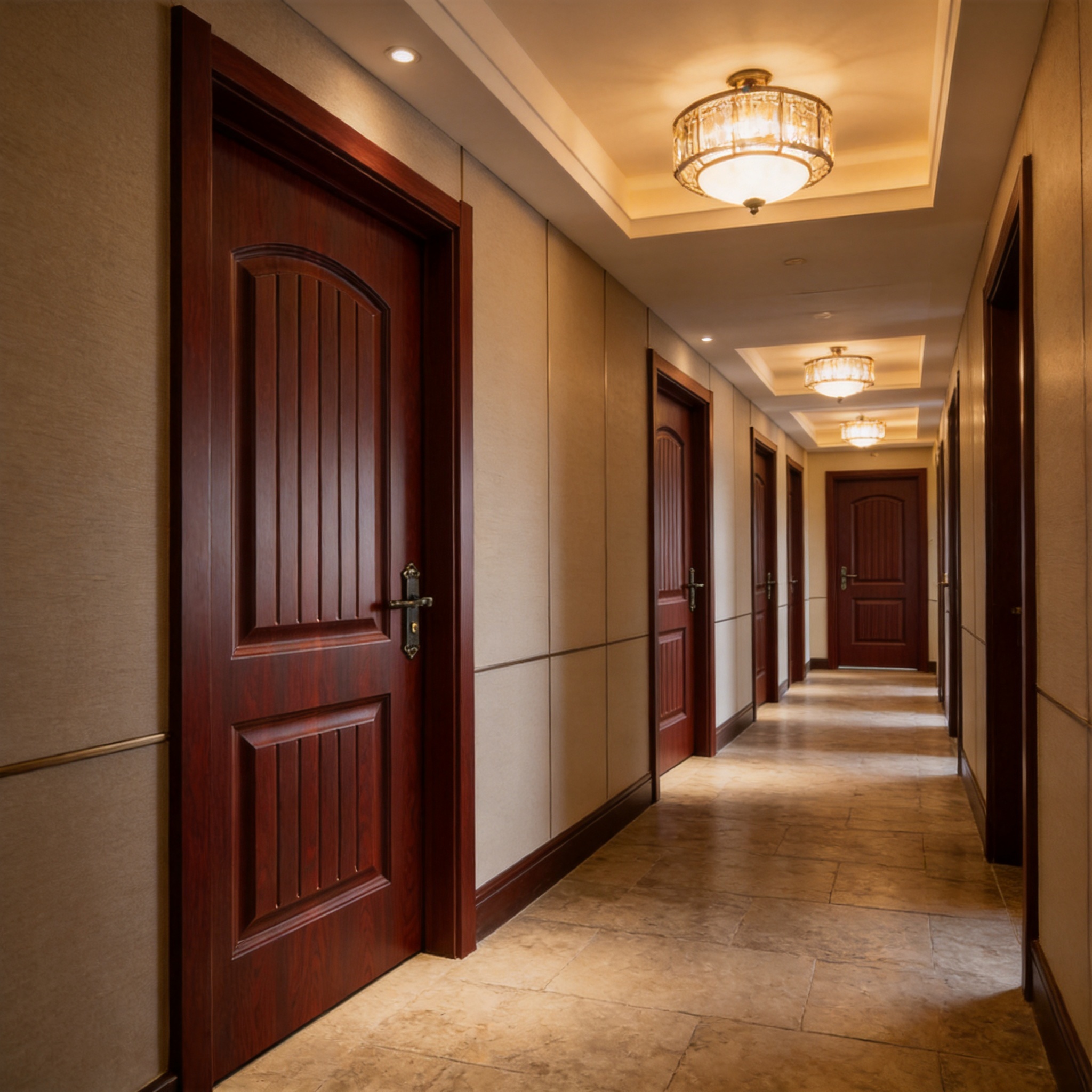
The Classic Vertical Groove Mahogany Interior Door is designed for interiors that need both visual order and natural warmth. The door surface features vertical grooves that run in a clean and structured direction. These grooves enhance the feeling of height, making rooms appear more elegant and proportioned. In residential spaces, this can make bedrooms, studies, and living areas feel calmer and more refined. In hospitality or commercial spaces, the same vertical rhythm can help corridors and guest room entrances appear more organized and premium.
The mahogany-inspired color is one of the central design features. Mahogany tones are often associated with tradition, stability, and high-end interiors. However, this door avoids an excessively old-fashioned appearance by pairing the warm tone with a simplified linear surface. The result is a product that can fit both classic and contemporary interior schemes. It works well with neutral wall colors, stone textures, warm lighting, brass or black hardware, and both traditional and minimalist furniture.
Unlike doors that rely only on decorative veneer to create a superficial impression, this product emphasizes both appearance and substance. Its solid wood core gives it a more substantial feel when opened and closed. The door can also support heavier-duty hardware, including concealed hinges and large smart locks, because its structure provides better load-bearing capacity. This is especially important for hotels, villas, and high-end apartments where door hardware is increasingly sophisticated and heavy.
The product integrates several important features that make it suitable for demanding interior applications. These features include a 100% solid wood mortise and tenon structure, superior physical sound insulation, environmentally responsible material standards, custom carving and milling capability, multiple wood species options, heavy-duty hardware compatibility, and long service life.
The mortise and tenon structure is a traditional woodworking technique known for strength and stability. When combined with modern paneling and precision machining, it helps create a dense and durable door structure. This is a major advantage compared with products that rely heavily on weak mechanical fasteners, low-grade adhesive bonding, or lightweight core materials.
Sound insulation is another important feature. The natural density of solid wood contributes to better acoustic privacy. With an acoustic performance range of approximately Rw 28-32 dB, and customization available for project requirements, the door can reduce everyday noise transmission between rooms. This is particularly useful for bedrooms, guest rooms, offices, studies, and hotel suites.
The product also emphasizes environmental compliance. It can meet E0 and E1 grade requirements, uses environmentally friendly adhesives and water-based finishes, and supports standards associated with formaldehyde emission control such as CARB P2. For developers and contractors working in international markets, environmental certification is not simply a marketing advantage. It can be essential for meeting procurement standards, building rating requirements, and customer expectations.
Item |
Specification |
Project Value |
Product Type |
Solid Wood Interior Door |
Suitable for high-end residential, hotel, apartment, and office interiors |
Design Style |
Mahogany-inspired tone with vertical groove detailing |
Combines classic warmth with modern structure |
Core Structure |
Solid Wood Core |
Improves durability, weight, stability, and sound reduction |
Wood Species or Surface Material |
Customizable: Red Oak, Black Walnut, White Ash, and other options |
Allows adaptation to budget, design, and project positioning |
Surface Finish |
Primed or painted finish available |
Supports customized color and design matching |
Standard Slab Size |
2100 x 900 x 45 mm, customizable |
Meets common interior door dimensions and special project needs |
Wall Thickness Range |
100-300 mm, customizable |
Adapts to different wall systems and construction conditions |
Frame Material |
Solid Wood |
Provides stable support and consistent quality with the slab |
Acoustic Performance |
Rw 28-32 dB, customizable |
Improves privacy and reduces everyday sound transmission |
Eco Standard |
E0 and E1 grades optional; CARB P2 supported |
Helps satisfy environmental and indoor air quality requirements |
Moisture Content |
8%-10%, plus or minus 2% |
Supports dimensional stability and reduces warping risk |
Delivery Form |
Knock-down frame plus slab |
Improves logistics efficiency and site handling |
Opening Direction |
Left or right, inward or outward customizable |
Enables accurate coordination with architectural drawings |
Pre-drilling Service |
Hinge and lock pre-drilled |
Reduces installation time and site error |
Weight Per Set |
Approximately 45 kg including door panel and frame |
Reflects solid construction and premium feel |
Packaging |
PE film, foam, and carton |
Protects the surface during transportation and storage |
One of the most meaningful advantages of this interior door is its solid wood construction. Many competing interior doors in the market are hollow-core, honeycomb-core, or low-density composite-core products. Such doors may be light and inexpensive, but they often lack the strength, sound performance, and premium tactile quality required for luxury or long-term projects. They may also feel less stable when closed, and they can be more vulnerable to impact damage.
The Classic Vertical Groove Mahogany Interior Door is built for a different level of performance. Its solid wood core creates a denser structure, which helps the door resist daily impact and deformation. This density also gives the door a more satisfying closing sound and a more substantial hand feel. For hotels, serviced apartments, villas, and executive offices, this difference is immediately noticeable. A door is touched every day, and its quality is judged not only by sight but also by weight, movement, and sound.
Solid wood also provides better screw-holding strength. This is important when the door must support heavy-duty concealed hinges, magnetic locks, luxury handles, or smart locks. Lightweight core doors can struggle in this area because the hardware fixing points may not have sufficient density. Over time, hinges can loosen, locks can misalign, and maintenance costs can increase. A robust solid structure reduces these risks and supports longer service life.
Traditional mortise and tenon joinery is one of the most respected methods in woodworking. It creates strong mechanical interlocking between structural components and does not depend only on glue or nails. In this product, the mortise and tenon principle is combined with modern production technology. This results in a door structure that is dense, stable, and suitable for repeated daily use.
Compared with competitors that rely on simple frame assembly or lower-grade joining techniques, mortise and tenon construction provides better resistance to loosening and separation. This matters in buildings with heavy traffic, such as hotels and commercial apartments. A door may be opened and closed thousands of times each year. Structural weakness that seems minor at the beginning can become a serious maintenance issue later. A stronger joint system helps prevent frame deformation, panel movement, and long-term instability.
The manufacturer’s processing approach also benefits from automated equipment and quality control. Traditional woodworking skill is valuable, but consistency is difficult without modern machinery. By combining craftsmanship with precision processing, the company can produce doors with better dimensional accuracy, cleaner groove lines, smoother edges, and more reliable fit between slab, frame, and hardware.
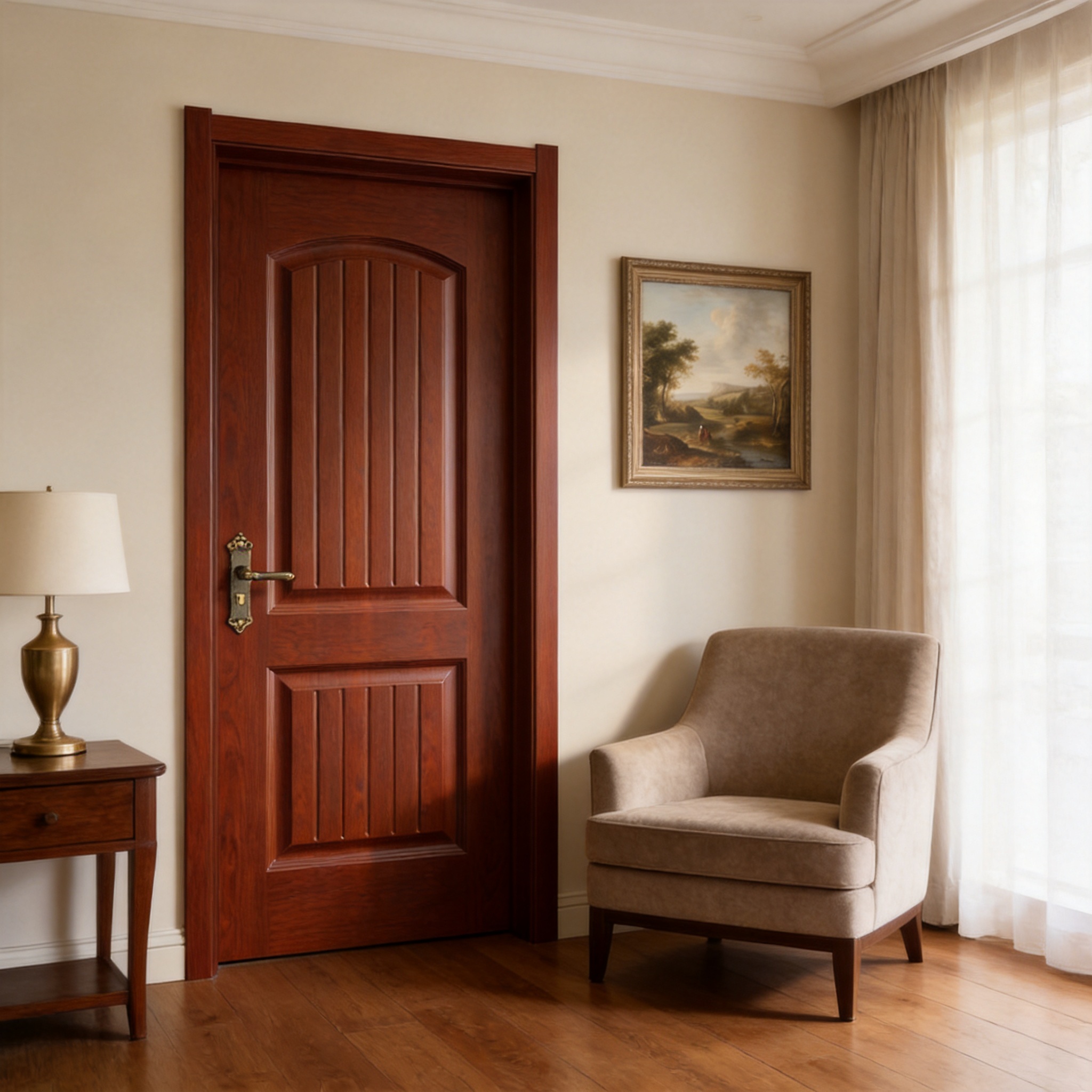
The vertical groove detail is more than a decorative pattern. It creates visual direction, adds depth to the surface, and helps the door communicate a sense of order. In interior design, vertical lines are often used to make walls and objects appear taller. When applied to a door, they can improve the perceived proportion of the opening and make the room feel more elegant.
Compared with heavily carved traditional doors, the vertical groove design is easier to coordinate with modern interiors. Compared with completely flat minimalist doors, it provides more character and visual richness. This makes it a flexible option for designers who want a door that is neither overly ornate nor too plain.
The groove detail also works well with the mahogany-inspired color. The depth of the tone enhances the shadow effect of the grooves, giving the surface a layered appearance under natural or artificial light. In hotel corridors, soft lighting can emphasize the vertical rhythm and create a refined guest experience. In residential interiors, the same detail adds warmth and dignity without overwhelming the room.
Interior doors are often required to match specific architectural conditions. Wall thickness, opening direction, slab size, frame detail, finish color, lock position, hinge type, and edge treatment can vary from one project to another. A standard off-the-shelf product may not satisfy these needs, especially in high-end residential and commercial construction.
This door supports extensive customization. The standard slab size is 2100 x 900 x 45 mm, while customized dimensions are available. Wall thickness can be adapted from 100 to 300 mm, and the opening direction can be configured as left or right, inward or outward. Pre-drilling for hinges and locks is available, which reduces site labor and improves installation accuracy.
Wood species and surface materials can also be customized. Options include red oak, black walnut, white ash, and other precious wood species depending on the design intention and budget. The surface finish can be primed or painted, and custom colors are available. This gives architects and developers greater control over the final appearance and allows the door to coordinate with flooring, cabinetry, wall panels, and furniture.
Compared with competitors that offer only limited standard models, this level of customization is especially valuable for hotel, apartment, villa, and office projects. It helps reduce design compromise and supports a more coherent interior identity.
Acoustic comfort is increasingly important in modern interiors. Bedrooms require quietness. Hotel guests expect privacy. Office meeting rooms need speech control. Apartments must reduce everyday noise between rooms. While an interior door cannot replace a complete acoustic wall system, the door is one of the most important weak points in sound separation.
The solid wood core of this door contributes to better physical sound insulation. With an acoustic performance range of approximately Rw 28-32 dB and customization available, the door can help reduce normal household and corridor noise. The dense core limits sound transmission more effectively than many hollow or lightweight alternatives.
Competitor products with thin skins and hollow cores often perform poorly in real acoustic conditions. They may transmit voices, footsteps, television sound, or corridor activity more easily. In hospitality projects, poor sound control can directly affect guest satisfaction. In residential projects, it can reduce comfort and perceived quality. By choosing a solid wood interior door with acoustic performance in mind, project owners invest in daily comfort as well as visual quality.
Indoor air quality has become a major concern for residential buyers, hotel operators, office developers, and international project clients. Doors, flooring, cabinets, wall panels, and furniture all contribute to the indoor environment. Materials with excessive formaldehyde emissions or low-quality finishes can create health concerns and compliance risks.
This product supports environmental standards such as E0 and E1 grades, and it is associated with CARB P2-level formaldehyde emission control. Environmentally friendly adhesives and water-based paints can be used to reduce harmful emissions. For projects in North America and other regulated markets, this is a significant advantage.
Many low-cost competitors focus primarily on initial price and may not provide clear environmental documentation. This creates risk for distributors, builders, and architects. If materials fail to meet required standards, projects may face delays, replacement costs, or reputational damage. A door supplier with established environmental compliance helps protect the project from these risks.
The quality of an interior door depends not only on design but also on manufacturing discipline. The company behind this product has more than 20 years of expertise in wood solutions and more than 10 years of export experience. Founded in 1999, it operates approximately 20,000 square meters of production facilities and serves more than 100 global partners across Europe, North America, and Southeast Asia.
This background matters because wood is a natural material. It requires careful drying, selection, cutting, machining, finishing, inspection, and packaging. Without experience, wood products can suffer from warping, cracking, color inconsistency, inaccurate dimensions, and installation problems. Long-term manufacturing knowledge helps reduce these risks.
The production system includes German imported production lines and automated quality control systems. These facilities improve consistency across batches and support large-scale project delivery. Annual production capacity includes 2,400,000 square meters of flooring and 5,000 sets of doors. While the company is highly active in wood flooring, its broader wood processing capability strengthens its door manufacturing knowledge, especially in surface treatment, moisture control, coating, and dimensional stability.
The company also supports OEM and ODM customization. This means it can manufacture according to customer specifications or help develop new product solutions. A 72-hour rapid prototyping capability is particularly useful for designers, distributors, and contractors who need samples or design confirmation quickly. In competitive project bidding, the ability to provide fast and accurate prototypes can become a major advantage.
Quality control is one of the most important differences between a professional wood door manufacturer and a general low-cost supplier. This product benefits from a strict three-step quality inspection process designed to protect both appearance and performance.
The first stage focuses on raw material selection and preparation. Wood species, moisture content, grain condition, and structural suitability must be checked before production. The specified moisture content of 8%-10%, with a tolerance of plus or minus 2%, is important for reducing movement after installation. Wood that is too wet may shrink later; wood that is too dry may absorb moisture and swell. Controlled moisture content helps achieve balance.
The second stage focuses on processing accuracy. Cutting, milling, groove formation, panel assembly, frame matching, and edge treatment must be controlled. The vertical grooves must be clean and consistent. The slab must remain flat. The frame must align correctly with the door leaf. Hardware drilling positions must match project drawings. Errors at this stage can cause installation delays or poor operation.
The third stage focuses on finishing, final inspection, and packaging. The mahogany-inspired finish must be stable, smooth, and visually consistent. Surface defects, color irregularities, scratches, and coating issues must be identified before shipment. Packaging with PE film, foam, and carton helps protect the product during logistics. For export and project delivery, packaging quality is essential because transportation damage can affect schedules and increase cost.
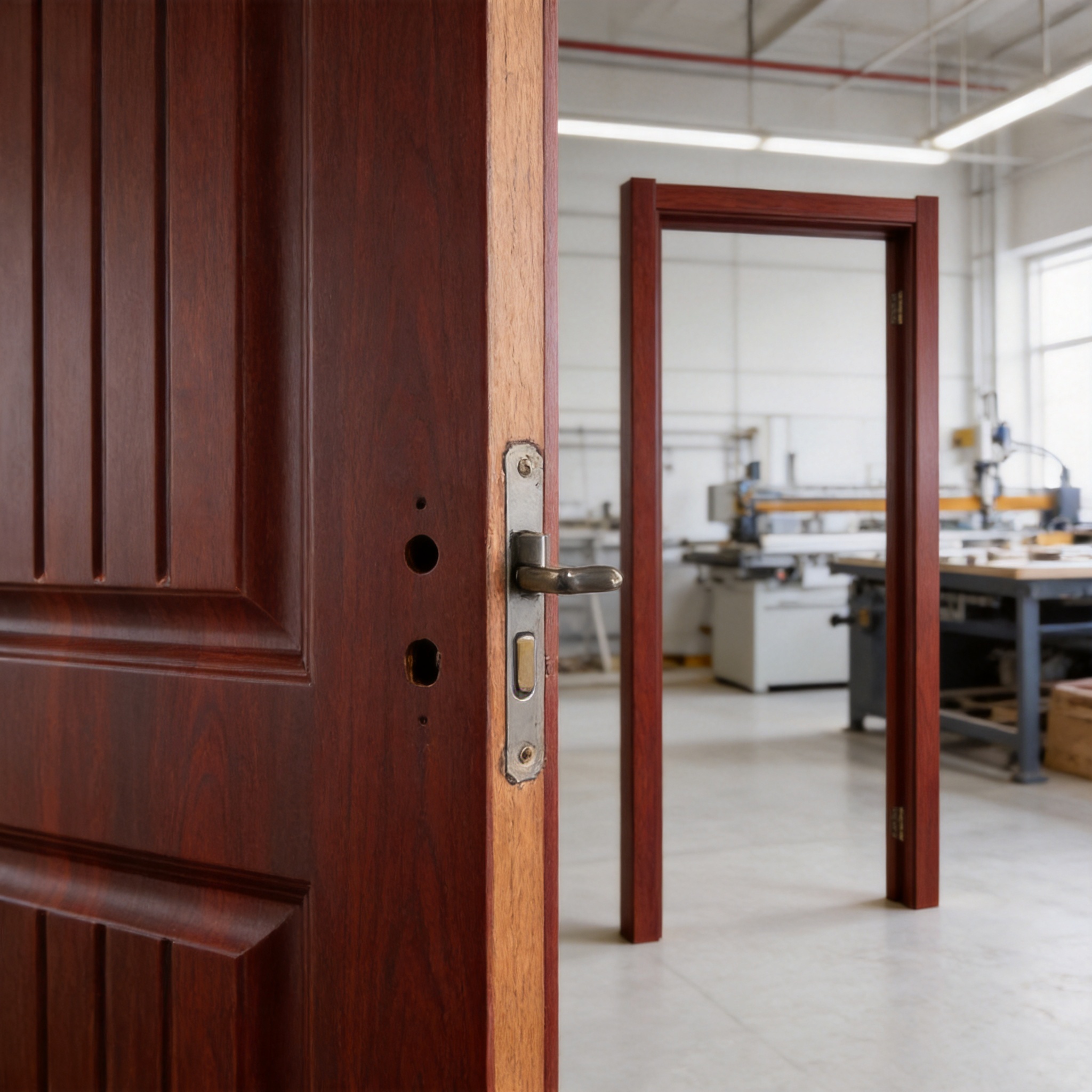
The visual success of a mahogany-toned door depends heavily on finish quality. The finish must provide depth, consistency, and protection while preserving the natural-looking wood grain effect. A poor finish can make the door appear artificial, uneven, or low-end. A professional finish gives the surface warmth, smoothness, and long-term appeal.
This product can be supplied with primed or painted finishing, with customized color available. This flexibility allows the door to meet different design requirements. Some projects may require a deep mahogany tone to coordinate with classic interiors. Others may prefer a lighter walnut or oak-inspired finish. Still others may use painted colors to match wall systems or branded hotel design standards.
Water-based paints can be used to support environmental objectives. These coatings generally reduce solvent emissions compared with traditional solvent-heavy systems. For interior applications, this is particularly important because doors are installed in occupied spaces where air quality matters.
Although the product is presented with a mahogany-inspired tone, the material strategy is flexible. Customizable wood species and surface materials include red oak, black walnut, white ash, and other options. This flexibility allows clients to select materials according to project budget, desired grain, color behavior, and design positioning.
Red oak is known for its visible grain and warm character. It can be suitable for traditional and transitional interiors. Black walnut is associated with premium design, rich color, and elegant grain patterns. White ash offers a lighter and cleaner appearance, making it useful for contemporary spaces. The ability to adapt the material makes the product suitable for different markets and design cultures.
Competitors with limited material options may force designers to accept a compromise. A professional manufacturer with global wood species selection can help architects achieve a more exact visual result. For developers working across multiple projects, this also creates an opportunity to standardize structural quality while varying the visual finish for different property levels.
Modern interior doors often carry more demanding hardware than in the past. Concealed hinges, magnetic locks, electronic access control, large luxury handles, and smart locks are increasingly common. These hardware systems may be heavier and require more precise installation than conventional hinges and locks.
The Classic Vertical Groove Mahogany Interior Door offers strong load-bearing capacity for heavy-duty hardware. Its robust core can accommodate imported concealed hinges and larger smart lock systems. Pre-drilling service for hinges and locks improves installation efficiency and reduces site errors.
In contrast, doors with low-density cores may not provide enough holding strength. Screws may loosen, lock bodies may become unstable, and repeated use can cause alignment problems. In high-traffic buildings, this can lead to ongoing maintenance. A solid wood core helps preserve hardware stability and improves the long-term user experience.
Installation quality has a major influence on door performance. Even a well-made slab can perform poorly if the frame, edge treatment, or hardware preparation is inaccurate. This product is supplied as a knock-down frame plus slab, supporting efficient logistics and installation. The frame material is solid wood, which provides a stable and compatible support system.
PUR or laser edge banding is available. Edge treatment helps protect the door from moisture intrusion, impact, and visual defects. A clean edge also contributes to the premium appearance of the product. Poor edge quality is a common weakness in lower-cost doors, where peeling, chipping, or uneven color can appear after use.
The ability to customize wall thickness from 100 to 300 mm also helps installers adapt the product to actual site conditions. In commercial projects, wall systems can vary because of fire partitions, acoustic walls, decorative wall panels, or renovation constraints. A customizable frame solution reduces the need for site modification and supports cleaner installation.
In residential settings, this door is ideal for living rooms, bedrooms, studies, and private corridors. The mahogany-inspired color adds a sense of warmth and permanence, while the vertical grooves provide order and subtle detail. For homeowners who want a refined interior without excessive decoration, the design is particularly suitable.
In bedrooms, the solid wood core and acoustic performance support privacy and comfort. In studies, the door helps create a quieter and more focused environment. In living areas, it can serve as a visual feature that coordinates with wood flooring, cabinets, wall panels, or furniture.
The door is especially suitable for villas and high-end apartments where buyers expect durable materials and a premium tactile experience. In such spaces, lightweight doors can feel inconsistent with the quality of other interior finishes. A solid wood interior door supports the overall value perception of the property.
Hotels and boutique apartments place demanding requirements on interior doors. Guest room doors and internal room doors must look attractive, operate smoothly, resist frequent use, and support privacy. A weak door can lead to guest complaints, maintenance issues, and reduced brand perception.
The Classic Vertical Groove Mahogany Interior Door is well suited for boutique hotels, serviced apartments, guest rooms, and premium rental residences. Its design is elegant but not overly specific, allowing it to fit different hospitality concepts. The mahogany tone suggests comfort and sophistication, while the linear groove design keeps the look contemporary.
For hotel operators, durability is particularly important. Doors are used repeatedly by different guests, staff, and maintenance teams. Impact resistance, stable hardware fixing, and deformation resistance all contribute to lower long-term maintenance costs. The product’s solid structure and controlled manufacturing process help meet these requirements.
Office interiors require doors that communicate professionalism while supporting daily function. Meeting rooms, executive offices, private work rooms, and reception areas can all benefit from a door with strong visual identity and acoustic privacy. The vertical groove design is formal and orderly, making it appropriate for corporate environments.
The door can be customized for different office design styles. A deeper mahogany tone can suit law firms, executive suites, financial offices, and traditional corporate interiors. A lighter customized finish can suit modern offices, creative studios, and mixed-use commercial spaces. Hardware pre-drilling and opening direction customization make it easier to coordinate with office layouts.
Compared with low-cost office doors, this solid wood solution gives a stronger impression of quality. It can help elevate the perceived value of meeting rooms and client-facing spaces. For commercial property owners, better interior finishes can support higher rental positioning and stronger tenant satisfaction.
The door’s competitive strength comes from the combination of structure, design, customization, compliance, and manufacturing capability. Some competitors may offer attractive surface designs but use weak cores. Others may offer solid doors but lack customization or export-level quality control. Some may provide low prices but cannot deliver consistent environmental documentation or stable batch quality.
This product is positioned as a comprehensive solution. It offers a solid wood core, mortise and tenon structural thinking, acoustic performance, customizable dimensions, multiple wood options, eco-conscious materials, heavy-duty hardware compatibility, and professional packaging. These characteristics are difficult for low-cost competitors to match as a complete package.
For contractors and distributors, the advantage is not only in the product itself but also in supply reliability. A manufacturer with established production capacity, export experience, rapid prototyping, and international compliance can support project schedules more effectively. In construction and interior fit-out, delays and rework can be more expensive than the initial product price difference. Choosing a reliable manufacturer can reduce hidden costs.
Like all quality wood products, this door should be maintained properly to preserve its appearance and performance. Routine care is simple. The surface should be wiped regularly with a soft dry or slightly damp cloth. Harsh chemicals, abrasive pads, and excessive water should be avoided. The door should not be exposed to prolonged moisture or strong direct sunlight, as extreme conditions can affect wood and finish stability over time.
Hard impacts and scratches should also be prevented. Although the door is designed for impact resistance and long service life, careful use will help maintain its premium appearance. Occasional light maintenance can preserve the surface texture and finish. In hotels or commercial properties, maintenance staff should be trained to use appropriate cleaning methods so that the finish remains consistent across all installed doors.
The controlled moisture content and quality finishing help improve dimensional stability, but the installation environment should still be managed. Interior humidity should remain within reasonable living conditions. Proper ventilation, correct installation clearances, and stable indoor climate all contribute to long-term performance.
When selecting interior doors for a project, buyers should evaluate more than unit price. Important factors include door structure, acoustic performance, finish quality, environmental certification, hardware compatibility, customization ability, production capacity, packaging, and after-sales support. A cheaper door may create higher costs later if it causes installation delays, frequent maintenance, poor acoustic comfort, or early replacement.
The Classic Vertical Groove Mahogany Interior Door is suitable for buyers who value long-term performance and design consistency. It is not merely a decorative panel but a complete door system with slab, frame, finish, hardware preparation, and customization options. For architects and designers, it provides visual flexibility. For contractors, it offers installation support through accurate sizing and pre-drilling. For developers, it supports property value through premium material quality. For distributors, it offers a product that can be positioned in the higher-quality segment of the market.
The manufacturer’s OEM and ODM capabilities also allow business partners to create project-specific designs. This can include adjusted groove dimensions, alternative colors, selected wood species, modified door sizes, and coordinated packaging requirements. Rapid prototyping within 72 hours can help accelerate sample approval and project decision-making.
The manufacturing process begins with material selection. Suitable wood or surface material is selected based on project specifications, grain requirements, stability, and finish goals. Moisture content control is essential at this stage. Wood must be dried and conditioned to reduce the risk of warping or cracking after installation.
After material preparation, the structural components are cut and machined. Precision is important because the door slab, frame, grooves, and hardware positions must align accurately. CNC milling can be used for clean grooves, intricate carving, or special customization. For customers requiring decorative upgrades, deep carving, metal inlay, or glass integration can be supported.
The next stage is structural assembly. The mortise and tenon approach helps form a strong internal relationship between components. Modern paneling techniques improve flatness and stability. The solid wood core creates the door’s main strength and acoustic mass. Once assembled, the door is checked for dimensional accuracy and surface condition.
Surface finishing follows. Depending on the specification, the door may receive priming, painting, or a customized finish. The mahogany-inspired tone is applied to create a deep, consistent appearance with natural-looking wood grain. Water-based paints and eco-conscious adhesives can be used to support environmental performance. Finish quality is inspected for smoothness, color consistency, adhesion, and defect control.
Hardware preparation may then be completed according to project drawings. Hinge and lock positions can be pre-drilled, reducing site work and improving accuracy. Finally, the door and frame are packed using PE film, foam, and carton to protect the surface during handling and transport.
For international buyers, compliance and export readiness are essential. The manufacturer’s products comply with standards such as CE, FSC, CARB P2, and ISO 9001. These standards reflect attention to product safety, responsible sourcing, emissions control, and quality management. While specific project documentation should always be confirmed during procurement, the company’s experience with global markets helps simplify cross-border cooperation.
More than 10 years of export experience means the manufacturer understands packaging requirements, documentation, communication expectations, and quality consistency for overseas clients. Serving more than 100 global partners across Europe, North America, and Southeast Asia demonstrates the ability to work with varied market requirements.
For distributors, this reduces sourcing risk. For contractors, it supports project planning. For architects, it provides confidence that the product can be specified for international projects. For developers, it helps align material procurement with sustainability and quality goals.
A unique advantage of the manufacturer is its broader expertise in wood flooring, wooden doors, and custom cabinets. This matters because modern interiors often require consistent wood tones, coordinated material quality, and unified design details. A door may need to match engineered wood flooring, wall panels, wardrobes, kitchen cabinets, or built-in furniture.
When wood products are sourced from unrelated suppliers, color differences, grain inconsistency, and delivery coordination problems can occur. A comprehensive wood solutions manufacturer can help reduce these issues by providing integrated material knowledge and coordinated production planning. This is especially valuable for hotels, apartments, villas, and commercial projects where many interior elements must be delivered on schedule and appear consistent after installation.
The company’s annual flooring production capacity also demonstrates its large-scale wood processing strength. Experience in flooring manufacturing supports knowledge of surface coating, wear resistance, moisture control, and batch consistency. These skills are directly relevant to interior door production.
The Classic Vertical Groove Mahogany Interior Door pairs well with warm-toned wood flooring, natural stone, cream or beige wall colors, soft grey palettes, and matte metal hardware. For a classic interior, it can be combined with brass handles, warm lighting, and decorative moldings. For a modern interior, it can be paired with black concealed hinges, minimalist handles, and plain wall panels.
In bedrooms, the door can be used with fabric wall coverings, wood floors, and warm bedside lighting to create a calm private atmosphere. In studies, it pairs well with bookshelves, walnut desks, and leather furniture. In hotel rooms, it can coordinate with corridor wall panels, carpet or wood flooring, and room signage systems.
The vertical grooves also allow designers to repeat linear elements elsewhere in the interior. For example, vertical wall panels, fluted glass, ribbed cabinet fronts, or linear lighting can echo the door surface. This creates design continuity without making the space feel repetitive.
Distributors need products that are easy to position, reliable to supply, and attractive to different customer groups. This door offers a strong selling story: solid wood structure, mahogany-inspired design, vertical grooves, acoustic value, environmental compliance, customization, and professional manufacturing. These features help distributors differentiate from suppliers offering only basic hollow-core doors.
Contractors need accuracy, consistency, and installation efficiency. Pre-drilled hinge and lock positions, customizable wall thickness, knock-down frame delivery, and protective packaging all support smoother project execution. When doors arrive correctly prepared, installation teams can reduce on-site cutting and adjustment. This saves time and lowers the risk of damage.
For project-based procurement, reliable production capacity is also important. A manufacturer with established facilities and export experience can better support phased delivery, sample approval, and repeat orders. This reduces the risk of inconsistent batches or supply interruption.
This door uses a solid wood core and a strong structural approach, giving it better durability, weight, acoustic privacy, and hardware support than many hollow-core doors. Hollow-core products are often lighter and cheaper, but they usually provide weaker sound insulation, lower impact resistance, and less premium tactile quality.
The door is described with a mahogany-inspired color tone. The surface material and wood species can be customized, including options such as red oak, black walnut, and white ash. The final appearance can be adjusted according to project requirements, budget, and design preference.
Yes. The standard slab size is 2100 x 900 x 45 mm, but customized dimensions are available. Wall thickness can also be customized from 100 to 300 mm, making the product suitable for different construction conditions.
Yes. The solid wood core provides physical acoustic performance, with an approximate Rw range of 28-32 dB and customization available. It is suitable for bedrooms, studies, hotel rooms, offices, and other spaces requiring improved privacy.
The door supports E0 and E1 environmental grades, and production can align with CARB P2-level formaldehyde emission control. Environmentally friendly adhesives and water-based paints may be used to support healthier indoor air quality.
Yes. The solid wood core provides strong load-bearing capacity for heavy-duty hardware, including concealed hinges and large smart locks. Hinge and lock pre-drilling services are available to improve installation accuracy.
It is suitable for residential living rooms, bedrooms, studies, villas, boutique apartments, hotel rooms, executive offices, and commercial interiors. Its classic yet simple appearance makes it versatile across different design styles.
Clean the surface with a soft dry or slightly damp cloth. Avoid prolonged moisture exposure, strong direct sunlight, harsh chemicals, hard impacts, and abrasive cleaning tools. Occasional light maintenance will help preserve the finish and surface texture.
Interior door quality depends on material control, machining accuracy, finishing consistency, environmental compliance, packaging, and delivery reliability. A manufacturer with advanced equipment, export experience, large production facilities, and strict inspection procedures can reduce project risk and improve long-term performance.
Yes. The manufacturer has large-scale production capability, OEM and ODM customization, export experience, and quality inspection systems. These strengths make the product suitable for hotels, apartments, offices, and other project-based applications.
The Classic Vertical Groove Mahogany Interior Door is a strong solution for projects that require more than a basic room divider. It combines a warm mahogany-inspired appearance, clean vertical groove detailing, solid wood core construction, acoustic privacy, customization flexibility, and environmental responsibility. Its design is understated but refined, making it suitable for residential, hospitality, and commercial interiors.
Compared with many competing doors, its advantages are clear. It offers a more substantial structure than hollow-core alternatives, stronger hardware support than low-density doors, greater customization than standard catalog products, and better compliance value than suppliers without clear environmental systems. The mortise and tenon structural concept, controlled moisture content, solid frame, pre-drilling service, and protective packaging all contribute to a more reliable project experience.
The manufacturer’s strengths further increase the product’s value. With more than 20 years of experience, approximately 20,000 square meters of production facilities, German imported production lines, automated quality control, global compliance, OEM and ODM support, rapid prototyping, and export experience, the company can serve distributors, contractors, architects, and developers who require stable quality and dependable delivery.
For interiors where durability, elegance, privacy, and long-term value matter, this solid wood vertical groove door is a practical and refined choice. It brings together the natural dignity of wood, the order of vertical design, and the confidence of advanced manufacturing.
Architectural Woodwork Institute. Architectural Woodwork Standards.
Forest Stewardship Council. Principles and Criteria for Responsible Forest Management.
California Air Resources Board. Composite Wood Products Airborne Toxic Control Measure Guidance.
International Organization for Standardization. ISO 9001 Quality Management Systems Guidelines.
Building Research Establishment. Acoustic Performance and Sound Insulation in Buildings.
Wood Handbook: Wood as an Engineering Material. United States Department of Agriculture, Forest Products Laboratory.

We provide customers with sustainable and eco-friendly
engineered wood solutions and services.
Choose DEIF for the perfect blend of
performance and aesthetics.
