


 English
 Español
 عربى
عربى

Get Social
Choose DEIF for the perfect blend of
performance and aesthetics.
 Get Free Sample

Content
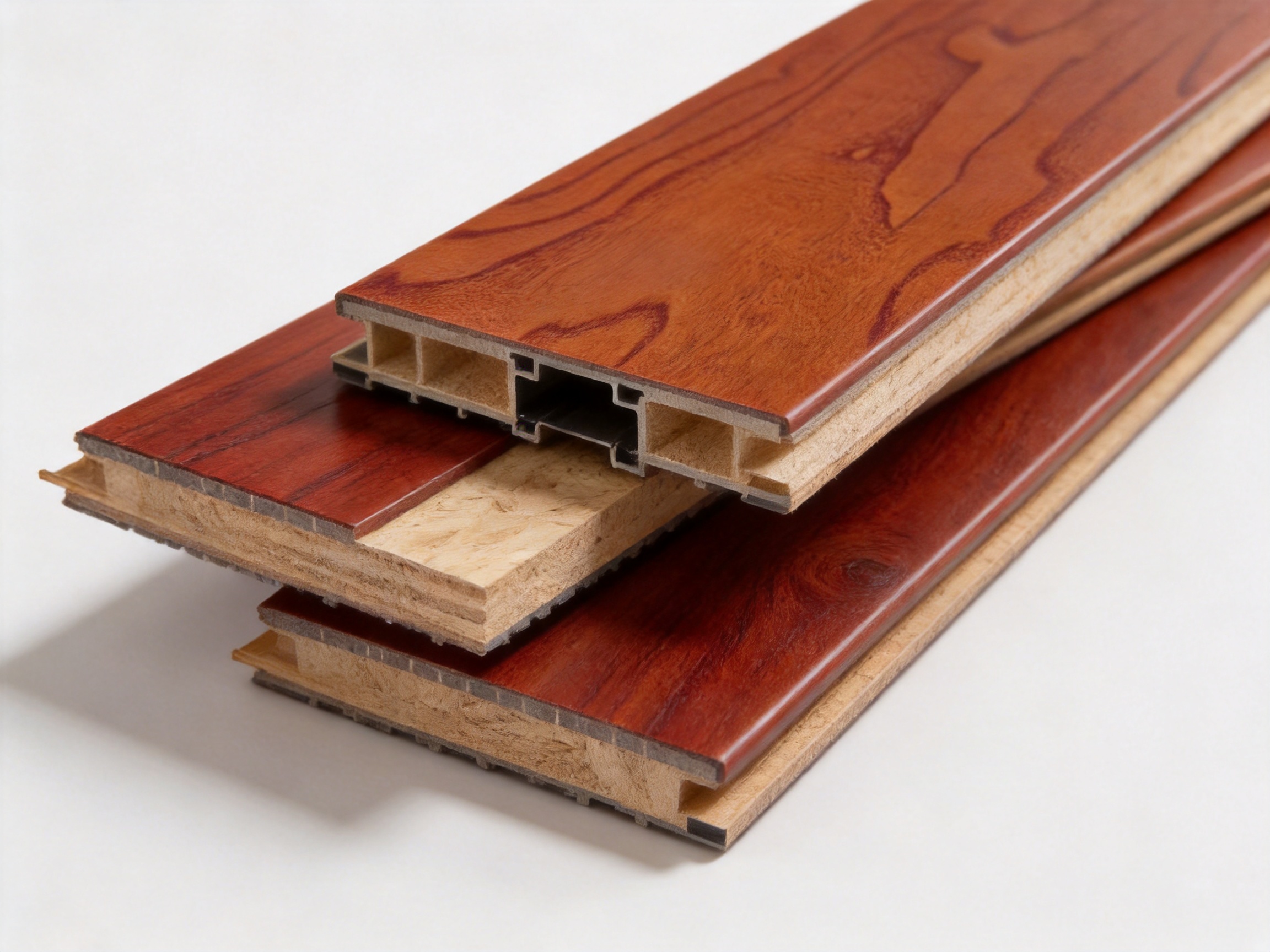
Engineered wood flooring has become one of the most practical and design-flexible choices for residential interiors, boutique commercial spaces, hospitality environments, offices, cafes, restaurants, and project-based developments. Among the many options available in the market, Multi-Ply Okan Red-Brown Hand-Scraped Click Engineered Wood Flooring stands out as a warm, character-rich, and technically stable solution designed for spaces that require both natural beauty and long-term performance. With its red-brown Okan-inspired visual tone, rustic hand-scraped surface, multi-layer engineered structure, click-lock installation system, and customizable specifications, this flooring is built to satisfy the expectations of distributors, contractors, architects, designers, and property owners who need a balance of appearance, durability, installation efficiency, and responsible sourcing.
The product is especially suitable for vintage-style interiors, warm contemporary homes, boutique retail spaces, cafes, restaurants, reception areas, hotel guest rooms, and commercial environments where flooring must contribute to the atmosphere while also resisting daily use. Its combination of natural veneer aesthetics and engineered core stability gives it an advantage over many traditional solid wood flooring options, particularly in spaces where temperature and humidity changes may create dimensional movement. By using a multi-layer eucalyptus or birch plywood core and a carefully finished veneer surface, this engineered wood flooring reduces the risk of warping, cracking, and deformation while preserving the genuine tactile appeal of wood.
As a product supplied by Suzhou Dicosbo Wood Co., Ltd., a global wood solutions manufacturer with extensive experience in wood flooring, wooden doors, and custom cabinets, the flooring also benefits from mature production systems, advanced manufacturing lines, strict quality inspection procedures, and the ability to support OEM and ODM customization. The company’s long experience in global export markets, combined with its compliance with standards such as CE, FSC, CARB P2, and ISO 9001, makes this product a strong option for project buyers who require stable supply, documentation support, and manufacturing consistency.
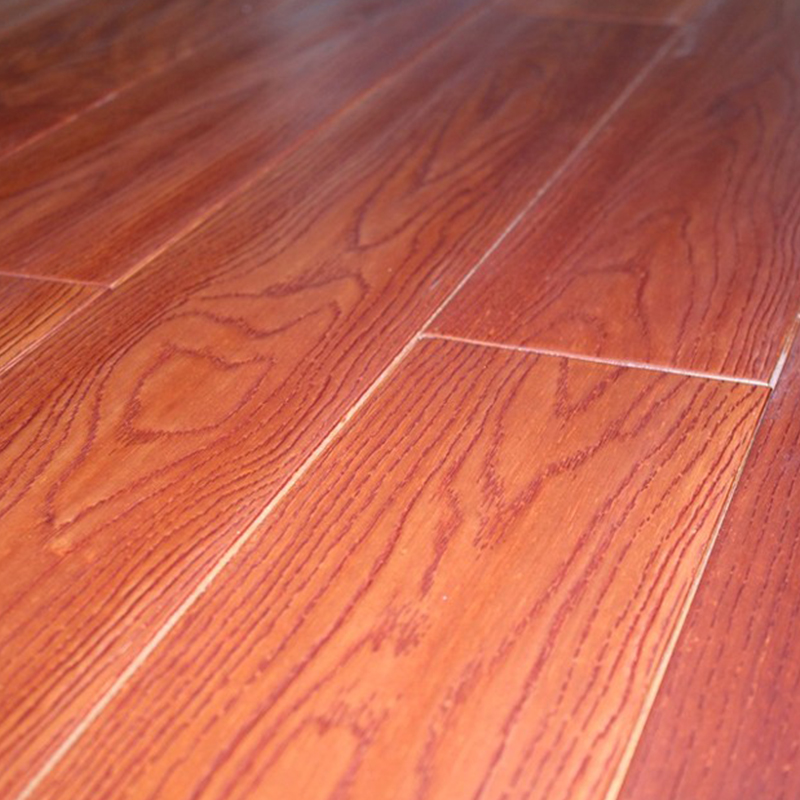
Multi-Ply Okan Red Brown Hand-scraped Click Engineered Wood Flooring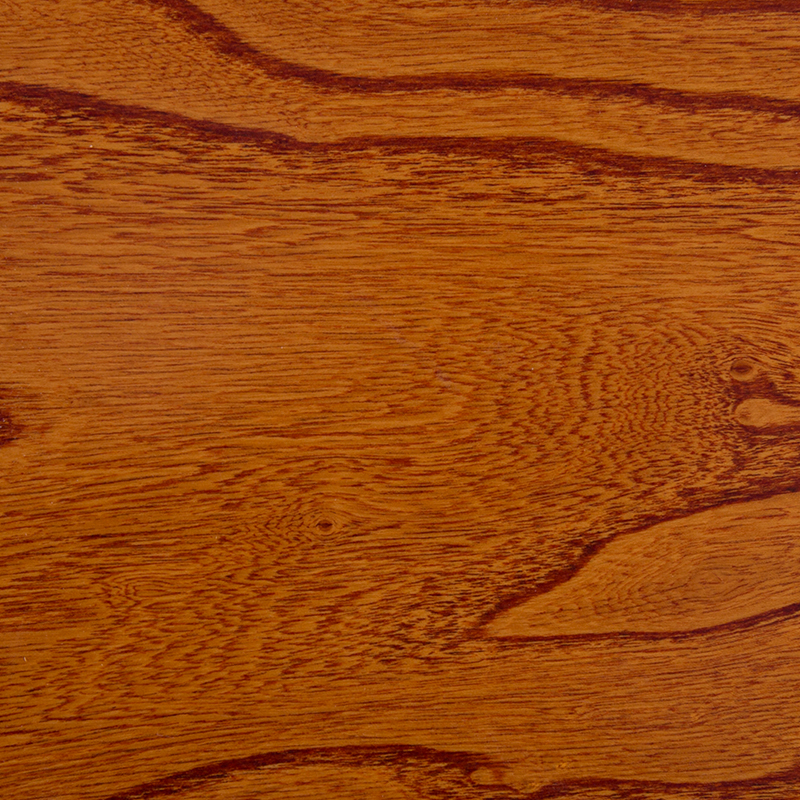
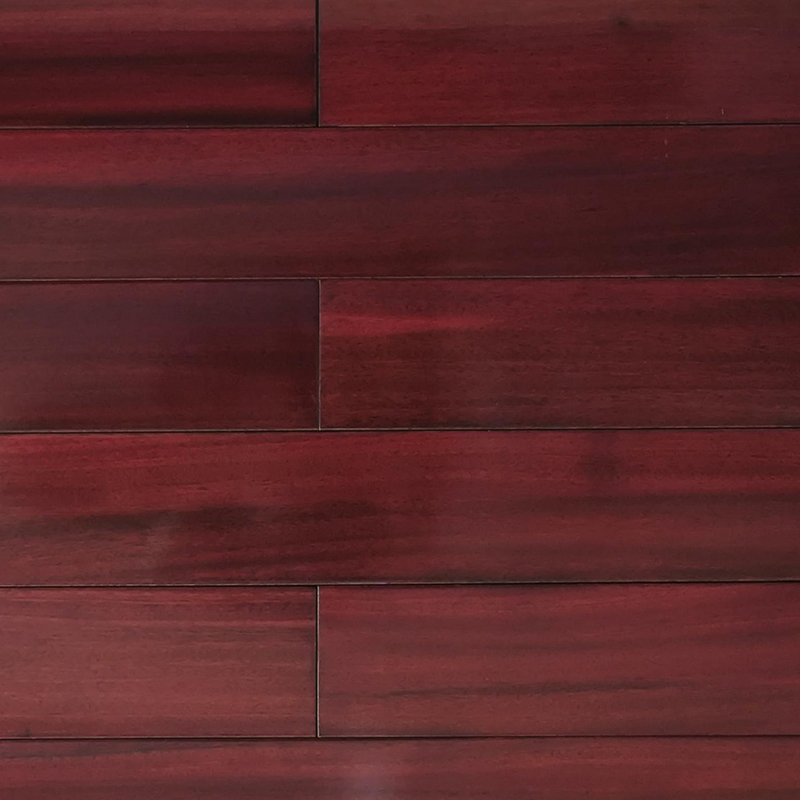
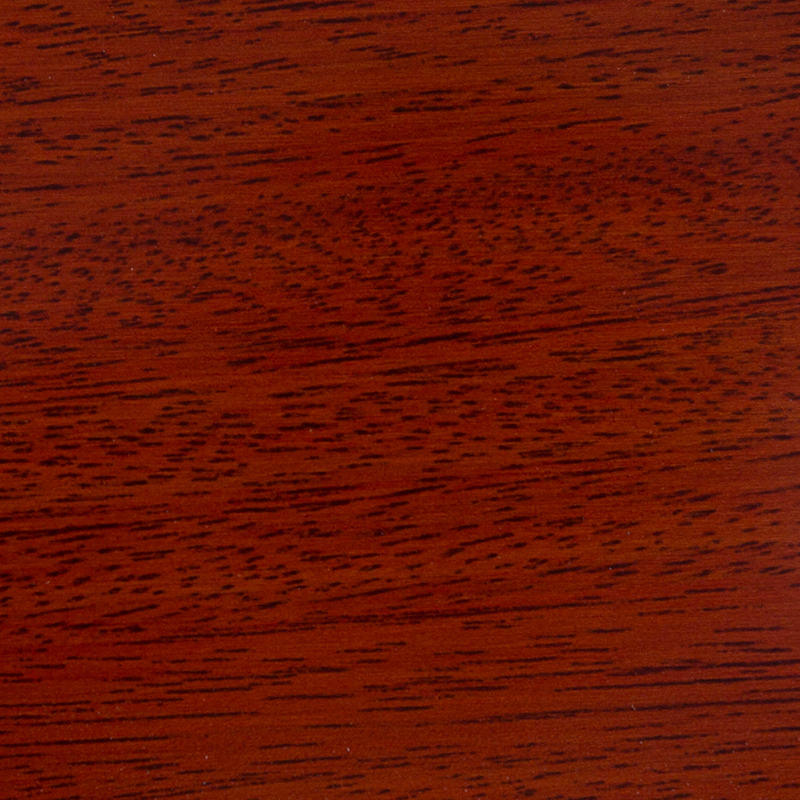
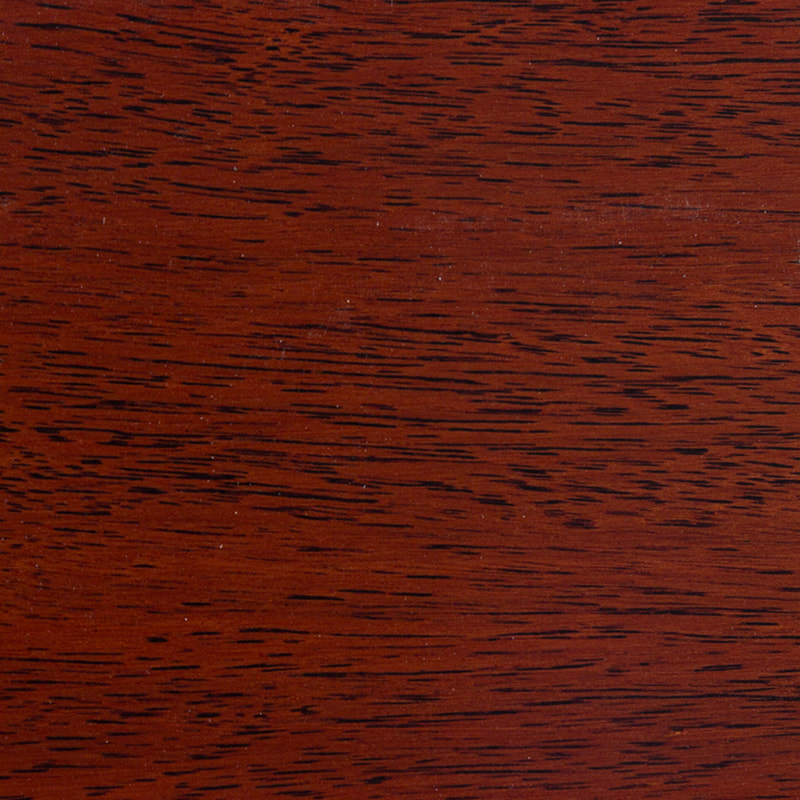
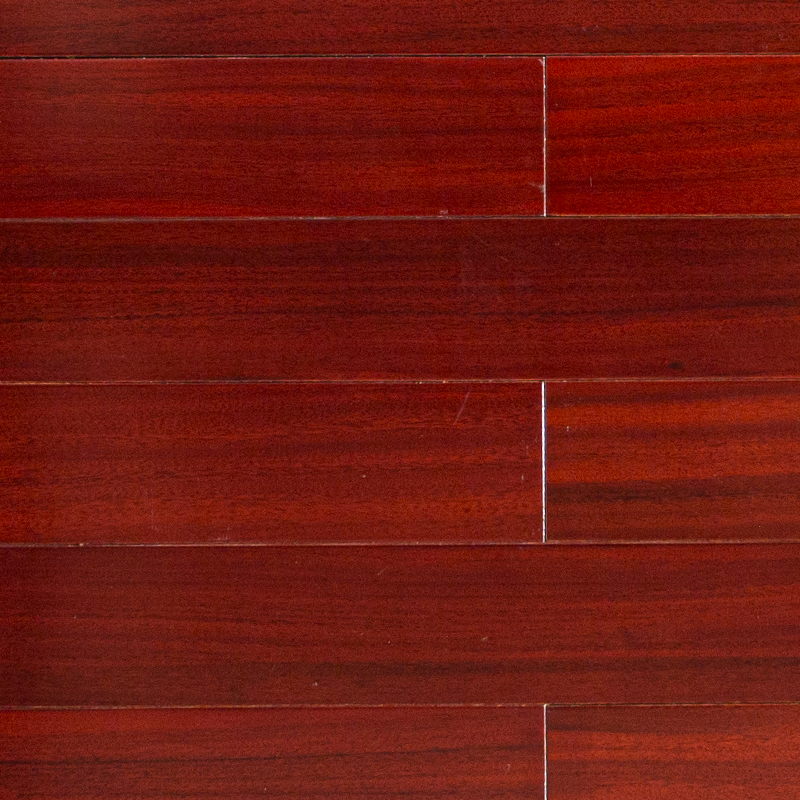
The Multi-Ply Okan Red-Brown Hand-Scraped Click Engineered Wood Flooring is designed around a classic red-brown color palette that evokes the richness of Okan-style hardwood visuals. The tone is warm, grounded, and inviting, making it suitable for interiors where the floor is expected to create comfort and depth. Unlike pale or overly modern flooring tones, the red-brown finish brings a sense of tradition and maturity. It works well with leather furniture, dark metal accents, stone features, natural textiles, vintage decor, and warm lighting schemes.
The hand-scraped texture is one of the product’s defining features. Instead of presenting a flat, uniform surface, the floor uses a textured finish that emphasizes the wood grain and produces a more authentic, rustic appearance. Hand-scraped flooring is valued because it can hide minor signs of wear better than perfectly smooth floors. In busy homes or light commercial spaces, small scratches, subtle dents, and daily marks are less visually disruptive on a surface that already contains natural movement and texture. This makes the product attractive not only from a design point of view but also from a practical maintenance perspective.
The click-lock profile further increases its usability. The flooring is designed with an arc-shaped click system that allows planks to connect smoothly and tightly. Compared with flooring that requires only traditional nail-down or full glue-down methods, a click engineered floor offers more installation flexibility. It can be installed as a floating floor, glued down, or stapled depending on the site conditions and project requirements. This gives contractors and flooring professionals more control over installation planning, while homeowners and developers can benefit from reduced installation time.
One of the main reasons engineered wood flooring has gained global acceptance is its structural stability. Solid wood is beautiful, but it is also more sensitive to environmental changes. When humidity rises, solid wood can expand; when conditions become dry, it can shrink. This natural movement can lead to gaps, cupping, cracking, or other dimensional issues. Engineered wood flooring is developed to reduce these risks by combining a real wood veneer surface with a stable layered core.
In this product, the multi-ply core is made from engineered wood layers such as eucalyptus or birch plywood. These layers are arranged to improve dimensional balance and strength. The layered construction helps distribute stress more evenly across the plank, improving resistance to warping and deformation. This is particularly important for international projects where flooring may be shipped across climates, stored under varying conditions, and installed in regions with different seasonal humidity levels.
Multi-ply engineered flooring offers a practical advantage over low-grade laminate flooring because it retains a real wood surface. Laminate products often use printed decorative paper to imitate wood, while engineered wood contains genuine veneer. This difference affects both appearance and touch. Real wood veneer has depth, natural grain variation, and an organic feel that printed surfaces cannot fully reproduce. At the same time, engineered flooring has an advantage over traditional solid wood because its layered base is more stable and often more resource-efficient.
For project buyers, the multi-ply structure also supports product consistency. A properly engineered core can help reduce installation complaints, after-sales problems, and job-site failures. In commercial and residential developments, flooring reliability affects not only the immediate appearance of a space but also long-term maintenance costs and customer satisfaction. A floor that remains stable under normal use protects the reputation of contractors, distributors, and designers.
The following table summarizes the key product information and customization options available for this engineered flooring product.
Product Type |
Multi-Ply Engineered Wood Flooring |
Product Style |
Okan Red-Brown, Hand-Scraped, Click System |
Standard Dimensions |
48.0″ × 6.8″ × 5/8″ |
Face Veneer Options |
Customizable: Oak, Walnut, Ash, Teak, and other options by project |
Veneer Thickness |
Customizable: 2 mm, 3 mm, 4 mm, 6 mm |
Core Construction |
Multi-layer engineered wood |
Core Layer |
Eucalyptus or birch plywood |
Veneer Grade |
Customizable: AB, ABC, ABCD, CD |
Veneer Cut |
Sliced veneer |
Surface Finish |
Customizable: UV lacquer, UV oil, hardwax oil |
Surface Texture |
Customizable: wire brushed, hand-scraped, smooth sanded |
Profile Detail |
Micro-bevel on all four sides |
Locking System |
Click system |
Pieces Per Carton |
10 pieces |
Area Per Carton |
2.05 square meters, approximately 22.7 square feet |
Weight Per Carton |
Approximately 24 kg |
Installation Methods |
Floating, glue-down, or staple installation |
Certification Support |
CE, FSC, CARB P2, ISO 9001, depending on project documentation requirements |
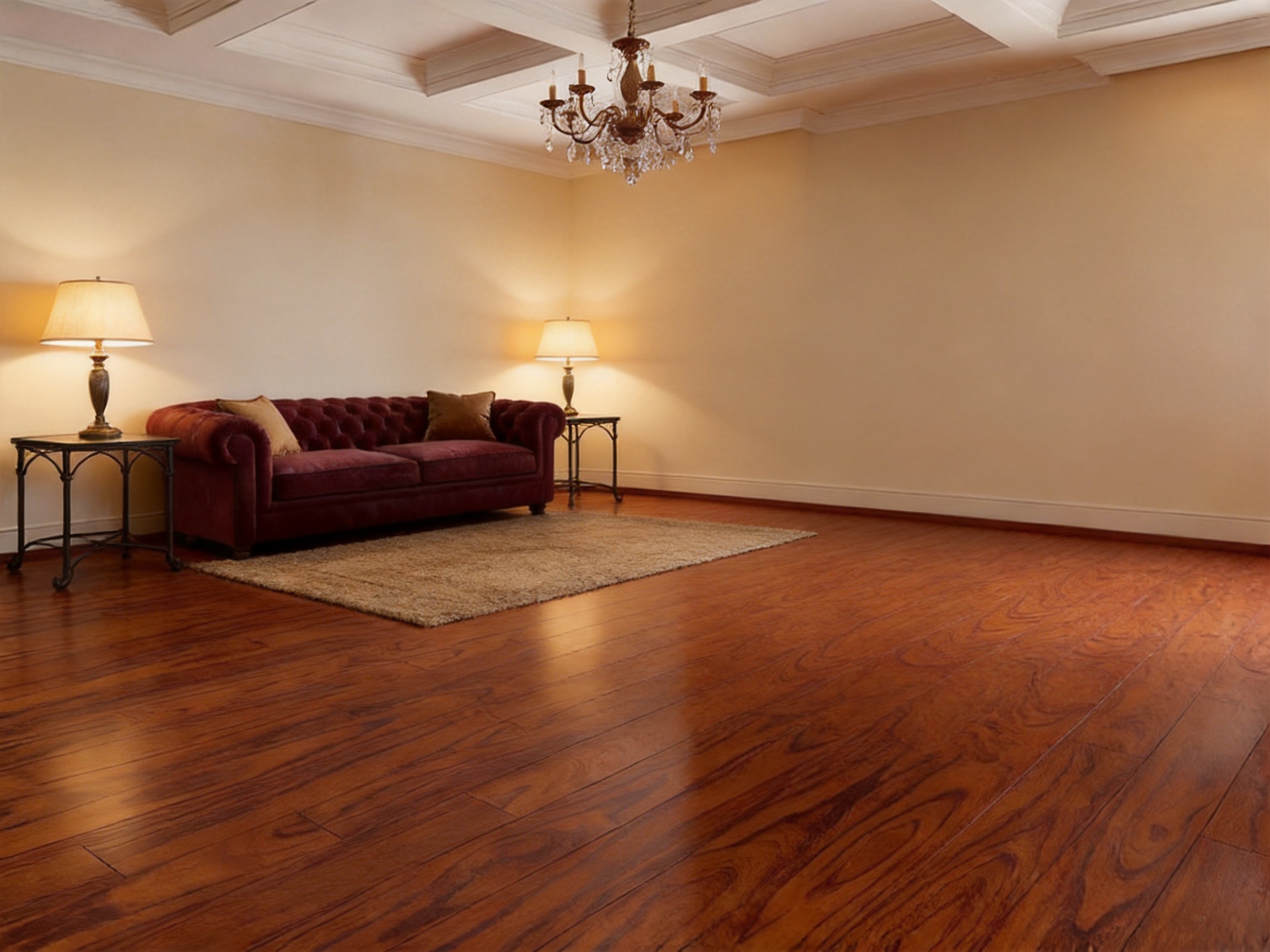
Flooring is one of the largest visible surfaces in an interior space, and its color strongly affects the emotional tone of the room. The Okan red-brown appearance of this engineered flooring provides warmth, depth, and a sense of natural permanence. In a living room, it can create a comfortable foundation for family life. In a guest room, it helps make the space feel welcoming and settled. In a cafe or restaurant, the color can support a relaxed and intimate atmosphere. In an office or reception area, it can communicate professionalism without feeling cold or overly industrial.
The red-brown tone also pairs well with many design directions. For rustic interiors, it complements exposed brick, reclaimed wood, antique furniture, and textured fabrics. For transitional interiors, it balances classic and contemporary elements. For boutique commercial spaces, it can create a premium look without appearing overly formal. Its medium-to-dark warmth also provides visual contrast with light walls, cream upholstery, brass fixtures, black frames, and neutral cabinetry.
The hand-scraped texture adds another layer of value. Instead of looking machine-perfect, the floor has a crafted, lived-in character. This is especially important in today’s interior design market, where many customers seek materials that feel authentic rather than artificial. A hand-scraped surface catches light differently across the plank, enhancing the sense of grain and movement. It also gives the flooring a tactile quality that can make a room feel more natural and comfortable.
Compared with many competing engineered floors that use thin decorative layers, overly uniform coloring, or shallow textures, this product creates a stronger impression of real wood craftsmanship. The customizable veneer options and finishes make it easier to align the flooring with different design concepts, while the standard red-brown Okan-inspired look offers a ready-made solution for warm and vintage-style projects.
Solid wood flooring remains desirable because it is natural and traditional, but it is not always the most stable choice. In regions with large seasonal humidity changes, solid wood may expand and contract more noticeably. This can cause gaps between boards, cupping, crowning, or surface checking. The multi-ply engineered construction of this product is designed to reduce such risks. By using a plywood core beneath the veneer surface, the plank becomes more balanced and less prone to deformation.
Another advantage is installation flexibility. Many solid wood floors require nail-down installation and may not be suitable for all subfloors or multi-level buildings. This engineered floor supports floating, glue-down, and staple methods, making it more adaptable for different project environments. The click system simplifies plank connection and can help reduce labor time when compared with more complex traditional installation methods.
Laminate flooring is often selected for budget reasons, but it typically lacks the depth and touch of real wood. Its surface is usually a printed image protected by a wear layer. While modern laminate can be visually convincing from a distance, it does not offer the same natural veneer character. The Multi-Ply Okan Red-Brown Hand-Scraped Click Engineered Wood Flooring uses a real wood veneer surface, giving it authentic grain variation and a warmer underfoot impression.
In project environments where atmosphere and perceived quality matter, real wood veneer can make a significant difference. Restaurants, boutique hotels, high-end apartments, and executive offices often need materials that feel more substantial than synthetic alternatives. This engineered floor delivers natural appeal while retaining the structural benefits of engineered construction.
Not all engineered wood floors are equal. Some low-cost alternatives may use unstable cores, inconsistent veneer thickness, weak locking profiles, or finishing systems that wear quickly. This product is designed with a multi-layer eucalyptus or birch plywood core, customizable veneer thickness, micro-beveled edges, and a protective UV coating system. These features support both appearance and performance.
The availability of veneer thickness options from 2 mm to 6 mm gives buyers greater control over product positioning. A thicker veneer can support higher-end applications and longer service expectations, while thinner options may be suitable for cost-sensitive projects that still require real wood aesthetics. Customizable grades, textures, and finishes allow distributors and project buyers to tailor the product to their market segment rather than accepting a one-size-fits-all specification.
Click flooring has become common, but the quality of the click profile and plank stability can vary significantly. A poorly designed locking system may lead to gaps, uneven joints, noise, or installation difficulty. This product uses an arc-shaped click-lock system designed for smooth and tight interlocking. When combined with a stable multi-ply core, the locking profile supports a cleaner installation and better long-term joint performance under normal use.
For contractors, a reliable click system reduces installation frustration. For distributors, it reduces complaints. For end users, it improves the final appearance of the floor. These practical benefits are important in competitive flooring markets where installation experience often affects product reputation as much as surface appearance.
A beautiful wood floor must also be protected. This product can be finished with UV lacquer, UV oil, or hardwax oil depending on the desired appearance and performance level. The product information highlights a seven-layer UV coating system designed to improve wear and scratch resistance. UV coating technology is widely used in engineered flooring because it cures quickly and forms a consistent protective layer over the wood surface.
UV lacquer can provide a durable, easy-to-clean finish suitable for busy residential and light commercial environments. UV oil can preserve a more natural matte appearance while still offering surface protection. Hardwax oil can create a warm, breathable finish that many designers prefer for premium wood interiors. The ability to customize the finish allows the product to satisfy different regional preferences. Some markets prefer low-sheen natural surfaces, while others prefer stronger protective lacquer finishes for practical maintenance.
The hand-scraped texture also works together with the finish system. Because the surface is not completely flat, it can visually soften everyday marks. This does not mean the floor is indestructible; all real wood products require reasonable care. However, the combination of textured surface and protective coating gives the floor a practical balance of beauty and durability.
The product includes a micro-bevel on all four sides of each plank. This small edge detail plays an important role in the final appearance of the installed floor. A micro-bevel creates subtle separation between boards, emphasizing the plank format and giving the floor a more natural board-by-board look. It also helps visually manage tiny height variations that may occur during installation or due to subfloor conditions.
Compared with square-edge flooring, micro-beveled flooring is often more forgiving in real-world installations. Square edges can create a seamless appearance, but they may also show minor unevenness more clearly. Micro-beveled edges provide a practical solution for engineered wood flooring because they enhance the natural plank style while supporting installation tolerance.
For red-brown hand-scraped flooring, micro-beveled edges reinforce the rustic and crafted aesthetic. Each plank feels distinct, which is desirable in vintage-inspired and natural interiors. The result is a floor that looks more like genuine wood boards and less like an artificial sheet-like surface.
The performance of engineered wood flooring depends heavily on manufacturing capability. Suzhou Dicosbo Wood Co., Ltd. brings more than two decades of experience in wood solutions, including flooring, wooden doors, and custom cabinetry. Founded in 1999, the company has developed production systems that support both standard manufacturing and customized project requirements. Its experience with global markets gives it an understanding of international quality expectations, packaging requirements, documentation needs, and project timelines.
The company operates approximately 20,000 square meters of production facilities and has more than 10 years of export experience. It serves over 100 global partners across Europe, North America, and Southeast Asia. This background is important because international buyers often need more than a product; they need a supplier capable of stable communication, consistent production, quality control, and delivery coordination. A manufacturer that understands export procedures and compliance requirements can help reduce procurement risk.
Annual production capacity is another strength. With capacity reaching approximately 2,400,000 square meters of flooring and 5,000 sets of doors, the company can support both distributor inventory programs and project-based orders. For flooring buyers, capacity matters because project schedules often require dependable supply. Delays can affect contractors, developers, and downstream clients. A manufacturer with mature production scale is better positioned to handle repeat orders and customized batches.
The company uses German imported production lines and automated quality control systems. In engineered wood flooring production, precision is essential at every stage. Core preparation, veneer selection, pressing, sanding, profiling, finishing, curing, inspection, and packaging all affect final product performance. Small variations in moisture content, adhesive application, plank dimensions, or locking profile accuracy can create major problems during installation or long-term use.
Advanced production equipment helps improve dimensional accuracy and consistency. This is especially important for click flooring, where profiles must interlock correctly across thousands of planks. If machining tolerance is poor, installers may face difficult fitting, loose joints, or visible gaps. Automated control systems help monitor production quality and reduce variation.
The layered core must also be produced with attention to balance and bonding strength. Multi-ply engineered flooring depends on stable lamination. Proper pressing and adhesive control help create a strong bond between layers and reduce the chance of delamination. The veneer must be applied evenly and then sanded carefully to preserve thickness while preparing the surface for finishing. The UV coating process must be consistent so that the floor receives proper protection without uneven gloss, streaking, or weak coverage.
In competitive flooring markets, manufacturing consistency is one of the most important differentiators. A product may look attractive in a sample, but true quality is proven in full production and installation. The company’s investment in equipment and quality systems helps ensure that the product can move from sample approval to bulk order with reliable performance.
The company applies a strict three-step quality inspection process. While individual inspection procedures may vary by order and specification, a strong flooring inspection system usually includes raw material inspection, in-process inspection, and final product inspection. Each stage helps prevent defects from moving forward.
Raw material inspection is essential for engineered wood flooring because veneer quality, core material stability, and moisture content all affect final performance. Veneers must be checked for acceptable grade, color range, grain appearance, and surface defects according to the agreed specification. Core layers must be stable and suitable for lamination. Moisture control is especially important because improper moisture content can lead to dimensional movement after installation.
In-process inspection helps verify pressing quality, sanding accuracy, profiling precision, coating consistency, and plank dimensions. This stage can catch issues before packaging. For click system flooring, profile accuracy is particularly important. Test assembly may be performed to confirm joint tightness and ease of installation.
Final inspection ensures that packaged goods meet appearance and specification requirements before shipment. Carton labeling, quantity, surface quality, edge condition, color consistency, and packaging protection can all be reviewed. For export orders, strong packaging is important because flooring may travel long distances by sea or land. Proper packaging helps protect edges, surfaces, and cartons from damage during transportation.
One of the product’s major advantages is its customizable specification range. Buyers can choose different face veneers, veneer thicknesses, grades, surface finishes, textures, and colors. This flexibility allows the same manufacturing platform to serve different market levels and design requirements. A distributor may request a popular red-brown hand-scraped finish for retail sales, while a hotel project may require a specific color, sheen, or veneer grade to match interior design drawings.
Customization is valuable because flooring markets are not identical. European buyers may prefer certain oak tones and matte oil finishes. North American buyers may prioritize wider planks, durability, and formaldehyde compliance. Southeast Asian markets may require better humidity stability and design variety. Architects may request samples that match furniture, doors, wall panels, or cabinetry. Contractors may need reliable installation systems and consistent batch production.
The company’s OEM and ODM capabilities help address these needs. OEM manufacturing supports buyers who have their own brand or specification. ODM support can help buyers develop new product lines based on design trends or market gaps. The company also offers rapid prototyping within 72 hours, which can shorten product development cycles. For project bidding, sample speed is often critical. A buyer who can present a realistic flooring sample quickly has a better chance of winning approval from designers, developers, or end clients.
Modern flooring buyers increasingly consider sustainability, emissions, and responsible sourcing. This product supports environmental expectations through certifications and compliance systems such as CE, FSC, CARB P2, and ISO 9001, depending on project requirements and documentation. FSC certification is important because it relates to responsible forest management and chain-of-custody practices. CARB P2 compliance is important for formaldehyde emission control in composite wood products. CE marking supports access to certain European markets, while ISO 9001 reflects quality management system discipline.
Engineered wood flooring can also support resource efficiency by using a real wood veneer over a stable core. Instead of using a full thickness of premium hardwood throughout the plank, engineered construction uses valuable hardwood where it is most visible and functional: on the surface. The core can be produced from suitable engineered layers, helping optimize material use while maintaining the natural appearance of wood.
For architects and developers working on sustainable projects, documentation and material transparency are increasingly important. A supplier with certification experience can help support submittal packages, project approvals, and compliance communication. While certification requirements vary by country and project, working with a manufacturer familiar with global compliance reduces uncertainty.
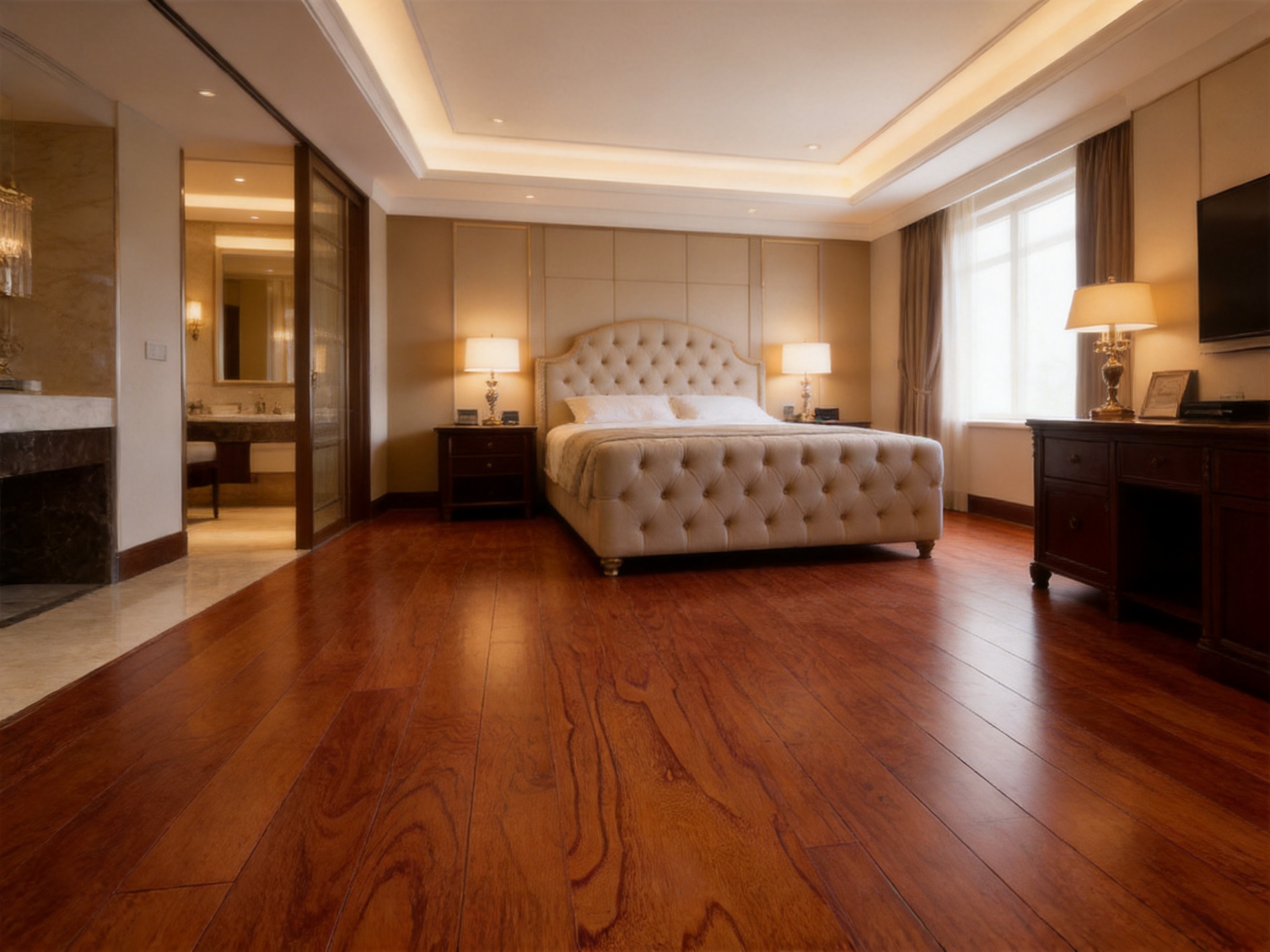
In residential interiors, this floor is especially well suited for living rooms, guest rooms, dining areas, bedrooms, home offices, and transitional spaces. Its warm red-brown color creates a comfortable background for daily life, while the hand-scraped surface gives character and reduces the visual impact of minor wear. The engineered structure is useful for homes in climates where seasonal humidity changes may affect solid wood flooring.
For living rooms, the flooring can create a welcoming atmosphere and pair well with both traditional and modern furniture. In dining rooms, its darker warmth can provide a grounded setting for wood tables, upholstered chairs, and soft lighting. In bedrooms, it can make the room feel calm and settled. In home offices, it offers a professional but natural finish that is more inviting than tile or synthetic flooring.
Homeowners also benefit from the installation flexibility. Depending on the subfloor and site conditions, the flooring can be floated, glued, or stapled. The click system makes installation more efficient and can reduce disruption during renovation projects. For apartments or multi-level homes, floating installation may be considered where suitable underlayment is used, though local building and acoustic requirements should always be reviewed.
In commercial spaces, flooring must support both design goals and operational needs. The Multi-Ply Okan Red-Brown Hand-Scraped Click Engineered Wood Flooring is suitable for restaurants, cafes, offices, boutiques, hotel rooms, reception areas, and other light to medium commercial interiors where natural warmth is desired. Its rustic surface can enhance customer experience by making spaces feel more comfortable and memorable.
Restaurants and cafes often benefit from wood flooring because it softens the atmosphere and works well with warm lighting. The red-brown tone can make dining areas feel intimate, while the textured surface helps create a casual, authentic appearance. Offices can use the floor in meeting rooms, executive areas, waiting areas, and collaborative spaces where a more refined finish is needed than carpet or vinyl. Retail stores can use the floor to reinforce brand identity and create a premium shopping environment.
Commercial buyers should consider wear level, maintenance practices, and finish selection. For higher traffic areas, UV lacquer may be preferable because of its protective properties. For boutique environments where a natural matte look is the priority, UV oil or hardwax oil may be considered. Project-specific consultation can help determine the best combination of veneer thickness, finish, texture, and installation method.
The click system is one of the most practical features of this engineered flooring. It enables planks to connect securely without relying only on traditional fastening. For installers, this can reduce installation time and help create consistent joints. The product can be installed by floating, glue-down, or staple methods, allowing adaptation to different subfloors and project conditions.
Before installation, the site should be prepared properly. The subfloor should be clean, dry, level, and structurally sound. Moisture testing should be performed according to local standards and flooring best practices. The flooring should be acclimated when required by the installation instructions and site conditions. Expansion gaps should be maintained around the perimeter and fixed objects. Underlayment should be selected according to the installation method, acoustic needs, moisture conditions, and building requirements.
Although engineered flooring is more stable than solid wood, it is still a wood product and should not be treated as waterproof. Excessive moisture can damage wood flooring. In kitchens, entryways, or other areas where spills may occur, prompt cleaning and proper mats are recommended. In bathrooms, wet rooms, or areas with standing water risk, alternative materials may be more appropriate unless a professional evaluation confirms suitability.
Daily maintenance is simple when proper habits are followed. The floor should be cleaned with a soft cloth, microfiber mop, or suitable wood-floor cleaning tool. Hard tools, abrasive pads, and harsh chemical cleaners should be avoided because they may damage the finish. Dust and grit should be removed regularly because abrasive particles can act like sandpaper under foot traffic.
Direct sunlight should be controlled where possible. Like most real wood surfaces, prolonged exposure to strong sunlight can cause color change over time. Curtains, blinds, UV-protective window films, and furniture rotation can help reduce uneven discoloration. Area rugs can also protect high-use zones, although rugs should be moved occasionally to allow the floor to age more evenly.
Excessive humidity should be avoided. Indoor humidity should be kept within a reasonable range recommended for wood flooring. Very dry air may cause shrinkage, while high humidity may encourage expansion. Climate control, ventilation, and moisture management help preserve flooring stability. Spills should be wiped promptly, and wet mopping should not be used.
Furniture protection is also important. Felt pads should be placed under chair and table legs. Heavy furniture should be lifted rather than dragged. Entry mats can reduce dirt and grit from outside. In commercial spaces, a planned cleaning routine and protective measures at entrances can significantly extend the attractive life of the floor.
This engineered flooring offers a strong combination of visual appeal, structural stability, customization, installation convenience, and manufacturing support. Its red-brown hand-scraped surface gives it a distinctive identity in a market filled with generic wood looks. Its multi-ply structure helps reduce dimensional problems compared with solid wood. Its real veneer surface gives it a premium advantage over laminate. Its click system improves installation efficiency. Its customizable options allow buyers to position it for different markets and project levels.
For distributors, the product provides a marketable design with practical specifications and certification support. For contractors, it offers installation flexibility and stable performance. For architects, it provides natural material character with customizable finish and grade options. For property owners, it offers warmth, comfort, and durability in daily use. For commercial operators, it supports atmosphere creation while maintaining practical maintenance requirements.
The manufacturing background of Suzhou Dicosbo Wood Co., Ltd. adds further value. With more than 20 years of industry experience, large-scale production capacity, advanced production equipment, export experience, OEM and ODM support, rapid prototyping, and quality control systems, the company can support both product quality and business reliability. In global flooring procurement, choosing the right manufacturer is as important as choosing the right product design.
This flooring uses a multi-ply engineered structure rather than a single solid wood board. The layered core improves dimensional stability and reduces the risk of warping, cracking, and deformation caused by temperature and humidity changes. It still provides a real wood veneer surface, so buyers can enjoy natural wood beauty with improved structural performance.
The surface is a natural wood veneer, not a printed laminate image. Veneer thickness can be customized, with options such as 2 mm, 3 mm, 4 mm, and 6 mm depending on project needs. This gives the flooring authentic grain, natural texture, and a more premium appearance than synthetic alternatives.
It is suitable for residential spaces such as living rooms, guest rooms, bedrooms, dining rooms, and home offices. It is also appropriate for many commercial interiors, including restaurants, cafes, boutiques, offices, reception areas, and hotel rooms where a warm and rustic wood atmosphere is desired.
The flooring can be installed using floating, glue-down, or staple methods. Its click-lock system supports efficient plank connection and can help reduce installation time. The final method should be selected according to subfloor type, site conditions, acoustic needs, and project specifications.
The hand-scraped texture enhances the natural grain and gives the floor a rustic, crafted appearance. It can also make minor daily wear less noticeable compared with very smooth, uniform surfaces. This makes it a practical choice for homes and light commercial spaces where both style and usability matter.
Yes. The product supports customization in face veneer, veneer thickness, veneer grade, surface finish, surface texture, color, and size. Finish options include UV lacquer, UV oil, and hardwax oil. Texture options include hand-scraped, wire brushed, and smooth sanded surfaces.
The product and manufacturing system can support certifications and compliance requirements such as CE, FSC, CARB P2, and ISO 9001, depending on project documentation needs. These standards are important for international buyers, sustainable sourcing, emissions control, and quality management.
Clean it regularly with a soft cloth or microfiber mop. Avoid abrasive tools, harsh chemical cleaners, wet mopping, prolonged direct sunlight, and excessive humidity. Use felt pads under furniture, clean spills promptly, and place entrance mats in high-traffic areas.
The multi-ply eucalyptus or birch plywood core improves plank stability. It helps the floor resist warping and cracking better than many solid wood alternatives. This is especially valuable in projects exposed to changing environmental conditions.
Project buyers need consistent quality, stable supply, documentation, customization, and reliable communication. Suzhou Dicosbo Wood Co., Ltd. offers more than 20 years of wood manufacturing experience, advanced production equipment, large annual flooring capacity, OEM and ODM services, rapid sample development, and strict quality inspection processes.
The Multi-Ply Okan Red-Brown Hand-Scraped Click Engineered Wood Flooring is a compelling solution for interiors that demand warmth, authenticity, stability, and installation efficiency. Its natural veneer surface creates the look and feel of real wood, while the multi-layer engineered core provides improved resistance to deformation and cracking. The red-brown Okan-inspired tone gives spaces a welcoming and vintage character, and the hand-scraped texture adds depth, craftsmanship, and practical visual forgiveness.
Compared with solid wood, it offers better dimensional stability and more installation flexibility. Compared with laminate, it provides a real wood surface and a more premium interior effect. Compared with low-cost engineered products, it offers stronger customization options, protective finishing choices, micro-beveled edges, a reliable click system, and the support of an experienced manufacturer. Its suitability for residential and commercial spaces makes it highly versatile, while its certification support and manufacturing background make it practical for global procurement.
Behind the product is a manufacturer with extensive experience, advanced production lines, automated quality control, large production capacity, and the ability to support custom specifications. These strengths matter because flooring performance depends not only on product design but also on process discipline and supply reliability. For distributors, contractors, architects, and developers seeking a wood flooring solution that combines visual richness with engineered stability, this product offers a balanced and competitive choice.
Forest Stewardship Council. FSC Chain of Custody and Responsible Forest Management Principles.
California Air Resources Board. Composite Wood Products Airborne Toxic Control Measure and CARB Phase 2 Emission Standards.
International Organization for Standardization. ISO 9001 Quality Management Systems Requirements.
European Committee for Standardization. CE Marking and Harmonized Standards for Construction and Interior Products.
National Wood Flooring Association. Wood Flooring Installation Guidelines and Methods.
Engineered Wood Flooring Association. Technical Guidance on Multi-Layer Wood Flooring Construction and Performance.

We provide customers with sustainable and eco-friendly
engineered wood solutions and services.
Choose DEIF for the perfect blend of
performance and aesthetics.
