


 English
 Español
 عربى
عربى

Get Social
Choose DEIF for the perfect blend of
performance and aesthetics.
 Get Free Sample

Content
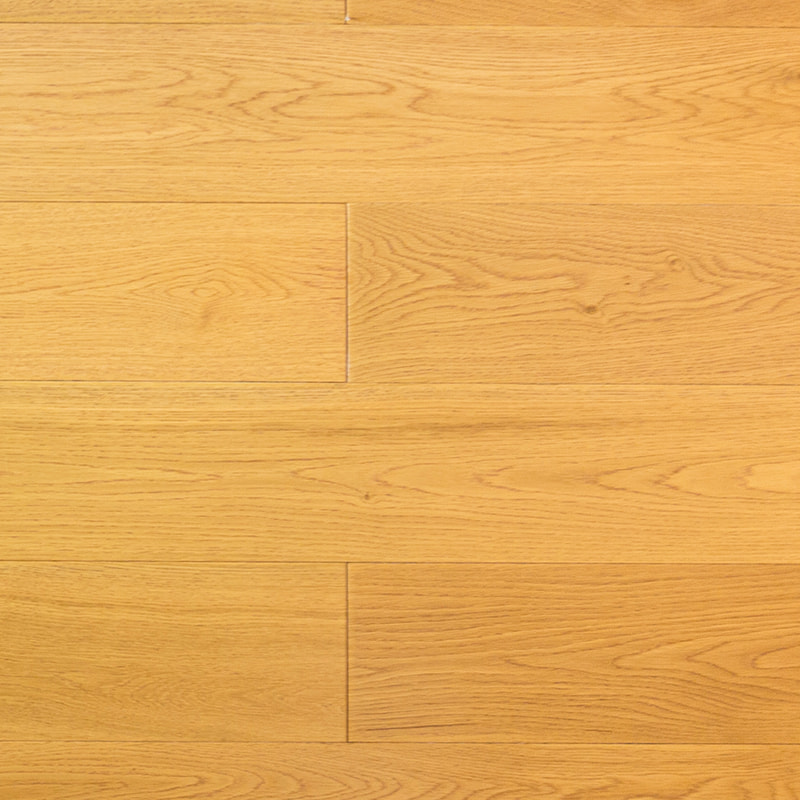
Engineered wood flooring has become one of the most practical and aesthetically refined flooring choices for modern homes, apartments, villas, boutique commercial spaces, and design-led renovation projects. Among the many options available, 3-layer light apricot oak engineered wood flooring stands out for its warm natural tone, balanced structural performance, easy click installation, and compatibility with contemporary interior trends such as light French, cream-style, Scandinavian, and soft minimalist design.
This article focuses on a 3-layer oak light apricot natural grain surface click engineered wood flooring solution designed for residential interiors that require visual warmth, long-term stability, and convenient installation. The product combines a real oak veneer surface, a stable engineered wood core, a click-lock profile, micro-beveled edges, and a protective UV coating system. These features make it a strong choice for homeowners, designers, builders, distributors, and project contractors who want the natural character of wood with improved dimensional reliability compared with many traditional solid wood flooring products.
Unlike purely decorative floor coverings that only imitate wood, this engineered flooring uses a natural wood veneer surface, allowing the grain, color variation, and tactile texture of real oak to remain visible. Its light apricot tone helps brighten interiors without appearing cold or artificial. The product is particularly well suited for bedrooms, living rooms, family spaces, apartments, and residential projects that aim to create a soft, welcoming atmosphere.
Beyond the product itself, manufacturing strength is also a major factor in flooring performance. A good engineered floor is not created by appearance alone. It requires careful raw material selection, precise veneer processing, controlled core construction, accurate profiling, stable coating technology, strict inspection, and reliable packaging. Backed by a wood solutions manufacturer with more than two decades of industry experience, advanced production capacity, OEM and ODM customization capability, and compliance with international standards, this flooring product is positioned not only as an attractive surface material but also as a dependable solution for global residential and project-based applications.
3-Layer Oka Light Apricot Natural Grain Surface Click Engineered Wood Flooring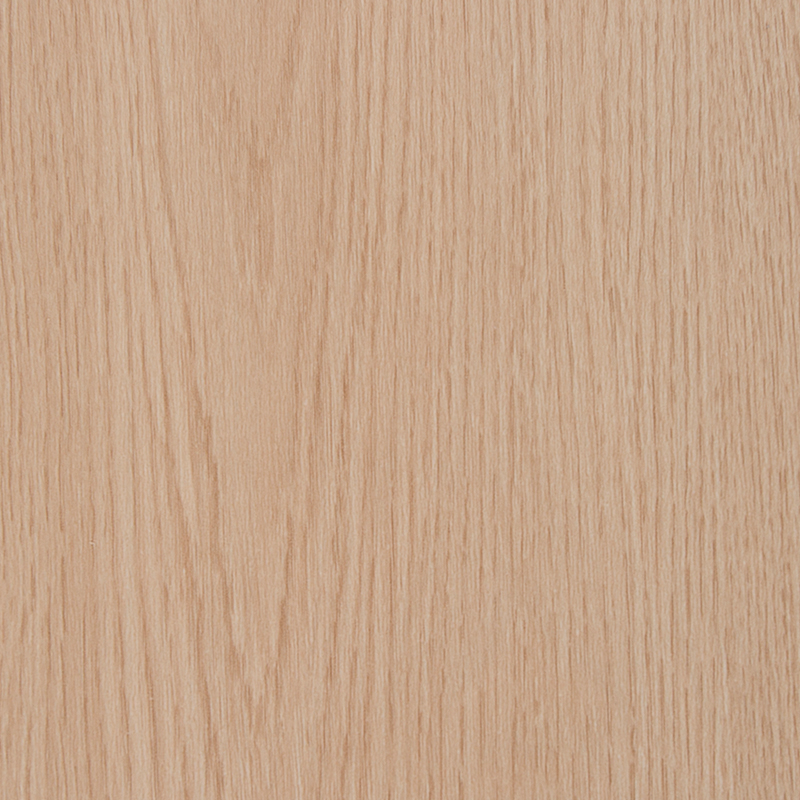
The 3-layer light apricot oak engineered wood flooring is designed around a simple but powerful concept: preserve the visual appeal of natural oak while improving structural reliability through engineered construction. The surface uses a natural wood veneer that may be customized in thickness according to project requirements. Available veneer thickness options include 2 mm, 3 mm, 4 mm, and 6 mm, while the general technical range for natural veneer surfaces can extend from approximately 0.6 mm to 6.0 mm depending on use and specification.
The face veneer can also be customized in different wood species, including oak, walnut, ash, and teak. For this featured product, oak is the visual highlight. Oak has long been favored in flooring because of its recognizable grain, balanced hardness, and ability to accept a wide variety of colors and finishes. In this product, the light apricot tone softens oak’s natural character and brings a gentle warmth to interior spaces.
The flooring uses a 3-layer engineered structure with a spruce or pine core. This construction helps reduce the tendency of the floorboard to expand, shrink, warp, or crack in response to normal indoor humidity and temperature changes. Compared with many solid wood planks, engineered wood flooring provides improved dimensional stability because its layers are arranged to balance internal stresses. This is one of the key reasons engineered flooring is widely adopted in residential projects, multi-unit housing, and modern interior construction.
The product is supplied with a click system, allowing floating installation in many conditions while also supporting glue-down or staple methods depending on the project design, subfloor condition, and professional installer recommendation. The micro-bevel on all four sides gives each plank a refined outline and helps define the natural plank format after installation.
In terms of dimensions, the product specification includes an imperial size of approximately 48.0 inches by 7.7 inches by 5/8 inch. Each carton contains 10 pieces, covering approximately 2.03 square meters or 21.85 square feet, with a carton weight of about 24 kg. These practical packaging details support project planning, logistics, and installation calculation.
| Product Type | 3-Layer Engineered Wood Flooring |
| Surface Appearance | Light Apricot Oak Natural Grain |
| Dimensions | 48.0″ × 7.7″ × 5/8″ |
| Face Veneer | Customizable: Oak, Walnut, Ash, Teak |
| Veneer Thickness | Customizable: 2 mm, 3 mm, 4 mm, 6 mm |
| Core Construction | 3-Layer Engineered Wood |
| Core Layer | Spruce or Pine |
| Veneer Grade | Customizable: AB, ABC, ABCD, CD |
| Veneer Cut | Sliced Veneer |
| Surface Finish | Customizable: UV Lacquer, UV Oil, Hardwax Oil |
| Surface Texture | Customizable: Wire Brushed, Handscraped, Smooth Sanded |
| Edge Detail | Micro-Bevel on All Four Sides |
| Locking System | Click System |
| Installation Methods | Float, Glue, Staple |
| Pieces Per Carton | 10 |
| Coverage Per Carton | 2.03 m² / 21.85 ft² |
| Weight Per Carton | Approximately 24 kg |
| Certifications | CE, FSC, CARB P2, ISO 9001 Related Manufacturing Compliance |
Color is one of the most important design decisions in flooring selection. Dark floors can create drama and depth, but they may also make smaller rooms feel more compact. Very pale floors can make interiors feel open and bright, but if the tone is too gray or too white, the space may appear cold. The light apricot oak tone offers a balanced alternative. It is bright enough to open up a room, yet warm enough to maintain a natural and inviting feeling.
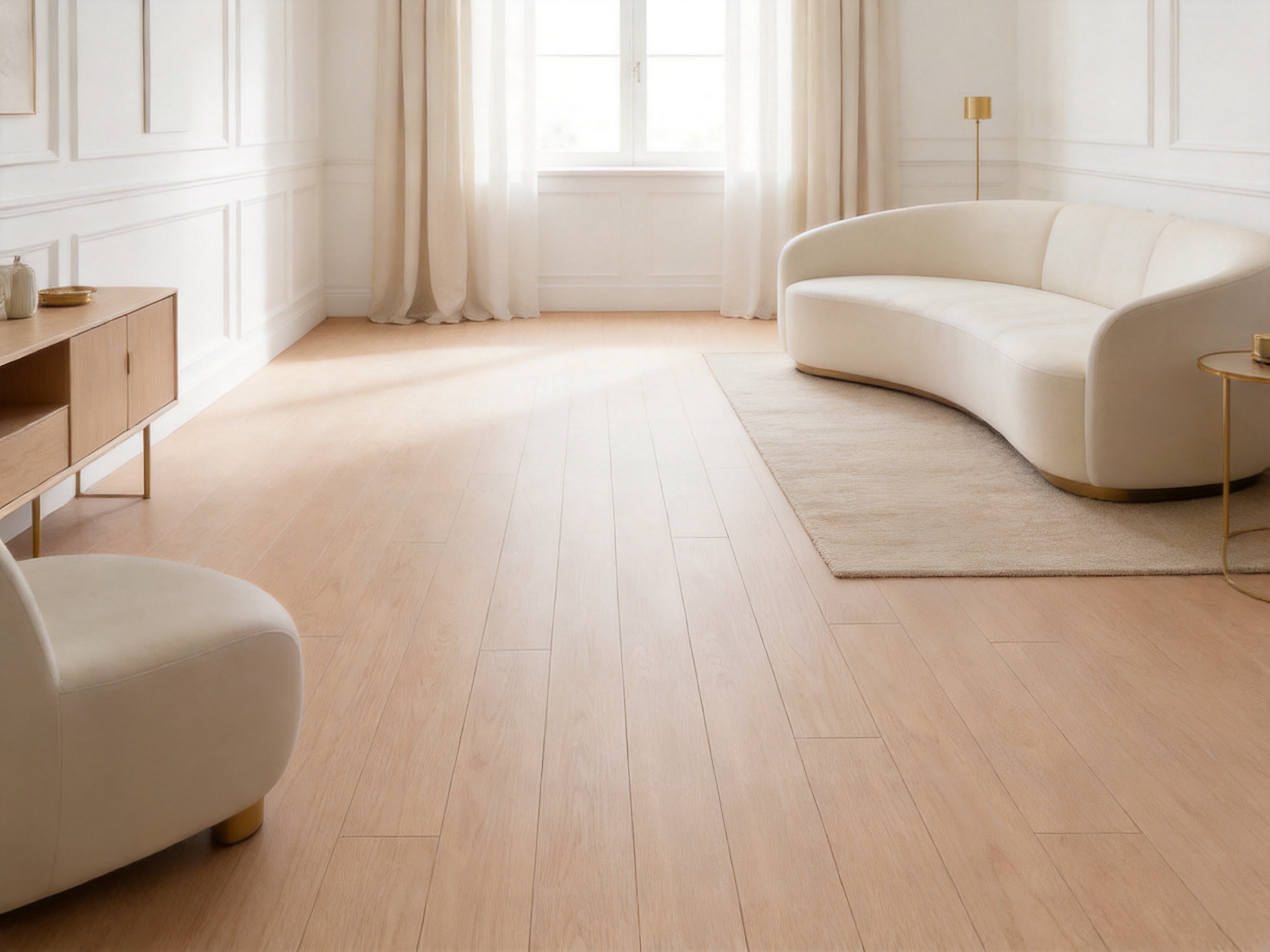
This color direction is especially compatible with light French interiors, cream-colored living rooms, soft beige palettes, warm white walls, natural linen textiles, curved furniture, and brass or matte metal accents. It also works well with Scandinavian-inspired settings where simplicity, natural materials, and gentle light are central design themes.
In bedrooms, the light apricot tone can create a calm and restful atmosphere. In living rooms, it provides a neutral but expressive foundation that pairs easily with sofas, rugs, cabinets, and decorative elements. In apartments, where lighting conditions may vary from room to room, this flooring can help reflect daylight and make interiors feel more spacious.
The natural oak grain further enhances the color. Rather than presenting a flat printed surface, the veneer shows authentic grain movement, subtle variation, and the visual rhythm of real wood. This helps the floor avoid the repetitive appearance sometimes found in low-grade laminate or synthetic flooring products. For customers who value genuine material expression, this is a meaningful advantage.
A key feature of this product is its natural wood veneer surface. In competitive flooring markets, many products claim to offer a wood look, but the difference between a printed imitation and a real veneer surface is significant. A natural veneer provides depth, grain complexity, and organic variation that cannot be fully duplicated by printing technology.
Oak veneer gives the floor a recognizable visual identity. Its grain can be bold enough to show natural character while still maintaining an elegant and versatile appearance. When finished in light apricot, the veneer becomes softer and more refined, making it suitable for contemporary homes that want warmth without heavy rusticity.
The veneer thickness can be customized according to project requirements. A thicker veneer may provide greater potential for future refinishing, depending on the finish system and maintenance method. A thinner veneer may be suitable for cost-sensitive projects or specific installation conditions. The ability to customize veneer thickness is one of the major advantages of a capable engineered flooring manufacturer, because different markets and project types often require different balance points between appearance, durability, budget, and long-term performance.
The product also offers veneer grade customization, including AB, ABC, ABCD, and CD grades. Higher grades generally present a cleaner and more uniform appearance, while more character-rich grades may include knots, natural marks, and stronger variation. This allows designers and buyers to match the flooring style to the intended interior atmosphere. A refined apartment project may prefer cleaner grading, while a natural country-style residence may prefer more visible character.
Solid wood flooring has traditional appeal, but it can be sensitive to changes in moisture and temperature. Wood is a natural hygroscopic material, meaning it absorbs and releases moisture depending on surrounding conditions. As a result, solid planks can expand, shrink, cup, or crack if the environment changes significantly. Engineered wood flooring was developed to reduce these challenges while preserving a real wood surface.
The 3-layer structure of this flooring contributes to stability by distributing movement across different layers. The surface layer provides the visible oak beauty, while the core layer, made from spruce or pine, gives support and structural balance. The bottom layer helps counteract the movement of the top layer. This layered arrangement improves the floor’s resistance to deformation and cracking compared with many conventional solid wood options.
This advantage is important in residential applications where heating, cooling, seasonal humidity changes, and daily living conditions affect indoor environments. A stable floor can better maintain tight joints, flatness, and overall appearance over time. For homeowners, this means fewer concerns about visible gaps or plank distortion. For contractors and developers, it means fewer performance complaints and more predictable installation outcomes.
The 3-layer format also helps create a comfortable walking feel. Because it uses real wood components, the floor maintains a warmer and more natural sensation underfoot than many ceramic, stone, or purely synthetic alternatives. This makes it suitable for bedrooms and living spaces where comfort is important.
The click system is another important product advantage. Modern construction and renovation projects often require efficient installation. A click-lock profile allows boards to connect tightly and securely without requiring traditional tongue-and-groove nailing in every installation scenario. Depending on the project, the floor can be installed as a floating floor, glued down, or stapled.
Floating installation is especially convenient for many residential renovations because it can reduce installation time and may be suitable over appropriate subfloors with the correct underlayment. Glue-down installation can provide a firm feel and may be preferred in some professional projects. Staple installation may be used where the subfloor and site conditions allow. This flexibility gives installers and contractors more options.
The arc-shaped click-lock design mentioned in the product concept helps form tight joints. Proper joint strength is essential for long-term flooring performance because weak joints can lead to gaps, uneven surfaces, or noise during use. A reliable locking system contributes to a cleaner installed appearance and helps the floor perform consistently under normal residential traffic.
Compared with competitors that offer only limited installation methods, a product that supports floating, glue, and staple installation has broader project compatibility. This is especially useful for distributors and contractors who serve different markets and construction conditions.
Flooring must do more than look beautiful on the day it is installed. It must handle daily life. Shoes, furniture movement, dust, children, pets, and regular cleaning can all affect the surface. This product uses a 7-layer UV coating system for wear and scratch resistance in general use. A well-applied UV finish helps protect the wood veneer while preserving the natural visual character of the surface.
UV lacquer, UV oil, and hardwax oil options provide different aesthetic and performance qualities. UV lacquer can create a more sealed and protective surface with convenient maintenance. UV oil can offer a more natural matte appearance while still providing protection. Hardwax oil is valued for its tactile natural feel and repair-friendly character in many wood applications. The ability to select different finishes gives buyers more control over appearance, maintenance expectations, and market preference.
Surface texture is also customizable. Wire brushing can emphasize the natural grain of oak and create a textured feel underfoot. Handscraped texture can provide a more artisanal and aged look. Smooth sanding offers a cleaner and more modern appearance. For the light apricot oak product, a natural grain surface can be paired with these texture options to match different design styles.
Compared with low-quality floors that rely on thin or inconsistent coatings, a multi-layer UV coating system improves practical performance. It helps resist everyday abrasion and makes cleaning easier. However, like all real wood flooring, it should still be maintained properly. Sharp objects, excessive water, and harsh chemicals should be avoided to preserve the surface over time.
The product is especially suitable for light French-style bedrooms and cream-colored living rooms, but its application range is wider than that. In modern residential design, flooring often acts as the visual foundation for the entire interior. A neutral warm floor can connect walls, furniture, doors, cabinets, and decorative finishes into one coherent atmosphere.
In a light French interior, this flooring can complement soft wall panels, carved moldings, curved furniture, linen curtains, warm white paint, and subtle metallic details. Its apricot tone adds warmth without overwhelming the elegance of the room. In cream-style interiors, the floor reinforces the soft monochrome palette and prevents the space from feeling too plain.
In Scandinavian interiors, the product works well with pale woods, white walls, wool rugs, and minimal furniture. In Japandi-inspired interiors, it can be paired with simple wood furniture, natural fabrics, and calm earth tones. In contemporary apartments, the micro-beveled plank edges create visual structure while the light color helps maintain openness.
For residential developers, such a versatile floor reduces design risk. A flooring product with extreme color or heavy rustic character may appeal to a narrow buyer group. A balanced light apricot oak floor can attract a wider range of homeowners and tenants because it is easy to match with many furniture styles and decoration schemes.
When compared with solid wood flooring, this 3-layer engineered floor offers improved dimensional stability. Solid wood can be beautiful, but it is often more sensitive to humidity changes. The engineered structure helps reduce deformation and cracking, making it more practical for many modern residential environments.
When compared with laminate flooring, this product offers the authenticity of a natural wood veneer surface. Laminate flooring can be cost-effective and durable, but it does not provide a real wood surface. For customers who value natural material, real grain, and premium interior quality, engineered wood has a stronger design appeal.
When compared with vinyl flooring, engineered wood provides a more natural and warmer material identity. Vinyl products can be waterproof in many cases and convenient for certain applications, but they are synthetic. Engineered oak flooring appeals to buyers who prefer authentic wood underfoot and want a higher-end interior finish.
When compared with low-grade engineered flooring, this product benefits from customizable veneer thickness, multiple surface finish choices, a stable 3-layer construction, micro-beveled edges, click installation, and international certification support. These details matter because the performance of engineered flooring depends heavily on manufacturing precision and material control.
Another advantage is customization. Many competitors offer fixed specifications, forcing customers to adapt their design or project requirements to what is available. This product can be customized in veneer species, veneer thickness, veneer grade, surface finish, texture, size, and color. For distributors, this means product lines can be adjusted for local market preferences. For contractors and architects, it means the flooring can be integrated into specific design concepts and technical requirements.
The quality of engineered wood flooring is closely linked to the strength of the manufacturer. The company behind this product is a global wood solutions manufacturer specializing in wood flooring, wooden doors, and custom cabinets. Founded in 1999, it has more than 20 years of expertise and over 10 years of export experience. This background matters because flooring for international markets must meet varied design expectations, technical standards, packaging requirements, and project schedules.
The manufacturer operates approximately 20,000 square meters of production facilities and serves more than 100 global partners across Europe, North America, and Southeast Asia. Annual production capacity includes approximately 2,400,000 square meters of flooring and 5,000 sets of doors. This capacity supports stable supply for distributors and project buyers who require consistency across multiple orders.
Advanced production lines imported from Germany and automated quality control systems contribute to manufacturing precision. In engineered flooring production, small errors can create major problems. If moisture content is not controlled, boards may deform. If profiling is inaccurate, click joints may not lock properly. If coating is inconsistent, the surface may wear unevenly. Modern equipment and systematic inspection reduce these risks.
The manufacturer also provides OEM and ODM customization, allowing partners to develop private-label products, exclusive colors, special dimensions, and market-specific collections. A 72-hour rapid prototyping capability supports faster development cycles, which is important for distributors responding to market trends or architects seeking samples for project approval.
A strict 3-step quality inspection process helps ensure that products meet expected standards before shipment. While inspection methods may vary by production stage, a strong quality system typically includes raw material evaluation, in-process production checks, and final inspection before packaging and delivery. This disciplined approach supports product reliability and reduces the likelihood of defects reaching the jobsite.
Engineered flooring begins with raw materials. The quality of the face veneer, core material, adhesives, and finish system all influence the final product. For a natural oak surface floor, veneer selection is especially important because the surface is what the customer sees and touches every day.
Sliced veneer processing allows the natural grain of oak to be displayed in a refined way. The veneer must be dried to suitable moisture content, sorted by grade, checked for defects, and prepared for lamination. If veneer drying is inconsistent, the finished floor may be more prone to movement or surface checking. If sorting is careless, the visual appearance may not match the promised grade.
The spruce or pine core must also be selected and processed carefully. A stable core supports the top veneer and contributes to the floor’s resistance to warping and cracking. Core material should be structurally sound, properly dried, and accurately machined. In a 3-layer floor, the core is not just filler; it is a key engineering component.
By offering customizable grades such as AB, ABC, ABCD, and CD, the manufacturer can optimize both appearance and cost. This is useful because not every project requires the same visual standard. A luxury villa may require cleaner boards, while a natural-style residential development may welcome more knots and character.
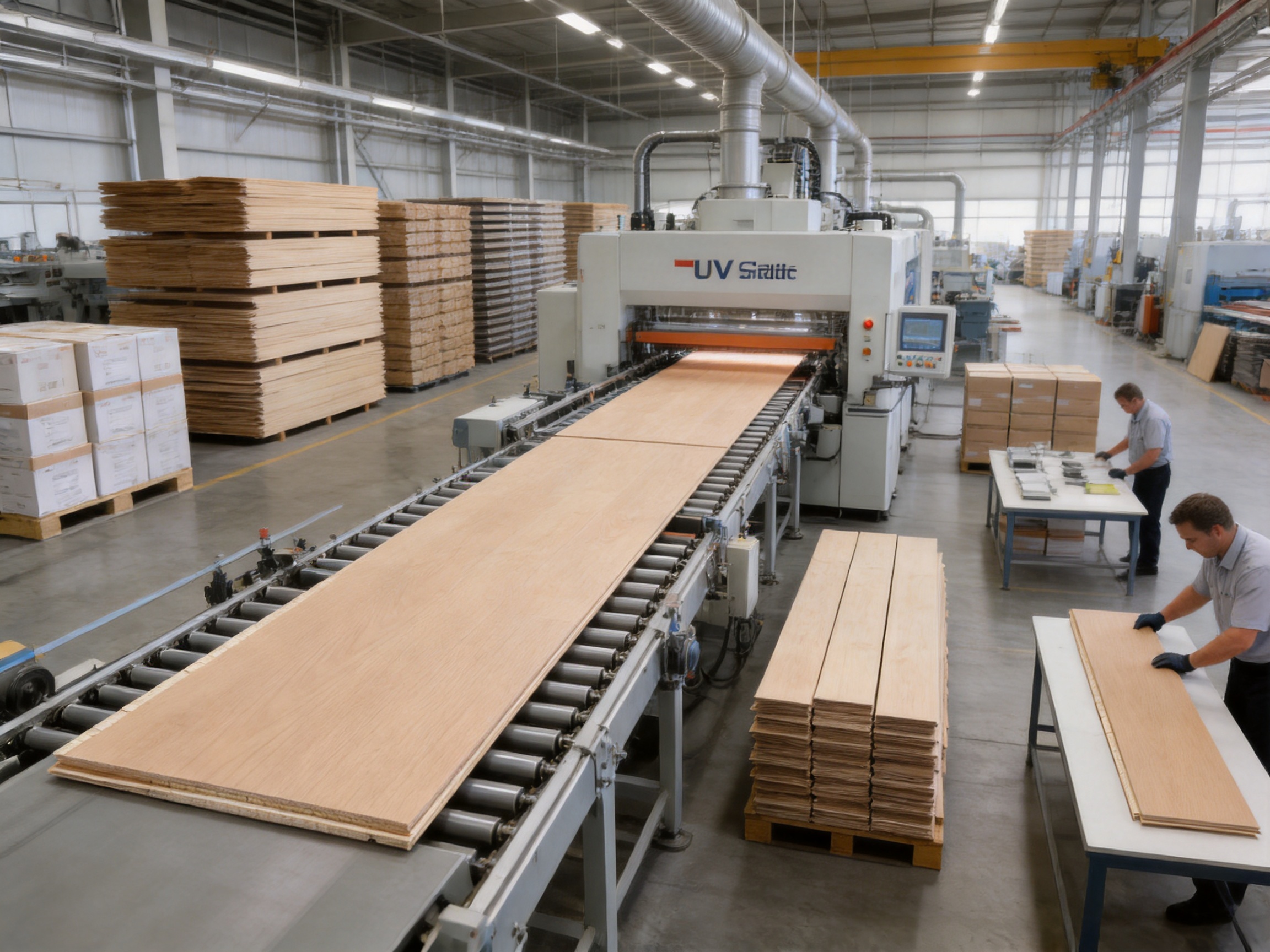
The lamination process is at the heart of engineered flooring production. During lamination, the surface veneer, core layer, and backing layer must be bonded under controlled conditions. Pressure, temperature, adhesive distribution, and moisture content all influence the strength and stability of the board.
Strong bonding helps prevent delamination, one of the most serious failures in engineered flooring. A high-quality product must maintain layer integrity through normal indoor environmental changes and long-term use. Precision lamination also supports board flatness, which affects installation quality and final appearance.
The 3-layer design works by balancing the movement tendencies of different wood layers. Wood expands and contracts more across the grain than along the grain. By arranging layers strategically, engineered construction reduces the overall movement of the plank. This is why engineered flooring is often preferred in modern interiors where climate control, underlayment systems, and varied installation methods are common.
Compared with competitors using unstable cores or inconsistent lamination practices, a well-made 3-layer product provides better peace of mind. Buyers may not see these hidden structural details immediately, but they experience the benefits through fewer installation issues, improved joint stability, and better long-term performance.
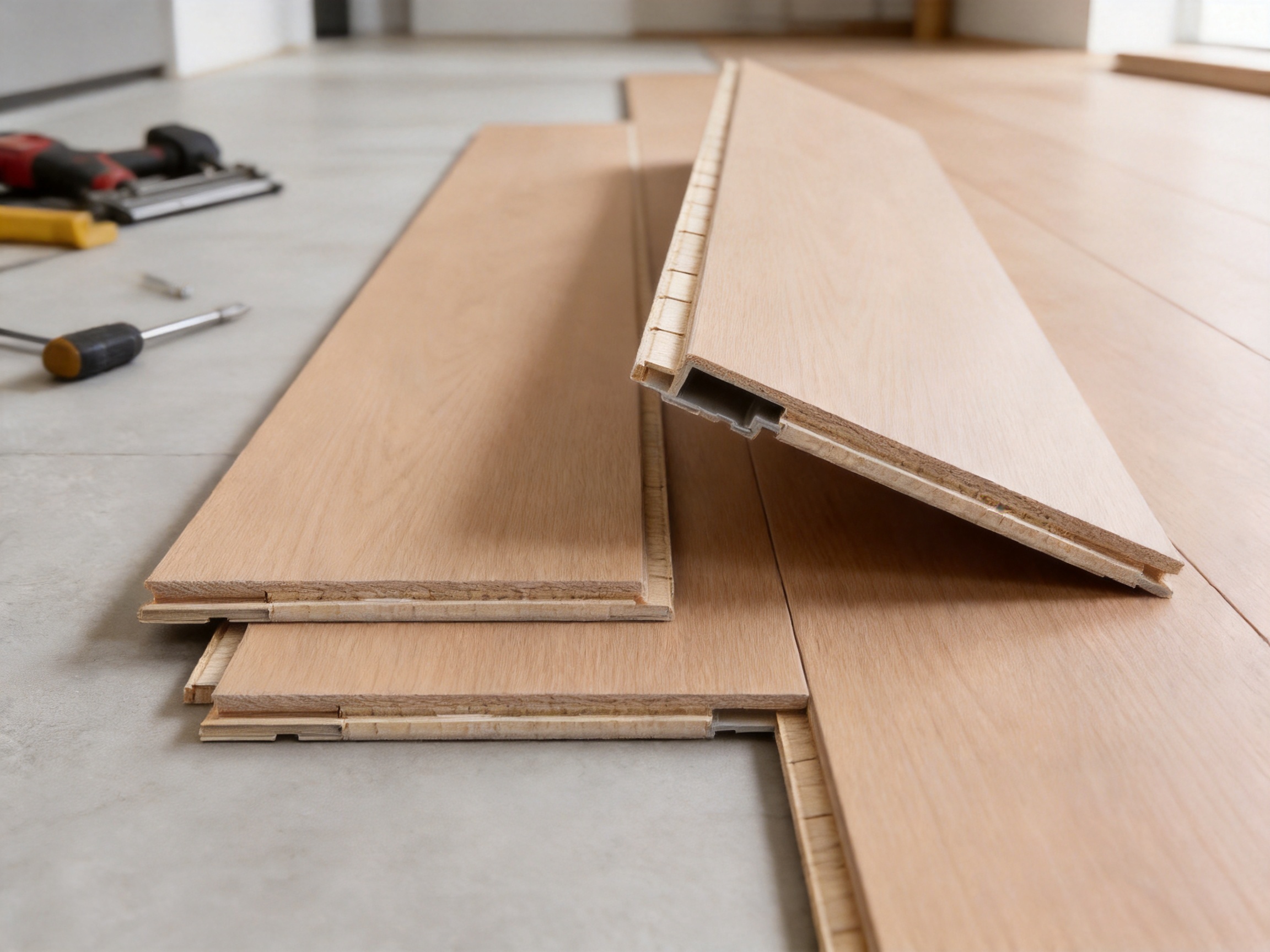
After lamination, flooring boards must be accurately profiled. The click system requires precise machining because the locking edges must fit together securely. If the profile is too loose, boards may separate. If it is too tight, installation becomes difficult and edges may be damaged. Precision profiling is therefore a key competitive advantage.
The micro-bevel on all four sides also requires controlled machining. A micro-bevel is subtle, but it performs important visual and practical functions. It defines each plank, creates a refined shadow line, and can help reduce the visibility of minor height differences between boards. In a natural wood floor, beveling also enhances the plank-like appearance and contributes to a premium installed look.
The arc-shaped click-lock concept supports tight joints and easy installation. For installers, a reliable click profile reduces labor difficulty. For homeowners, it supports a cleaner floor with fewer visible gaps. For project contractors, it improves installation efficiency and helps maintain consistent quality across large areas.
In competitive markets, not all click flooring is equal. Some low-cost products use weaker profiles that may chip during installation or loosen over time. A flooring manufacturer with advanced machinery and quality control can produce more consistent joints, which directly affects real-world performance.
The finishing stage determines both appearance and surface resistance. The product’s 7-layer UV coating system is designed for wear and scratch resistance in general use. Multiple coating layers can include primers, sealers, wear-resistant layers, and topcoats, depending on the finish design. UV curing helps create a stable surface finish efficiently and consistently.
Finish customization gives the product broader market appeal. UV lacquer is often chosen for its protective qualities and ease of cleaning. UV oil can provide a more natural appearance, allowing the wood texture to feel closer to untreated material while still offering practical protection. Hardwax oil is appreciated for its warm tactile quality and traditional wood finish character.
Texture customization adds another level of design flexibility. Wire brushed oak emphasizes grain lines and can help disguise minor daily wear. Handscraped surfaces create a handcrafted look suitable for rustic, vintage, or transitional interiors. Smooth sanded surfaces are ideal for clean modern spaces where simplicity is preferred.
Color customization is equally important. The featured light apricot shade is elegant and versatile, but different markets may prefer natural oak, smoked tones, whitewashed tones, walnut-brown colors, or gray-beige finishes. A manufacturer capable of custom color development can support distributors with localized product collections and help architects achieve specific design schemes.
Global flooring buyers increasingly require documentation and compliance. The product and manufacturing system are supported by certifications and standards such as CE, FSC, CARB P2, and ISO 9001 related quality management. These standards are important in international distribution and project supply because they demonstrate attention to safety, environmental responsibility, and quality consistency.
FSC certification supports responsible forest management and traceable sourcing. For environmentally conscious buyers, this is a major consideration. CE compliance is important for products entering European markets. CARB P2 relates to formaldehyde emission requirements, especially relevant for North American buyers and indoor air quality concerns. ISO 9001 reflects systematic quality management practices.
Compliance does not only benefit end users. It also helps distributors, contractors, and architects reduce procurement risk. When products are backed by recognized standards, they are easier to specify, approve, and sell in regulated markets. In competitive bidding, certification support can be a decisive advantage.
Flooring quality must be preserved from factory to installation site. Packaging is therefore an essential part of the product system. Each carton contains 10 pieces and covers approximately 2.03 square meters or 21.85 square feet. With a carton weight of about 24 kg, the product is packaged in a way that supports handling, storage, and shipment planning.
For large projects, consistent packaging data helps calculate quantities, container loading, warehouse space, and installation staging. Distributors benefit from predictable carton coverage when managing inventory. Contractors benefit when estimating waste, ordering extra material, and scheduling labor.
The manufacturer’s export experience is also important. International shipping requires attention to moisture protection, carton strength, labeling, documentation, and delivery coordination. A company with more than 10 years of export experience and more than 100 global partners is better positioned to support overseas buyers than a supplier with limited international exposure.
Stable production capacity also reduces supply risk. With annual flooring capacity of approximately 2,400,000 square meters, the manufacturer can support recurring orders, project replenishment, and customized production runs. For distributors building a long-term product line, supply stability is as important as initial sample quality.
Proper maintenance helps preserve the appearance and service life of engineered wood flooring. Daily cleaning should be simple and gentle. Dust can be removed with a dry cloth, microfiber mop, or suitable vacuum attachment. For stubborn stains, a neutral detergent and soft cloth may be used. Excessive water should be avoided because real wood flooring should not be soaked.
Sharp objects should not be dragged across the surface. Furniture legs should be protected with pads, and entrance mats can help reduce grit and sand from shoes. Grit is one of the most common causes of surface abrasion, so regular dust removal is an effective preventive measure.
The product information recommends applying a wax finish every 6 to 12 months to help maintain a pristine appearance. The exact maintenance method should match the selected finish type. UV lacquer, UV oil, and hardwax oil finishes may have different care recommendations, so professional guidance should be followed after installation.
Indoor humidity control is also helpful. Although engineered flooring is more stable than many solid wood floors, it is still made from natural wood materials. Maintaining normal indoor humidity and avoiding extreme environmental changes will help the floor perform better over time.
For homeowners, this flooring provides a warm, natural, and elegant surface that can elevate everyday living spaces. It is suitable for bedrooms where comfort matters, living rooms where design impact is important, and family spaces where practical durability is required. The light apricot oak tone is easy to coordinate with furniture and wall colors, reducing the risk of future decoration mismatch.
For interior designers, the product offers a flexible foundation. The customizable species, finish, texture, grade, and color options make it possible to adapt the flooring to different design narratives. Whether the goal is soft French elegance, modern cream minimalism, natural Scandinavian brightness, or understated contemporary warmth, the floor can be specified accordingly.
For contractors, the click system and multiple installation methods offer practical jobsite advantages. The engineered structure supports stability, while carton coverage data supports quantity planning. Certifications and quality control support project approval and reduce risk.
For distributors, the product is attractive because it combines marketable design with flexible customization. Light natural tones remain popular in many global markets, and oak continues to be one of the most recognizable wood species for flooring. The manufacturer’s OEM and ODM capabilities allow distributors to create differentiated product lines rather than selling generic stock items.
The engineered wood flooring market is crowded. Buyers can choose from solid wood, laminate, vinyl, SPC, WPC, bamboo, and many types of engineered products. To stand out, a flooring product must offer a clear combination of appearance, performance, installation convenience, compliance, and supply reliability. This 3-layer light apricot oak engineered flooring meets those requirements through several integrated advantages.
First, the real oak veneer surface provides authentic natural beauty. Second, the light apricot tone matches current interior design trends and offers broad residential appeal. Third, the 3-layer engineered construction improves stability compared with many solid wood products. Fourth, the click system supports efficient installation. Fifth, the 7-layer UV coating system improves surface protection for daily use. Sixth, customization options allow the product to serve different markets and design requirements. Seventh, international compliance and manufacturing scale support professional procurement.
Many competing products may offer one or two of these advantages, but fewer combine them into a complete product and supply system. A beautiful floor without stable construction can cause long-term problems. A stable floor without attractive design may be difficult to sell. A good sample without reliable production capacity may fail in large projects. This product’s strength lies in the balance between design appeal, engineered performance, and manufacturing support.
Manufacturing strength is not just a factory detail; it is part of the value delivered to the customer. German imported production lines and automated quality control systems help improve precision and consistency. For engineered wood flooring, consistency is essential because each plank must connect with surrounding planks, maintain thickness tolerance, accept finish evenly, and perform under normal indoor conditions.
OEM and ODM services further increase value. Instead of forcing customers to purchase only standard products, the manufacturer can support private label development, custom colors, specific textures, selected veneer grades, and tailored product specifications. This is especially important for distributors who compete in local markets and need unique offerings.
The 72-hour rapid prototyping service is valuable in a fast-moving industry. Interior trends change quickly, and buyers often need samples for showroom launches, project bidding, or client approval. Faster prototyping shortens the development process and helps partners respond to opportunities more effectively.
The 3-step quality inspection system strengthens reliability. In flooring, quality issues can be costly because defects may not appear until installation. By inspecting materials, production processes, and finished goods, the manufacturer reduces risk before products reach customers. This helps protect the reputation of distributors and contractors as well as the satisfaction of end users.
This flooring uses a real oak veneer surface over an engineered 3-layer structure. Compared with many solid wood floors, the engineered construction improves dimensional stability and helps reduce the risk of warping, cracking, and deformation caused by normal humidity and temperature changes.
The surface is natural wood veneer, not a printed imitation. The featured version uses oak with a light apricot natural grain appearance, offering authentic wood character, real grain variation, and a warmer material feel than many synthetic alternatives.
The color is ideal for light French-style bedrooms, cream-colored living rooms, Scandinavian interiors, soft minimalist homes, and warm modern apartments. It brightens spaces while maintaining a natural and welcoming atmosphere.
Yes. Customization options include face veneer species such as oak, walnut, ash, and teak; veneer thickness such as 2 mm, 3 mm, 4 mm, and 6 mm; veneer grades including AB, ABC, ABCD, and CD; surface finishes such as UV lacquer, UV oil, and hardwax oil; and textures such as wire brushed, handscraped, and smooth sanded.
The flooring uses a click system and can be installed by floating, glue-down, or staple methods, depending on subfloor conditions, project requirements, and professional installation guidance.
Yes. The product uses a 7-layer UV coating system for wear and scratch resistance in general use. Different finish options are available to meet aesthetic and maintenance preferences.
The product is primarily described for residential use, especially bedrooms and living rooms. However, depending on project requirements, finish selection, traffic level, and maintenance planning, engineered wood flooring may also be considered for selected light commercial or boutique interior applications. Professional specification review is recommended for commercial use.
Daily dust can be removed with a dry cloth, microfiber mop, or suitable vacuum attachment. For stubborn stains, use a neutral detergent and soft cloth. Avoid excessive water, harsh chemicals, and sharp objects that may damage the surface.
The product and manufacturing system are supported by international compliance standards such as CE, FSC, CARB P2, and ISO 9001 related quality management. These standards help support global distribution, responsible sourcing, emission control, and consistent manufacturing practices.
Manufacturer experience affects raw material selection, drying control, lamination quality, click profile accuracy, surface coating consistency, packaging, and export reliability. A manufacturer with more than 20 years of expertise, advanced production lines, large capacity, and strict inspection systems can provide more dependable flooring for distributors, contractors, designers, and homeowners.
The 3-layer light apricot oak natural grain click engineered wood flooring is a strong flooring solution for modern residential interiors that require beauty, comfort, stability, and practical installation. Its real oak veneer surface delivers authentic natural character, while the light apricot tone creates a soft and welcoming atmosphere suitable for light French, cream-style, Scandinavian, and contemporary interiors.
The engineered 3-layer construction offers meaningful advantages over many traditional solid wood floors by improving resistance to warping, cracking, and deformation. The click system supports efficient installation, and the micro-beveled edges create a refined plank appearance. A 7-layer UV coating system helps protect the surface in daily use, while customizable finishes, textures, veneer thicknesses, grades, colors, and species allow the product to meet varied market and project needs.
Equally important is the manufacturing strength behind the product. With more than two decades of wood industry experience, advanced production facilities, German imported production lines, automated quality control, OEM and ODM customization, rapid prototyping, strict inspection, major annual flooring capacity, and international compliance support, the manufacturer provides more than a single flooring item. It provides a complete wood flooring solution for global partners.
For homeowners, the product offers warmth and natural beauty. For designers, it offers visual flexibility. For contractors, it offers installation practicality and reliable structure. For distributors, it offers customization and market competitiveness. In a crowded flooring market, this balanced combination of authentic material, engineered performance, refined design, and professional manufacturing capability makes the product a compelling choice for modern interiors.
European Committee for Standardization. Wood Flooring Standards and Performance Requirements.
Forest Stewardship Council. Principles of Responsible Forest Management and Chain of Custody Certification.
California Air Resources Board. Composite Wood Products Airborne Toxic Control Measure and Phase 2 Emission Requirements.
International Organization for Standardization. ISO 9001 Quality Management Systems Guidelines.
National Wood Flooring Association. Technical Guidelines for Wood Flooring Installation, Moisture Control, and Maintenance.
Architectural Woodwork Institute. Wood Material Selection and Interior Performance Considerations.

We provide customers with sustainable and eco-friendly
engineered wood solutions and services.
Choose DEIF for the perfect blend of
performance and aesthetics.
