


 English
 Español
 عربى
عربى

Get Social
Choose DEIF for the perfect blend of
performance and aesthetics.
 Get Free Sample

Content
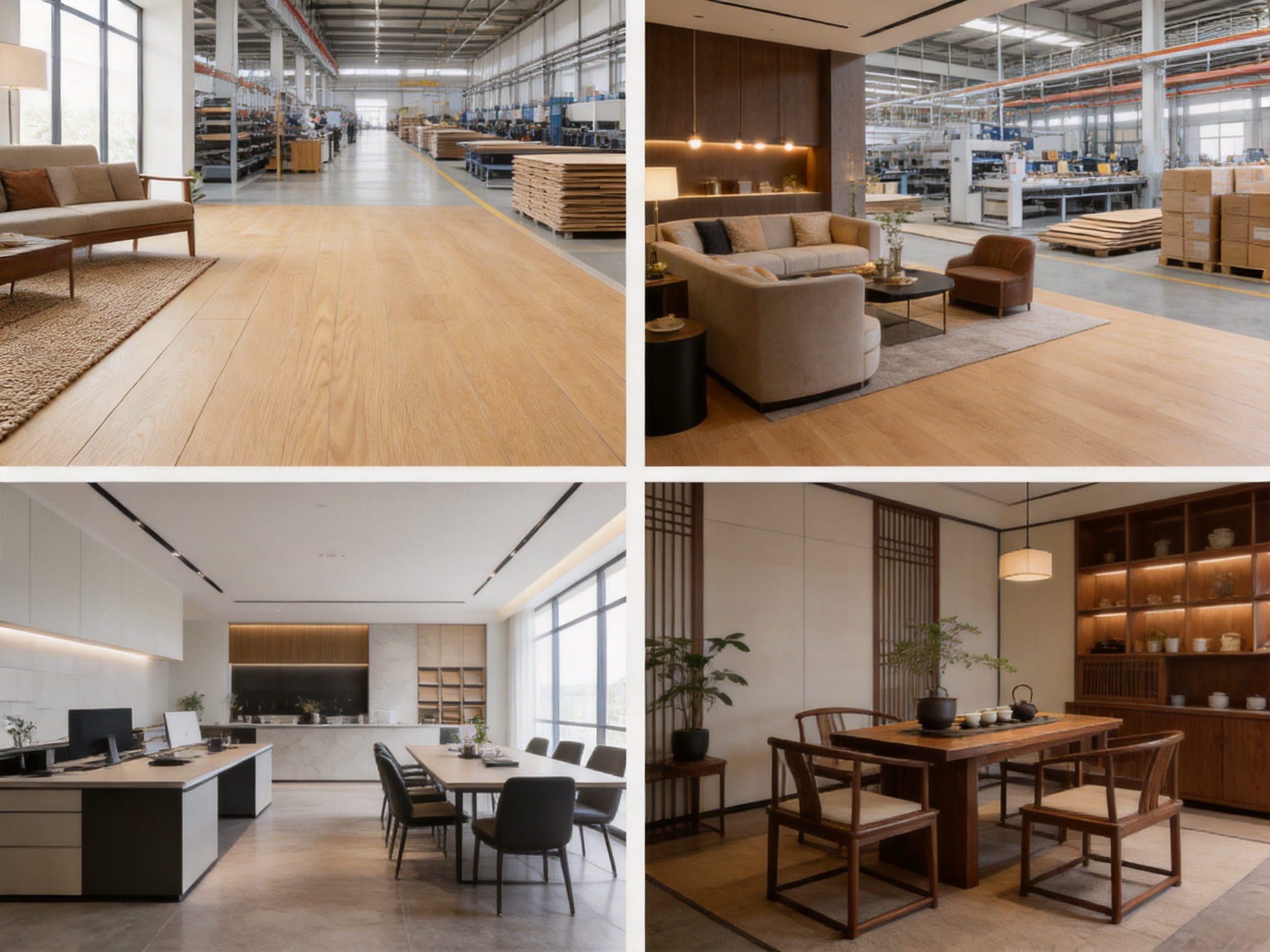
Wood flooring has become an important architectural and interior design element rather than a simple finishing material. The right floor can influence the visual scale of a room, the sense of warmth, acoustic comfort, maintenance requirements, and the long-term value of an interior project. For homeowners, distributors, contractors, and architects, the challenge is to select a floor that combines natural beauty with structural reliability, efficient installation, responsible manufacturing, and flexible customization.
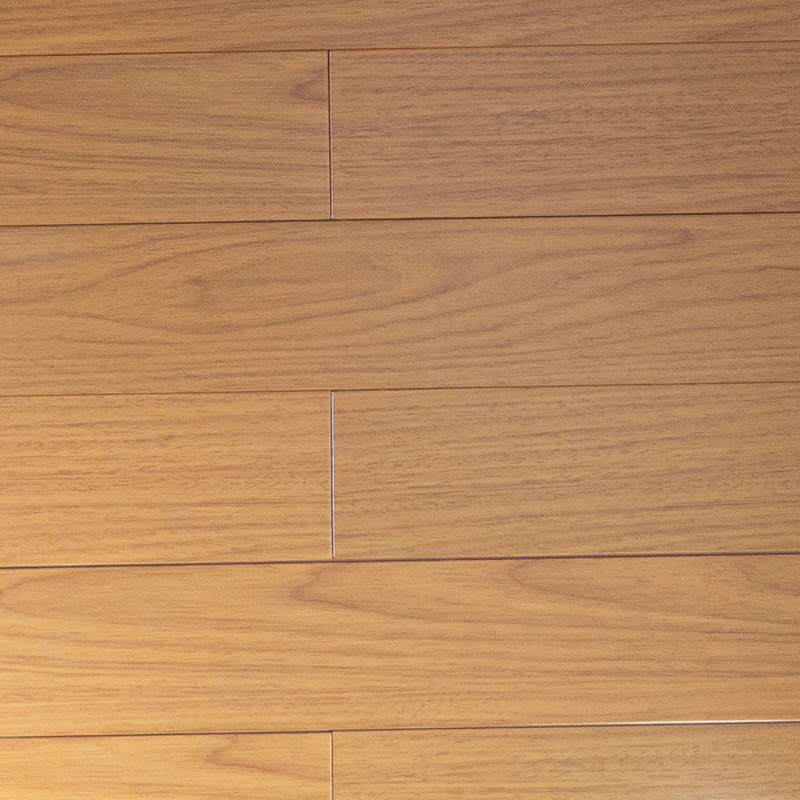
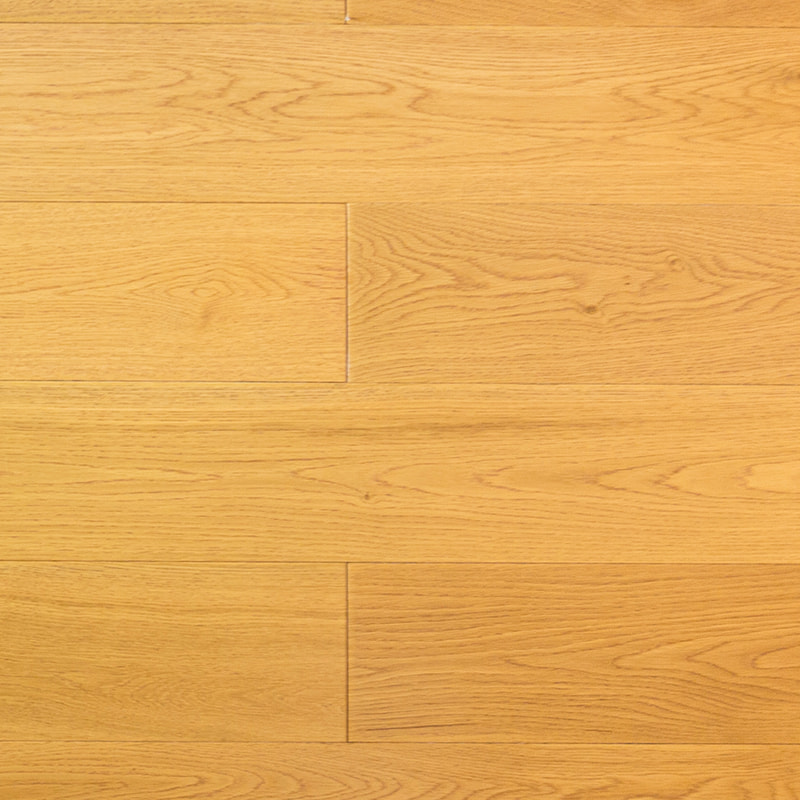
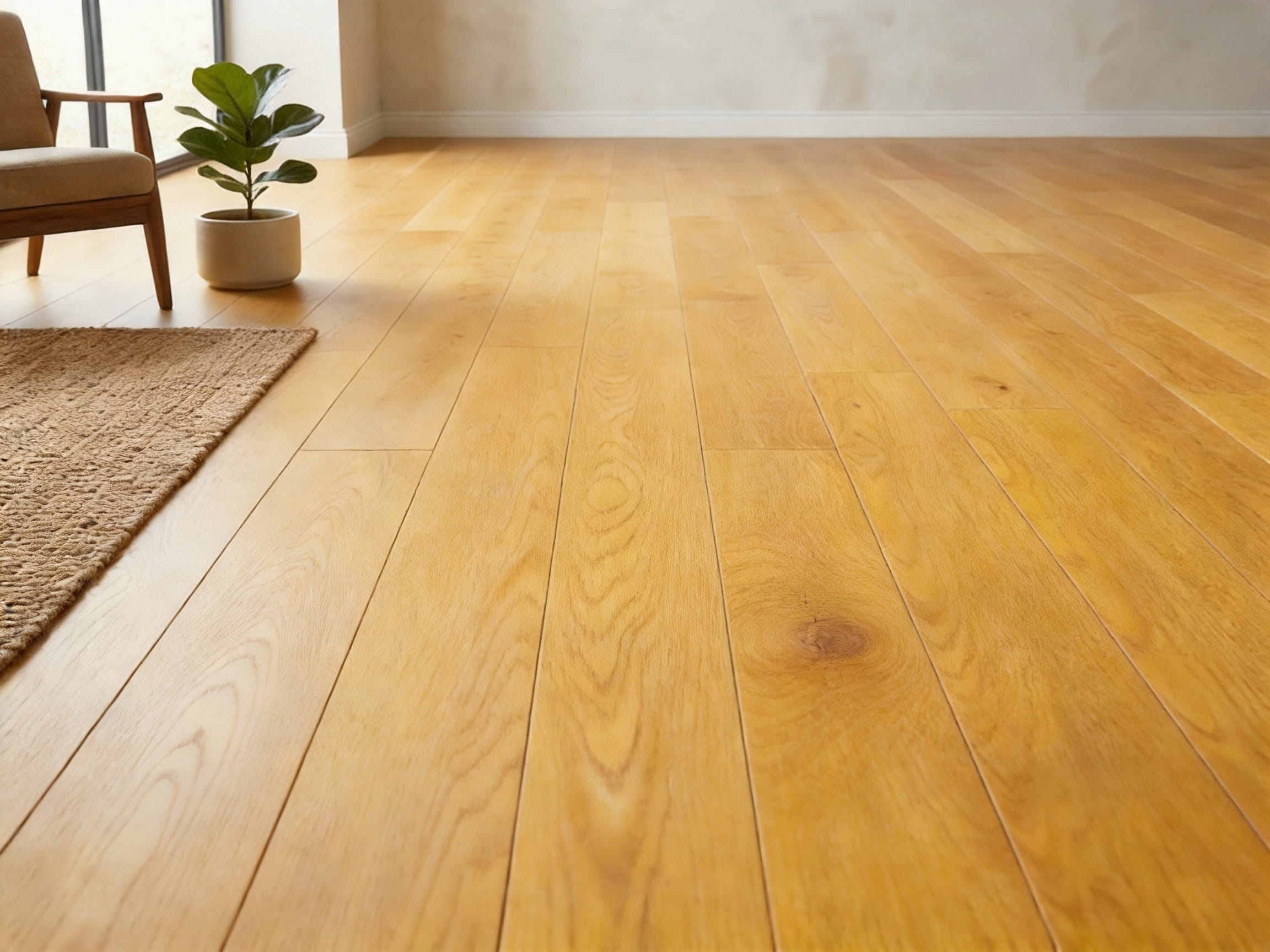
The 3-Layer Oak Light Golden Yellow Hand-Scraped Click Engineered Wood Flooring, identified as DF-T0503, is designed to meet these requirements. It combines a natural oak veneer, a stable engineered wood construction, a rustic hand-scraped surface, and a click-lock installation profile. Its light golden yellow appearance creates a bright and welcoming atmosphere, while the visible grain and hand-worked texture give the floor the character associated with traditional solid timber.
Unlike many conventional solid wood floors, this engineered flooring is constructed in layers. The cross-layer structure improves dimensional stability and helps reduce the risk of deformation caused by seasonal temperature and humidity changes. At the same time, the natural veneer preserves the appearance and tactile quality of real wood. This balance between visual authenticity and technical performance makes the product suitable for residential interiors, hospitality areas, offices, tea rooms, showrooms, and selected commercial applications.
The product is manufactured by Suzhou Dicosbo Wood Co., Ltd., a China-based wood solutions manufacturer specializing in wood flooring, wooden doors, and custom cabinet solutions. With production facilities, automated quality control systems, export experience, and OEM/ODM capabilities, the company supports both standard product supply and project-specific development.
The DF-T0503 flooring is a three-layer engineered oak floor with a warm, light golden yellow finish and a hand-scraped texture. The standard marketing collection is 3-Layer Engineered Flooring. The standard listed dimensions are 48.0 inches by 7.7 inches by 5/8 inch, while custom dimensions are available for projects requiring different plank proportions, thicknesses, or installation layouts.
The product combines a natural wood veneer surface with a fir or pine structural core. Depending on the selected specification, the veneer thickness can range from approximately 2 millimeters to 6 millimeters, with other customized options available. The surface may be produced with UV lacquer, UV oil, or hardwax oil, allowing buyers to select a finish according to appearance, maintenance expectations, and project requirements.
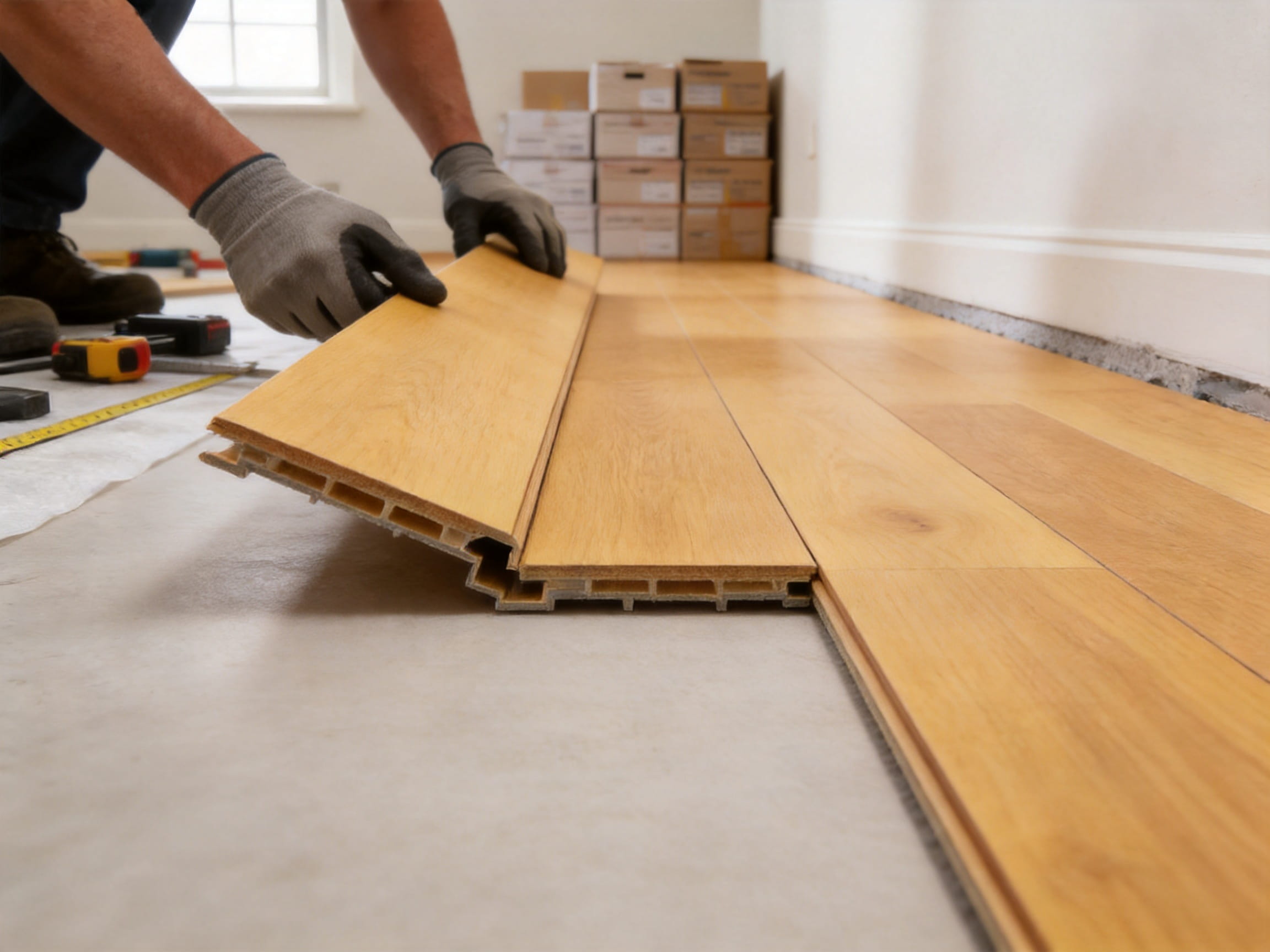
The flooring uses a click system and micro-beveled edges on all four sides. This profile creates a defined plank appearance after installation and supports efficient floating installation. Depending on the subfloor, design requirements, and professional installation recommendations, the flooring may also be installed using glue or staples.
Its standard packaging includes 10 pieces per carton, covering approximately 2.39 square meters or 25.73 square feet. The approximate carton weight is 24 kilograms. These packaging specifications help distributors and project managers calculate shipping, storage, handling, and installation quantities more accurately.
| Product Code | DF-T0503 |
| Product Category | 3-Layer Engineered Flooring |
| Standard Dimensions | 48.0 inches × 7.7 inches × 5/8 inch |
| Face Veneer | Oak; walnut, ash, and teak available for customization |
| Veneer Thickness | Customizable options from approximately 2 mm to 6 mm |
| Core Construction | Three-layer engineered wood |
| Core Material | Spruce, fir, or pine according to specification |
| Veneer Grade | AB, ABC, ABCD, or CD according to project requirements |
| Veneer Cut | Sliced veneer |
| Surface Finish | UV lacquer, UV oil, or hardwax oil |
| Surface Texture | Hand-scraped, wire-brushed, or smooth sanded |
| Edge Profile | Micro-bevel on all four sides |
| Locking System | Click system |
| Installation Methods | Floating, glue-down, or staple installation |
| Pieces Per Carton | 10 |
| Coverage Per Carton | Approximately 2.39 square meters or 25.73 square feet |
| Approximate Carton Weight | 24 kilograms |
The visual identity of this floor begins with its natural oak veneer. Oak is widely selected for flooring because it offers a recognizable grain pattern, balanced hardness, good finishing performance, and broad compatibility with traditional and contemporary interiors. In the DF-T0503 design, the oak is presented in a light golden yellow tone that brings warmth without making the room appear visually heavy.
Light-colored wood flooring can help increase the perceived brightness of an interior. It reflects more ambient light than very dark flooring and can make smaller rooms feel more open. The golden undertone adds warmth, preventing the space from appearing cold or overly minimal. This combination is particularly suitable for living rooms, dining areas, bedrooms, tea rooms, boutique hospitality spaces, and family-oriented interiors.
The oak surface also provides a natural foundation for a wide range of furniture styles. It can be paired with painted cabinetry, natural wood furniture, woven textiles, leather seating, stone surfaces, and matte metal details. In American-style and country-style interiors, the light oak complements exposed textures and traditional forms. In modern interiors, it can soften clean lines and create a more comfortable atmosphere.
Because the product uses sliced natural veneer, each plank retains the visual variation associated with genuine wood. Grain movement, color variation, and small natural characteristics can contribute to a more authentic appearance than printed or decorative imitation surfaces. Buyers should expect reasonable differences between samples and completed production because natural timber is not completely uniform.
For large commercial projects, the natural variation of the veneer can be managed through grading, sorting, sample approval, and production controls. Customers may select veneer grades such as AB, ABC, ABCD, or CD depending on the desired balance between a cleaner appearance and a more rustic, character-rich design.
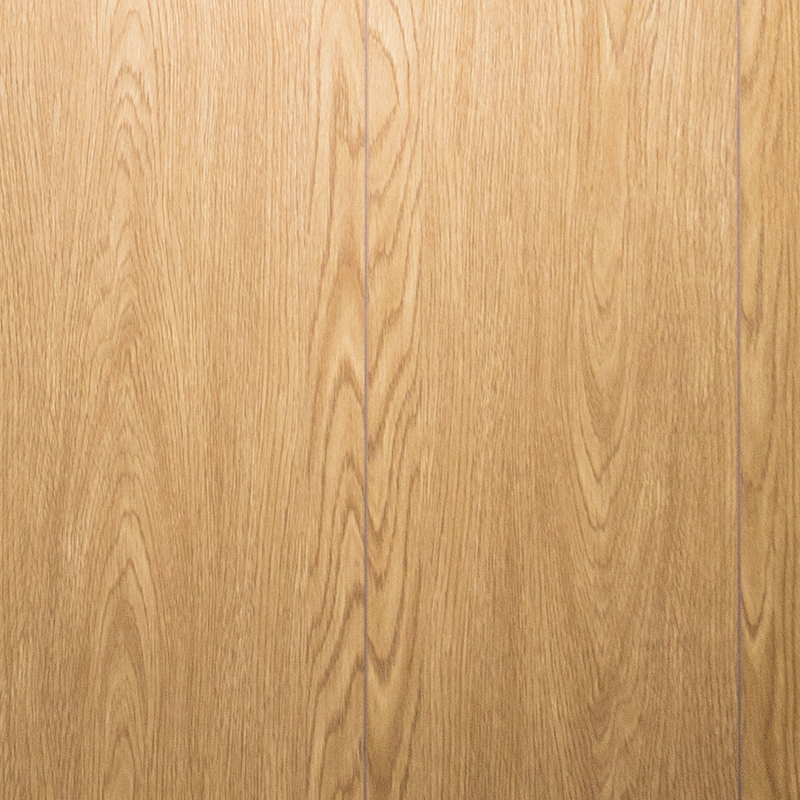
3-Layer Oak Light Golden Yellow Hand-scraped Click Engineered Wood Flooring
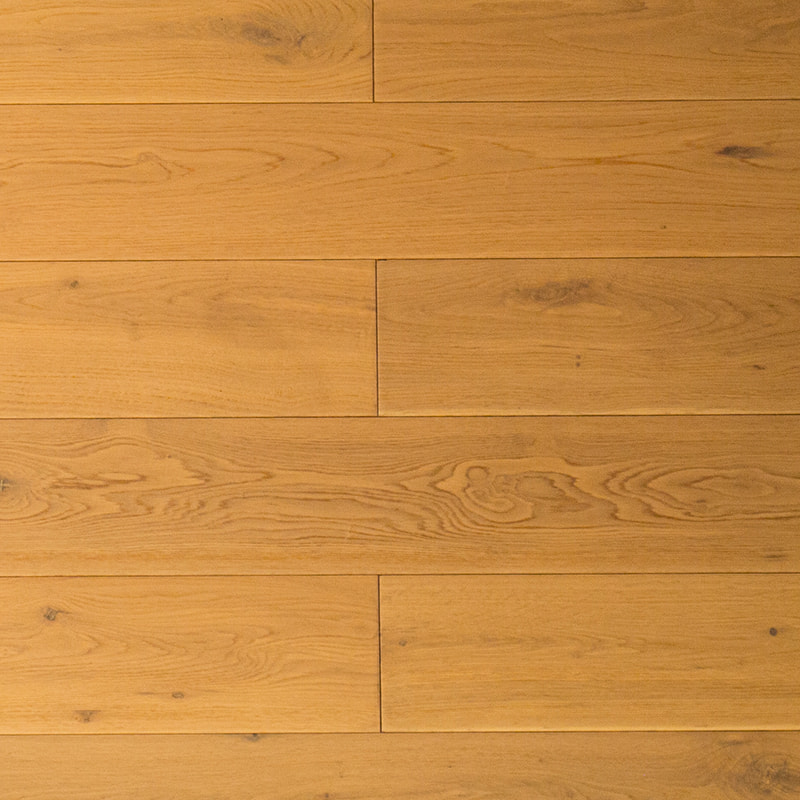
The hand-scraped surface is one of the defining features of this engineered wood flooring. Rather than presenting a completely flat and mechanically uniform surface, hand-scraping introduces subtle variations that follow the direction and visual rhythm of the wood grain. These shallow surface movements create depth, allowing light to interact with the floor from different angles.
Hand-scraped flooring is often chosen when the design goal is to create a sense of craftsmanship. The texture can make a newly installed floor feel more established and individual. It works especially well in interiors that use natural materials, handmade furniture, traditional joinery, rustic decoration, or warm neutral colors.
The texture also gives the floor a practical visual advantage. Minor changes in reflection, small marks, and everyday signs of use may be less visually obvious on a hand-worked surface than on a perfectly smooth, high-gloss floor. This does not eliminate the need for maintenance, but it can help the floor retain a naturally lived-in appearance over time.
For projects requiring a different visual direction, the manufacturer offers additional surface texture options. Wire brushing can emphasize the softer grain areas and create a more linear, tactile surface. Smooth sanding can provide a cleaner and more refined appearance. These options enable distributors, architects, and developers to use the same engineered construction in different interior design collections.
The surface texture can also be coordinated with the selected finish. UV lacquer generally creates a more protected and consistent surface film, while UV oil can emphasize the appearance of the wood and provide a more natural visual impression. Hardwax oil is another option for projects seeking a tactile, low-sheen finish. The most suitable selection depends on traffic, maintenance procedures, desired sheen, and local project specifications.
The primary technical advantage of this product is its engineered three-layer structure. Each layer contributes to the overall performance of the floor. The natural veneer supplies the visible oak appearance, the core layers provide structural support, and the cross-oriented construction helps distribute internal movement more evenly.
Solid wood expands and contracts as moisture conditions change. This is a natural characteristic of timber, but excessive or uneven movement can lead to gaps, cupping, bowing, or cracking when the product is not appropriately selected or installed. Engineered construction is developed to reduce these risks by combining multiple wood layers in a controlled structure.
The three-layer design used for this product is based on fir, pine, spruce, or another specified softwood core, depending on the production configuration. The core material is arranged to support dimensional stability while maintaining a relatively efficient material structure. This provides a practical alternative to thicker solid wood boards in applications where seasonal environmental changes must be considered.
The structural benefits are particularly valuable in regions with changing heating and cooling conditions. Indoor humidity can vary between winter and summer, and buildings may experience different environmental conditions during construction, installation, and occupancy. Correct acclimatization, moisture testing, subfloor preparation, and installation remain essential, but the engineered structure provides a stronger foundation for long-term performance.
Compared with a typical solid wood plank of similar visual appearance, a three-layer engineered floor can offer improved resistance to warping and cracking. Compared with lower-cost multi-layer products, the three-layer format may provide a more substantial construction and a closer relationship between the wear surface and the structural body. The best choice still depends on the application, but the DF-T0503 specification offers a balanced construction for many residential and light commercial projects.
The product information also identifies seven-layer eucalyptus or birch core construction as an option for the company’s multi-layer category. This allows buyers to select a different engineered structure when a specific project requires additional layers, alternative wood species, or different dimensional performance. The company can therefore support both three-layer and multi-layer programs rather than limiting customers to one construction format.
Solid wood flooring offers genuine material depth and a traditional appearance, but it can be more sensitive to moisture movement and site conditions. The engineered construction of DF-T0503 helps reduce dimensional instability while preserving a natural oak wear surface. This can be advantageous in apartments, modern buildings, and renovation projects where indoor climate conditions fluctuate throughout the year.
The engineered format may also allow more efficient use of high-value oak. Instead of producing the entire board from thick oak, the visible surface uses a selected natural veneer over a structural core. This approach can support design consistency, material efficiency, and a broader range of customization while retaining the visual identity of oak flooring.
Laminate flooring can provide good visual consistency and cost efficiency, but its decorative layer is not a natural wood veneer. DF-T0503 is designed for buyers who want the grain variation and tactile authenticity of real wood. The oak surface, hand-scraped texture, and selectable oil or lacquer finishes create a more natural material experience.
Engineered wood can also be more compatible with high-value interior design projects where the authenticity of materials is important. It allows architects and designers to specify a real wood product while still benefiting from a layered structure and modern click-lock installation.
Not all engineered flooring products use the same veneer thickness, core material, surface finish, or quality control process. DF-T0503 offers customizable veneer thickness, grades, finishes, textures, dimensions, and core specifications. This allows buyers to develop a product that is more closely aligned with project expectations instead of accepting a fixed, generic specification.
The product also offers a defined three-layer structure, micro-beveled four-sided edges, and several installation methods. These details can make a meaningful difference in the appearance, performance, and practicality of a completed floor.
The click system simplifies installation planning and can reduce the time required for floating installation. Although professional preparation remains necessary, click-lock boards can help installers achieve a secure and visually consistent connection between planks. This is particularly useful for renovation projects, phased developments, and applications where rapid installation is important.
Because the product can also be installed using glue or staples, project teams have greater flexibility. The appropriate method should be selected according to the subfloor, building conditions, local practice, and manufacturer or installer recommendations.
The product is available with a seven-layer UV coating for general wear and scratch resistance. UV-cured finishes are applied and hardened through ultraviolet curing technology. They can create a consistent protective surface and support faster industrial production than some air-dried coating systems.
A UV lacquer option may be selected when the project requires a more uniform protective film and straightforward routine care. UV oil can provide a more natural visual effect while still benefiting from an industrial curing process. Hardwax oil may be selected where a softer sheen and more tactile wood feel are preferred.
Surface finish selection should be made according to the intended use of the floor. A private bedroom, a family living room, a boutique retail space, and a high-traffic commercial corridor may require different performance priorities. The manufacturer can discuss the appropriate combination of veneer, texture, coating, and maintenance expectations during the customization process.
Routine cleaning should be gentle and controlled. Dust and loose particles can be removed with a soft broom, vacuum designed for hard floors, or dry microfiber mop. When damp cleaning is needed, the mop should be well wrung out rather than wet. Prolonged water exposure should be avoided, as standing moisture can affect wood flooring and subfloor materials.
Furniture pads can help reduce the risk of surface marking. Entry mats can capture sand and grit before they reach the floor. Direct exposure to extreme heat, excessive humidity, or long-term uncontrolled sunlight should also be managed. These measures are standard good practice for real wood flooring and help preserve its color, texture, and finish.
The rounded click-lock profile allows planks to connect efficiently and form a stable installation surface. Click installation can reduce the need for extensive on-site adhesive work and may support faster completion when the subfloor is properly prepared. It is suitable for floating installation in appropriate conditions, although glue-down and staple methods are also available.
Before installation, the flooring should be inspected and acclimatized according to the project environment and professional installation guidance. The building should be enclosed, wet trades should be complete, and the subfloor should meet the required flatness, cleanliness, and moisture conditions. A floor covering can only perform as intended when the structure beneath it is suitable.
Expansion allowances should be planned around walls, columns, door frames, fixed cabinets, and other vertical obstructions. The exact allowance depends on room dimensions, environmental conditions, and local installation standards. A professional installer should determine the correct details rather than relying on a general assumption.
The micro-bevel on all four sides creates a subtle visual separation between boards. This can emphasize the individual plank format and complement the hand-scraped texture. In larger rooms, the four-sided bevel can contribute to a more defined and traditional floor pattern. In smaller rooms, careful plank direction and layout planning can help maintain a balanced appearance.
Because the product is supplied in cartons, project teams can estimate material requirements based on floor area, waste allowance, room geometry, and installation direction. Extra material should be included for cutting, sorting, future repairs, and natural selection of boards. The exact amount depends on the project layout and the installer’s recommendation.
The living room is one of the most suitable applications for the DF-T0503 floor. The light golden yellow oak tone adds warmth and brightness, while the hand-scraped texture creates a comfortable visual foundation for sofas, occasional chairs, area rugs, and natural accessories. The floor can support both traditional and transitional furniture arrangements.
In dining rooms, the natural wood appearance can soften the hard surfaces of tables, chairs, lighting, and cabinetry. The oak floor works well with both light and dark dining furniture. A suitable protective finish and furniture pads should be used to reduce the possibility of marks from chair movement.
Wood flooring is often selected for bedrooms because it creates a warmer and more residential atmosphere than many hard mineral surfaces. The light color of DF-T0503 can make the room feel calm and open. Its natural grain can be coordinated with textiles, upholstered headboards, woven baskets, and painted walls.
The floor is especially compatible with tea rooms, reading rooms, and relaxation areas that emphasize natural textures. The hand-scraped oak surface can reinforce a quiet, crafted design language. When combined with low furniture, warm lighting, and simple natural materials, it helps create an inviting environment.
The click system can be useful in renovation projects where installation time must be carefully managed. However, entry areas may experience greater exposure to grit, moisture, and outdoor contamination. Entrance mats, suitable cleaning routines, and proper finish selection are important in these locations.
Although the product has strong residential appeal, its configurable construction also makes it relevant to selected commercial and architectural applications. Distributors and project suppliers can specify the floor for boutique offices, hospitality interiors, private clubs, showrooms, model apartments, restaurants, and small retail environments.
In hospitality design, the warm oak appearance can help create a more comfortable guest experience. Designers can use the floor to support a consistent material palette across reception areas, lounges, dining spaces, and guest rooms. The ability to choose different surface finishes and textures makes it possible to create coordinated collections for different sections of a property.
In offices, engineered wood flooring can provide a more welcoming alternative to uniform synthetic flooring. It may be suitable for meeting rooms, executive offices, waiting areas, and collaborative zones where a residential or premium design is preferred. High-traffic areas require careful specification and maintenance planning, and the selected finish should match the expected use.
For distributors, the product offers a useful combination of standard availability and customization. A standard oak design can be presented as a core collection, while alternative veneer species, grades, dimensions, finishes, and textures can be developed for larger or more specialized accounts.
Architects and interior designers may also benefit from the product’s ability to combine natural wood with a modern installation system. The flooring can be integrated into projects that require a more efficient construction program without sacrificing the appearance of a crafted oak surface.
Customization is a major advantage for professional buyers. The standard product is based on a light golden yellow oak appearance with hand-scraped texture, but the construction can be adapted to meet different market and project requirements.
Face veneer options include oak, walnut, ash, and teak. Oak provides a familiar and versatile appearance, walnut can create a darker and more luxurious atmosphere, ash offers a lighter and more linear grain, and teak can bring a distinctive warm tone. Actual availability, grading, and finish should be confirmed during product development.
Veneer thickness can be customized to approximately 2 millimeters, 3 millimeters, 4 millimeters, or 6 millimeters. A thicker veneer may be selected when the project places greater emphasis on material depth or future renovation potential, while a thinner veneer may support a specific cost, weight, or construction target.
Veneer grades can be selected as AB, ABC, ABCD, or CD. Cleaner grades may be preferred for contemporary interiors that require a more consistent appearance. More character-rich grades may be suitable for rustic, country, farmhouse, or heritage-inspired designs.
Surface finish options include UV lacquer, UV oil, and hardwax oil. Surface texture options include hand-scraped, wire-brushed, and smooth sanded. These choices allow buyers to create product lines for different regional preferences and design trends.
Dimensions can also be adjusted. While the standard size is 48.0 inches by 7.7 inches by 5/8 inch, custom lengths, widths, and thicknesses can be discussed for specific programs. Custom sizing may be useful when coordinating flooring with room proportions, furniture modules, installation patterns, or regional market preferences.
Suzhou Dicosbo Wood Co., Ltd. has specialized in wood flooring, wooden doors, and custom cabinet solutions since 1999. The company has more than 20 years of industry experience and more than 10 years of export experience. This background supports an understanding of international product expectations, packaging requirements, documentation, and communication with overseas partners.
The company operates production facilities covering approximately 20,000 square meters. Its annual production capacity is stated as approximately 2,400,000 square meters of flooring and 5,000 sets of doors. This capacity enables the company to support regular distributor orders as well as project-based supply programs.
German imported production lines and automated quality control systems are used to support manufacturing consistency. In engineered flooring production, consistency is important at every stage, including veneer preparation, core assembly, pressing, calibration, machining, surface treatment, profiling, inspection, and packaging.
The company applies a three-step quality inspection process. A multi-stage approach can help identify issues earlier than a single final inspection. Depending on the product program, inspection may include raw material review, process monitoring, dimensional verification, surface examination, finish checking, click-profile evaluation, carton inspection, and final shipment approval.
Quality control is especially important for natural wood products because the material contains inherent variation. A professional manufacturer must distinguish acceptable natural characteristics from defects that could affect performance or appearance. Sorting and grading help create a more predictable product while preserving the authentic visual qualities of real wood.
Rapid prototyping is another stated capability. The company offers 72-hour rapid prototyping for selected development projects. This can help distributors, architects, and contractors review a new color, texture, finish, or construction concept before moving to larger production quantities. Faster sample development can shorten the time between design approval and commercial launch.
OEM and ODM services allow the company to support different business models. OEM customers may provide their own specifications, packaging requirements, or brand standards. ODM customers may work with the manufacturer to develop a product from an initial design concept. This flexibility is valuable for private-label collections, regional product programs, and project-specific flooring packages.
The company’s stated compliance and certification portfolio includes EU CE, FSC, CARB P2, and ISO 9001-related standards or certifications. Certification status should always be confirmed against the exact product, production site, certificate number, and current validity period before being used in formal project documentation.
CE-related compliance can be relevant to products supplied into European markets, while FSC certification supports responsible forestry and chain-of-custody expectations when the relevant material and certificate scope apply. CARB P2 is associated with formaldehyde emission requirements for composite wood products in the California market. ISO 9001 provides a framework for quality management systems.
These certifications and compliance capabilities can help importers, distributors, contractors, and architects organize documentation for international projects. They may also support customer confidence when the flooring is being specified for projects with environmental, quality, or regulatory requirements.
The company serves partners across Europe, North America, Southeast Asia, and other international markets. Its experience with global customers supports stable supply planning, export packaging, production scheduling, and project communication. For buyers managing multiple markets, a manufacturer with experience across regions can make product coordination more efficient.
Wood products should be evaluated not only for appearance and performance but also for material responsibility. Engineered construction can use a natural veneer over a structural core, allowing the visual benefits of selected timber without requiring the entire board to be made from thick high-value hardwood. This can contribute to efficient material utilization when managed through responsible sourcing and production practices.
FSC-related certification can provide an additional framework for responsible forest material sourcing where the relevant certification scope applies. Buyers should request the appropriate documentation for the specific order and confirm whether the selected veneer, core, and finished product are covered.
Long service life is another sustainability consideration. A durable floor that remains attractive and functional for many years may reduce the frequency of replacement. Proper installation, regular cleaning, environmental control, and appropriate maintenance all contribute to service life.
Responsible product selection should also consider the full project context. Subfloor preparation, adhesive choice, packaging, transportation, maintenance chemicals, and end-of-life planning can influence the overall environmental impact of a flooring system. A qualified project team should evaluate these factors together.
Store cartons in a dry, clean, and protected indoor area. The flooring should not be exposed to rain, standing water, extreme temperature, or uncontrolled humidity. Cartons should be handled carefully to prevent damage to corners, locking edges, and finished surfaces.
The installation area should be enclosed and sufficiently stable. Wet construction activities should be completed, and the subfloor should be checked for moisture, flatness, cleanliness, and structural soundness. Any subfloor problem should be corrected before flooring installation begins.
Professional installers should review the product instructions and local building requirements. The correct underlayment, adhesive, fastener, expansion allowance, and installation direction may vary according to the selected method and site conditions.
Planks should be inspected before installation. Boards with unacceptable damage or unexpected defects should be separated and reported before they are installed. Natural color variation and grain differences are normal characteristics of genuine oak and should be considered when planning the layout.
Installers can distribute boards from multiple cartons to create a balanced appearance. The direction of the planks should be selected according to the room’s dimensions, natural light, architectural features, and design intent. Doorways, transitions, fixed cabinetry, and stair connections require careful detailing.
The click-lock system should be engaged according to the recommended installation procedure. Excessive force, improper alignment, or the use of unsuitable tools can damage the locking profile. A professional installation team can help ensure that the boards connect securely and remain visually aligned.
Remove dust and construction debris with a suitable vacuum or soft cleaning tool. Avoid flooding the floor during post-installation cleaning. Heavy furniture should be moved carefully, and protective pads should be installed under furniture legs.
Regular maintenance should focus on removing dust, sand, and grit before they act as abrasives. Spills should be cleaned promptly with a soft, slightly damp cloth. Harsh chemicals, abrasive pads, steam cleaning, and excessive water should be avoided unless specifically approved for the selected finish.
For commercial buyers, the value of a flooring product includes more than its appearance. Reliable production capacity, clear specifications, consistent packaging, responsive sampling, and flexible customization can affect project profitability and delivery schedules.
The DF-T0503 program gives buyers a defined starting specification while retaining flexibility for changes. A distributor can begin with the standard light golden yellow oak design and later request adjustments to color, grading, finish, texture, dimensions, or packaging. This allows the product to serve both stock-based sales and made-to-order project supply.
The stated 72-hour rapid prototyping capability can support sample approval and product development. A fast sample cycle is particularly useful when a project team needs to compare several textures, finish levels, or color targets before confirming a purchase.
Production capacity also supports larger orders. With annual flooring production of approximately 2,400,000 square meters, the manufacturer is positioned to serve distributors, contractors, developers, and international project partners that require repeat supply. Actual lead time depends on order quantity, customization, raw material availability, production planning, and shipping arrangements.
The company’s product categories extend beyond flooring to wooden doors and custom cabinets. This broader capability may benefit project partners seeking coordinated interior woodwork from one manufacturing source. Flooring, doors, and cabinetry can be developed with complementary colors, veneers, and finishes to create a more integrated interior package.
A clear specification should begin with the intended application. Residential living areas, hospitality rooms, offices, retail environments, and premium display areas may have different requirements for surface protection, finish, maintenance, and appearance.
The next step is to define the visual target. Buyers should identify the preferred oak color, natural variation, grade, hand-scraped intensity, sheen level, bevel detail, and plank dimensions. Physical samples are recommended because lighting, screen settings, and photography can affect color perception.
Structural requirements should then be confirmed. The project team should select the appropriate three-layer or multi-layer construction, veneer thickness, core species, board thickness, and installation method. Subfloor conditions and building climate should be included in this assessment.
Documentation should cover product data, packaging, installation guidance, maintenance instructions, quality inspection records, and applicable certification documents. For international projects, shipping labels, pallet requirements, carton markings, and export documentation should also be agreed in advance.
Finally, the project should establish sample approval procedures. The approved sample should identify acceptable color variation, grain characteristics, surface texture, finish, dimensions, and joint appearance. This helps align expectations between the manufacturer, distributor, installer, designer, and final customer.
DF-T0503 is a three-layer engineered wood flooring product with a natural oak veneer, a light golden yellow appearance, a hand-scraped surface, and a click-lock installation system.
Engineered flooring uses multiple wood layers arranged to improve dimensional stability. It retains a natural wood surface while generally offering greater resistance to movement caused by changes in temperature and humidity than a comparable solid wood board.
Yes. The product uses a natural sliced wood veneer. Oak is the featured surface species for the standard DF-T0503 design, while walnut, ash, and teak are available as customization options according to the project specification.
Hand-scraping creates subtle surface variation and emphasizes the natural character of the wood. It gives the flooring a crafted, rustic appearance that is suitable for American, country, farmhouse, transitional, and warm contemporary interiors.
The available finish options include UV lacquer, UV oil, and hardwax oil. The most suitable finish depends on the required appearance, sheen, wear expectations, cleaning program, and project environment.
Yes. Customization may include dimensions, colors, oak or alternative veneer species, veneer thickness, veneer grade, surface finish, surface texture, and packaging. Custom requirements should be confirmed before production.
The flooring supports floating, glue-down, and staple installation methods, depending on the selected specification and site conditions. Professional installers should choose the method that matches the subfloor and applicable installation requirements.
It can be suitable for selected commercial applications such as offices, boutique hospitality spaces, showrooms, restaurants, and model apartments. The finish, construction, maintenance plan, and expected traffic should be evaluated before specification for high-use areas.
Use a soft broom, suitable vacuum, or dry microfiber mop for regular cleaning. For spills, use a soft, lightly damp cloth and remove moisture promptly. Avoid prolonged water exposure, abrasive cleaners, steam cleaning, and harsh scouring tools unless specifically approved for the selected finish.
The manufacturer identifies EU CE, FSC, CARB P2, and ISO 9001-related compliance or certification capabilities. Buyers should request current documentation for the specific product and confirm certificate scope before using it in a formal project submission.
Suzhou Dicosbo Wood Co., Ltd. provides OEM and ODM services, customized product development, rapid prototyping for selected projects, quality inspection, export support, and manufacturing across wood flooring, wooden doors, and custom cabinet categories.
The 3-Layer Oak Light Golden Yellow Hand-Scraped Click Engineered Wood Flooring combines the warmth of natural oak with the stability and installation flexibility of engineered construction. Its light golden yellow color brightens interiors, while the hand-scraped texture adds depth, craftsmanship, and rustic character. The click-lock profile supports efficient installation, and the micro-beveled edges define the individual plank format.
Its advantages over conventional flooring options include a natural real-wood surface, a layered structure designed to reduce deformation and cracking, selectable finishes, multiple installation methods, and customization across veneer species, grades, thicknesses, colors, textures, and dimensions. These characteristics make the product suitable for residential interiors and carefully specified commercial applications.
The manufacturing capabilities of Suzhou Dicosbo Wood Co., Ltd. strengthen the product offering. More than two decades of industry experience, a 20,000-square-meter production base, German imported production lines, automated quality control, three-step inspection, international export experience, OEM/ODM services, and stated annual production capacity provide a strong foundation for project supply.
For distributors, contractors, architects, developers, and interior designers, DF-T0503 offers a practical balance between authentic appearance, technical performance, design flexibility, and manufacturing support. With suitable installation and maintenance, it can provide a durable and visually engaging wood surface for interiors that require both comfort and long-term value.
1. Product specification sheet for DF-T0503, 3-Layer Oak Light Golden Yellow Hand-Scraped Click Engineered Wood Flooring.
2. Manufacturer-provided technical information covering veneer, core construction, surface finish, dimensions, packaging, and installation methods.
3. Manufacturer-provided company profile covering production capacity, export experience, OEM/ODM services, quality inspection, and product categories.
4. General principles of engineered wood flooring installation, subfloor preparation, acclimatization, moisture control, and routine maintenance.
5. General guidance on FSC responsible forest material sourcing, formaldehyde emission requirements, CE-related product compliance, and ISO 9001 quality management systems.

We provide customers with sustainable and eco-friendly
engineered wood solutions and services.
Choose DEIF for the perfect blend of
performance and aesthetics.
