


 English
 Español
 عربى
عربى

Get Social
Choose DEIF for the perfect blend of
performance and aesthetics.
 Get Free Sample

Content
Engineered wood flooring has become one of the most practical ways to bring the appearance and warmth of natural timber into modern interiors. It offers the visual character of solid wood while providing greater dimensional stability, flexible installation options, and more efficient material use. The Multi-Layer Light Brown Oak Embossed Grain Matte Click-Lock Engineered Wood Flooring, identified as DF-E6181, is designed around these advantages. It combines a natural sliced-wood veneer, a stable multi-layer core, a realistic embossed matte surface, and a convenient click-lock profile to create a flooring solution suitable for residential interiors, hospitality spaces, retail environments, offices, and other project applications.
The product belongs to the multi-ply engineered flooring category. Its construction is intended to reduce the deformation and cracking that can occur when solid timber responds to changes in temperature and humidity. At the same time, its light brown oak appearance, tactile grain, and low-gloss finish help preserve the visual authenticity expected from premium wood flooring. The result is a balanced flooring product for buyers who want natural character, reliable performance, and customization without the cost and maintenance demands associated with some solid wood alternatives.
Manufactured by Suzhou Dicosbo Wood Co., Ltd., the flooring is supported by an established production system, extensive export experience, and a broad customization capability. The company operates approximately 20,000 square meters of production facilities and has developed expertise in wood flooring, wooden doors, and custom cabinet solutions since 1999. Its production capacity, quality inspection procedures, imported equipment, and compliance certifications help make the product suitable for distributors, contractors, architects, developers, and flooring brands that require consistent supply and project-specific specifications.
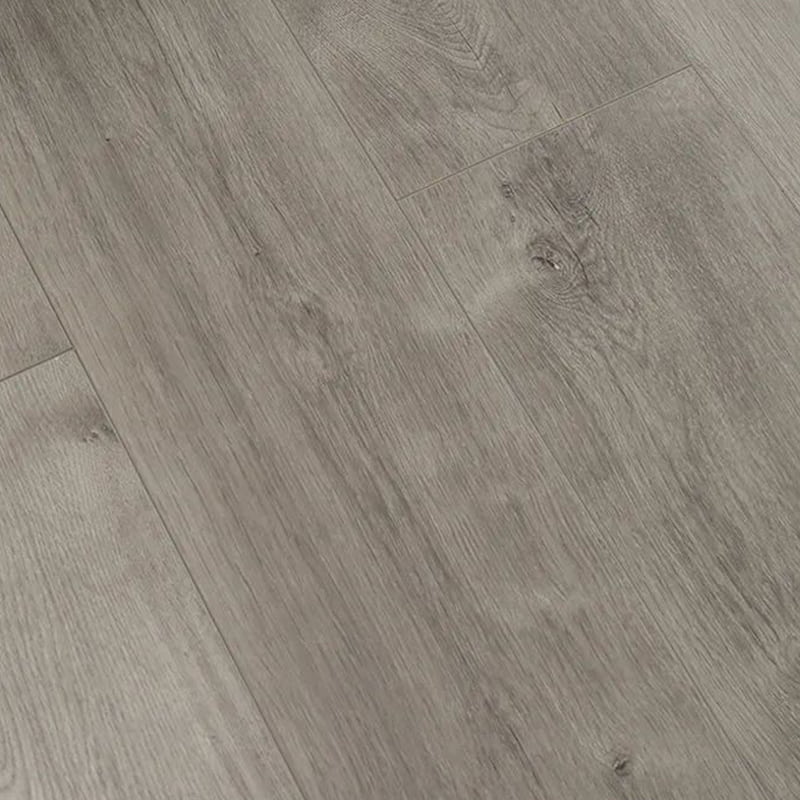
Multi-Layer Light Brown Oak Embossed Grain Matte Click Lock Engineered Wood Flooring
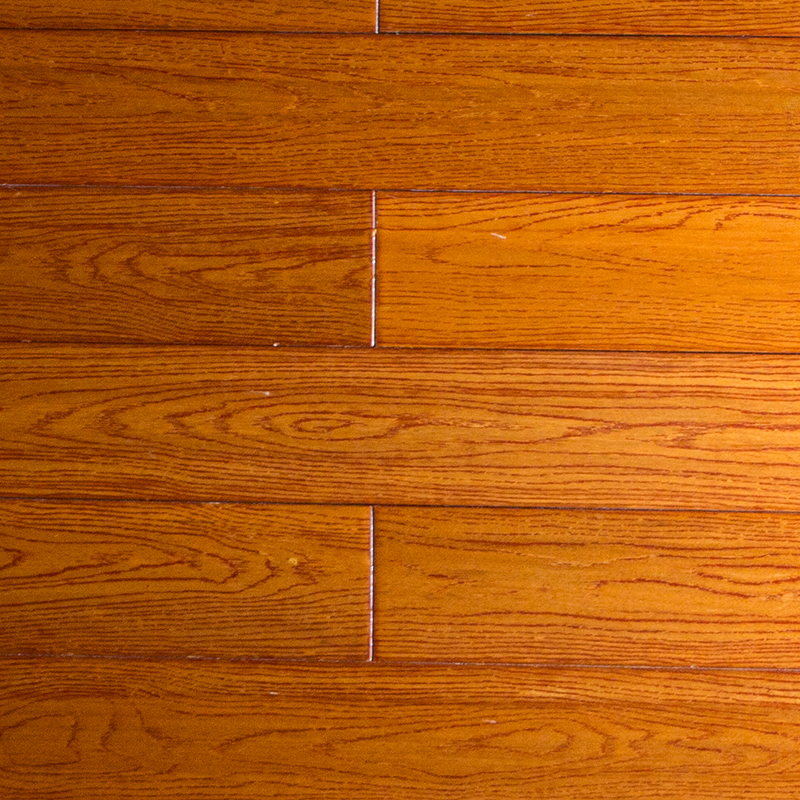
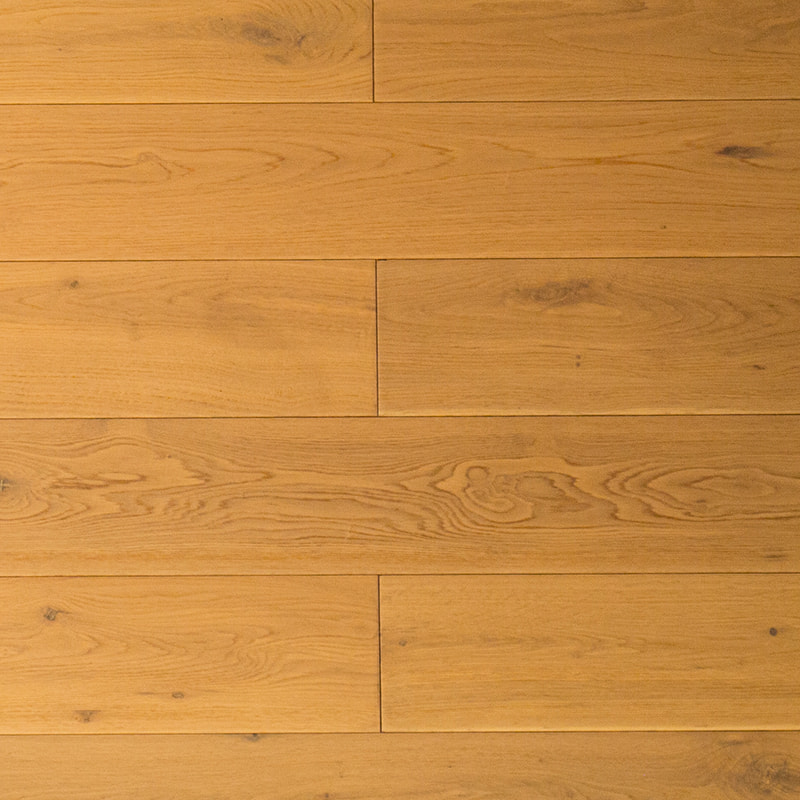
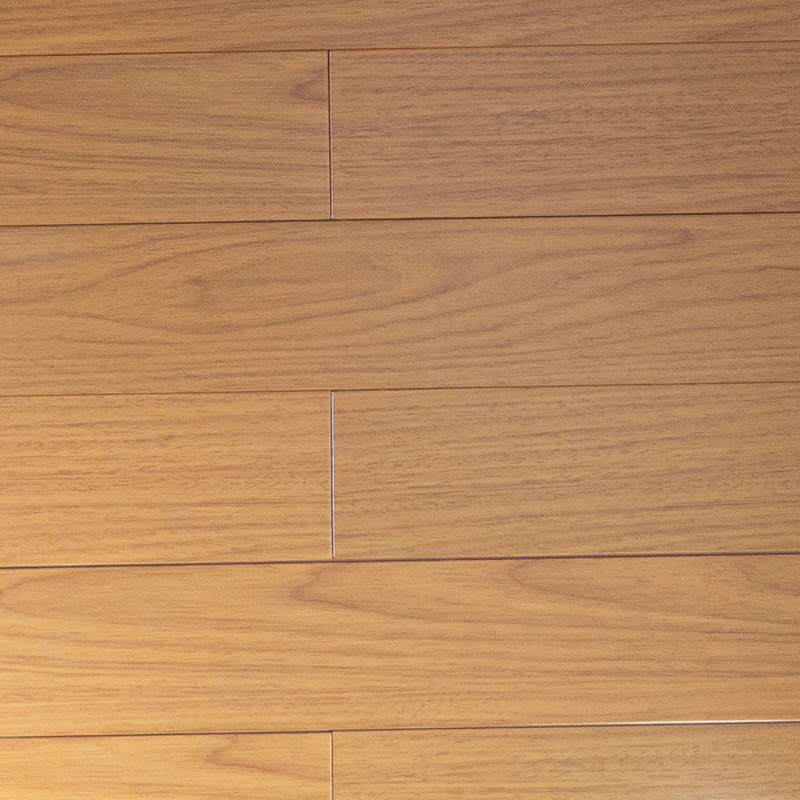
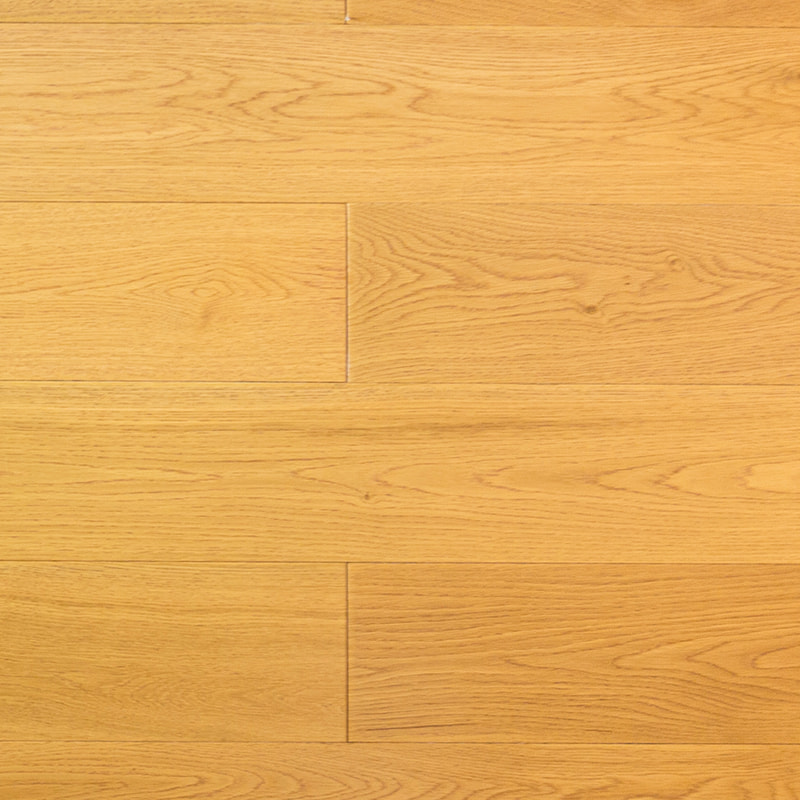
The first impression of DF-E6181 comes from its light brown oak appearance. Oak remains one of the most widely selected flooring species because its grain is recognizable, adaptable, and compatible with a wide range of interior styles. The light brown tone creates warmth without making a room appear visually heavy. It can support Scandinavian, contemporary, transitional, modern farmhouse, minimalist, and hospitality design schemes.
Unlike a printed imitation that only reproduces the appearance of wood, the product uses a natural wood veneer surface. The veneer can be specified in thicknesses ranging from 2 millimeters to 6 millimeters, depending on the desired specification and project requirements. Because the visible layer is real wood, variations in grain direction, cathedral patterns, knots, and tonal movement can contribute to an authentic appearance. This natural variation is particularly valuable in projects where the flooring must communicate quality and material honesty.
The standard product concept features oak, but the face veneer can also be customized with other species, including walnut, ash, and teak. Maple and other veneer options may also be discussed for specific orders. This flexibility allows buyers to maintain a consistent construction while changing the visual identity of the flooring. A distributor may therefore offer several wood appearances from one manufacturing platform, while an architect can coordinate the floor with wall panels, doors, cabinets, stair components, or other interior woodwork.
The light brown color is also practical from a design perspective. Very dark floors can emphasize dust, footprints, and surface marks, while very pale floors may appear less warm in large spaces. A balanced light brown oak shade can help conceal minor daily variation and maintain a welcoming atmosphere. It works effectively with white, cream, gray, charcoal, natural stone, black metal, brushed brass, and many wood-toned furnishings.
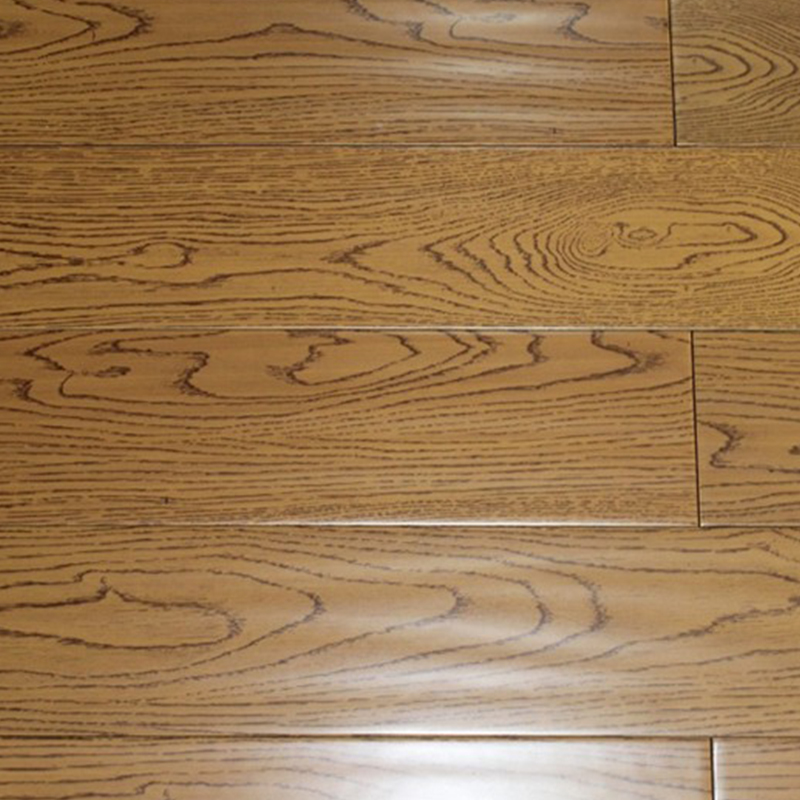
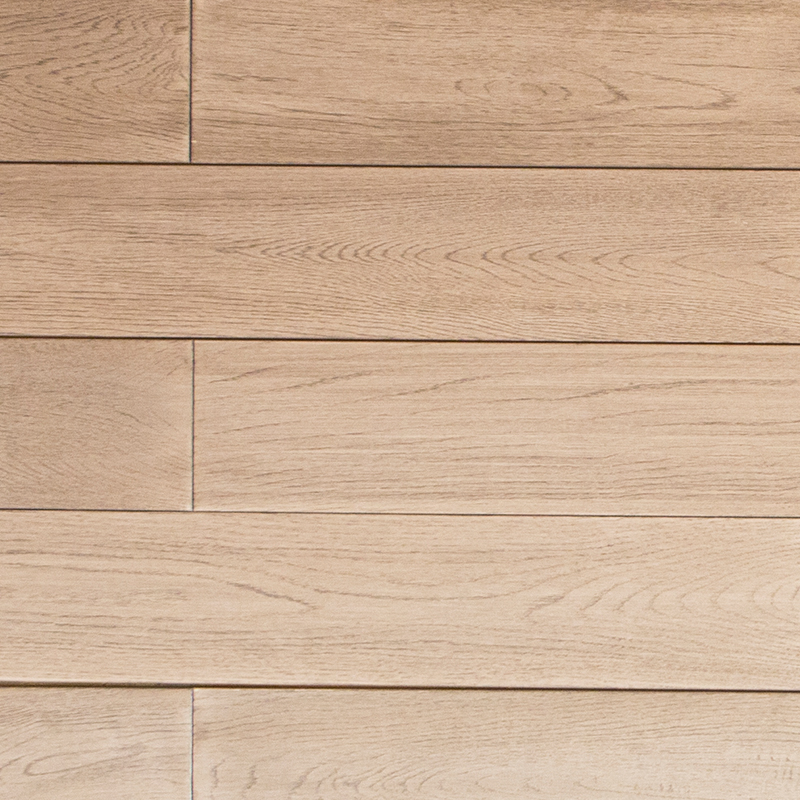
DF-E6181 is distinguished by its embossed grain surface. Embossing adds a subtle three-dimensional texture that follows or enhances the visual pattern of the veneer. When light moves across the floor, the texture creates small changes in shadow and reflection, helping the surface resemble traditionally finished solid timber more closely than a completely flat coating.
The matte finish supports this natural appearance. High-gloss surfaces can reflect strong highlights and may make a floor look more synthetic, especially under artificial lighting. A matte surface reduces excessive reflection and gives the oak a softer, more understated character. It is well suited to interiors where the designer wants the floor to look refined but not overly polished.
Embossed flooring also creates a tactile experience. Users can see and feel a wood-like grain when walking across the surface or touching it during cleaning and maintenance. This sensory quality is important in residential interiors, boutique hotels, showrooms, restaurants, and premium commercial spaces where material authenticity contributes to the overall design experience.
The embossing depth can be customized according to the order specification. A shallow texture can provide a refined appearance with easier routine cleaning, while a stronger texture can create a more pronounced rustic or hand-worked effect. The ability to coordinate veneer, embossing depth, surface treatment, and board thickness gives project buyers more control than a fixed, off-the-shelf product normally provides.
Surface finishes can include UV lacquer, UV oil, or hardwax oil. UV lacquer is useful where a durable, consistent protective film is required. UV oil can preserve a more natural visual feel while adding protection. Hardwax oil is often selected when the desired appearance emphasizes the depth and touch of natural wood. The appropriate option depends on the project’s traffic level, maintenance program, design intent, and local technical requirements.
The core advantage of engineered wood flooring is its layered construction. Solid wood is naturally hygroscopic, meaning it exchanges moisture with the surrounding air. Seasonal changes in humidity can cause timber boards to expand, contract, cup, bow, or develop gaps. Although solid wood remains an attractive material, its performance depends heavily on species, board dimensions, subfloor conditions, acclimatization, and environmental control.
Multi-layer engineered flooring addresses these challenges by arranging wood components in a structured assembly. The product uses a multi-layer engineered wood core based on eucalyptus or birch plywood, depending on the selected specification. The layers are arranged to create a more balanced board than a single piece of solid timber. As environmental conditions change, the movement of one layer is moderated by the orientation and stability of the surrounding layers.
This construction helps reduce the likelihood of warping, deformation, and cracking. It does not eliminate the need for correct installation or moisture management, but it provides a more stable foundation for everyday use. This is particularly valuable in regions with changing seasons, underfloor heating applications where approved, humid climates, and commercial interiors where the floor must remain visually consistent over time.
The product information also identifies a solid three-layer fir or pine structure for the three-layer category and a seven-layer eucalyptus or birch core for the multi-layer category. This distinction allows buyers to select a construction that matches their performance requirements and budget. The multi-layer version is especially suitable where enhanced stability, specification flexibility, and a more engineered performance profile are priorities.
The visible veneer can be ordered in several thicknesses. A thicker veneer provides a stronger natural wood presence and may offer additional scope for future professional maintenance, subject to the exact finish and manufacturer guidance. A thinner veneer can help control material consumption and cost while still delivering a genuine wood surface. This range enables the flooring to serve both premium residential applications and larger commercial projects with controlled budgets.
DF-E6181 incorporates a click-lock system designed for straightforward installation. The boards are profiled to connect securely without requiring traditional tongue-and-groove assembly methods for every joint. Depending on the project conditions and installation instructions, the flooring can be installed using floating, glue-down, or staple methods.
A floating installation can reduce the time and labor required for certain residential and commercial projects. Boards are assembled over an approved underlay or prepared subfloor, allowing installers to work efficiently across large areas. This method can be useful for renovation projects where minimizing disruption is important. It may also make the flooring easier to remove or replace in selected applications, although the suitability of removal depends on the installation system and adhesive or underlay used.
Glue-down installation can provide a firm connection between the flooring and the subfloor. It may be selected for spaces where acoustic performance, a more solid underfoot feel, or particular substrate conditions are important. Staple installation is another available method for suitable subfloors and construction details. Professional installers should confirm the correct method according to the building structure, local standards, moisture conditions, and manufacturer recommendations.
The click system is a competitive advantage for buyers seeking a balance between premium appearance and installation efficiency. Compared with some conventional solid wood flooring systems, it can reduce assembly complexity and shorten installation time. It also supports consistent alignment when the subfloor has been properly prepared and the boards are handled correctly.
The four-sided micro-bevel profile creates a subtle definition between boards. This detail can emphasize the plank layout and help create a more structured visual rhythm. The available reference dimension is 48.0 inches by 7.7 inches by 5/8 inch, although custom dimensions may be available. These proportions provide a contemporary plank appearance while remaining manageable for common interior installation patterns.
The flooring is equipped with a seven-layer UV coating option intended to improve resistance to wear and scratching. UV-cured finishes are hardened using ultraviolet light during production, creating a consistent surface treatment across the boards. The coating helps protect the veneer from common surface stresses such as foot traffic, furniture movement, and routine cleaning.
Surface performance always depends on the selected finish, traffic conditions, maintenance practices, and installation quality. Nevertheless, a properly applied UV coating can provide a strong protective layer while maintaining the visual detail of the oak veneer. This makes the product suitable for living rooms, bedrooms, home offices, corridors, and other areas where people expect the floor to combine appearance with practical durability.
For pet-friendly households, the wear-resistant surface can help reduce concerns about light scratches caused by everyday activity. No wood floor is completely immune to damage from claws, grit, dropped objects, or heavy furniture, but a durable finish can reduce the effect of ordinary use when combined with suitable protective measures. Felt pads, entrance mats, regular dust removal, and prompt cleaning of spills remain important.
Commercial applications may include offices, retail stores, restaurants, hospitality suites, serviced apartments, and selected public interiors. The best application depends on the expected traffic level and the final surface specification. For very high-traffic environments, buyers should confirm the appropriate wear rating, finish system, and maintenance program before placing an order. The advantage of this product platform is that the finish and construction can be discussed and adjusted for the intended application.
One of the most important strengths of the product is its customization potential. DF-E6181 is not limited to one fixed combination of species, thickness, texture, color, or finish. Buyers can discuss board dimensions, veneer species, veneer grade, veneer thickness, surface treatment, texture, and installation profile according to project needs.
Face veneer options include oak, walnut, ash, and teak. Veneer grades may be specified as AB, ABC, ABCD, or CD. These grades generally allow buyers to control the amount of natural variation, knots, color movement, and rustic character visible across the flooring. A high-grade selection may be appropriate for premium residential or hospitality spaces, while a more expressive grade may be preferred for rustic, country, industrial, or cost-sensitive designs.
The veneer cut is identified as sliced veneer. This method allows the natural grain of the selected wood species to remain visible and provides a genuine timber surface rather than a photographic decorative layer. The choice of veneer grade and cut can influence the visual consistency of a completed floor, so buyers should review samples and approve the expected natural variation before mass production.
Surface textures can be customized as wire brushed, handscraped, or smooth sanded. Wire brushing emphasizes the softer grain and creates a linear tactile effect. Handscraping can produce a more artisanal and irregular appearance. Smooth sanding provides a cleaner, calmer surface that may suit minimalist or contemporary interiors. These options allow the same engineered structure to serve different design languages.
Color development is also available. The light brown oak version provides the reference appearance, but custom stains and tones can be considered for coordinated interior programs. A project may require a specific shade to match cabinetry, doors, wall cladding, or furniture. Color approval should be based on physical samples because wood species, grain structure, coating type, and lighting conditions can influence the final result.
Customization is particularly valuable for importers and flooring distributors. Instead of competing only on standard stock products, distributors can develop exclusive collections with selected colors, grades, surface textures, and packaging. This can support private-label programs, regional design preferences, and differentiated product portfolios.
Solid wood flooring is made from boards cut from a single piece of timber. Its principal appeal is the depth and authenticity of solid wood throughout the board. However, solid wood can be more sensitive to changes in humidity and temperature, particularly when wide planks are used or when the building environment is not carefully controlled.
Multi-layer engineered flooring provides a genuine wood surface while using a cross-layer construction to improve stability. In many applications, this means the floor is less likely to experience the degree of movement associated with a comparable solid wood plank. The product can therefore be a practical alternative for projects requiring wider boards, more predictable installation, or better adaptation to variable interior conditions.
Engineered construction can also use the selected face species more efficiently. A high-quality oak or walnut veneer delivers the desired natural appearance without requiring the entire thickness of the board to be made from the same premium timber. This can support more efficient resource use and help reduce the cost of achieving a natural wood look.
Maintenance requirements may also be more manageable. The seven-layer UV coating option provides a protective surface designed for routine wear, while the click-lock profile may simplify installation. Although care is still necessary, buyers can obtain a wood floor with a lower overall project burden than some solid wood alternatives.
Laminate flooring often uses a decorative printed layer over a composite core. Modern laminate products can be visually effective and economical, but they do not provide the same natural veneer surface as engineered wood flooring. Printed patterns may repeat at regular intervals, while natural veneer offers genuine grain variation and a more individual appearance.
DF-E6181 is designed for buyers who want the tactile and visual qualities of real wood rather than an image of wood. The embossed surface works together with the natural veneer, so the texture is not merely an artificial pattern placed over a printed design. This combination can create a more convincing material experience in spaces where users see the floor closely and interact with it daily.
Engineered wood may also offer greater flexibility in future design decisions. Veneer species, grade, thickness, stain, and coating can be specified according to the project. Laminate collections are usually more dependent on fixed decorative patterns and standardized specifications. For professional projects requiring coordinated woodwork, the customization range of engineered flooring can be a significant advantage.
Of course, laminate can remain suitable for specific budget, moisture, or usage requirements. Product selection should always consider the environment, traffic level, maintenance plan, and performance expectations. DF-E6181 is most valuable when the project prioritizes real wood appearance, tactile quality, stability, customization, and a premium interior atmosphere.
The performance of engineered flooring is closely connected to manufacturing precision. Veneer preparation, core assembly, adhesive application, pressing, sanding, profiling, coating, curing, inspection, and packaging must all be controlled carefully. Small inconsistencies in any of these stages can affect board flatness, joint alignment, surface appearance, or long-term performance.
Suzhou Dicosbo Wood Co., Ltd. has more than two decades of experience in wood product manufacturing. The company was founded in 1999 and has developed production capabilities across wood flooring, wooden doors, and custom cabinets. Its experience across several wood product categories supports a broad understanding of timber selection, moisture control, surface finishing, joinery, and interior project coordination.
The company operates approximately 20,000 square meters of production facilities and uses German imported production lines together with automated quality control systems. Modern production equipment can improve repeatability in processes such as board sizing, sanding, profiling, coating application, and final inspection. Automation does not replace skilled technical supervision, but it helps reduce variation and maintain stable specifications across larger orders.
DEIF applies a three-step quality inspection process. While exact inspection criteria may vary by product and contract, a structured inspection system typically addresses incoming materials, production-stage quality, and finished goods. Raw veneer and core materials must be assessed for suitability. During production, dimensions, bonding, surface quality, and profile accuracy need to be monitored. Before shipment, finished boards should be checked for appearance, packaging condition, quantity, and order compliance.
This process is especially important for commercial projects and distributor programs. A single sample may look excellent, but reliable supply requires the same standards to be maintained across thousands of square meters. Stable manufacturing helps reduce installation delays, replacement claims, color inconsistencies, and unexpected variation between batches.
The company reports an annual flooring production capacity of approximately 2,400,000 square meters. This capacity supports both regular distribution orders and larger architectural or development projects. It also gives buyers greater confidence that a successful sample collection can be scaled into a broader supply program.
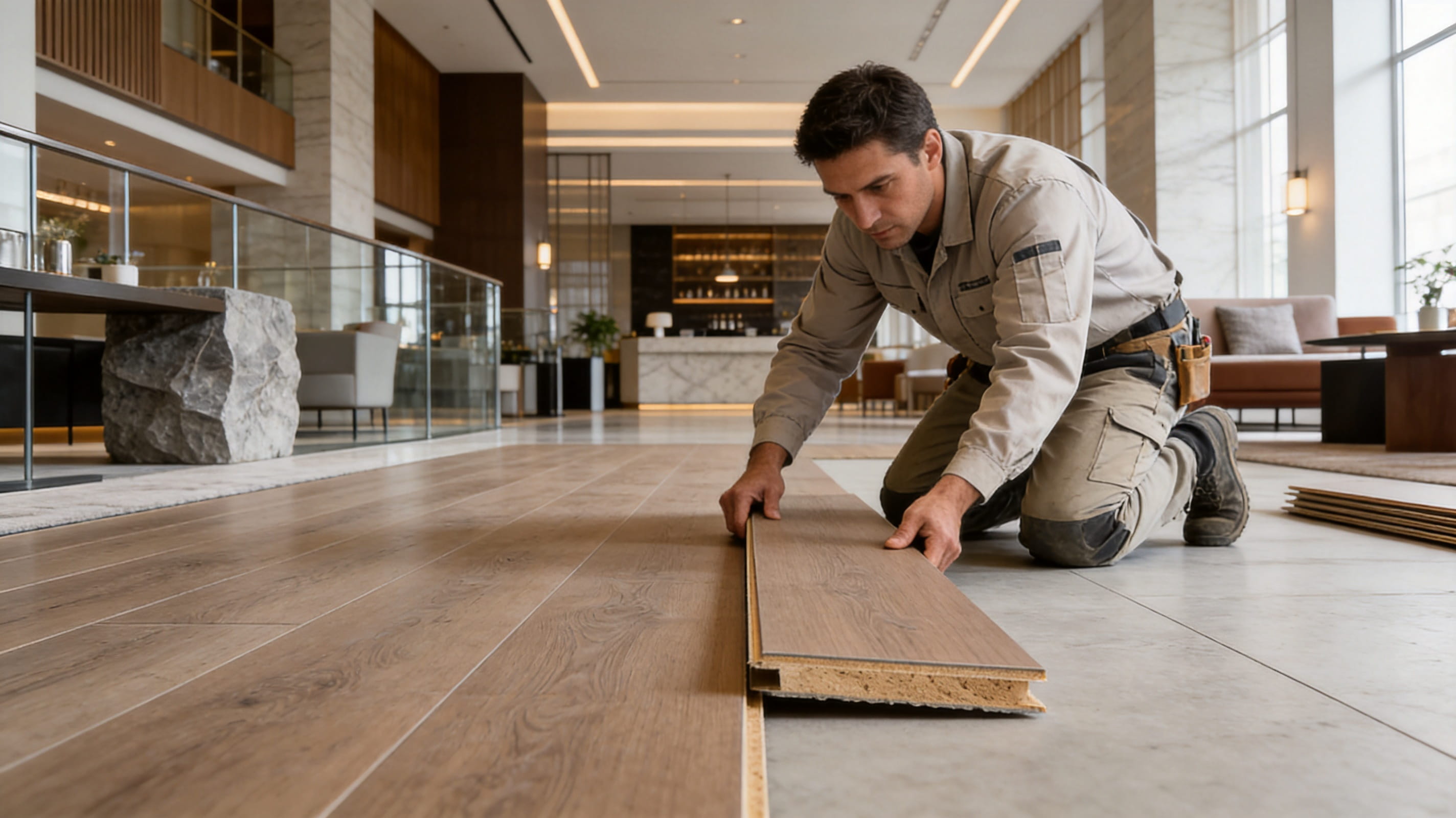
DF-E6181 is presented with EU CE and FSC certification references, while the company’s broader product compliance information also identifies CARB P2 and ISO 9001 standards. These certifications and standards can help buyers evaluate product conformity, responsible material sourcing, quality management, and market suitability.
CE marking is relevant to products that fall within applicable European regulatory frameworks. It indicates that the product has been assessed against relevant requirements for its intended category. Buyers should confirm the specific documentation, test reports, and scope applicable to the flooring specification being ordered.
FSC certification supports responsible forest management and chain-of-custody expectations when the certified material and supply chain are covered by the relevant certificate. For architects, developers, and environmentally conscious buyers, documented sourcing can contribute to broader sustainability goals and green-building submissions.
CARB P2 relates to formaldehyde emissions requirements for certain composite wood products in the California market. Where low-emission materials are required, buyers should confirm the applicable test documentation for the exact core, adhesive system, and finished product. ISO 9001 is associated with quality management systems and can indicate that production and management procedures are organized around documented quality processes.
Compliance is not only a marketing feature. It can influence customs clearance, project approvals, indoor air quality assessments, retailer requirements, and professional specification documents. DEIF’s experience serving customers in Europe, North America, Southeast Asia, and other regions provides a foundation for handling international documentation and export requirements.
The reference configuration contains 10 pieces per carton, covering approximately 2.39 square meters or 25.73 square feet. The listed carton weight is approximately 24 kilograms. These figures help distributors and project managers estimate storage, handling, transport, and installation requirements.
Packaging must protect the flooring from impact, moisture, abrasion, and edge damage during domestic handling and international shipment. Buyers should confirm the final packaging design, carton markings, pallet requirements, container loading plan, and moisture protection measures before production. Large projects may also require batch identification to support installation sequencing and future replacement requests.
For commercial projects, supply planning should account for waste, cutting, pattern direction, transitions, stairs, damaged boards, and future repairs. The exact allowance depends on room geometry and installation pattern. Straight installations may require less additional material, while diagonal, herringbone, complex layouts, or heavily detailed spaces may require more. Project teams should calculate the required quantity with the installer and add an appropriate reserve.
The company’s reported export experience of more than 10 years supports international order coordination. DEIF serves more than 100 global partners across Europe, North America, and Southeast Asia. This international experience can be valuable for buyers who require communication across time zones, export documentation, sample approval, production scheduling, and container shipment management.
DEIF also offers OEM and ODM services. OEM production can allow a buyer to order flooring according to an established brand specification, packaging system, or collection identity. ODM cooperation can involve the development of a new surface, color, construction, or product collection based on a buyer’s market strategy. A reported 72-hour rapid prototyping capability can help accelerate early-stage sample development, although final production timing depends on material selection, approval cycles, testing, and order volume.
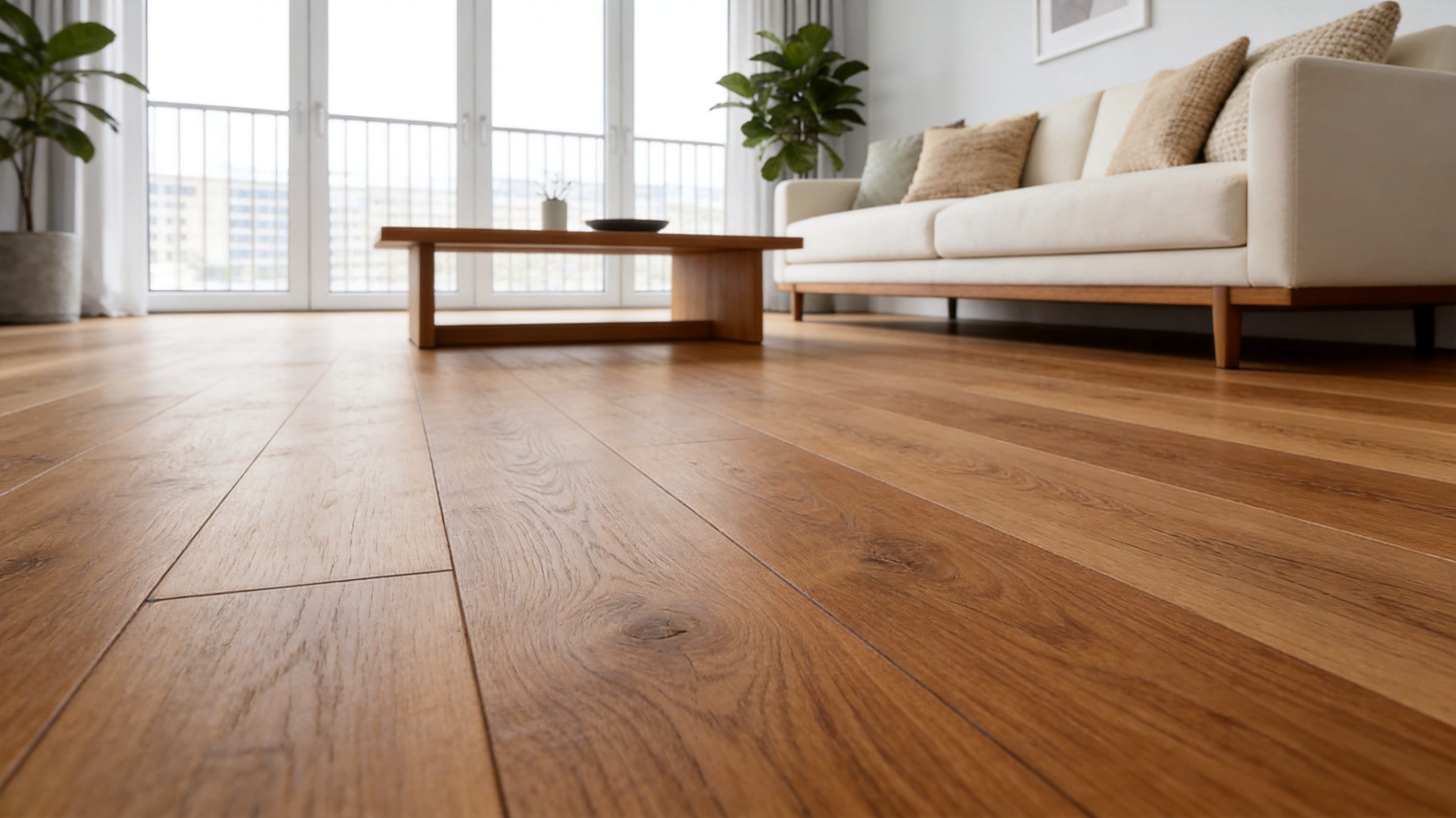
In living rooms, the light brown oak surface creates a warm foundation for seating, rugs, lighting, and artwork. The matte embossed finish helps the floor appear natural under both daylight and interior lighting. The multi-layer structure provides a stable platform for daily family use, while the click-lock installation can support efficient renovation work.
Bedrooms benefit from the product’s softer visual character. Oak grain adds texture without overwhelming calm interiors. The flooring can be combined with neutral textiles, upholstered furniture, painted walls, and natural materials such as linen, stone, leather, and rattan.
Home offices and study rooms can use the floor to create a professional but comfortable atmosphere. The plank proportions suit desks, storage systems, and modern built-in furniture. When felt pads are installed under chair bases and furniture legs, the surface can be better protected from repeated movement.
For pet-friendly homes, regular removal of grit is essential because sand and dirt can act as abrasives under paws. The wear-resistant finish provides a helpful layer of protection, but owners should still place mats at entrances, keep pet nails maintained, wipe spills promptly, and avoid dragging heavy objects across the floor.
The flooring can be considered for boutique hotels, serviced apartments, restaurant interiors, premium offices, retail stores, showrooms, and selected public areas. Its real wood veneer gives commercial spaces a warmer and more distinctive identity than many purely synthetic surfaces. The customizable grade and finish allow designers to select either a clean, refined appearance or a more expressive rustic character.
In hospitality projects, the floor can coordinate with wooden doors, reception desks, wall panels, and custom cabinets. This is particularly useful when one supplier can support several interior woodwork categories. Coordinated manufacturing can simplify color matching, sample approval, and procurement communication.
Retail environments may benefit from the product’s visual appeal and clear plank structure. The floor can serve as a neutral but high-quality background for merchandise displays. Designers can choose a matte or brushed finish to reduce unwanted reflections from lighting, helping the space maintain a controlled visual atmosphere.
Office environments increasingly seek materials that feel less institutional. Light brown oak can introduce warmth into meeting rooms, executive areas, lounges, and collaborative spaces. The correct finish and maintenance plan should be selected according to the expected foot traffic and furniture arrangement.
Architects and contractors should evaluate site conditions before specifying the flooring. Subfloor flatness, moisture, building temperature, humidity, acoustic requirements, fire regulations, transitions, and expansion provisions all influence the final installation. Engineered flooring is stable, but it remains a natural wood product and must be treated as such throughout storage, acclimatization, installation, and occupancy.
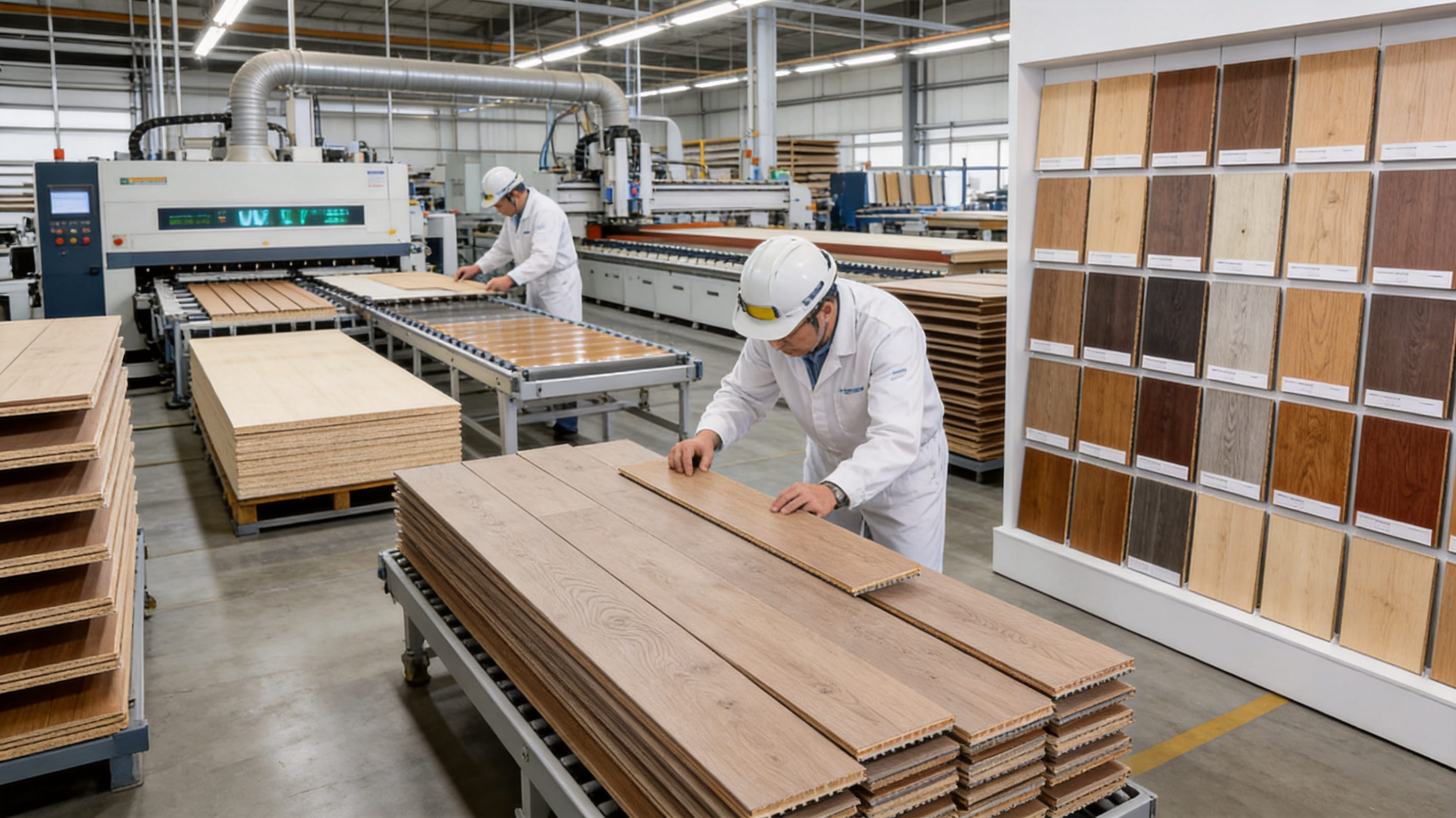
Successful installation begins before the cartons are opened. The subfloor should be clean, dry, structurally sound, and sufficiently flat. Uneven areas can place stress on joints and create movement or noise. Moisture testing should be completed according to the subfloor type and local installation standards.
Cartons should be transported and stored in a protected indoor environment. Exposure to rain, standing water, extreme temperature, or uncontrolled humidity can damage the boards before installation. The flooring should be acclimatized according to the manufacturer’s instructions and the conditions of the installation site.
Installers should inspect boards before and during installation. Natural wood contains variation, and boards with unacceptable damage, manufacturing defects, or significant color differences should be separated before they are fixed in place. Once a board has been installed, visible defects may be more difficult to address.
Expansion gaps are necessary around walls, columns, door frames, cabinets, and other fixed structures. Wood flooring needs room to respond to changes in environmental conditions. The size and location of expansion provisions should follow the product instructions, room dimensions, and applicable installation standards.
The click-lock joints should be assembled using the correct technique and tools. Excessive force can damage the profile, while incomplete engagement can lead to gaps or movement. The installation direction should be planned in relation to room geometry, natural light, doorways, and transitions to other flooring materials.
When glue-down installation is selected, the adhesive must be compatible with the flooring, substrate, and environmental conditions. The installer should follow the adhesive manufacturer’s coverage, open time, moisture limitations, and curing requirements. Staple installation should only be used where the board construction, subfloor, and fastening system are appropriate.
Routine maintenance should begin with dry cleaning. A soft-bristled brush, microfiber mop, or suitable vacuum cleaner can remove dust and grit without scratching the finish. Embossed seams may collect particles, so a soft brush is useful for cleaning the textured surface while preserving its appearance.
Spills should be removed promptly with a slightly damp cloth. Excessive water should not be allowed to remain on the floor. Steam cleaning, soaking, harsh chemicals, abrasive powders, and unsuitable detergents may damage the finish or cause moisture to enter the joints.
Furniture should be fitted with clean felt pads or suitable protective glides. Heavy furniture should be lifted rather than dragged. Rolling office chairs may require a protective mat, especially when they are used continuously in one location. Entrance mats can reduce the amount of sand and moisture carried onto the floor.
Direct sunlight can influence the color of natural wood over time. Curtains, blinds, solar-control glazing, or periodic furniture repositioning can help reduce uneven exposure. Some color change is a normal characteristic of real wood and may contribute to a more mature appearance.
Commercial maintenance schedules should be based on traffic intensity. High-use entrances and corridors may need more frequent dry cleaning than private rooms. A professional maintenance team should use products compatible with the selected UV lacquer, UV oil, or hardwax oil finish. Before using a new cleaning product, a small hidden-area test is recommended.
The value of DF-E6181 comes from the combination of natural appearance, engineered stability, installation efficiency, finish protection, and manufacturing flexibility. Competing products may offer one or two of these qualities, but buyers increasingly need a complete solution that can be adapted to different markets and project types.
The product uses real wood veneer instead of relying solely on printed decoration. It offers a multi-layer construction rather than a single solid board that may be more sensitive to environmental movement. Its matte embossed surface provides tactile realism, while the UV coating option supports resistance to everyday wear. The click-lock profile can help reduce installation complexity, and the available floating, glue, or staple methods allow the product to respond to different site requirements.
Customization further strengthens its competitive position. Buyers can specify wood species, grade, veneer thickness, surface texture, coating system, color, and dimensions. This is important for businesses that want to develop a differentiated collection rather than sell a generic commodity product.
The manufacturer’s production scale and export experience also support commercial value. A flooring product is only successful when it can be sampled, approved, produced consistently, packaged securely, and delivered according to project schedules. DEIF’s facilities, automated systems, quality inspection process, international customer base, and OEM/ODM capabilities are designed to support this full supply chain.
| Specification | Reference Information |
|---|---|
| Product Code | DF-E6181 |
| Product Category | Multi-Ply Engineered Flooring |
| Appearance | Light brown oak with natural wood grain |
| Surface Character | Embossed grain with matte visual effect |
| Reference Dimensions | 48.0 inches × 7.7 inches × 5/8 inch |
| Face Veneer | Customizable oak, walnut, ash, teak, and other options by agreement |
| Veneer Thickness | Customizable options including 2 mm, 3 mm, 4 mm, and 6 mm |
| Core Construction | Multi-layer engineered wood |
| Core Material | Eucalyptus or birch plywood for the multi-layer category |
| Veneer Grade | Customizable AB, ABC, ABCD, or CD |
| Veneer Cut | Sliced veneer |
| Surface Finish | UV lacquer, UV oil, or hardwax oil |
| Surface Texture | Wire brushed, handscraped, or smooth sanded |
| Protective Coating | Seven-layer UV coating option |
| Edge Profile | Micro-bevel on all four sides |
| Locking System | Click system |
| Installation Methods | Floating, glue-down, or staple installation, subject to site suitability |
| Pieces per Carton | 10 |
| Coverage per Carton | Approximately 2.39 square meters or 25.73 square feet |
| Carton Weight | Approximately 24 kilograms |
| Certifications and Standards | EU CE and FSC references; company information also includes CARB P2 and ISO 9001 compliance |
Before placing an order, buyers should define the intended application, target market, required certification, quantity, preferred species, veneer grade, surface finish, dimensions, installation system, packaging format, and delivery schedule. Clear specifications reduce the possibility of misunderstandings during sampling and production.
Sample approval should cover more than color. Buyers should review grain variation, embossing depth, edge treatment, gloss level, surface feel, board flatness, click-lock engagement, coating consistency, and carton presentation. If the product will be used across multiple rooms or buildings, the approved reference sample should be retained for future comparison.
For projects with strict sustainability or emissions requirements, documentation should be requested for the exact product construction. This may include veneer source, core material, adhesive system, emissions testing, certification scope, quality records, and packaging details. Requirements vary by country and project, so confirmation should take place before final specification.
Buyers should also discuss minimum order quantities, lead times, sample development, production capacity, color matching, replacement boards, and after-sales support. OEM and ODM projects may require additional time for artwork, packaging, labeling, technical documents, and market compliance review.
DF-E6181 is a multi-ply engineered wood flooring product with a natural wood veneer surface, a multi-layer eucalyptus or birch plywood core, an embossed grain texture, a matte appearance, and a click-lock installation system.
Yes. The product uses a natural sliced-wood veneer surface. Oak is the reference appearance, while walnut, ash, teak, and other veneer options may be available for customized orders.
The product combines natural wood veneer with a three-dimensional embossed texture. Printed flooring reproduces the appearance of wood through a decorative image, while this product provides genuine wood grain and a tactile surface experience.
Yes. The light brown oak appearance is the reference design, but colors and stains can be customized according to the project, subject to sample development and approval.
Common customization options include 2 millimeters, 3 millimeters, 4 millimeters, and 6 millimeters. The suitable thickness depends on the desired appearance, application, budget, and maintenance expectations.
The multi-layer category uses eucalyptus or birch plywood as the core material. A separate three-layer category may use fir or pine. Buyers should confirm the core construction for the exact product specification.
It can be considered for offices, retail stores, hotels, serviced apartments, restaurants, showrooms, and other selected commercial interiors. The finish, installation method, traffic requirements, and maintenance plan should be reviewed for each application.
The available methods are floating, glue-down, and staple installation. The correct method depends on the subfloor, building conditions, local requirements, and the selected installation specification.
The click-lock system is designed to simplify installation, but professional installation is recommended for larger projects, complex layouts, commercial applications, and sites with demanding subfloor or moisture conditions.
The wear-resistant surface can help manage ordinary household use in pet-friendly homes. Owners should still remove grit regularly, maintain pet nails, use entrance mats, protect furniture contact points, and clean spills promptly.
Use a soft-bristled brush, microfiber mop, or suitable vacuum to remove dust from the embossed seams. Avoid excessive water, abrasive cleaners, harsh chemicals, and unsuitable steam equipment.
The product information references EU CE and FSC certification. The company information also identifies CARB P2 and ISO 9001 compliance. Buyers should request current documents for the exact product and market application.
DEIF offers OEM and ODM services. Buyers can discuss private-label packaging, custom collections, product specifications, colors, surface treatments, and other project-specific requirements.
The reference carton contains 10 pieces and covers approximately 2.39 square meters or 25.73 square feet. Final packaging and coverage should be confirmed against the approved order specification.
An experienced manufacturer can support material selection, sample development, customization, production control, inspection, packaging, export documentation, and project supply. DEIF reports more than 20 years of wood product experience, over 10 years of export experience, a 20,000-square-meter production facility, and an annual flooring capacity of approximately 2,400,000 square meters.
Multi-Layer Light Brown Oak Embossed Grain Matte Click-Lock Engineered Wood Flooring offers a practical and visually convincing alternative to conventional solid wood flooring. Its natural veneer surface provides authentic timber character, while the embossed matte finish adds tactile depth and reduces an overly reflective appearance. The multi-layer eucalyptus or birch core is designed to improve stability, and the click-lock profile supports efficient installation across a variety of suitable applications.
The product is also adaptable. Buyers can select veneer species, grades, thicknesses, colors, surface textures, coatings, dimensions, and installation methods. This makes it suitable for standard distribution collections as well as customized residential, hospitality, commercial, and architectural projects.
Behind the product is a manufacturer with more than two decades of wood industry experience, modern production facilities, German imported production lines, automated quality control systems, a three-step inspection process, international export experience, and OEM/ODM capabilities. The combination of material authenticity, engineered performance, customization, and manufacturing support gives DF-E6181 a strong position for buyers seeking reliable and design-oriented wood flooring solutions.
1. Product specification and technical information for DF-E6181 Multi-Ply Engineered Flooring.
2. General technical guidance for multi-layer engineered wood flooring construction and dimensional stability.
3. Manufacturer information regarding natural wood veneer, surface finishing, click-lock profiles, and customization options.
4. Manufacturer information regarding production facilities, quality inspection procedures, export experience, and OEM/ODM services.
5. General flooring installation principles covering subfloor preparation, acclimatization, expansion gaps, moisture control, and installation methods.
6. General wood flooring maintenance guidance for UV lacquer, UV oil, hardwax oil, embossed surfaces, and residential traffic.
7. General reference materials concerning CE marking, FSC chain of custody, CARB P2 emissions requirements, and ISO 9001 quality management systems.

We provide customers with sustainable and eco-friendly
engineered wood solutions and services.
Choose DEIF for the perfect blend of
performance and aesthetics.
