


 English
 Español
 عربى
عربى

Get Social
Choose DEIF for the perfect blend of
performance and aesthetics.
 Get Free Sample

Content
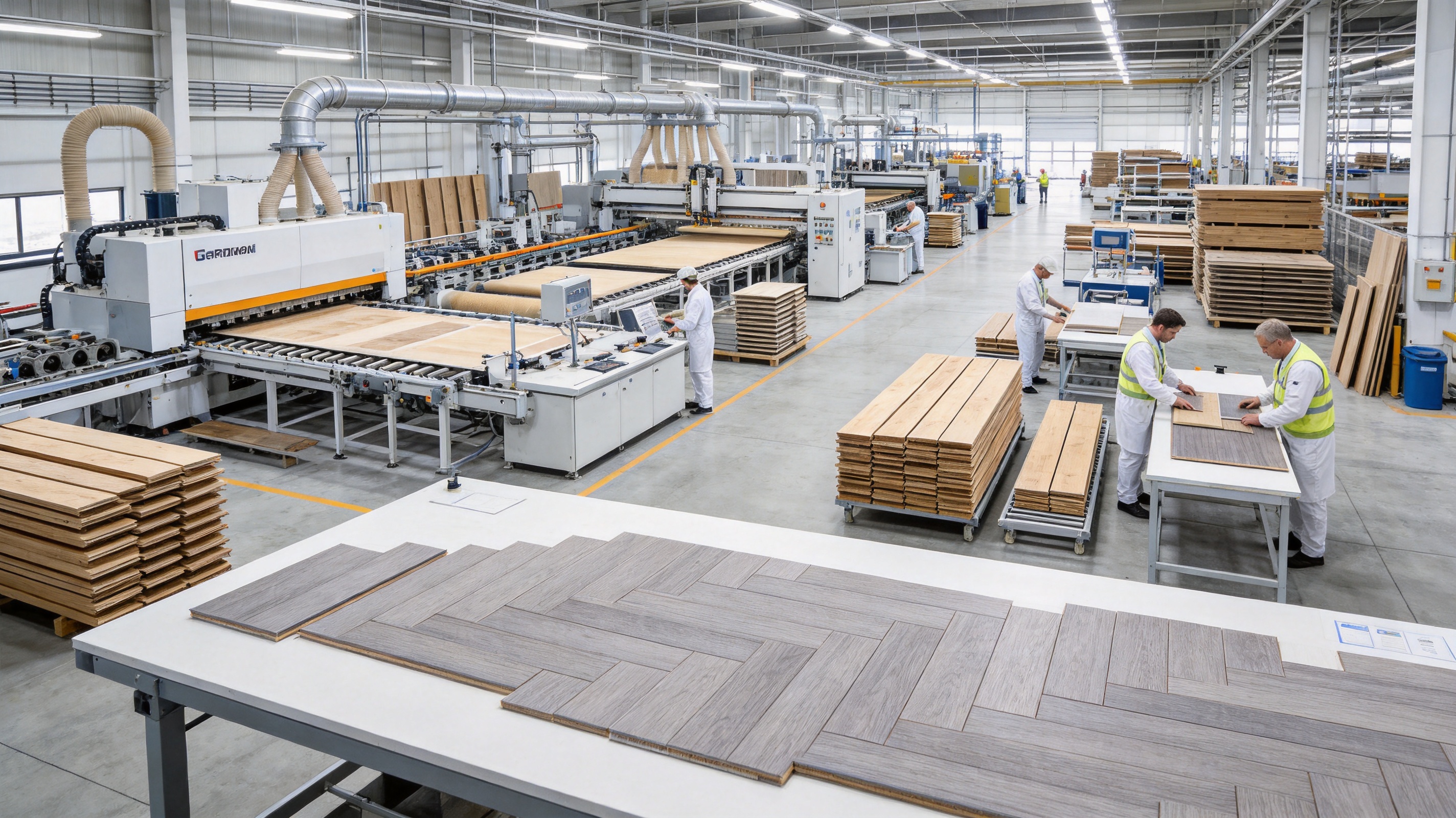
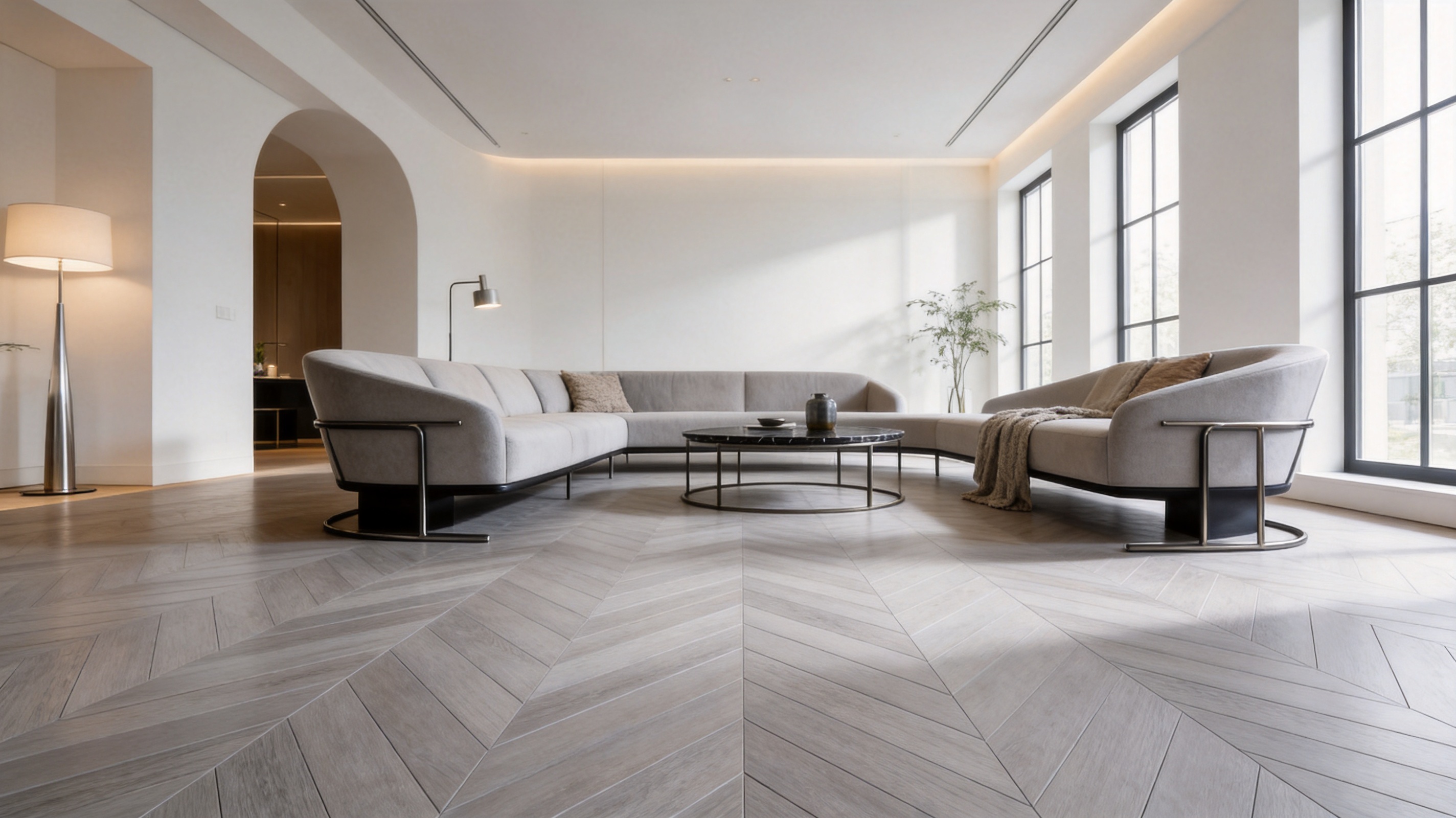
Interior flooring is no longer treated as a simple background surface. In modern residential, hospitality, retail, and commercial design, the floor contributes to the identity of the entire space. It influences how light travels across a room, how furniture is perceived, how visitors move through an environment, and how comfortable a building feels over many years of use. The White Oak Herringbone Light Grey Futuristic Matte Parquet Flooring, product code DF-Y1810, responds to these demands with a carefully balanced combination of visual refinement, engineered performance, customization, and production capability.
Designed around a cool light-grey color direction and a structured herringbone layout, this flooring creates an atmosphere that is clean, contemporary, and subtly technological. The design avoids the heavy visual warmth associated with some traditional wood floors while preserving the natural grain, texture, and depth that make timber attractive. Its futuristic matte finish reduces excessive reflection and gives the surface a smooth, sophisticated appearance suitable for minimalist interiors, luxury residences, showrooms, hotel lobbies, studios, and other design-led environments.
The product is also supported by a broad manufacturing platform. Its supplier specializes in wood flooring, wooden doors, and custom cabinet solutions, offering OEM and ODM development, rapid prototyping, international quality certifications, automated production systems, and large-scale capacity. This combination is important for architects, distributors, contractors, developers, and furniture or interior brands that need more than an attractive sample. They require repeatable color, reliable dimensional performance, technical flexibility, controlled quality, and dependable supply.
Herringbone flooring has remained popular because it gives a room rhythm without relying on complex ornamentation. Individual planks are arranged in a broken zigzag pattern, creating directional movement across the floor. The pattern can make a narrow area appear more elongated, define zones in an open-plan interior, and add architectural interest to otherwise simple surfaces.
DF-Y1810 presents this familiar pattern in a distinctly modern way. The light-grey tone gives the wood a cooler visual character, while the matte finish keeps the surface calm and controlled. Instead of producing a glossy decorative effect, the floor reflects light softly. This allows the herringbone geometry and the natural grain to remain visible without becoming visually aggressive.
The product title identifies the flooring as herringbone, while the supplied marketing and specification information also refers to a chevron parquet collection with selectable 45-degree or 60-degree angles. This means that project buyers should confirm the final pattern configuration, angle, plank orientation, and packing arrangement before placing a production order. The manufacturing platform is designed to support customized parquet solutions, allowing a project to select the most appropriate pattern expression for its interior concept.
Whether specified as a classic herringbone arrangement or as a related chevron configuration, the flooring provides a geometric foundation for contemporary architecture. It works particularly well where a designer wants a recognizable wood pattern but does not want the traditional dark oak, high-gloss, or strongly rustic appearance often associated with parquet.
Color is one of the most important factors in flooring selection because it changes the perceived scale, temperature, and brightness of a room. Light grey wood flooring occupies an adaptable position between natural timber and modern architectural finishes. It can support concrete, stone, metal, glass, painted surfaces, and neutral textiles without competing with them.
The light-grey finish is especially suitable for interiors that use white walls, brushed metal, black accents, pale upholstery, or transparent glass. It can soften industrial materials while maintaining a crisp, contemporary atmosphere. In residential settings, it creates a quieter alternative to very yellow or orange wood tones. In commercial spaces, it can provide a neutral but distinctive foundation for product displays, reception areas, hospitality furniture, and curated lighting schemes.
The futuristic matte surface further strengthens this design direction. Glossy flooring can create strong reflections, highlight small surface irregularities, and sometimes make a room feel visually busy. A matte treatment diffuses light more evenly and offers a more restrained appearance. It allows the grain and pattern to be appreciated from multiple viewing angles, which is valuable in open-plan spaces where visitors see the floor from a distance as well as close up.
Another advantage is design flexibility. The floor can be paired with warm wood furniture for contrast, or with metal and glass elements for a more technological look. It can support Scandinavian-inspired interiors, contemporary luxury apartments, boutique hospitality schemes, creative studios, showroom environments, and modern offices. The same base design can therefore be adapted to different markets through changes in color, surface texture, veneer selection, and finishing system.
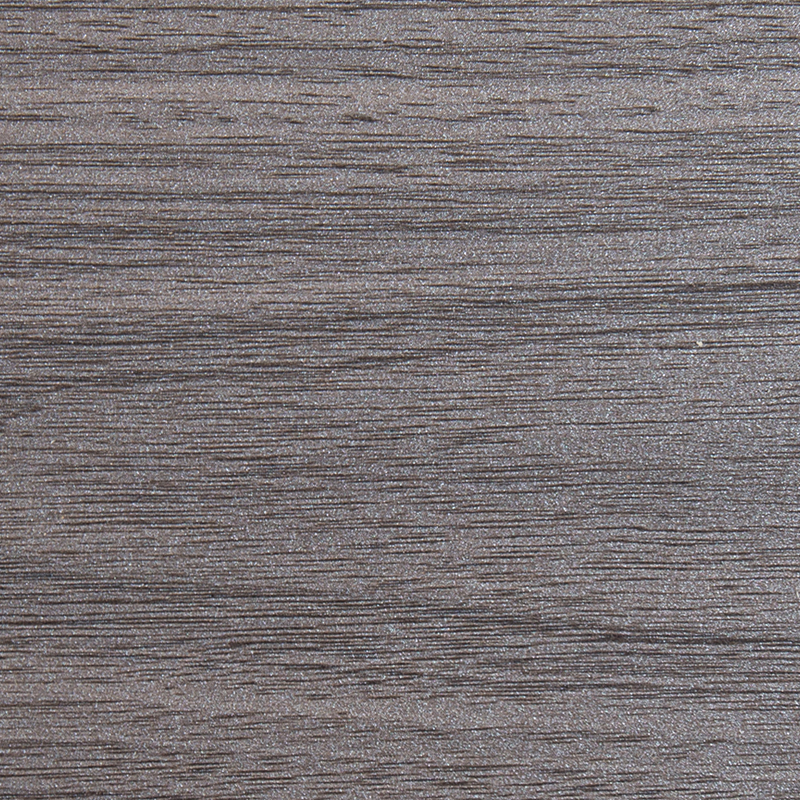
White Oak Herringbone Light Grey Futuristic Matte Parquet Flooring
White Oak is widely valued for its balance of stability, strength, grain character, and design versatility. Its natural grain is usually more pronounced than that of some lighter, less textured wood species, giving the surface enough visual interest to remain attractive even when finished in a pale or muted color. The grain also helps the floor retain a natural appearance beneath a modern coating.
For long-term residential use, material stability is a significant consideration. A flooring product must respond appropriately to normal changes in indoor temperature and humidity. Although all wood products require proper acclimatization, site preparation, and moisture control, a carefully manufactured oak floor can provide a dependable foundation when installed and maintained according to project requirements.
White Oak is also a practical choice for customization. It can accept multiple grades, stains, pigments, and surface treatments. Depending on the project, the appearance may be adjusted to show more natural variation or to create a more uniform and architectural surface. The supplied options include Oak, Walnut, Ash, and Teak face veneers, as well as selectable grades such as AB, ABC, ABCD, and CD. This gives buyers the ability to position the product at different visual and commercial levels.
The product information describes DF-Y1810 as having a solid wood base material and emphasizes the natural character of solid timber. The technical configuration also identifies sliced veneer and eucalyptus or birch plywood core options for customized parquet constructions. These specifications represent different possible project configurations and should be confirmed with the manufacturer during technical approval. The distinction is important: a solid wood construction, a multi-layer engineered construction, and a veneer-faced plywood construction each have different installation, dimensional, and maintenance considerations.
The appearance of parquet depends heavily on the quality of its assembly. A pattern can lose its elegance when joints are inconsistent, plank ends are poorly aligned, or the surface has noticeable height differences. DF-Y1810 emphasizes handcrafted splicing technology, tight joints, and high flatness. These characteristics support the clean, precise appearance expected from a modern herringbone floor.
Handcrafted assembly does not mean the product relies only on manual work. In a professional flooring factory, skilled workers and automated equipment can complement one another. Automated cutting, profiling, sanding, and inspection systems provide repeatable dimensions, while experienced technicians manage visual selection, pattern assembly, detail correction, and final quality decisions. This combination is especially valuable for parquet, where the relationship between individual pieces affects the appearance of the complete installation.
Tight joints help reduce visual gaps between pieces and create a continuous pattern across the room. High flatness supports a more stable installation and helps prevent distracting transitions between adjacent planks. These benefits are particularly visible in spaces with low-angle lighting, large windows, or long sightlines, where the floor surface is observed from many directions.
The parquet format also demands careful control of left and right components. The supplied packing information specifies left and right planks in separate boxes for the relevant collection. Separating these components can make sorting and installation more organized, reducing the risk of pattern interruption. Installers should follow the approved installation drawing and maintain the correct sequence throughout the room.
The following table summarizes the principal specifications supplied for the DF-Y1810 product and its customizable parquet platform. Some options are project-dependent, so the final approved specification should be confirmed before production.
| Product Code | DF-Y1810 |
| Product Category | Herringbone Parquet Flooring |
| Wood Direction | White Oak design; other face veneers may be customized |
| Design Direction | Light grey futuristic matte |
| Plank Size | 510 × 102 × 15 mm |
| Approximate Imperial Size | 20.1 × 4.0 × 19/32 inch |
| Pattern Options | Herringbone; project collection may support Chevron 45° or 60° |
| Veneer Cut | Sliced veneer for applicable engineered configurations |
| Core Options | Eucalyptus or birch plywood for applicable configurations |
| Wear Layer Options | 2 mm, 3 mm, 4 mm, or 6 mm |
| Surface Finish Options | UV lacquer, UV oil, or wood wax oil |
| Surface Texture Options | Wire brushed, hand scraped, or smooth sanded |
| Profile Detail | Click system on four sides with V-bevel |
| Locking System | Click system |
| Installation Method | Floating installation listed for the supplied configuration |
| Pieces Per Carton | 32 |
| Coverage Per Carton | 1.665 square meters or approximately 17.92 square feet |
| Carton Weight | Approximately 18 kg |
| Certification Direction | FSC-certified sustainable material; other compliance documentation may be project-specific |
The dimensional format of 510 × 102 × 15 mm creates a relatively compact parquet module that can be used in both residential and commercial layouts. The plank proportion is long enough to establish a clear directional pattern while remaining manageable for detailed installation work. The 15 mm overall thickness can also support project planning where floor build-up, door clearances, skirting details, and transitions must be coordinated carefully.
Because parquet installation is pattern-sensitive, cartons should be distributed across the work area rather than installed one box at a time whenever possible. This helps blend natural color and grain variation. For a pale grey finish, sample approval and batch consistency remain important, particularly where the floor covers a large open area or connects several rooms.
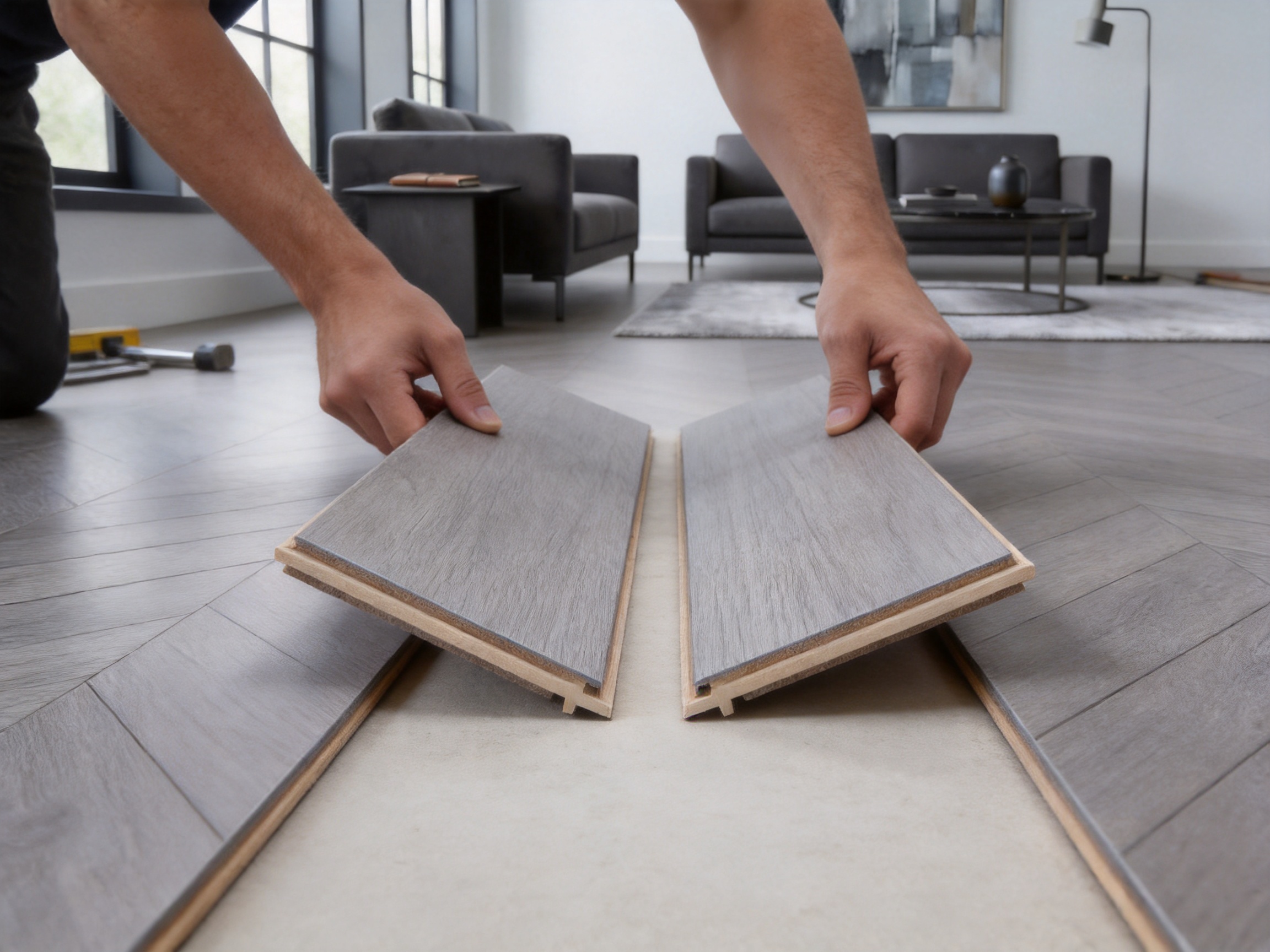
The supplied product information identifies a click-lock system on four sides and a click-lock DIV installation method. A click system can simplify assembly by allowing planks to connect mechanically without glue between the individual boards. This may reduce installation time, improve alignment, and make the process more accessible for qualified installers familiar with floating wood flooring.
Click-lock construction can be advantageous in commercial projects where schedules are tight. Retail stores, hotel renovations, offices, and showrooms often need to minimize downtime. A well-designed locking profile helps installers create a stable pattern efficiently, although the subfloor still needs to be properly prepared and the installation must follow the relevant technical instructions.
The floating installation method may also simplify future access in specific project conditions. However, it should not be assumed that every site is suitable for floating installation. Subfloor flatness, moisture levels, room size, expansion requirements, acoustic expectations, and local building regulations must all be evaluated. The manufacturer or project engineer should confirm whether floating installation, full-surface bonding, or another method is appropriate for the selected construction.
V-beveling on the profile can emphasize the boundary of each plank. In a herringbone or chevron pattern, this detail gives the geometry more definition and helps individual units remain visually legible. The result is a parquet floor with a stronger architectural expression rather than a completely seamless visual field.
One of the principal advantages of this flooring platform is its ability to move beyond a single stock appearance. The product content identifies customizable parquet sizes and colors, and the technical data provides several adjustable options. This makes the product suitable for projects with specific design standards, private-label requirements, or regional market preferences.
Color customization can range from subtle changes in grey value to warmer oak tones, smoked effects, natural finishes, or deeper contemporary shades. A designer may require a very light grey for a gallery-like interior, a medium greige for a hospitality space, or a more natural oak color for a residential collection. Color development should be evaluated through physical samples because timber species, grain direction, veneer selection, coating type, and lighting conditions all influence the final appearance.
Surface texture is another important customization area. Smooth sanding supports a clean and refined visual language. Wire brushing can enhance the grain and introduce tactile depth without making the surface appear heavily distressed. Hand scraping creates a more artisanal appearance and may be selected for hospitality or luxury residential schemes seeking a crafted character.
Finishing systems can also be selected according to the desired balance of appearance, maintenance, and project use. UV lacquer generally provides a controlled factory-applied protective surface. UV oil can preserve a more natural visual quality while providing a different maintenance profile. Wood wax oil may be chosen when the project prioritizes a softer, more organic finish. Each option should be assessed for cleaning procedures, repair expectations, sheen, texture, and compatibility with the intended traffic level.
Wear-layer thickness options of 2 mm, 3 mm, 4 mm, and 6 mm offer further flexibility. A thicker wear layer may support additional future refinishing potential, depending on the total construction and manufacturer instructions. Buyers should not select wear-layer thickness solely by assuming that thicker is always better. The appropriate choice depends on the construction, installation method, expected traffic, maintenance plan, and project budget.
Compared with ordinary straight-plank flooring, herringbone parquet offers a stronger visual identity. Straight planks can create a calm and linear appearance, but parquet introduces a more deliberate architectural pattern. This is useful in projects that need a memorable interior without relying on elaborate wall finishes or decorative materials.
Compared with highly glossy flooring, the futuristic matte finish offers more controlled reflections. It can reduce glare under spotlights and large areas of artificial illumination, which is beneficial in showrooms, hospitality settings, and contemporary homes with extensive glazing. The low-sheen surface also aligns with current preferences for tactile, natural-looking materials.
Compared with heavily rustic or strongly distressed flooring, the light-grey design delivers a more precise and restrained appearance. It can appeal to customers who want real wood but prefer a cleaner surface with less visible aging, knots, or dramatic color variation. The result is a floor that supports modern furniture and architectural lines rather than dominating them.
Compared with rigidly standardized imported collections, a customizable manufacturing program can offer more control over dimensions, colors, grades, surface textures, coating systems, and packaging. This is valuable for distributors that need a differentiated product range or for designers whose project specifications do not fit standard retail formats.
Compared with flooring supplied without a coordinated production system, a manufacturer with experience in doors, cabinets, and other interior wood products can offer a broader understanding of interior material coordination. Wood tone, grain direction, coating sheen, and edge details can potentially be developed across several product categories, helping a project achieve a more coherent interior language.
In luxury residences, flooring must combine everyday comfort with a carefully considered appearance. DF-Y1810 is suitable for living rooms, bedrooms, private studies, dressing areas, studios, and selected entrance spaces where a contemporary atmosphere is desired. Its light-grey tone can make smaller rooms feel more open, while the herringbone arrangement provides enough detail to avoid a flat or anonymous surface.
The design can be coordinated with low-profile furniture, sculptural lighting, neutral rugs, stone islands, black-framed glass, and natural textiles. In a minimalist interior, the floor can act as the main decorative element. In a more layered interior, it can serve as a quiet foundation for artwork, furniture, and architectural features.
For residences with connected rooms, the floor can help create visual continuity. However, the pattern direction should be planned carefully in relation to doorways, corridors, staircases, and changes in room geometry. A professional layout drawing is recommended before installation, particularly when several spaces meet at different angles.
Daily care is straightforward when the floor is protected from excessive moisture, abrasive particles, and prolonged direct sunlight. Dry mopping or light wiping is recommended for routine maintenance. Felt pads beneath furniture, entrance mats, and prompt removal of spills can help preserve the finish and reduce surface wear.
Commercial environments often use flooring to communicate brand values before a visitor interacts with staff or products. The light-grey matte finish can support a premium, modern, and technologically aware image. In a product showroom, it provides a sophisticated base that does not distract from furniture, fashion, automobiles, lighting, or interior accessories.
Hotel lobbies benefit from flooring that creates a strong first impression while remaining compatible with seating groups, reception counters, decorative lighting, and circulation routes. The herringbone geometry can guide movement toward a reception desk or define a lounge zone within a larger open plan. Where traffic is higher, the project should specify the correct wear layer, finish, installation system, and maintenance schedule.
In offices, creative studios, and contemporary restaurants, the floor can soften the hardness of glass, concrete, and metal. Its natural material character adds warmth without undermining a modern design concept. Acoustic underlays and appropriate installation details should be evaluated where sound control is an important performance requirement.
For commercial projects, procurement planning is as important as the visual design. Batch approval, lead-time coordination, spare material allowances, carton labeling, installation drawings, and replacement procedures should be agreed in advance. A manufacturer with export experience and structured quality inspection can help reduce uncertainty across these stages.
The supplier behind the product was founded in 1999 and has more than two decades of experience in wood manufacturing. Its production facilities cover approximately 20,000 square meters, and its annual capacity is stated as approximately 2,400,000 square meters of flooring and 5,000 sets of wooden doors. This scale supports both standard product manufacturing and project-based customization.
Large capacity matters because a flooring specification may need to be repeated across multiple phases, buildings, or markets. A small initial sample is not enough to demonstrate supply capability. The manufacturer must be able to source consistent materials, reproduce approved colors, maintain dimensional control, and schedule production without compromising inspection standards.
The company also reports more than ten years of export experience and cooperation with over 100 global partners across Europe, North America, and Southeast Asia. International experience can contribute to better documentation, packaging coordination, communication across time zones, and familiarity with the requirements of distributors, contractors, architects, and developers.
German imported production lines and automated quality-control systems are identified as part of the manufacturing infrastructure. Modern equipment can improve the consistency of machining, sanding, profiling, and finishing. Automation is particularly useful for click-lock flooring, where small deviations in joint geometry can affect installation quality. It also supports repeatability when a customized collection is reordered.
At the same time, parquet flooring benefits from human expertise. Visual grading, veneer selection, pattern assembly, color assessment, and final inspection require trained judgment. The combination of automated manufacturing and skilled craftsmanship is therefore a significant advantage over production methods that depend excessively on either manual labor or uncontrolled mass processing.
A reliable flooring product is the result of several controlled stages rather than one final inspection. The stated manufacturing process includes a three-step quality inspection system. While the exact internal checkpoints should be confirmed for each order, a robust inspection program commonly covers incoming materials, in-process production, and finished goods.
Incoming material inspection can evaluate species, moisture content, grain direction, veneer quality, core construction, and visible defects. This stage is essential because inconsistent raw material cannot be fully corrected later through finishing. For light-grey flooring, the selection of suitable oak and the control of natural variation are especially important.
In-process inspection may review plank dimensions, squareness, thickness, profile accuracy, locking performance, surface flatness, sanding quality, and color development. Click systems require particular attention because the four-sided connection must function consistently across a large quantity of pieces.
Finished-product inspection can include visual grading, coating appearance, packaging, labeling, carton quantity, and random dimensional checks. The goal is to ensure that the delivered product corresponds with the approved sample and technical specification. For large projects, quality records and batch references can also help with traceability.
The company identifies compliance with CE, FSC, CARB P2, and ISO 9001 standards or certification frameworks within its broader product offering. Certification scope can vary by product, construction, market, and order, so buyers should request current certificates and verify that they apply to the exact DF-Y1810 configuration being purchased.
Wood flooring can contribute to responsible interior design when the timber source, manufacturing process, product life, and disposal considerations are managed appropriately. The supplied product information identifies FSC-certified sustainable material. Forest certification can help demonstrate that wood is sourced through a recognized chain-of-custody system, subject to the scope of the relevant certificate.
Responsible sourcing should be considered alongside durability. A floor that remains attractive and serviceable for many years can reduce the need for frequent replacement. The ability to customize wear layers, finishes, and construction can also help match the product to the actual requirements of a project rather than using an unsuitable specification.
Manufacturing efficiency is another part of sustainability. Automated production, controlled cutting, and careful grading can reduce avoidable waste. Packaging design, shipment planning, and responsible use of coatings should also be considered during procurement. For architects and developers preparing environmental documentation, the manufacturer should provide the applicable certificates, material declarations, and test reports for the selected product.
It is important to distinguish general corporate compliance from product-specific evidence. Buyers should request documentation for the exact species, core, finish, adhesive system, and market destination. This approach provides greater confidence than relying only on broad sustainability statements.
Many flooring buyers are not simply looking for an existing catalog item. Distributors may need a private-label collection, architects may require a project-specific color, and developers may want a standardized floor across several building types. OEM and ODM support can make these requirements easier to manage.
OEM production allows a buyer to supply or approve a brand identity, packaging system, labeling structure, and product range while using the manufacturer’s production resources. ODM development goes further by supporting the creation or modification of a product based on a design brief. For DF-Y1810, this may include adjusting the grey tone, selecting a different veneer grade, changing the texture, modifying the wear layer, or developing a related herringbone or chevron format.
The reported 72-hour rapid prototyping capability can be valuable during the early design stage. A fast prototype does not replace full testing or production approval, but it can help a project team evaluate proportion, color, grain, finish, and pattern direction before committing to a large order.
Successful customization requires a clear approval process. Buyers should define the reference sample, acceptable color tolerance, surface grade, dimensions, packaging requirements, installation method, and inspection criteria. Physical samples should be viewed under representative lighting because the same grey tone can appear warmer or cooler depending on surrounding materials and light sources.
Even a well-manufactured floor can perform poorly if the installation environment is not prepared correctly. The subfloor should be clean, dry, structurally sound, and sufficiently flat for the selected construction. Moisture testing should be completed according to the installation method and local standards.
Wood flooring should be delivered to a protected site and allowed to acclimatize as instructed by the manufacturer. Cartons should remain unopened until the appropriate stage unless the technical instructions require otherwise. The building should have stable interior conditions, and wet trades should be substantially complete before flooring installation begins.
Expansion gaps must be provided at walls, columns, thresholds, and other fixed elements. The required gap depends on the product construction, room dimensions, climate, and installation method. Skirting boards, transition profiles, door frames, and built-in cabinets should be coordinated so that movement allowances are not accidentally blocked.
The herringbone layout should be marked from a carefully established centerline or design axis. In irregular rooms, the installer may need to determine which walls or architectural features should control the pattern. A small layout error can become increasingly visible as the pattern extends, so dry planning and sample placement are recommended before permanent installation.
Left and right planks should be identified and distributed correctly. Installers should inspect each piece before placing it and set aside any item that does not meet the approved visual or dimensional standard. Mixing cartons during installation helps create a balanced natural appearance.
Routine maintenance for the matte parquet floor should begin with prevention. Entrance mats can capture grit that might otherwise act as an abrasive under footwear. Furniture should be fitted with suitable felt protectors, and heavy items should be lifted rather than dragged across the surface.
Dry mopping or vacuuming with a floor-safe attachment is appropriate for everyday dust and particles. Light wiping can be used when necessary, but excessive water should be avoided. Standing moisture may affect wood components, joints, surface coatings, or subfloor conditions.
Cleaning products should be compatible with the specified finish. A UV lacquer, UV oil, and wood wax oil do not necessarily require the same maintenance products. Strong detergents, abrasive pads, steam cleaning, and unapproved polishes may change the sheen or damage the protective surface.
Direct sunlight should not be allowed to fall on the same area for prolonged periods without considering window treatments or other measures. Natural wood and colored finishes may change gradually under ultraviolet exposure. Curtains, blinds, solar-control glazing, and sensible furniture rotation can help create a more even appearance.
Spills should be removed promptly using a soft, lightly damp cloth. If a repair is needed, it should be carried out with products and procedures recommended for the actual finish. The presence of a thicker wear layer may provide additional refinishing options, but any sanding or refinishing decision should be made by a qualified professional.
Architects and interior designers need flooring information that can be translated into drawings, schedules, samples, and procurement documents. DF-Y1810 provides a defined product code, stated dimensions, pattern direction, finish concept, installation information, carton coverage, and customization options. These details make it easier to compare the product with competing materials during the specification stage.
A professional specification should identify the wood species, construction type, wear layer, finish, surface texture, dimensions, profile, locking system, installation method, color reference, certification requirements, and acceptable visual tolerances. It should also clarify whether the selected product is a solid wood construction or an engineered veneer-faced configuration, since the supplied information includes both solid wood language and engineered core options.
For competitive comparison, buyers should evaluate more than price per square meter. Important factors include material yield, carton coverage, installation labor, waste percentage, maintenance requirements, replacement availability, lead time, certification, sample consistency, and technical support. A slightly higher-quality floor may offer better value if it reduces installation problems and remains visually acceptable over a longer period.
The manufacturer’s ability to supply flooring alongside doors and custom cabinets may also support broader interior packages. Coordinated wood products can be developed with compatible colors, stains, textures, and architectural details. This can reduce the visual mismatch that sometimes occurs when separate suppliers provide flooring, doors, and cabinetry.
International projects often involve more complex supply chains than local residential orders. Goods may need to meet destination-market regulations, travel long distances, pass through multiple logistics stages, and arrive according to a fixed construction schedule. Manufacturing scale and export experience can reduce some of these challenges.
A large production facility can allocate resources for project orders while continuing to support regular distribution programs. Capacity also makes it more practical to reserve raw materials and maintain production slots for repeat orders. For a hotel group, property developer, or flooring distributor, this continuity can be as important as the appearance of the first shipment.
Export experience can contribute to more robust packing methods, carton labeling, palletization, document preparation, and communication with international partners. These operational details are not visible in a showroom sample, but they directly affect the success of a commercial project.
Global buyers should still conduct their own due diligence. They should review production samples, request test reports, confirm certification scope, clarify warranty terms, and agree on inspection procedures. A strong manufacturing platform creates a better foundation for cooperation, but transparent project documentation remains essential.
Competing parquet products generally fall into several categories: low-cost standardized flooring, premium solid wood parquet, engineered parquet with a thin veneer, and highly customized architectural collections. DF-Y1810 is positioned toward the design-led and customizable segment, combining natural White Oak aesthetics with a controlled modern finish and flexible technical options.
Against low-cost standardized products, its advantages include greater design specificity, a distinctive light-grey color direction, selectable textures and coatings, and support for customized dimensions or grades. Against conventional solid parquet, an engineered configuration may offer greater dimensional flexibility in certain environments, although the correct construction must be selected for the project. Against thin decorative flooring, a thicker selectable wear layer may provide more substantial material value and potential long-term service benefits.
The product also competes through manufacturing support. Rapid prototyping, OEM and ODM capability, automated quality control, export experience, and broad production capacity can be important differentiators for professional buyers. These services help transform a floor from a one-time purchase into a repeatable collection or project solution.
However, the most appropriate competitor comparison should be based on verified specifications. Buyers should compare the actual wear layer, core construction, moisture performance, finish durability, locking profile, formaldehyde emissions, certification, warranty, packaging, and installation requirements. Visual similarity alone is not enough to establish equivalent performance.
Before ordering, request a physical sample of the exact final construction and finish. The sample should include the approved light-grey tone, matte sheen, surface texture, edge profile, and pattern components. Digital images are useful for initial selection, but they cannot fully represent timber variation or reflectivity.
Confirm the final product structure in writing. In particular, clarify whether the order will use a solid wood base, a plywood core with a White Oak face, or another engineered construction. Confirm the selected wear-layer thickness, finish type, texture, plank size, angle, locking profile, and installation method.
Review the carton quantity and coverage when calculating project quantities. Allowances should account for cutting waste, pattern layout, access restrictions, future repairs, and possible batch replacement. Herringbone and chevron installations may require a different waste allowance from straight-plank floors because of the directional pattern and edge cuts.
Establish a quality-control plan for production. This may include a pre-production sample, first-article approval, in-process photographs or reports, pre-shipment inspection, carton labeling review, and a retention sample. The inspection plan should define measurable requirements as well as visual standards.
Finally, coordinate the floor with the wider interior package. Door thresholds, cabinetry plinths, stair nosings, skirting, heating systems, acoustic underlays, and transitions should be reviewed before installation. Early coordination reduces the risk of last-minute adjustments that could compromise the parquet layout.
DF-Y1810 is a White Oak herringbone parquet flooring product in a light-grey futuristic matte design. It is intended for contemporary residential and commercial interiors and can be customized in selected dimensions, colors, surface treatments, grades, and constructions.
The supplied product description identifies a solid wood base material, while the technical information for the customizable parquet platform lists sliced veneer with eucalyptus or birch plywood core options. Buyers should confirm the exact construction for their order because solid wood and engineered configurations have different technical characteristics and installation requirements.
The listed plank size is 510 × 102 × 15 mm, approximately 20.1 × 4.0 × 19/32 inch. Customized sizes may be available depending on the project and production requirements.
The product is categorized and titled as herringbone parquet flooring. The associated technical collection also lists Chevron 45-degree and 60-degree options. The final pattern, angle, and left-right plank arrangement should be confirmed during technical approval.
The listed options include UV lacquer, UV oil, and wood wax oil. The supplied design uses a futuristic matte appearance, but the final finish system should be stated in the approved order specification.
Yes. The listed surface texture options include wire brushed, hand scraped, and smooth sanded. Smooth sanding is appropriate for a cleaner minimalist appearance, while brushing or scraping can add more tactile and visual depth.
The listed options are 2 mm, 3 mm, 4 mm, and 6 mm. The most suitable thickness depends on the construction, installation system, expected traffic, maintenance plan, and refinishing requirements.
Customization of colors is available. Buyers can request a different grey value, a warmer or cooler tone, or another wood-color direction, subject to sample development and production approval.
The flooring is suitable for modern residences, living rooms, bedrooms, studios, commercial showrooms, hotel lobbies, offices, and other design-led interiors. The final application should be checked against traffic levels, moisture exposure, local regulations, and the selected construction.
The supplied information lists a four-sided click system and floating installation for the relevant configuration. Site conditions must be assessed before installation, and the manufacturer’s instructions should be followed for acclimatization, subfloor preparation, expansion gaps, underlay, and pattern layout.
Routine care includes dry mopping or light wiping, prompt removal of spills, protection from abrasive dirt, and the use of furniture felt pads. Prolonged direct sunlight and excessive water should be avoided. Cleaning products must be compatible with the specified surface finish.
The product information identifies FSC-certified sustainable material. Buyers should request the current certificate and verify that its scope covers the specific material and product configuration being purchased.
The manufacturer offers OEM and ODM customization. This can support private-label programs, custom colors, project-specific dimensions, packaging development, and coordinated product collections, subject to minimum order quantities and technical approval.
Its main points of distinction are the light-grey futuristic matte design, White Oak character, handcrafted splicing emphasis, click-lock profile, customization options, and access to a large manufacturing and export platform. The final advantage should be evaluated against the verified specification and performance requirements of each competing product.
White Oak Herringbone Light Grey Futuristic Matte Parquet Flooring offers a contemporary interpretation of a classic architectural pattern. Its cool grey tone, restrained matte surface, and natural oak grain make it suitable for interiors that value clarity, geometry, and material authenticity. The product can support luxury residences, modern studios, showrooms, hotel lobbies, offices, and other spaces where flooring is expected to contribute actively to the design concept.
Its competitive value extends beyond appearance. The supplied technical platform includes click-lock installation, four-sided profiling, selectable wear layers, multiple finishing systems, surface textures, veneer grades, core options, and custom sizes and colors. These choices allow professional buyers to develop a specification that is more closely matched to the visual, technical, and commercial needs of a project.
The manufacturing organization further strengthens the offer through long-term industry experience, a 20,000-square-meter production base, substantial annual flooring capacity, international export experience, German production lines, automated quality control, three-step inspection, OEM and ODM support, and rapid prototyping. For distributors, architects, contractors, and developers, these capabilities can help improve supply continuity and reduce the risks associated with customized flooring programs.
As with any timber product, successful performance depends on selecting the correct construction, preparing the site, following the approved installation method, and maintaining the surface appropriately. When these factors are addressed through clear technical documentation and professional installation, DF-Y1810 provides a durable and visually distinctive foundation for contemporary interior architecture.
1. Product technical information supplied for White Oak Herringbone Light Grey Futuristic Matte Parquet Flooring, product code DF-Y1810.
2. Manufacturer-provided specifications for parquet dimensions, wear layers, veneer options, core construction, finishes, textures, click systems, packaging, and installation methods.
3. Forest Stewardship Council. Principles and Criteria for Responsible Forest Management.
4. ISO 9001. Quality Management Systems — Requirements.
5. CARB Phase 2. Airborne Toxic Control Measures for Composite Wood Products.
6. European construction product conformity principles applicable to wood flooring products, subject to product scope and destination-market requirements.
7. General professional guidance for wood flooring acclimatization, subfloor preparation, expansion allowances, installation, cleaning, and maintenance.

We provide customers with sustainable and eco-friendly
engineered wood solutions and services.
Choose DEIF for the perfect blend of
performance and aesthetics.
