


 English
 Español
 عربى
عربى

Get Social
Choose DEIF for the perfect blend of
performance and aesthetics.
 Get Free Sample

Content
In premium interior design, flooring is not merely a surface; it is the foundation of atmosphere, comfort, durability, and long-term value. Deep red brown high gloss solid wood flooring offers a rare combination of strong visual depth, natural hardwood character, refined surface reflection, and dependable performance for residential and light commercial interiors. Designed for luxury homes, boutique hotels, showrooms, premium retail spaces, and high-end private rooms, this flooring solution brings together the warmth of natural wood and the sophistication of a polished contemporary finish.
The featured product, DS-6005 Kasai Deep Red Brown High Gloss Solid Wood Flooring, belongs to the Solid Taun Wood Flooring collection and is made with Taun wood, botanically known as Pometia pinnata. It is designed as a 100% solid hardwood flooring product with a solid wood core, E0 environmental standard, tongue-and-groove profile, customizable surface texture and finish options, and compatibility with underfloor heating when installed and maintained under proper conditions. Its deep red brown tone and high-gloss lacquered surface create an elegant and dramatic design effect, making it particularly suitable for spaces that require a luxurious focal point.
Unlike flooring products that rely mainly on printed decorative layers, thin veneers, or synthetic surfaces, this solid wood flooring is built from real hardwood throughout the plank. That difference matters. A solid hardwood plank has natural depth, authentic grain variation, and a tactile warmth that artificial alternatives cannot fully reproduce. The product is also positioned for customers who value certification, environmental performance, customization, and manufacturing consistency. With CE and FSC certification support, E0 emission control, strict quality inspection, and advanced production capacity, it provides a practical and visually powerful option for architects, distributors, contractors, and property owners seeking reliable wood flooring for high-end projects.
Kasai Deep Red Brown High Gloss Solid Wood Flooring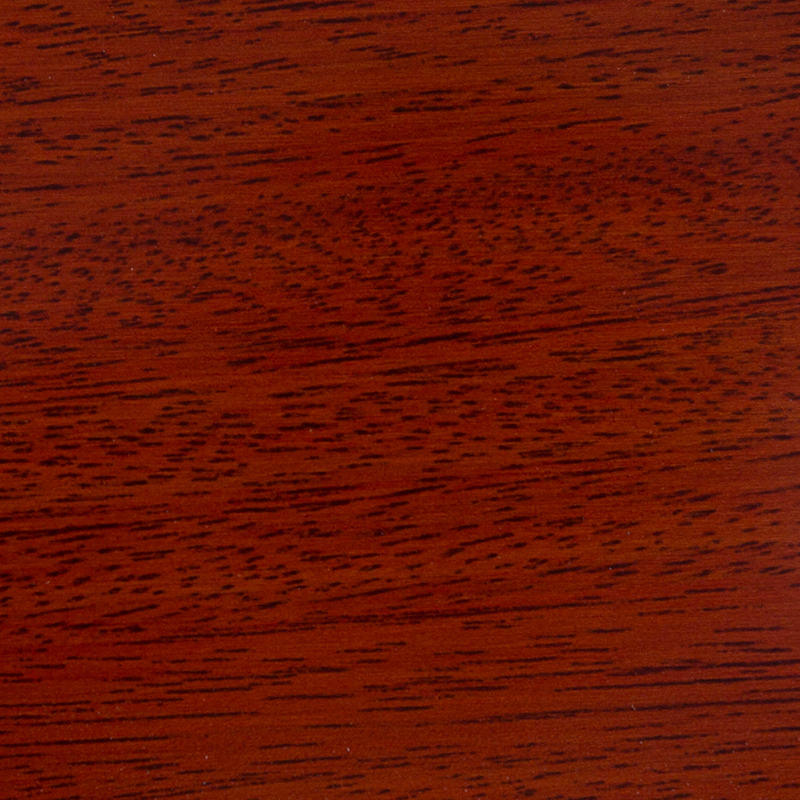
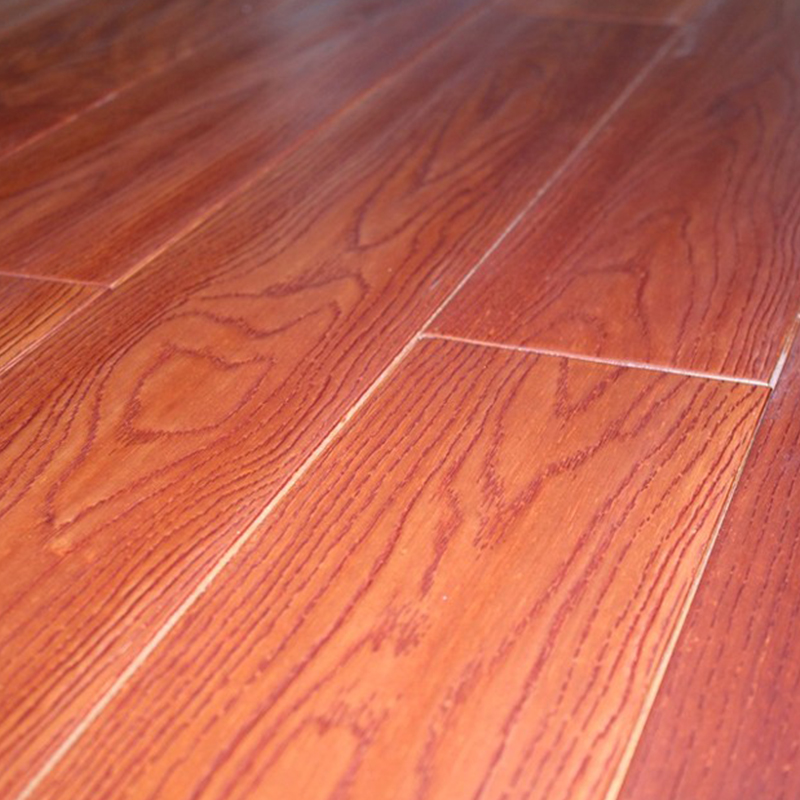
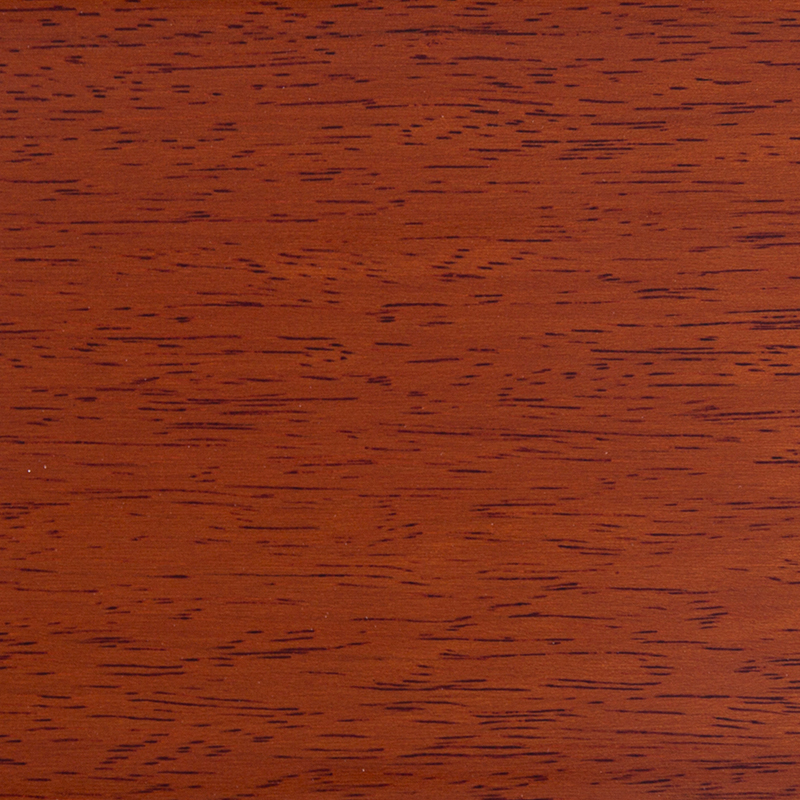
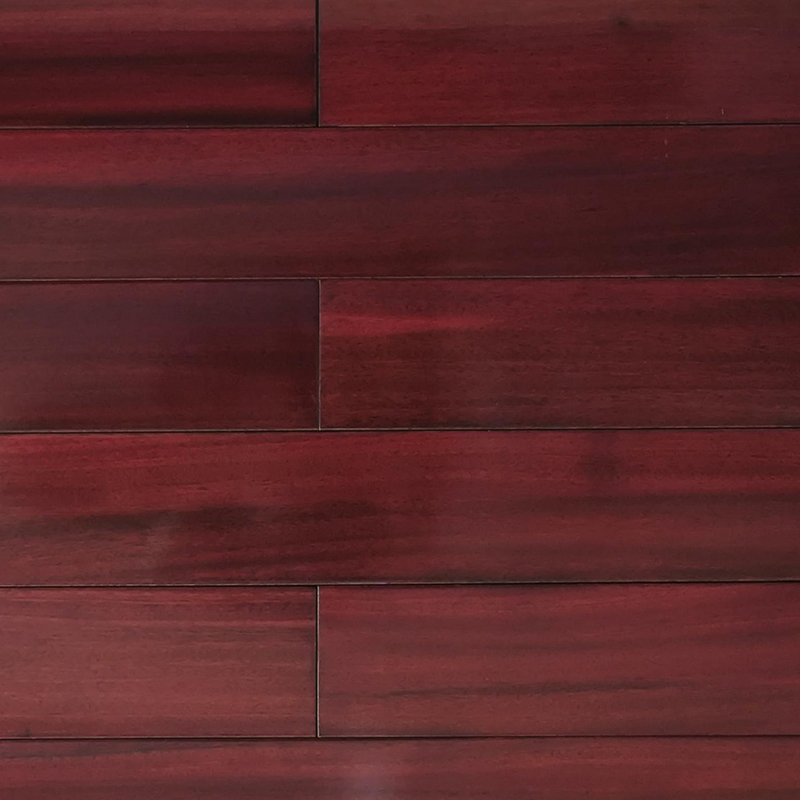
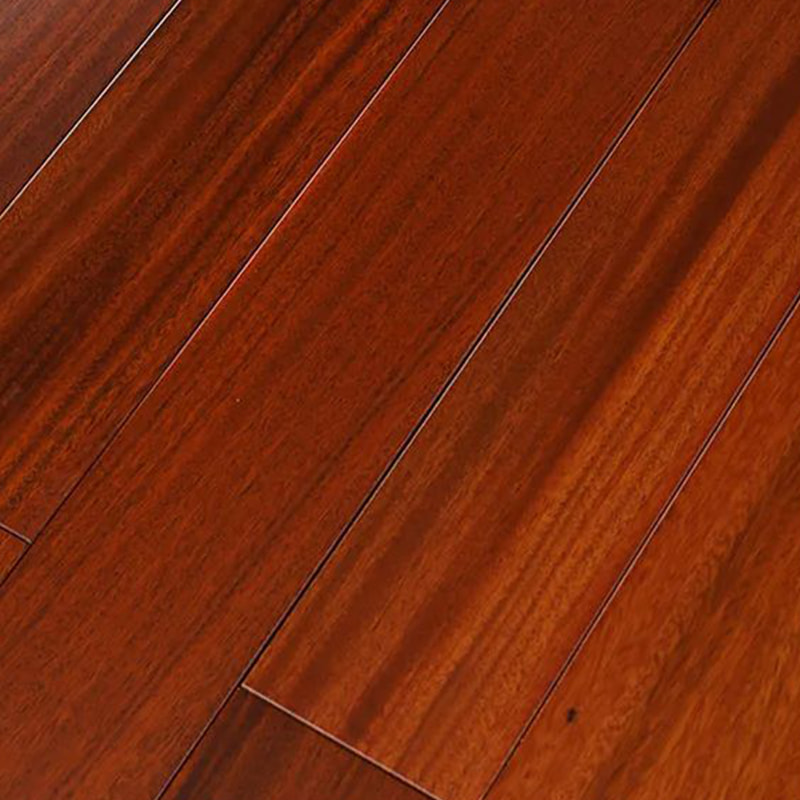
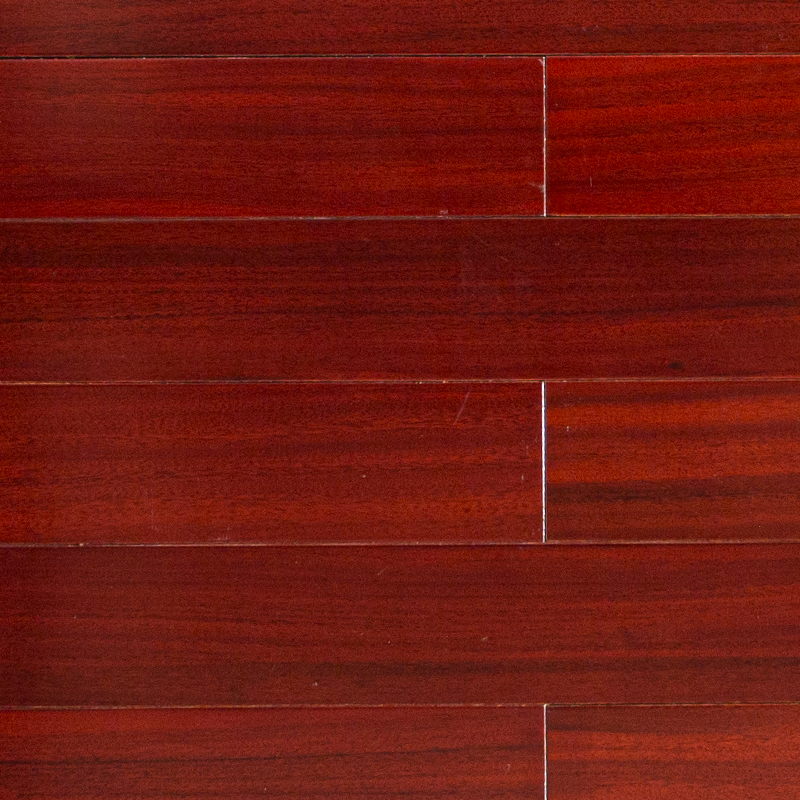
The DS-6005 model is a high-gloss deep red brown solid wood flooring product with a refined and polished appearance. The color is one of its most defining features. Deep red brown creates a strong sense of visual richness, giving interiors a warmer and more dignified personality than many pale or neutral flooring tones. In large living rooms, hotel lobbies, private clubs, premium offices, and luxury showrooms, this type of color can help anchor the overall design scheme and provide a sense of permanence.
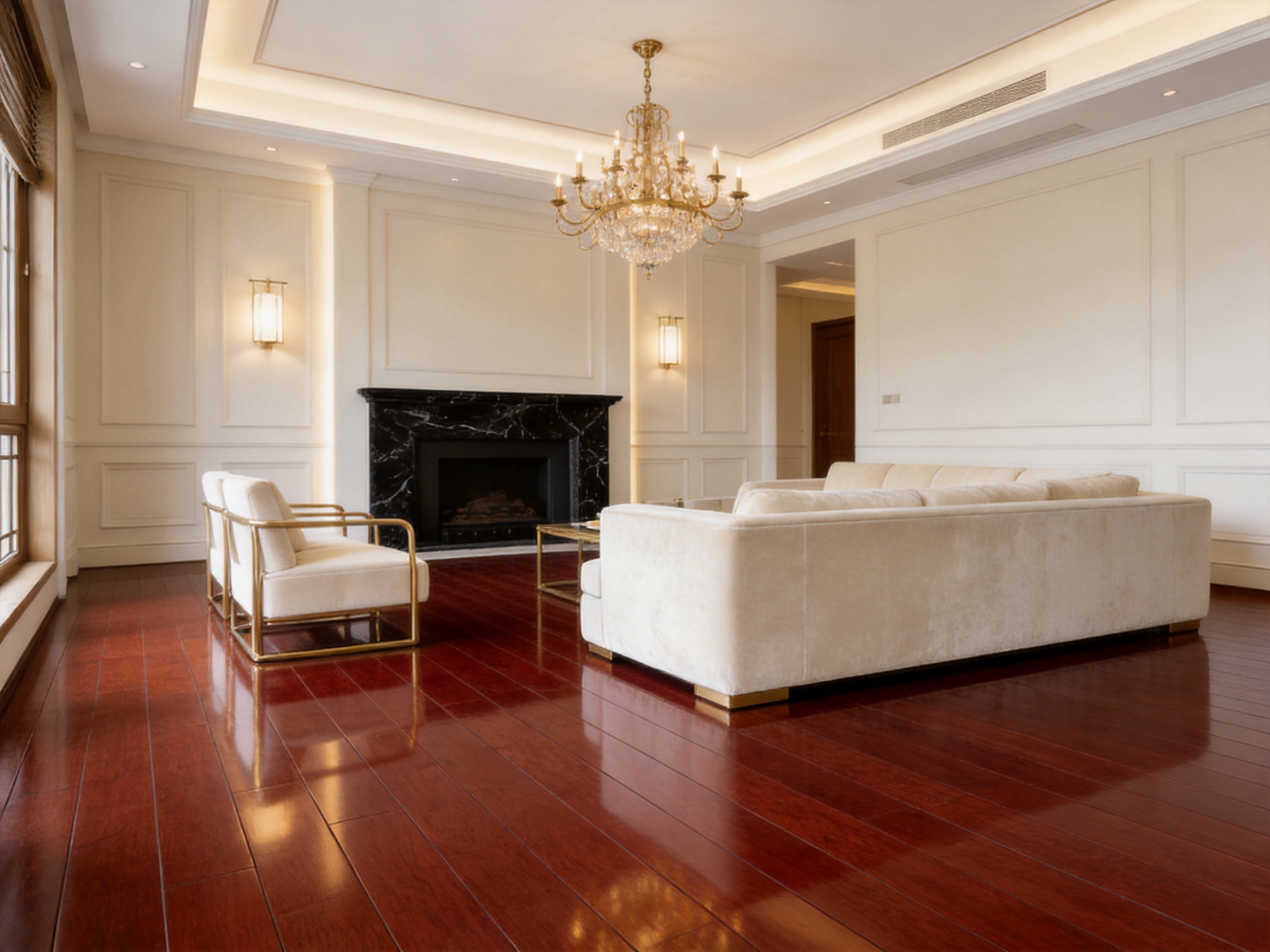
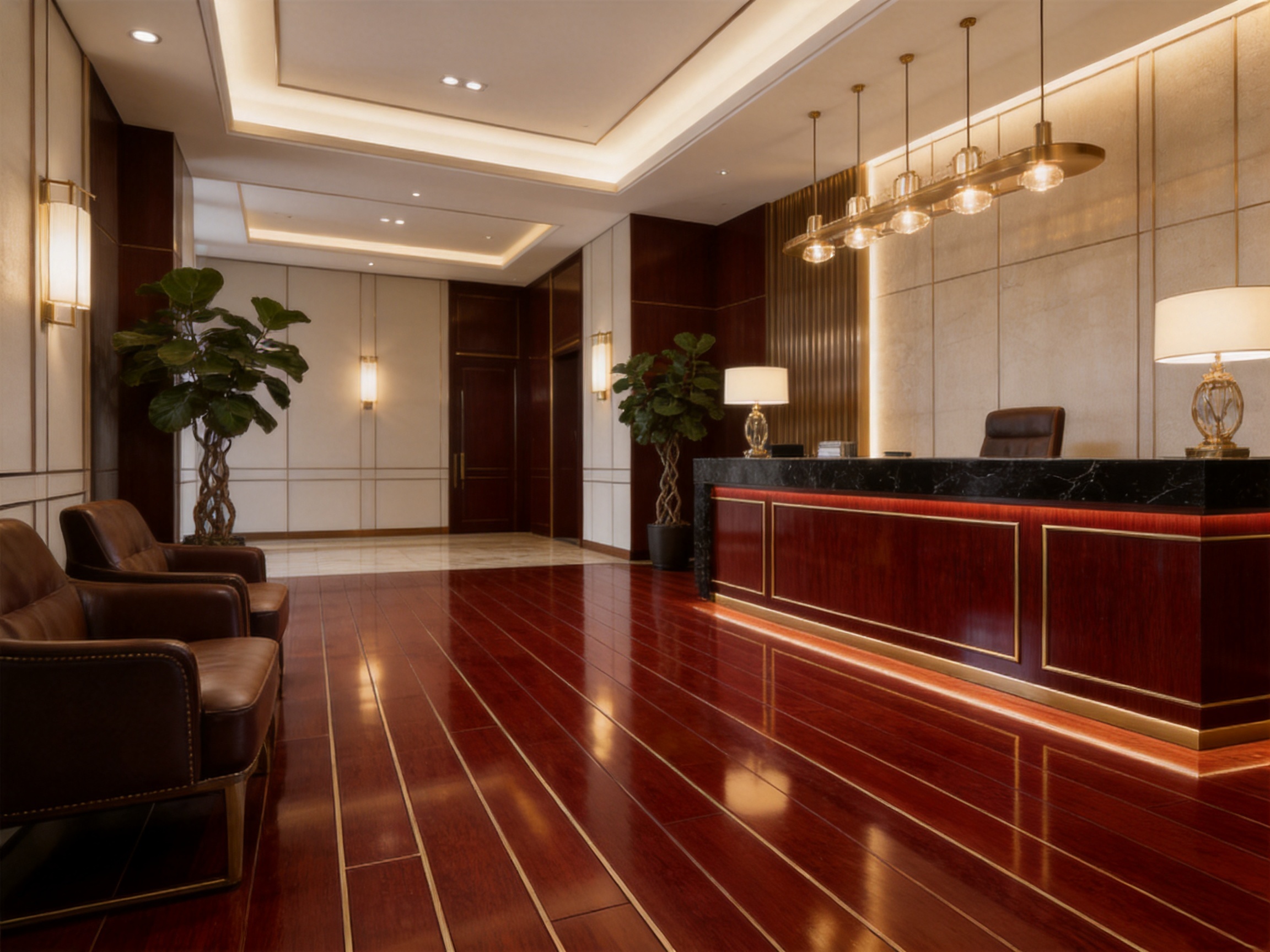
The high-gloss finish further enhances this effect. A glossy surface reflects light and emphasizes spatial brightness, which is especially valuable in interiors using marble, metal, glass, velvet, leather, and dark decorative panels. When paired with black marble textures, gold decorative elements, dark cabinetry, or velvet furniture, the flooring can become part of a layered luxury environment rather than simply a background material. The result is a floor that supports both classic elegance and modern opulence.
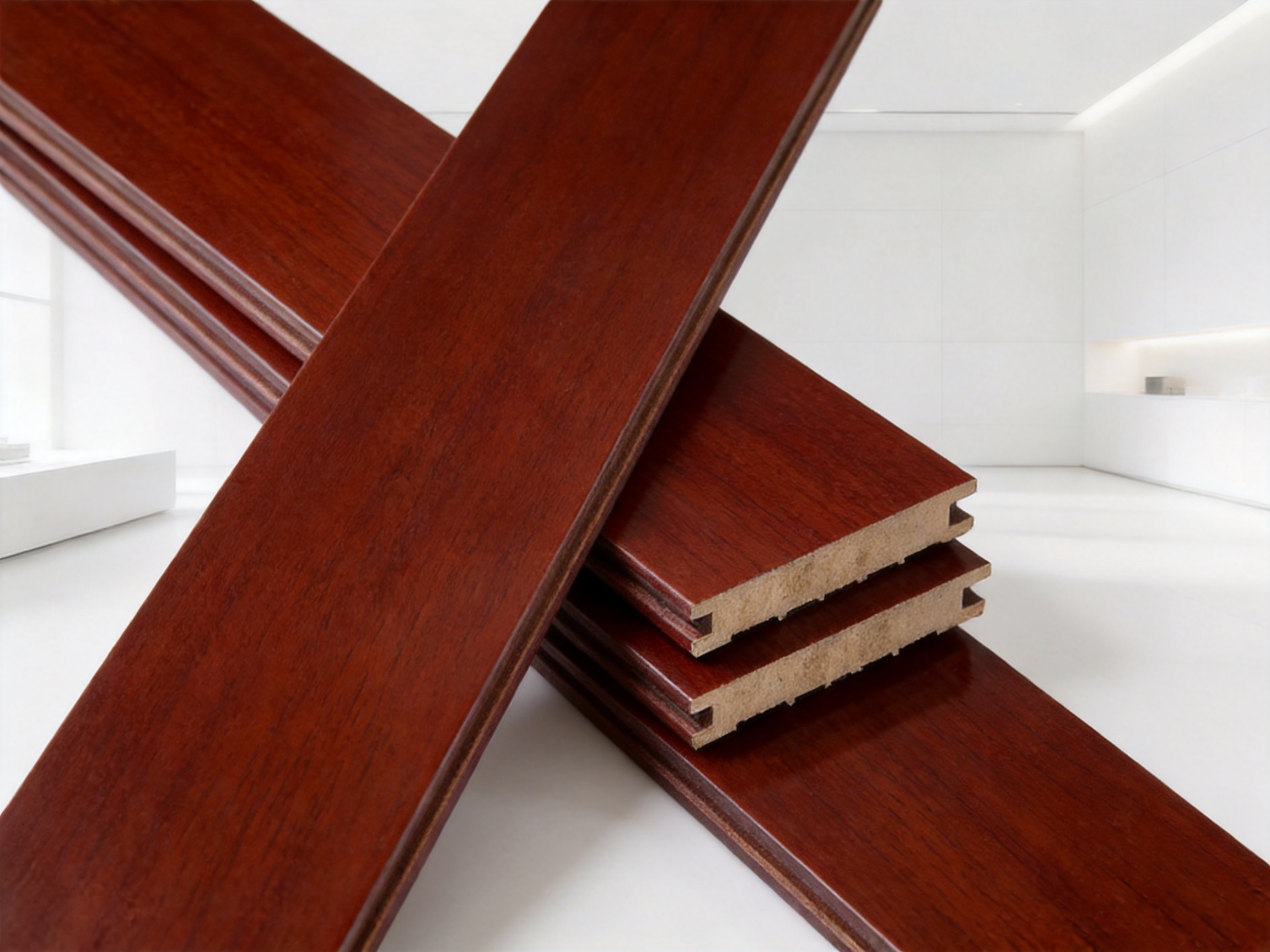
From a construction perspective, the flooring uses a solid hardwood core. This means the structure is not based on plywood, HDF, SPC, or laminate substrates. The plank itself is made of real wood, providing a natural underfoot feel and long-lasting material integrity. For customers comparing flooring categories, this is a major advantage. Laminate and vinyl can be practical in some settings, but they cannot offer the same authentic grain, long-term natural aging, or refinishing potential associated with solid hardwood. Engineered wood can be stable and attractive, but it usually includes multiple layers and a limited top veneer thickness. Solid wood, by contrast, delivers full-depth natural material.
The product is classified under Solid Taun Wood Flooring. Taun is known as a dense hardwood species, and density is important for wear resistance, scratch resistance, and daily durability. In high-end interiors, where the floor must maintain appearance while receiving frequent foot traffic, furniture movement, and routine cleaning, a dense hardwood base provides a stronger foundation for long-term performance. The flooring is designed for residential and light commercial use, including living rooms, villas, showrooms, hotel spaces, and premium retail environments.
The following table summarizes the major technical and commercial specifications of the product. These specifications are important for project planning, logistics, installation design, procurement comparison, and quality evaluation.
| Product Model | DS-6005 |
| Product Type | High Gloss Solid Wood Flooring |
| Collection | Solid Taun Wood Flooring |
| Wood Species | Taun, Pometia pinnata |
| Dimensions | 35.83 in x 4.80 in x 0.71 in |
| Core Structure | 100% Solid Hardwood Core |
| Surface Texture | Customizable: Wire Brushed, Handscraped, or Smooth Sanded |
| Surface Finish | Customizable: UV Lacquer, UV Oil, or Hardwax Oil |
| Featured Finish | Deep Red Brown High Gloss |
| Profile | Tongue-and-Groove on Four Sides, Micro-bevel |
| Locking System | Tongue-and-Groove |
| Grade | AB Grade, Select |
| Pieces Per Carton | 14 |
| Coverage Per Carton | 1.55 sq.m, 16.73 sq.ft |
| Weight Per Carton | 19.6 kg |
| Moisture Content | 8% to 10%, plus or minus 2% |
| Installation Methods | Glue or Staple |
| Environmental Standard | E0, Formaldehyde Emission ≤ 0.05 mg/m³ |
| Certifications | CE and FSC Supported |
| Applications | Luxury Residential, Boutique Hotel, Showroom, Premium Retail, Light Commercial |
The main design concept of this flooring is to create a luxury focal point. Many flooring products are designed to remain neutral and unnoticed, but this product is intended to contribute actively to the interior identity. Its deep red brown tone produces a rich visual base, while the high-gloss surface introduces reflection, sharpness, and dramatic light movement.
In a villa living room, the flooring can work as a warm and impressive foundation for premium furniture. In a showroom, it can help products appear more valuable by creating a refined environment around them. In a hotel lobby or boutique hospitality space, the reflective quality can enhance the sense of scale and light. In premium retail, the glossy red brown floor can convey high value and strengthen brand presentation.
This flooring is especially effective when combined with dark stone, brass or gold metal accents, deep green or navy textiles, cream walls, and curated lighting. The contrast between polished wood and other luxury materials creates layered richness. For example, a black marble reception counter on this floor can appear more grounded and elegant. Velvet seating gains a warmer background. Decorative lighting reflects subtly from the floor surface, contributing to a more immersive and atmospheric space.
The micro-bevel profile also supports the design. Micro-beveled edges visually define each plank without creating large grooves that collect dirt. This detail allows the floor to show its plank structure while maintaining a smooth premium impression. The result is suitable for contemporary luxury, transitional interiors, upscale classic interiors, and hospitality projects seeking a prestigious finish.
The choice of Taun wood is one of the product’s essential advantages. Taun, or Pometia pinnata, is valued for its density, natural character, and suitability for durable wood flooring applications. In flooring, the wood species determines not only appearance but also mechanical behavior. A dense hardwood species can better withstand daily wear than softer alternatives, especially in areas where furniture, footwear, and movement place repeated pressure on the surface.
Natural hardwood also provides grain variation that gives each plank individuality. Unlike printed flooring that repeats a fixed pattern, solid wood has authentic texture, color movement, and natural depth. This creates a more premium and less artificial appearance. In high-end interiors, this authenticity is important because clients and visitors often notice the difference between real material and imitation material, even if they cannot immediately explain it. Natural wood communicates quality through touch, sound, light reflection, and subtle variation.
The solid wood core offers additional benefits. It provides a warm underfoot feel, helping interiors feel more comfortable and inviting. Wood is naturally less cold than stone or tile, which is especially important in living rooms, bedrooms, private lounges, and hospitality areas where comfort is part of the user experience. When used with compatible underfloor heating systems and correct installation conditions, the flooring can support comfort during colder seasons while preserving a natural surface feel.
Compared with many competitor products using multi-layer substrates or synthetic materials, a solid Taun wood floor offers a more authentic material story. It is not a decorative image over a core; it is hardwood through the plank. For luxury projects, this distinction supports higher perceived value and longer product relevance. Trends in color and surface finish may change, but natural hardwood remains a long-term interior material associated with permanence and craftsmanship.
The surface finish is one of the most visible and performance-related features of this product. The flooring uses an 8-layer UV high-gloss lacquer coating process for the featured high-gloss version. UV lacquer is widely used in premium wood flooring because it can provide a cured protective layer that improves wear resistance, enhances surface stability, and creates a clear, refined appearance.
An 8-layer coating system is designed to build protection step by step. Each layer contributes to the final appearance and durability. Proper sanding between coating stages can improve adhesion and smoothness, while controlled UV curing helps create a stable finish. The result is a glossy surface that strengthens the reflective effect of the deep red brown color. This reflection gives the floor a more luxurious look than standard matte or low-gloss finishes.
High gloss flooring requires careful production control. Imperfections are more visible on a glossy surface than on textured or matte surfaces. Dust, uneven sanding, coating marks, inconsistent color, and small defects can be amplified by reflection. Therefore, producing a high-gloss solid wood floor demands stricter surface preparation, controlled coating conditions, precision sanding, and careful quality inspection. This is one area where advanced manufacturing makes a meaningful difference.
The UV lacquer coating improves scratch resistance and surface protection for daily use. While no wood flooring surface is completely scratch-proof, a high-quality lacquer finish helps reduce wear from ordinary foot traffic and routine activities. For luxury residential and light commercial spaces, this balance between beauty and performance is essential. The surface must be attractive enough for high-end design while also durable enough for practical use.
Customers can also choose other finish systems depending on project needs, including UV oil and hardwax oil. UV oil can provide a more natural wood feel, while hardwax oil can create a softer, more matte appearance with a repairable surface character. However, the deep red brown high-gloss finish is particularly suited for dramatic luxury spaces where reflection, richness, and visual impact are primary goals.
The flooring uses a tongue-and-groove profile on four sides with a micro-bevel. This profile is a proven installation system for solid wood flooring. Accurate tongue-and-groove machining is critical because it affects seam tightness, plank alignment, installation speed, and long-term visual consistency. If the profile is poorly cut, gaps, uneven edges, difficult fitting, or movement problems can occur.
Precision cutting technology helps ensure tight seams and minimizes gaps between planks. This is especially important for high-gloss flooring because gaps and height differences may be more noticeable under reflective light. A smooth, level, and tightly connected surface supports the premium visual effect. The micro-bevel also helps manage small variations while adding a refined plank outline.
The product specifications indicate glue or staple installation methods. In practical flooring projects, proper installation method selection depends on the subfloor, room conditions, local climate, heating system, and project requirements. For solid wood flooring, professional installation is strongly recommended. The flooring should be acclimated before installation, the subfloor must be dry and flat, and moisture conditions should be controlled. When installed with care, the tongue-and-groove system provides a durable and stable floor structure.
Compared with low-cost flooring products that may use less accurate machining, this precision approach reduces installation risk. For contractors, accurate milling saves time on site. For owners, it improves the final appearance. For distributors and project managers, it reduces complaint rates and supports more predictable project delivery. The product’s carton coverage, plank dimensions, and weight also support planning for shipment, storage, and installation labor.
Environmental performance has become a core requirement in modern building materials. This product supports the E0 environmental standard, with formaldehyde emission ≤ 0.05 mg/m³. Since the flooring is made with a solid hardwood core and no composite layers, it reduces reliance on adhesive-heavy composite structures. This is a meaningful advantage when compared with many engineered, laminate, or low-cost board-based flooring options that may depend on multiple bonded layers.
For projects such as hotels, apartments, villas, offices, and retail spaces, indoor air quality is increasingly important. Designers and procurement teams often evaluate flooring not only for appearance and price but also for emissions, certifications, and compliance with regional requirements. E0 emission performance helps support healthier interior environments and provides a stronger argument for specification in quality-focused projects.
The product is also associated with CE and FSC certification support. CE certification is important for European market compliance, while FSC certification is related to responsible forest resource management. For global distributors, contractors, and architects, these certifications can simplify procurement review and support sustainability goals. Certification is not only a marketing label; it is part of a broader trust system that helps customers evaluate supply chain reliability.
Compared with uncertified competitors, a certified and compliance-oriented flooring supplier offers lower risk for project stakeholders. A low-priced floor may appear attractive at purchase, but if it lacks documentation, emission control, or reliable traceability, it can create serious problems in regulated markets or high-profile projects. By supporting recognized standards, this flooring becomes more suitable for professional procurement and international project use.
The flooring market includes many alternatives: laminate, SPC, LVT, engineered wood, bamboo, ceramic tile, and conventional solid wood. Each category has strengths, but the deep red brown high gloss solid Taun wood flooring offers a specific balance of luxury, authenticity, and performance that makes it stand out.
Laminate flooring often uses a printed image layer over an HDF core. It can be affordable and easy to install, but it lacks the authentic depth of real hardwood. Once its printed layer is damaged, the floor cannot be renewed in the same way as real wood. By contrast, solid Taun wood has natural grain throughout the plank. Its appearance is not printed, and its material value is higher. For luxury spaces, this difference is significant.
Vinyl and SPC flooring can offer water resistance and dimensional stability, but they are synthetic surfaces. In high-end interiors, synthetic flooring may not provide the same warmth, acoustic character, or prestige as solid hardwood. Deep red brown high gloss Taun flooring gives a more natural and upscale feel, especially in areas where visual impact and tactile quality matter more than waterproof performance.
Engineered wood flooring can be stable and attractive, but it typically includes a hardwood veneer over plywood or another core. The top layer thickness determines refinishing potential and long-term wear value. Solid wood flooring uses hardwood throughout the plank, giving it a more complete natural material structure. For customers who prioritize authenticity, this is a powerful advantage.
Not all solid wood flooring is equal. Lower-cost products may suffer from inconsistent drying, poor milling, weak coating, unreliable grading, or lack of certification. The DS-6005 flooring emphasizes moisture control, AB select grade, precision T&G machining, an 8-layer UV lacquer finish, E0 performance, and CE/FSC certification support. These details create a stronger overall product than generic solid wood flooring without advanced production standards.
Stone and tile can deliver durability and luxury, but they often feel cold and hard underfoot. Solid wood flooring provides a warmer and more comfortable walking experience. It also adds organic texture and visual softness. In luxury homes and hospitality interiors, the warmth of wood can make a space feel more welcoming while still maintaining elegance.
The quality of a solid wood floor depends heavily on manufacturing. Premium flooring cannot be created by material alone; it requires stable production processes, skilled control, accurate machinery, and disciplined inspection. Suzhou Dicosbo Wood Co., Ltd., operating with the DEIF wood solutions manufacturing capability, brings more than 20 years of expertise to wood flooring, wooden doors, and custom cabinet solutions. Founded in 1999, the company has developed a production system designed for global residential and project-based applications.
The company operates approximately 20,000 square meters of production facilities and has more than 10 years of export experience. This matters because export-oriented production requires not only making attractive products but also meeting international standards, packaging requirements, documentation needs, shipment schedules, and customer-specific specifications. Serving more than 100 global partners across Europe, North America, and Southeast Asia demonstrates the ability to supply different markets with different technical expectations.
Advanced manufacturing equipment also plays a central role. German imported production lines and automated quality control systems support consistent machining, surface processing, and inspection. In flooring, small deviations can create big problems after installation. If planks are not straight, moisture is uncontrolled, coatings are inconsistent, or profiles do not fit correctly, the finished floor may show gaps, cupping, uneven gloss, or premature wear. Automated and standardized production reduces these risks.
The company offers OEM and ODM customization, which is important for distributors, contractors, architects, and design brands. Custom sizes, surface textures, colors, and finishes allow the flooring to match regional preferences and project-specific design concepts. The ability to provide 72-hour rapid prototyping further supports design development and sample confirmation. For commercial projects, fast sampling can shorten decision cycles and help procurement teams move from concept to order more efficiently.
The annual production capacity of 2,400,000 square meters of flooring provides supply stability for larger projects and long-term distribution programs. Capacity is not merely about volume; it also supports reliability. Buyers need confidence that repeat orders, coordinated project batches, and replacement materials can be supplied within realistic timelines. A supplier with sufficient production scale can better support global partners than a small workshop with limited output and unstable scheduling.
A strict three-step quality inspection process is one of the company’s major strengths. While the exact inspection details can vary by product order, a robust quality system for solid wood flooring generally involves incoming material evaluation, in-process production control, and final product inspection before packaging and shipment.
The first stage begins with raw material selection and moisture control. Wood is a natural material, and its performance depends on proper drying and conditioning. Moisture content for this product is specified at 8% to 10%, plus or minus 2%. Keeping moisture within target range is essential for reducing risks such as expansion, shrinkage, cupping, and checking. In export markets with different climates, careful moisture management is especially important.
The second stage involves machining and surface processing inspection. During this stage, plank dimensions, tongue-and-groove accuracy, micro-bevel consistency, sanding quality, surface texture, and coating application must be controlled. High-gloss products require particular attention to surface smoothness, coating clarity, dust control, and color uniformity. Because glossy surfaces reflect light strongly, defects can be more visible. Quality inspection helps remove or correct nonconforming pieces before they reach customers.
The third stage is final inspection and packaging control. Finished flooring must be checked for grade, color consistency, surface defects, dimensional tolerance, carton quantity, labeling, and packaging strength. For international shipment, packaging must protect the flooring from impact, moisture variation, and handling stress. Proper carton packing, palletizing, and documentation support smooth delivery to distributors and project sites.
This disciplined inspection system gives the product an advantage over competitors that depend mainly on visual sorting or inconsistent workshop methods. For professional buyers, predictable quality reduces after-sales issues, installation delays, and financial risk. For architects and project owners, it helps ensure that the installed floor matches the design expectation.
Customization is central to modern wood flooring procurement. A single standard product cannot satisfy every market, climate, design style, or project requirement. This flooring can be customized in size, color, surface texture, and surface finish. Available surface texture options include wire brushed, handscraped, and smooth sanded. Finish options include UV lacquer, UV oil, and hardwax oil.
For luxury projects, color customization is especially important. Deep red brown is ideal for dramatic, high-value interiors, but some projects may require a slightly darker, warmer, cooler, or more transparent tone. Manufacturers with color development capabilities can create samples that align with design boards, furniture finishes, wall treatments, and lighting conditions. This flexibility is valuable for architects and interior designers who need flooring to support a complete design language.
Surface texture customization also changes the user experience. A smooth sanded high-gloss surface provides the most refined and reflective look. A wire brushed texture emphasizes wood grain and can help mask small signs of use. A handscraped texture introduces artisanal character and a more traditional appearance. By offering these options, the manufacturer can serve both sleek modern interiors and warmer heritage-inspired spaces.
For distributors, OEM and ODM support allows product lines to be adapted to local market positioning. A distributor may request specific carton labeling, private product names, exclusive colors, or market-specific specifications. For contractors, customization helps meet project documents and site requirements. For architects, it supports creative control and specification confidence.
In private residences, this flooring is particularly suitable for living rooms, dining rooms, master suites, libraries, and entertainment spaces. The deep red brown color adds warmth and sophistication, while the high-gloss finish gives the floor a premium decorative presence. In villas and upscale apartments, it can create a strong impression immediately upon entry.
Boutique hotels often rely on distinctive material choices to create memorable guest experiences. This flooring can be used in suites, lounges, reception areas, and premium corridors where a luxurious wood appearance is desired. The reflective finish can work beautifully with controlled lighting, decorative wall panels, and high-end furniture.
Showrooms require flooring that enhances product presentation. Whether the showroom displays furniture, fashion, lighting, interior materials, or luxury goods, the floor contributes to brand perception. A deep red brown high-gloss hardwood floor can make the space feel more exclusive and carefully designed.
Retail environments benefit from materials that communicate value. Customers often respond subconsciously to finishes, lighting, and surface quality. Real solid wood flooring can help a premium retail space feel more trustworthy and refined than one using basic synthetic flooring.
For light commercial applications such as private offices, galleries, meeting rooms, and reception areas, the flooring offers an attractive combination of durability and elegance. Proper maintenance and protection practices should be followed, especially in areas with rolling chairs, high heels, or heavy furniture.
Correct installation is essential for the successful performance of solid wood flooring. Even a high-quality product can fail if installed over an unsuitable subfloor or under uncontrolled moisture conditions. Before installation, the flooring should be stored in the project environment long enough to acclimate to local temperature and humidity conditions. Cartons should be kept in a dry, stable interior environment rather than exposed to outdoor conditions.
The subfloor must be clean, flat, dry, and structurally sound. Uneven subfloors can create movement, squeaking, or visible irregularities. Moisture testing should be conducted before installation, especially over concrete subfloors or in climates with seasonal humidity variation. If underfloor heating is used, the heating system must be compatible with solid wood flooring, and temperature changes should be gradual. Excessive heat or sudden changes can stress wood and affect dimensional stability.
The specified installation methods are glue or staple. The installer should select the method based on subfloor type, local standards, and project conditions. Expansion gaps should be left around walls and fixed objects to allow natural wood movement. Because this is a high-gloss product, care should be taken during installation to protect the surface from scratches, adhesive smears, and construction dust.
Professional installation is recommended for best results. Skilled installers understand how to plan plank layout, blend color variation, maintain alignment, and protect the finished surface. For commercial projects, installation should be coordinated with other trades so the floor is not damaged by heavy equipment, paint, plaster, or debris after installation.
Daily maintenance for high-gloss solid wood flooring should be gentle and consistent. Dust and grit should be removed regularly because small particles can act like abrasives underfoot. A microfiber cloth or microfiber mop is recommended for routine cleaning. Spills should be wiped immediately to prevent staining or surface marks. For glossy surfaces, a manufacturer-approved cleaner or suitable glass cleaner may be used carefully to maintain clarity, but harsh chemicals, excessive water, steam mops, and abrasive pads should be avoided.
Furniture pads should be placed under chair legs, tables, cabinets, and other movable furniture. Rugs or mats can be used at entrances to reduce dirt and grit. In commercial spaces, walk-off mats are especially important. High heels, sharp objects, pet claws, and dragging furniture can damage any wood flooring surface, including UV lacquered finishes, so preventive care is necessary.
Long-term care includes controlling sunlight exposure. Prolonged direct sunlight may cause color changes or fading over time. Curtains, blinds, UV-filtering window films, or area rugs can help manage exposure. However, rugs should be moved periodically so color aging remains balanced. Indoor humidity should also be controlled within a reasonable range to reduce expansion and contraction. Wood naturally responds to environmental conditions, and stable humidity supports long-term floor performance.
The advantage of a well-made solid wood floor is that it can remain attractive for many years when maintained properly. Rather than being a disposable surface, it becomes part of the building’s long-term interior value. This sustainability of use is one reason why solid hardwood remains a preferred material in premium interiors.
Sustainability is not only about raw material sourcing; it is also about product lifespan, repairability, indoor air quality, and responsible manufacturing. A durable solid wood floor that remains in use for many years can reduce replacement frequency compared with lower-quality alternatives. When a product lasts longer, it can reduce material waste, transportation impact, and renovation disruption.
The FSC certification support contributes to responsible sourcing expectations. E0 emission performance contributes to indoor environmental quality. The absence of composite layers supports a simpler material structure compared with multi-layer boards that depend heavily on adhesives. The manufacturer’s compliance with CE, FSC, CARB P2, and ISO 9001 standards reflects a broader commitment to global quality and environmental expectations.
For architects and developers, selecting sustainable materials is increasingly part of project value. Buildings are assessed not only for visual design but also for health, responsibility, and long-term performance. A certified solid wood flooring product can contribute positively to that assessment, particularly when installed in projects where natural materials and indoor comfort are priorities.
Behind the product is a manufacturer with broad wood solution expertise. The company specializes not only in wood flooring but also in wooden doors and custom cabinet solutions. This broader capability is useful for project clients who need coordinated interior wood products. A hotel, apartment development, villa project, or commercial interior may require flooring, doors, cabinetry, wall panels, and other wood elements. Working with a manufacturer experienced in multiple wood categories can improve material coordination and supply efficiency.
With more than 20 years of experience, 20,000 square meters of production facilities, and over a decade of export experience, the manufacturer has built a foundation for stable international cooperation. More than 100 global partners across Europe, North America, and Southeast Asia indicate a mature export service system. For buyers, this experience reduces communication barriers and improves confidence in documentation, packaging, quality expectations, and delivery planning.
The company’s mission is to create durable and sustainable wood products that enhance interior spaces worldwide. This mission aligns well with the product’s purpose: to provide a beautiful, durable, and environmentally responsible flooring solution for premium interiors. The vision of becoming a trusted wood solutions manufacturer for global partners is supported by production capacity, OEM/ODM flexibility, certifications, and quality control.
Contact channels such as phone, email, and international social media presence also support global communication. For project buyers, responsive communication is essential. Flooring procurement often requires sample confirmation, specification review, lead time planning, installation guidance, and after-sales support. A supplier that can respond quickly and professionally provides value beyond the physical product.
For distributors, this product offers a strong premium flooring option with visual impact and technical credibility. The deep red brown high-gloss appearance is distinctive enough to stand out in a showroom, while the certifications and specifications support professional sales conversations. Customization allows distributors to develop localized product lines and respond to market preferences.
For contractors, accurate machining and stable packaging reduce installation risk. A product with controlled moisture content, precise tongue-and-groove profile, and consistent grading helps avoid costly project delays. The clear carton coverage and weight specifications also simplify logistics and installation planning.
For architects and designers, the flooring provides a material that supports luxury concepts. The rich tone, high-gloss finish, solid wood authenticity, and compatibility with premium materials make it suitable for expressive design. Custom color and surface options support design control from concept to installation.
For property owners, the main value lies in long-term beauty and comfort. A high-quality solid wood floor can elevate the perceived value of an interior. It feels warm, looks elegant, and can become a signature feature of the space. With proper care, it offers long-lasting satisfaction.
To maximize the effect of this flooring, designers should consider the relationship between color, light, and material contrast. Deep red brown flooring pairs well with neutral walls such as warm white, ivory, beige, taupe, or light gray. These wall colors allow the flooring to remain visually rich without overwhelming the room. For a more dramatic effect, dark wall panels or black marble can be used selectively.
Gold, brass, and bronze metal accents complement the warm undertone of the floor. These accents can appear in lighting fixtures, cabinet handles, table bases, mirrors, and decorative trims. Velvet furniture in emerald green, navy blue, charcoal, burgundy, or cream can create a luxurious lounge atmosphere. Leather furniture in tan, cognac, black, or dark brown also pairs well.
Lighting should be planned carefully for high-gloss floors. Downlights, chandeliers, wall washers, and indirect lighting can all create attractive reflections. However, extremely harsh lighting may reveal dust or surface marks more easily. Balanced lighting produces the best visual result. In commercial spaces, lighting tests with sample flooring are recommended before final installation.
Area rugs can soften the room and protect high-traffic zones, but they should be selected thoughtfully. Cream, beige, charcoal, or patterned rugs can create contrast. Rug pads should be suitable for wood flooring and should not react with the lacquer finish. Rugs should be moved occasionally to avoid uneven color aging due to sunlight exposure.
This flooring combines dense Taun hardwood, a deep red brown luxury color, an 8-layer UV high-gloss lacquer finish, precise tongue-and-groove machining, E0 environmental performance, and CE/FSC certification support. These features make it more suitable for premium residential and light commercial spaces than generic solid wood flooring with inconsistent finishing or limited quality control.
Yes. The flooring uses a 100% solid hardwood core. It does not rely on printed decorative layers or composite core structures. This gives it authentic grain, natural warmth, and the premium value associated with real hardwood flooring.
Taun, also known as Pometia pinnata, is a hardwood species used for durable wood applications. In this flooring, it provides density, natural grain character, and a strong foundation for a high-end solid wood floor.
It is best used in luxury homes, villas, premium apartments, boutique hotels, showrooms, reception areas, premium retail spaces, and light commercial interiors. Its high-gloss deep red brown finish is especially suitable for spaces requiring a strong luxury atmosphere.
The flooring is described as compatible with underfloor heating when proper conditions are met. Professional installation is recommended. Temperature changes should be gradual, the subfloor must be dry and stable, and the heating system must be suitable for solid wood flooring.
Regular cleaning with a microfiber cloth or mop is recommended. Spills should be wiped immediately. Abrasive cleaners, steam mops, excessive water, and harsh chemicals should be avoided. Furniture pads and entrance mats can help reduce scratching and grit damage.
Yes. Custom sizes and colors are available. Surface textures can include wire brushed, handscraped, or smooth sanded finishes. Surface finish options include UV lacquer, UV oil, and hardwax oil, depending on project requirements.
The flooring uses a tongue-and-groove profile on four sides with a micro-bevel. The specified installation methods are glue or staple. Professional installation is recommended for best performance and appearance.
E0 indicates very low formaldehyde emission, with the stated emission level at ≤ 0.05 mg/m³. This supports healthier indoor environments and is important for residential, hospitality, and commercial projects where indoor air quality matters.
The manufacturer has more than 20 years of experience, 20,000 square meters of production facilities, over 10 years of export experience, German imported production lines, automated quality control systems, OEM/ODM customization, 72-hour rapid prototyping, a strict three-step quality inspection process, and large annual flooring production capacity. These strengths support stable quality and reliable supply.
Deep red brown high gloss solid Taun wood flooring is a premium solution for interiors that require more than basic floor covering. It delivers visual depth, authentic hardwood character, refined gloss, and a strong luxury presence. With a 100% solid hardwood core, E0 environmental performance, tongue-and-groove precision, AB select grade, CE and FSC certification support, and customizable finishes, the product is well suited for high-end residential, hospitality, showroom, and light commercial applications.
Its advantages over competitors come from both material and manufacturing. Compared with laminate, vinyl, SPC, and low-end engineered floors, it offers real solid wood authenticity and a richer underfoot experience. Compared with ordinary solid wood products, it benefits from controlled moisture content, precision machining, advanced UV finishing, strict inspection, and professional manufacturing scale. The deep red brown high-gloss design allows it to serve as a luxury focal point in carefully designed spaces.
The manufacturer’s advanced production capability, global export experience, OEM/ODM customization, rapid prototyping, and strict quality control further strengthen the product’s value. For distributors, contractors, architects, and property owners, this flooring represents a dependable combination of beauty, performance, compliance, and supply reliability. In spaces where first impressions matter and long-term quality is essential, this high-gloss solid wood flooring offers a compelling choice.
1. Forest Stewardship Council. FSC Principles and Criteria for Forest Stewardship.
2. European Committee for Standardization. CE Marking Requirements for Construction Products.
3. International Organization for Standardization. ISO 9001 Quality Management Systems: Requirements.
4. U.S. Environmental Protection Agency. Formaldehyde Emission Standards for Composite Wood Products.
5. National Wood Flooring Association. Wood Flooring Installation Guidelines and Methods.
6. Forest Products Laboratory. Wood Handbook: Wood as an Engineering Material.
7. European Federation of the Parquet Industry. Technical Information on Wood Flooring Performance and Care.

We provide customers with sustainable and eco-friendly
engineered wood solutions and services.
Choose DEIF for the perfect blend of
performance and aesthetics.
