


 English
 Español
 عربى
عربى

Get Social
Choose DEIF for the perfect blend of
performance and aesthetics.
 Get Free Sample

Content
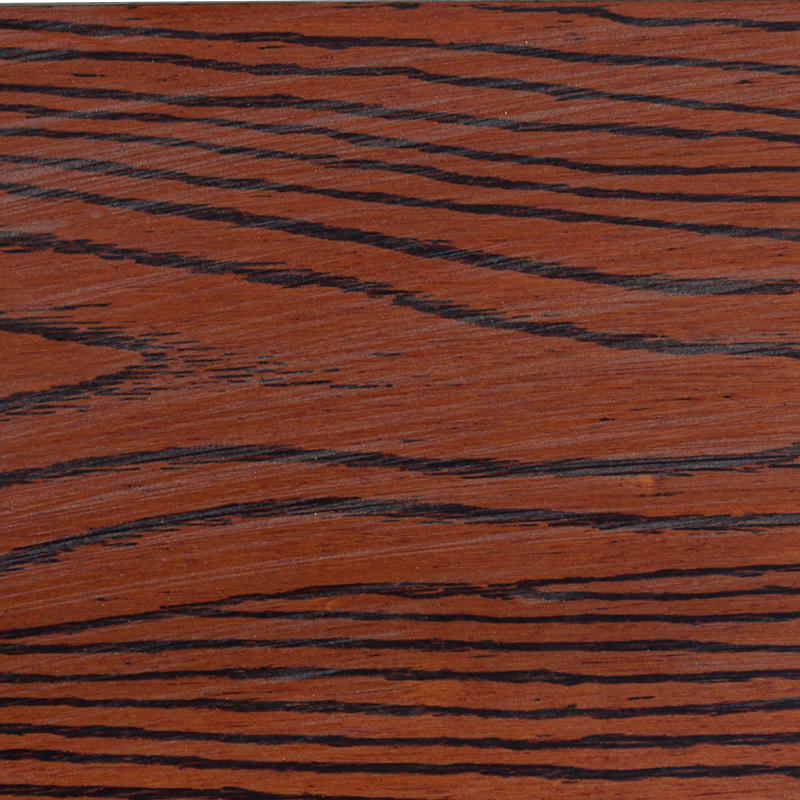
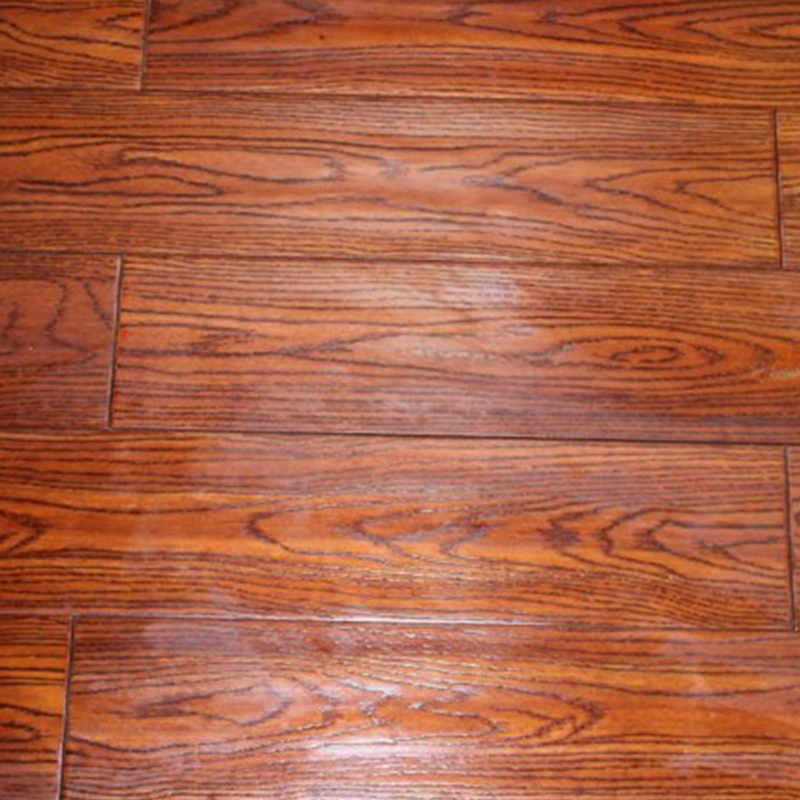
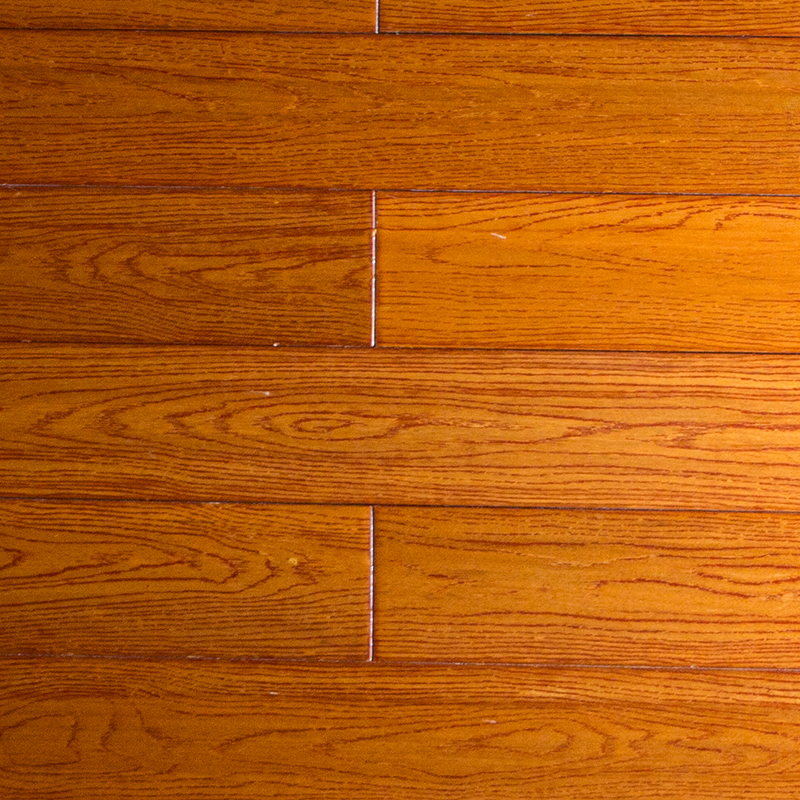
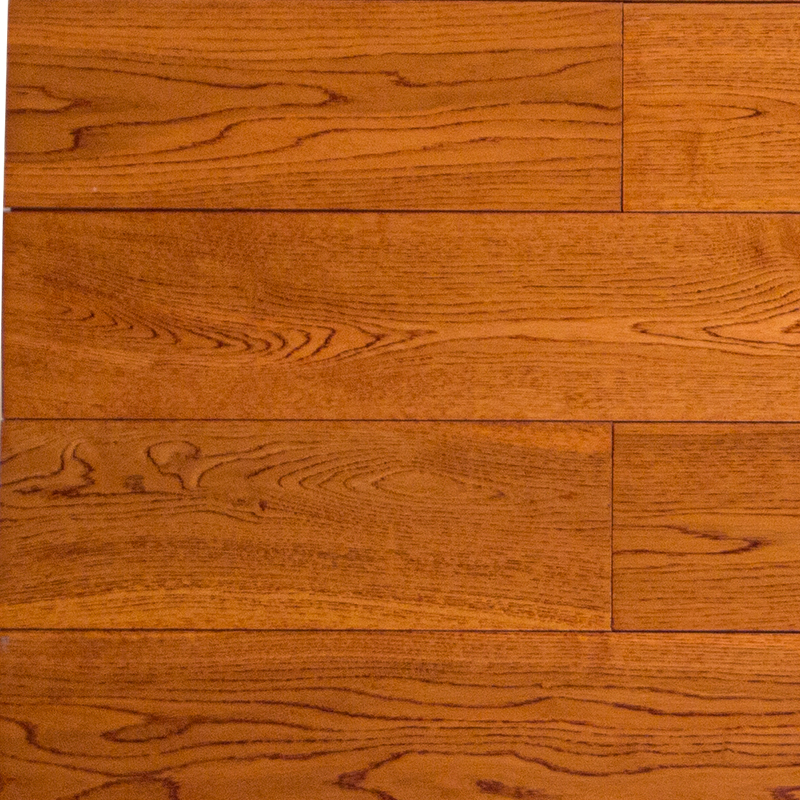
Solid wood flooring remains one of the most valued interior materials because it combines natural beauty, long service life, structural strength, and a tactile warmth that synthetic surfaces often cannot reproduce. Oka Brown Yellow Solid Wood Flooring is designed for residential and light commercial interiors where warmth, comfort, durability, and authentic wood character are essential. With its brown-yellow tone, solid hardwood core, tongue-and-groove profile, UV surface finish options, and customizable specifications, this flooring solution supports both aesthetic design goals and practical performance requirements.
This article focuses on the product’s material value, manufacturing quality, competitive advantages, application scenarios, installation considerations, care requirements, and the production strengths behind it. It also explains why a professionally manufactured solid oak wood floor can outperform many alternative floor coverings in terms of longevity, repairability, natural appearance, indoor comfort, and project adaptability.
Oka Brown Yellow Solid Wood Flooring belongs to the solid oak wood flooring category. It is made with a 100% solid hardwood core and is designed for interiors requiring stable structure, warm color, and long-term daily use. The standard listed dimension is 35.83 inches by 4.92 inches by 0.71 inches, which is approximately 910 mm by 125 mm by 18 mm. The 18 mm thickness gives the plank a substantial feel underfoot and contributes to strength, dimensional presence, and durability.
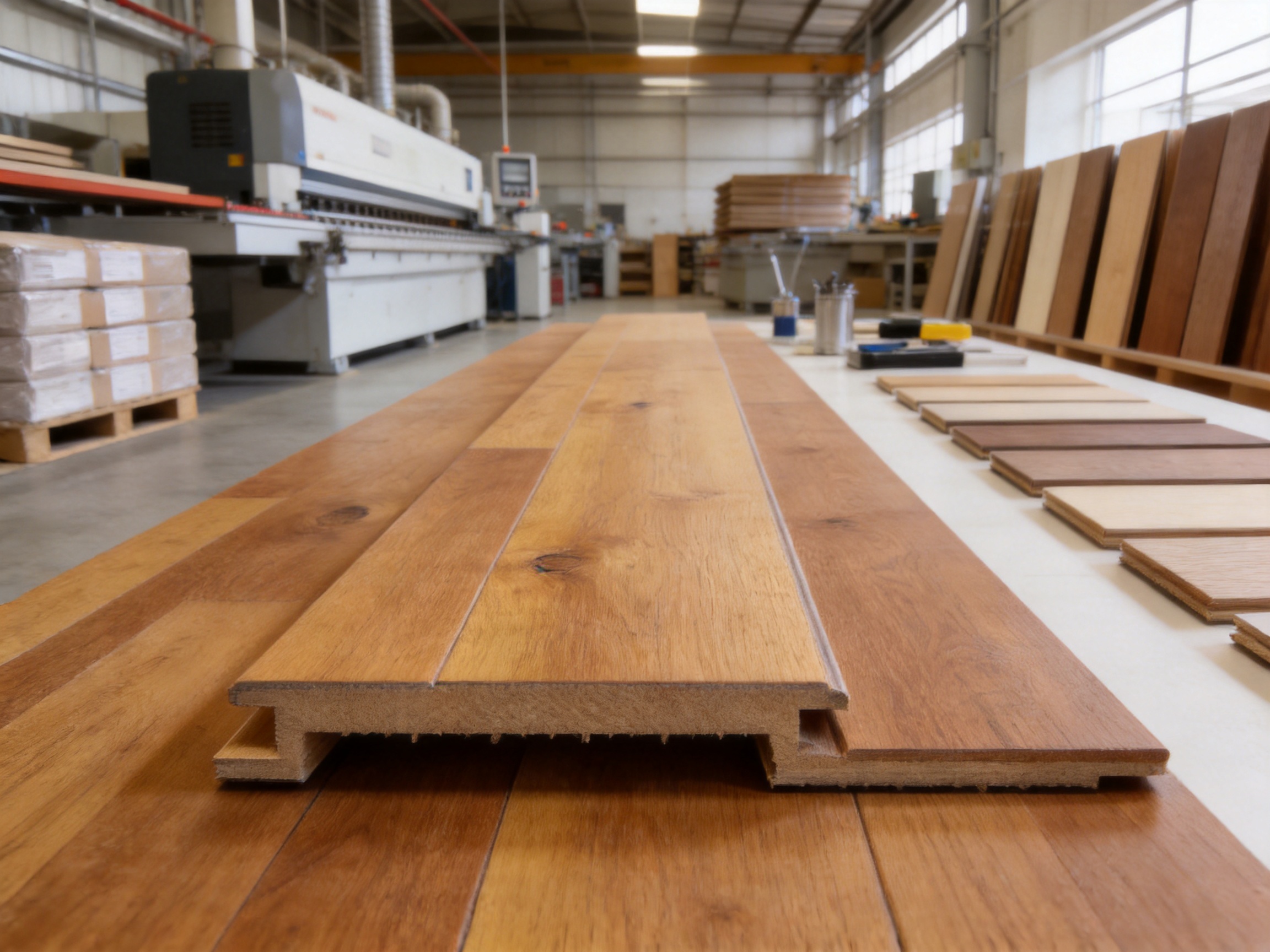
The floor uses a tongue-and-groove profile on four sides with micro-beveled edges. This construction allows the planks to connect securely and create a refined surface definition after installation. Depending on project requirements, the installation can be configured for glue or staple methods. The product is suitable for residential applications and light commercial areas where wood flooring is expected to provide warmth, comfort, and visual appeal.
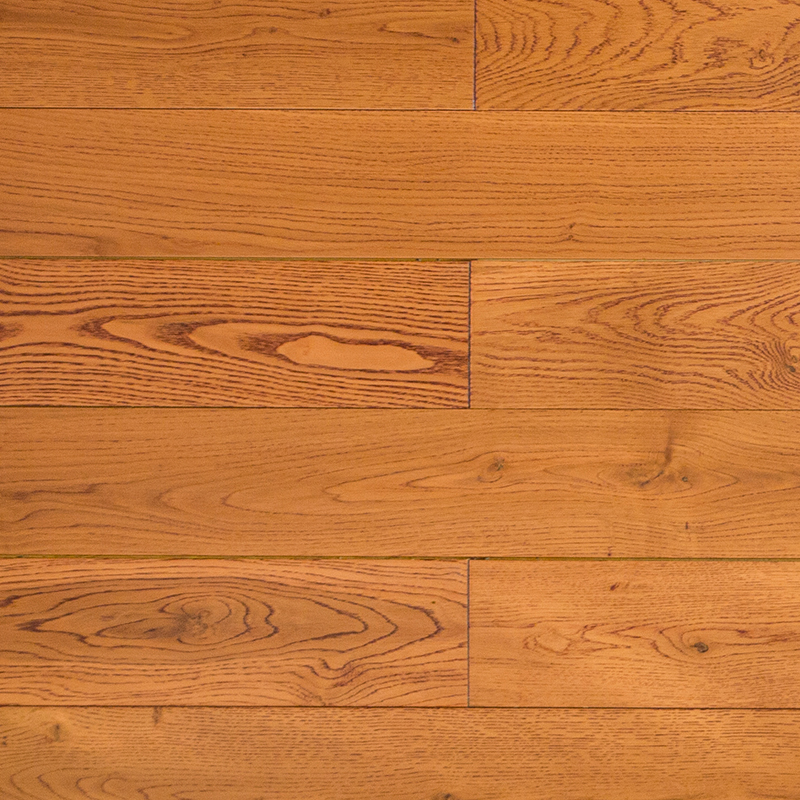
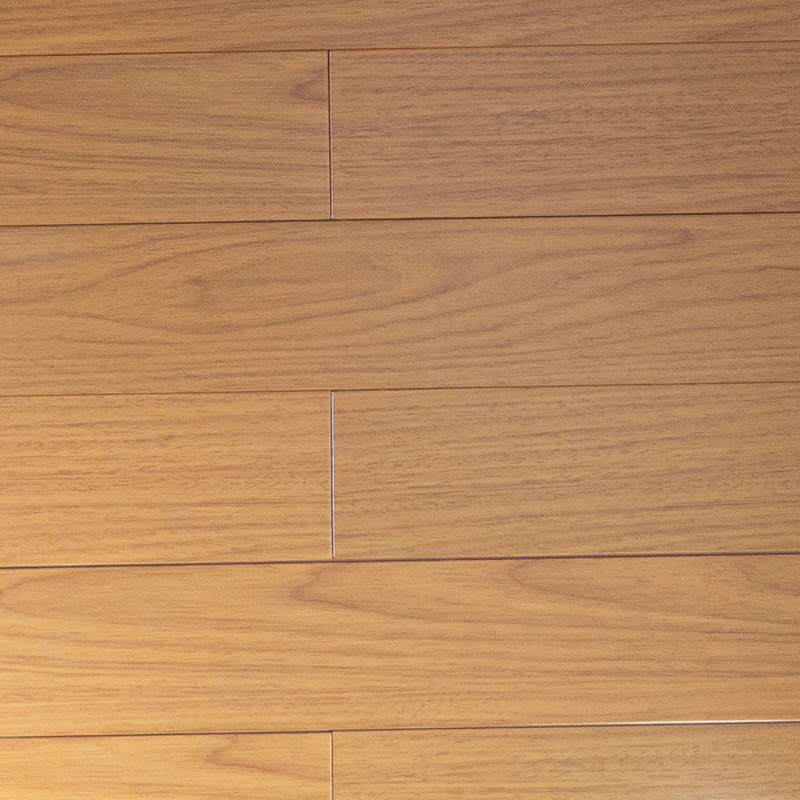
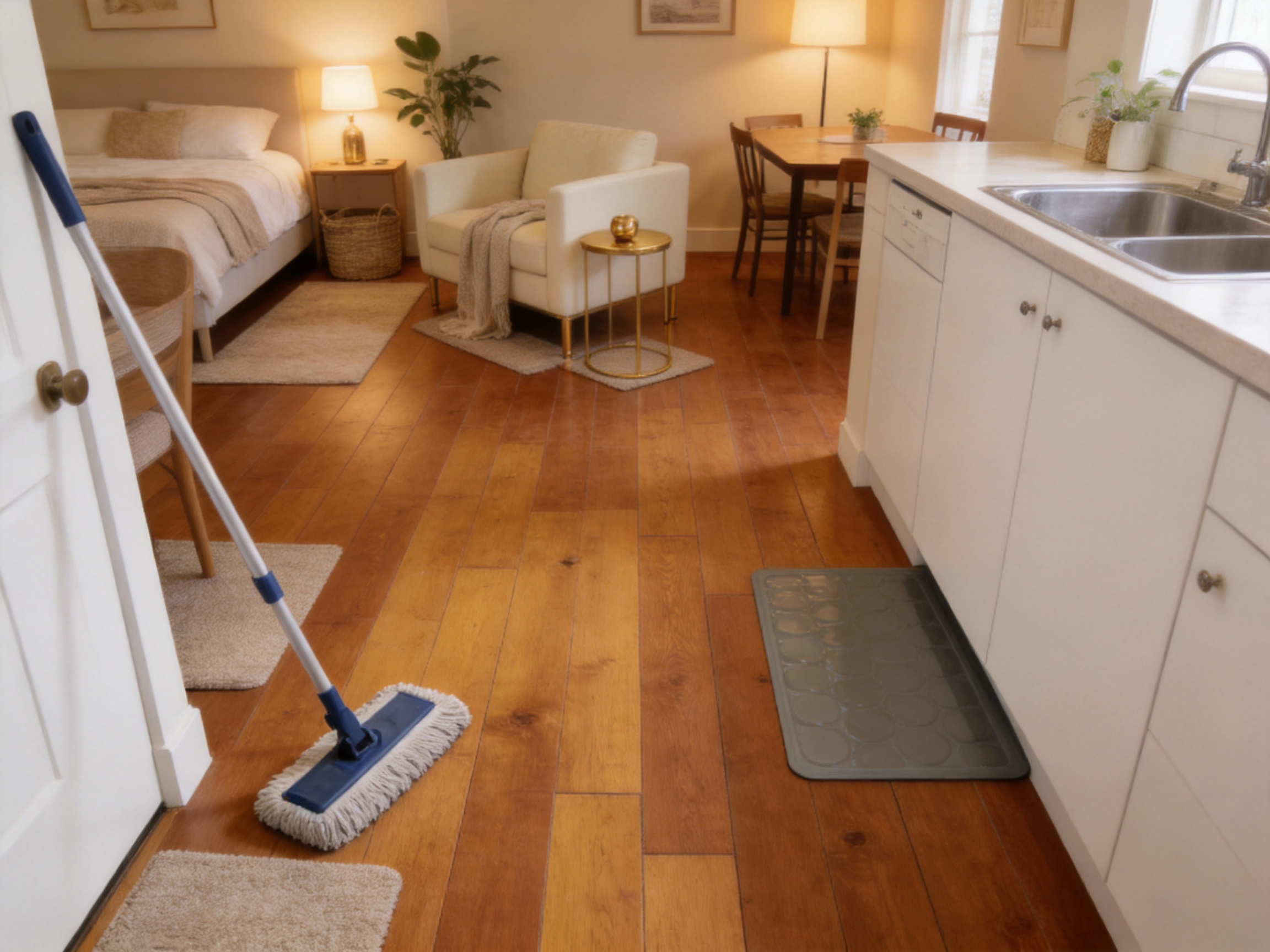
The brown-yellow tone is one of the defining characteristics of this product. It resembles sunlight passing through natural wood, creating a brighter and more welcoming atmosphere. This makes it especially useful for rooms with limited daylight, north-facing bedrooms, compact living rooms, and interiors that need a warmer color foundation. Compared with very dark brown flooring, the brown-yellow tone feels lighter and more open. Compared with very pale natural oak, it offers greater warmth and a more established visual character.
The flooring can be customized in surface texture, surface finish, color, and size. Available surface texture options include wire brushed, hand-scraped, and smooth sanded effects. Finish options include UV lacquer, UV oil, and hardwax oil. These choices help distributors, contractors, designers, and homeowners adapt the same product concept to different interior styles, from modern minimalist apartments to warm traditional homes and boutique commercial spaces.
| Product Type | Solid Oak Wood Flooring |
| Product Name | Oka Brown Yellow Solid Wood Flooring |
| Core Structure | 100% Solid Hardwood Core |
| Standard Dimension | 35.83" x 4.92" x 0.71" |
| Wood Species | Oak |
| Profile | Tongue-and-Groove on Four Sides, Micro-Bevel |
| Surface Texture Options | Wire Brushed, Hand-Scraped, Smooth Sanded |
| Finish Options | UV Lacquer, UV Oil, Hardwax Oil |
| Grade | ABCD Character Grade |
| Pieces Per Carton | 14 |
| Area Per Carton | 1.59 Square Meters / 17.14 Square Feet |
| Weight Per Carton | 21.5 kg |
| Moisture Content | 8%–10% with +/- 2% Tolerance |
| Installation Methods | Glue or Staple |
| Environmental Standard | E0 Environmental Standard |
| Certifications | CE and FSC Applicable |
Color is one of the most important factors in flooring selection because the floor occupies a large visual area and influences the atmosphere of the entire room. The brown-yellow tone of this solid wood floor creates a balance between brightness and warmth. It does not feel cold like some gray-toned floors, and it does not visually compress a space as much as deep walnut or dark espresso finishes can. Instead, it offers a natural, sunlit tone that makes a room feel comfortable, lived-in, and approachable.
This color works especially well with white cabinets, light-colored sofas, beige walls, cream textiles, brass accents, warm lighting, and yellow or earth-toned decorative elements. In contemporary interiors, the floor can soften clean lines and make a minimalist space feel more welcoming. In classic interiors, the tone can reinforce the natural elegance of wood furniture, painted doors, and built-in cabinetry. In small spaces, the brightness of the color helps reflect light and reduces the heavy appearance that darker floors sometimes create.
The product’s ABCD character grade also contributes to its visual richness. Character-grade oak may include natural grain variation, color movement, knots, and other organic features that give each plank individuality. For many homeowners and designers, this is a major advantage over uniform imitation flooring. Real wood carries variation by nature. Those variations help the finished floor feel authentic rather than artificially printed or mechanically repeated.
Oak is one of the most widely recognized hardwood flooring species because it offers a reliable combination of strength, stability, attractive grain, and broad design compatibility. In flooring applications, oak performs well under regular household traffic and can serve for decades when properly installed and maintained. It has enough hardness to resist normal wear while still offering natural warmth and comfort underfoot.
Solid oak flooring also has long-term value because it is not merely a decorative surface bonded to a different substrate. The entire plank is hardwood. This gives it a sense of authenticity that engineered, laminate, and vinyl products cannot fully match. While those alternatives may offer practical benefits in certain environments, solid wood remains a benchmark for natural interiors due to its material integrity and ability to age gracefully.
Another advantage of solid oak is its compatibility with refinishing over time. Depending on installation conditions, wear layer availability, and floor condition, solid hardwood can often be sanded and refinished, extending its usable life. This makes it different from many synthetic or thin-surface products that must be replaced once the decorative layer is damaged. A solid oak floor is often considered a long-term investment rather than a short-cycle finish.
Oak’s natural grain also works with multiple surface treatments. Smooth sanding creates a clean and refined appearance. Wire brushing emphasizes the grain texture and improves tactile depth. Hand-scraped finishing introduces a more artisanal, aged, or rustic character. With UV lacquer, UV oil, or hardwax oil, the same oak base can be tailored to different markets, climates, design preferences, and maintenance expectations.
When compared with laminate flooring, Oka Brown Yellow Solid Wood Flooring offers authentic natural material instead of a photographic decorative layer. Laminate can be economical and practical, but it cannot reproduce the depth of real oak grain, the natural temperature of solid wood, or the long-term refinishing potential of hardwood. If laminate is deeply scratched or water-damaged, replacement is usually the only realistic solution. Solid oak offers more repair and restoration possibilities.
When compared with vinyl flooring, solid oak provides a more natural and premium interior experience. Vinyl can be waterproof and flexible in design, but it is a synthetic product. For projects where natural materials, tactile quality, sustainability, and premium positioning are important, solid oak carries stronger design value. Wood also contributes to a warmer acoustic and sensory environment, while many plastic-based surfaces may feel less substantial underfoot.
When compared with engineered wood flooring, solid oak has the advantage of full-depth hardwood construction. Engineered flooring can offer excellent dimensional stability in certain conditions because of its multi-layer structure, but its top hardwood layer varies in thickness. Once that layer is worn through, refinishing options become limited. Solid hardwood provides a more complete material identity, which is attractive for buyers who want traditional craftsmanship, full plank authenticity, and long-lasting value.
When compared with ceramic tile or stone, solid oak is warmer and more comfortable underfoot. Tile and stone can be extremely durable, but they often feel cold and hard, especially in bedrooms, living rooms, and family spaces. Oak flooring creates a softer acoustic quality and a more comfortable walking experience. It also reduces the institutional feeling that hard mineral surfaces can produce in residential interiors.
The product is designed to meet the E0 environmental standard, with formaldehyde emission listed at no more than 0.05 mg/m³. This is important for interior products because flooring covers large areas and has direct contact with living spaces. Lower emission performance supports healthier indoor environments, especially in bedrooms, children’s rooms, and family living areas.
Solid wood construction also eliminates the need for composite core layers in the plank body. Many composite products rely on adhesives and wood-based panels, which can vary in emission performance depending on manufacturing quality. A solid hardwood core simplifies the material structure and reinforces the natural identity of the product. When combined with responsible finishing systems and quality control, it supports a cleaner and more reassuring flooring choice.
FSC certification indicates attention to responsible forestry and chain-of-custody standards. In global projects, certification is increasingly important because architects, developers, distributors, and homeowners often need evidence that wood products support responsible sourcing practices. CE compliance also supports international confidence in product consistency and market readiness.
The manufacturing strength behind this flooring is a major part of its value. Suzhou Dicosbo Wood Co., Ltd. has more than 20 years of expertise in wood flooring, wooden doors, and custom cabinet solutions. The company was founded in 1999 and operates with substantial production capacity, including 20,000 square meters of production facilities. This scale supports stable supply, consistent processing, and project-based customization.
Advanced manufacturing is important because solid wood flooring performance depends on many controlled steps. Raw material selection, moisture control, kiln drying, machining accuracy, profiling, sanding, finishing, curing, inspection, and packing all affect the final floor. A beautiful plank can fail if moisture is poorly controlled or if the tongue-and-groove profile is inaccurate. A strong manufacturing system reduces these risks and improves reliability for global customers.
The company uses German imported production lines and automated quality control systems. Such equipment contributes to precise cutting, stable profiling, smooth sanding, controlled surface finishing, and consistent batch production. For distributors and contractors, this consistency is crucial. A flooring batch must install smoothly, connect accurately, and present a balanced appearance after installation. Irregular dimensions, uneven profiles, or inconsistent finish quality can increase labor costs and create project delays.
Annual production capacity reaches 2,400,000 square meters of flooring, which indicates the ability to serve both recurring wholesale needs and large construction or renovation projects. The company also has more than 10 years of export experience and serves over 100 global partners across Europe, North America, and Southeast Asia. Export experience matters because international buyers require documentation, packaging reliability, moisture control awareness, specification clarity, and communication efficiency.
A strict three-step quality inspection process supports the product’s reliability. Although each manufacturer may organize inspection stages differently, effective wood flooring quality control typically includes incoming material inspection, in-process inspection, and final inspection before shipment. This layered approach reduces defects and improves consistency.
Incoming inspection focuses on wood species, grade, moisture content, board condition, and visible defects. For solid oak flooring, moisture content is particularly important. The listed moisture content range of 8% to 10%, with a tolerance of +/- 2%, is designed to support dimensional stability in typical interior conditions. Wood naturally expands and contracts with humidity changes, so properly dried material is essential for reducing risks such as cupping, gapping, or warping.
In-process inspection focuses on machining precision, tongue-and-groove fit, plank thickness, width consistency, end matching, bevel quality, sanding smoothness, and surface preparation. If the profile is not accurate, installation becomes difficult and the finished floor may not remain even. If sanding is inconsistent, the surface finish may highlight defects. Automated equipment and skilled inspection together help create a more reliable product.
Final inspection covers color consistency, finish quality, packaging, carton labeling, quantity verification, and product documentation. Because wood is natural, color variation is expected, especially in character grade flooring. However, controlled sorting and reasonable batch consistency are still necessary. Good final inspection helps ensure that natural variation looks intentional and attractive rather than chaotic or mismatched.
The product can be finished with UV lacquer, UV oil, or hardwax oil. Each finish creates a different balance of appearance, protection, maintenance, and tactile feeling. UV lacquer is a popular choice for customers who want a smooth surface, good daily stain resistance, and convenient cleaning. The semi-matte lacquer option reduces glare while preserving the natural wood texture. This is particularly suitable for bright rooms, showrooms, and modern interiors where excessive shine may feel artificial.
UV oil provides a more natural look and feel. It penetrates and enhances the wood grain while retaining a softer, less film-like surface impression. Designers often choose oil finishes when they want the floor to look closer to raw wood while still receiving surface protection. Oil-finished floors may require more attentive maintenance, but they offer a warm and authentic tactile quality.
Hardwax oil combines oil penetration with wax-based surface protection. It is appreciated for its natural appearance, repairability, and comfortable texture. Small scratches in hardwax oil floors can often be locally maintained more easily than high-gloss film finishes. This makes it attractive for boutique interiors, premium residential settings, and spaces where natural finish character is valued.
The ability to customize finish systems gives this product an advantage in international markets. Different regions have different expectations. Some customers prefer lacquered floors for low-maintenance cleaning. Others prefer oil finishes for natural aesthetics. By offering multiple finish paths, the manufacturer can serve diverse project requirements without changing the essential solid oak foundation.
Surface texture strongly influences how a floor feels and how it interacts with light. Smooth sanded oak creates a clean, refined, and contemporary effect. It is suitable for apartments, modern homes, offices, and interiors where furniture and architectural lines should remain visually prominent. The smooth surface is also easy to clean because there are fewer grooves where dust can collect.
Wire brushed oak highlights the natural grain by removing softer wood fibers from the surface. This creates texture, depth, and a more pronounced natural appearance. Wire brushed flooring is useful for family homes because the texture can help disguise small daily scratches and wear marks better than perfectly smooth surfaces. It works well with Scandinavian, rustic modern, farmhouse, and transitional interiors.
Hand-scraped oak creates a more crafted and aged appearance. It introduces irregular surface movement that recalls traditional woodworking and manually finished planks. This option is ideal for interiors that want warmth, history, and tactile charm. It also helps reduce the visual impact of small dents or daily wear because the surface is intentionally varied.
These customization options strengthen the product’s competitive position. Many mass-market floors offer limited surface choices, forcing buyers to accept a standard look. A customizable solid wood floor allows designers and distributors to respond more accurately to target customers, regional preferences, and project briefs.
The flooring uses a tongue-and-groove profile on four sides with micro-beveled edges. Tongue-and-groove construction is a classic and reliable method for joining solid wood planks. It helps align boards, improves surface continuity, and supports strong installation when combined with glue or staple methods.
Micro-beveled edges provide a subtle definition between planks. This detail can make natural wood variation look more intentional while helping reduce the visibility of minor height differences that may occur due to subfloor conditions or natural wood movement. In character grade flooring, micro-beveling often enhances plank individuality and gives the floor a more dimensional look.
Proper installation is essential for any solid wood floor. The subfloor should be clean, dry, flat, and structurally sound. The flooring should be acclimated according to project conditions and professional guidelines. Expansion space should be maintained around walls and fixed objects. Moisture testing of the subfloor and site environment is recommended before installation. These steps help the flooring perform as intended and reduce problems caused by environmental imbalance.
The listed installation methods include glue and staple. Glue installation can provide strong bonding and reduce movement when performed correctly with suitable adhesives. Staple installation is commonly used over appropriate wood subfloors and can be efficient for professional installers. The best method depends on subfloor type, site conditions, local practices, and project requirements.
The product information indicates suitability for underfloor heating when configured and used correctly. This is a significant advantage because many modern homes and apartments use radiant heating systems for comfort and energy efficiency. However, solid wood requires careful control when used with underfloor heating because wood reacts to heat and humidity changes.
For best performance, heating systems should be commissioned properly before flooring installation. Surface temperature should be controlled within professional wood flooring guidelines. Sudden temperature changes should be avoided. Indoor humidity should be maintained within a stable range. The floor should not be exposed to excessive heat concentration from rugs, mats, or furniture arrangements that trap heat.
Oak is known for good structural strength and reasonable stability compared with many other wood species, which supports its use in carefully managed heated environments. The 18 mm solid plank offers comfort and durability, but it also requires responsible climate control. When installed and maintained properly, it can provide the combined benefits of radiant warmth and natural wood comfort.
One of the most noticeable advantages of solid wood flooring is comfort underfoot. Unlike tile or stone, wood does not feel as cold or hard. It has a natural warmth that improves the sensory quality of bedrooms, living rooms, dining areas, and private offices. The 18 mm thickness of this product adds to the substantial walking feel and contributes to a more premium interior experience.
Wood also affects the acoustic character of a room. It can create a warmer sound profile than ceramic or stone surfaces, especially when combined with rugs, curtains, upholstered furniture, and proper underlayment or installation methods. This makes it suitable for family spaces where comfort and atmosphere are as important as durability.
The UV semi-matte lacquer option helps create a surface that is smooth, anti-glare, and easy to clean. A highly glossy floor may show reflections, dust, and scratches more obviously. A semi-matte finish provides a more natural look while maintaining practical daily usability. This balance is especially important for homeowners who want an elegant floor without constant visual maintenance.
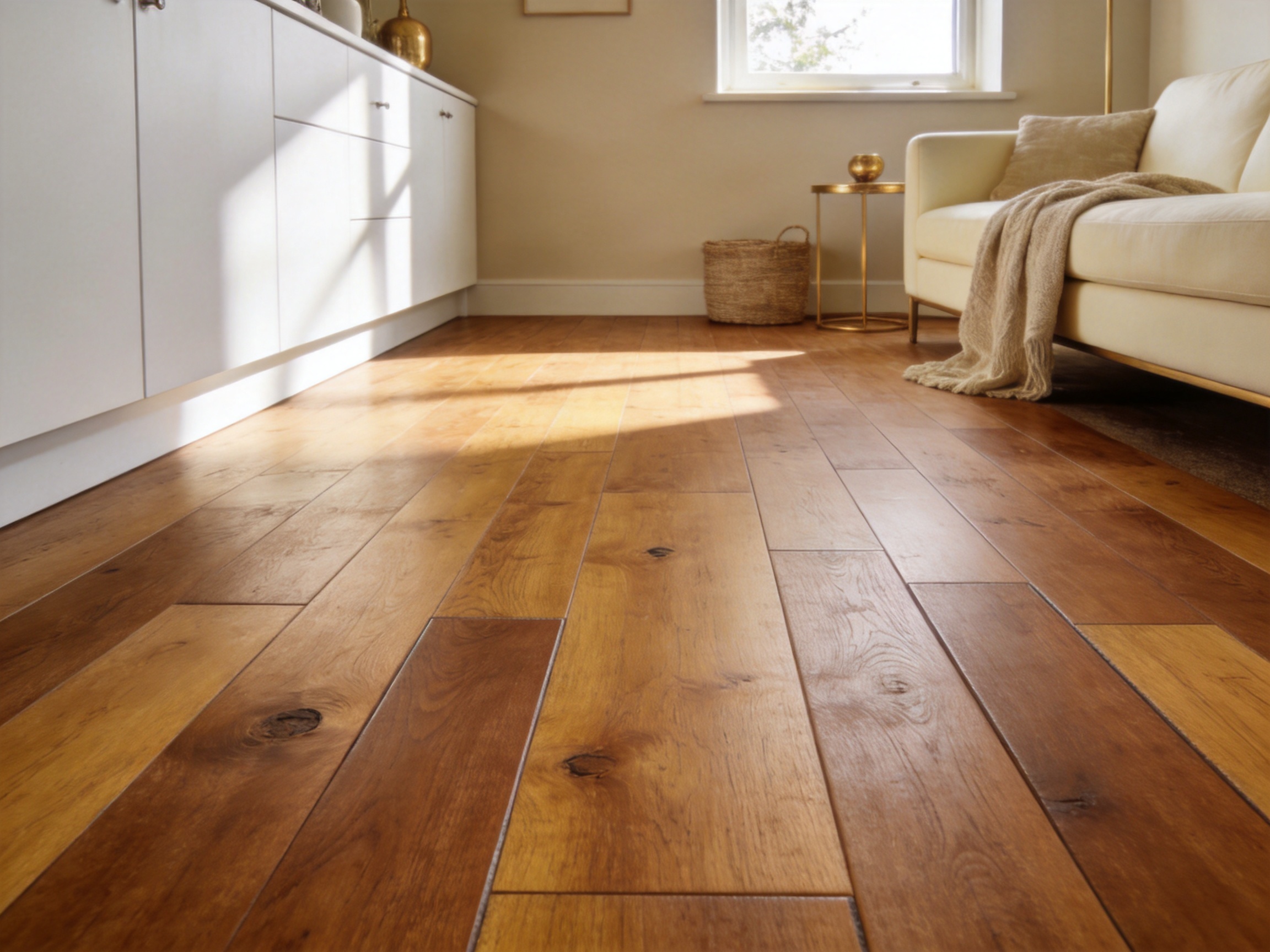
Oka Brown Yellow Solid Wood Flooring is especially suitable for north-facing bedrooms because its warm tone offsets cool natural light. North-facing rooms often appear gray or dim, and flooring color can significantly influence the mood. A brown-yellow oak floor can make such spaces feel warmer, softer, and more comfortable for rest.
Small living rooms also benefit from this color. Very dark flooring can make compact rooms feel smaller, while overly pale flooring may feel flat or too casual. Brown-yellow oak provides enough brightness to open the space while adding warmth and texture. Paired with light walls, white cabinetry, cream textiles, and warm accent lighting, it can create a balanced and inviting living area.
In kitchens, the flooring can be used with practical precautions. Waterproof mats are recommended near sinks, dishwashers, and other water-prone areas. Spills should be wiped quickly, and standing water should be avoided. While solid wood is durable, it is still a natural material and should be protected from prolonged moisture exposure. With attentive care, oak flooring can bring warmth to kitchen interiors that might otherwise feel cold with tile or stone.
Dining rooms, hallways, home offices, and boutique reception spaces are also suitable applications. The product’s character grade and customizable finish options allow it to adapt to both relaxed family settings and more polished design environments. In commercial use, it is best suited for light commercial applications rather than heavy industrial or high-moisture areas.
This flooring pairs naturally with white cabinets. The contrast between warm oak and clean white surfaces is timeless and widely used in kitchens, living rooms, and built-in storage designs. The floor softens the crispness of white cabinetry and prevents the interior from feeling sterile.
Light-colored sofas, linen fabrics, warm gray upholstery, beige rugs, and natural fiber carpets also complement the brown-yellow tone. These elements create a calm and cohesive interior palette. For accent colors, warm yellow, olive green, terracotta, muted orange, and brass can reinforce the floor’s natural warmth.
For modern interiors, matte black hardware and slim metal furniture can create contrast without overpowering the wood. For classic interiors, painted wall panels, wooden doors, and custom cabinets in cream or soft brown tones can create a unified woodwork environment. Because the company also manufactures wooden doors and custom cabinets, complete interior wood solutions can be coordinated for projects requiring consistent material language.
Daily cleaning is simple when correct methods are followed. A dry mop, microfiber broom, or slightly damp mop is suitable for routine cleaning. Excessive water should be avoided because standing moisture can damage wood and finish. Spills should be wiped promptly, especially in kitchens, dining rooms, and entry areas.
For stubborn stains, a neutral detergent and soft cloth are recommended. Abrasive cleaning tools should be avoided because they may scratch or dull the lacquer surface. Strong alkaline or acidic cleaners should not be used unless specifically approved for the finish type. Furniture pads should be placed under chair legs, tables, sofas, and movable furniture to reduce dents and scratches.
Long-term care may include checking floor joints and plank stability annually. This is particularly important in climates with strong seasonal humidity variation. Indoor humidity should be controlled to reduce excessive expansion or shrinkage. Waxing every 6 to 12 months may help maintain surface gloss where compatible with the finish system. The exact maintenance method should match the selected finish, because lacquer, oil, and hardwax oil may require different care products.
Entry mats can reduce grit and sand, which are common causes of surface abrasion. In sunny rooms, curtains or UV-protective window treatments can reduce color change caused by prolonged sunlight. Like all natural wood, oak may gradually change tone over time. Many owners consider this aging process part of the beauty of real wood.
Each carton contains 14 pieces, covering approximately 1.59 square meters or 17.14 square feet, with a carton weight of about 21.5 kg. Clear carton specifications help distributors, contractors, and project managers calculate quantities, shipping weights, storage needs, and installation planning. Accurate packaging information reduces ordering errors and supports efficient site management.
For export markets, packaging quality is not a secondary concern. Flooring must be protected against impact, moisture, carton deformation, and handling damage during transportation. A manufacturer with export experience understands the importance of stable packaging, correct labeling, and shipment documentation. This is especially valuable for international distributors who need products to arrive in usable condition and match purchase specifications.
The company’s production capacity and export history support dependable delivery for larger orders. For contractors and developers, stable supply reduces project risk. A beautiful flooring sample is not enough; the supplier must be able to reproduce the approved quality in volume and deliver it according to schedule. This is where manufacturing scale, quality systems, and export experience become competitive advantages.
OEM and ODM capabilities allow the product to be adapted for different brands, markets, and project requirements. Distributors may need private-label packaging, specific dimensions, region-specific finishes, or color adjustments. Designers and contractors may require customized plank sizes, textures, or matching woodwork products. The ability to customize helps transform a standard flooring product into a project-specific solution.
The company offers 72-hour rapid prototyping, which is a strong advantage in the specification stage. In flooring projects, customers often need to see color, texture, and finish samples before approving production. Fast sample development shortens the decision cycle and helps architects, buyers, and homeowners compare options efficiently. This can be decisive in competitive tenders where response speed matters.
Customization also supports coordinated interiors. Since the manufacturer specializes in wood flooring, wooden doors, and custom cabinets, project teams can source multiple wood-related products from one supplier. This can improve color coordination, simplify communication, and reduce sourcing complexity. For hotels, apartments, villas, and commercial interiors, unified material planning can elevate the final design result.
Global flooring buyers increasingly require proof of quality and compliance. Certifications such as CE, FSC, CARB P2, and ISO 9001 indicate that the company works within recognized standards for product performance, responsible sourcing, emissions, and quality management. This makes the product more suitable for international markets, especially where regulatory requirements and customer expectations are strict.
For distributors, compliance reduces market-entry friction. For architects and contractors, it supports specification confidence. For end users, it offers reassurance that the floor is produced with attention to safety, quality, and environmental responsibility. In competitive markets, documentation can be as important as appearance because professional buyers must manage risk.
The company’s mission to create durable and sustainable wood products aligns with the long-term value of solid oak flooring. A floor that lasts for decades and can be maintained or restored supports a more responsible consumption model than short-life decorative products that require frequent replacement. Durability is not only an economic advantage; it is also an environmental advantage when paired with responsible sourcing and controlled manufacturing.
For homeowners, the main value lies in comfort, beauty, and long-term use. The floor makes living spaces warmer and more inviting while offering authentic oak character. Its color is practical for many interior styles, and its surface options make it adaptable to personal taste.
For interior designers, the value lies in flexibility. The same product platform can be adjusted through texture, finish, color, and size. This makes it easier to match a concept board, coordinate with cabinets and doors, or create a distinctive atmosphere for a room. The brown-yellow tone is particularly useful when a design requires warmth without excessive darkness.
For contractors, the value lies in reliable machining, stable specifications, and installation support through the tongue-and-groove profile. Accurate dimensions and quality control reduce site complications. Clear packaging data helps with project planning.
For distributors, the value lies in manufacturing capacity, export experience, certification support, OEM/ODM service, and customization. A supplier with consistent production and global experience helps distributors build a dependable product line. Fast prototyping and product flexibility also help distributors respond to local market trends.
No flooring material is perfect for every environment. Solid wood should not be treated like a fully waterproof surface. It is not recommended for areas with constant standing water, uncontrolled humidity, or extreme temperature fluctuation. Bathrooms, wet basements, and heavily exposed commercial entrances may require different flooring solutions unless special design precautions are taken.
Wood movement is natural. Seasonal gaps or slight dimensional changes can occur if indoor humidity is not controlled. This is not necessarily a defect; it is part of the behavior of real wood. Proper acclimation, installation, and climate management are essential. Buyers should understand that solid wood rewards care and environmental stability with long service life and beauty.
Because the flooring is character grade, natural variation should be expected and appreciated. Customers who want a perfectly uniform surface may prefer a more selective grade or a synthetic product. However, for many projects, the natural variation is exactly what gives the floor its premium and authentic appearance.
It is made from a 100% solid hardwood core rather than a printed decorative layer. This gives it authentic oak grain, natural warmth, long-term value, and potential refinishing options. Laminate can be practical, but it cannot fully match the depth and material integrity of real solid wood.
Yes. The warm brown-yellow tone helps brighten darker or smaller spaces, especially north-facing rooms. It creates a cozy atmosphere without making the room feel visually heavy.
The product is listed as suitable for underfloor heating when installed and managed correctly. Site temperature, humidity, and heating system operation must be controlled according to professional wood flooring guidelines.
UV lacquer is often preferred for convenient daily cleaning and good surface protection. UV oil and hardwax oil provide a more natural look and feel, but they may require more specific maintenance routines.
The flooring meets the E0 environmental standard and is associated with CE and FSC certification. The solid wood structure, low formaldehyde emission performance, and responsible sourcing support healthier and more sustainable interior applications.
It is suitable for bedrooms, living rooms, dining rooms, home offices, hallways, and selected kitchen areas with proper water protection. It is also suitable for light commercial interiors that require warm natural wood flooring.
Routine cleaning should be done with a dry or slightly damp mop. Excessive water should be avoided. Stubborn stains can be treated with neutral detergent and a soft cloth. Abrasive tools should not be used.
Yes. Custom sizes, colors, textures, and finishes are available. Options include wire brushed, hand-scraped, smooth sanded, UV lacquer, UV oil, and hardwax oil.
Moisture content affects dimensional stability. Properly controlled moisture reduces the risk of excessive expansion, shrinkage, cupping, or warping after installation. The listed moisture content range is 8%–10% with a tolerance of +/- 2%.
Suzhou Dicosbo Wood Co., Ltd. has over 20 years of wood product expertise, 20,000 square meters of production facilities, German imported production lines, automated quality control systems, OEM/ODM capabilities, rapid prototyping, and extensive export experience serving global partners.
Oka Brown Yellow Solid Wood Flooring is a strong choice for interiors that require natural beauty, warmth, comfort, and long-term material value. Its brown-yellow tone brightens rooms while maintaining the rich character of oak. Its 100% solid hardwood core provides authenticity and durability. Its tongue-and-groove profile, micro-beveled edges, customizable textures, and multiple finish options make it practical for diverse design and installation needs.
Compared with laminate, vinyl, tile, and many short-life alternatives, solid oak flooring offers a more natural, premium, and lasting interior experience. It is not simply a surface covering; it is a structural and aesthetic material that can shape the atmosphere of a home or commercial space for many years. With proper installation and care, it provides warmth underfoot, visual depth, and the enduring appeal of real wood.
The manufacturing strength behind the product further increases its value. Advanced production lines, strict quality inspection, global certifications, export experience, customization capability, and large-scale production capacity all contribute to reliable supply and professional project support. For homeowners, designers, contractors, and distributors, this flooring offers a balanced combination of beauty, performance, compliance, and manufacturable consistency.
In an interior market filled with imitations and fast-replacement materials, a well-made solid oak floor stands apart. It brings nature indoors, supports refined design, and offers the durability expected from a premium wood solution. For spaces that need to feel brighter, warmer, and more comfortable, brown-yellow solid oak flooring remains a compelling and practical choice.
Forest Stewardship Council. FSC Principles and Criteria for Forest Stewardship.
European Committee for Standardization. CE Marking and Construction Product Requirements for Wood Flooring.
International Organization for Standardization. ISO 9001 Quality Management Systems: Requirements.
National Wood Flooring Association. Wood Flooring Installation Guidelines and Methods.
National Wood Flooring Association. Wood Flooring Maintenance and Recoating Technical Publications.
California Air Resources Board. Composite Wood Products Airborne Toxic Control Measure and CARB Phase 2 Guidance.
European Federation of the Parquet Industry. Technical Information on Wood Flooring Performance and Indoor Use.

We provide customers with sustainable and eco-friendly
engineered wood solutions and services.
Choose DEIF for the perfect blend of
performance and aesthetics.
