


 English
 Español
 عربى
عربى

Get Social
Choose DEIF for the perfect blend of
performance and aesthetics.
 Get Free Sample

Content
Solid wood flooring remains one of the most valued materials in interior design because it brings natural texture, long service life, and an atmosphere that synthetic surfaces cannot fully reproduce. Among premium hardwood floor choices, deep red brown matte solid wood flooring stands out for its visual warmth, understated luxury, and dependable performance in residential and light commercial settings. This flooring is designed for projects that require a rich natural tone, a comfortable surface underfoot, and the confidence of real hardwood construction.
The product discussed in this article is a deep red brown matte solid wood flooring solution with a 100% solid hardwood core, tongue-and-groove profile, AB Select grade appearance, customizable surface textures, and multiple finish options such as UV lacquer, UV oil, and hardwax oil. Its standard dimension is 35.83 inches by 4.33 inches by 0.71 inches, or approximately 910 mm by 110 mm by 18 mm. The flooring is supplied in cartons of 12 pieces, covering approximately 1.2 square meters or 12.93 square feet per carton, with an average carton weight of 20.5 kg.
This flooring is positioned for homeowners, designers, contractors, distributors, and project buyers who want natural hardwood with practical installation options and global compliance credentials. It offers E0 environmental performance, CE and FSC certification, controlled moisture content, and compatibility with glue or staple installation. It is also suitable for underfloor heating when installed under appropriate site conditions and in accordance with technical guidance.
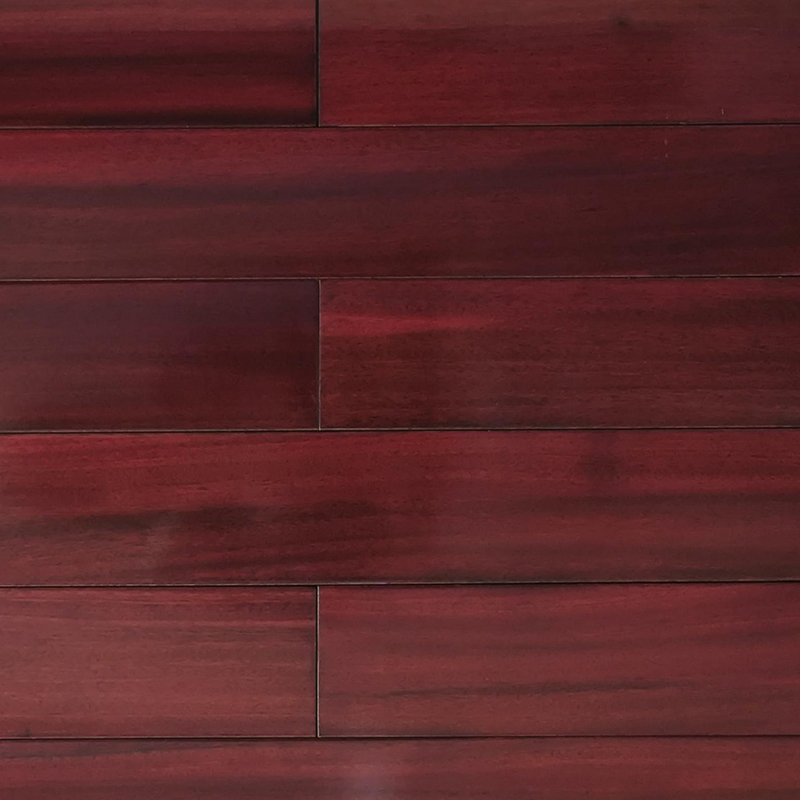
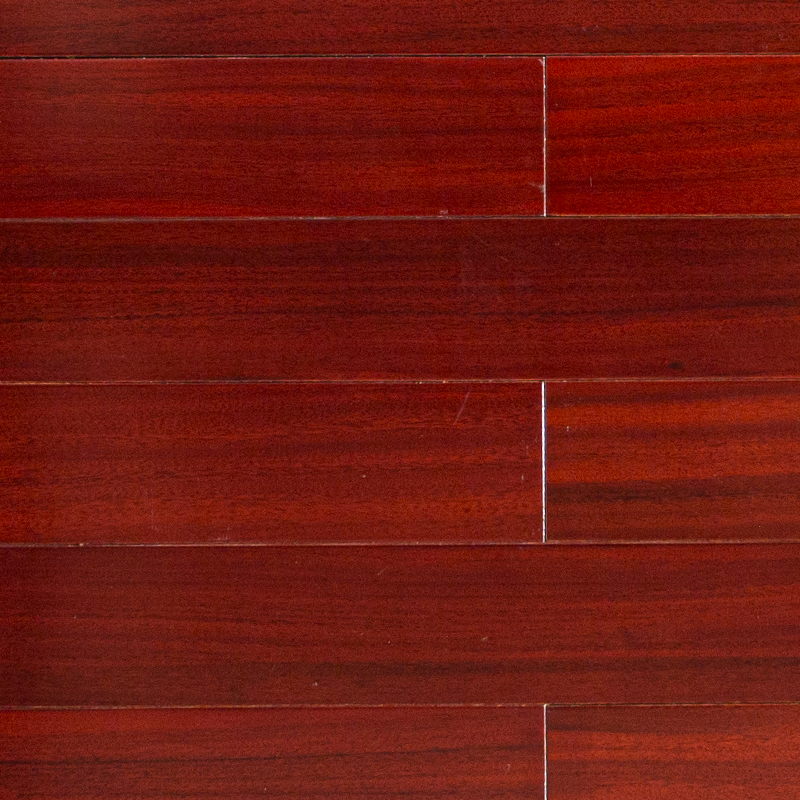
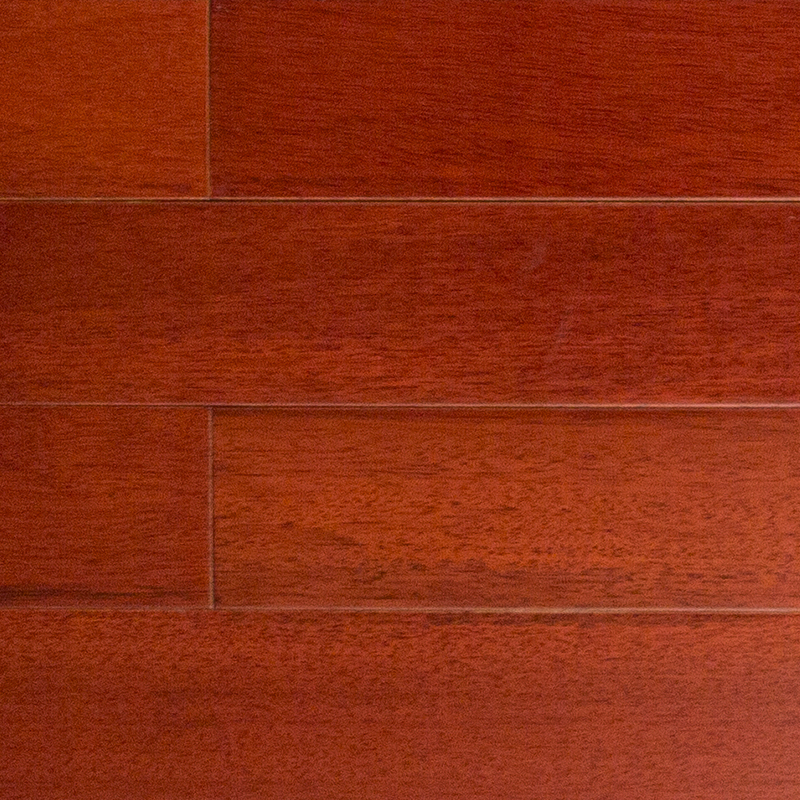
The flooring’s visual identity is defined by a deep red brown tone and a low-sheen matte surface. The color delivers depth without excessive gloss, creating a quiet, intimate, and elegant atmosphere. In bedrooms, reading rooms, home theaters, lounges, boutique hospitality spaces, and executive interiors, this tone can make a room feel grounded and composed. Unlike pale flooring that emphasizes openness or high-gloss flooring that creates reflections, the deep matte surface absorbs light softly and supports calm interior moods.
The product is associated with solid Okan wood flooring, with the wood species specified as Okan, scientifically known as Cylicodiscus gabunensis. Okan is a dense tropical hardwood known for strength, durability, and a naturally warm appearance. In marketing terms, the deep red brown aesthetic can resemble the luxurious mood often associated with Padauk-style color palettes, while the technical specification emphasizes Okan as the wood species. This distinction is important for professional buyers because species performance, density, grain, and stability influence specification decisions.
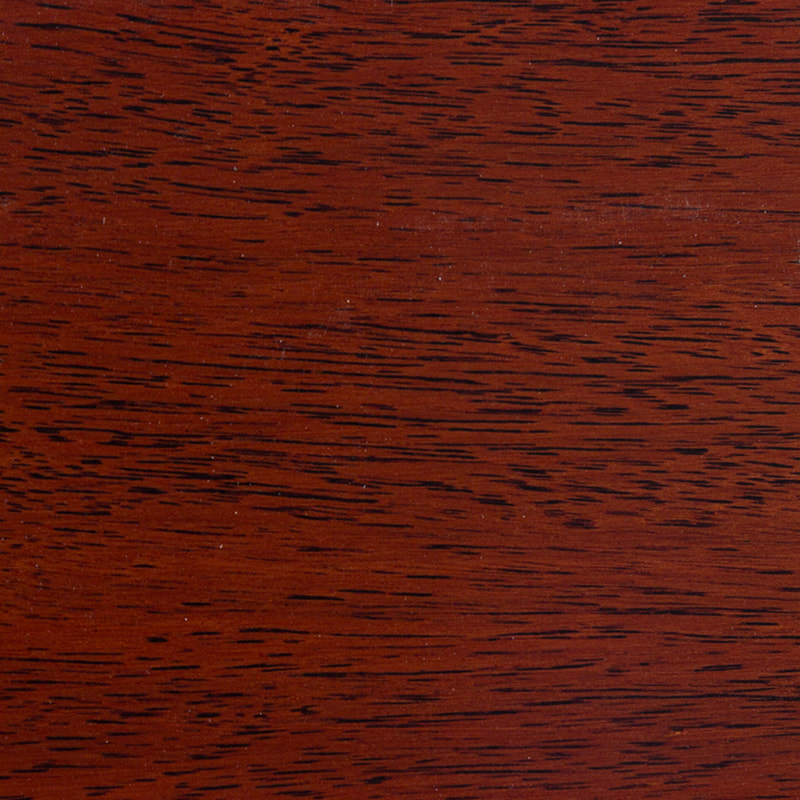
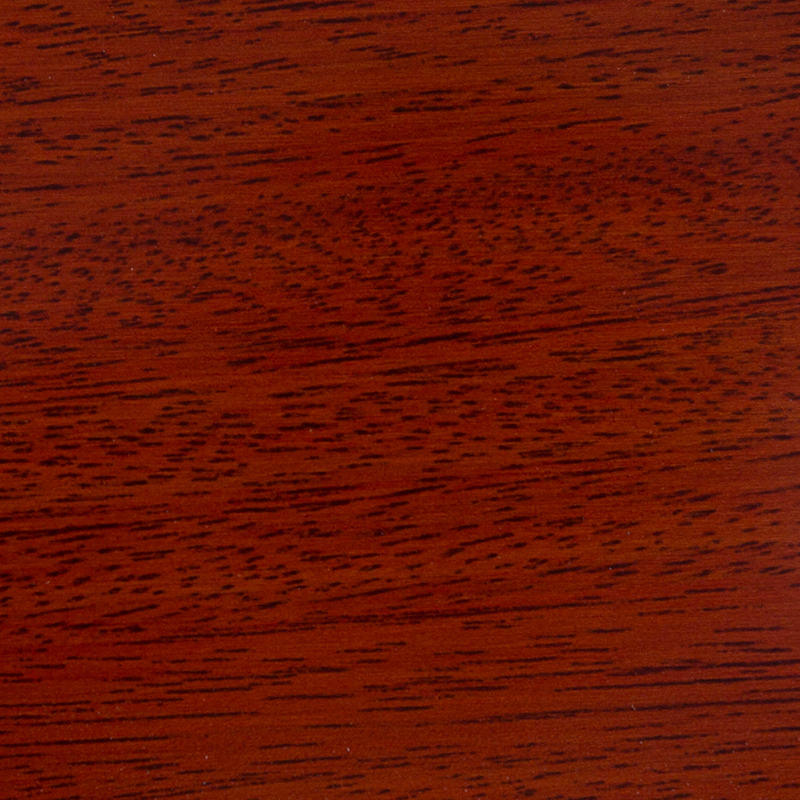
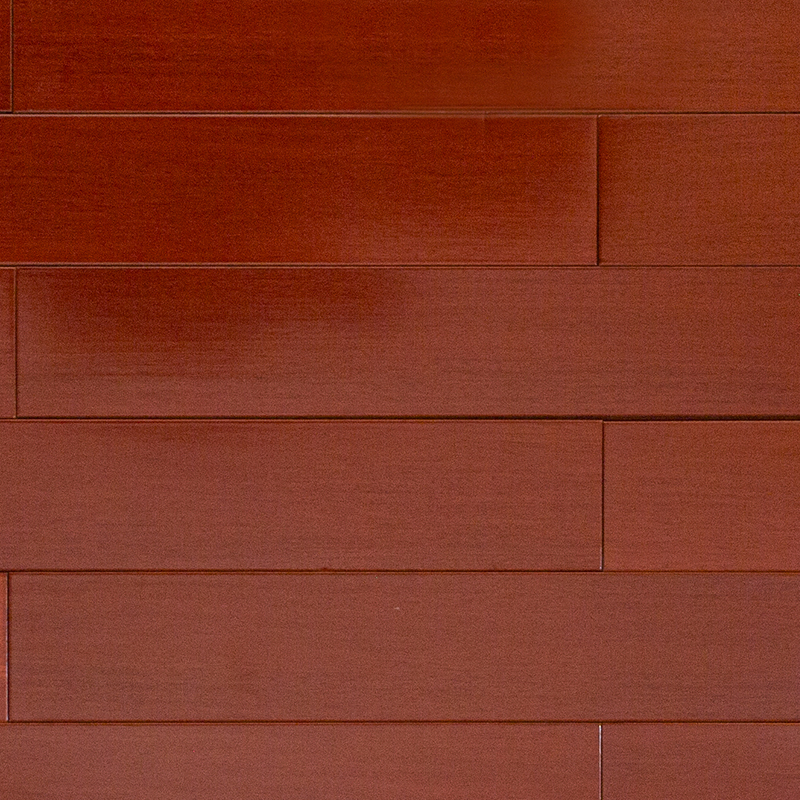
The surface texture is customizable, including wire brushed, handscraped, and smooth sanded options. Wire brushing enhances the natural grain by subtly removing softer fibers, creating texture that can help conceal minor wear over time. Handscraped surfaces provide a crafted, artisanal look suited to rustic luxury or heritage-inspired spaces. Smooth sanded surfaces deliver a refined modern appearance and allow the color and matte finish to become the primary design focus.
The flooring is offered in AB Grade, also known as Select grade. This grade typically provides a balanced visual appearance with natural character but fewer prominent defects than more rustic grades. For designers who need consistency across bedrooms, living areas, hospitality suites, or office interiors, AB Select grade provides a polished look while preserving the natural uniqueness of hardwood.
The following table summarizes the main product specifications and project-relevant details.
| Product Type | Deep red brown matte solid wood flooring |
| Marketing Collection | Solid Okan Wood Flooring |
| Wood Species | Okan, Cylicodiscus gabunensis |
| Core Structure | 100% solid hardwood core |
| Dimensions | 35.83" x 4.33" x 0.71" |
| Approximate Metric Size | 910 mm x 110 mm x 18 mm |
| Surface Texture | Customizable: wire brushed, handscraped, or smooth sanded |
| Surface Finish | Customizable: UV lacquer, UV oil, or hardwax oil |
| Profile Detail | Tongue and groove on four sides with micro-bevel |
| Locking System | Tongue and groove |
| Grade | AB Grade, Select |
| Pieces per Carton | 12 |
| Area per Carton | 1.2 square meters or 12.93 square feet |
| Weight per Carton | 20.5 kg |
| Moisture Content | 8% to 10%, with tolerance of plus or minus 2% |
| Installation Methods | Glue or staple |
| Environmental Standard | E0, formaldehyde emission not more than 0.05 mg per cubic meter |
| Certifications | CE and FSC, with broader company compliance including CARB P2 and ISO 9001 |
The most important structural feature of this flooring is its 100% solid hardwood core. Solid wood flooring is milled from a single piece of timber rather than being assembled from composite layers. This gives it a natural integrity that appeals to buyers who want authentic hardwood throughout the full thickness of the board. There is no printed decorative layer, no plastic wear layer, and no fiberboard core. Every board is genuine hardwood from surface to base.
This construction offers several advantages over laminate flooring, many vinyl products, and low-grade engineered alternatives. First, solid wood can provide a more authentic tactile experience. The density, temperature, and acoustic quality of real wood are distinct. When walked on, it feels warmer and more substantial than many synthetic surfaces. Second, solid wood has long-term renovation potential. Depending on installation and wear conditions, solid hardwood can often be sanded and refinished, extending its life cycle and reducing replacement frequency.
Another advantage is material honesty. Many competitors in the low-cost flooring market rely on decorative films, imitation grain patterns, or thin veneers. These products may appear attractive initially, but the surface identity is not the same as real hardwood. With this flooring, the grain, tone variation, and natural fiber structure belong to the wood itself. This authenticity is especially important for high-end residential projects, boutique commercial spaces, and design-driven interiors.
The 18 mm thickness also contributes to stability, comfort, and acoustic performance. A thicker board can feel more solid underfoot and may help reduce the hollow sound sometimes associated with thinner flooring systems. In private rooms such as bedrooms and home theaters, this sense of quietness supports the overall design intent. The flooring’s substantial profile makes it suitable for interiors where long-term value matters more than the lowest initial material cost.
Color is not only a decorative feature; it affects how people experience space. The deep red brown tone of this flooring creates warmth, depth, and visual intimacy. In large rooms, it can make the interior feel more inviting. In smaller spaces, it can create a cocoon-like atmosphere when balanced with lighter walls, soft textiles, and carefully planned lighting. The color is especially effective in interiors that aim for relaxation, privacy, and understated sophistication.
Compared with pale oak-style floors, deep red brown flooring creates stronger contrast and a more established feeling. Pale floors are often chosen for Scandinavian or minimalist interiors, while red brown tones are favored in classic, transitional, luxury, and warm modern settings. When paired with dark wood furniture, leather seating, brass accents, stone surfaces, or wool rugs, this flooring can become a defining element of the room.
Compared with gray-toned floors, deep red brown flooring feels less cold and more natural. Gray flooring has been popular in contemporary interiors, but it can sometimes make spaces feel flat or impersonal. A red brown hardwood floor introduces emotional warmth and organic variation. It complements cream, beige, taupe, charcoal, forest green, navy, terracotta, and muted gold palettes.
The matte finish is particularly important because it moderates the richness of the color. A high-gloss red brown floor might appear formal or reflective, while a matte finish makes the tone more livable and relaxed. It reduces glare, hides minor dust better than glossy surfaces, and supports low-light environments such as bedrooms, media rooms, and private lounges.
A matte surface provides both aesthetic and functional benefits. In modern interiors, designers increasingly prefer matte finishes because they look natural, refined, and less artificial than high-gloss coatings. The soft-touch appearance helps the flooring integrate with stone, fabric, plaster, matte metal, and other contemporary materials.
From a practical standpoint, matte flooring reduces visible reflections from windows, ceiling lights, and screens. This makes it especially suitable for home theaters, entertainment rooms, offices, and bedrooms where glare can be distracting. A low-sheen floor also tends to make minor scratches and daily wear less obvious than mirror-like surfaces. While all wood floors require care, matte finishes are often more forgiving in real living environments.
The product can be finished with UV lacquer, UV oil, or hardwax oil depending on project requirements. UV lacquer provides a protective film with efficient curing and consistent factory-controlled performance. UV oil penetrates and enhances the natural grain while providing a more open-pore look. Hardwax oil offers a natural feel and repairable surface qualities, often preferred in high-end residential or boutique settings.
An eco-conscious low-VOC water-based matte lacquer process may be applied to enhance the natural look while supporting indoor environmental goals. Low-VOC coatings are important for customers who care about indoor air quality, especially in bedrooms, children’s rooms, hotels, and wellness-oriented spaces. This aligns with the product’s E0 environmental standard and the manufacturer’s broader sustainability position.
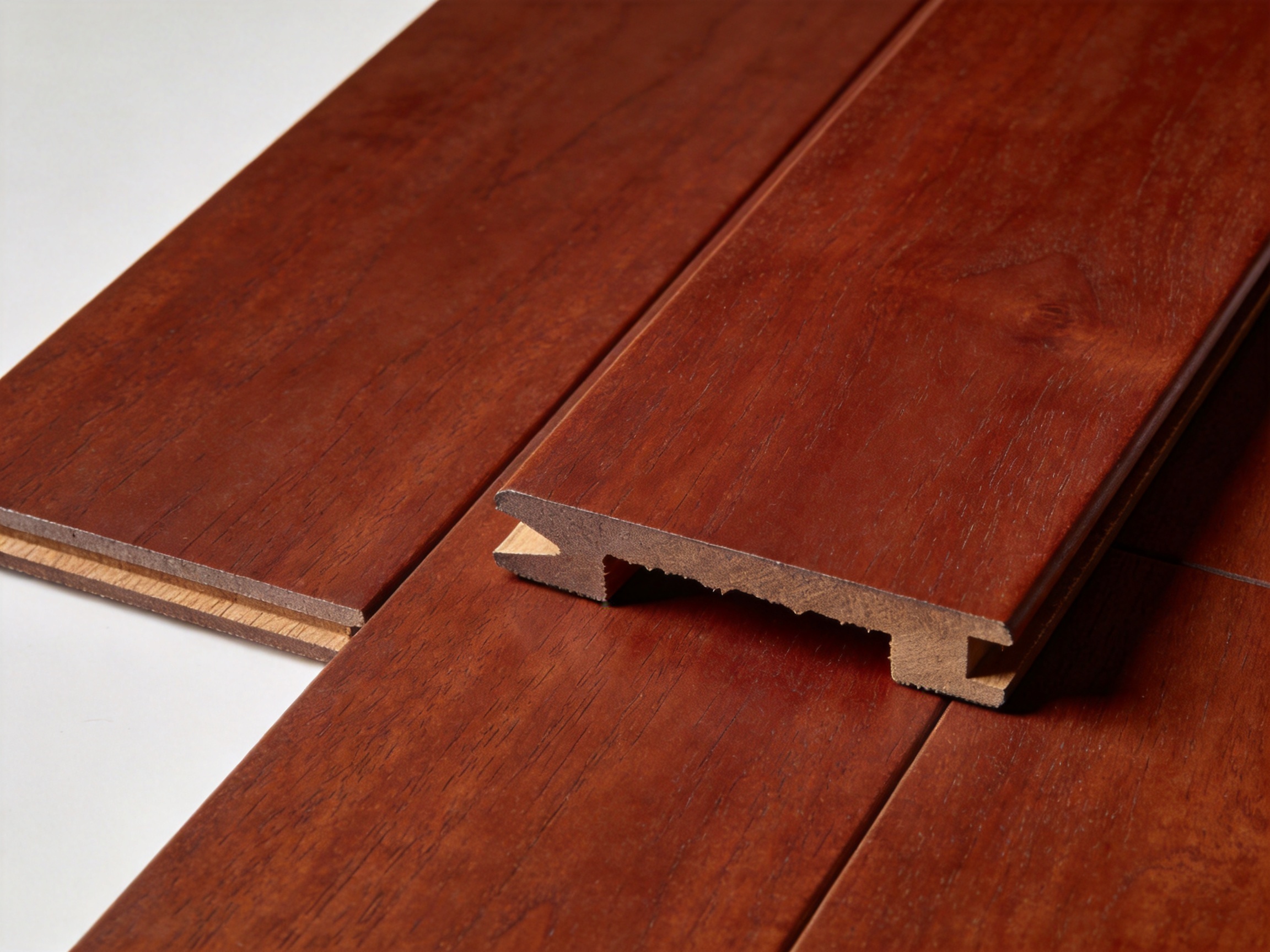
The flooring uses a tongue-and-groove profile on four sides, with micro-beveled edges. Tongue-and-groove construction is a proven flooring profile that allows boards to fit securely together. The tongue of one board enters the groove of the next, helping align the floor surface and supporting dimensional continuity across the installation.
The micro-bevel detail offers several advantages. It visually defines each plank, emphasizing the natural board format and adding depth to the floor layout. It can also help reduce the visibility of slight height differences between boards, which is useful in real-world installation conditions. For deep red brown flooring, micro-beveled edges create subtle shadow lines that enhance the premium plank appearance.
The specified installation methods are glue or staple. Glue-down installation can provide a firm feel underfoot and good acoustic performance when performed correctly on a suitable substrate. Staple installation is commonly used over appropriate wood subfloors and can be efficient for professional installers. The choice depends on subfloor type, project location, climate conditions, and installer recommendations.
Some marketing content references a floating click-lock concept, but the technical table identifies tongue and groove with glue or staple installation. For professional specification, the technical table should be treated as the controlling reference. Tongue-and-groove solid wood floors generally require careful subfloor preparation, acclimation, expansion gaps, and moisture control to achieve long-term stability.
Environmental responsibility is increasingly important in flooring procurement. This product is associated with the E0 environmental standard, with formaldehyde emission not more than 0.05 mg per cubic meter. Although solid wood itself does not rely on composite adhesive layers in the same way as many engineered panels, coatings, packaging, and related materials still matter in indoor environmental assessment. E0 performance helps reassure buyers who prioritize air quality.
The flooring is also CE and FSC certified. CE compliance supports access to European markets and signals conformity with applicable health, safety, and environmental requirements. FSC certification indicates that wood sourcing is connected to responsible forest management principles. For distributors, architects, and contractors, these certifications can simplify documentation for projects that require sustainable material records.
The manufacturer’s broader compliance profile includes CARB P2 and ISO 9001. CARB P2 is widely recognized in relation to formaldehyde emission control for composite wood products, while ISO 9001 demonstrates a structured quality management system. These credentials are especially meaningful for international buyers who need consistent documentation, stable production quality, and lower procurement risk.
Compared with competitors that offer attractive pricing but limited documentation, this flooring provides stronger assurance for specification-driven projects. In commercial tenders, hospitality procurement, and multi-unit residential developments, certification is not optional; it is often a baseline requirement. A supplier capable of providing CE, FSC, CARB P2, and ISO 9001-related documentation has a practical advantage over smaller workshops or traders with uncertain compliance systems.
The flooring is described as suitable for underfloor heating under appropriate conditions. This is a valuable feature because underfloor heating is increasingly common in modern residential and hospitality design. Wood is a natural material that responds to temperature and humidity, so successful use over radiant heating requires correct species selection, controlled moisture content, professional installation, and gradual heating operation.
The product’s moisture content is controlled at 8% to 10%, with a tolerance of plus or minus 2%. This range is intended to support dimensional stability in interior environments. Before installation, the flooring should be acclimated to site conditions, and the heating system should be commissioned and stabilized according to project guidelines. Sudden changes in temperature or humidity should be avoided.
Compared with low-quality solid wood flooring that lacks moisture control, this product offers a more reliable foundation for heated environments. However, no solid wood floor should be treated as immune to movement. The advantage lies in careful manufacturing, species performance, controlled drying, accurate milling, and disciplined installation. When these factors are aligned, the floor can deliver comfort and durability with radiant heating systems.
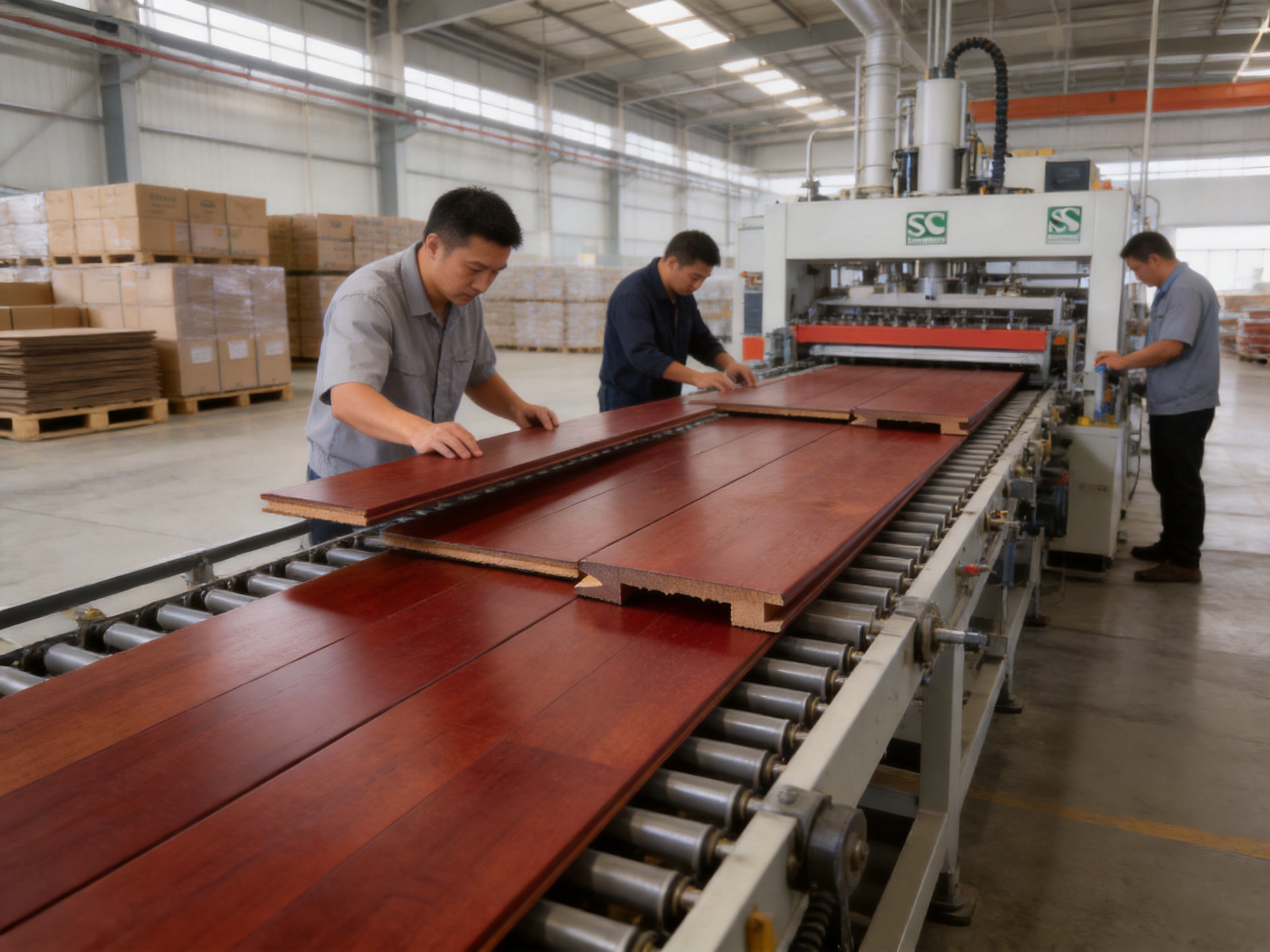
The quality of solid wood flooring is not determined only by the timber species. It depends heavily on manufacturing capability. The producer behind this flooring is a global wood solutions manufacturer specializing in wood flooring, wooden doors, and custom cabinet solutions. Founded in 1999, the company has more than 20 years of industry experience and more than 10 years of export experience. This history matters because solid wood manufacturing requires accumulated expertise in material selection, drying, machining, finishing, inspection, and packaging.
The company operates approximately 20,000 square meters of production facilities and serves more than 100 global partners across Europe, North America, and Southeast Asia. Its annual production capacity includes 2,400,000 square meters of flooring and 5,000 sets of doors. For distributors and project buyers, this production scale supports stable supply, repeat orders, and coordinated delivery for larger projects.
Advanced German imported production lines and automated quality control systems are part of the manufacturing foundation. Precision equipment improves milling accuracy, surface consistency, and profile reliability. Automated quality control helps reduce variation and detect defects earlier in the production process. In solid wood flooring, small differences in milling tolerance can affect installation speed and final floor appearance, so equipment quality has direct customer value.
The company also offers OEM and ODM customization, allowing buyers to specify dimensions, colors, surface textures, finishes, and project-specific requirements. A 72-hour rapid prototyping capability helps accelerate sampling and product development. This is a major advantage for brands, distributors, architects, and developers who need to evaluate color boards, finish samples, or customized design concepts before committing to volume orders.
A strict three-step quality inspection process helps ensure that flooring shipments meet buyer expectations. While the exact internal procedure may vary by production batch, a professional inspection system usually includes raw material inspection, in-process inspection, and final inspection before packaging and shipment. Each stage reduces the probability of defects reaching the installation site.
Raw material inspection focuses on species identification, board quality, moisture level, color range, visible defects, and structural suitability. Since natural wood varies from tree to tree, skilled grading is essential. The goal is not to eliminate all natural variation, but to sort boards into appropriate grades and ensure that the selected material matches the intended product standard.
In-process inspection occurs during cutting, drying, profiling, sanding, staining, and finishing. For tongue-and-groove flooring, machining accuracy is critical. Poorly milled profiles can cause gaps, uneven surfaces, slow installation, or weak connections. Sanding must be uniform to avoid waves, scratches, or inconsistent stain absorption. Coating must be evenly applied and properly cured to achieve the desired appearance and protection.
Final inspection checks dimensions, surface quality, color consistency, finish integrity, carton labeling, quantity, packaging strength, and documentation. For export orders, packaging quality is especially important because flooring may experience long-distance transport, port handling, container movement, and storage before reaching the jobsite. Strong final inspection reduces claims, delays, and unnecessary waste.
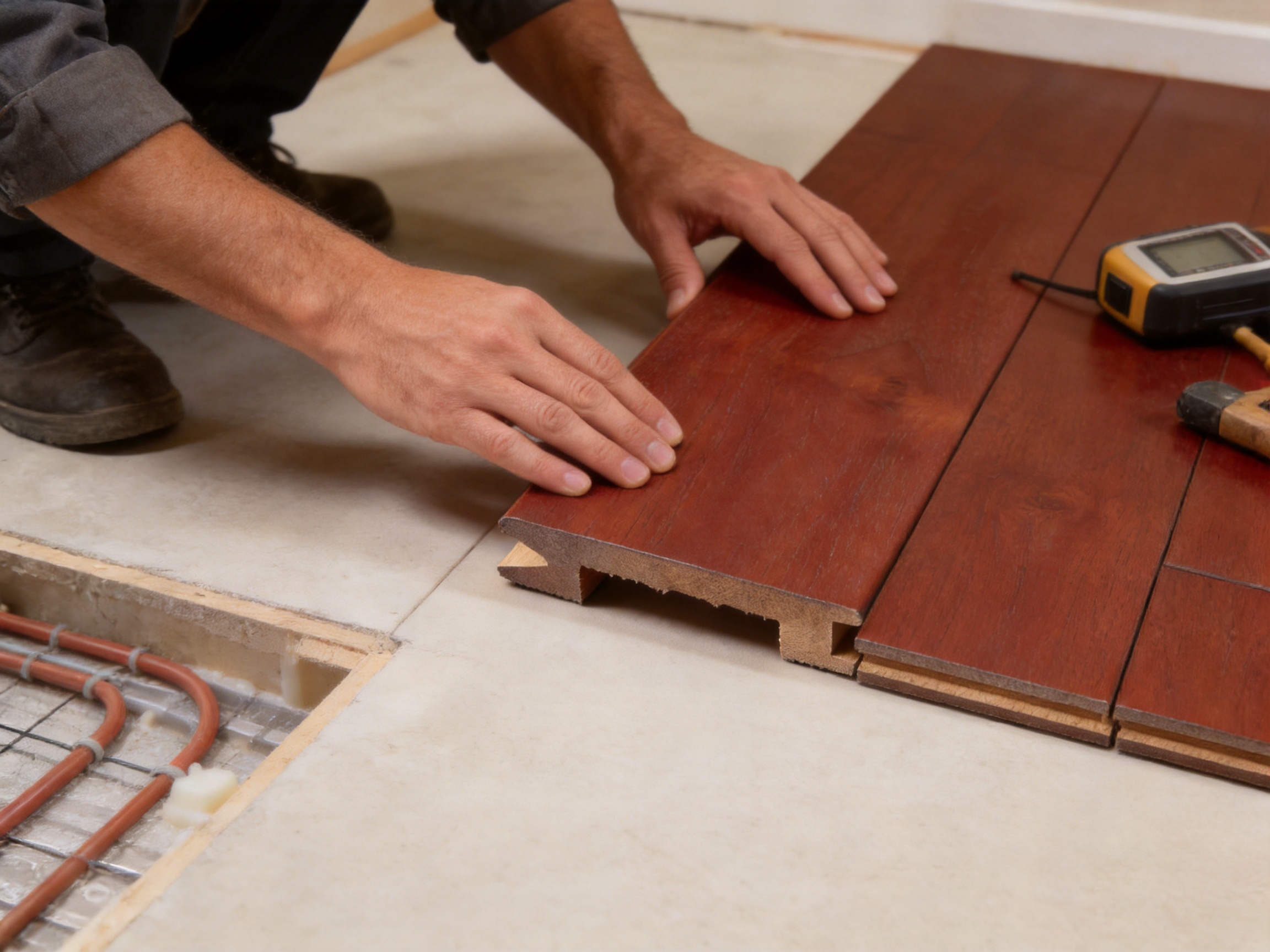
Compared with laminate flooring, this product offers genuine hardwood rather than a printed image layer. Laminate can be cost-effective and scratch resistant, but it cannot provide the same natural grain depth, full-thickness wood identity, or refinishing potential. In premium interiors, clients often recognize the difference between imitation and authentic materials.
Compared with luxury vinyl tile, this solid wood flooring provides a natural, renewable material with a warmer tactile quality. Vinyl can perform well in wet areas and heavy commercial conditions, but it is a synthetic product. For bedrooms, lounges, and high-end residential spaces, many clients prefer the organic feel and acoustic softness of wood.
Compared with low-cost engineered wood, this flooring avoids thin veneer limitations. Some engineered products have very thin top layers that cannot be sanded significantly. A solid 18 mm hardwood board offers greater material depth. Although engineered wood may offer superior dimensional stability in some environments, the appeal of solid wood remains strong for customers who value authenticity and longevity.
Compared with unfinished site-finished flooring, this factory-finished or factory-prepared flooring can provide more controlled color and coating consistency. Factory finishing allows specialized equipment, controlled curing, and repeatable processes. Site finishing may still be desirable for certain projects, but it often introduces variables such as dust, odor, weather, and installer technique.
Compared with suppliers that only offer standard products, this manufacturer provides customization in size, color, texture, and finish. This is important because design projects rarely follow one universal specification. A boutique hotel may need a wire-brushed hardwax oil finish; a private residence may prefer smooth matte UV oil; a distributor may require a custom color range for a local market. Customization allows the product to compete in both design-led and commercial channels.
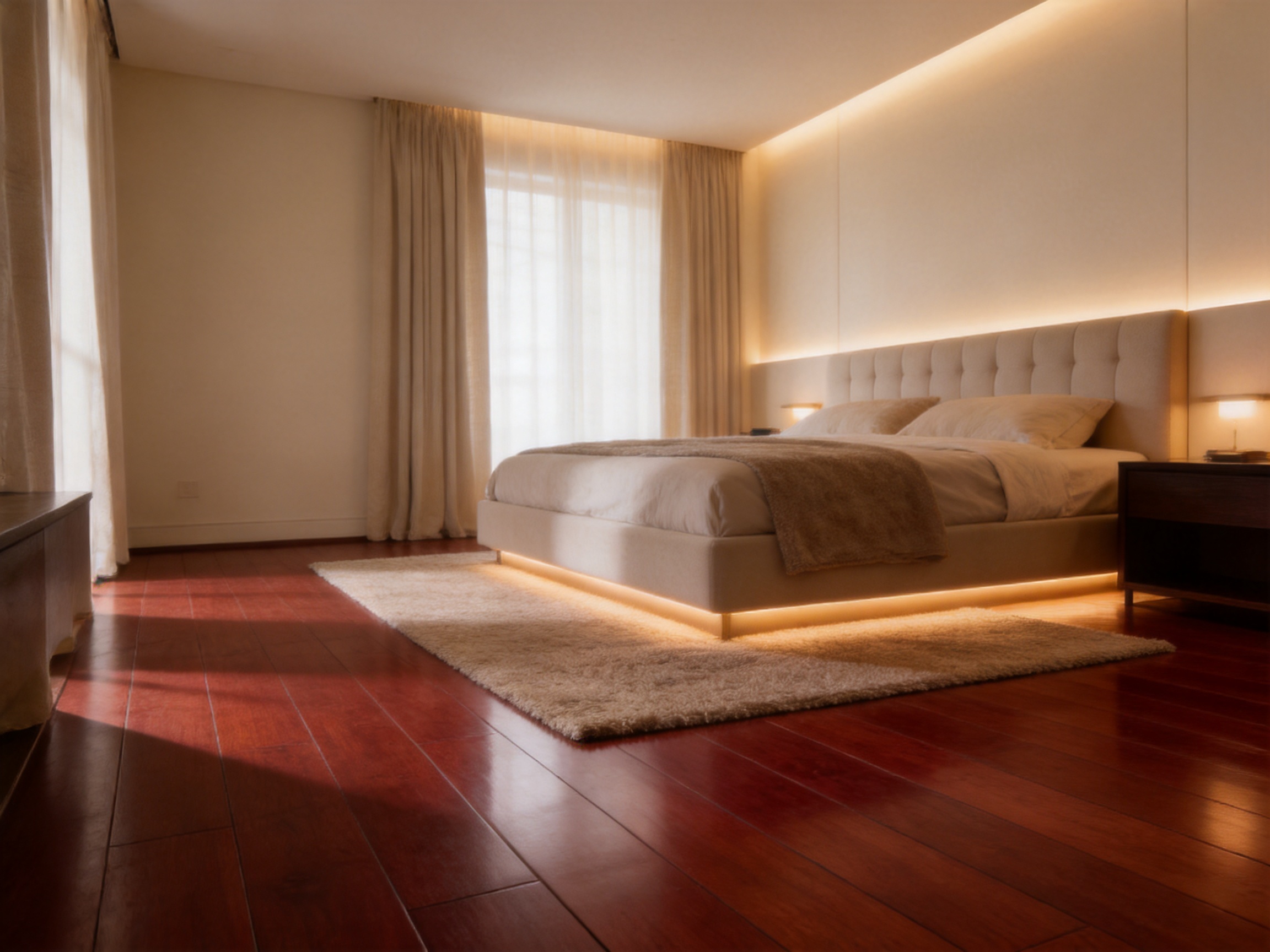
In master bedrooms, the deep red brown matte floor creates a sense of comfort and privacy. It pairs well with upholstered headboards, dimmable lighting, linen bedding, wool rugs, and warm neutral walls. The low-glare surface supports restful environments, and the solid wood construction adds a feeling of permanence.
In home theaters, the matte finish reduces reflected light from screens and projectors. Darker flooring also supports a cinematic atmosphere. The 18 mm thickness and solid construction can contribute to a more substantial acoustic feel, especially when combined with proper underlayment, wall treatments, curtains, and furniture.
In reading nooks and libraries, the floor’s deep tone reinforces a quiet and thoughtful mood. It works beautifully with built-in cabinetry, dark shelving, leather chairs, and warm task lighting. The natural wood grain prevents the space from feeling too flat or artificial.
In living rooms, this flooring can act as a strong visual anchor. It pairs well with cream sofas, dark coffee tables, stone fireplaces, and metallic accents. Because the surface is matte, it does not compete with decorative lighting or artwork. Instead, it provides a calm foundation for layered interiors.
In dining rooms, the red brown tone creates hospitality and warmth. With proper protective pads under furniture and careful cleaning after spills, the floor can support elegant daily living. The micro-beveled plank format adds texture without overwhelming the room.
The product is suitable for light commercial use when installed and maintained properly. Potential applications include boutique hotel rooms, private clubs, executive offices, design studios, showrooms, upscale retail areas, and hospitality lounges. These spaces benefit from the emotional value of real wood and the premium effect of deep matte color.
In boutique hospitality, flooring must contribute to brand experience. Guests notice tactile materials, color warmth, and acoustic comfort. A solid deep red brown hardwood floor can make rooms feel more curated and memorable than generic surface materials. It communicates quality without needing excessive decoration.
In executive offices and meeting rooms, the floor conveys authority and refinement. It pairs well with wood veneer wall panels, leather seating, black metal details, and neutral acoustic panels. The matte finish reduces glare from conference lighting and digital screens.
In showrooms, the flooring can support products that require a premium setting, such as furniture, luxury textiles, cabinetry, lighting, or interior decor. The natural warmth of the wood helps customers imagine real residential environments. Because the floor itself has character, it elevates the perceived value of the space.
Customization is one of the strongest selling points of this flooring solution. The manufacturer can provide custom sizes and colors, along with multiple texture and finish options. For architects, this means the floor can be aligned with a project’s material palette. For contractors, it means technical requirements can be coordinated early. For distributors, it means product ranges can be adapted to local market trends.
Color customization can adjust the red brown tone toward deeper chocolate, warmer reddish brown, or more natural brown depending on target market preferences. Finish customization can modify sheen level, surface feel, and maintenance expectations. Texture customization can create a clean contemporary look or a more rustic handmade appearance.
The 72-hour rapid prototyping capability is particularly useful in competitive project environments. Fast sample development allows design teams to review physical boards rather than relying only on digital images. Because wood appearance changes under different lighting, physical samples are essential for accurate approval. Rapid prototyping can reduce decision time and help buyers move from concept to order more efficiently.
OEM and ODM capabilities also support private-label flooring brands. Distributors can develop exclusive collections, packaging, and specification programs while relying on established production infrastructure. This is a major advantage over factories that cannot adjust products beyond a fixed catalog.
Wire brushed texture is ideal for customers who want visible grain and practical everyday performance. By emphasizing the wood’s natural structure, wire brushing adds depth and can make small marks less noticeable. It suits transitional, rustic modern, industrial luxury, and hospitality interiors.
Handscraped texture creates a more artisanal surface. It can make a floor feel handcrafted and historically rooted. This option is suitable for villas, private residences, boutique hotels, and spaces where individuality is valued. Because handscraping creates irregular surface movement, it should be specified carefully to match the overall design language.
Smooth sanded texture is the most refined and contemporary. It allows the deep red brown color and matte finish to appear clean and elegant. Smooth surfaces work well in modern bedrooms, formal lounges, executive offices, and minimalist spaces where excessive texture would distract from the design.
The availability of all three texture categories gives the product broader market reach. One hardwood species and color direction can be transformed into multiple design expressions simply by changing texture and finish combinations.
UV lacquer is a strong option for customers who want a factory-controlled protective coating. It provides a surface film that helps resist daily wear and simplifies routine cleaning. For many residential and light commercial projects, UV lacquer offers a practical balance of beauty and durability.
UV oil enhances the natural appearance of wood while offering efficient curing. It can create a softer, more organic look than lacquer. Customers who prefer a natural wood feel may choose UV oil, especially in spaces where the floor is part of a calm, tactile interior concept.
Hardwax oil is often selected for premium natural finishes. It combines oil penetration with wax-like surface protection and can be locally repairable in many cases. It requires appropriate maintenance but rewards the owner with an authentic, low-sheen surface.
Daily cleaning should be simple and disciplined. Dry mopping or vacuuming with a suitable wood-floor attachment removes dust and grit. Wet mopping should be avoided because excessive moisture can damage wood and finish. For stubborn stains, a neutral cleaner and soft cloth are recommended. Harsh chemicals, abrasive pads, and steam cleaning should not be used.
Wax-based cleaners should be avoided on matte finishes unless specifically recommended for the selected finish system. Inappropriate wax products can dull or contaminate the surface. Periodic maintenance every 6 to 12 months may help keep the floor fresh, but the correct product depends on whether the floor is finished with UV lacquer, UV oil, or hardwax oil.
Solid wood flooring performs best when moisture is controlled from manufacturing through installation and daily use. The flooring’s specified moisture content of 8% to 10%, plus or minus 2%, provides a controlled starting point. However, site conditions remain critical. The building should be enclosed, wet trades should be completed, HVAC systems should be operating, and subfloor moisture should be measured before installation.
Acclimation is also important. Flooring should be stored in the installation environment or a comparable controlled space before installation, following professional guidance. The goal is to allow the wood to adjust gradually to site conditions. Extreme humidity swings can cause expansion, contraction, cupping, crowning, or gaps.
Subfloor flatness and cleanliness affect installation quality. Glue-down floors require suitable adhesive, correct spread rate, and proper open time. Staple-down floors require an appropriate wood subfloor and correct fastener type. Expansion gaps must be maintained around walls and fixed objects because wood naturally moves with seasonal humidity changes.
These details distinguish professional solid wood flooring from casual DIY materials. While the product has strong manufacturing quality, installation discipline is essential. Buyers should work with experienced installers and follow local standards to protect the investment.
Each carton contains 12 pieces and covers approximately 1.2 square meters. This carton format supports manageable handling while protecting the material during transport. With a carton weight of approximately 20.5 kg, the packaging is substantial but still practical for site distribution by trained personnel.
For international buyers, export experience is an important advantage. The company has more than 10 years of export experience and serves partners in Europe, North America, and Southeast Asia. Export flooring orders require accurate documentation, stable packaging, container loading planning, moisture protection, labeling, and communication. A manufacturer familiar with these requirements reduces procurement risk.
Stable production capacity also matters for repeat supply. Distributors need consistency across multiple shipments. Contractors need confidence that replacement or additional material can be coordinated. Developers need predictable lead times. A production base with large flooring capacity is better positioned to support these requirements than small workshops with limited throughput.
Sustainability in flooring should consider sourcing, manufacturing, indoor air quality, durability, maintenance, and end-of-life value. FSC certification supports responsible sourcing. E0 emissions and low-VOC coating options support healthier interiors. Solid hardwood construction supports long service life. The ability to maintain or refinish wood can reduce replacement frequency compared with short-cycle floor coverings.
Long-term value is not the same as lowest purchase price. A cheaper floor that must be replaced quickly may create higher total cost and more waste. A durable solid wood floor can provide decades of service when installed and maintained properly. Its visual appeal also tends to remain relevant because natural wood does not depend entirely on short-lived decorative trends.
The deep red brown matte style has lasting design potential. While certain colors rise and fall in popularity, warm hardwood tones have a long history in interior architecture. The matte finish updates the look for contemporary preferences, making the product suitable for both traditional and modern spaces.
For procurement teams, the product combines design appeal, technical clarity, compliance, customization, and manufacturing capacity. It is not merely a decorative surface; it is a complete flooring solution backed by production systems and export capability. This makes it suitable for distributors building product lines, contractors bidding projects, and architects specifying premium interiors.
The advantages are especially clear when compared with competitors that lack certification, offer limited customization, or rely on inconsistent manual production. German imported production lines, automated quality control systems, a three-step inspection process, and a large production base all support reliability. Buyers can evaluate samples, customize details, and scale orders with confidence.
The company’s broader wood solutions capability also creates coordination benefits. Because it manufactures flooring, wooden doors, and custom cabinets, it can support integrated interior woodwork projects. For hotels, residences, villas, apartments, and commercial interiors, coordinated wood tones and finishes across multiple product categories can create a more unified design.
For a warm modern bedroom, pair the floor with ivory walls, walnut or dark oak furniture, linen curtains, and warm LED lighting. Use a large wool rug in beige or taupe to soften acoustics and add comfort. The deep floor color will ground the room while the matte finish keeps the effect calm.
For a home theater, combine the flooring with dark acoustic wall panels, charcoal seating, blackout curtains, and indirect lighting. The matte surface helps reduce glare, while the red brown tone adds warmth so the room does not feel cold or purely technical.
For a luxury study, pair the flooring with built-in bookcases, leather seating, brass lamps, and a deep green or navy accent wall. The natural grain of the hardwood will balance the richness of the palette.
For a boutique hotel room, combine the floor with upholstered panels, stone vanity surfaces, soft area rugs, and custom wood doors or cabinets in complementary tones. Coordinated wood elements can strengthen the guest experience and support a premium brand identity.
Routine care begins with prevention. Use entrance mats to reduce grit, attach felt pads under furniture, and avoid dragging heavy objects across the floor. Maintain stable indoor humidity where possible, especially in regions with strong seasonal changes. Promptly wipe spills with a soft dry or slightly damp cloth.
Dry mop regularly to remove dust. If deeper cleaning is needed, use a neutral cleaner designed for wood floors and follow the finish supplier’s recommendations. Avoid soaking the floor, using steam cleaners, or applying aggressive chemical products. Standing water is one of the most common causes of wood flooring problems.
For matte floors, avoid polish products intended to create shine. These can alter the intended low-sheen appearance. If the floor uses hardwax oil or oil finish, maintenance oils may be needed periodically. If the floor uses UV lacquer, maintenance products should be compatible with lacquered wood surfaces.
In commercial or hospitality spaces, cleaning staff should receive clear instructions. Many flooring problems arise not from the material but from incorrect cleaning methods. A simple maintenance protocol can protect appearance and reduce long-term costs.
This flooring is made from a 100% solid hardwood core, while laminate uses a printed decorative layer and vinyl is synthetic. Solid hardwood provides authentic grain, natural warmth, long-term value, and potential renovation options that imitation surfaces cannot fully match.
Yes, it can be suitable for small rooms when balanced with lighter walls, soft lighting, and appropriate furniture. The deep tone creates intimacy, while the matte finish reduces glare and prevents the floor from looking overly reflective.
The technical specification identifies the wood species as Okan, or Cylicodiscus gabunensis. It is a dense hardwood known for strength and durability. The product’s deep red brown visual character gives it a rich premium appearance.
Yes. The surface can be customized as wire brushed, handscraped, or smooth sanded. Each option creates a different design effect, from textured and practical to artisanal or refined modern.
Available finish options include UV lacquer, UV oil, and hardwax oil. The best choice depends on the desired appearance, maintenance preference, and project use conditions.
The flooring meets the E0 environmental standard and is associated with CE and FSC certification. The manufacturer also works within broader compliance systems including CARB P2 and ISO 9001. Low-VOC coating options further support healthier indoor environments.
Yes, it is described as suitable for underfloor heating when installed under proper conditions. Moisture control, acclimation, gradual heating operation, and professional installation are essential for best performance.
The technical specification lists glue and staple installation methods. The correct method depends on the subfloor, project conditions, and installer recommendations.
Dry mop or vacuum regularly using a wood-floor-safe attachment. Avoid wet mopping, steam cleaning, abrasive tools, and harsh chemicals. For stains, use a neutral cleaner and a soft cloth.
Manufacturing quality affects drying, milling, grading, finishing, inspection, packaging, and delivery reliability. A manufacturer with advanced production lines, automated quality control, certifications, customization capability, and export experience offers stronger procurement security than suppliers with limited systems.
Deep red brown matte solid wood flooring offers a compelling combination of natural beauty, technical strength, and design versatility. Its 100% solid hardwood core provides authenticity and long-term value. Its Okan wood specification supports durability, while its matte deep red brown appearance creates warmth, privacy, and refined visual depth. Customizable textures and finishes allow the product to adapt to different design languages, from smooth contemporary bedrooms to wire-brushed hospitality interiors.
Beyond the product itself, the manufacturing strength behind it is a major advantage. More than 20 years of experience, large production facilities, German imported production lines, automated quality control, a three-step inspection process, OEM and ODM services, rapid prototyping, and global compliance credentials all contribute to a more reliable flooring solution. For distributors, contractors, designers, and project owners, this combination reduces risk and increases design freedom.
In a market filled with imitation surfaces and inconsistent suppliers, this flooring stands out because it offers real hardwood, verified standards, customizable production, and an appearance that can transform interiors. It is especially suited to spaces where warmth, quiet elegance, durability, and responsible sourcing matter. Whether used in a master bedroom, home theater, private study, boutique hotel suite, or executive office, it provides a lasting foundation for interiors that are both beautiful and functional.
Forest Stewardship Council. Principles and Criteria for Responsible Forest Management.
International Organization for Standardization. ISO 9001 Quality Management Systems Guidelines.
European Committee for Standardization. Wood Flooring Product and Performance Standards.
California Air Resources Board. Composite Wood Products Airborne Toxic Control Measure Guidance.
National Wood Flooring Association. Wood Flooring Installation Guidelines and Methods.
European Federation of the Parquet Industry. Technical Information on Wood Flooring and Indoor Climate.
Architectural Woodwork Institute. Wood Material Performance and Interior Woodwork Standards.

We provide customers with sustainable and eco-friendly
engineered wood solutions and services.
Choose DEIF for the perfect blend of
performance and aesthetics.
