


 English
 Español
 عربى
عربى

Get Social
Choose DEIF for the perfect blend of
performance and aesthetics.
 Get Free Sample

Content
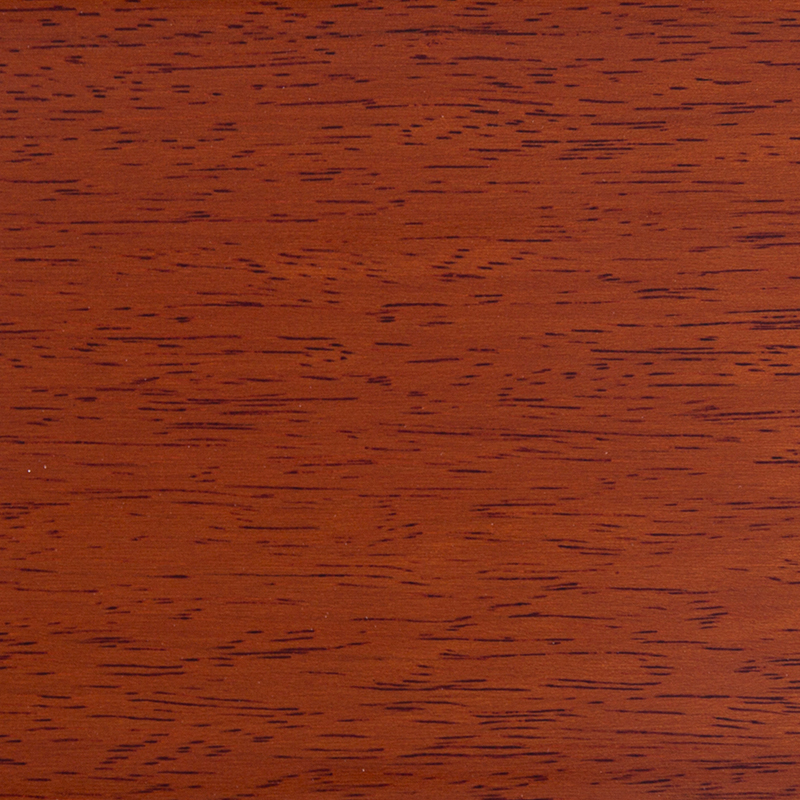
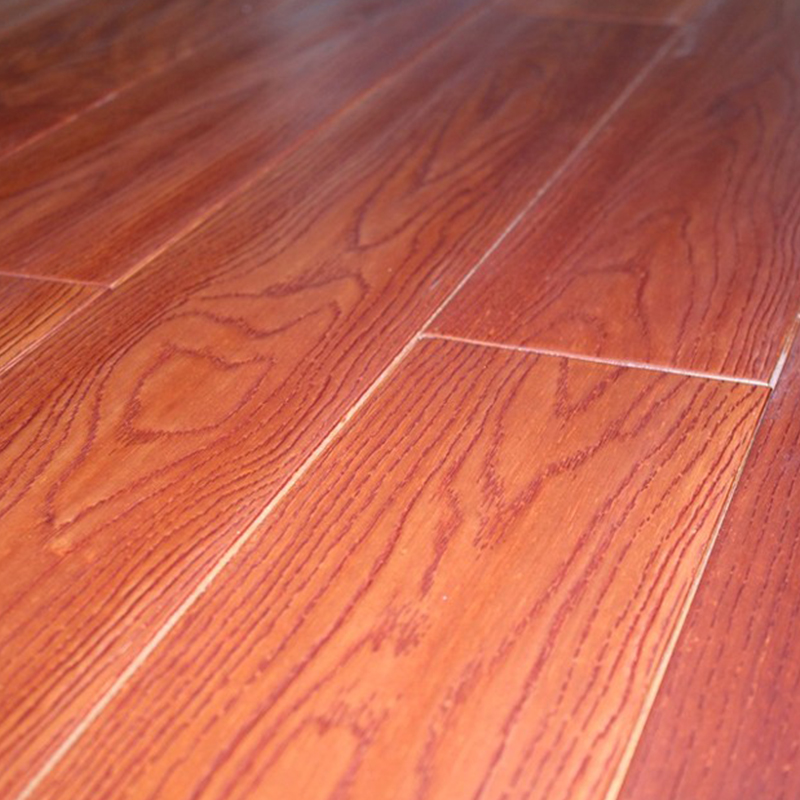
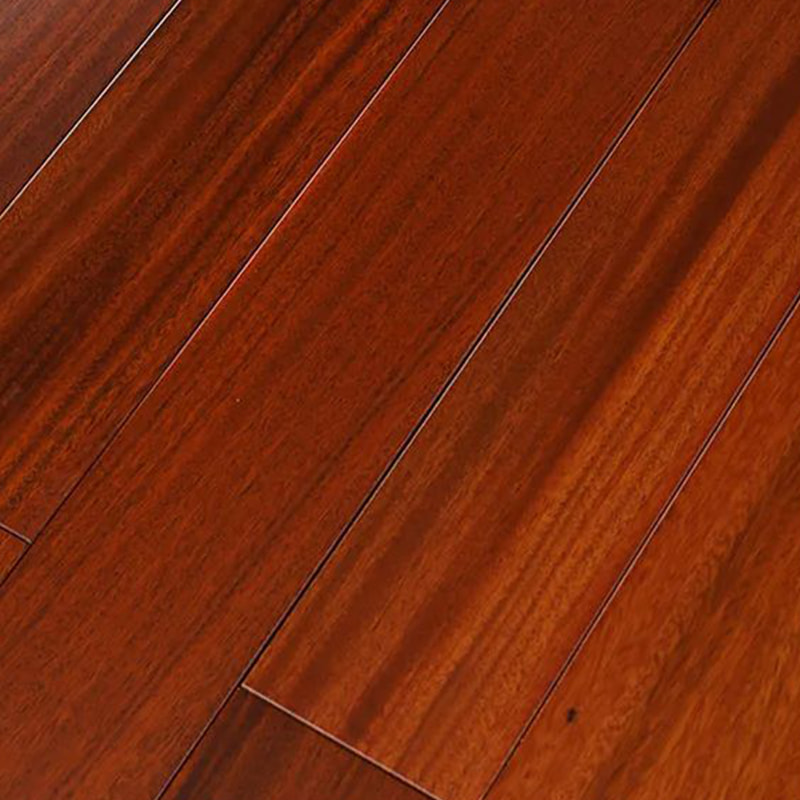
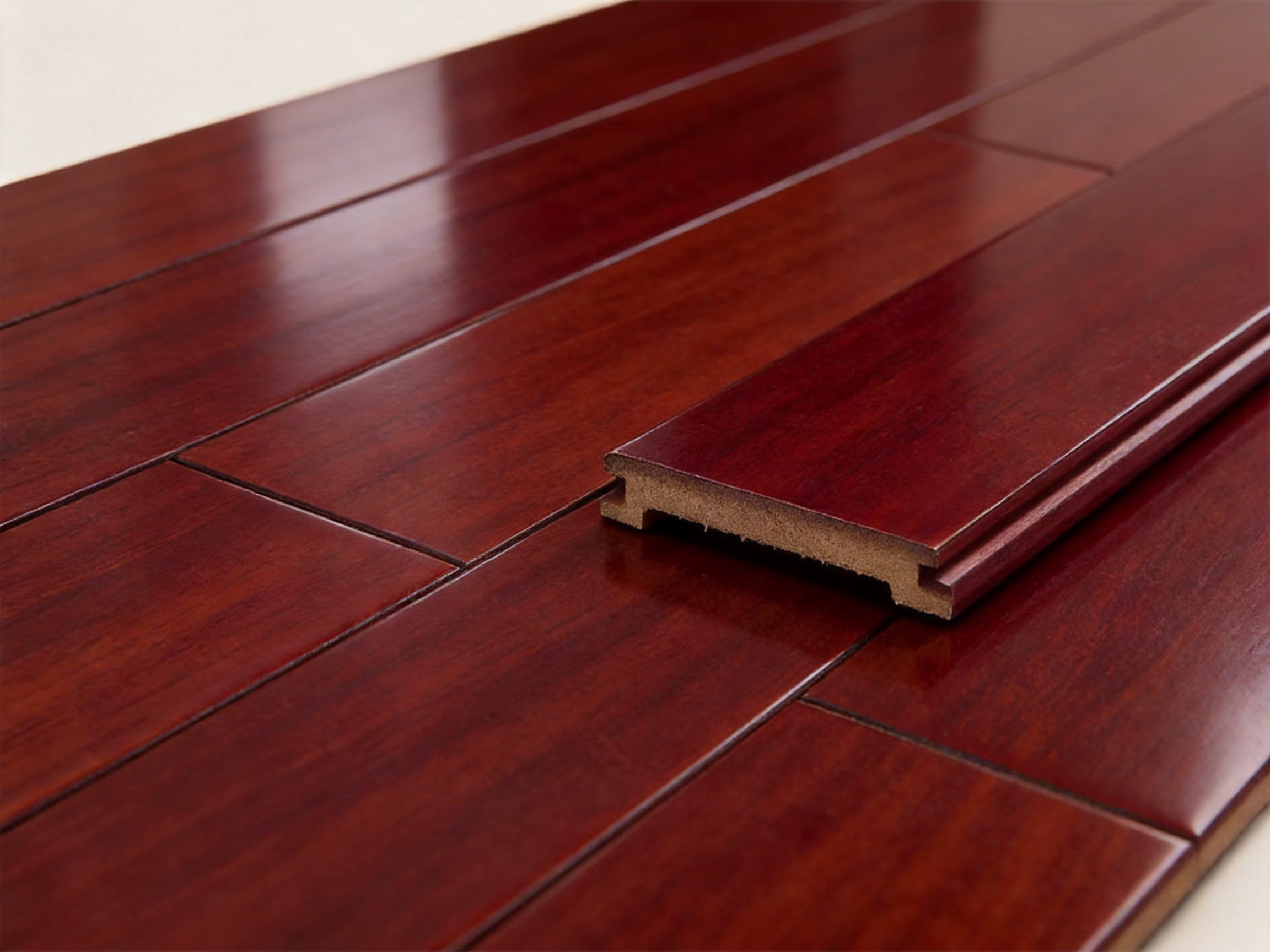
Classic Burgundy Red Taun Flooring is a distinctive solid hardwood flooring solution designed for interiors that require warmth, durability, and a strong visual identity. Its deep burgundy-red tone, high-gloss piano lacquer finish, and naturally expressive grain combine to create a refined floor with the visual richness often associated with luxury mahogany. At the same time, the flooring is positioned as a more practical and cost-conscious alternative to some premium dark hardwood specifications.
Manufactured from solid Taun wood, also identified as Pometia pinnata, this flooring provides a genuine hardwood construction rather than a composite or multi-layered core. The result is a naturally warm surface, a substantial underfoot feel, and the authentic variation that makes every installation visually individual. With a tongue-and-groove profile, customizable dimensions and finishes, certification support, and project-oriented manufacturing capabilities, the product is suitable for residential interiors, hospitality settings, refined commercial spaces, and architectural projects.
Beyond its appearance, the flooring is supported by a complete manufacturing and quality-control system. The producer operates large-scale facilities, uses imported production lines and automated inspection systems, and provides OEM and ODM customization for global partners. This combination allows buyers to obtain a decorative hardwood floor with a distinctive finish while also receiving the consistency, documentation, and supply capability required for professional projects.
The product reference for this flooring is DS-6003. It belongs to the Solid Taun Wood Flooring category and is developed around a solid hardwood core, a tongue-and-groove installation profile, and a selectable surface specification. The featured version uses a classic burgundy tone and high-gloss piano lacquer finish. This finish produces a highly polished surface with strong light reflection and enhanced color depth.
The floor is supplied in a standard plank format of approximately 35.83 inches long, 4.80 inches wide, and 0.71 inches thick. These dimensions provide a balanced visual rhythm: the width is broad enough to show the wood grain clearly, while the plank length supports an orderly, traditional installation pattern. Custom sizes can be discussed for projects with special design requirements, room proportions, or installation systems.
The standard product is supplied in AB Select Grade. This grade can provide a controlled balance between natural timber character and a relatively refined appearance. Depending on the project brief, the buyer may request a texture or finish such as wire brushed, hand scraped, smooth sanded, UV lacquer, UV oil, or hardwax oil. The featured burgundy design is associated with a high-gloss lacquer treatment, but the wider product platform allows the material to be adapted to different interior concepts.
| Product Reference | DS-6003 |
| Product Category | Solid Taun Wood Flooring |
| Wood Species | Taun, Pometia pinnata |
| Standard Dimensions | 35.83 inches x 4.80 inches x 0.71 inches |
| Grade | AB Grade, Select |
| Profile | Tongue and groove on four sides with micro-bevel |
| Standard Locking System | Tongue and groove |
| Surface Texture Options | Wire brushed, hand scraped, or smooth sanded |
| Surface Finish Options | UV lacquer, UV oil, or hardwax oil |
| Featured Appearance | Classic burgundy red with high-gloss piano lacquer |
| Pieces per Carton | 14 |
| Coverage per Carton | 1.55 square meters or approximately 16.73 square feet |
| Approximate Carton Weight | 19.6 kilograms |
| Moisture Content | 8 to 10 percent, with a tolerance of approximately plus or minus 2 percent |
| Installation Methods | Glue or staple, subject to project conditions |
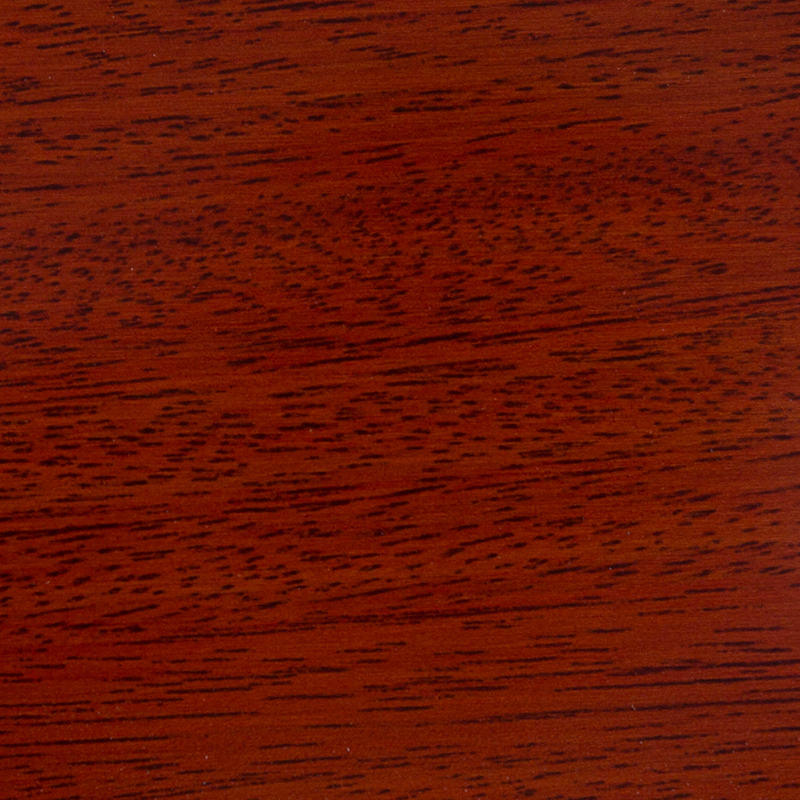
The principal design feature of this flooring is its deep burgundy color. Unlike pale oak or lightly finished ash, a burgundy floor introduces a darker and more formal visual foundation. It can make a large room feel more grounded, add contrast to light walls, and provide a dramatic surface for furniture, artwork, and architectural details.
The color is not intended to imitate a flat painted surface. Instead, the finish allows the natural grain structure of the Taun wood to remain part of the design. Variations in grain direction and tonal depth create movement across each plank, while the dark red-brown palette reinforces the impression of richness. The combination is particularly effective where the floor is expected to function as a major decorative element rather than a neutral background.
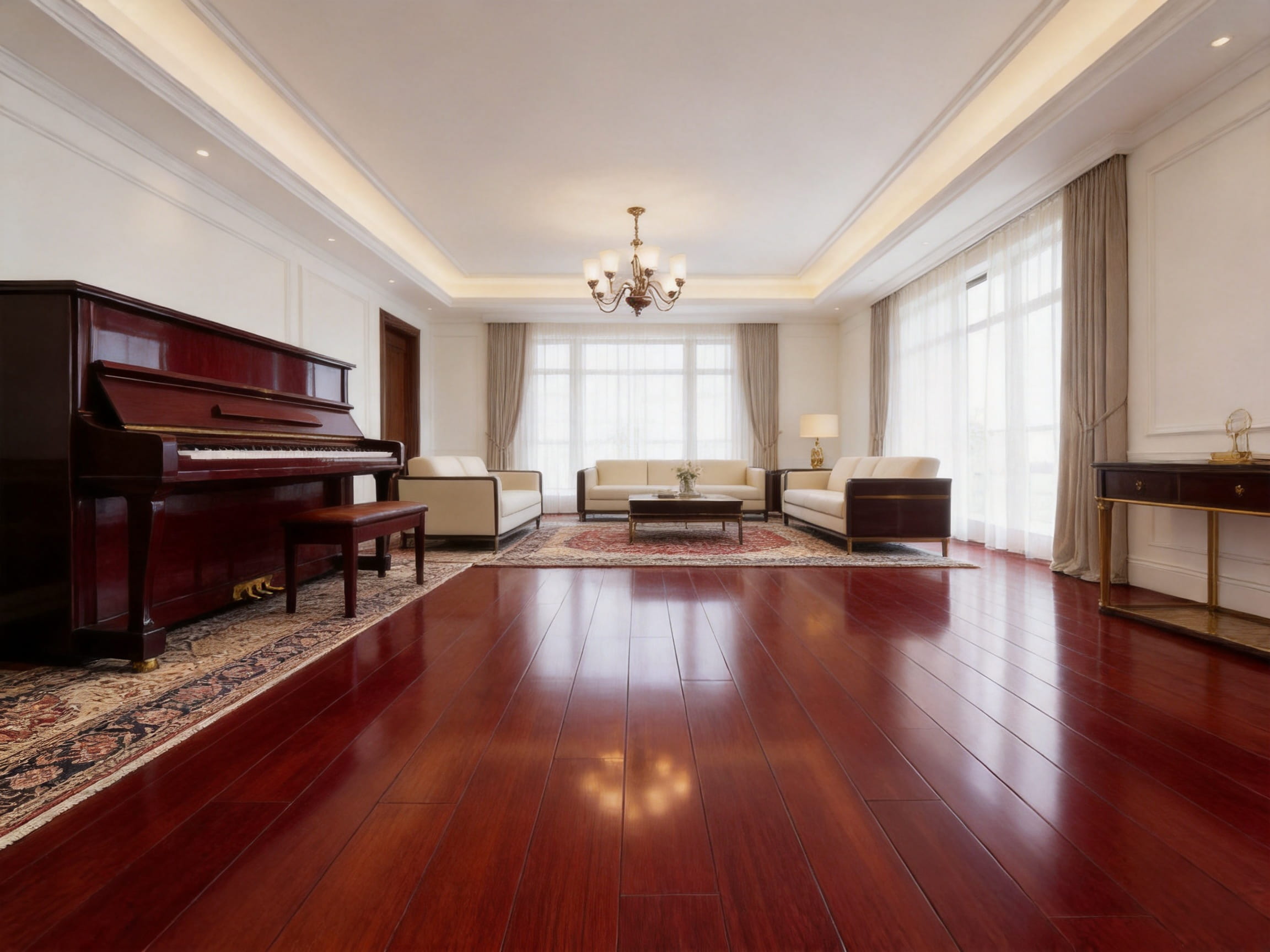
The high-gloss piano lacquer finish strengthens this effect. Multiple rounds of fine polishing help create a smooth, reflective surface similar in visual character to a polished piano. Light from windows, chandeliers, wall fixtures, and ceiling fittings can be reflected across the floor, increasing the sense of depth within a room.
High-gloss flooring is often selected for spaces that need a more formal or luxurious atmosphere. Traditional living rooms, executive offices, libraries, private reception areas, boutique hospitality interiors, and premium residential developments can all benefit from the product’s decorative presence. In a contemporary space, the floor can also be used as a deliberate contrast against simple furniture and restrained wall finishes.
Because the color is visually strong, successful design planning should consider the surrounding palette. Pale cream, warm white, taupe, muted gray, and natural stone colors can balance the richness of the floor. Brass, bronze, black metal, and dark wood accents may reinforce its classic character. Designers can also use light upholstery and generous daylight to prevent the overall interior from becoming visually heavy.
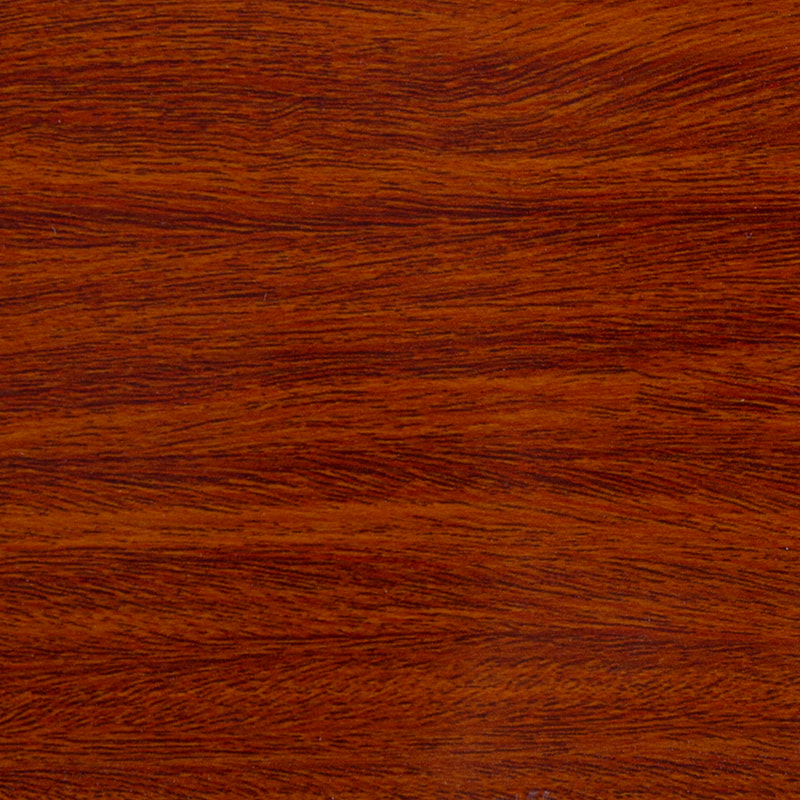
Classic Burgundy Red Taun Flooring, High Gloss Finish
A major advantage of DS-6003 is its 100 percent solid hardwood core. The floor is not built around a composite center or a decorative printed layer. Each plank is formed from solid Taun wood selected and processed for flooring use. This construction gives the product a genuine timber identity that can be felt as well as seen.
Solid hardwood offers a different experience from laminate, vinyl, and many engineered decorative surfaces. Printed products can reproduce a wood image, but they do not provide the same natural variation, edge character, or tactile response. Solid wood also gives the floor a substantial feel underfoot and allows the surface to remain connected to the material’s natural grain.
Compared with low-cost composite flooring, the solid construction can provide stronger long-term value in applications where authenticity, repairability, and a premium appearance are important. The exact maintenance and refinishing plan should be determined by the installed finish and site conditions, but a properly maintained solid wood floor is designed to remain part of an interior for many years.
Solid wood has a naturally warm tactile character. It does not feel as cold or artificial as some hard mineral or synthetic surfaces, and its texture contributes to a more comfortable interior environment. This quality is especially appreciated in bedrooms, living areas, studies, libraries, and other spaces where occupants spend extended periods barefoot or in light footwear.
The warm underfoot experience also supports hospitality and residential design goals. A floor can influence how comfortable a room feels even before furniture and decorations are added. The combination of genuine wood, carefully polished surfaces, and a dark, rich color creates a sense of permanence and comfort.
Taun is selected for its useful combination of strength, hardness, and visual appeal. When correctly dried, machined, finished, packaged, and installed, Taun flooring can support long-term use in residential environments and suitable light commercial settings. The surface is designed to resist the ordinary friction associated with walking, furniture movement, and daily activity.
The floor’s performance depends on more than wood species alone. Moisture control, coating quality, machining accuracy, subfloor preparation, installation technique, and maintenance all affect service life. The manufacturing process therefore plays a central role in converting raw hardwood into a reliable flooring product.
Many competitive flooring products are designed around neutral colors intended to disappear into a room. That approach can be useful, but it does not always provide the visual identity required for premium interiors. Burgundy Taun flooring takes a more expressive direction. Its color and gloss allow the floor to become a design feature and can reduce the need for excessive decorative treatment elsewhere in the room.
In comparison with low-gloss or ordinary stained floors, the piano lacquer finish offers stronger reflection and greater apparent depth. In comparison with expensive imported dark hardwoods, the Taun solution can offer a similar luxurious visual direction while maintaining a more accessible product position. This makes it useful for developers, designers, and distributors seeking a distinctive appearance without specifying the highest-cost exotic hardwood category.
The featured finish is a high-gloss piano lacquer. This coating is developed for a highly polished appearance, smooth touch, and strong visual shine. The surface treatment helps emphasize the burgundy color and can make the natural grain appear deeper and more layered.
A high-gloss finish is also practical in daily cleaning because its smooth surface can limit the areas where dust and loose particles become trapped. Routine dust removal and gentle cleaning can help the floor retain its appearance. However, the reflective surface may show footprints, fine dust, and scratches more visibly than a matte finish, so appropriate care remains important.
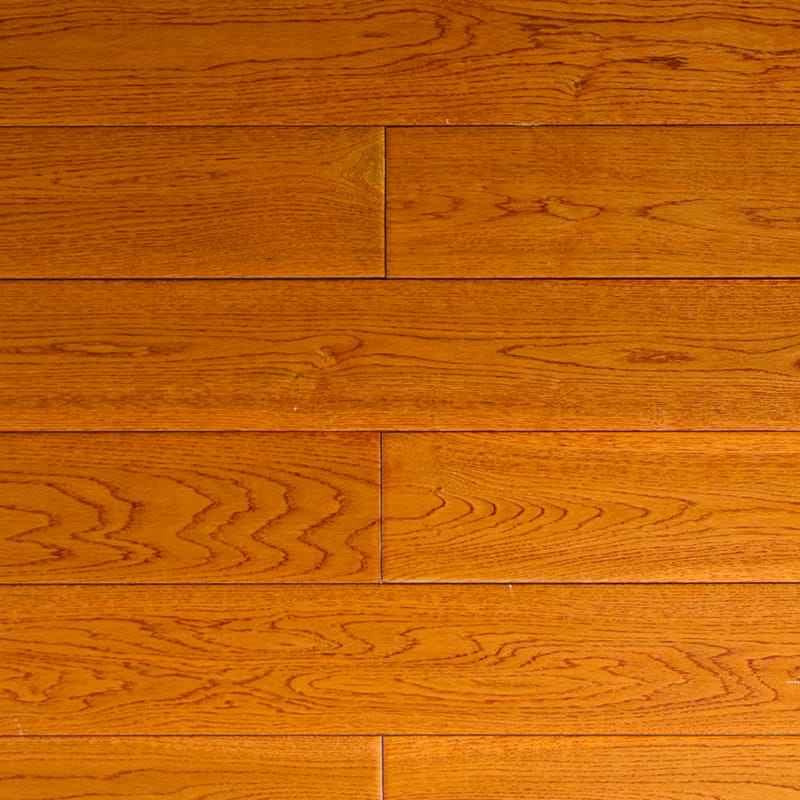
For buyers who prefer a different design direction, the product platform supports several finish alternatives. UV lacquer can provide a durable coated surface with a consistent appearance. UV oil can retain a more natural tactile impression while supporting surface protection. Hardwax oil is often selected when the design requires a softer, more natural wood appearance and a finish that can be maintained as part of a periodic care program.
Texture can also be customized. Smooth sanding offers a clean and contemporary surface. Wire brushing emphasizes the grain and introduces subtle linear texture. Hand scraping creates a more artisanal appearance with additional visual variation. These options allow the same Taun wood platform to serve different architectural styles, from formal classical interiors to relaxed modern spaces.
| Surface Configuration | Design and Performance Character |
| High-Gloss Piano Lacquer | Strong shine, smooth touch, rich color depth, and formal visual character |
| UV Lacquer | Consistent protective coating suitable for projects requiring a uniform finished appearance |
| UV Oil | Balanced protection with a more natural visual and tactile expression |
| Hardwax Oil | Natural-looking finish suitable for projects emphasizing wood texture and maintainability |
| Smooth Sanded Texture | Clean, refined, and contemporary appearance |
| Wire-Brushed Texture | Enhanced grain visibility with subtle tactile detail |
| Hand-Scraped Texture | Artisanal character and greater surface variation |
DS-6003 uses a tongue-and-groove profile on four sides, with a micro-beveled edge detail. The tongue-and-groove system allows adjacent planks to connect in an organized manner and helps establish a clean installation pattern. The micro-bevel can create a fine visual separation between boards, making the individual plank layout more readable.
The product can be installed using glue or staples, depending on the project specification, subfloor design, local construction practice, and manufacturer or installer recommendations. Tongue-and-groove flooring may be configured for glue-free joining as required, but the final installation method should always be selected according to site conditions and the approved technical specification.
Accurate machining is essential for a tongue-and-groove floor. If the profile is inconsistent, boards may not align correctly, joints may become visible, and installation time may increase. Advanced production equipment and automated quality-control procedures help the manufacturer maintain greater dimensional consistency across production batches.
Professional installation remains essential. The subfloor should be clean, flat, dry, and structurally suitable. Expansion allowances should be considered around walls and fixed objects. Flooring should be acclimatized in accordance with the project’s moisture and environmental conditions before installation. These steps help reduce the risk of movement, gaps, cupping, or other installation-related issues.
The stated moisture content for the flooring is 8 to 10 percent, with an indicated tolerance of approximately plus or minus 2 percent. Moisture management is one of the most important technical factors in solid hardwood flooring. Wood naturally responds to changes in temperature and humidity, so the floor must be manufactured, stored, transported, and installed under controlled conditions.
The product is described as compatible with underfloor heating and suitable for residential and light commercial use. Compatibility should be confirmed for the specific heating system, floor assembly, finish, installation method, and climate. The heating system should be commissioned gradually, and the floor should not be exposed to sudden or excessive temperature changes.
Underfloor heating projects require coordination between the flooring supplier, heating-system provider, installer, and general contractor. The subfloor moisture level, maximum surface temperature, heating cycle, adhesive selection, and room humidity should all be reviewed before installation. When the system is properly designed and operated, the solid hardwood surface can provide warmth and comfort without sacrificing the natural wood appearance.
Long-term exposure to excessive heat or high humidity should be avoided. Strong environmental fluctuations can contribute to expansion, contraction, deformation, or color change. Good building ventilation, stable indoor humidity, appropriate window protection, and careful cleaning practices are therefore part of the flooring performance strategy.
The product information identifies an E0 environmental standard, with formaldehyde emissions stated at no more than 0.05 milligrams per cubic meter for the applicable solid wood flooring specification. The flooring is also identified as supporting CE and FSC certification requirements. These credentials are important for buyers who need to evaluate environmental responsibility, product safety, and documentation for international projects.
Because the floor uses a solid wood core rather than a composite layer, it avoids the layered construction associated with some engineered or composite products. Nevertheless, the complete environmental profile of a flooring system includes the wood source, coatings, adhesives, packaging, manufacturing energy, transportation, installation materials, and end-of-life handling. Buyers should request current project-specific documentation when certification or regulatory compliance is a contractual requirement.
FSC-related documentation can help demonstrate responsible forestry sourcing when supplied under the appropriate chain-of-custody system. CE-related documentation can support compliance evaluation for applicable European market requirements. Environmental declarations and test reports should be reviewed according to the destination market, building type, and procurement conditions.
The manufacturer’s broader product portfolio is also described as supporting CARB P2 and ISO 9001 standards, in addition to CE and FSC requirements. These standards and certifications can help distributors, contractors, and architects organize material approvals and quality documentation. The exact certificate scope should be verified for the relevant product, production site, and order.
The manufacturing company was founded in 1999 and has developed more than two decades of experience in wood flooring, wooden doors, and custom cabinet production. This cross-category expertise is valuable because many architectural projects require several wood products to work together visually and technically.
Experience across flooring, doors, and cabinetry gives the manufacturer a broader understanding of timber selection, color coordination, coating behavior, machining, joinery, hardware integration, packaging, and installation requirements. A project buyer can therefore coordinate multiple interior wood elements through a supplier familiar with both decorative and functional woodwork.
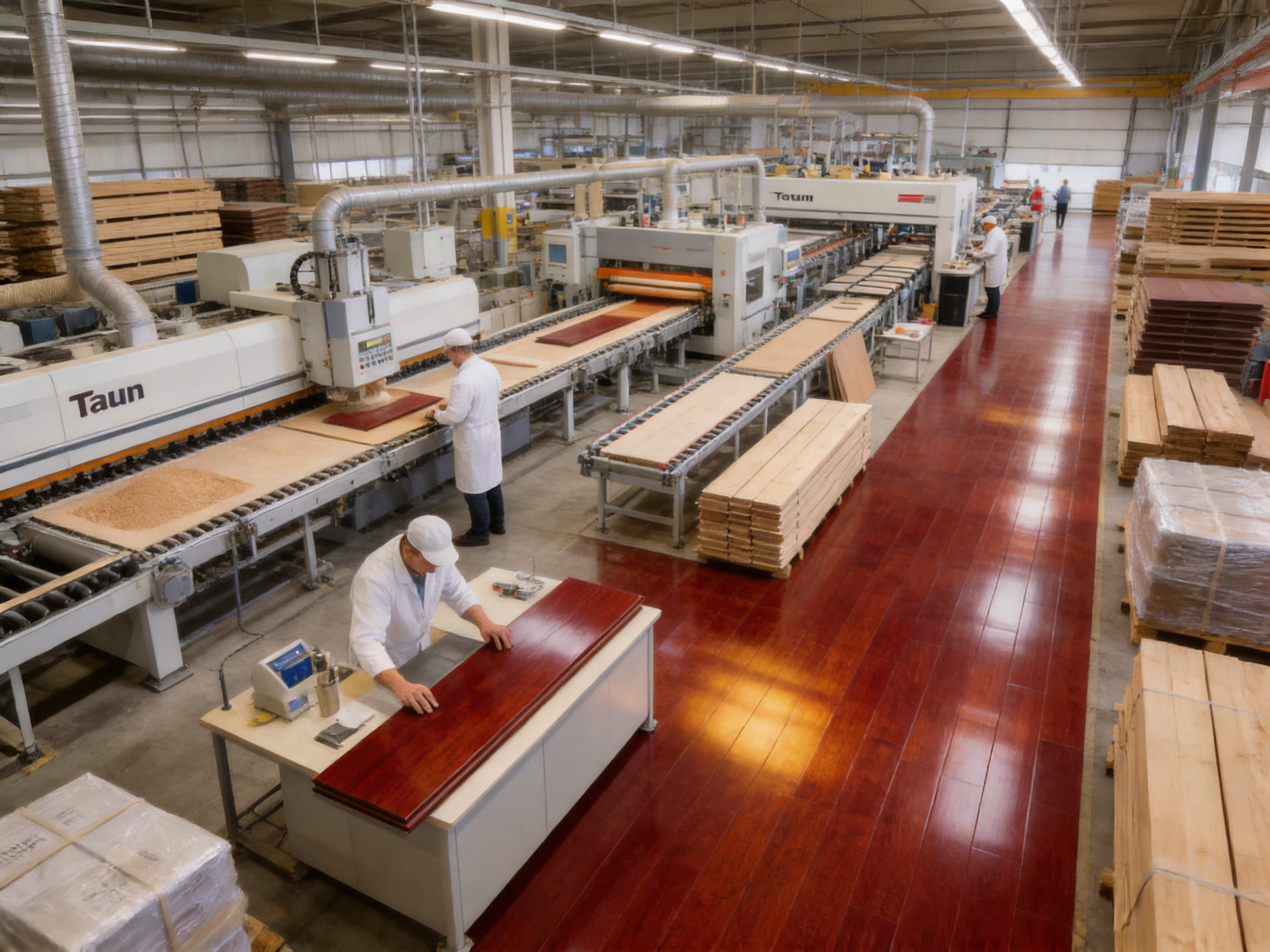
The company operates approximately 20,000 square meters of production facilities and reports an annual production capacity of around 2,400,000 square meters of flooring and 5,000 sets of doors. This scale supports both standard product supply and larger development programs.
Capacity matters to distributors, contractors, and project owners because a flooring design must remain available through the procurement cycle. A manufacturer with established production resources is better positioned to manage repeat orders, phased construction, replacement material, and coordinated delivery schedules than a very small workshop with limited equipment and labor.
Large-scale production also supports process specialization. Timber preparation, drying, grading, machining, sanding, coating, inspection, packing, and shipment can be organized into controlled stages. This improves traceability and helps the manufacturer identify defects before the product reaches the customer.
The factory is equipped with German imported production lines and automated quality-control systems. For solid hardwood flooring, this type of equipment can support stable machining dimensions, repeatable profile accuracy, controlled sanding, and more consistent surface preparation.
Automated systems do not replace skilled personnel. Instead, they provide repeatability while trained workers review material appearance, color, edge quality, coating uniformity, packaging, and other factors that may require human judgment. The combination of equipment and inspection is particularly important for a dark, high-gloss floor because surface irregularities can be more visible under reflected light.
Production control is also significant for customizable products. When a buyer specifies a special width, finish, texture, or color, the factory must translate the design brief into repeatable manufacturing parameters. A controlled production line makes it easier to preserve consistency between approved samples and final production.
The company describes a strict three-step quality inspection process. While the exact internal checkpoints may vary by order, a robust inspection program for solid flooring generally includes checks on incoming timber, checks during machining and finishing, and final inspection before packing.
Incoming material inspection can evaluate species identity, moisture condition, dimensions, natural defects, and grade suitability. In-process inspection can review tongue-and-groove accuracy, plank thickness, sanding quality, color matching, coating coverage, and surface smoothness. Final inspection can confirm appearance, carton quantity, labeling, packaging integrity, and order specifications.
This staged approach is stronger than relying only on a final visual check. Problems can be identified closer to the point where they occur, reducing waste and preventing large quantities of unsuitable product from moving through later manufacturing stages.
The manufacturer offers a reported 72-hour rapid prototyping capability. This can be useful when a designer or project buyer needs to confirm a color, surface texture, gloss level, plank format, or coordinated woodwork finish before approving mass production.
A prototype allows stakeholders to assess the flooring under actual or simulated lighting conditions. Burgundy tones can appear different under daylight, warm artificial light, and cool architectural lighting, so a physical sample is especially valuable. A sample can also reveal how the gloss level interacts with the grain, surrounding materials, and expected furniture palette.
Rapid prototyping can shorten design approval cycles and reduce the risk of ordering a large quantity based only on digital images. It also supports OEM and ODM programs where the buyer wants a product developed around a particular market, brand, or project style.
Customization is one of the product’s strongest commercial advantages. The standard DS-6003 specification provides a clear starting point, but the manufacturer can discuss custom sizes, colors, textures, and surface finishes. This allows distributors to create regionally relevant collections and enables architects to coordinate flooring with doors, wall panels, stairs, and cabinetry.
Color customization can be used to adjust the burgundy tone toward a warmer red, deeper brown, softer wine shade, or more restrained antique appearance. Any color development should be evaluated through physical samples because timber species, grain structure, coating thickness, polishing, and lighting all influence the final result.
Texture customization supports different market segments. Smooth sanded boards may be suitable for modern apartments and formal interiors. Wire-brushed boards can appeal to buyers seeking a more visible grain structure. Hand-scraped boards may be selected for boutique hospitality, heritage-inspired, or handcrafted design concepts.
Dimension customization can assist with room scale and installation planning. Wider boards may create a more spacious appearance, while narrower planks can support traditional layouts or reduce visual repetition in smaller rooms. Custom thickness, length, and profile requirements should be evaluated against material availability, production yield, structural performance, and installation requirements.
Custom packaging and labeling may also be available for distributor programs. Clear carton information can help warehouse teams, installers, and end users identify species, grade, finish, batch, quantity, and application. For international supply, packaging design should be coordinated with container loading, moisture protection, handling, and destination-market requirements.
Each standard carton contains 14 pieces and covers approximately 1.55 square meters or 16.73 square feet. The approximate carton weight is 19.6 kilograms. These figures are useful for estimating pallet quantities, handling requirements, warehouse space, and transportation costs.
Project buyers should calculate the required flooring quantity based on net floor area plus an allowance for cutting, sorting, installation pattern, and future repairs. The appropriate allowance depends on room geometry, plank direction, layout complexity, and installer experience. For custom production, the final carton coverage and weight should be confirmed before purchase.
Solid wood flooring should be protected from rain, condensation, ground moisture, and uncontrolled humidity during storage and transit. Cartons should remain sealed until the product is ready for acclimatization, while storage areas should be clean, dry, ventilated, and protected from direct sunlight. Proper logistics are particularly important for finished flooring because surface damage or moisture exposure can affect both appearance and installation performance.
The manufacturer’s experience serving partners in Europe, North America, and Southeast Asia provides a foundation for international order management. More than 10 years of export experience can support communication regarding documentation, packaging, shipping coordination, product approvals, and destination-market expectations.
In residential projects, Classic Burgundy Red Taun Flooring can be used in living rooms, studies, libraries, formal dining areas, bedrooms, and high-end reception spaces. Its deep color can define the main social areas of a home and provide a strong foundation for classic, transitional, or eclectic interior design.
The product is especially suitable for rooms where occupants value a rich material experience. A solid wood floor can be paired with upholstered furniture, carved wood details, stone fireplaces, decorative wall molding, or contemporary furniture with clean lines. The high-gloss finish can increase the sense of formality, while the natural grain prevents the space from appearing visually flat.
Boutique hotels, private clubs, restaurants, executive lounges, and reception areas may use burgundy Taun flooring to establish a memorable identity. The floor’s reflective finish can work with carefully designed lighting to create a sense of arrival and sophistication.
In commercial applications, the floor should be selected according to expected traffic, maintenance resources, furniture loads, and local regulations. The product is described as suitable for light commercial use, but heavily trafficked public areas may require a separate technical review and a finish selected specifically for the anticipated level of wear.
Architects and interior designers can specify the product as a visual anchor within a broader material palette. It can be used to distinguish a reception zone, highlight a central room, or provide continuity between a living area and adjoining woodwork. Coordinated custom doors and cabinets can be developed through the same manufacturing partner, simplifying the process of matching color, grain direction, and finish sheen.
Furniture showrooms, luxury retail interiors, galleries, and design studios may benefit from a floor that attracts attention without relying on complex patterns. The burgundy surface can provide contrast for neutral product displays and enhance the perceived quality of surrounding materials.
Installation should be performed by experienced flooring professionals. Before work begins, the installer should inspect the cartons, verify the product specification, confirm the grade and finish, and examine the boards for transport damage or visible inconsistencies. Any concerns should be reported before installation rather than after the floor has been fixed in place.
The subfloor should be structurally sound, level, clean, and dry. Unevenness may create stress within the boards and may result in movement or visible irregularities. Moisture testing should be completed using methods appropriate for the subfloor type. The installation area should have stable environmental conditions, including controlled temperature and humidity.
Wood flooring should be acclimatized according to the product requirements and the building conditions. The cartons should not be opened prematurely if doing so could expose the boards to uncontrolled humidity. The installer should follow the approved technical instructions for the selected adhesive, staple, expansion allowance, and layout.
For underfloor heating, the heating system should be tested and commissioned before flooring installation. Temperature changes should be gradual, and the maximum recommended surface temperature should not be exceeded. Furniture placement, rugs, and ventilation should be considered so that heat and humidity are not concentrated unevenly across the floor.
Expansion space should be provided at walls, thresholds, columns, and other fixed objects. The precise allowance depends on room size, local climate, product dimensions, and installation conditions. Skirting boards or transition profiles can be used to conceal expansion gaps while maintaining a finished appearance.
Routine maintenance begins with regular dust and grit removal. Fine particles can act as abrasives when walked across a polished surface. A soft broom, microfiber mop, or vacuum cleaner equipped with a suitable hard-floor attachment can help reduce this risk.
Spills should be removed promptly using a soft, lightly damp cloth. Excess water should not be left standing on the surface. Strongly alkaline, acidic, abrasive, or corrosive cleaning agents should be avoided unless specifically approved for the installed finish.
Furniture legs should be fitted with protective pads. Heavy objects should not be dragged across the floor. When furniture must be moved, it should be lifted or transported using appropriate protective materials. Entrance mats can help reduce the amount of sand, grit, and moisture brought into the room.
Direct sunlight can gradually influence the color of natural wood and surface coatings. Curtains, blinds, ultraviolet protection, and periodic furniture repositioning can help promote more uniform aging. Long-term exposure to excessive heat or high humidity should also be avoided because environmental instability may contribute to movement, deformation, or discoloration.
Periodic waxing or finish maintenance may be recommended depending on the selected coating. The care program for high-gloss lacquer should not automatically be applied to oil-finished or hardwax-oil flooring. The maintenance product should be compatible with the installed surface and used according to the supplier’s instructions.
| Maintenance Area | Recommended Practice | Practice to Avoid |
| Daily Dust | Use a soft broom, microfiber mop, or suitable vacuum attachment | Allow abrasive grit to remain on the surface |
| Spills | Wipe promptly with a soft, lightly damp cloth | Leave standing water on the floor |
| Cleaning Agents | Use products approved for the installed finish | Use corrosive, abrasive, or unsuitable chemicals |
| Furniture | Install felt or soft protective pads | Drag heavy furniture across the floor |
| Sunlight | Use window protection and manage direct exposure | Leave one area exposed for prolonged periods without protection |
| Gloss Maintenance | Follow a suitable periodic care and polishing schedule | Apply incompatible waxes or coatings |
| Climate Control | Maintain stable indoor temperature and humidity | Expose the floor to persistent extreme heat or moisture |
Compared with laminate flooring, solid Taun flooring offers a genuine hardwood core and a more authentic tactile experience. Laminate may provide a wide range of printed designs and can be cost-effective, but it does not reproduce the same material depth or natural variation as solid wood. The burgundy Taun design is intended for buyers who value real timber and a more substantial interior finish.
Compared with vinyl flooring, solid wood provides a natural surface that can contribute to a warmer and more residential atmosphere. Vinyl can be useful where moisture resistance, rapid installation, or low initial cost is the main priority, but it may not provide the same visual prestige or long-term material identity as a carefully finished hardwood floor.
Compared with ordinary prefinished oak or ash flooring, the product offers a more dramatic color direction and stronger decorative presence. Standard neutral flooring may be easier to coordinate, but burgundy Taun can help differentiate a project and create a signature interior style.
Compared with higher-priced mahogany-style specifications, this flooring provides a similar design language through color, grain enhancement, and high-gloss finishing while using Taun wood as the base material. This can help project owners achieve a luxurious appearance without automatically selecting the highest-cost hardwood category.
Compared with small-batch workshop production, the manufacturer’s production facilities, automated controls, export experience, and reported capacity offer greater potential for repeatability and project continuity. These strengths are particularly relevant to distributors and developers who need consistent material across multiple buildings or delivery phases.
Professional buyers should evaluate the flooring as part of a complete procurement process rather than considering appearance alone. Key questions include the required certification scope, project moisture conditions, installation method, finish selection, maintenance requirements, expected traffic level, packaging format, lead time, and replacement stock.
Sample approval is recommended before a production order is released. The approved sample should record the wood species, grade, color, texture, gloss level, dimensions, profile, and finish. If the floor will be installed beside doors or cabinets, samples of the coordinated woodwork should be evaluated under the same lighting conditions.
For large projects, batch control is important. The buyer may request production records, inspection documentation, moisture information, packaging labels, and a retained reference sample. These measures can assist with quality verification, installation planning, and future replacement requirements.
OEM and ODM support can help distributors develop a private-label collection or a regional product line. The manufacturer’s capabilities in flooring, doors, and cabinetry can also simplify the development of coordinated interior packages. This is valuable for hospitality groups, residential developers, architectural firms, and building-material distributors seeking a reliable wood-product supply chain.
The manufacturer is a global wood solutions producer specializing in wood flooring, wooden doors, and custom cabinet solutions. Its production history began in 1999, and the company reports more than 20 years of expertise and more than 10 years of export experience.
The company operates approximately 20,000 square meters of production facilities and serves more than 100 global partners across Europe, North America, and Southeast Asia. It reports an annual production capacity of approximately 2,400,000 square meters of flooring and 5,000 sets of doors.
Its capabilities include OEM and ODM customization, rapid prototyping, automated quality-control systems, and a three-step quality inspection process. The company also identifies compliance with CE, FSC, CARB P2, and ISO 9001 standards, subject to the scope of the applicable documentation and product order.
This combination of design flexibility, production capacity, technical coordination, and international supply experience allows the manufacturer to support both individual product purchases and broader project programs. Buyers can use the standard burgundy Taun specification as supplied or develop a tailored version around a specific commercial identity or architectural concept.
The flooring is made from a 100 percent solid Taun hardwood core. Taun is identified by its botanical name, Pometia pinnata. The solid construction provides a genuine wood surface and avoids composite core layers.
The deep burgundy-red tone creates a rich, formal appearance with visual similarities to luxurious dark mahogany interiors. It combines natural grain variation with a strong color foundation, allowing the floor to function as a major design feature.
The featured design uses a high-gloss piano lacquer finish. It is highly polished, smooth to the touch, and intended to create strong light reflection and enhanced color depth. Other finish options, including UV lacquer, UV oil, and hardwax oil, can be discussed for customized orders.
Yes. The product platform supports smooth sanded, wire-brushed, and hand-scraped surface textures. The appropriate choice depends on the desired appearance, tactile character, cleaning expectations, and project style.
The standard dimensions are approximately 35.83 inches long, 4.80 inches wide, and 0.71 inches thick. Custom sizes may be available subject to the technical requirements and production evaluation of the project.
The boards use a tongue-and-groove profile on four sides with a micro-bevel. Installation methods include glue or staple installation, subject to the subfloor, project specification, and professional installer recommendations.
The product is described as compatible with underfloor heating. The heating system, subfloor, installation method, adhesive, maximum surface temperature, and acclimatization process should be reviewed before installation to ensure compatibility with the specific project.
It is suitable for refined residential interiors, traditional living rooms, studies, libraries, high-end reception rooms, boutique hospitality spaces, and suitable light commercial applications. Heavily trafficked or technically demanding areas should receive a project-specific performance review.
The product information identifies an E0 environmental standard with formaldehyde emissions of no more than 0.05 milligrams per cubic meter for the applicable solid wood flooring specification. CE and FSC certification support are also identified. Current documentation should be requested for the specific order and destination market.
Use a soft cloth, microfiber mop, or suitable hard-floor vacuum attachment. Remove spills promptly, avoid corrosive or abrasive cleaners, use protective pads under furniture, and follow a finish-compatible maintenance schedule. Regular waxing or polishing should only be performed with a product approved for the installed coating.
Yes. The manufacturer offers OEM and ODM customization, including custom sizes, colors, textures, finishes, and coordinated wood products. A reported 72-hour rapid prototyping service can help buyers evaluate samples before mass production.
The manufacturer reports more than two decades of wood-product experience, approximately 20,000 square meters of production facilities, German imported production lines, automated quality-control systems, a three-step inspection process, international export experience, and annual flooring capacity of approximately 2,400,000 square meters.
Classic Burgundy Red Taun Flooring combines authentic solid hardwood construction with a highly expressive decorative finish. Its deep burgundy tone and high-gloss piano lacquer create a polished, luxurious appearance, while the natural Taun grain preserves the character expected from genuine timber. The product is more distinctive than standard neutral flooring and offers a cost-conscious alternative to some premium dark hardwood visual concepts.
Its tongue-and-groove construction, customizable dimensions and finishes, underfloor heating compatibility, environmental positioning, and certification support make it suitable for both residential and selected commercial applications. The product is also supported by a manufacturer with substantial production capacity, international experience, OEM and ODM capabilities, imported equipment, automated quality control, and a structured inspection process.
For designers, developers, distributors, and contractors, the strongest value lies in the combination of visual impact and supply capability. DS-6003 can serve as a finished product for refined interiors or as a starting point for a customized wood flooring collection. With proper installation, climate management, and maintenance, it can provide a durable and visually memorable foundation for interiors that require warmth, elegance, and a clear architectural identity.
1. Product specification sheet for DS-6003 Classic Burgundy Red Taun Flooring.
2. Solid Taun Wood Flooring technical information, including dimensions, grade, moisture content, profile, packaging, and installation methods.
3. Manufacturer-provided information on E0 environmental performance, CE certification, FSC certification, CARB P2 compliance, and ISO 9001 quality systems.
4. Manufacturer-provided company profile covering production facilities, manufacturing capacity, export experience, OEM and ODM services, and quality-control procedures.
5. General professional guidance for solid hardwood flooring installation, acclimatization, underfloor heating coordination, moisture management, and routine maintenance.
6. General architectural flooring practice concerning wood species selection, surface finishing, interior color coordination, and commercial application assessment.

We provide customers with sustainable and eco-friendly
engineered wood solutions and services.
Choose DEIF for the perfect blend of
performance and aesthetics.
