


 English
 Español
 عربى


Get Social
Choose DEIF for the perfect blend of
performance and aesthetics.
 Get Free Sample

Content
3-Layer Interlocking Waterproof and Anti-Slip Engineered Wood Flooring
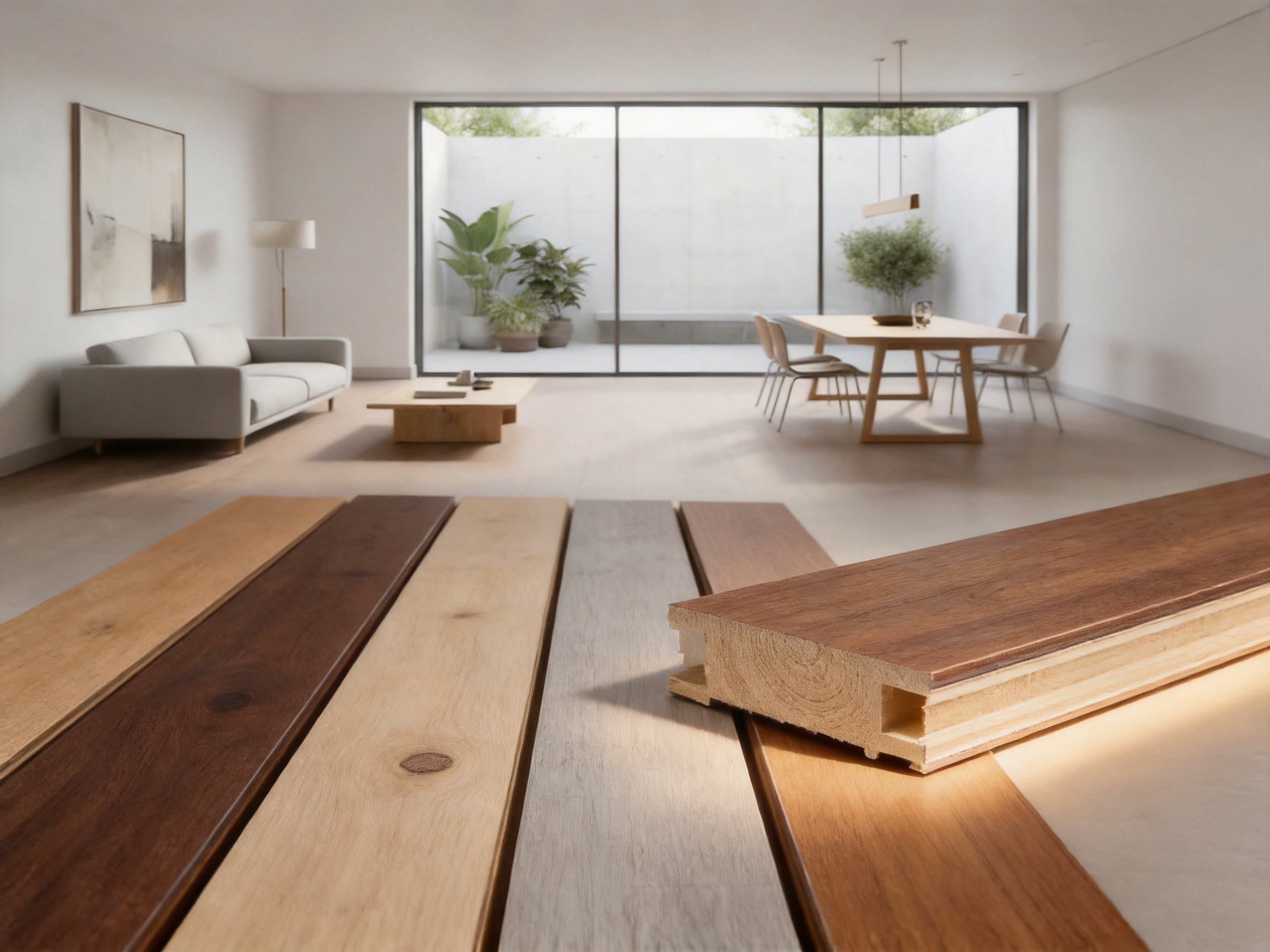
Engineered wood flooring has become an important solution for interior projects that require the appearance of natural timber together with improved dimensional stability. The 3-layer interlocking waterproof and anti-slip engineered wood flooring represented by model DC-X1188 is designed to meet these requirements through a carefully balanced combination of real wood veneer, cross-laminated construction, surface protection, and precision-machined click installation.
Unlike many conventional solid wood floors, this flooring uses a structured engineered core to reduce the effects of temperature and humidity changes. Unlike lower-grade composite alternatives, it retains the authentic grain, color variation, and tactile character of sliced natural wood veneer. The result is a flooring product that combines visual warmth with the structural performance required in modern homes, offices, hotels, retail environments, and other interior spaces.
The product is part of a broader wood solutions portfolio that includes engineered flooring, wooden doors, and custom cabinets. Its design is suitable for distributors, contractors, architects, developers, hospitality groups, and homeowners seeking a customizable flooring system with dependable manufacturing support. Available options include several wood species, veneer thicknesses, grades, surface finishes, textures, dimensions, and installation methods.
The DC-X1188 three-layer engineered wood floor is built around a natural wood veneer surface and a three-layer spruce or pine core. The cross-laminated structure is engineered to improve stability and reduce the likelihood of deformation and cracking. A multi-layer UV coating system protects the visible surface against everyday abrasion and scratches, while the available waterproof and anti-slip surface treatment supports use in areas where moisture resistance and safer underfoot performance are important.
The standard listed dimensions are 74.8 inches by 7.7 inches by 5/8 inch. However, the manufacturer supports custom sizes and colors for project requirements. The face veneer can be specified in oak, walnut, ash, or teak, with veneer thickness options ranging from 2 millimeters to 6 millimeters for the listed configuration. Other veneer thicknesses may be evaluated according to the project’s technical and commercial requirements.
The flooring uses a click system with a micro-bevel on all four sides. This profile produces clear plank definition after installation and supports efficient assembly. Depending on the subfloor, project specification, and installation design, the flooring may be installed by floating, gluing, or stapling. The ability to support multiple installation methods gives contractors greater flexibility during renovation and new-build projects.
| Product model | DC-X1188 |
| Product category | 3-layer engineered flooring |
| Standard dimensions | 74.8 inches × 7.7 inches × 5/8 inch |
| Core construction | Three-layer engineered wood |
| Core material | Spruce or pine |
| Face veneer options | Oak, walnut, ash, or teak |
| Veneer thickness options | 2 mm, 3 mm, 4 mm, or 6 mm |
| Veneer grades | AB, ABC, ABCD, or CD |
| Veneer cut | Sliced veneer |
| Surface finishes | UV lacquer, UV oil, or hardwax oil |
| Surface textures | Wire brushed, hand scraped, or smooth sanded |
| Edge profile | Micro-bevel on all four sides |
| Locking system | Click system |
| Installation methods | Floating, glue-down, or stapled |
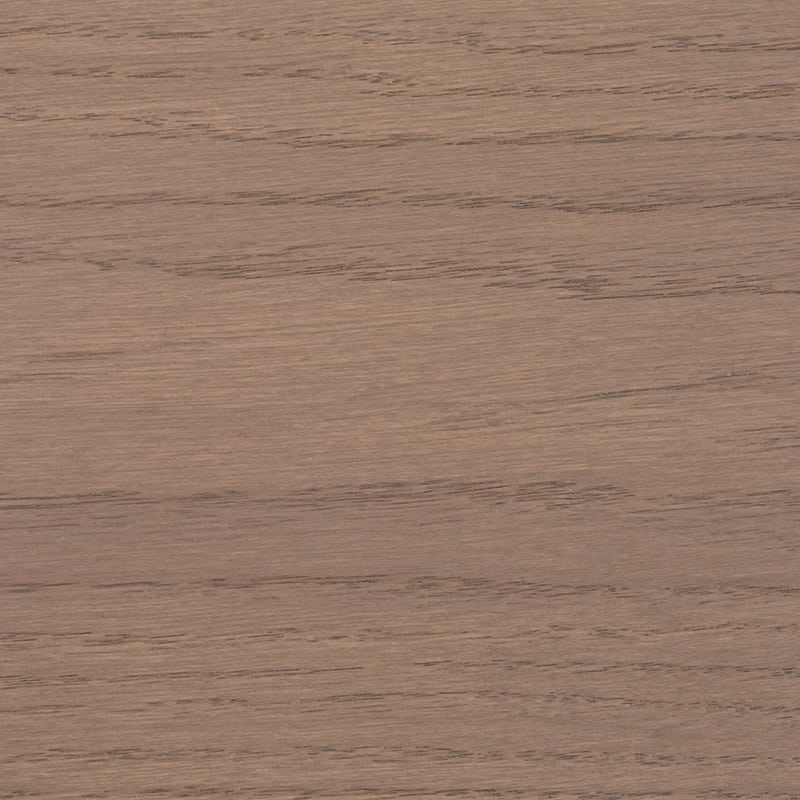
The first major advantage of the flooring is its real wood veneer surface. Natural veneer provides a level of visual authenticity that printed decorative layers often cannot reproduce. Grain direction, annual-ring patterns, tonal variation, and species-specific character remain visible, helping designers create interiors with a genuine connection to natural materials.
Oak can provide a balanced and versatile appearance for residential and commercial interiors. Walnut offers deeper color and a more refined visual identity. Ash is valued for its expressive grain and lighter appearance, while teak can bring warmth and distinctive tonal variation to selected projects. Because the face species and grade are customizable, buyers can match the flooring to furniture, doors, wall treatments, cabinetry, and overall architectural concepts.
The veneer is available in several thicknesses, including 2 millimeters, 3 millimeters, 4 millimeters, and 6 millimeters. This flexibility allows purchasers to balance visual character, project budget, expected service conditions, and future maintenance requirements. A thicker veneer may be preferred for projects seeking a more substantial natural wood layer, while other applications may prioritize cost control and efficient material use.
Veneer grading options also make it possible to control the appearance of the finished floor. AB grades may provide a relatively uniform and refined appearance, while ABC, ABCD, and CD grades can introduce more visible knots, color variation, and natural character. This range supports both minimalist interiors and designs that intentionally celebrate the irregularity of real timber.
The core of the product uses a three-layer engineered structure. The layers are arranged in a cross-laminated configuration so that the orientation of adjacent layers helps balance internal movement. Wood naturally responds to changes in moisture and temperature. When properly engineered, cross-layer construction can reduce the impact of these changes compared with a single solid board of equivalent width.
This structural approach is particularly important for wide or long flooring planks. A broad solid wood plank can experience noticeable expansion, contraction, cupping, or bowing when the surrounding environment changes. The engineered construction used in this product is designed to improve dimensional control, helping the flooring maintain a more stable profile in normal interior conditions.
The spruce or pine core provides a practical balance between strength, workability, and weight. The three-layer design also enables efficient conversion of high-quality veneer into a durable flooring component without requiring the entire board to be made from a single thick section of premium hardwood. This can improve material utilization while retaining a real wood walking surface.
Compared with many low-cost multilayer products, a three-layer construction can offer a straightforward and easily understood structure. The core layers provide support, while the face veneer supplies the visible finish and the wear system protects the surface. This clear construction makes it easier for project teams to evaluate specifications, installation conditions, and long-term maintenance expectations.
The flooring is described as waterproof and is designed with a special moisture-resistant surface treatment. This feature helps reduce the risk of surface damage when the flooring encounters occasional moisture during normal interior use. The product is therefore suitable for a broad range of indoor environments where practical resistance to moisture is important.
However, waterproof performance should always be understood within the context of proper installation and maintenance. Engineered wood flooring is not intended to replace ceramic tile, stone, or specialized exterior decking in permanently wet locations. Standing water, flooding, leaking appliances, and prolonged soaking should be avoided. Moisture protection works best when the subfloor is appropriately prepared, joints are correctly engaged, and spills are removed promptly.
For commercial projects, moisture management may be especially important near entrances, reception areas, corridors, dining spaces, and other locations where cleaning activity or wet footwear can expose the surface to short-term moisture. A waterproof-oriented surface treatment can support daily usability, but project specifications should still include suitable drainage, entrance mats, cleaning procedures, and humidity control.
Before installation, the flooring should be stored in a dry and protected indoor environment. The subfloor should be clean, level, dry, and structurally sound. Moisture testing and acclimatization should follow the requirements of the installation location and the recommendations of the flooring supplier. These steps help the product perform as designed and reduce avoidable movement after installation.
The anti-slip surface treatment is another important product feature. A floor’s appearance is only one part of its performance; underfoot safety is also essential in homes, workplaces, hospitality venues, and public-facing interiors. The surface treatment is intended to improve traction and reduce the likelihood of slipping during ordinary use, particularly in areas where minor moisture or smooth footwear may otherwise create additional risk.
The anti-slip feature does not eliminate all hazards. Floor safety depends on the entire environment, including footwear, cleaning practices, lighting, drainage, floor slope, contamination, and the presence of loose objects. Nevertheless, a properly specified textured or treated wood surface can contribute to a safer and more comfortable walking experience.
Surface texture may be customized as wire brushed, hand scraped, or smooth sanded. Wire brushing emphasizes the natural grain and can create a tactile surface. Hand scraping produces a more artisanal appearance with subtle variation. Smooth sanding provides a cleaner and more contemporary visual effect. The choice should be based on the desired appearance, expected traffic, cleaning routine, and safety requirements of the project.
For residential applications, anti-slip performance can be valuable in living areas, bedrooms, hallways, and family spaces. In commercial environments, it can support the design objectives of hotels, offices, retail stores, showrooms, and other properties where visitors and employees move frequently across the floor.
The flooring uses a seven-layer UV coating system for wear and scratch resistance. Surface finishing is critical because the visible top layer is exposed to footwear, furniture movement, dust, cleaning, sunlight, and daily contact. A multi-layer UV coating can create a more durable protective barrier than a basic single-coat finish, provided that the coating is correctly applied and cured during manufacturing.
UV lacquer is one available finish option. It can provide a consistent appearance and a practical protective layer for many residential and commercial applications. UV oil is another choice for projects that prefer an oil-finished appearance while still seeking factory-applied surface protection. Hardwax oil can emphasize the natural feel of the wood and may be selected for interiors where tactile character is a primary design consideration.
The coating system is intended to resist common forms of surface wear and scratching. It is not invulnerable to damage from sharp objects, heavy dragging, abrasive particles, or improper cleaning chemicals. Protective pads under furniture, entrance mats, regular dust removal, and prompt treatment of spills can significantly extend the appearance and service life of the finish.
Factory finishing also offers an important advantage over on-site finishing. The surface can be produced under controlled conditions, with consistent application, curing, inspection, and packaging. This helps reduce variations that may occur when finishing is performed in an uncontrolled construction environment.
Precision processing is essential to engineered flooring because the planks must fit together accurately and remain visually consistent across the installation. The product uses a click system manufactured to support tight interlocking joints. Properly made joints improve installation efficiency and can reduce the likelihood of loose connections, visible gaps, and local movement.
The micro-bevel on all four sides creates a defined transition between planks. This profile can help reduce the visual impact of minor variation between adjoining boards and gives the finished floor a structured, plank-by-plank appearance. It also supports design flexibility because the same basic board can be used in contemporary, transitional, hospitality, and traditional interiors.
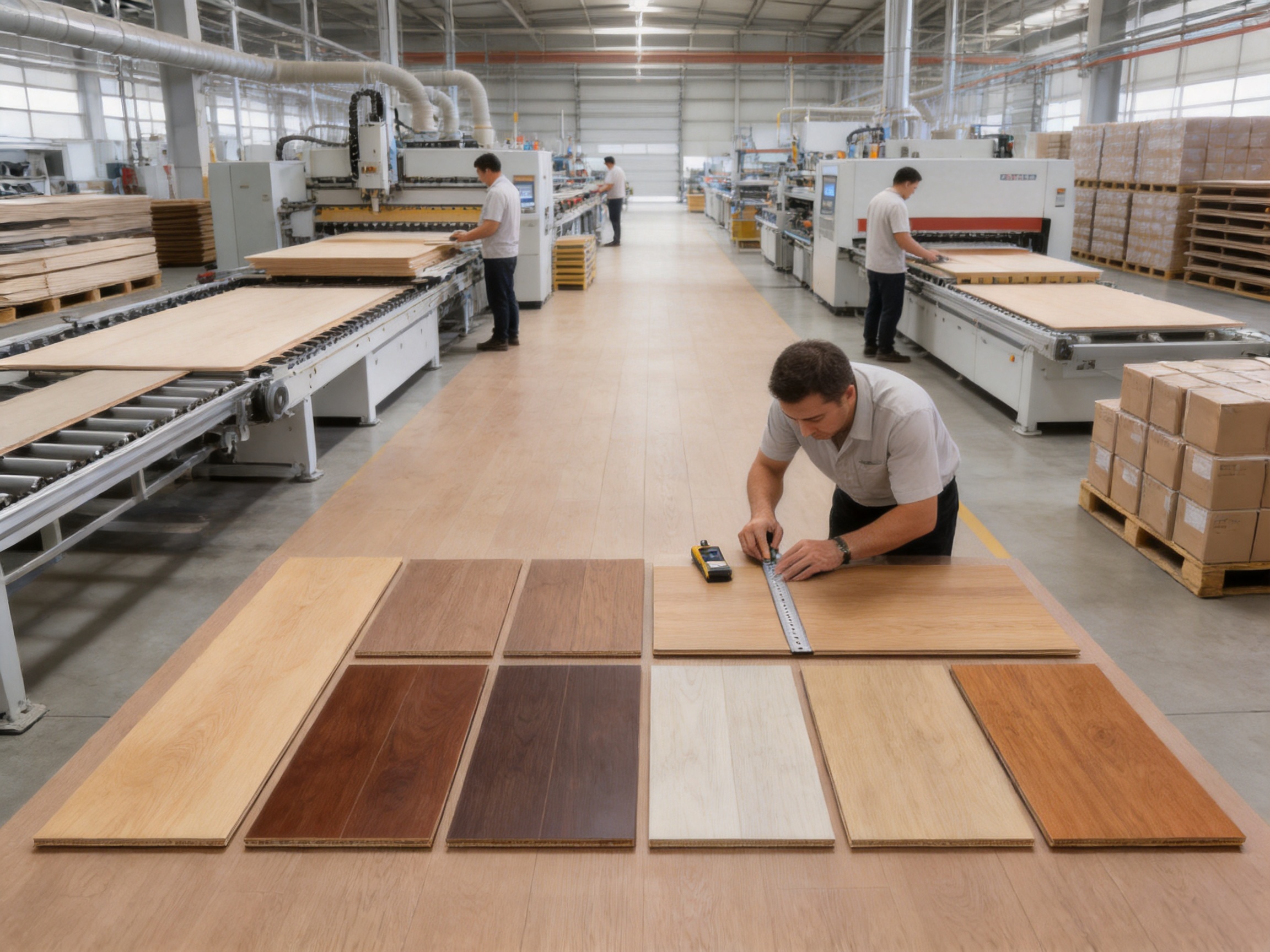
Precision manufacturing involves more than machining the locking profile. It also includes veneer selection, core preparation, adhesive application, pressing, sanding, coating, curing, dimensional inspection, appearance grading, and packaging. Each stage influences the final result. A visually attractive face veneer cannot compensate for poor board flatness, inaccurate thickness, weak bonding, or inconsistent locking geometry.
The manufacturer operates German imported production lines and automated quality control systems. These production resources support repeatability across large orders and help stabilize supply for distributors, contractors, and project developers. Automated systems can assist with dimensional control and process monitoring, while trained personnel remain important for visual grading, production supervision, and final inspection.
The supplier, Suzhou Dicosbo Wood Co., Ltd., has been engaged in wood manufacturing since 1999. Its product scope covers wood flooring, wooden doors, and custom cabinet solutions. This broader specialization gives the company experience with several important aspects of interior woodwork, including timber selection, surface treatment, component engineering, custom dimensions, color coordination, and project-based supply.
The company operates production facilities totaling approximately 20,000 square meters and has more than 10 years of export experience. Its stated annual capacity includes approximately 2,400,000 square meters of flooring and 5,000 sets of doors. Capacity of this scale can be valuable for projects that require continuity of supply, repeat orders, coordinated batches, or support across multiple construction phases.
Production scale alone does not guarantee quality, so process control remains important. The company applies a three-step quality inspection process intended to identify issues during manufacturing and before shipment. Such a system may include inspection of incoming materials, monitoring of semi-finished components, and final review of completed and packaged products. The specific inspection criteria should be confirmed for each project, but the staged approach is useful for reducing the risk of defects reaching the customer.
The company also supports OEM and ODM customization. OEM production can be suitable when a buyer requires a private-label product manufactured to an established specification. ODM support may be more appropriate when a customer needs assistance developing a customized product, finish, profile, packaging format, or collection. This flexibility is an advantage for distributors and brands seeking to differentiate their flooring offer.
Rapid prototyping is another stated capability, with a target of 72-hour rapid prototyping for suitable development requests. Fast sampling can help architects, interior designers, and purchasing teams review color, texture, veneer grade, and finish combinations before committing to a larger order. Prototypes should be evaluated under project lighting and alongside other specified materials because wood appearance can change depending on light, surrounding colors, and installation direction.
The product information identifies EU CE and FSC certification for general use. The company also reports compliance with CARB Phase 2 and ISO 9001 standards. These certifications and compliance claims can help buyers evaluate a supplier’s quality management, responsible sourcing approach, and suitability for international markets.
FSC certification is relevant to purchasers who require traceable wood from responsibly managed forest sources. CE marking or related European conformity documentation may be relevant when products are supplied into applicable European construction and interior markets. CARB Phase 2 is associated with formaldehyde emission requirements for composite wood products in California. ISO 9001 relates to quality management systems.
Certification requirements vary by destination, building type, installation system, and local regulation. Buyers should request current certificates, declarations, test reports, and scope information before placing an order. Documentation should correspond to the specific product, adhesive system, coating, core construction, and production site rather than relying only on general company-level statements.
Responsible purchasing also includes evaluating material efficiency and product lifespan. The engineered structure allows a natural wood surface to be used efficiently while providing a stable board format. Durable finishes, maintainable surfaces, and appropriate installation can help extend service life and reduce the frequency of replacement. These factors are relevant to both environmental objectives and the long-term cost of ownership.
Solid wood flooring offers genuine timber throughout the board, but it can be more sensitive to environmental changes, particularly when wide planks are used. The three-layer engineered structure is designed to provide greater dimensional stability by balancing wood movement across the layers. This makes engineered flooring a practical alternative for locations where humidity and temperature may fluctuate.
Engineered construction can also provide more predictable installation performance. The click system supports efficient assembly, while the option of floating, glue-down, or stapled installation allows the contractor to select a method appropriate for the subfloor and project conditions. Solid wood flooring may require more extensive site preparation, fastening, sanding, and finishing, depending on the product and application.
The factory-applied seven-layer UV finish can reduce the need for on-site finishing work. This can shorten installation schedules, minimize construction dust, and provide a more consistent appearance across the completed floor. Solid wood products that require finishing after installation may produce a different workflow and may be more dependent on site conditions and installer skill.
These advantages do not mean that engineered flooring is suitable for every situation. Solid wood may be preferred for certain heritage interiors, specialized restoration projects, or applications where the owner specifically requires a full-thickness timber board. The correct choice depends on design intent, environmental conditions, maintenance plans, and budget.
Low-grade laminated flooring may offer a low initial cost, but its decorative layer is typically a printed image rather than natural wood veneer. The DC-X1188 uses real sliced veneer, giving the floor a genuine timber surface that can provide more visual depth and natural variation.
Natural veneer also supports more meaningful customization. Buyers can select species, grade, thickness, finish, and texture according to a project concept. Printed surfaces can imitate wood appearances, but they generally cannot offer the same natural variation from plank to plank or the same tactile relationship with real timber.
The three-layer core and factory-applied surface system are also intended to provide a more robust construction than basic products with thin decorative layers and less advanced backing materials. When combined with quality installation and maintenance, this construction can support a more substantial and durable interior finish.
Again, performance depends on the complete specification. A buyer should compare wear ratings, formaldehyde emissions, moisture test results, locking strength, surface hardness, veneer thickness, warranty terms, and installation instructions rather than judging products only by appearance or price.
In homes, the flooring can be used in living rooms, bedrooms, dining areas, corridors, home offices, and other dry interior spaces. The natural veneer contributes warmth and visual comfort, while the engineered structure helps the floor remain stable during ordinary seasonal changes.
Living rooms benefit from flooring that can support both everyday family activity and formal entertaining. Oak, ash, walnut, and teak options can be coordinated with furniture, wall colors, lighting, and cabinetry. A wire-brushed or hand-scraped surface may complement rustic or transitional interiors, while a smooth-sanded surface may suit minimalist or contemporary spaces.
Bedrooms and private areas may benefit from the tactile comfort and acoustic warmth associated with wood flooring. The anti-slip surface can also provide an additional safety consideration for households with children, older residents, or pets. As with all flooring, rugs, furniture pads, and regular cleaning remain important for protecting the finish.
Home offices and study areas require attention to chair movement and localized wear. Protective mats may be recommended beneath rolling chairs, particularly when hard casters are used. Heavy furniture should be moved carefully, and felt pads should be installed beneath chair legs, tables, cabinets, and other fixed or movable items.
The product is suitable for offices, hotels, shopping malls, showrooms, and other commercial environments where the floor must combine visual quality with practical performance. Commercial interiors often demand a coordinated appearance across large areas, and the supplier’s production capacity and customization services can support collection development and repeat orders.
In offices, the flooring can create a warmer alternative to hard mineral surfaces. A natural timber appearance may support workplace design concepts focused on comfort, biophilic elements, and a less institutional atmosphere. The finish and texture should be selected according to traffic intensity, chair movement, cleaning frequency, and the expected presence of grit or contaminants.
Hotels may use the flooring in guest rooms, corridors, suites, lounges, meeting rooms, and selected public areas. Oak or walnut veneer can support a premium hospitality image, while custom color and surface treatment can help match the flooring to doors, wall panels, reception counters, and furniture.
Retail stores and showrooms often require a strong visual background for merchandise and displays. A natural wood floor can make product presentations feel warmer and more inviting. For these environments, the purchaser should consider high-traffic pathways, display fixture movement, maintenance access, and the potential for wet cleaning near entrances.
Commercial buyers should request technical documentation and, where appropriate, project samples, slip-resistance information, wear data, fire-related documentation, emissions reports, and installation recommendations. The flooring should be selected according to the specific performance requirements of the building and local codes.
Customization is one of the product’s strongest commercial advantages. The supplier can adjust sizes and colors, while buyers can select face species, veneer thickness, grade, finish, texture, and installation profile. These options allow the flooring to be developed as part of a coordinated interior collection rather than treated as an isolated commodity.
For residential developers, customization can support several finish packages within the same building. A lighter ash or oak option may be used for one design line, while a deeper walnut tone may be reserved for premium units. Consistent core construction and manufacturing support can help maintain product continuity across these variations.
For hospitality operators, custom colors and textures can support brand standards or regional design concepts. The buyer may request a specific balance of sapwood, knots, grain direction, surface brushing, or color tone. Samples should be reviewed carefully because natural veneer always contains variation, and an individual sample cannot represent every plank in a full production batch.
For distributors, a customizable product can create a differentiated assortment. Instead of competing only on stock dimensions and standard colors, the distributor can develop a private collection with selected veneer species, grades, finishes, packaging, and marketing materials. OEM and ODM services can further support brand positioning and market-specific requirements.
Each carton contains 10 pieces and approximately 2.03 square meters, or 21.85 square feet, of flooring. The listed carton weight is approximately 24 kilograms. These figures are important for estimating shipping volume, warehouse capacity, handling requirements, pallet configuration, and installation-site logistics.
| Pieces per carton | 10 |
| Square meters per carton | 2.03 m² |
| Square feet per carton | 21.85 ft² |
| Weight per carton | 24 kg |
| Installation methods | Floating, glue-down, or stapled |
For a project quotation, the required quantity should include a reasonable allowance for cutting, pattern layout, defects identified during installation, and future repairs. The correct allowance depends on room geometry, plank direction, installation pattern, and installer experience. Straightforward rectangular spaces may require less additional material than irregular rooms with multiple doorways, columns, alcoves, or curved features.
Large projects should also consider batch consistency. Natural wood can vary between production runs, so it is advisable to confirm whether the entire project can be manufactured and delivered as one coordinated batch. If phased delivery is unavoidable, the buyer should establish acceptable color and grade tolerances in advance.
Packaging should protect the flooring from impact, moisture, contamination, and excessive temperature variation during transportation and storage. Cartons should remain sealed until the material is ready for acclimatization. The storage area should be dry, clean, covered, and protected from direct sunlight or water intrusion.
Installation quality has a direct effect on the performance of any engineered wood floor. The subfloor should be structurally sound, dry, clean, and sufficiently flat. Uneven areas can create movement, joint stress, squeaking, or visible variation. The installer should verify the moisture condition of the substrate and follow the product-specific requirements for underlayment, adhesive, fasteners, expansion gaps, and acclimatization.
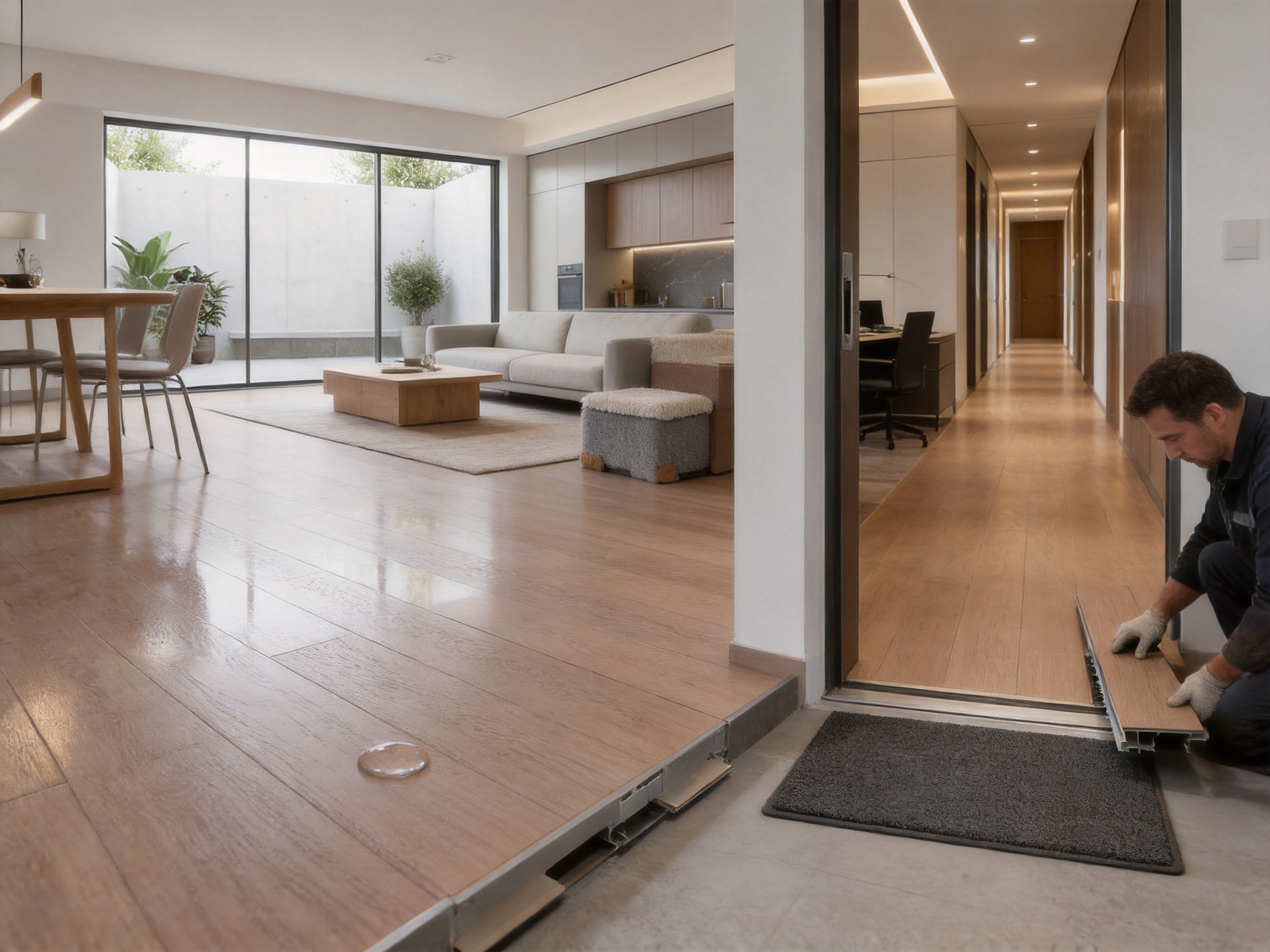
The click system allows glue-free floating installation when the project conditions and product instructions permit it. Floating installation can be efficient and may simplify future replacement of individual boards. It also requires suitable underlayment, perimeter expansion space, and careful control of joint alignment.
Glue-down installation can provide a more fixed feel underfoot and may be appropriate for certain commercial or residential subfloors. The adhesive must be compatible with the flooring, substrate, moisture condition, and environmental requirements. Incorrect adhesive selection or application can affect board stability and may invalidate product warranties.
Stapled installation may be suitable for compatible wood subfloors or other approved systems. Fastener selection, spacing, placement, and subfloor construction must be confirmed by the installer. The selected method should always reflect the technical conditions of the project rather than being chosen only for convenience.
Before full installation, several cartons should be opened and mixed. This helps distribute natural color and grain variation throughout the room. The installer should review the appearance, identify boards requiring special placement, and establish the starting line so that the final layout is balanced.
Routine cleaning should primarily use dry mopping, vacuuming with a suitable hard-floor setting, or a soft broom. Removing dust and grit regularly helps prevent abrasive particles from acting like sandpaper beneath footwear and furniture. Entrance mats can reduce the amount of dirt and moisture brought into the room.
For stubborn stains, use a neutral detergent and a soft, well-wrung cloth. Avoid excessive water, strong alkaline chemicals, abrasive powders, steel wool, and cleaning products that are not approved for finished wood floors. Prolonged contact with water or soaking methods can place unnecessary stress on the joints, veneer, and core.
Spills should be cleaned promptly. Liquids should not be allowed to remain on the surface for extended periods, even when the floor has a waterproof-oriented treatment. Wet shoes, plant containers, pet bowls, and cleaning equipment should be managed carefully to reduce repeated moisture exposure.
Sharp objects can damage the surface texture and anti-slip treatment. Furniture should be lifted rather than dragged. Felt pads should be checked regularly because worn or contaminated pads can scratch the finish. Heavy rolling loads should be evaluated before use, and protective mats may be necessary beneath office chairs or movable equipment.
Wood flooring performs best in a reasonably stable indoor environment. Extreme changes in relative humidity can cause natural wood components to expand or contract. Heating, air conditioning, ventilation, and humidity control should be operated in a manner appropriate for the building and local climate.
The engineered three-layer construction is designed to improve stability, but no wood product is completely unaffected by environmental change. Maintaining a stable interior climate helps minimize joint opening, cupping, gapping, and other movement. This is especially important in large open-plan interiors and buildings with significant seasonal temperature differences.
Sunlight can gradually alter the color of natural wood. Window coverings, furniture rotation, and appropriate interior design planning can help reduce uneven exposure during the early life of the floor. Color changes are a normal characteristic of many wood species and should be considered when approving samples.
Purchasers should evaluate the product through both documentation and physical samples. A sample should be checked for veneer appearance, thickness, board flatness, edge quality, click engagement, surface uniformity, coating adhesion, and texture consistency. If the project requires anti-slip or moisture performance, the buyer should request relevant test data for the specified finish and construction.
It is also useful to define acceptance criteria before production. These criteria may cover allowable color variation, knot size, sapwood percentage, veneer joint visibility, board length tolerance, thickness tolerance, coating defects, edge damage, and packaging condition. Clear standards reduce disputes and help the manufacturer align production with the buyer’s expectations.
The company’s three-step quality inspection process provides a framework for staged control. Incoming timber and veneer can be reviewed before production. Core assembly and pressing can be checked during manufacturing. Finished planks can then be inspected for dimensions, appearance, surface treatment, locking performance, and packaging before shipment.
For repeat orders, buyers should maintain a retained reference sample from the approved production batch. This reference can be used to compare later deliveries, although natural wood variation should always be considered. The objective is not to eliminate every difference but to keep the overall appearance within an agreed commercial range.
International buyers often require more than a technically acceptable board. They need a supplier capable of communication, customization, documentation, production planning, export packaging, and repeat delivery. The company’s export experience and global customer base provide a foundation for serving these requirements.
Support for Europe, North America, and Southeast Asia indicates experience with different design preferences, compliance expectations, climate conditions, and procurement structures. Products for these markets may require different documentation, packaging language, installation guidance, and surface specifications. Buyers should communicate destination-market requirements at the beginning of the project.
The supplier’s combination of flooring, doors, and cabinetry can also simplify coordination for projects that require several interior wood products. A developer or hospitality group may be able to align veneer species, color tones, and surface treatments across flooring, doors, wall elements, and cabinetry. This can reduce the risk of visual mismatch among products purchased from different sources.
With a stated annual flooring capacity of approximately 2,400,000 square meters, the manufacturer can support both standard distribution orders and larger project programs. Capacity should still be confirmed against current schedules, raw material availability, customization complexity, and required delivery dates.
Engineered flooring can provide a useful balance between natural material appeal and efficient timber utilization. Instead of manufacturing the complete thickness of a floorboard from a premium hardwood species, the product uses a natural veneer over a structural core. This approach can make selected wood species available for a broader range of interior projects while preserving the visual character desired by designers.
Durability also contributes to value. A floor that maintains its appearance and structural integrity for a longer period can reduce replacement frequency, disruption, disposal, and future material consumption. The real benefit depends on installation quality, climate control, maintenance, traffic conditions, and the suitability of the chosen finish.
Responsible sourcing and certification documentation add another dimension to procurement decisions. Buyers increasingly require evidence that materials are sourced and produced according to recognized standards. FSC, CE, CARB Phase 2, and ISO 9001-related documentation can assist with due diligence, although each project must confirm which certifications are mandatory or preferred.
For architects and developers, wood flooring can contribute to interior spaces that feel warm, durable, and connected to nature. For distributors, customizable engineered flooring can provide a product line that combines a recognizable natural material with modern manufacturing performance.
The product uses a natural sliced wood veneer over a three-layer spruce or pine engineered wood core. The layers are arranged in a cross-laminated structure intended to improve dimensional stability and reduce deformation and cracking caused by normal changes in temperature and humidity.
The product is designed with a waterproof-oriented surface treatment that helps resist moisture damage during normal indoor use. It should not be considered suitable for permanent immersion, outdoor exposure, flooding, or rooms with uncontrolled standing water. Proper installation, prompt spill removal, and moisture management remain essential.
The special surface treatment is intended to improve traction and underfoot safety. Actual performance depends on the selected texture, contamination, footwear, cleaning practices, moisture, and installation environment. Buyers with specific safety requirements should request test information for the exact product configuration.
The listed customizable options are oak, walnut, ash, and teak. Other species or visual specifications may be discussed for special OEM or ODM projects, subject to material availability, technical requirements, and minimum order quantities.
The listed options are 2 millimeters, 3 millimeters, 4 millimeters, and 6 millimeters. The appropriate thickness depends on the project’s design objectives, budget, expected use, and maintenance requirements.
The available grades include AB, ABC, ABCD, and CD. These grades can represent different levels of natural variation, including knots, color variation, and grain character. Buyers should approve physical samples and define grade expectations before production.
The listed finish options are UV lacquer, UV oil, and hardwax oil. Each creates a different visual and tactile result. The selection should consider expected traffic, maintenance routines, desired appearance, and the requirements of the final interior.
Yes. The available texture choices include wire brushed, hand scraped, and smooth sanded. These options can be used to create different visual identities and tactile effects.
The product uses a click locking system and can support floating, glue-down, or stapled installation when the selected method is suitable for the subfloor and approved by the installation instructions. Professional installation is recommended for project applications.
It is suitable for offices, hotels, shopping malls, showrooms, and other indoor commercial environments. The selected finish, texture, installation system, maintenance plan, and subfloor should be matched to the expected traffic and operating conditions.
Routine cleaning should use dry mopping, vacuuming with a suitable hard-floor setting, or a soft broom. For stubborn marks, use a neutral detergent and a soft cloth. Avoid soaking, prolonged water contact, abrasive products, and harsh chemicals.
The supplied information identifies EU CE and FSC certification for general use and reports CARB Phase 2 and ISO 9001 compliance at the company level. Buyers should request current, product-specific documentation applicable to the intended market and construction project.
Yes. The company supports OEM and ODM customization. Buyers can discuss dimensions, colors, veneer species, veneer grades, surface finishes, textures, packaging, and other project requirements.
The company states that it can provide 72-hour rapid prototyping for suitable development requests. Actual timing depends on the requested configuration, material availability, sample quantity, and approval process.
Each carton contains 10 pieces, covering approximately 2.03 square meters or 21.85 square feet. The listed carton weight is approximately 24 kilograms. Shipping and pallet details should be confirmed for each order.
The 3-layer interlocking waterproof and anti-slip engineered wood flooring combines a genuine natural wood surface with a structurally balanced engineered core. Its principal advantages include cross-laminated three-layer construction, improved resistance to deformation and cracking, waterproof-oriented surface treatment, anti-slip performance, seven-layer UV protection, precision click installation, and broad customization options.
The product offers a practical alternative to conventional solid wood flooring when project teams require greater dimensional control, factory-applied finishing, and flexible installation. It also provides a more authentic natural surface than many low-grade decorative flooring products. Oak, walnut, ash, and teak veneer choices, multiple grades, several thicknesses, and different surface textures allow the flooring to serve a wide range of architectural and interior design concepts.
Its commercial value is strengthened by the supplier’s long manufacturing history, 20,000-square-meter production facilities, German imported production lines, automated quality control systems, export experience, OEM and ODM capabilities, rapid prototyping support, and stated capacity of approximately 2,400,000 square meters of flooring per year. These capabilities make the product suitable for residential developments, hospitality projects, commercial interiors, distribution programs, and custom architectural applications.
For the best results, buyers should evaluate the exact product configuration, request current technical and compliance documentation, approve physical samples, define appearance tolerances, verify installation conditions, and establish a clear maintenance plan. When these factors are managed correctly, this engineered flooring can deliver the warmth of real timber together with the stability, customization, and manufacturing consistency required by modern interior projects.
1. Product specification and technical information for DC-X1188 three-layer engineered wood flooring, supplied manufacturer documentation.
2. Manufacturer information regarding production facilities, export experience, OEM and ODM services, quality inspection procedures, and annual production capacity.
3. General principles of engineered wood flooring construction, cross-laminated timber components, dimensional stability, and interior installation practice.
4. General guidance on wood flooring cleaning, moisture management, surface protection, and residential and commercial maintenance.
5. General information concerning FSC responsible sourcing, CE conformity documentation, CARB Phase 2 emissions requirements, and ISO 9001 quality management systems.

We provide customers with sustainable and eco-friendly
engineered wood solutions and services.
Choose DEIF for the perfect blend of
performance and aesthetics.
