


 English
 Español
 عربى
عربى

Get Social
Choose DEIF for the perfect blend of
performance and aesthetics.
 Get Free Sample

Content
The ash grey straight grain engineered veneer door is designed for interior projects that demand a clean architectural appearance, stable performance, consistent batch delivery, and environmentally responsible materials. Built on a reliable engineered wood structure and finished with a calm grey straight-grain surface, this door solution addresses the practical concerns of architects, contractors, developers, hotel operators, office designers, and residential project buyers who need more than a decorative panel. It offers a controlled aesthetic, predictable quality, customizable structure, and scalable production for modern building programs.
In contemporary interiors, doors are no longer treated as simple functional partitions. They influence the rhythm of corridors, the perceived quality of rooms, the acoustic comfort of occupied spaces, and the long-term maintenance cost of a project. A door used in a hotel, apartment tower, office, showroom, or high-end residential development must look refined on the first day and remain visually stable after years of use. The ash grey straight grain engineered veneer door responds to this need with engineered veneer consistency, a low-saturation modern color, and a practical structure that can be adapted to different wall thicknesses, hardware systems, and performance requirements.
Unlike many natural veneer doors, which may display unpredictable knots, tone variation, and inconsistent grain direction, this engineered veneer door provides a controlled appearance across large orders. The surface can be reproduced with high accuracy, allowing design teams to maintain a unified interior concept across hundreds or thousands of door sets. This is especially valuable for commercial and hospitality projects where every floor, room, and corridor must follow the same visual standard.
Ash Grey Straight Grain Engineered Veneer Door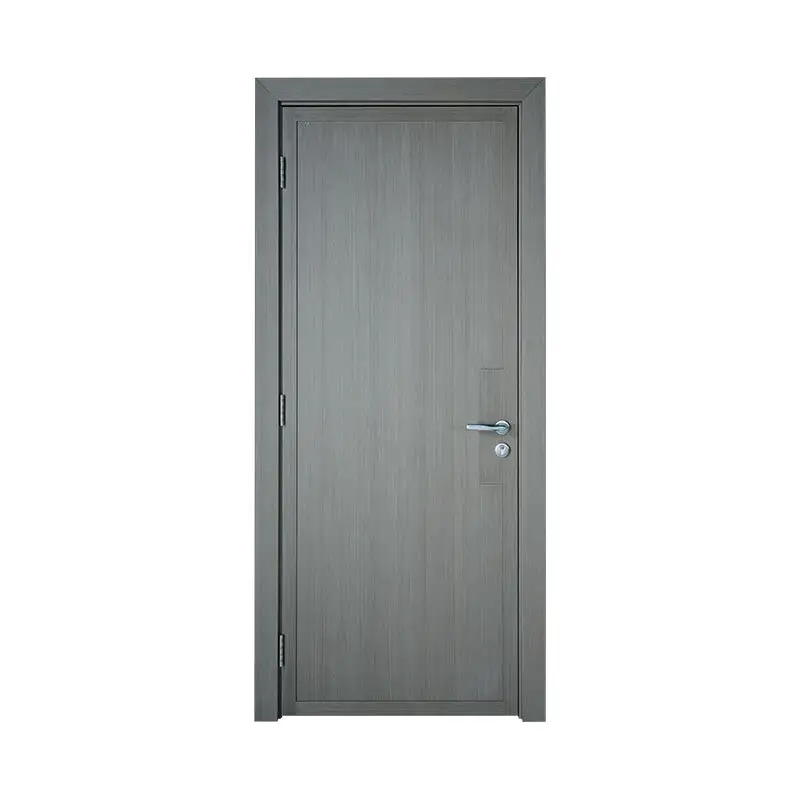
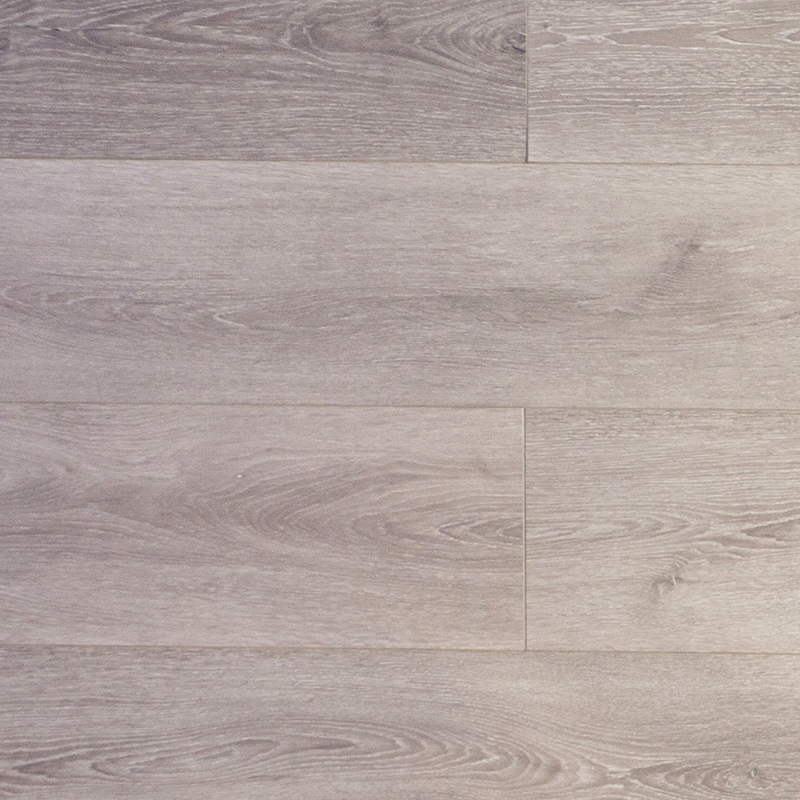
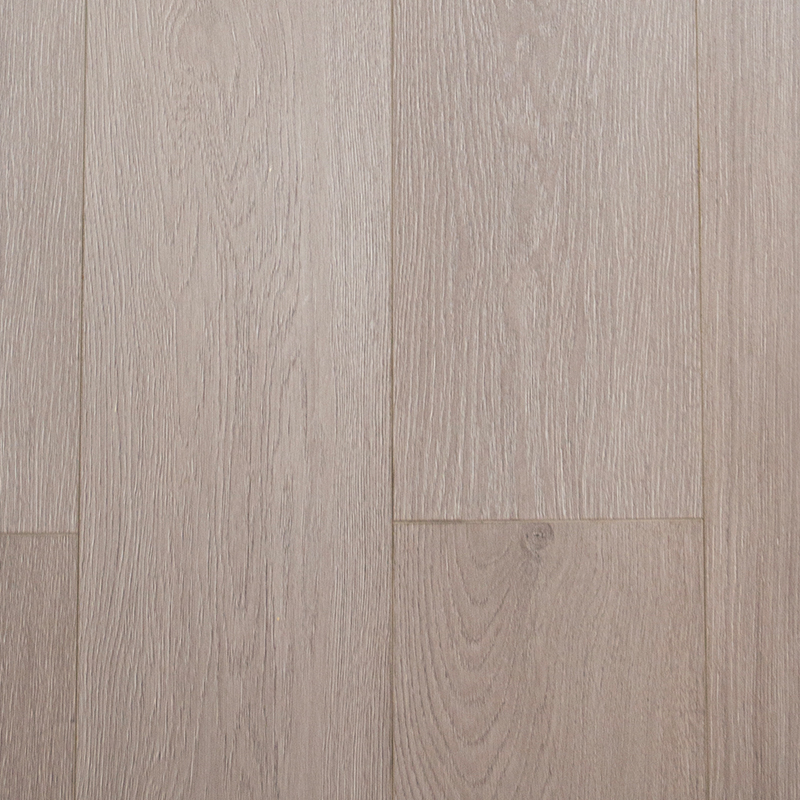
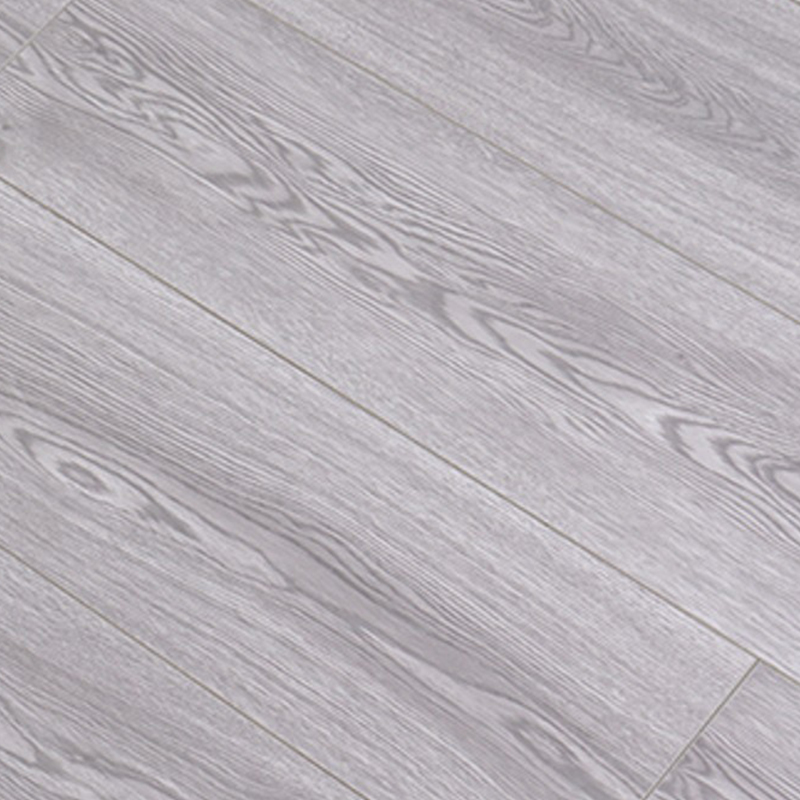
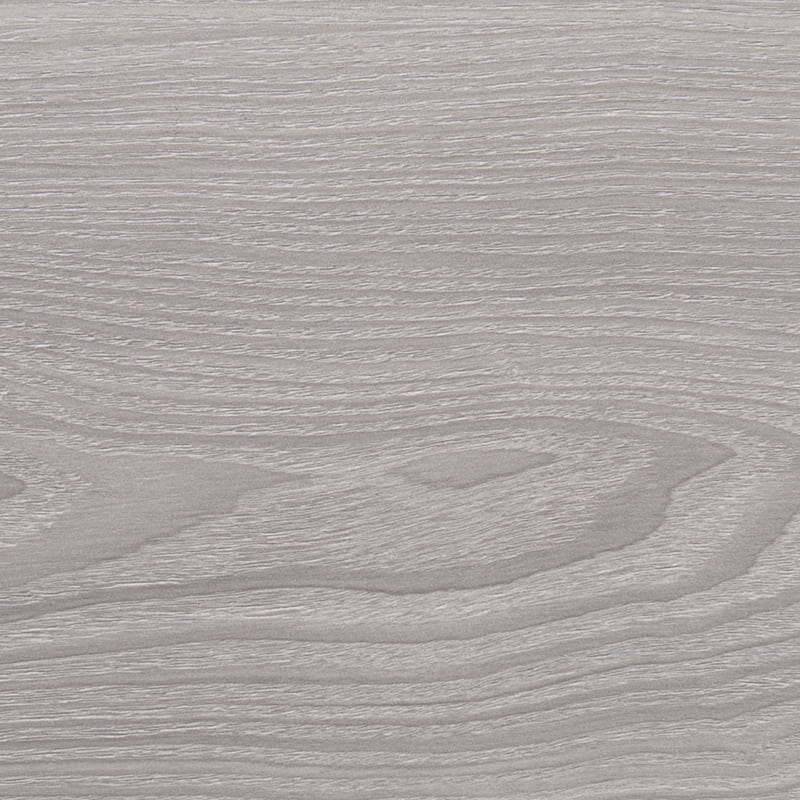
The product is an engineered veneer interior door with an ash grey straight grain appearance. Its surface presents fine, linear wood patterns in a restrained grey tone, creating a neat and orderly visual effect. The finish is suitable for minimalist, industrial, urban, and contemporary design schemes, where designers often prefer calm surfaces, reduced visual noise, and a coordinated palette.
The engineered veneer surface is supported by a stable engineered wood base. Depending on project requirements, the base board can be MDF, HDF, or plywood, while the internal core can be configured with honeycomb paper, solid wood, or plywood. This flexibility allows the door to meet different budget levels, performance expectations, acoustic requirements, and installation conditions.
The standard slab size is 2100 mm by 900 mm by 45 mm, with custom sizing available. Wall thickness compatibility ranges from 100 mm to 300 mm, and both left or right opening directions and inward or outward swing options can be customized. The door can also be supplied with a knock-down frame and slab, supporting efficient transportation, project storage, and on-site installation.
The surface finish can be primed or painted finished, and color customization is available. Although the ash grey straight grain design is the featured surface, the system can also support engineered oak, engineered walnut, and engineered ash veneer options. Edge banding can be completed with PUR or laser edge banding, depending on the project’s durability and appearance requirements.
Ash grey is a practical and versatile interior color because it sits between warm natural wood and cool architectural neutrality. It does not dominate the space, yet it still provides wood texture and material depth. The straight grain pattern reinforces visual order, making the door suitable for corridors, apartments, hotel guest rooms, office suites, and showrooms where clean lines are important.
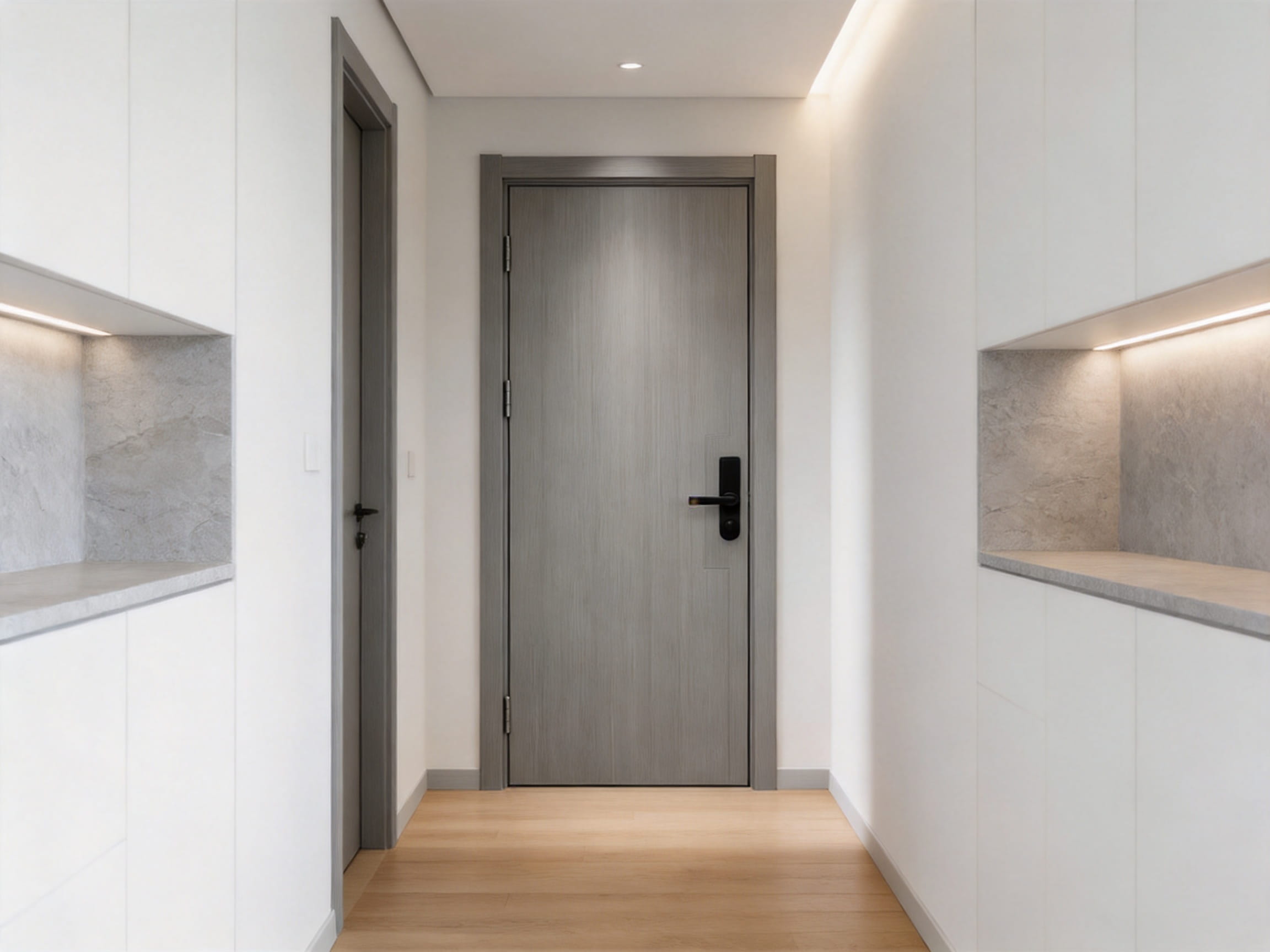
In residential interiors, ash grey doors coordinate easily with light flooring, stone surfaces, matte metal hardware, white walls, black accents, and soft neutral furniture. In commercial interiors, they provide a professional and controlled backdrop without creating a cold or overly industrial atmosphere. For hospitality projects, the color reduces the risk of style fatigue because it is elegant, restrained, and easy to combine with changing decorative schemes.
The straight grain pattern also helps designers create vertical rhythm. When multiple doors are installed along a corridor, inconsistent grain or color variation can make the entire space look less organized. Engineered veneer solves this issue by offering repeatable grain direction and tone. The result is a cleaner architectural composition, especially under corridor lighting or daylight exposure.
One of the most important advantages of this engineered veneer door is its zero-defect consistency matching. Natural veneer doors often depend on the availability and characteristics of logs. Even when veneers are carefully selected, differences in growth conditions, cutting direction, color, knots, mineral streaks, and natural markings can create visible inconsistency. For small custom homes, such variation may be acceptable or even desirable. For large-scale commercial projects, however, inconsistency can become a serious quality concern.
The ash grey straight grain engineered veneer door avoids this problem by using a technologically controlled veneer surface. It has no natural knots, minimizes color difference, and can deliver a consistent appearance across large batches. This gives project managers greater confidence when ordering doors for apartments, hotels, offices, and real estate developments. It also reduces the risk of on-site rejection, rework, and schedule delays.
Another major advantage is deep texture replication customization. Wood grain direction, gloss, and color can be accurately reproduced according to the architect’s drawings or project sample. This ability is particularly valuable when designers require a specific interior concept and need the manufacturer to reproduce that concept across many rooms and building phases.
Competitor products may offer standard veneer patterns, but not all suppliers can maintain accurate grain reproduction at scale. The engineered veneer process allows a more stable relationship between sample approval and final delivery. For developers and contractors, this helps reduce the common problem of “approved sample versus delivered product” mismatch.
Ash grey is attractive because it is subtle, but subtle colors are also vulnerable to inconsistency if the finishing process is not well controlled. Slight variation in coating thickness, pigment distribution, sanding quality, or substrate absorption can make grey surfaces appear uneven. This product addresses that challenge through controlled surface finishing and UV-resistant treatment.
The ultimate UV-resistant coating helps prevent fading and yellowing caused by long-term sunlight exposure. This is important in rooms with large windows, bright corridors, hotel suites, and office environments. While no interior product should be exposed to extreme moisture or abuse, a UV-resistant finish improves long-term visual stability and helps preserve the original design intent.
The product uses international green and environmentally friendly materials, including fast-growing timber from technologically reconstituted forest resources. This supports responsible material use and aligns with green building expectations. For projects pursuing environmental certification or healthier interior standards, material sourcing and low-emission performance are increasingly important.
The zero VOC paint-free environmentally friendly process is another competitive advantage. It supports immediate occupancy requirements and helps meet strict commercial indoor air quality standards. In apartments, hotels, hospitals, offices, and schools, low-emission materials are not merely a marketing feature; they influence occupant comfort and project compliance.
Different buildings require different performance levels. Medical projects, public buildings, commercial facilities, and hospitality environments may require enhanced fire performance or antibacterial surface properties. This door system supports flame retardant or silver ion antibacterial process customization according to project needs.
Many standard interior doors are limited to fixed specifications, forcing buyers to choose between appearance and performance. This engineered veneer door is more flexible. It allows the visual design to remain consistent while the technical configuration is upgraded for specific applications.
Compared with natural veneer on less stable substrates, this door is designed for better resistance to warping, cracking, and environmental changes. Interior doors are often affected by humidity variation, heating and cooling systems, transportation conditions, and installation environments. A stable engineered base helps improve dimensional reliability and reduces the risk of long-term deformation.
The availability of MDF, HDF, and plywood base boards allows project teams to select the right balance of cost, weight, strength, and performance. Core options such as honeycomb paper, solid wood, and plywood further expand the range of applications. For example, a project focused on lightweight interior partitions may select a honeycomb core, while a project requiring stronger acoustic or structural performance may choose a solid wood or plywood core.
| Item | Specification |
| Product Type | Ash grey straight grain engineered veneer interior door |
| Surface Material | Customizable engineered oak, engineered walnut, or engineered ash veneer |
| Base Board | MDF, HDF, or plywood available |
| Core Structure | Honeycomb paper, solid wood, or plywood available |
| Surface Finish | Primed or painted finished |
| Color | Ash grey standard concept; customized colors available |
| Standard Slab Size | 2100 mm × 900 mm × 45 mm; customized sizes available |
| Wall Thickness Range | 100 mm to 300 mm, customizable |
| Edge Banding | PUR or laser edge banding available |
| Frame Material | MDF or plywood available |
| Fire Rating | Not applicable as standard; customizable by project requirement |
| Acoustic Performance | Rw 28–32 dB standard range; customizable |
| Eco Standard | E0 and E1 grades optional |
| Moisture Content | 8%–10%, tolerance plus or minus 2% |
| Delivery Form | Knock-down frame plus slab |
| Opening Direction | Left or right, inward or outward customizable |
| Pre-Drilling Service | Hinge and lock pre-drilled |
| Weight Per Set | Approximately 45 kg including door panel and frame |
| Packaging | PE film, foam, and carton |
| Sets Per Pallet | 25 sets |
The performance of an engineered veneer door depends not only on the surface material, but also on the manufacturing system behind it. Suzhou Dicosbo Wood Co., Ltd. operates as a global wood solutions manufacturer specializing in wood flooring, wooden doors, and custom cabinet solutions. With a business foundation dating back to 1999, the company brings more than two decades of experience to the production of interior wood products.
The company’s manufacturing capability is supported by 20,000 square meters of production facilities, German imported production lines, automated quality control systems, and a strict three-step inspection process. These strengths are directly relevant to the ash grey straight grain engineered veneer door because project doors require repeatable accuracy. A visually refined door can only succeed if it is produced with stable sanding, laminating, finishing, edge treatment, drilling, packaging, and inspection.
Annual capacity includes 2,400,000 square meters of flooring and 5,000 sets of doors. This production background demonstrates the ability to serve both product categories and project-based orders. For architects and contractors, factory capacity matters because delayed door delivery can affect finishing schedules, handover dates, and occupancy planning. A manufacturer with organized production systems is better positioned to support large commercial and residential programs.
OEM and ODM customization are also important strengths. Some projects need standard doors with predictable specifications, while others require unique dimensions, special wall thickness compatibility, custom colors, adjusted acoustic performance, modified cores, fire-related upgrades, or specific hardware preparation. The company’s customization framework allows the ash grey straight grain door to be adapted to the requirements of distributors, developers, contractors, and design firms.
The success of a straight grain grey door depends heavily on process control. Grey finishes expose imperfections more easily than darker wood tones because uneven sanding, coating variation, or substrate defects may become visible under light. Straight grain designs are also unforgiving because misalignment is easy to notice. To produce a stable visual effect, every production stage must be controlled.
First, the engineered veneer surface must be selected and matched according to approved grain and tone standards. Because the product is designed for zero-defect consistency, the surface must avoid obvious knots, excessive color variation, and disruptive grain changes. Second, the substrate must be prepared to create a flat and stable foundation. Any irregularity in the base board can affect the surface appearance and later finishing quality.
Third, lamination must be performed with controlled pressure, temperature, and adhesive application. Poor bonding can cause bubbling, delamination, or surface unevenness. Fourth, edge banding must be completed with precision. PUR and laser edge banding options help improve edge appearance and durability, reducing weak points that may occur in humid or high-use environments.
Fifth, finishing must be carefully applied. The surface may be primed or painted finished according to project needs. UV-resistant treatment is used to improve color durability and resist fading or yellowing. Finally, pre-drilling for hinges and locks can be completed at the factory, improving installation accuracy and reducing on-site labor.
Quality assurance is one of the strongest differentiators between a project-grade engineered veneer door and a basic commodity door. The product is supported by ISO 9001 system guarantee, and the manufacturer’s broader compliance framework includes CE, FSC, CARB P2, and ISO 9001 standards. These certifications and quality systems help reassure global buyers that production follows recognized procedures and material requirements.
For international projects, compliance is often required before a product can be approved. Buyers may need documentation related to emissions, responsible sourcing, production control, or product safety. A supplier with export experience and global compliance awareness can reduce the administrative burden for contractors and distributors.
The company has more than ten years of export experience and serves more than 100 global partners across Europe, North America, and Southeast Asia. This experience is important because international projects involve different installation methods, packaging expectations, moisture conditions, documentation needs, and communication standards. A manufacturer accustomed to global supply is more likely to understand these requirements and deliver appropriately.
Environmental responsibility is increasingly important in interior construction. Doors are installed in large quantities, and their materials can influence indoor environmental quality. The ash grey straight grain engineered veneer door supports healthier interiors through green material selection, E0 and E1 grade options, and a zero VOC paint-free environmentally friendly process.
Low VOC performance is especially valuable in hotels, apartments, offices, medical spaces, and educational facilities. In many projects, interiors must be occupied shortly after completion, leaving little time for long ventilation periods. Low-emission materials help reduce odor and improve the readiness of the space for use.
The use of fast-growing timber from technologically reconstituted forest resources also reduces dependence on slow-growing natural decorative timber. Engineered veneer makes efficient use of wood resources while still delivering the appearance of a refined wood surface. This balance between aesthetics and resource efficiency gives the product an advantage over traditional veneer options that may rely more heavily on variable natural logs.
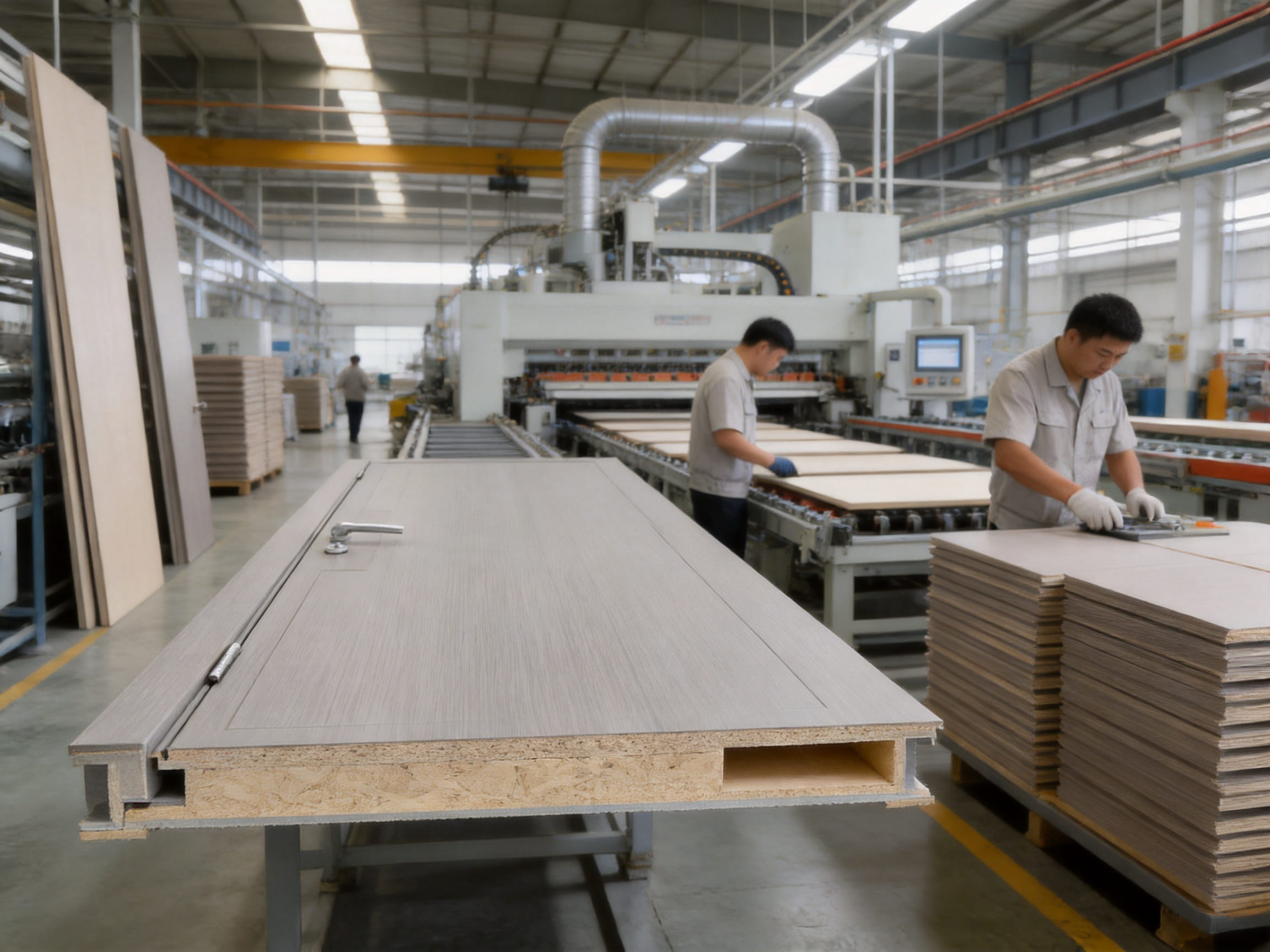
In modern apartment buildings and finished housing programs, interior doors must satisfy several expectations at once. They must match the interior design, remain stable under daily use, fit standardized construction openings, support efficient installation, and stay within project budgets. The ash grey straight grain engineered veneer door is well suited to this environment because it combines a refined appearance with scalable production.
Developers can use the same door style across bedrooms, bathrooms, studies, corridors, and utility areas while maintaining a consistent appearance. The calm ash grey tone works well with light oak flooring, grey stone tile, white cabinetry, black hardware, and contemporary lighting. For finished housing, consistency is especially important because buyers compare units closely. Color variation between rooms or between apartments can create negative impressions, even if the door itself functions properly.
The engineered structure also helps support long-term stability. Residential spaces experience changes in humidity due to seasonal weather, air conditioning, heating, cooking, and daily living. A stable engineered base reduces the risk of warping and cracking compared with less controlled natural materials.
Hotel doors must combine visual quality, operational durability, acoustic comfort, and predictable delivery. In hotel corridors, dozens or hundreds of doors are viewed together under continuous lighting. Any inconsistency in grain direction, color, gloss, or edge quality becomes immediately visible. The ash grey straight grain engineered veneer door is particularly suitable for this application because the engineered veneer surface can be matched across batches.
The Rw 28–32 dB acoustic performance range can support basic sound reduction needs, and acoustic customization is available for projects requiring stronger performance. Door weight, core structure, seals, frame design, and installation quality all influence final acoustic results, so the ability to customize the structure is valuable.
The optional UV-resistant coating helps maintain the appearance of doors exposed to daylight from corridor windows or room interiors. Optional flame retardant upgrades can be considered for commercial hospitality projects where local code or project specifications require enhanced fire-related performance.
Offices and co-working environments often use design language based on straight lines, neutral colors, glass partitions, acoustic panels, and efficient circulation. The ash grey straight grain engineered veneer door fits this environment because it looks professional without appearing heavy or traditional.
Commercial spaces also require durability and maintainability. Doors may be opened and closed many times each day, touched by different users, and exposed to cleaning routines. The product’s refined surface, stable core options, and edge banding choices support long-term commercial use when properly specified and maintained.
For offices with multiple rooms, meeting areas, executive suites, and service spaces, batch consistency reduces visual disruption. The door can also be coordinated with custom cabinets, wall panels, and wood flooring solutions to create a more integrated interior system.
Showrooms and premium real estate projects depend heavily on first impressions. Every detail contributes to perceived value. A door with inconsistent color, visible defects, or low-quality edge treatment can weaken the effect of a carefully designed interior. The ash grey straight grain engineered veneer door offers a refined, modern surface that supports premium presentation.
The muted grey tone is especially useful in showrooms because it does not compete with displayed products, furniture, or lighting features. It provides a high-quality architectural background while maintaining visual calm. The straight grain texture adds depth without overwhelming the space.
The product can be delivered as a knock-down frame plus slab, which supports efficient packaging, shipping, and site handling. Each set weighs approximately 45 kg including the door panel and frame, and packaging includes PE film, foam, and carton protection. With 25 sets per pallet, the delivery format is suitable for project logistics.
Factory pre-drilling for hinges and locks can reduce on-site labor and improve installation accuracy. This is especially important in large projects where repeated manual drilling can create variation, delay, and waste. When hardware locations are prepared in advance, installers can work faster and with greater consistency.
Customizable opening direction also supports practical construction needs. Left or right, inward or outward configurations can be specified according to room layout, corridor circulation, safety requirements, and user convenience.
Maintenance is straightforward when the door is used in appropriate indoor conditions. For daily cleaning, users should wipe the surface with a soft dry cloth. Harsh acidic or alkaline cleaners should be avoided because they may damage the finish. The door should be kept away from prolonged moisture or standing water, and hard or sharp objects should not be allowed to scratch the surface during handling or daily use.
Regular hardware inspection is recommended to ensure smooth operation. Hinges, locks, and handles should be checked periodically, especially in high-traffic commercial spaces. Maintaining normal indoor humidity will help extend service life and preserve dimensional stability.
Compared with some natural veneer doors that require more careful tone matching and repair handling, engineered veneer provides more predictable surface consistency. However, proper cleaning and environmental control remain important for all quality interior doors.
Architects and interior designers often need products that can translate concept drawings into repeatable physical results. The ash grey straight grain engineered veneer door supports this process through 1:1 grain, gloss, and color replication capability. When a design team approves a sample, the manufacturer can reproduce the intended appearance across the project.
This capability reduces the uncertainty that often occurs with natural materials. While natural wood has beauty, it may not always obey the strict repetition required in modern architecture. Engineered veneer allows designers to keep the warmth and texture of wood while gaining greater control over color, linearity, and project-wide consistency.
The door also works well with concealed or minimalist hardware systems. Its simple surface design does not require heavy decorative molding or visible pattern complexity. This makes it suitable for flush doors, clean frames, modern handles, and refined detailing.
Contractors and developers value products that reduce risk. A door may appear simple, but it involves design approval, procurement, production scheduling, shipment, storage, installation, finishing coordination, hardware matching, inspection, and handover. If any stage fails, the project can experience delays and additional cost.
The ash grey straight grain engineered veneer door reduces risk through consistency, customization, quality control, and factory preparation. Its engineered veneer avoids unpredictable natural defects. Its customizable structure allows technical requirements to be addressed before production. Its packaging and knock-down delivery form support logistics. Its pre-drilling service improves installation efficiency.
The manufacturer’s ability to provide rapid prototyping within 72 hours is also valuable. Quick sample development can accelerate design decisions and project approval. For fast-moving commercial projects, this responsiveness can make a meaningful difference.
When compared with many conventional interior doors, this engineered veneer door offers a stronger combination of controlled appearance, environmental performance, customization, and production reliability. Natural veneer competitors may provide authentic wood character, but they often struggle with large-batch uniformity. Low-cost laminate competitors may provide consistency, but they may not offer the same depth of wood texture, customization flexibility, or project-grade finish options.
Painted plain doors may suit simple interiors, but they lack the refined linear grain of ash grey engineered veneer. Basic hollow-core doors may be lightweight and economical, but they may not meet the visual, acoustic, or durability expectations of hotels, offices, and premium residences. High-end solid wood doors may offer strength and prestige, but they can be more expensive, heavier, and more sensitive to moisture-related movement.
The ash grey straight grain engineered veneer door occupies a practical middle-to-premium position. It delivers a refined wood-look surface, strong visual consistency, customizable technical structure, environmental advantages, and scalable production. For many modern projects, this balance is more useful than choosing either a purely natural luxury door or a basic commodity door.
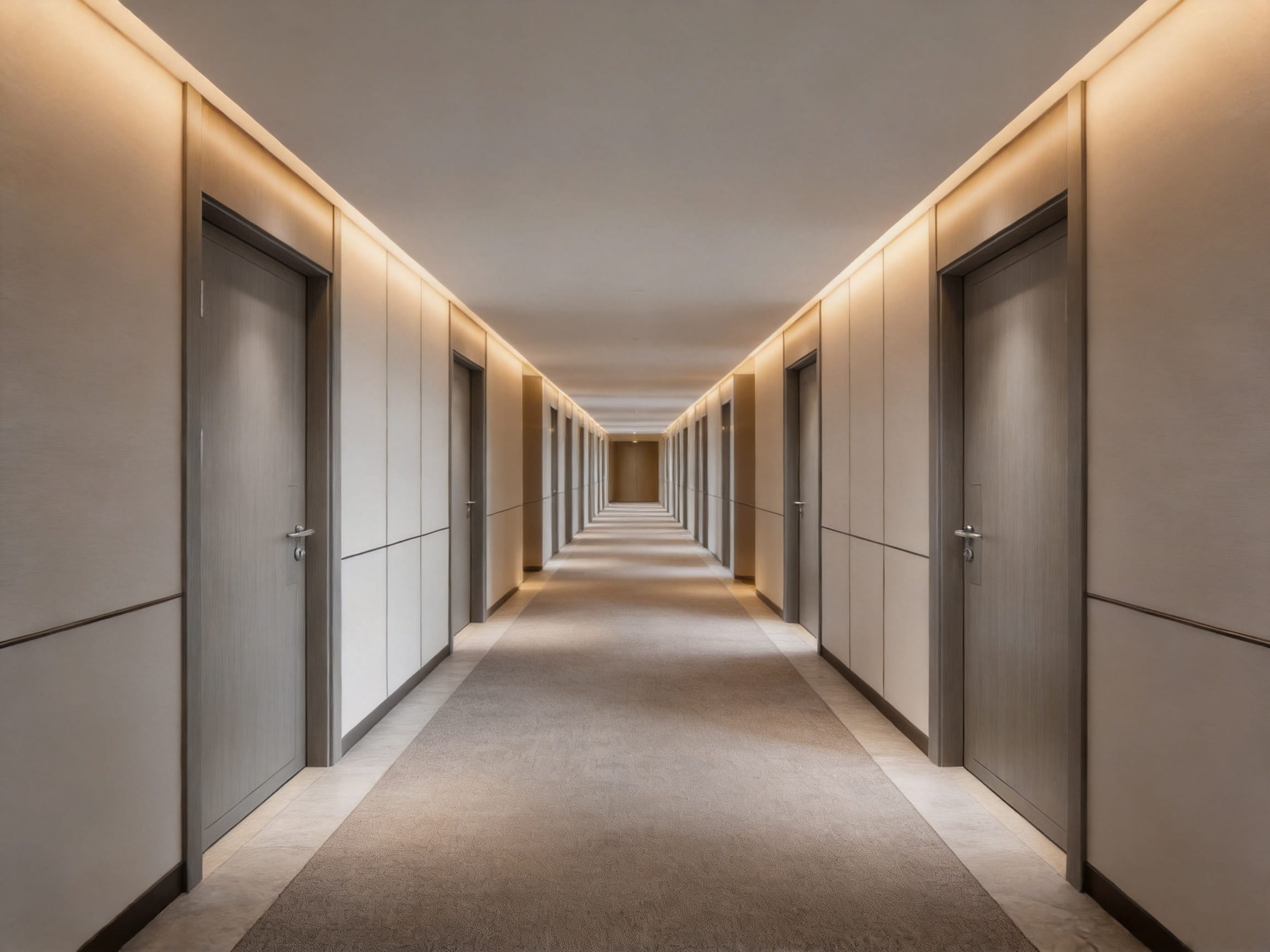
The main visual characteristic is a fine, linear wood grain in a muted ash grey tone. The result is calm, modern, and orderly, making it suitable for minimalist, industrial, contemporary, and urban interiors.
Engineered veneer provides stronger batch consistency. It reduces natural knots, color differences, and unpredictable grain variation, which is essential when hundreds or thousands of doors must look uniform across rooms, floors, and buildings.
Yes. Wood grain direction, gloss, and color can be reproduced according to architect drawings or approved samples. Custom color options are available, and surface material choices can include engineered oak, engineered walnut, and engineered ash veneer.
The door can be supplied with honeycomb paper, solid wood, or plywood core structures. This allows the project team to select the most appropriate solution based on weight, strength, acoustic performance, budget, and application.
Yes. The door is suitable for hotel rooms and corridor systems because it offers consistent appearance, customizable acoustic performance, optional fire-related upgrades, and a refined modern surface that works well in hospitality interiors.
The product supports green building needs through environmentally responsible materials, E0 and E1 grade options, and a zero VOC paint-free process. These features help improve indoor air quality and support immediate occupancy requirements.
Yes. Its calm grey tone, straight grain pattern, and stable construction make it well suited for offices, meeting rooms, co-working spaces, executive suites, and commercial interiors requiring a clean architectural style.
The standard slab size is 2100 mm by 900 mm by 45 mm. Customized sizes are available according to project needs.
Yes. Hinge and lock pre-drilling services are available, helping improve installation accuracy and reduce on-site labor.
Daily cleaning should be done with a soft dry cloth. Harsh acidic or alkaline cleaners should be avoided. The door should be protected from standing water, prolonged moisture, scratches from sharp objects, and abnormal humidity conditions.
The ash grey straight grain engineered veneer door is a strong solution for modern interiors that require visual consistency, refined design, environmental responsibility, and project-ready manufacturing reliability. Its calm grey tone and straight grain texture make it suitable for apartments, hotels, offices, showrooms, and high-end real estate developments. Its engineered veneer surface solves many of the consistency problems associated with natural veneer, while its customizable structure allows the product to meet different technical and budget requirements.
Beyond appearance, the door’s value lies in its manufacturing foundation. Supported by advanced production lines, automated quality control, ISO 9001 system assurance, export experience, and OEM/ODM customization capability, it is designed for real project conditions rather than only showroom presentation. Features such as UV-resistant coating, optional flame retardant and antibacterial upgrades, zero VOC processing, PUR or laser edge banding, factory pre-drilling, and flexible core choices make it a practical and competitive interior door system.
For architects, it provides design control. For contractors, it reduces installation and delivery risk. For developers, it supports consistent quality across large projects. For end users, it offers a clean, modern, and durable interior experience. In a market where many doors compete only on price or appearance, this engineered veneer door stands out by combining controlled aesthetics, stable performance, responsible materials, and reliable manufacturing strength.
International Organization for Standardization. ISO 9001 Quality Management Systems: Requirements.
Forest Stewardship Council. FSC Principles and Criteria for Responsible Forest Stewardship.
California Air Resources Board. Airborne Toxic Control Measure for Composite Wood Products.
U.S. Green Building Council. LEED Green Building Rating System Reference Guide.
Architectural Woodwork Institute. Architectural Woodwork Standards.
European Committee for Standardization. Interior Door Performance and Wood-Based Panel Standards.
Composite Panel Association. Technical Guidance for MDF, HDF, and Engineered Wood Products.
Wood Handbook: Wood as an Engineering Material. Forest Products Laboratory.

We provide customers with sustainable and eco-friendly
engineered wood solutions and services.
Choose DEIF for the perfect blend of
performance and aesthetics.
