


 English
 Español
 عربى
عربى

Get Social
Choose DEIF for the perfect blend of
performance and aesthetics.
 Get Free Sample

Content
Engineered wood flooring has become one of the most practical and design-driven choices for modern residential and commercial interiors. Among the many options available, the 3-layer light grey mountain pattern locking composite hardwood floor stands out because it combines natural wood beauty, dimensional stability, installation efficiency, and flexible customization. Designed with a natural wood veneer surface, a solid engineered core, a protective multi-layer UV coating system, and a practical click-lock profile, this flooring solution is made for projects that require both visual refinement and reliable long-term performance.
This product is especially suitable for interior spaces where designers, contractors, distributors, and property owners want the warmth of real wood without the instability risks often associated with traditional solid hardwood. Its light grey mountain grain creates a calm, contemporary, and elegant appearance, while the engineered 3-layer structure helps reduce deformation, warping, and cracking caused by seasonal humidity changes, temperature fluctuations, or underfloor heating conditions.
The floor is part of the 3-layer engineered flooring category and is designed for a wide variety of interior applications, including living rooms, master bedrooms, open-plan offices, cafes, restaurants, boutique commercial spaces, and high-end residential developments. With customizable veneer species, surface finishes, textures, colors, grades, and thickness options, it can be adapted to different architectural concepts, from minimalist apartments to luxury hospitality environments.
Beyond product design, this flooring is supported by the manufacturing strength of Suzhou Dicosbo Wood Co., Ltd., a wood solutions manufacturer with more than 20 years of experience in flooring, wooden doors, and custom cabinet solutions. With large-scale production facilities, German imported production lines, automated quality control systems, global compliance certifications, and OEM/ODM customization capabilities, the company provides stable supply and project-ready manufacturing support for international partners.
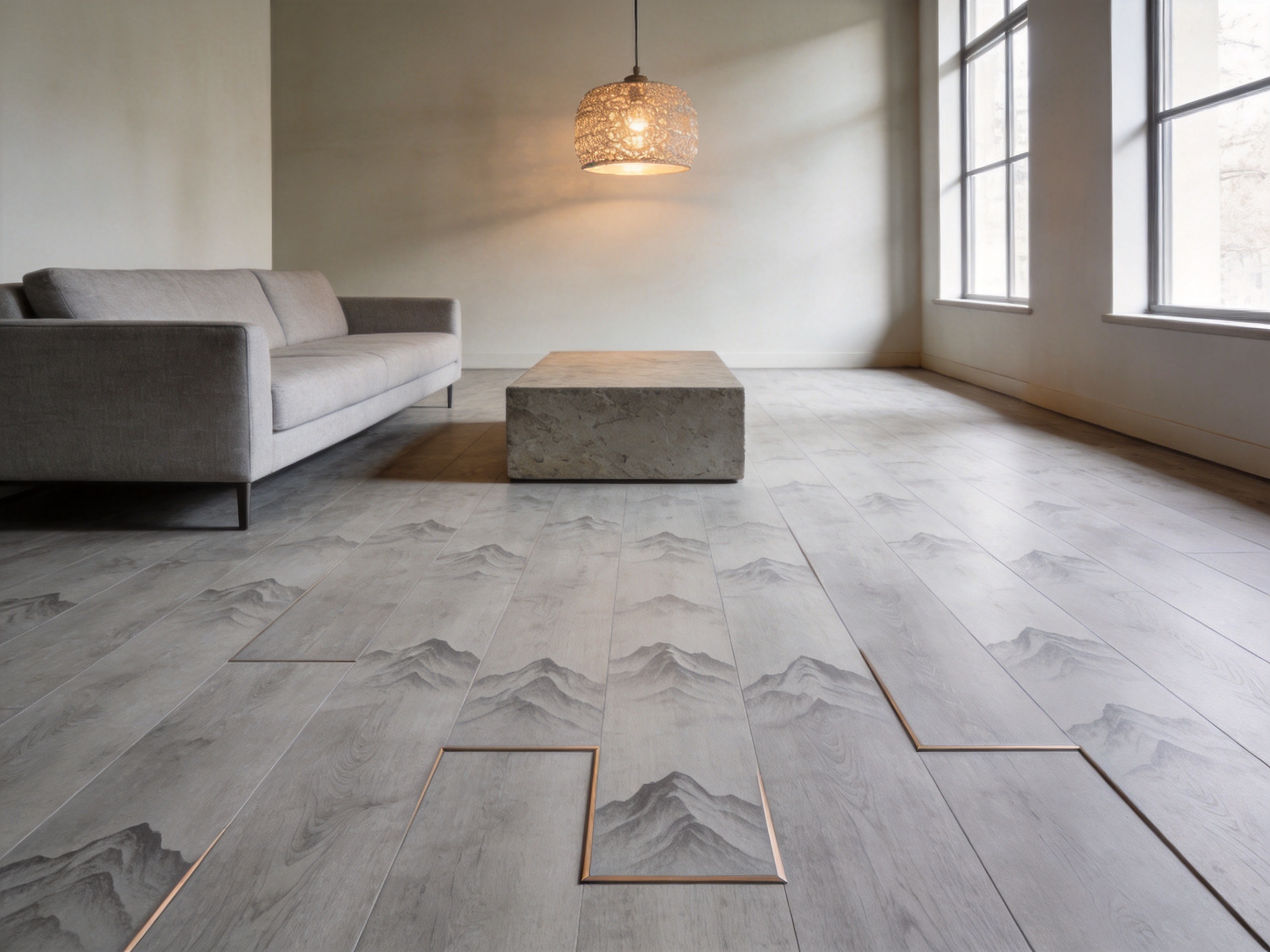
The 3-layer light grey mountain pattern locking composite hardwood floor is built to deliver the authentic visual appeal of natural wood while improving structural stability through engineered construction. The surface uses natural wood veneer, with veneer options including ash, oak, walnut, and teak. This allows the floor to retain the texture, grain variation, and natural warmth that make hardwood flooring so desirable, while the internal structure improves performance compared with ordinary solid wood flooring.
The light grey tone is one of the product’s most important design features. Grey flooring has become popular in contemporary interiors because it works well with neutral color palettes, black-and-white design schemes, stone textures, metal accents, and soft furnishings. However, not all grey floors are the same. A flat grey surface can look cold or artificial, while this floor uses a mountain pattern grain to maintain a natural and layered appearance. The result is a floor that feels modern but not dull, calm but not plain, and elegant without being overly decorative.
The product’s layered design is also important. A 3-layer engineered wood structure generally consists of a decorative top veneer, a stable core layer, and a balancing bottom layer. In this product, the core construction uses spruce or pine, selected for stability and structural performance. This cross-layer structure helps distribute stress more evenly across the plank, reducing the tendency of the wood to expand, contract, cup, twist, or crack. For northern climates, dry indoor heating seasons, or projects using underfloor heating systems, this stability is a major advantage.
Another key feature is the click locking system. Instead of relying only on traditional nail-down or glue-down methods, the locking profile allows planks to connect tightly with consistent alignment. This helps create a smooth floor surface with tight joints and fewer height differences between boards. It also supports faster installation, which can reduce project labor time, especially in apartments, offices, renovation projects, and commercial fit-outs.
The flooring is available in a standard imperial dimension of 48.0 inches by 6.5 inches by 5/8 inch, with 10 pieces per carton, approximately 2.03 square meters or 21.85 square feet per carton, and a carton weight of about 24 kilograms. It supports floating, glue-down, and staple installation methods, giving installers flexibility based on site conditions and project specifications.
| Product Type | 3-Layer Engineered Flooring |
| Standard Dimension | 48.0 inches × 6.5 inches × 5/8 inch |
| Design Style | Light grey mountain pattern composite hardwood |
| Face Veneer Options | Customizable oak, walnut, ash, or teak |
| Veneer Thickness | Customizable 2 mm, 3 mm, 4 mm, or 6 mm |
| Core Construction | 3-layer engineered wood |
| Core Layer | Spruce or pine |
| Veneer Grade Options | AB, ABC, ABCD, or CD |
| Veneer Cut | Sliced veneer |
| Surface Finish Options | UV lacquer, UV oil, or hardwax oil |
| Surface Texture Options | Wire brushed, handscraped, or smooth sanded |
| Edge Detail | Micro-bevel on all four sides |
| Locking System | Click system |
| Installation Methods | Floating, glue-down, or staple |
| Pieces Per Carton | 10 pieces |
| Coverage Per Carton | 2.03 square meters or 21.85 square feet |
| Certification Support | CE, FSC, CARB P2, and ISO 9001 related manufacturing capability |
Flooring is one of the largest visible surfaces in any interior. It influences the perceived brightness, warmth, spatial scale, and overall style of a room. The light grey mountain pattern of this engineered hardwood floor provides a balanced foundation for a wide range of design approaches. It is lighter than dark walnut flooring, more sophisticated than plain beige flooring, and more natural than many synthetic grey floor coverings.
The mountain grain effect creates a visual rhythm that moves across the boards without overwhelming the room. In living rooms, it can make the space feel open and calm. In master bedrooms, it contributes to a restful atmosphere. In offices, it supports a clean and professional look. In commercial spaces such as cafes and restaurants, it creates a modern background that can match metal chairs, stone countertops, fabric seating, and warm lighting.
Compared with heavily stained dark floors, the light grey tone is better at hiding small dust particles and minor surface marks. Dark floors can look dramatic, but they often show footprints, pet hair, and fine scratches more easily. Very light floors can brighten interiors, but they may sometimes look too casual or lack depth. This light grey mountain pattern offers a middle path: it is bright enough to enlarge visual space, yet textured enough to retain depth and authenticity.
Another advantage is its compatibility with multiple design themes. In Scandinavian interiors, it complements white walls, pale textiles, and simple furniture. In industrial interiors, it pairs well with concrete, black metal, and exposed lighting. In luxury apartments, it can support marble, brass, and custom cabinetry. In hospitality interiors, it can create a refined but relaxed atmosphere. This flexibility makes the product particularly valuable for distributors and project contractors who need a floor that can appeal to many customer segments.
The customizable veneer options further increase design flexibility. Ash can provide a clean and lively grain, oak can deliver classic elegance, walnut can create a richer and more premium appearance, and teak can provide a warm exotic character. Surface finishes can also be selected according to the project mood. Matte finishes create a subtle modern look, embossed or wire-brushed textures add tactile naturalness, UV lacquer improves easy maintenance, UV oil enhances natural appearance, and hardwax oil offers a warm, hand-finished feeling.
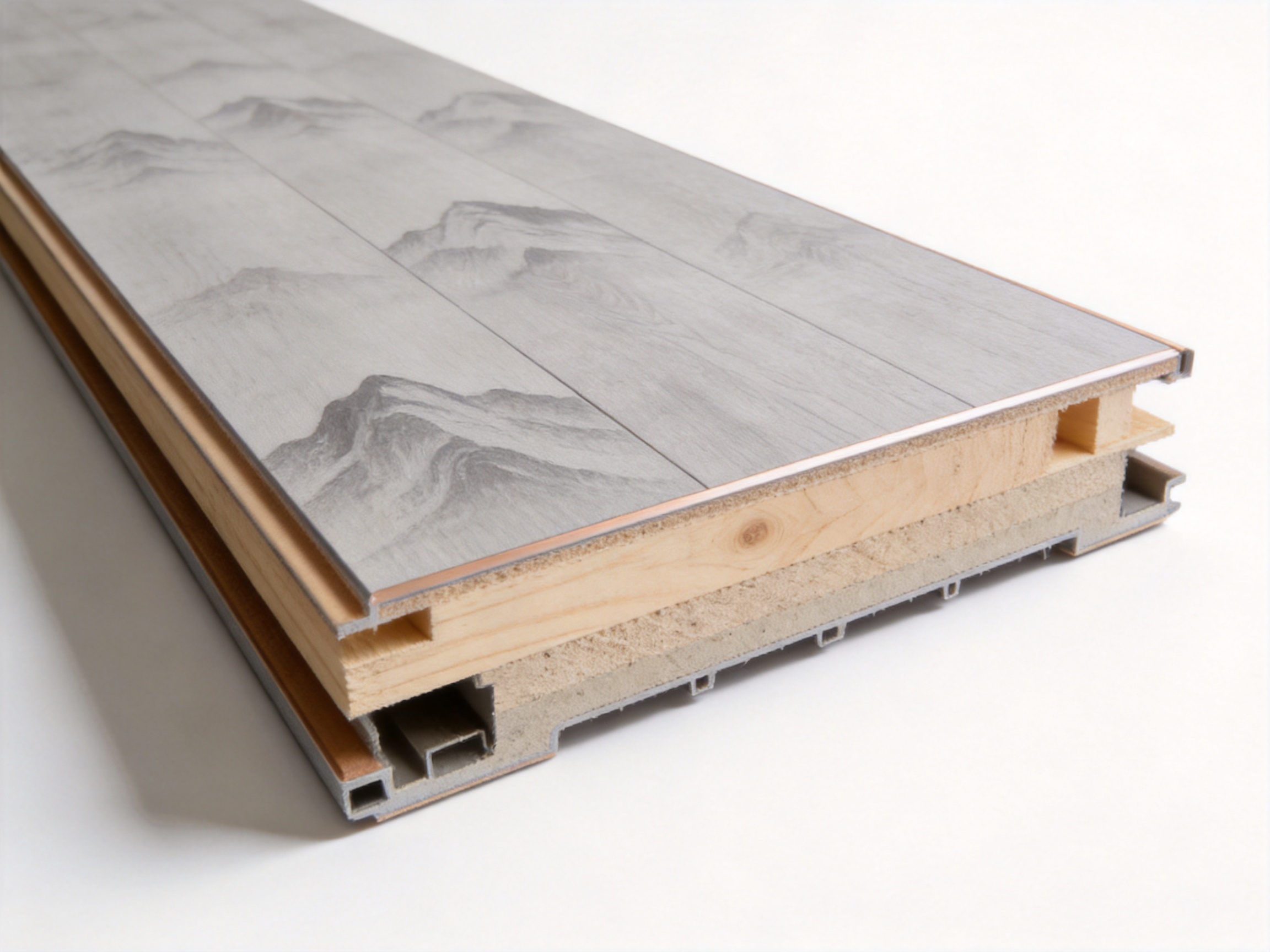
One of the strongest advantages of this product is its 3-layer engineered structure. Traditional solid wood flooring is made from one solid piece of timber. While beautiful, solid wood responds strongly to humidity and temperature changes. It can expand during humid seasons and shrink during dry seasons. Over time, this movement may cause gaps, cupping, warping, or cracking, particularly in environments with underfloor heating or significant seasonal climate changes.
Engineered flooring addresses these concerns by using a layered construction. In this 3-layer product, the natural wood veneer provides the desired hardwood surface, while the spruce or pine core improves dimensional stability. The layers are arranged to balance the natural movement of wood. This reduces stress concentration and helps the plank maintain its shape more effectively than many conventional solid wood products.
For northern climates, where indoor heating can make air very dry in winter, anti-deformation performance is especially important. Wood loses moisture in dry conditions and gains moisture in humid conditions. A stable engineered structure helps manage these changes. This does not mean the floor is immune to environmental conditions; proper acclimation, installation, and indoor humidity control are still important. However, compared with many ordinary wood flooring options, the engineered 3-layer format provides a more reliable solution for challenging interior environments.
The structure also supports compatibility with underfloor heating when installed according to professional guidelines. Underfloor heating can create temperature gradients that affect flooring materials. A more stable engineered wood structure is generally better suited to these systems than unstable solid planks. This makes the product attractive for modern apartments, villas, and residential developments where radiant heating is common.
The core material also matters. Spruce and pine are commonly used in engineered wood products because they offer favorable strength-to-weight characteristics and can be processed into stable layers. When properly dried, bonded, pressed, and balanced, they help create a plank that is firm, practical, and suitable for everyday use. The balance between natural veneer and engineered core is what gives the floor its key advantage: it looks like real hardwood because it is real wood on the surface, but it performs with greater stability because it is engineered inside.
A beautiful wood floor must also withstand daily wear. People walk across it with shoes, furniture is moved, chairs slide, children play, and commercial visitors create repeated foot traffic. For this reason, the surface finish is a critical part of performance. This product can be supplied with UV lacquer, UV oil, or hardwax oil, allowing buyers to select the surface system most appropriate for the project.
UV lacquer is a practical choice for spaces that need wear resistance and easy cleaning. The product information highlights a 7-layer UV coating system for wear and scratch resistance. Multiple UV-cured layers help create a protective surface that improves resistance to common household and commercial abrasion. The curing process produces a consistent finish and supports stable production quality. For distributors and contractors, this helps reduce variability from batch to batch.
UV oil offers a more natural visual effect. It tends to emphasize the grain and texture of the wood while still providing surface protection. Some designers prefer oil finishes because they create a softer, less plastic-like appearance. Hardwax oil is another premium option, often chosen for interiors that want a warm and natural touch. It can deliver a tactile surface that feels close to the wood itself while still supporting practical maintenance when properly cared for.
Surface texture also contributes to both appearance and durability perception. Wire-brushed flooring removes softer grain portions and highlights the natural wood structure, making minor wear less noticeable. Handscraped texture adds artisanal character and can work well in rustic-modern or luxury casual interiors. Smooth sanded texture gives a cleaner and more refined look for contemporary spaces.
Compared with low-cost flooring products that use thin decorative layers or weak surface treatments, this engineered hardwood floor offers a more premium and durable approach. The use of real veneer, customizable thickness, multiple finish options, and a protective UV coating system gives project buyers more control over both appearance and performance. This is particularly important for commercial settings where replacement or repair costs can be high if the flooring fails prematurely.
The locking system is another major advantage of this product. A click system allows boards to connect mechanically along their edges, forming tight joints and improving installation efficiency. For modern construction and renovation projects, installation speed is not only a convenience; it directly affects labor cost, scheduling, and site management.
In floating installations, the click system allows the floor to be installed over an appropriate underlayment without fully bonding each plank to the subfloor. This method can be useful in apartments, offices, and renovation projects where reducing installation time is important. Glue-down installation may be selected when a more permanent bond or acoustic performance is required. Staple installation can also be used in suitable wood subfloor conditions. The ability to support multiple installation methods gives contractors flexibility and helps the product adapt to different site requirements.
The interlocking profile also helps reduce height differences between boards when installed correctly. Tight joints contribute to a smoother floor surface and a more premium finished appearance. Poor-quality locking systems may loosen, create gaps, or produce uneven seams over time. A well-designed click system helps maintain alignment and improves user experience after installation.
Micro-bevels on all four sides further enhance the finished look. A micro-bevel creates a subtle edge definition between planks, which helps highlight the individual board layout while reducing the visual impact of tiny installation tolerances. It also works well with natural wood grain because it gives the floor a structured, intentional appearance.
For commercial buyers, the click system can be an advantage in inventory and project planning. The same flooring line can serve different installation scenarios, reducing the need to stock many separate products. Contractors can choose the installation method based on subfloor condition, room use, and client requirements, while still maintaining a consistent visual result.
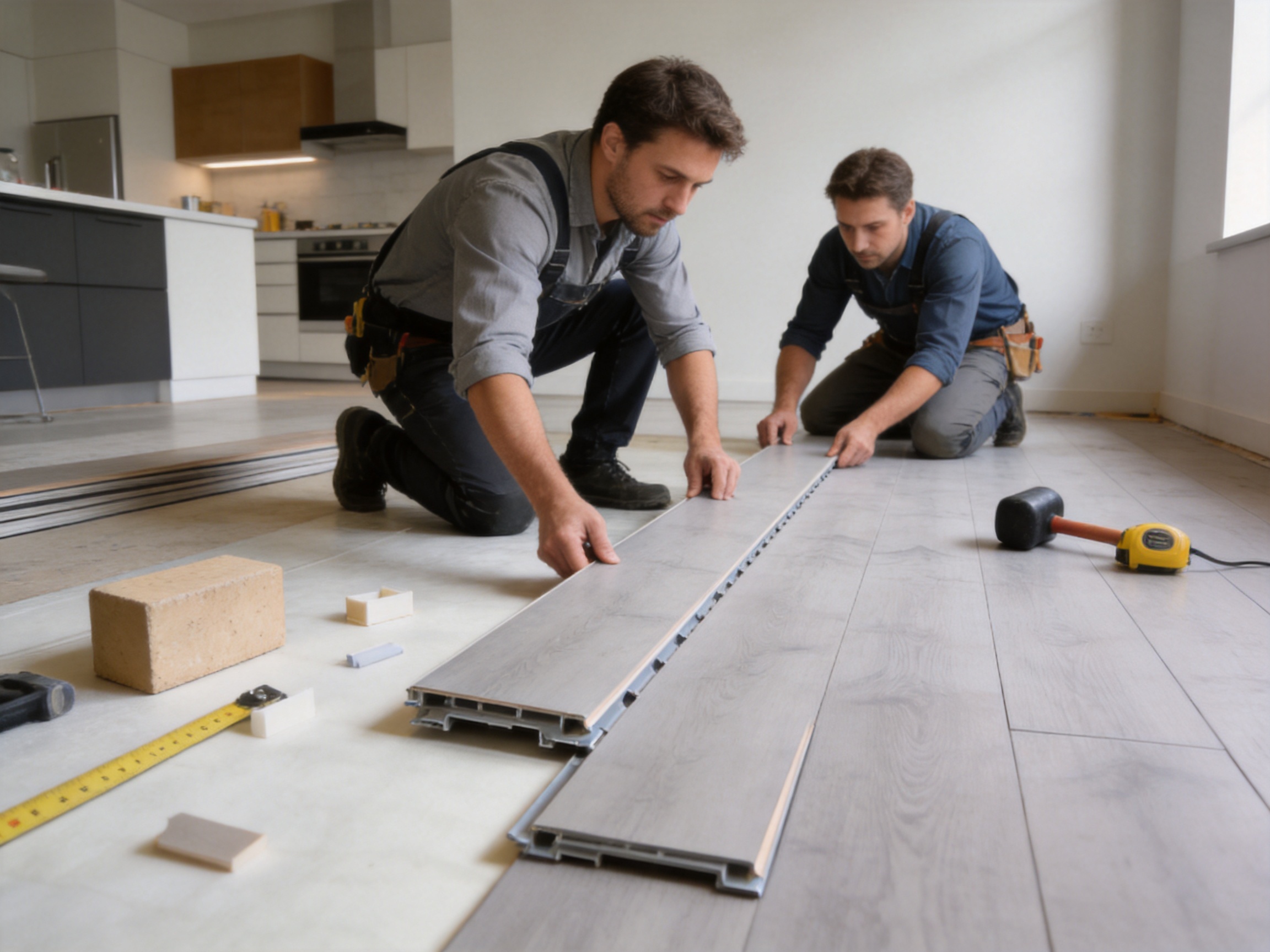
Customization is one of the most important reasons this flooring stands apart from ordinary stock products. Many flooring suppliers offer fixed colors, fixed surface finishes, and limited board formats. This product, supported by the company’s OEM/ODM capability, can be customized across multiple technical and aesthetic dimensions, making it suitable for distributors, architects, contractors, developers, and private-label programs.
Face veneer options include oak, walnut, ash, and teak. Each wood species has a different grain structure and market appeal. Oak remains one of the most widely accepted choices for residential and commercial flooring because of its balanced grain and classic character. Walnut offers a darker, more luxurious appearance. Ash provides a lighter and more dynamic grain, well suited to modern grey treatments. Teak brings warmth and a distinctive look for premium spaces.
Veneer thickness options include 2 mm, 3 mm, 4 mm, and 6 mm. This range allows customers to match product construction to budget, performance expectation, and renovation requirements. Thicker veneer can provide a more premium specification and may support future refinishing depending on the total structure and finish system. Thinner veneer can provide cost efficiency while still retaining the beauty of real wood.
Veneer grades can be customized as AB, ABC, ABCD, or CD. This is important because different markets and design styles have different preferences for knots, color variation, and natural character. A cleaner AB grade may be preferred for luxury apartments or modern office spaces, while ABCD or CD grades may be chosen for rustic, natural, or cost-sensitive projects where more variation is acceptable or even desirable.
Surface finishes include UV lacquer, UV oil, and hardwax oil. Surface textures include wire brushed, handscraped, and smooth sanded. Color can be customized, enabling project teams to match specific interior design palettes. This combination of options allows one base product concept to serve many market needs.
Customization also helps distributors build differentiated product lines. Instead of selling the same generic flooring as every competitor, a distributor can request specific color tones, veneer grades, surface textures, and packaging requirements. Architects and contractors can also use customization to meet project specifications more accurately. In competitive markets, this ability to tailor the product can become a decisive advantage.
The quality of engineered flooring depends not only on design but also on manufacturing consistency. Suzhou Dicosbo Wood Co., Ltd., operating under the DEIF wood solutions identity, has developed manufacturing capabilities that support stable flooring production for global customers. Founded in 1999, the company has more than 20 years of experience in wood flooring, wooden doors, and custom cabinet solutions. This broad wood manufacturing background gives the company a strong understanding of material selection, moisture control, machining accuracy, surface finishing, and project customization.
The company operates approximately 20,000 square meters of production facilities and has more than 10 years of export experience. It serves more than 100 global partners across Europe, North America, and Southeast Asia. For international buyers, this export background is important because flooring supply involves more than manufacturing alone. It requires packaging, documentation, compliance awareness, quality consistency, logistics coordination, and communication across time zones and market standards.
The annual production capacity includes approximately 2,400,000 square meters of flooring and 5,000 sets of doors. This scale supports both recurring distributor orders and project-based supply. For contractors and developers, stable capacity reduces the risk of project delays. For wholesalers, it supports inventory planning and repeat orders. For private-label customers, it enables scalable product programs.
The company uses German imported production lines and automated quality control systems. Advanced equipment helps improve cutting accuracy, pressing consistency, profiling precision, surface finishing uniformity, and dimensional tolerance. In engineered flooring, small deviations can affect installation performance. If the locking profile is inaccurate, boards may not connect tightly. If moisture content is poorly controlled, planks may deform after delivery. If coating thickness is inconsistent, surface performance may vary. Automated systems and structured production processes help reduce these risks.
A strict 3-step quality inspection process further supports product reliability. Inspection can include raw material evaluation, in-process control, and final product checking. For flooring, key quality points include veneer selection, core quality, bonding strength, moisture content, board flatness, machining accuracy, surface finish, color consistency, packaging integrity, and compliance documentation. By controlling quality at multiple stages, the company can better ensure that the finished flooring meets customer expectations.
The manufacturing process for a premium 3-layer engineered floor begins with material selection. The surface veneer must be chosen according to species, grade, grain, color, and thickness. Since the visible surface determines much of the product’s value, veneer selection is critical. Sliced veneer helps preserve natural wood character while enabling efficient use of hardwood resources. Depending on the customer’s specification, oak, walnut, ash, or teak veneer can be selected and sorted into grades such as AB, ABC, ABCD, or CD.
Moisture control is another essential step. Wood is hygroscopic, meaning it absorbs and releases moisture according to environmental conditions. If the veneer or core material is too wet or too dry during production, the finished floor may develop problems later. Professional manufacturing requires controlled drying, conditioning, and moisture testing before bonding and pressing. This helps create a more stable product and supports better performance after installation.
The core layer, made from spruce or pine for the 3-layer category, is processed and prepared to meet thickness and stability requirements. The layers are then bonded under controlled pressure and temperature. The bonding process must create a strong connection between layers while maintaining board balance. Inconsistent bonding can lead to delamination, surface checking, or deformation. Reliable pressing equipment and quality adhesive systems are therefore fundamental to engineered flooring quality.
After pressing, boards are calibrated and machined. Calibration ensures uniform thickness, which is especially important for smooth installation and consistent finished floor height. Profiling creates the click locking system and micro-beveled edges. This step requires high precision because the locking profile must be consistent along the full board length. Even small machining errors can cause installation difficulty or joint weakness.
Surface finishing follows. Depending on the specification, the floor may receive UV lacquer, UV oil, or hardwax oil. For UV coating systems, multiple layers can be applied and cured to enhance wear and scratch resistance. Color treatment and texturing can also be added. Wire brushing, handscraping, or smooth sanding each requires different processing methods and quality standards.
Final inspection and packaging complete the process. Boards are checked for color, surface defects, profile accuracy, dimensions, flatness, and packaging quality. Proper carton packaging protects the floor during storage and international transport. With 10 pieces per carton and approximately 2.03 square meters per carton, the product is packaged for practical distribution and site handling.
Modern flooring buyers increasingly require products that meet environmental and safety expectations. This is especially true for European, North American, and international project markets, where compliance documentation may be required before products can be approved for use. This engineered hardwood flooring is supported by manufacturing capabilities related to CE, FSC, CARB P2, and ISO 9001 standards.
FSC certification support is important because it indicates responsible sourcing practices for wood materials. In the flooring industry, responsible forestry is a major concern. Buyers want to know that wood products are connected to sustainable forest management and traceable supply chains. FSC-related capability helps distributors and project clients respond to environmental purchasing requirements.
CE compliance supports access to European markets by indicating that products meet applicable health, safety, and environmental protection requirements. CARB P2 compliance is especially important for formaldehyde emission control in composite wood products, particularly for buyers serving North American markets. ISO 9001 relates to quality management systems and demonstrates that the manufacturer follows structured quality procedures.
These certifications and compliance capabilities create a competitive advantage over suppliers that cannot provide reliable documentation. For large projects, product approval often depends on more than appearance and price. Architects, developers, contractors, and purchasing teams may require technical documents, environmental certificates, emission compliance, and quality management evidence. A manufacturer with global compliance experience can support these requirements more effectively.
Sustainability is also reflected in the engineered structure itself. By using a natural wood veneer surface over an engineered core, the product can make efficient use of premium hardwood species. Instead of using thick solid hardwood throughout the entire plank, the visible hardwood layer provides the desired appearance while the core delivers structural performance. This approach can improve material efficiency and support more responsible use of valuable hardwood resources.
Compared with solid hardwood flooring, this 3-layer engineered floor offers improved dimensional stability. Solid hardwood has traditional appeal, but it can be more vulnerable to movement in environments with humidity changes or underfloor heating. The engineered structure reduces deformation risk while preserving a real wood surface. This makes it a strong alternative for customers who want natural wood without the limitations of solid planks.
Compared with laminate flooring, this product offers a real wood veneer surface rather than a printed decorative layer. Laminate can be cost-effective and durable, but it does not provide the same natural grain depth, tactile authenticity, or premium market positioning as real wood veneer. For residential buyers and commercial clients who value authentic materials, engineered hardwood provides a more refined solution.
Compared with vinyl or SPC flooring, this product offers the warmth and natural variation of wood. Vinyl and SPC products can perform well in moisture-prone areas, but many designers and homeowners still prefer the feel and appearance of natural wood in living rooms, bedrooms, offices, and hospitality interiors. This flooring provides a more organic visual character and can elevate the perceived value of an interior.
Compared with low-cost engineered flooring, this product stands out through its customization options, 3-layer stability, UV coating system, click locking profile, veneer thickness choices, and manufacturing support. Many budget engineered floors have limited veneer thickness, fewer finish options, weaker profiling, or inconsistent quality control. For buyers focused only on the lowest price, those products may seem attractive initially. However, flooring failures, installation issues, and inconsistent appearance can create higher costs later. A more stable and customizable product helps reduce these risks.
Compared with non-certified or poorly documented products, this flooring is supported by global compliance capabilities. For distributors and contractors, certification support can make the difference between winning and losing a project. It also helps reduce regulatory and reputational risks in international markets.
Another competitive advantage is supply strength. A manufacturer with 20,000 square meters of facilities, large annual flooring capacity, advanced equipment, rapid prototyping, and export experience can support both standard product orders and customized project needs. This is especially important for business buyers who require predictable delivery, repeatable quality, and responsive communication.
In residential interiors, the 3-layer light grey mountain pattern engineered hardwood floor is suitable for living rooms, bedrooms, corridors, dining rooms, and open-plan spaces. The light grey tone helps create a calm and spacious atmosphere, which is especially valuable in urban apartments or homes with limited natural light. The natural wood grain adds warmth and prevents the grey color from feeling cold.
For living rooms, the floor can serve as a neutral base for many furniture styles. It pairs well with white, beige, charcoal, navy, sage green, and warm wood furniture. It can support both minimal design and more layered decoration. The mountain pattern adds interest without competing with rugs, sofas, artwork, or cabinetry.
For master bedrooms, the floor creates a restful foundation. A matte or UV oil finish can make the room feel softer and more natural. If the project requires a luxury feel, walnut veneer or a refined AB grade veneer may be selected. If the project seeks a more natural or rustic appearance, wire-brushed texture and a more character-rich grade can be used.
For homes with underfloor heating, the engineered 3-layer structure offers a practical advantage when installed under appropriate conditions. The stability of the structure helps reduce risks associated with thermal movement. Homeowners still need to follow recommended temperature and humidity guidelines, but the product is better suited to such systems than many traditional solid wood alternatives.
For family use, the surface finish supports practical maintenance. Daily cleaning can be done with a dry mop. Localized stains can be wiped with a slightly damp cloth. Long-term care can include neutral detergent and a soft cloth, with periodic waxing every 6 to 12 months where appropriate for the selected finish system. This manageable maintenance routine makes the floor suitable for everyday living.
Commercial spaces require flooring that supports brand image, visitor comfort, and operational durability. This engineered hardwood floor can be used in open-plan offices, cafes, restaurants, boutique stores, showrooms, hotel rooms, and other interior commercial environments. Its light grey color provides a modern and professional appearance, while the natural veneer surface creates a more premium atmosphere than many purely synthetic materials.
In open-plan offices, flooring affects acoustic comfort, visual organization, and employee perception. A light grey wood floor can make the workplace feel brighter and more welcoming. It also works well with glass partitions, white desks, black metal frames, and modern lighting. The click system can help speed up installation during office fit-outs, reducing downtime.
In cafes and restaurants, the floor contributes to ambience. Customers often respond positively to natural materials because they make spaces feel warmer and more comfortable. The mountain grain pattern provides visual movement that can hide minor everyday marks better than plain surfaces. With the right finish and maintenance plan, the floor can support high-traffic hospitality use.
In retail and showroom environments, the flooring can help products stand out. A neutral light grey base does not dominate the visual field, allowing furniture, clothing, cabinets, or display items to remain the focus. At the same time, the natural wood surface improves the perceived quality of the space.
For commercial buyers, the ability to customize color, finish, texture, grade, and veneer species is especially valuable. A chain store, hotel group, or restaurant brand may need a consistent flooring appearance across multiple locations. OEM/ODM production support allows the flooring to be tailored to brand standards and repeated across projects.
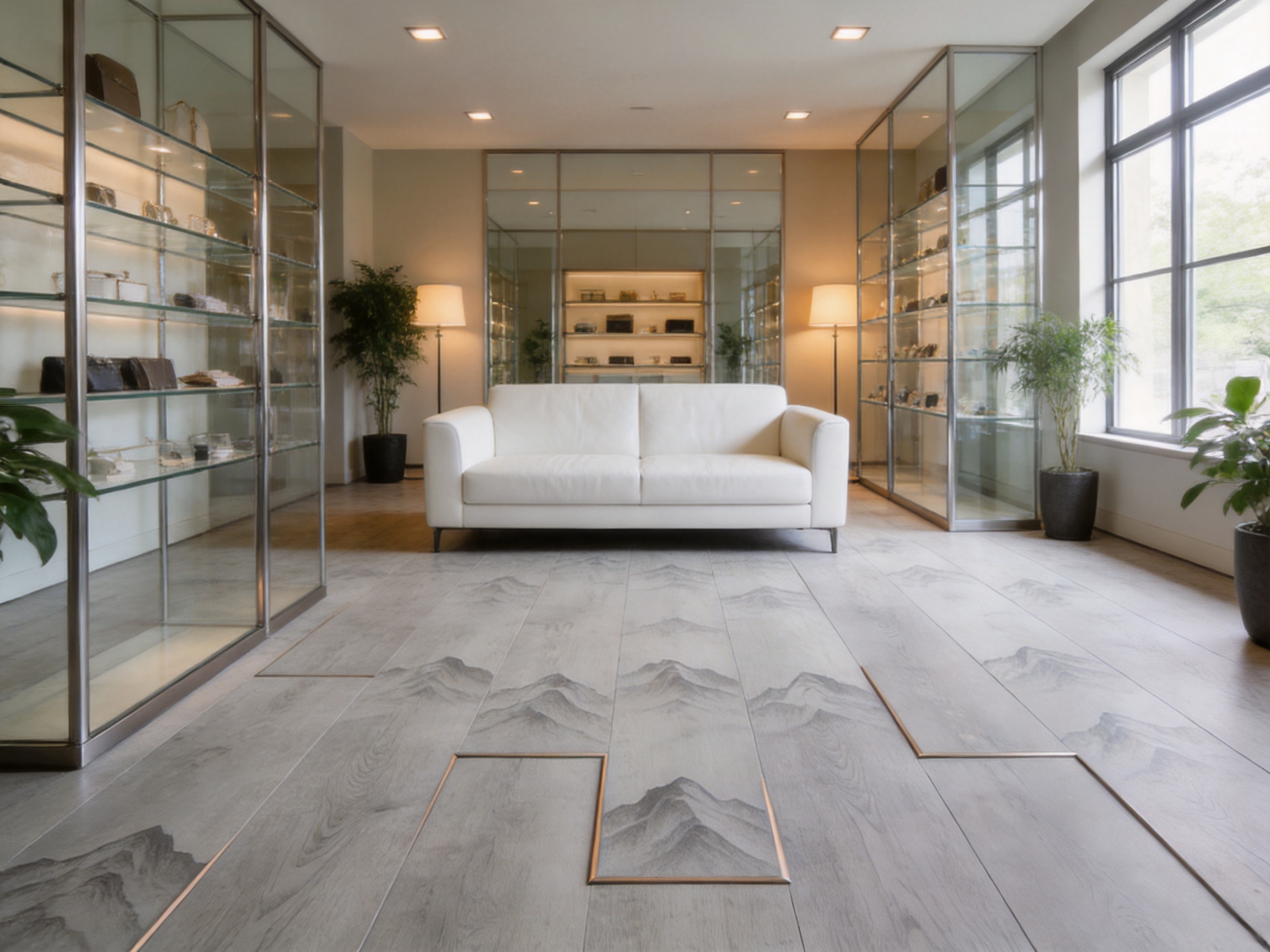
Even high-quality flooring requires correct installation to achieve long-term performance. Before installation, the flooring should be acclimated according to professional guidelines and site conditions. The subfloor should be clean, dry, level, and structurally sound. Moisture levels should be checked, especially in new construction or concrete subfloor applications.
For floating installation, an appropriate underlayment may be used to support sound reduction, comfort, and moisture protection depending on the site. The click system allows the boards to connect securely, but expansion gaps must still be left around walls and fixed objects to allow natural movement. Floating installation is often selected for speed and convenience.
For glue-down installation, the correct adhesive must be chosen based on subfloor type, flooring construction, and environmental conditions. Glue-down installation can provide a firm feel underfoot and may improve acoustic performance. It is often used in commercial projects or premium residential spaces.
For staple installation, the subfloor must be suitable, usually wood-based, and the correct fasteners and tools must be used. Installers should follow recommended spacing and avoid damaging the locking profile or board edges. Staple installation can provide a traditional fixed-floor feel where site conditions allow.
Underfloor heating requires careful management. The heating system should be commissioned before installation, and temperature changes should be gradual. Surface temperature limits should be respected. Indoor humidity should be maintained within a suitable range to reduce stress on the wood. Although the engineered structure improves stability, wood remains a natural material and benefits from controlled indoor conditions.
Proper maintenance helps preserve both the appearance and performance of the floor. Daily cleaning should be simple and gentle. A dry mop, soft broom, or vacuum with a wood-floor-safe attachment can remove dust and grit. Grit is one of the main causes of fine scratches, so regular cleaning is important, especially near entrances.
For localized stains, a slightly damp cloth can be used. Excess water should be avoided because standing moisture can affect wood flooring. Spills should be wiped promptly. For deeper cleaning, a neutral detergent suitable for wood floors can be used with a soft cloth or mop. Harsh chemicals, abrasive pads, and excessive water should be avoided.
Furniture pads are recommended under chairs, tables, and heavy furniture. In commercial spaces, entrance mats can reduce the amount of sand, dirt, and moisture brought into the room. Chair mats may be used under rolling office chairs, depending on the intensity of use. These small preventive measures can significantly extend the floor’s attractive appearance.
For long-term care, waxing every 6 to 12 months may help maintain shine, depending on the selected surface finish and maintenance system. UV lacquer, UV oil, and hardwax oil may have different care requirements, so the maintenance plan should match the finish type. Commercial spaces should establish a routine cleaning schedule based on foot traffic.
Environmental control is also part of maintenance. Indoor humidity should be kept within a reasonable range. Very dry air can cause shrinkage, while excessive humidity can cause expansion. Stable indoor conditions are good not only for flooring but also for wooden doors, cabinets, furniture, and general occupant comfort.
For distributors, flooring products must be attractive, reliable, marketable, and supply-stable. This product meets those needs through its modern design, real wood veneer, engineered stability, customizable specifications, compliance support, and practical packaging. The light grey mountain pattern has broad market appeal, while the 3-layer structure gives sales teams a clear technical advantage to communicate to customers.
For contractors, installation flexibility is a major benefit. The click system, micro-beveled edges, and support for floating, glue-down, or staple methods allow the product to adapt to different projects. Reduced installation difficulty can help control labor time and improve customer satisfaction.
For architects and designers, customization is central. They can select veneer species, color, surface texture, finish, grade, and thickness to match the design vision. The floor can be specified for minimalist, luxury, rustic-modern, Scandinavian, industrial, or hospitality interiors.
For developers, supply capacity and quality consistency matter. Large projects require reliable production schedules, consistent batches, and documentation. The manufacturer’s production scale, quality inspection process, export experience, and certification support help reduce procurement risk.
For private-label customers, OEM/ODM capability and 72-hour rapid prototyping provide additional value. Rapid sampling helps buyers review colors, textures, and finishes quickly before committing to larger production. This can shorten product development cycles and support faster market launches.
Suzhou Dicosbo Wood Co., Ltd. is not only a flooring manufacturer. The company also specializes in wooden doors and custom cabinet solutions. This integrated wood solutions capability is valuable for project buyers who need coordinated interior materials. Flooring, doors, and cabinets often need to match or complement each other in color, texture, and quality level. A manufacturer with experience across multiple wood product categories can better understand complete interior design requirements.
The company’s mission is to create durable and sustainable wood products that enhance interior spaces worldwide. Its vision is to become a trusted wood solutions manufacturer for global partners. This positioning aligns well with the needs of distributors, contractors, and architects who require more than one-off product supply. They need a manufacturing partner that can support development, customization, quality control, compliance, and long-term cooperation.
The company’s export experience across Europe, North America, and Southeast Asia demonstrates its ability to serve diverse markets. Each region has different aesthetic preferences, technical standards, packaging expectations, and business practices. Experience with more than 100 global partners gives the company practical insight into international buyer needs.
The combination of large production capacity, advanced manufacturing equipment, automated quality control, and strict inspection supports product consistency. In flooring, consistency is not optional. Customers expect boards to fit together, colors to match within acceptable variation, finishes to perform, and cartons to arrive in good condition. Strong manufacturing systems help deliver that consistency.
This flooring uses a natural wood veneer surface over a stable 3-layer engineered structure. Compared with solid hardwood, it is more resistant to deformation, warping, and cracking caused by humidity or temperature changes. It still provides the appearance of real wood because the surface is genuine veneer.
Yes. The light grey tone and natural mountain grain make it suitable for living rooms, bedrooms, offices, cafes, restaurants, showrooms, and boutique commercial interiors. It creates a modern and elegant look while remaining neutral enough to match many design styles.
The 3-layer engineered structure provides enhanced stability and is suitable for underfloor heating applications when installed according to professional guidelines. Proper acclimation, gradual temperature changes, and indoor humidity control are important for best performance.
The flooring can be customized with UV lacquer, UV oil, or hardwax oil. UV lacquer is practical for wear resistance and easy cleaning, UV oil enhances natural wood appearance, and hardwax oil provides a warm and tactile surface feel.
Available veneer options include oak, walnut, ash, and teak. These choices allow the product to meet different design needs, from classic oak interiors to premium walnut looks or bright modern ash styles.
Veneer thickness can be customized at 2 mm, 3 mm, 4 mm, or 6 mm. This flexibility allows customers to balance budget, specification level, durability expectations, and project positioning.
The floor supports floating, glue-down, and staple installation methods. The click locking system helps improve installation efficiency and joint consistency.
Daily cleaning can be done with a dry mop or soft broom. Stains can be wiped with a slightly damp cloth. For deeper cleaning, use a neutral detergent suitable for wood floors and avoid excessive water or harsh chemicals.
Certification support such as CE, FSC, CARB P2, and ISO 9001 helps buyers meet project requirements, environmental expectations, quality management standards, and international market regulations.
The manufacturer has more than 20 years of wood product experience, approximately 20,000 square meters of production facilities, large annual flooring capacity, German imported production lines, automated quality control systems, export experience, and OEM/ODM customization capability.
The 3-layer light grey mountain pattern locking composite hardwood floor is a strong choice for modern interiors because it balances design beauty with engineered performance. Its natural wood veneer surface provides authentic grain and warmth, while the 3-layer spruce or pine core improves stability and resistance to deformation. The light grey mountain pattern creates a refined contemporary look suitable for homes, offices, hospitality spaces, and commercial interiors.
The product’s advantages extend beyond appearance. The click locking system supports efficient installation and tight joints. The 7-layer UV coating option improves wear and scratch resistance. The micro-beveled edges enhance visual definition. Customizable veneer species, grades, thicknesses, textures, colors, and finish systems allow the floor to meet diverse project requirements.
For business buyers, the manufacturing background is equally important. Suzhou Dicosbo Wood Co., Ltd. provides advanced production capability, German imported lines, automated quality control, strict inspection processes, global compliance support, rapid prototyping, and OEM/ODM customization. These strengths help distributors, contractors, architects, and developers reduce supply risk and create differentiated flooring solutions for their markets.
In a competitive flooring industry, the best product is not simply the cheapest or the most decorative. It is the product that combines reliable structure, attractive design, flexible specification, responsible manufacturing, and long-term support. This engineered hardwood floor delivers that combination, making it a practical and premium solution for modern wood flooring projects.
Forest Stewardship Council. Principles and Criteria for Responsible Forest Management.
International Organization for Standardization. ISO 9001 Quality Management Systems Requirements.
California Air Resources Board. Airborne Toxic Control Measure for Composite Wood Products.
European Committee for Standardization. Wood Flooring and Parquet Product Performance Standards.
Wood Handbook: Wood as an Engineering Material. Forest Products Laboratory, United States Department of Agriculture.
National Wood Flooring Association. Technical Guidelines for Wood Flooring Installation and Maintenance.

We provide customers with sustainable and eco-friendly
engineered wood solutions and services.
Choose DEIF for the perfect blend of
performance and aesthetics.
