


 English
 Español
 عربى
عربى

Get Social
Choose DEIF for the perfect blend of
performance and aesthetics.
 Get Free Sample

Content
Engineered wood flooring has become one of the most practical and attractive choices for residential, commercial, and hospitality interiors. It combines the visual character of natural timber with a dimensionally stable construction that is better suited to changing indoor conditions than many conventional solid wood products. Within this category, the Multi-Layer Deep Red Oak Mountain Grain Matte Click-Lock Engineered Wood Flooring stands out through its rich appearance, flexible specifications, stable multi-layer core, durable surface treatment, and installation-friendly click system.
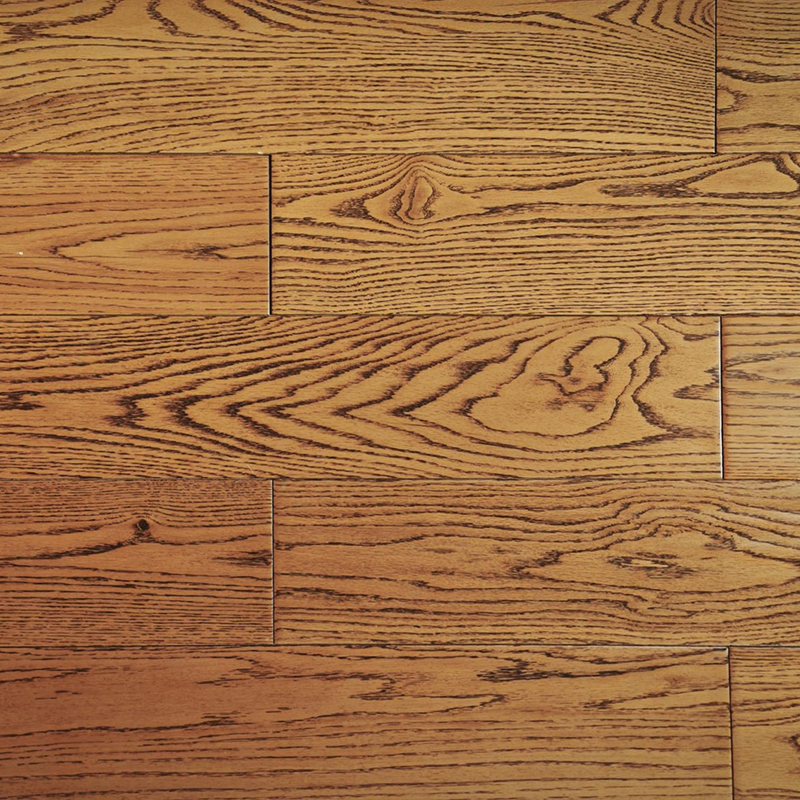
Product reference DF-E2668 is designed for buyers who want the warmth and authenticity of natural wood without accepting unnecessary limitations in installation, maintenance, or design. Its deep red oak appearance creates a welcoming atmosphere, while the mountain grain pattern introduces movement and character across the floor. The matte surface preserves a natural visual effect and reduces the overly glossy appearance associated with some traditional lacquered flooring products.
The flooring is suitable for American-style bedrooms and dining rooms, Neo-Chinese living spaces, refined commercial interiors, hospitality projects, offices, showrooms, and other applications where a durable and distinctive wood surface is required. Its multi-layer engineered construction helps reduce the risk of warping and cracking, making it a practical solution for different climate zones, including regions with seasonal changes or moderate fluctuations in indoor humidity.
Manufactured by Suzhou Dicosbo Wood Co., Ltd., the product benefits from a production system developed through more than two decades of experience in wood flooring, wooden doors, and custom cabinet manufacturing. The company combines German-imported production lines, automated quality control, multi-stage inspection procedures, OEM and ODM capabilities, and international compliance standards to support distributors, contractors, architects, and project buyers.
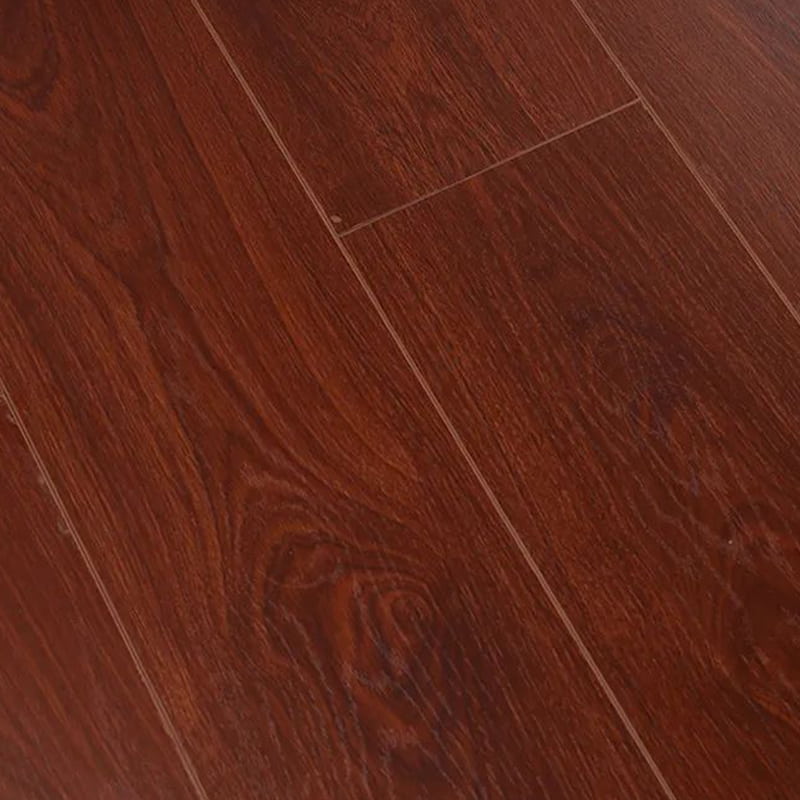
Multi-Layer Deep Red Oak Mountain Grain Matte Click Lock Engineered Wood Flooring
The Multi-Layer Deep Red Oak Mountain Grain Matte Click-Lock Engineered Wood Flooring is a multi-ply flooring product constructed from a natural wood veneer surface and a layered wood-based core. The design balances appearance, structural stability, and installation efficiency. Unlike a purely decorative laminate surface, the product uses a real wood veneer that retains the visual variation, grain depth, and tactile character associated with natural timber.
The standard product specification is approximately 48.0 inches long, 7.7 inches wide, and 5/8 inch thick. These dimensions create a balanced plank proportion suitable for bedrooms, living rooms, dining rooms, corridors, retail areas, offices, and other medium- to large-scale interior spaces. Custom dimensions are available for projects requiring special plank lengths, widths, or thicknesses.
| Product Reference | DF-E2668 |
| Product Category | Multi-Ply Engineered Flooring |
| Standard Dimensions | 48.0 inches × 7.7 inches × 5/8 inch |
| Face Veneer | Deep red oak appearance; oak, walnut, ash, and teak options available |
| Veneer Thickness | Customizable from 2 mm to 6 mm |
| Core Construction | Multi-layer engineered wood |
| Core Material | Eucalyptus or birch plywood |
| Veneer Cut | Sliced veneer |
| Surface Options | UV lacquer, UV oil, or hardwax oil |
| Texture Options | Wire brushed, hand scraped, or smooth sanded |
| Profile | Micro-bevel on all four sides |
| Locking System | Click system |
| Installation Methods | Floating, glue-down, or staple installation |
| Pieces per Carton | 10 |
| Coverage per Carton | 2.39 square meters or approximately 25.73 square feet |
| Approximate Carton Weight | 24 kilograms |
The visual identity of this flooring is defined by its deep red oak appearance. The warm reddish tone creates a sense of comfort and richness without making the room feel excessively dark. It works particularly well in interiors that require a strong natural focal point, including bedrooms, dining areas, libraries, private offices, and reception spaces.
Deep red oak tones can complement neutral walls, natural stone, dark metal, warm textiles, and traditional furniture. They can also be incorporated into contemporary interiors when paired with simple furniture forms, light-colored walls, and restrained decorative elements. This flexibility gives the product a broader design range than flooring with an extremely pale or highly uniform appearance.
The mountain grain pattern adds a pronounced natural rhythm to the surface. Instead of appearing flat or repetitive, the grain moves across each plank in a way that reflects the structure of real timber. Natural variation between boards helps create an authentic floor field, while careful grading and finishing allow the overall installation to remain visually coherent.
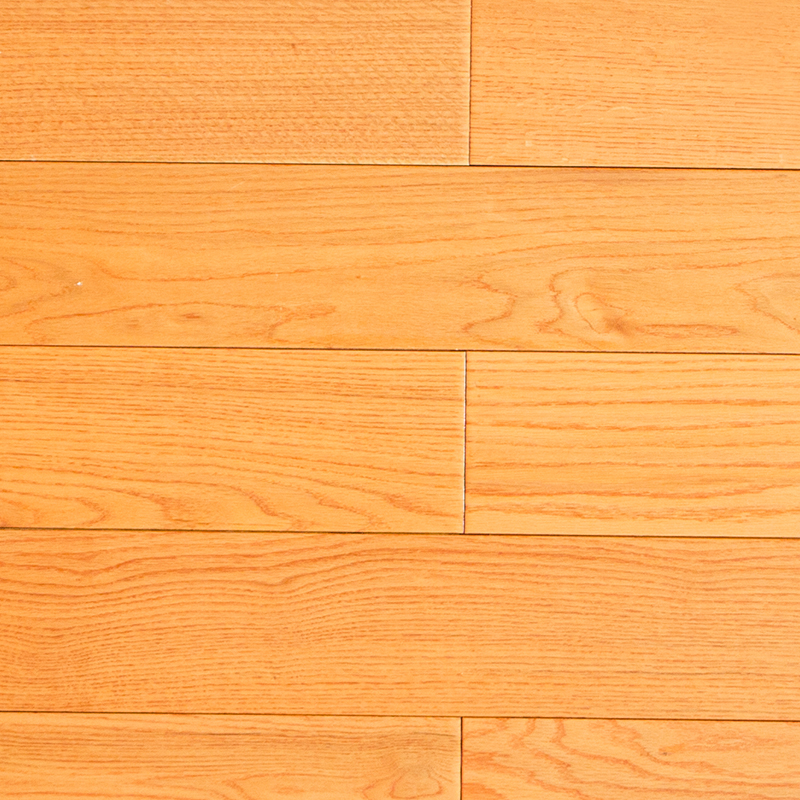
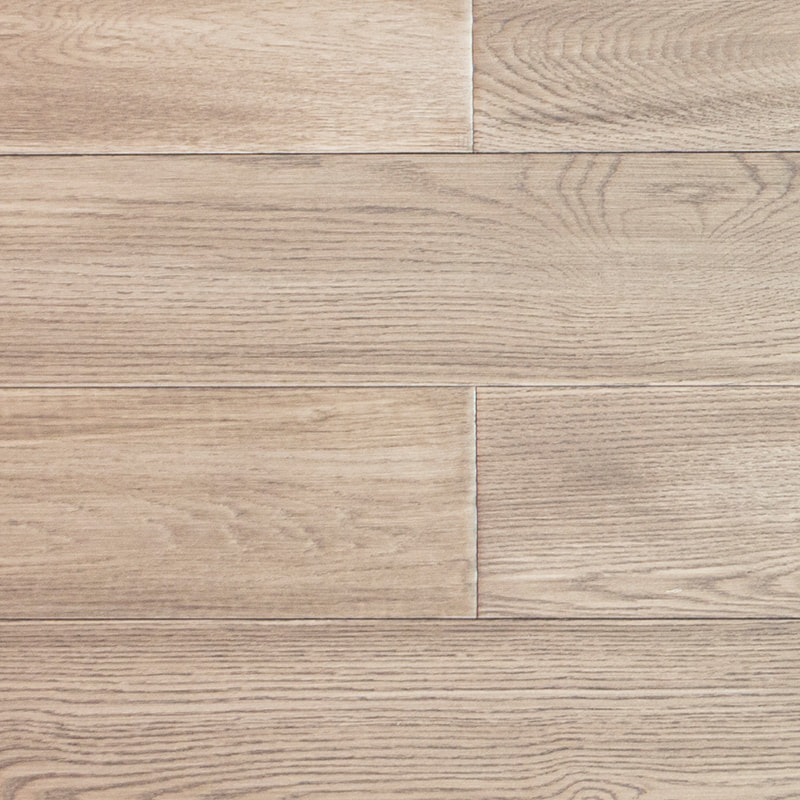
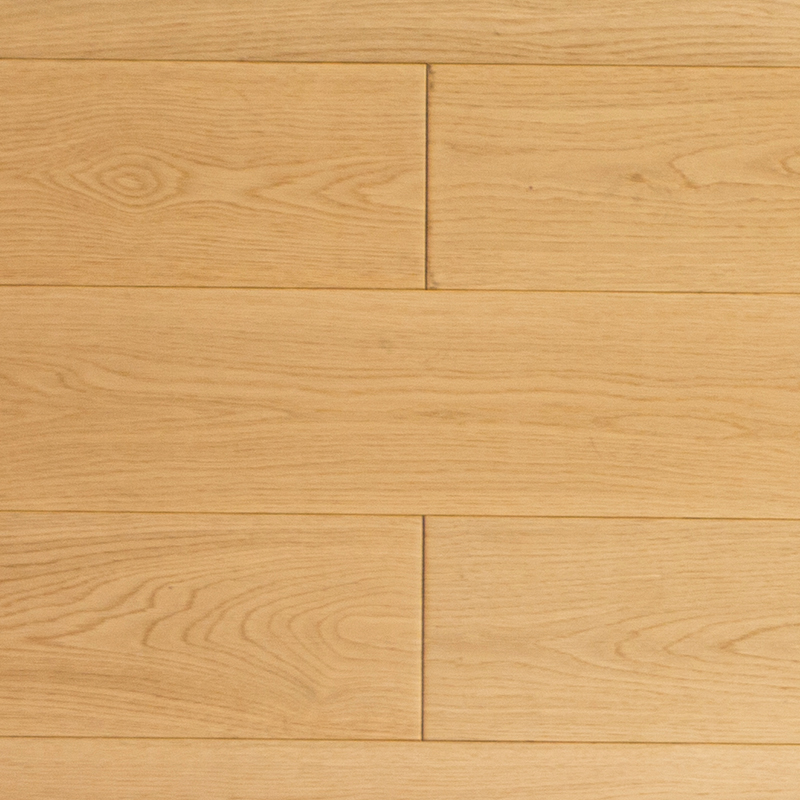
For projects that require a different character, the manufacturer can offer alternative veneer species, including oak, walnut, ash, and teak. Cherry veneer may also be considered as an optional finish for buyers seeking a warmer or more refined red-brown appearance. Veneer grade can be specified as AB, ABC, ABCD, or CD, depending on the desired balance between natural knots, color variation, and visual uniformity.
The matte finish is one of the product’s most important aesthetic advantages. High-gloss flooring can emphasize reflections, surface marks, and minor irregularities. A matte surface produces a softer visual effect and allows the natural grain to remain the principal design feature. It is well suited to contemporary, rustic, American, Scandinavian-inspired, transitional, and Neo-Chinese interiors.
A matte surface can also make a room feel calmer and less formal. This is valuable in residential spaces, where occupants often prefer a relaxed environment, and in hospitality or commercial spaces, where designers want a premium appearance without excessive visual shine. Depending on the project, the surface may be produced with UV lacquer, UV oil, or hardwax oil.
UV lacquer creates a protective film designed to support wear and scratch resistance. UV oil maintains a more natural appearance while providing surface protection. Hardwax oil offers a tactile finish that can be especially appropriate for projects emphasizing natural materials and handcrafted design. The selection can be coordinated with the intended traffic level, maintenance expectations, and design concept.
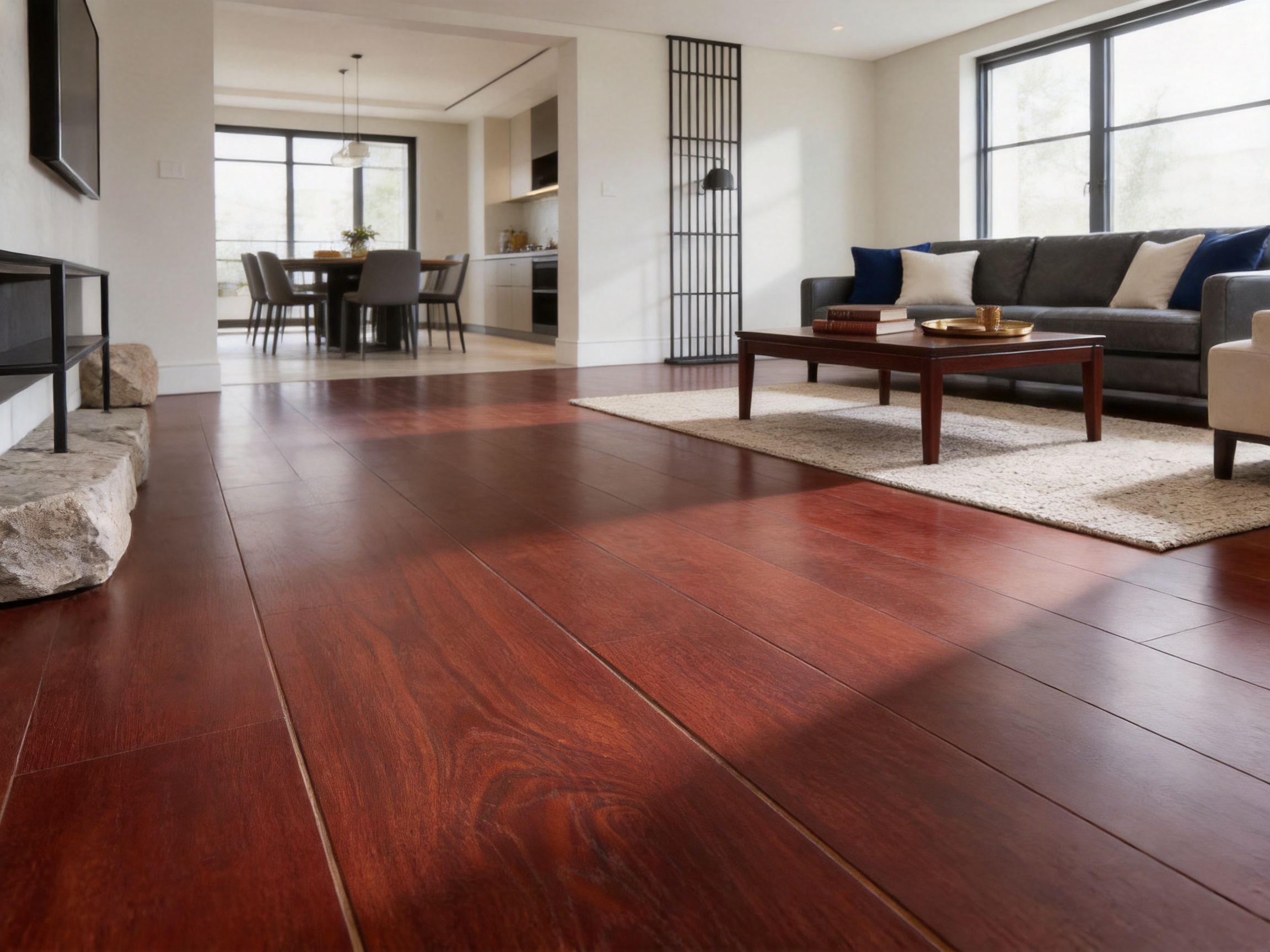
The principal technical advantage of the product is its multi-layer construction. Engineered flooring is produced by arranging wood layers in a carefully controlled structure so that the movement of one layer is balanced by the movement of adjacent layers. This construction is fundamentally different from a single solid wood board, which can respond more dramatically to changes in temperature and humidity.
For the DF-E2668 product, the core may be constructed with eucalyptus or birch plywood layers. These layers are selected and arranged to provide a stable support system for the natural wood veneer. The result is a floorboard designed to resist common problems such as excessive expansion, contraction, warping, and cracking when the product is correctly installed and maintained.
Stability is especially important in regions where indoor conditions change during the year. Heating systems may reduce indoor humidity in winter, while humid summers may increase moisture levels. Coastal locations, southern climates, and spaces near kitchens or entrances may also experience more variable conditions than centrally located rooms. A well-designed engineered structure helps the flooring respond to these changes in a more controlled manner.
The layered core is engineered to reduce stress concentration within the plank. In a solid wood board, grain direction is generally aligned in one primary direction. When the wood absorbs or releases moisture, the board can move across its width and thickness. In a multi-layer product, the orientation and composition of the layers help counteract these forces.
This does not mean that engineered flooring is immune to moisture-related movement. No wood product should be exposed to standing water, uncontrolled humidity, or unsuitable subfloor conditions. However, the multi-layer structure offers a meaningful performance advantage over less stable flooring formats when the product is installed according to professional guidelines.
The stable core also helps support the natural veneer. A high-quality veneer requires a reliable substrate to reduce the risk of surface checking, joint stress, and visible distortion. The combination of a real wood face and a multi-layer core therefore provides a more balanced solution than either a thin decorative surface on an unstable base or a solid plank that may move excessively under changing conditions.
The manufacturer supplies different engineered flooring constructions to meet different project requirements. Three-layer flooring may use a fir or pine core, while multi-layer flooring may use eucalyptus or birch plywood. This product belongs to the multi-ply category and is intended for buyers who prioritize enhanced dimensional stability and flexible specification options.
The availability of multiple construction types allows distributors and project designers to select a product based on budget, intended use, local climate, installation method, and expected traffic. A professional supplier can also advise on the appropriate core construction for a particular application rather than treating every project as identical.
The product is available with a seven-layer UV coating system for general-purpose protection against wear and scratches. Surface finishing is a crucial part of engineered flooring production because the top layer must protect the natural veneer while preserving its appearance and tactile qualities.
UV curing technology allows the finish to harden efficiently under controlled production conditions. A properly applied coating can improve resistance to everyday abrasion caused by foot traffic, furniture movement, and routine cleaning. It also helps maintain the appearance of the wood veneer over time.
For residential applications, the coating is appropriate for bedrooms, living rooms, dining rooms, studies, and other interior areas with normal household traffic. For commercial projects, the correct finish should be selected according to the expected level of use, cleaning schedule, furniture type, and maintenance program. The manufacturer can discuss finish selection for offices, retail environments, hospitality spaces, and other project-based applications.
Surface texture can also be customized. Wire brushing highlights the grain and adds a subtle tactile effect. Hand scraping produces a more handcrafted appearance with visual depth and variation. Smooth sanding creates a cleaner and more refined surface for modern interiors. These options allow the same basic product category to serve different architectural and decorative concepts.
The standard profile includes a micro-bevel on all four sides. This small edge detail helps define the individual plank and gives the finished floor a clear board-by-board appearance. It can also reduce the visual impact of minor differences in plank height or seasonal movement by creating a deliberate transition between boards.
A four-sided micro-bevel is useful in both residential and commercial design. It emphasizes plank direction and can make wide boards appear more structured. When combined with a matte finish and natural grain, the profile contributes to an authentic solid-wood visual effect while retaining the practical benefits of engineered construction.
The click-lock mechanism is designed to simplify installation. Boards are manufactured with interlocking edges that fit together without requiring traditional tongue-and-groove assembly techniques alone. This can reduce installation time, improve alignment, and make the product more accessible to experienced do-it-yourself installers as well as professional flooring contractors.
Click installation is particularly advantageous for renovation projects where the schedule is limited. A contractor may be able to complete a room more efficiently because the boards can be connected in a systematic sequence. The system can also reduce the need for excessive adhesive use in floating installations, although the appropriate installation method depends on the subfloor, room conditions, local requirements, and project specifications.
The flooring can be installed using floating, glue-down, or staple methods. Floating installation is convenient for suitable residential and commercial applications where the subfloor is properly prepared and an appropriate underlayment is used. Glue-down installation may provide a more fixed feel and can be selected for certain project conditions. Staple installation may be appropriate when the flooring construction and subfloor support that method.
Successful installation begins with site preparation. The subfloor should be clean, dry, level, and structurally sound. Uneven areas may need to be corrected before the flooring is installed. Moisture testing is also important, especially in ground-level rooms, newly constructed buildings, kitchens, entrance areas, and locations where concrete subfloors are present.
Wood flooring should be delivered to the site and allowed to acclimate in accordance with the manufacturer’s technical instructions and the conditions of the installation environment. The correct acclimation period depends on the product, packaging, indoor humidity, temperature, and subfloor type. Proper expansion allowances should be maintained around walls, fixed structures, door frames, and other vertical obstacles.
Although the click system makes installation easier, it does not remove the need for careful workmanship. Installers should inspect boards before installation, maintain the recommended stagger between end joints, avoid forcing damaged boards into position, and use appropriate tools. A professional installation is the best way to obtain the intended visual quality and long-term performance.
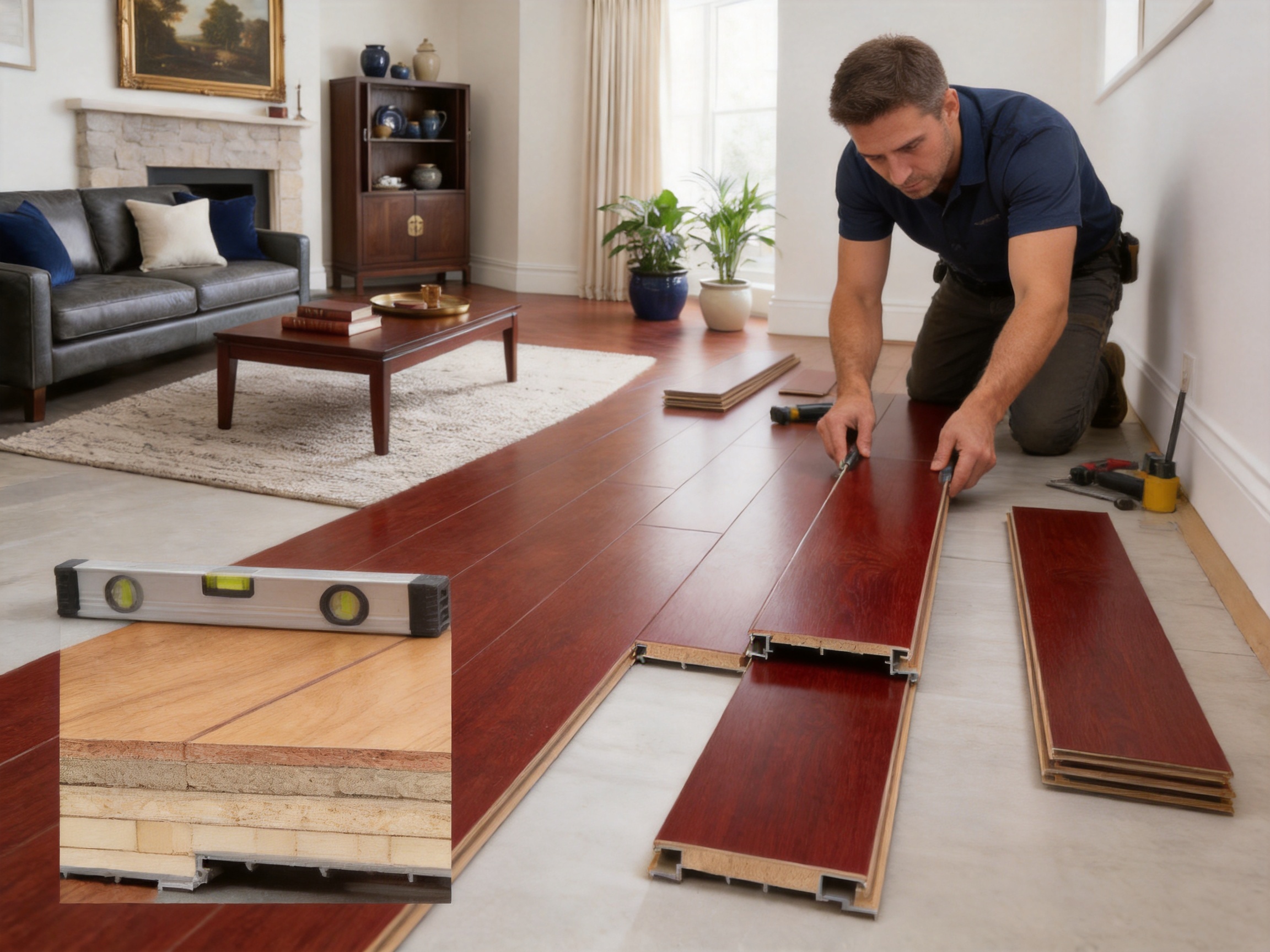
The warm color and natural mountain grain make this flooring especially suitable for residential interiors. In bedrooms, the deep red tone can create a cozy and grounded atmosphere. The matte finish helps prevent the space from appearing too formal, while the natural veneer provides a more authentic visual experience than printed flooring products.
Dining rooms can benefit from the product’s rich color and structured plank layout. The floor can support both traditional wooden furniture and modern combinations of metal, glass, stone, and upholstered seating. In American-style interiors, it can complement substantial furniture, paneling, leather details, and warm textiles. In Neo-Chinese interiors, the natural grain can work with dark wood furniture, porcelain, woven materials, and restrained decorative elements.
Living rooms are another strong application. The floor establishes a durable visual foundation without competing with artwork, furniture, or architectural features. The available surface options allow designers to adjust the product from smooth and refined to textured and rustic. This makes it suitable for both private homes and high-end apartments.
The product may also be used in home offices, dressing rooms, libraries, and guest rooms. The stable multi-layer core provides practical advantages in rooms where comfort, appearance, and long service life are equally important. As with all wood flooring, areas exposed to prolonged water or excessive humidity require careful design consideration.
Commercial spaces demand a balance of appearance, durability, maintenance efficiency, and supply reliability. The DF-E2668 flooring is suitable for selected commercial applications where a natural wood surface is required. Potential uses include boutique retail stores, offices, restaurants, hotel rooms, private clubs, showrooms, sales centers, and architectural interiors.
In a commercial setting, the deep red oak appearance can communicate warmth and quality. It may be used to create a welcoming reception area, define a premium retail environment, or add character to a restaurant or hospitality space. The click-lock system can support efficient project scheduling, while the choice of UV lacquer, UV oil, or hardwax oil allows the surface to be matched to the intended maintenance program.
Commercial buyers should evaluate expected traffic, furniture loads, cleaning procedures, indoor humidity, and local building requirements before selecting the final specification. The manufacturer can support project discussions involving plank dimensions, veneer grade, surface texture, finish type, packaging, and installation method.
For large projects, consistency between batches is essential. A professional manufacturing partner should maintain controlled raw material selection, stable production parameters, documented inspections, and appropriate packaging. These factors reduce the risk of color inconsistency, dimensional variation, surface defects, or shipment damage across a project requiring significant quantities.
One of the product’s major advantages over standardized retail flooring is its ability to support customization. Buyers can request different wood species, veneer thicknesses, surface finishes, textures, grades, colors, dimensions, and packaging formats. This is valuable for distributors who want a distinctive collection and for architects who need a floor coordinated with a specific design concept.
| Customization Area | Available Options | Typical Project Benefit |
| Face Veneer | Oak, walnut, ash, teak, and other approved species | Coordinates flooring with furniture and interior materials |
| Veneer Thickness | Approximately 2 mm, 3 mm, 4 mm, or 6 mm | Balances appearance, budget, and future service expectations |
| Veneer Grade | AB, ABC, ABCD, or CD | Controls knot content, natural variation, and visual uniformity |
| Surface Finish | UV lacquer, UV oil, or hardwax oil | Matches protection, touch, and maintenance requirements |
| Surface Texture | Wire brushed, hand scraped, or smooth sanded | Creates different visual and tactile effects |
| Color | Custom stains and color directions | Supports brand collections and architectural concepts |
| Dimensions | Custom plank length, width, and thickness | Adapts the flooring to room scale and installation patterns |
| Packaging | Project-specific carton marks and labeling | Improves logistics, identification, and distributor presentation |
Veneer thickness is an important decision. A thinner veneer may be appropriate for cost-sensitive applications or projects with limited service expectations. A thicker veneer can provide a more substantial natural wood layer and may offer greater flexibility for selected future maintenance procedures, subject to the specific finish and product construction. Buyers should obtain technical guidance before planning sanding or refinishing.
Veneer grade influences the visual language of the floor. AB grade generally supports a cleaner appearance, while ABC, ABCD, and CD grades allow more natural knots, mineral streaks, color variation, and rustic character. There is no universally superior grade; the correct choice depends on whether the project requires uniform elegance or a more expressive natural look.
The product is manufactured by Suzhou Dicosbo Wood Co., Ltd., a wood solutions company established in 1999. The company operates production facilities covering approximately 20,000 square meters and has more than ten years of export experience. Its product scope includes wood flooring, wooden doors, and custom cabinet solutions, allowing it to support multiple interior woodwork categories through one manufacturing partner.
The company’s annual production capacity includes approximately 2,400,000 square meters of flooring and 5,000 sets of doors. This capacity is relevant to importers, developers, distributors, and contractors who need dependable supply for ongoing programs or large construction projects. Production scale can also support more efficient raw material planning, manufacturing scheduling, and shipment coordination.
German-imported production lines are used to support precision and repeatability. In engineered wood flooring, accuracy is required at multiple stages, including veneer preparation, core assembly, pressing, calibration, profile machining, surface finishing, and packaging. Controlled equipment helps maintain consistent board dimensions and reduces avoidable variation between production runs.
A strict three-step quality inspection process is used to monitor product performance. Although the precise inspection details may vary by order and product specification, a structured quality system generally covers incoming material inspection, in-process manufacturing checks, and final product inspection before shipment.
Incoming inspection can evaluate veneer appearance, moisture condition, core material, thickness, and other raw material characteristics. This stage helps prevent unsuitable materials from entering production. It is particularly important for natural wood because species, grain, color, knots, and moisture content can influence the final result.
In-process inspection can monitor bonding, pressing, board thickness, surface preparation, profile accuracy, click-lock performance, and coating application. Detecting deviations during production allows corrective action before a large quantity of flooring is completed.
Final inspection can include appearance review, dimensional checks, carton verification, surface evaluation, and packing inspection. This stage helps confirm that the finished product corresponds to the approved sample and order specification. For export shipments, packaging quality is also essential because flooring must remain protected during handling, storage, and transportation.
Automated quality control systems supplement skilled human inspection. Automated systems can improve repeatability in areas such as dimensional measurement, surface monitoring, production data collection, and process control. Human expertise remains important for evaluating natural wood characteristics, matching approved samples, and making balanced decisions about acceptable variation.
The combination of automation and professional inspection is a competitive advantage over small-scale production systems that rely solely on visual checking without documented process control. Buyers benefit from clearer quality expectations, more stable production, and better communication when customized products are ordered.
The product information identifies EU CE and FSC certification support, while the company’s broader compliance profile includes CE, FSC, CARB Phase 2, and ISO 9001 standards. These certifications and management systems are important for international buyers because they provide evidence that the manufacturer addresses product conformity, responsible sourcing, emissions control, and quality management.
FSC-related certification supports responsible forest management and supply chain traceability when the specific certified material and transaction are covered by the applicable certification scope. This can be important for environmentally conscious architects, developers, retailers, and public projects.
CE-related compliance is relevant to products intended for markets where applicable European requirements must be addressed. Buyers should confirm the exact documentation, product scope, and testing basis for the intended destination and application.
CARB Phase 2 compliance is particularly relevant to buyers concerned with formaldehyde emissions from composite wood products. Since engineered flooring contains wood-based core materials, emissions control is an important consideration for indoor air quality. Project teams should request current technical documents and test reports for the specific construction and order.
ISO 9001 represents a structured approach to quality management. It does not replace product testing or project-specific inspection, but it indicates that the manufacturer operates within a formal system for process control, documentation, corrective action, and continuous improvement.
Solid wood flooring offers a thick, continuous timber structure and a traditional appearance. However, it can be more sensitive to humidity changes and may require more careful installation and acclimation. The multi-layer construction of DF-E2668 provides improved dimensional stability while retaining a genuine natural wood surface.
Engineered flooring can also offer greater flexibility over concrete subfloors and in renovation environments, depending on the selected installation method. The click-lock profile may reduce installation complexity compared with traditional solid wood installation systems.
Laminate flooring can provide strong abrasion resistance and a wide range of printed designs, but its decorative surface is not a real wood veneer. DF-E2668 provides the natural grain variation and tactile character of actual wood. This distinction is important for premium residential and commercial interiors where authenticity and material quality are central to the design.
Natural veneer can also be more visually convincing under changing light conditions. The depth, color variation, and grain movement of real wood are difficult to reproduce fully through a printed image. For buyers seeking a genuine timber experience, engineered wood offers a compelling middle ground between solid wood and synthetic alternatives.
Not all engineered flooring products have the same structural quality. Low-grade products may use inconsistent core materials, inadequate bonding, imprecise profiles, weak surface finishes, or limited quality control. The DF-E2668 product is supported by a multi-layer core, customizable veneer thickness, seven-layer UV coating options, click-lock machining, and a documented manufacturing system.
The ability to select eucalyptus or birch plywood core construction, veneer grade, finish, texture, and dimensions gives buyers greater control over the final specification. This level of customization is a significant advantage for professional projects compared with off-the-shelf products that provide only a narrow range of choices.
Wood is a renewable material when sourced and managed responsibly. Engineered flooring can make efficient use of high-quality wood veneer by combining it with a stable wood-based core. This construction allows the visible face to use a carefully selected natural timber layer rather than requiring the entire board to be made from the same premium species.
Responsible sourcing, emissions control, efficient production, and long product life all contribute to the environmental profile of a flooring product. FSC-related certification can support responsible procurement, while CARB Phase 2 compliance addresses emissions concerns associated with composite wood materials. Buyers should review current certification documents and confirm whether the relevant order is covered by the stated certification scope.
Durability is also an environmental consideration. A floor that maintains its appearance and structural integrity for many years may reduce the frequency of replacement, transportation, disposal, and new material consumption. Proper cleaning, humidity management, furniture protection, and prompt treatment of spills can extend the useful life of the floor.
Routine maintenance should focus on keeping abrasive particles and excessive moisture away from the surface. Regular dry mopping or vacuuming with a suitable soft-floor attachment can remove dust, grit, and small particles that may contribute to surface wear.
For localized stains, use a neutral detergent diluted according to the cleaning product instructions. Avoid harsh chemicals, abrasive powders, and cleaners containing strong acids or alkalis. These substances may damage the finish, alter the color, or reduce the protective performance of the surface.
Excessive water should be avoided. Wood flooring should not be saturated during cleaning, and spills should be removed promptly. Wet mops should be well wrung out, and standing water should never be left on the floor. Entrance mats can help reduce the amount of moisture, dirt, and grit carried into the room.
Furniture should be fitted with protective pads, particularly on chairs and tables that are moved frequently. Heavy furniture should be lifted rather than dragged. Rugs may be used in appropriate areas, provided they are compatible with wood flooring and do not trap moisture beneath them.
Indoor humidity should be maintained within a moderate, stable range. Very dry or very humid conditions can affect any wood product. Heating, ventilation, and air-conditioning systems should be used responsibly to avoid abrupt environmental changes. In semi-humid areas such as kitchen entrances, the balancing layer and engineered core can provide additional support, but good moisture management remains necessary.
The product’s moisture-proof balancing layer makes it suitable for selected semi-humid areas, including entrances near kitchens, provided that the space is properly designed and maintained. This feature helps balance the flooring construction and contributes to longer service life under moderate moisture exposure.
It is important to distinguish between semi-humid conditions and areas subject to direct or prolonged water exposure. The product is not intended to replace waterproof flooring in bathrooms, open shower areas, laundry rooms with frequent spills, or locations where standing water is expected. Drainage, ventilation, threshold detailing, and cleaning practices should be considered during design.
For entrance areas, the use of high-quality mats, adequate ventilation, and prompt spill removal can reduce moisture stress. Contractors should also verify subfloor moisture levels before installation and use the correct underlayment or adhesive system for the site conditions.
Distributors and brand owners often need more than a standard product. They may require private labeling, custom color development, special packaging, exclusive surface textures, or a coordinated product collection. The manufacturer supports OEM and ODM customization for buyers seeking to develop a differentiated flooring line.
OEM production can allow a distributor to sell flooring under its own brand while using an established manufacturing platform. ODM cooperation can go further by supporting product development, design adjustment, material selection, and specification optimization. These services can reduce the time required to move from an initial concept to a commercially viable product.
The company reports a 72-hour rapid prototyping capability. Rapid prototyping can be valuable when architects, retailers, and project managers need to compare color, texture, veneer grade, and finish options before approving a larger order. A physical sample remains important because natural wood appearance can change under different lighting conditions and alongside different materials.
For large projects, early communication is recommended. Buyers should provide drawings, estimated quantities, delivery schedules, target markets, installation requirements, preferred certifications, and packaging expectations. This allows the manufacturer to recommend a technically suitable specification and identify potential issues before production begins.
International supply requires coordination across production, inspection, packaging, documentation, and logistics. The manufacturer’s export experience of more than ten years supports communication with overseas distributors, contractors, and project buyers. Experience with different markets can help the company understand variations in labeling, documentation, packaging, and compliance expectations.
The reported annual flooring capacity of approximately 2,400,000 square meters provides a foundation for regular distributor programs and project orders. Capacity alone does not guarantee delivery performance, so buyers should still confirm production schedules, raw material availability, lead times, sample approvals, and shipping arrangements for each order.
Packaging should protect the flooring from impact, dust, and moisture during transportation. Carton labeling can be customized to support warehouse management and project identification. For multi-phase projects, consistent labeling and batch documentation can simplify receiving and inventory control.
Buyers evaluating the DF-E2668 product should begin by identifying the application. Residential rooms, boutique commercial interiors, high-traffic retail locations, and hospitality projects may require different surface finishes, veneer grades, and installation systems.
The second step is to confirm the desired visual result. Buyers should decide whether they prefer a clean AB appearance, a naturally varied ABC or ABCD grade, or a rustic CD grade. They should also select a preferred texture, such as smooth sanding, wire brushing, or hand scraping.
The third step is to evaluate the technical specification. This includes plank dimensions, total thickness, veneer thickness, core construction, click-lock profile, surface finish, edge treatment, and available installation methods. The final specification should be reviewed against local building conditions and installation standards.
The fourth step is to request samples and documentation. Samples should be viewed under the lighting conditions of the intended project whenever possible. Buyers should request applicable certification documents, test reports, installation instructions, care recommendations, and technical data for the exact product configuration.
The final step is to confirm commercial details. These include minimum order quantity, production lead time, packaging, payment terms, shipment planning, warranty conditions, inspection procedures, and after-sales communication. Clear documentation at this stage reduces misunderstandings and supports a smoother project execution.
Contemporary architecture increasingly values materials that combine authenticity, performance, flexibility, and responsible sourcing. This engineered wood flooring responds to those priorities through its real wood veneer, customizable appearance, layered stability, durable finish options, and international compliance support.
Designers can use the flooring as a warm counterpoint to concrete, glass, metal, and stone. Its deep red tone can introduce visual depth into minimalist rooms, while the mountain grain can reinforce a natural-material concept. The matte finish supports modern interiors that favor subdued reflections and tactile surfaces.
At the same time, the product is practical for supply chains and installation teams. Click-lock assembly can reduce installation complexity, while multiple installation methods allow the floor to be adapted to different subfloors and project conditions. Custom dimensions and finishing options help manufacturers, distributors, and design firms create collections that are not limited to generic retail specifications.
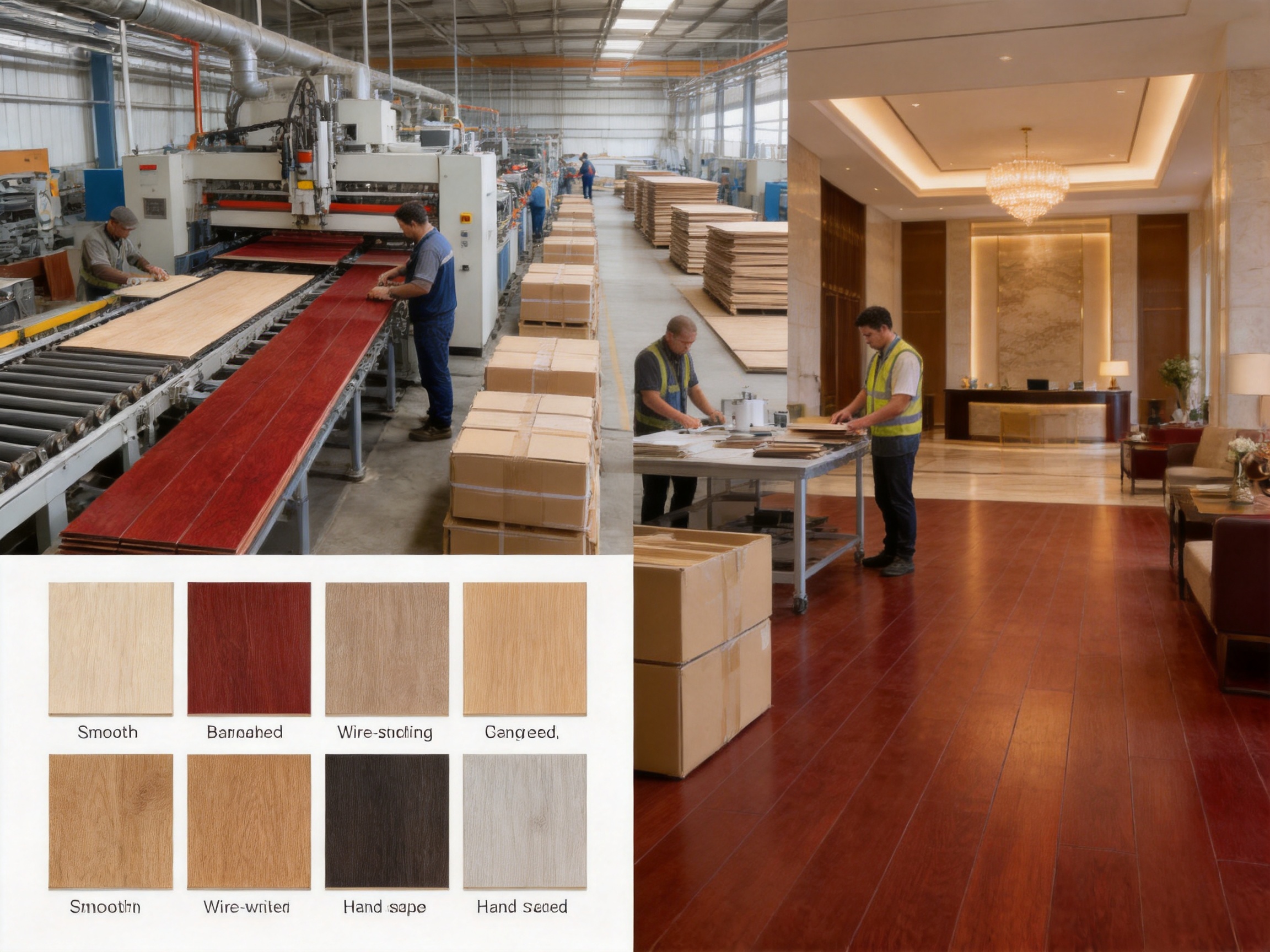
The product uses a natural wood veneer over a multi-layer engineered core. This construction provides the appearance of real wood while improving dimensional stability and reducing the risk of deformation caused by normal changes in indoor humidity. Solid wood flooring is made from a single timber structure and may be more sensitive to environmental movement.
Yes. The product uses a natural wood veneer surface. Deep red oak is the featured appearance, while other veneer species and thicknesses can be customized according to the project specification.
Mountain grain refers to a naturally expressive grain pattern with flowing, irregular movement across the surface. It creates a more dynamic and authentic timber appearance than a highly uniform linear grain.
Yes. The matte finish reduces excessive reflection and emphasizes the natural appearance of the veneer. It is suitable for contemporary, transitional, American, rustic, and Neo-Chinese interiors.
The click-lock mechanism is designed to simplify installation and can be suitable for experienced do-it-yourself users when the room and subfloor meet the technical requirements. Professional installation is recommended for large projects, complex layouts, commercial spaces, or locations with challenging moisture conditions.
The product can be installed using floating, glue-down, or staple methods, depending on the product configuration, subfloor, site conditions, and local requirements.
Yes. Custom sizes and colors are available. Buyers can discuss plank length, width, thickness, veneer thickness, surface finish, texture, grade, and packaging with the manufacturer.
Veneer thickness can generally be customized at approximately 2 mm, 3 mm, 4 mm, or 6 mm. The correct thickness depends on the design, budget, expected service conditions, and project requirements.
The multi-layer product uses eucalyptus or birch plywood core construction. Other engineered flooring categories may use fir or pine core materials, depending on the requested product type.
The multi-layer construction and balancing layer provide improved stability for changing or moderately humid indoor conditions. However, the flooring must still be installed on a dry, properly prepared subfloor and protected from standing water, leaks, and prolonged excessive humidity.
It can be suitable for semi-humid areas such as kitchen entrances when moisture is controlled and the flooring is installed correctly. It should not be treated as waterproof flooring for areas with constant direct water exposure.
Regular dry mopping or vacuuming is recommended. For localized stains, use a neutral detergent. Avoid excessive water, abrasive cleaners, strong acids, strong alkalis, and harsh chemicals.
The product information identifies EU CE and FSC certification support. The company’s broader compliance profile includes CE, FSC, CARB Phase 2, and ISO 9001 standards. Buyers should request current documentation for the specific product and destination market.
The manufacturer supports OEM and ODM customization. Private labeling, custom packaging, product development, color matching, and project-specific specifications can be discussed according to order requirements.
The company reports a 72-hour rapid prototyping capability. Actual timing may depend on the requested veneer, color, finish, texture, sample quantity, and approval process.
The flooring is suitable for residential bedrooms, dining rooms, living rooms, offices, libraries, boutique retail spaces, hospitality interiors, showrooms, restaurants, and selected commercial projects requiring a warm and refined natural wood appearance.
The Multi-Layer Deep Red Oak Mountain Grain Matte Click-Lock Engineered Wood Flooring offers a well-balanced combination of natural beauty, technical stability, installation convenience, and customization. Its deep red oak appearance brings warmth and sophistication to interior spaces, while the mountain grain pattern creates an authentic and expressive surface. The matte finish supports a modern, understated aesthetic and helps the natural wood remain the visual focus.
Its multi-layer eucalyptus or birch plywood core is designed to resist deformation and cracking more effectively than many less stable flooring formats. The seven-layer UV coating option provides protection against everyday wear and scratches, while the choice of UV lacquer, UV oil, or hardwax oil allows buyers to match the finish to the intended application.
The click-lock mechanism can simplify installation and support floating, glue-down, or staple installation methods. Custom veneer species, thicknesses, grades, colors, textures, dimensions, and packaging provide flexibility for distributors, architects, contractors, developers, and private-label brands.
Behind the product is a manufacturer with more than 20 years of wood industry experience, approximately 20,000 square meters of production facilities, substantial annual flooring capacity, German-imported production lines, automated quality control systems, OEM and ODM expertise, rapid prototyping, and a three-step inspection process. Its support for CE, FSC, CARB Phase 2, and ISO 9001 standards further strengthens its suitability for international procurement.
For buyers seeking an engineered wood floor that combines the character of real timber with improved stability and project-level flexibility, DF-E2668 is a strong candidate. Its performance depends on correct specification, professional installation, suitable indoor conditions, and proper care, but when these factors are managed correctly, it can provide a durable and visually distinctive foundation for residential and commercial interiors.
1. Product specification sheet for Multi-Layer Deep Red Oak Mountain Grain Matte Click-Lock Engineered Wood Flooring, reference DF-E2668.
2. Manufacturer-provided technical information regarding engineered wood veneer, multi-layer eucalyptus and birch plywood cores, UV coating, click-lock profiles, and installation methods.
3. Manufacturer-provided company profile covering production capacity, manufacturing facilities, export experience, OEM and ODM services, and quality inspection procedures.
4. General principles of engineered wood flooring installation, subfloor preparation, acclimation, moisture management, and expansion allowance.
5. General wood flooring maintenance guidance concerning dry cleaning, neutral detergents, furniture protection, humidity control, and prevention of standing water.
6. General information on CE conformity, FSC responsible sourcing, CARB Phase 2 emissions requirements, and ISO 9001 quality management systems.

We provide customers with sustainable and eco-friendly
engineered wood solutions and services.
Choose DEIF for the perfect blend of
performance and aesthetics.
