


 English
 Español
 عربى
عربى

Get Social
Choose DEIF for the perfect blend of
performance and aesthetics.
 Get Free Sample

Content
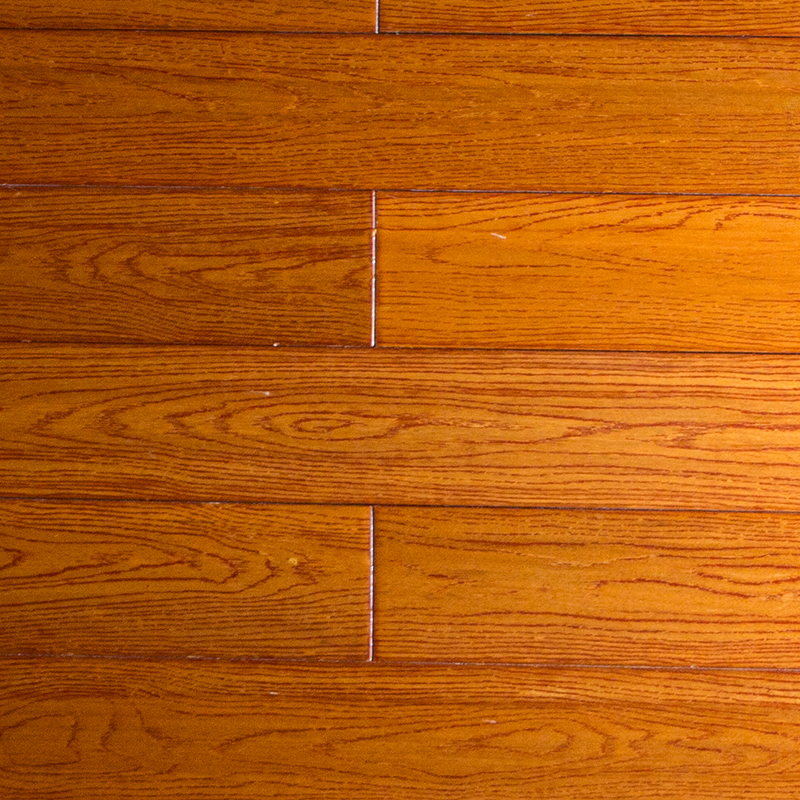
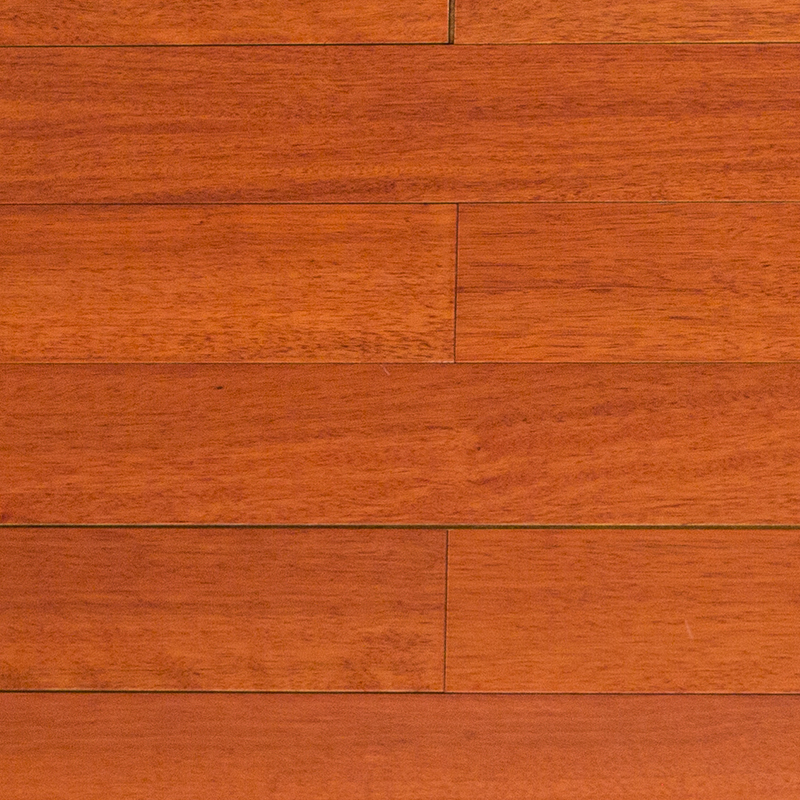
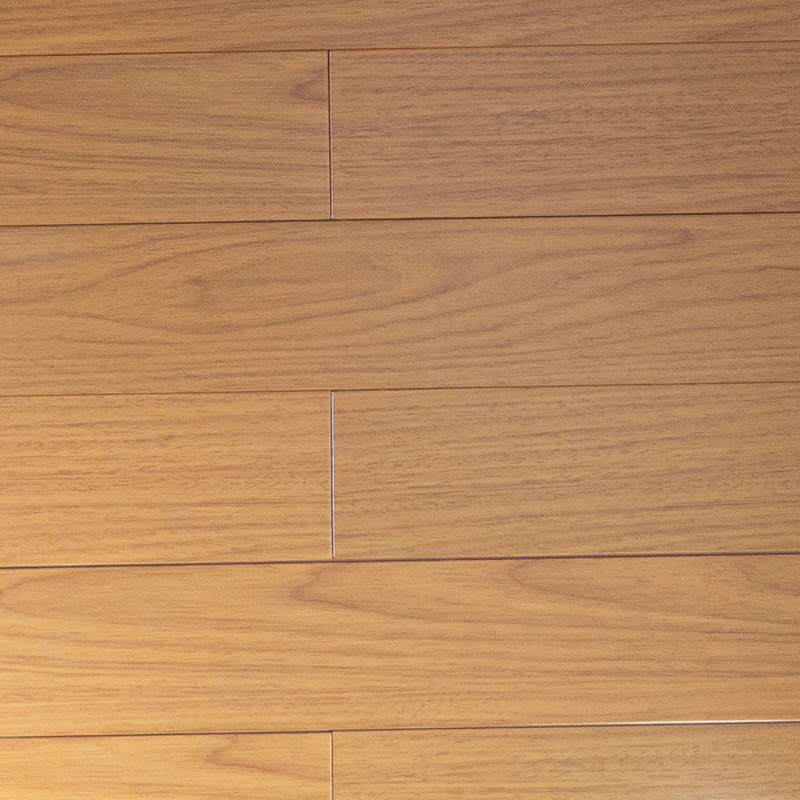
Solid wood flooring remains one of the most respected interior materials because it combines natural beauty, long service life, repairability, and a warm underfoot feeling that synthetic surfaces struggle to reproduce. The Oak Light Brown Yellow Matte Solid Wood Flooring, model DK-T6023, is designed for residential and light commercial spaces where comfort, visual softness, and dependable performance are equally important. Its gentle light brown-yellow tone, matte surface, solid hardwood structure, and refined edge treatment make it suitable for interiors that aim to feel calm, natural, and welcoming.
Although the product name communicates an oak-inspired warm visual style, the listed marketing collection identifies it as Solid Taun Wood Flooring, using Taun, or Pometia pinnata, as the specified wood species. This gives the floor a distinctive natural identity while preserving the warm, familiar color language often preferred in modern homes, boutique spaces, hospitality rooms, and project interiors. The result is a floor that offers an inviting natural appearance, a stable solid wood structure, and a specification profile suitable for professional procurement.
For architects, distributors, contractors, and homeowners, a floor is not only a decorative finish. It is a long-term surface that must withstand daily walking, furniture movement, cleaning routines, seasonal humidity changes, and the expectations of comfort. This product addresses these demands through a 100% solid hardwood core, E0 environmental performance, tongue-and-groove profiling, customizable surface options, CE and FSC certification support, and production backed by experienced wood manufacturing capabilities.
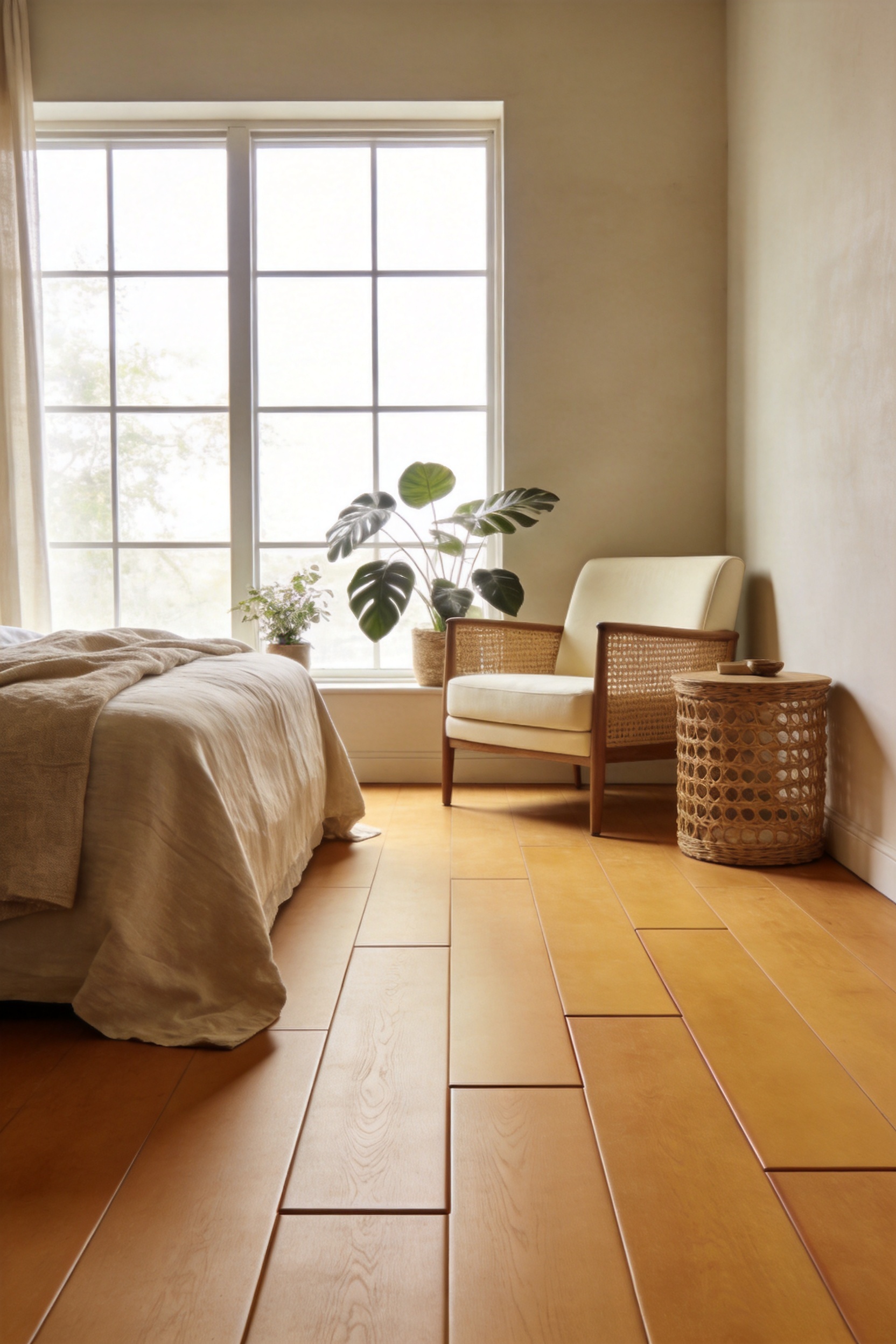
The most immediate advantage of this flooring is its balance between natural warmth and understated visual control. Many wood floors are either too glossy for relaxed interiors or too dark for small rooms. This light brown-yellow matte flooring avoids both problems. The color is warm enough to soften an interior but light enough to keep a room visually open. The matte coating reduces glare, allowing the natural grain to remain visible without creating strong reflections under daylight or artificial lighting.
This visual quality makes the floor especially effective in bedrooms, reading corners, nurseries, apartments, villas, and relaxed hospitality spaces. It coordinates well with linen textiles, light oak furniture, rattan, neutral walls, soft lighting, cream-colored upholstery, and minimalist decorative elements. In modern residential design, surfaces are often expected to contribute to emotional comfort. This floor does that by providing a calm, natural base that supports furniture and lighting rather than competing with them.
Compared with high-gloss wood floors, the matte finish is more visually forgiving. It does not show reflections as strongly, and it creates a quieter atmosphere. Compared with gray or heavily stained floors, the light brown-yellow tone feels warmer and more timeless. Compared with printed laminate or vinyl products, the solid wood structure gives the surface genuine depth, tactile character, and a more authentic long-term aging pattern.
The product is built with a 100% solid hardwood core. A solid wood floor is different from a veneered or printed product because the entire plank is made from real wood rather than a decorative layer over a composite base. This gives the material natural density, authentic grain, and the potential for long-term service when installed and maintained correctly.
Solid hardwood is valued because it can be maintained, refreshed, and, in many cases, refinished over its service life. While engineered floors can also be durable, their surface wear layer determines how many times they can be sanded. Laminate and vinyl floors generally cannot be restored in the same way. Once their decorative layer is damaged, replacement is usually the only practical solution. Solid wood flooring offers a more traditional and durable material logic: it is a real material, not only a surface image.
The specified Taun wood species provides a natural hardwood option with a warm appearance and practical performance potential. Its use in this product supports an attractive balance between visual comfort and structural reliability. The AB Grade, also described as Select Grade, provides a refined appearance with controlled natural variation. This helps the product suit residential and project interiors where the client wants visible wood character without excessive rustic contrast.
| Product Model | DK-T6023 |
| Marketing Collection | Solid Taun Wood Flooring |
| Visual Style | Light brown-yellow matte wood flooring |
| Wood Species | Taun, Pometia pinnata |
| Dimensions | 35.83 inches x 4.80 inches x 0.71 inches |
| Metric Carton Coverage | 1.55 square meters per carton |
| Imperial Carton Coverage | 16.73 square feet per carton |
| Pieces Per Carton | 14 pieces |
| Weight Per Carton | 19.6 kg |
| Moisture Content | 8% to 10%, plus or minus 2% |
| Profile | Tongue and groove on four sides, micro-bevel |
| Installation Methods | Glue or staple, depending on project conditions |
| Surface Texture Options | Wire brushed, handscraped, or smooth sanded |
| Surface Finish Options | UV lacquer, UV oil, or hardwax oil |
| Environmental Standard | E0 environmental standard, formaldehyde emission controlled to very low levels |
| Certifications | CE and FSC certification support |
The surface color of a floor strongly influences the psychological feeling of a room. Dark floors can create luxury and depth, but they may also make small rooms feel heavier. Very pale floors can brighten a space, but some may feel cold or artificial. The light brown-yellow tone of this flooring sits between those extremes. It introduces warmth without visual weight, making it suitable for interiors that need comfort, brightness, and natural elegance.
The matte finish is equally important. Glossy coatings can look impressive in showrooms, but in real homes and commercial interiors they may highlight dust, footprints, and light reflection. A matte surface creates a more relaxed look. It reduces glare from windows, lamps, and ceiling lights. This is especially beneficial in bedrooms, children’s rooms, reading areas, and spaces intended for rest.
For design professionals, a matte warm-toned wood floor can serve as a flexible background. It works with Scandinavian interiors, Japanese-inspired minimalism, modern natural homes, soft contemporary apartments, and warm commercial environments. It can also support layered materials such as stone, fabric, ceramic, metal, leather, and painted cabinetry.
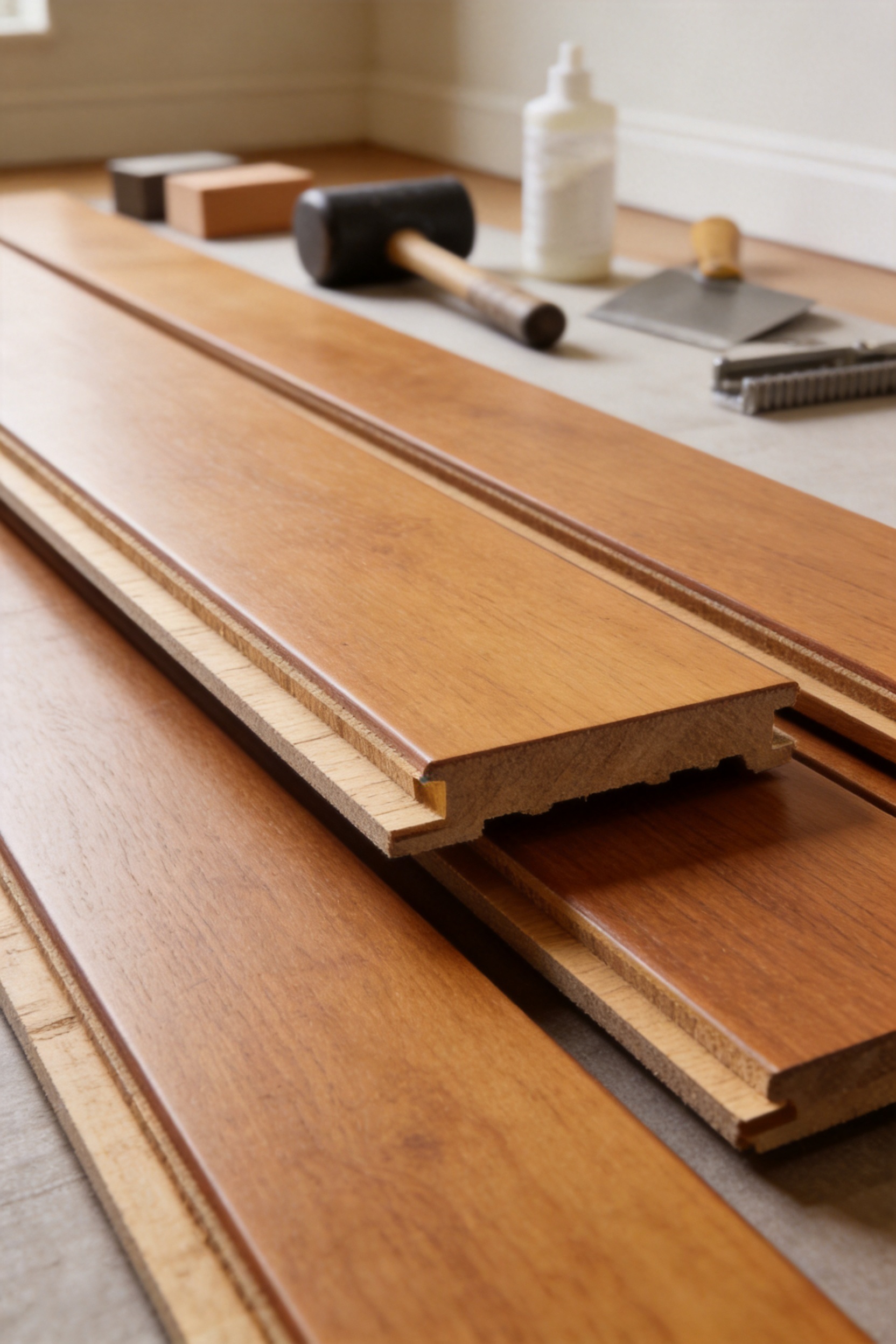
Laminate flooring is often selected for cost efficiency, but it is fundamentally a printed decorative surface over a fiberboard core. Even high-quality laminate relies on an image layer to imitate wood. The Oak Light Brown Yellow Matte Solid Wood Flooring offers authentic wood grain because it is made from real hardwood. The tactile feeling, edge detail, natural variation, and long-term aging behavior are more genuine than printed alternatives.
Laminate can be vulnerable to moisture penetration at joints if not properly protected. It also cannot be sanded and renewed like solid wood. For clients who want a natural material with long-term interior value, solid wood provides a more premium solution.
Vinyl and SPC floors are popular for water resistance and dimensional convenience, but they are synthetic or mineral-composite products. They may deliver practical benefits in certain environments, yet they cannot fully replicate the warmth, organic texture, and acoustic character of solid hardwood. A real wood floor feels different underfoot. It has a natural temperature, a subtle resilience, and a material depth that printed surfaces cannot duplicate.
For premium residences, boutique hospitality rooms, private offices, and high-value interiors, solid wood communicates quality more effectively than many synthetic alternatives. It also aligns better with design narratives focused on natural materials and sustainable sourcing.
Not all solid wood flooring is equal. Differences in drying control, machining accuracy, coating quality, grading, environmental compliance, and quality inspection determine whether a floor performs well after installation. This product is supported by advanced manufacturing processes, controlled moisture content, tongue-and-groove profiling, micro-bevel edge treatment, and customizable finishing options. These details help it compete against ordinary solid wood flooring that may suffer from inconsistent milling, unstable moisture levels, rough finishing, or limited project customization.
The strength of this flooring is not limited to the plank itself. It is also connected to the manufacturing system behind it. Suzhou Dicosbo Wood Co., Ltd., operating with the DEIF wood solutions identity, has built a production foundation focused on flooring, wooden doors, and custom cabinet solutions. Founded in 1999, the company has more than 20 years of wood manufacturing expertise and more than 10 years of export experience.
The company operates approximately 20,000 square meters of production facilities and serves more than 100 global partners across Europe, North America, and Southeast Asia. Its annual capacity reaches approximately 2,400,000 square meters of flooring and 5,000 sets of doors. This scale supports stable supply for distributors, contractors, project developers, and design firms that need reliable delivery rather than small-batch uncertainty.
Advanced production equipment, including German imported production lines and automated quality control systems, helps improve dimensional accuracy, surface consistency, and batch repeatability. For flooring buyers, these factors matter because installation success depends on consistent plank geometry. Poorly machined boards can cause gaps, uneven joints, installation delays, waste, and warranty concerns. A controlled manufacturing environment reduces those risks.
The production process begins with careful material selection. Wood flooring requires raw material that is suitable in density, grain, structural integrity, and appearance. The AB Grade specification indicates a select visual standard, allowing natural wood character while maintaining a refined surface suitable for higher-end interiors. Selecting the right timber helps reduce defects, improves yield, and supports consistent color matching within cartons and batches.
Moisture control is one of the most critical steps in solid wood flooring manufacturing. Wood is hygroscopic, meaning it absorbs and releases moisture depending on surrounding conditions. If flooring is shipped or installed with unsuitable moisture content, it may cup, crown, shrink, or expand after installation. This product is specified at 8% to 10% moisture content, with a tolerance of plus or minus 2%, supporting more stable performance when matched with appropriate interior conditions.
Professional drying and conditioning help prepare the boards for machining and final use. The purpose is not to remove all moisture, but to achieve a controlled range appropriate for the target application. This contributes directly to installation quality and long-term dimensional stability.
The tongue-and-groove profile on four sides provides a traditional and reliable installation structure. Precision profiling helps boards fit together securely and consistently. A properly machined tongue and groove reduces installation frustration and supports a flatter finished surface. The micro-bevel edge adds visual definition between planks while helping reduce the visibility of minor height variation.
Compared with loose or inaccurate profiles, precise machining improves installer confidence. For commercial projects and large residential installations, this can reduce labor time and minimize waste. It also contributes to a more professional final appearance.
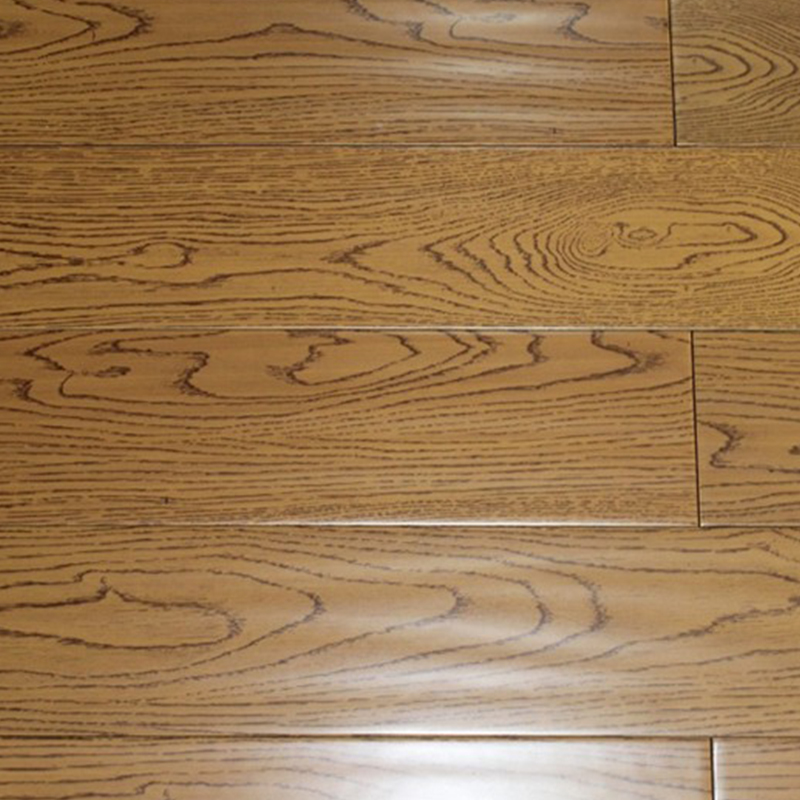
Surface preparation determines how the floor feels and how the coating performs. The product can be customized with wire brushed, handscraped, or smooth sanded textures. Smooth sanding provides a clean modern surface. Wire brushing emphasizes the natural grain and can help disguise minor daily marks. Handscraping creates a more artisanal and character-rich appearance.
Finish options include UV lacquer, UV oil, and hardwax oil. UV lacquer is valued for efficient curing and practical surface resistance. UV oil can preserve a natural look while enhancing the wood tone. Hardwax oil offers a breathable, tactile finish favored by many natural interior designers. The availability of multiple finishing systems gives the product a competitive advantage for project specification because it can be adapted to different markets, climates, price levels, and design concepts.
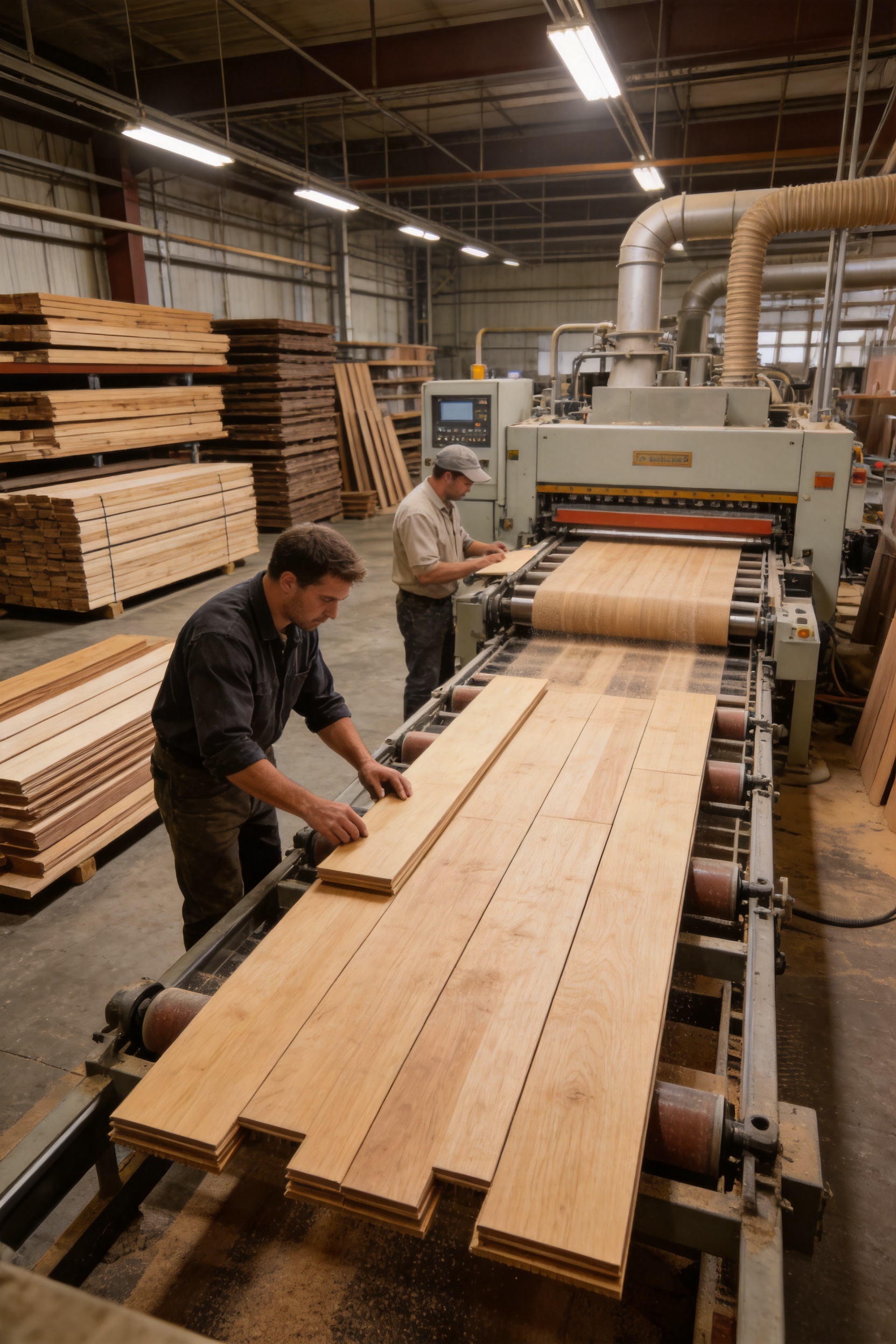
Modern flooring buyers increasingly ask not only how a product looks, but also how it affects indoor air quality and sourcing responsibility. This flooring is specified to meet the E0 environmental standard, with formaldehyde emission controlled to a very low level. Since solid wood has no composite layers in the same way as many engineered or fiberboard-based materials, it supports a cleaner material structure for indoor spaces.
CE and FSC certification support further increases confidence for international buyers. CE compliance helps address European market expectations for product safety and conformity. FSC certification supports responsible forest management and traceable sourcing principles. For distributors and project contractors, these certifications can be important in tender documents, green building discussions, and client approval processes.
The manufacturing company also supports broader compliance systems including CE, FSC, CARB P2, and ISO 9001 standards across its product offerings. This compliance orientation is especially valuable for global partners who require documentation, consistency, and reliable quality assurance for cross-border business.
One reason homeowners continue to prefer solid wood is the feeling underfoot. Wood is naturally warmer and more comfortable than many mineral-based surfaces. It does not feel as cold as tile or stone, and it has a softer acoustic character than many rigid synthetic floors. In bedrooms, family rooms, nurseries, and reading spaces, this comfort is not a minor detail. It affects daily experience.
The light brown-yellow matte flooring is particularly suitable for spaces where people walk barefoot, sit near the floor, or spend long periods relaxing. The rounded or refined edge treatment contributes to safety and visual softness. The matte surface reduces eye strain by limiting strong reflection, which is useful in rooms with large windows or direct lighting.
The product is also described as compatible with underfloor heating, subject to proper project conditions. Solid wood and underfloor heating require careful control of temperature, humidity, subfloor preparation, and installation method. When specified and installed correctly, the floor can support warm and comfortable indoor environments. For best results, heating systems should be commissioned gradually, and indoor humidity should be maintained within a stable recommended range.
The listed installation methods are glue and staple, supported by a tongue-and-groove structure. These are established methods for solid wood flooring. Glue-down installation can provide strong contact with the subfloor and may support better acoustic behavior when the correct adhesive system is used. Staple installation is common over suitable wood subfloors and can be efficient for experienced installers.
Before installation, the flooring should be acclimated according to site requirements. The subfloor should be clean, dry, level, and structurally sound. Moisture readings should be taken for both the flooring and the subfloor. Solid wood should not be installed in uncontrolled wet areas or environments with extreme humidity fluctuation. Expansion gaps should be maintained around the perimeter and at fixed structures.
The tongue-and-groove profile helps ensure alignment, but professional installation remains important. A high-quality floor can only perform as intended if the site conditions, installation method, adhesive or fastener selection, and post-installation climate control are appropriate. For project buyers, working with a manufacturer that understands export documentation and technical communication can simplify installation planning.
A significant competitive advantage of this flooring is customization. Custom sizes and colors are available, and the surface can be adapted with multiple textures and finishes. This flexibility matters for distributors and contractors because different markets prefer different plank widths, surface treatments, coating systems, and color tones. A single fixed specification may not fit all sales channels.
OEM and ODM customization support allows partners to develop product lines for retail showrooms, project tenders, private label programs, and architectural specifications. The company’s 72-hour rapid prototyping capability helps shorten development cycles. For flooring businesses, faster sampling can improve response time to customer requests and increase the chance of winning projects.
Customization also helps designers maintain continuity across interior wood elements. Since the company manufactures flooring, wooden doors, and custom cabinets, it can support coordinated interior woodwork solutions. This is valuable for hotels, apartments, villas, and commercial interiors where flooring, doors, wall panels, and cabinetry need to share compatible tones and finishes.
Quality control is essential in wood flooring because the customer sees and uses the product every day. Problems such as color inconsistency, dimensional variation, coating defects, moisture imbalance, and poor packaging can create costly disputes. The manufacturer applies a strict three-step quality inspection process supported by automated quality control systems. This strengthens reliability from raw material preparation to finished goods packaging.
Inspection typically includes checks for moisture content, dimensions, surface quality, profile accuracy, coating consistency, grading, and packaging condition. For export orders, packaging strength is also important because flooring must survive long-distance transport, loading, unloading, and storage. Carton specifications such as 14 pieces per carton, 1.55 square meters per carton, and 19.6 kg per carton support planning for logistics, warehousing, and installation quantities.
For global partners, production capacity and consistent quality are closely linked. A manufacturer with large capacity and established export experience can better support repeat orders, batch consistency, and project deadlines. This reduces procurement risk compared with small suppliers who may struggle with scaling, documentation, or shipment reliability.
In bedrooms, this flooring creates a calm foundation that works well with soft bedding, warm lamps, and natural textiles. The matte finish helps reduce reflective glare, making the room feel restful. The light brown-yellow tone prevents the space from feeling cold while still maintaining brightness.
In nurseries and children’s rooms, the soft color and rounded visual character support a gentle atmosphere. The natural wood surface provides warmth underfoot, while the low-emission specification supports indoor air quality expectations. As with any wood floor, protective pads should be used under furniture, and liquids should be wiped promptly.
In living rooms, the floor provides a versatile base for both modern and traditional furniture. It can be paired with cream sofas, wood coffee tables, woven rugs, indoor plants, and neutral wall colors. The natural grain helps prevent the room from feeling flat, while the light tone keeps the space open.
In reading nooks and private offices, the matte surface is particularly useful. Glare can be distracting in work and reading environments, especially near windows or task lamps. A matte wood floor supports concentration by creating a visually quiet background.
The product is suitable for residential and light commercial use when properly specified. Boutique hotels, serviced apartments, wellness studios, private clubs, design offices, and premium retail spaces can all benefit from the warm natural appearance. In these environments, flooring must communicate quality while supporting daily use.
Compared with cold commercial surfaces, a real wood floor can make customers feel more comfortable and welcome. In hospitality rooms, it helps create a home-like atmosphere. In boutique retail, it can elevate product presentation. In offices, it can soften the feeling of the workplace and make meeting rooms more refined.
For commercial use, the correct finish and maintenance plan should be selected. UV lacquer may be preferable where practical wear resistance is prioritized, while hardwax oil may be selected for natural tactile appearance. Entrance mats, furniture pads, cleaning routines, and humidity management should be included in the maintenance strategy.
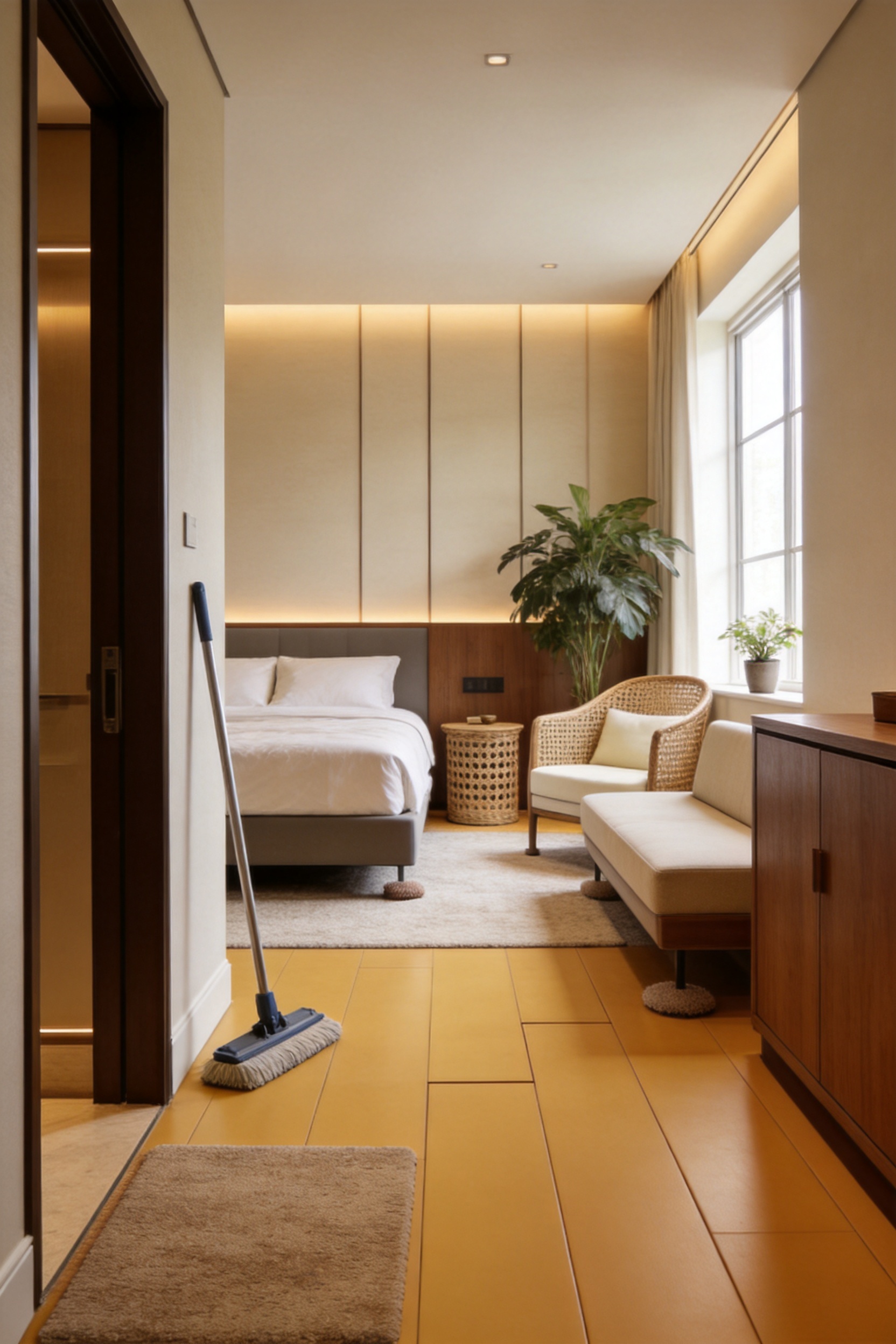
Daily cleaning should be simple and dry. Use a dry mop, microfiber mop, or soft broom to remove dust and grit. Abrasive particles can act like sandpaper under foot traffic, so regular dry cleaning helps protect the surface. A vacuum may be used if it has a wood-floor-safe head and does not scratch the finish.
Wet soaking should be avoided. Solid wood flooring should not be flooded with water, and standing moisture should be wiped immediately. For stubborn stains, use a neutral cleaning agent recommended for wood floors and apply it with a soft cloth. Harsh chemicals, abrasive pads, ammonia-based cleaners, and strong solvents should not be used.
Wax-based products should be avoided on matte lacquered surfaces because they may dull or alter the intended finish. If the floor uses an oil or hardwax oil system, maintenance should follow the specific finish instructions. Furniture legs should have protective pads, and heavy furniture should be lifted rather than dragged. Indoor humidity should be kept stable to reduce seasonal movement.
For buyers, the value of this flooring comes from the combination of material authenticity, visual comfort, technical specification, and manufacturing support. It is not simply a warm-colored floor. It is a solid hardwood product with controlled moisture content, customizable finish options, tongue-and-groove profiling, AB Grade selection, low-emission environmental performance, and international certification support.
Compared with many competitors, it provides stronger natural material value than laminate or vinyl, more design warmth than many gray-toned floors, and more manufacturing reliability than generic solid wood products with limited process control. The company’s production capacity, export experience, quality inspection system, OEM and ODM capabilities, and broad wood product expertise create additional advantages for distributors, contractors, and project specifiers.
The product is especially appealing for clients who want interiors to feel soft, natural, and durable. It supports modern minimalist design, cozy residential styling, natural interior concepts, and light commercial environments where comfort and authenticity are important.
The main visual feature is its light brown-yellow tone combined with a matte surface. This creates a warm, soft, and low-glare appearance suitable for calm residential and light commercial interiors.
Yes. The product is specified with a 100% solid hardwood core. Unlike laminate or vinyl flooring, it is made from real wood rather than a printed decorative surface.
The specification lists Taun, also known as Pometia pinnata, as the wood species in the Solid Taun Wood Flooring collection. The product name communicates an oak-style light brown-yellow visual direction.
The product uses a tongue-and-groove profile on four sides with a micro-bevel. Listed installation methods include glue and staple, depending on site conditions and professional installation requirements.
Yes. The surface finish can be customized with UV lacquer, UV oil, or hardwax oil. Surface texture options include wire brushed, handscraped, and smooth sanded treatments.
The product is described as suitable for underfloor heating when properly specified and installed. Temperature, humidity, subfloor moisture, and heating system commissioning must be carefully controlled for solid wood flooring.
Routine cleaning should be done with a dry mop or soft broom. For stubborn stains, use a neutral wood-floor cleaner with a soft cloth. Avoid wet soaking, harsh chemicals, abrasive tools, and wax-based products on matte lacquered surfaces.
It offers genuine solid wood structure, authentic grain, natural underfoot warmth, and longer-term material value. Laminate relies on a printed image layer and generally cannot be renewed in the same way as solid wood.
The manufacturer has more than 20 years of wood product experience, over 10 years of export experience, large production facilities, German imported production lines, automated quality control systems, OEM and ODM support, rapid prototyping capability, and compliance support including CE, FSC, CARB P2, and ISO 9001 standards.
It is especially suitable for bedrooms, reading nooks, nurseries, living rooms, apartments, villas, boutique hotels, serviced apartments, private offices, and other interiors where warmth, comfort, and natural material quality are priorities.
The Oak Light Brown Yellow Matte Solid Wood Flooring, model DK-T6023, offers a thoughtful combination of warm aesthetics, solid wood authenticity, low-glare comfort, and professional manufacturing support. Its light brown-yellow tone helps interiors feel gentle and welcoming, while the matte finish reduces visual reflection and supports a calm atmosphere. The solid hardwood structure, E0 environmental performance, tongue-and-groove profile, micro-bevel edge, and customizable finish options make it a practical and attractive choice for residential and light commercial applications.
Its strongest value lies in the way product design and manufacturing capability work together. A beautiful floor must also be stable, accurately machined, responsibly sourced, carefully finished, and consistently inspected. Backed by experienced production, global export knowledge, rapid customization, and recognized compliance systems, this flooring provides more than surface decoration. It provides a durable wood solution for interiors that need warmth, comfort, and reliable long-term quality.
Forest Stewardship Council. Responsible Forest Management and Chain of Custody Principles.
European Committee for Standardization. Wood Flooring Product Performance and Conformity Guidelines.
International Organization for Standardization. ISO 9001 Quality Management Systems Requirements.
National Wood Flooring Association. Wood Flooring Installation Guidelines and Moisture Control Practices.
United States Environmental Protection Agency. Indoor Air Quality and Formaldehyde Emission Considerations for Building Products.
Technical Data Provided for DK-T6023 Solid Taun Wood Flooring Product Specification.

We provide customers with sustainable and eco-friendly
engineered wood solutions and services.
Choose DEIF for the perfect blend of
performance and aesthetics.
