


 English
 Español
 عربى


Get Social
Choose DEIF for the perfect blend of
performance and aesthetics.
 Get Free Sample

Content
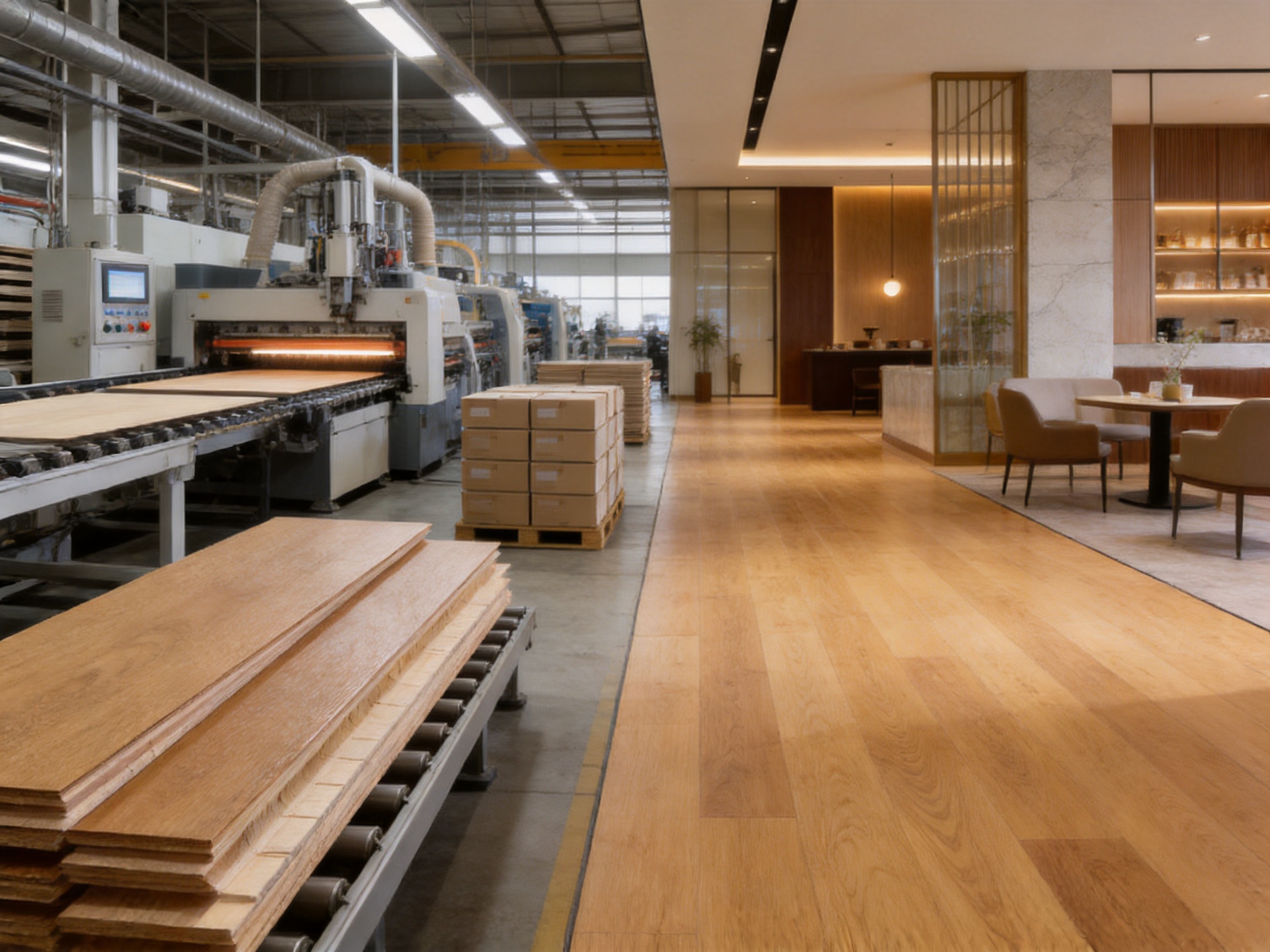
Wood flooring continues to play an important role in contemporary interior design because it combines visual warmth, tactile comfort, and long-term architectural value. Among the many flooring formats available today, three-layer engineered wood flooring offers a practical balance between the character of natural timber and the dimensional stability required by modern buildings. The DC-YB112 3-Layer Oak Light Brown-Yellow Natural Texture Environmental Arc Locking Engineered Wood Flooring is designed around this balance. It brings together a carefully selected oak veneer, a solid three-layer wood construction, a durable surface system, and an arc locking profile that supports efficient installation.
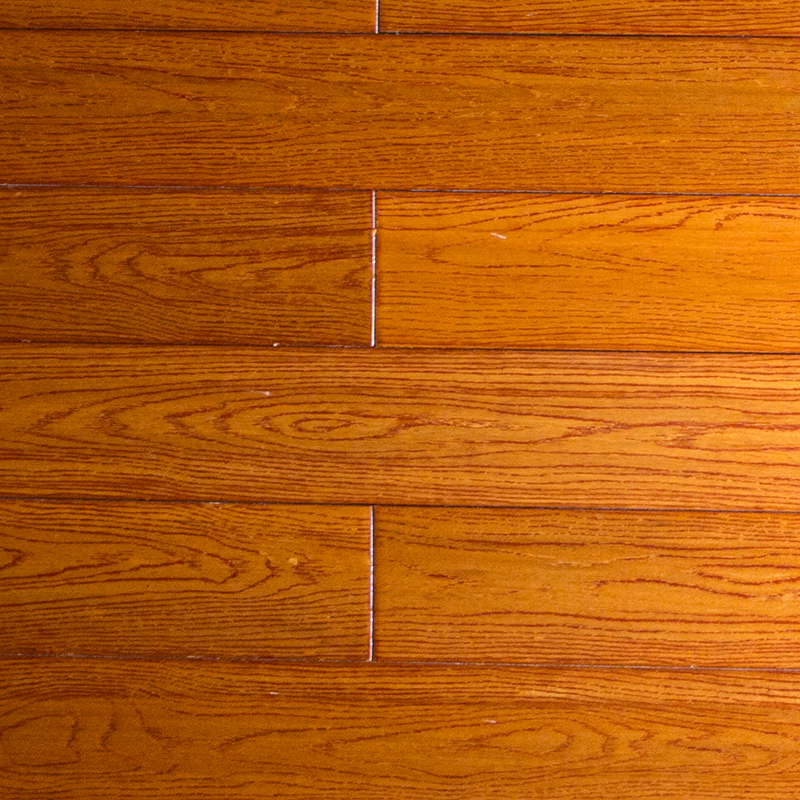
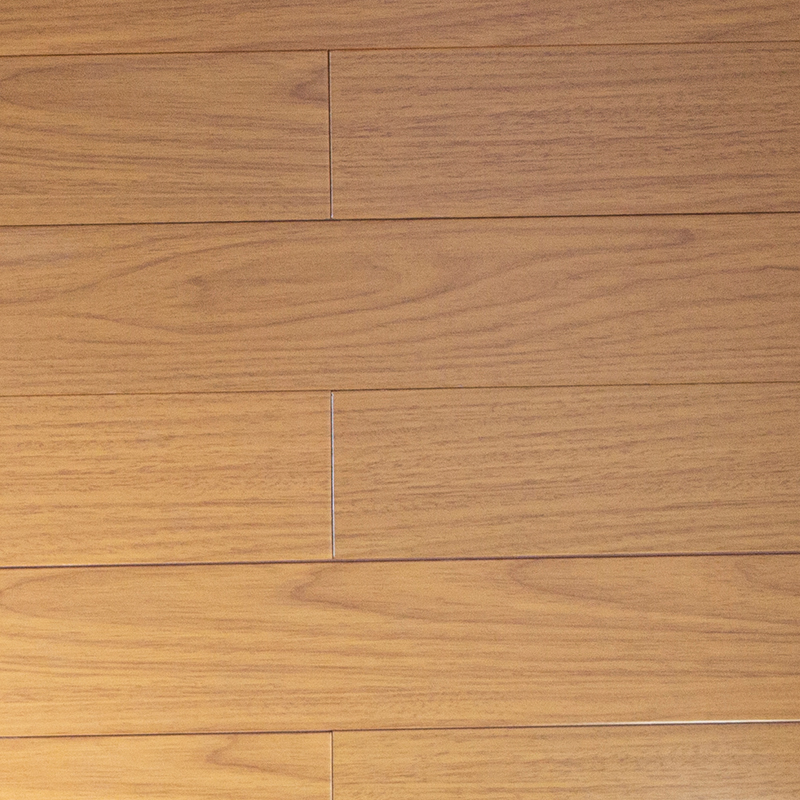
The product is especially suited to interiors that require a soft, natural, and welcoming visual identity. Its light brown-yellow oak tone works effectively with light French interiors, cream-style rooms, modern apartments, boutique hospitality spaces, cafés, studies, and refined commercial environments. Rather than relying on an artificial printed pattern, the flooring uses a natural wood veneer surface, allowing the grain, color movement, and organic detail of oak to remain visible.
At the same time, the flooring is designed for practical use. The cross-layer construction helps reduce the effects of environmental movement, while the engineered structure supports improved resistance to warping, deformation, and cracking compared with many conventional solid wood alternatives. Its click-based arc locking system simplifies installation and creates tight board connections. A choice of surface finishes, veneer thicknesses, wood grades, and installation methods allows the product to serve both standardized distribution programs and customized architectural projects.
DC-YB112 belongs to the three-layer engineered flooring category. Its standard format is approximately 74.8 inches long, 7.7 inches wide, and 5/8 inch thick. Each carton contains 10 pieces, covering approximately 2.03 square meters or 21.85 square feet. The approximate carton weight is 24 kilograms.
The visible face is oak, although alternative species such as walnut, ash, and teak may be specified for customized collections. The veneer is sliced rather than printed, preserving the natural visual structure of the selected species. Standard customization options include veneer thicknesses of 2, 3, 4, and 6 millimeters, while the broader product platform can support veneer thicknesses from approximately 0.6 to 6.0 millimeters depending on the intended application.
The internal construction uses a three-layer engineered wood core based on spruce, pine, or fir materials. These layers are arranged to improve structural balance and reduce the impact of seasonal movement. The result is a flooring board that retains the natural appearance of timber while offering greater control over dimensional behavior than a single-piece solid wood board.
| Product Category | Three-layer engineered wood flooring |
| Product Code | DC-YB112 |
| Face Species | Oak; walnut, ash, and teak available for customization |
| Visual Tone | Light brown-yellow with natural oak texture |
| Standard Dimensions | 74.8 inches × 7.7 inches × 5/8 inch |
| Veneer Options | Customizable from approximately 2 to 6 millimeters; broader options available by project |
| Core Construction | Three-layer engineered wood |
| Core Materials | Spruce, pine, or fir |
| Veneer Grades | AB, ABC, ABCD, and CD |
| Veneer Cut | Sliced veneer |
| Surface Finishes | UV lacquer, UV oil, or hardwax oil |
| Surface Textures | Wire brushed, hand scraped, or smooth sanded |
| Edge Profile | Micro-bevel on all four sides |
| Locking System | Arc click system |
| Installation Methods | Floating, glue-down, or staple installation |
| Carton Coverage | Approximately 2.03 square meters or 21.85 square feet |
The defining visual characteristic of this flooring is its light brown-yellow oak surface. This color range introduces warmth without making a room feel visually heavy. It can complement pale walls, soft textiles, natural stone, white cabinetry, warm metals, and neutral architectural finishes. In light French interiors, the flooring can support a relaxed yet elegant atmosphere. In cream-style rooms, it creates continuity between the floor, wall colors, and furniture while preserving enough grain contrast to prevent the space from looking flat.
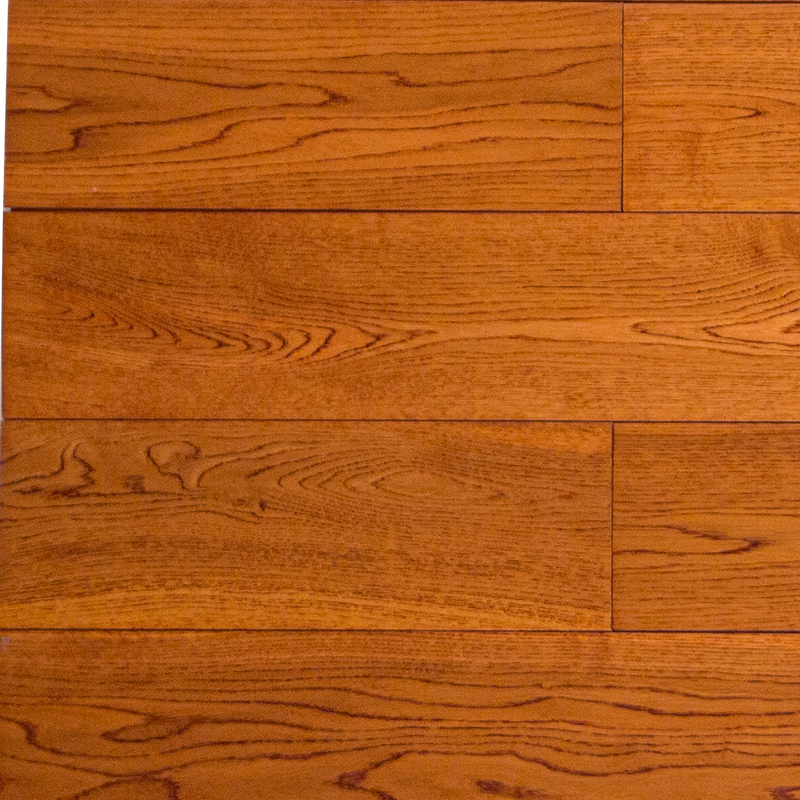
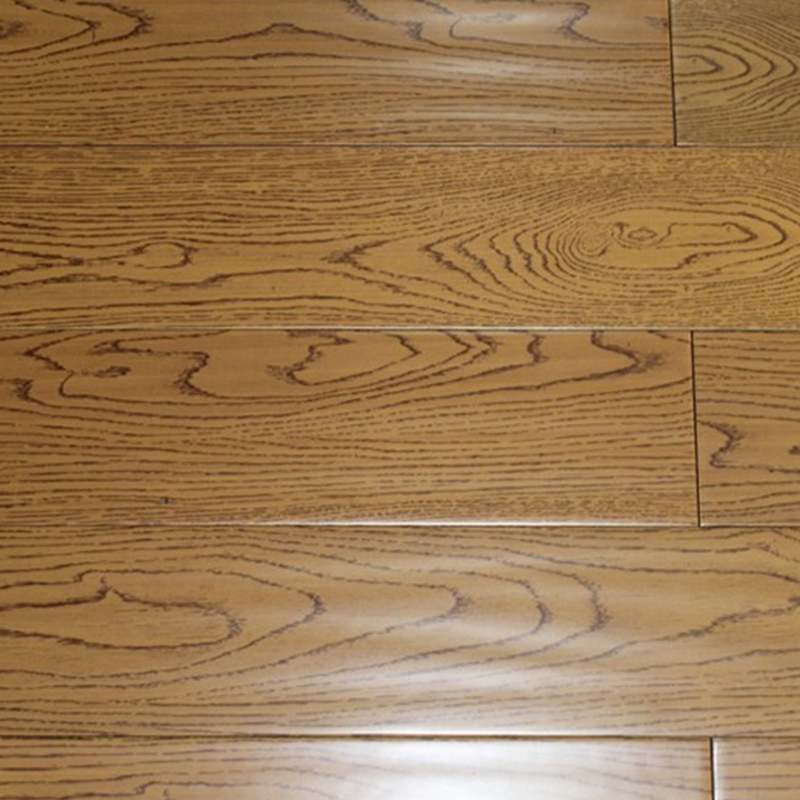
Oak is widely valued for its combination of hardness, fine grain structure, and recognizable natural character. The species has a refined appearance that can work in both traditional and contemporary settings. Depending on the selected grade and surface treatment, the boards can display a relatively calm visual field or a more expressive pattern with knots, color variation, and natural markings.
The sliced veneer process allows the surface to retain genuine timber detail. Each board can show individual differences in grain direction and tone, making the installed floor more visually authentic than a repeated decorative print. These variations are a natural feature of real wood and can contribute to a more comfortable, less uniform interior atmosphere.
For projects that require a particularly consistent appearance, veneer grade can be selected according to the desired level of variation. AB and ABC grades may be preferred for cleaner, more uniform interiors, while ABCD or CD grades can provide a more rustic and expressive appearance. This flexibility makes the product suitable for private residences, hospitality projects, retail environments, and multi-unit developments with different design standards.
The three-layer construction is central to the product’s performance. Instead of relying on one thick piece of solid timber, engineered flooring uses multiple wood layers arranged to manage internal stress. The structure helps distribute movement caused by changes in temperature and humidity. This is especially important in buildings where indoor climate conditions vary throughout the year or where large rooms require stable, long-length boards.
The top layer is the natural oak veneer. It provides the visible appearance, tactile identity, and wear surface foundation of the flooring. Beneath it, the core layers create structural support. Spruce, pine, or fir can be used as the primary core materials, depending on the selected specification. The layers are bonded and arranged to improve balance across the board, helping reduce the tendency of the material to cup, twist, or crack under normal service conditions.
A three-layer structure also provides a more efficient use of valuable hardwood resources. A relatively thin layer of oak delivers the desired appearance while the supporting layers provide thickness and strength. This construction can help manufacturers produce longer and wider boards with controlled performance while preserving the visual advantages of genuine oak.
Compared with many solid wood floors, engineered flooring is generally better suited to areas exposed to moderate environmental fluctuations. It remains a wood product and must still be protected from prolonged moisture, standing water, and unsuitable installation conditions. However, its cross-layer design provides a meaningful advantage where temperature and humidity changes are part of normal building operation.
Flooring performance depends not only on the material itself but also on the climate of the installation site. Wood naturally absorbs and releases moisture. If this movement is not properly managed, boards may expand, contract, open at the joints, or develop surface distortion. The engineered construction of DC-YB112 is intended to reduce these risks by balancing the movement of different layers.
The cross-layer structure increases resistance to deformation and cracking. This is valuable in homes with seasonal heating and cooling, as well as in commercial interiors where doors open frequently and indoor conditions change throughout the day. The structure also supports use with underfloor heating when the complete installation system, subfloor preparation, moisture control, and operating temperature are correctly managed.
Underfloor heating compatibility is an important consideration in contemporary residential design. Many homeowners and architects want the clean appearance of wood flooring without giving up the comfort of radiant heat. The stable three-layer format can be selected for such applications, subject to the technical requirements of the heating system and the recommendations of the flooring installer.
Correct installation remains essential. The subfloor should be clean, dry, level, and structurally sound. Moisture conditions should be checked before installation, and the boards should be acclimatized according to the conditions of the project. Expansion allowances should be maintained at appropriate boundaries, and the selected installation method should correspond to the subfloor and room use.

3-Layer Oak Light Brown Yellow Natural Texture Environmental Arc Locking Engineered Wood Flooring
DC-YB112 uses an arc locking click system designed to create tight joints between adjacent boards. The profile allows boards to be connected efficiently without requiring complex mechanical fastening for every installation. This supports faster progress on suitable projects and can reduce the disruption associated with floor replacement or renovation.
The locking system is particularly useful for floating installations, where the boards are assembled over an appropriate underlay without being permanently bonded to the subfloor. Floating installation can be efficient in residential renovations and selected commercial spaces because it can shorten installation time and make future access or replacement easier.
The flooring can also be installed using glue-down or staple methods where the project design, subfloor, acoustic requirements, or professional recommendation calls for a more permanent connection. This range of installation methods gives contractors and designers greater flexibility than a product restricted to only one installation approach.
Tight joints contribute to a more continuous finished appearance and help limit the accumulation of dust and debris in open gaps. The click profile also supports individual board replacement during future maintenance, provided replacement material is available and the installation is carried out by a qualified professional.
The four-sided micro-bevel adds definition to each board. It can emphasize the individual plank layout and provide a subtle shadow line between boards. This detail is useful in designs that want to highlight long-board proportions rather than create a completely seamless visual field.
The surface finish influences appearance, maintenance, tactile response, and resistance to everyday wear. The product platform supports UV lacquer, UV oil, and hardwax oil finishes. Each option can be matched to the aesthetic and functional requirements of a project.
UV lacquer creates a protective surface film that helps improve resistance to everyday abrasion and scratching. The seven-layer UV coating specified for general use provides an additional protective system for areas that experience regular foot traffic. Depending on the selected sheen, UV lacquer can preserve a clean, refined appearance while making routine cleaning more convenient.
This finish is often appropriate for busy residential rooms, offices, hospitality areas, and other spaces where efficient maintenance is important. It can also help maintain the visual clarity of the oak grain while providing a consistent surface response across the floor.
UV oil combines an oil-based visual character with curing technology designed to improve surface protection. It can create a warmer and more natural tactile impression than a heavily film-forming finish. This may be appropriate for interiors that prioritize a close-to-nature appearance and a soft, low-sheen surface.
UV oil should be maintained according to the manufacturer’s care recommendations. Cleaning products, re-oiling schedules, and repair procedures may differ from those used for lacquered floors.
Hardwax oil can emphasize the natural feel of wood while providing a protective treatment for the surface. It is often selected for projects where subtle grain enhancement and a more tactile finish are important. Small areas can sometimes be refreshed or repaired more locally than with certain fully coated systems, although the correct maintenance process should always be confirmed before treatment.
Surface texture is another important part of the product specification. Wire brushing can highlight the softer grain areas of oak and create a lightly textured appearance. This treatment is suitable for interiors that want to communicate natural materiality without appearing overly rustic.
Hand scraping produces more visible variation and a crafted appearance. It can be used in hospitality interiors, country-inspired homes, boutique commercial environments, and projects that want a sense of artisanal character. The degree of hand-scraped expression can be coordinated with the selected veneer grade and color.
Smooth sanding provides a cleaner and more understated surface. It allows the color and natural grain of the oak to remain the primary visual focus. This option may be particularly appropriate for minimalist interiors, modern apartments, light Scandinavian-inspired spaces, or projects with a calm and refined material palette.
Customization also extends to color. Although DC-YB112 is characterized by a light brown-yellow oak appearance, colors can be adjusted for project requirements. A manufacturer may develop a sample range, coordinate the flooring with furniture and doors, or produce a customized tone for a hotel, residential development, retail concept, or branded interior program.
The product combines several advantages that can distinguish it from conventional solid wood flooring, laminate flooring, and lower-specification engineered boards.
Solid wood flooring offers authentic material character, but its single-piece construction can be more sensitive to environmental movement. Wide or long solid boards may require careful climate management and installation controls. The three-layer engineered structure of DC-YB112 provides a more balanced construction that is better equipped to manage ordinary changes in indoor temperature and humidity.
The product also makes efficient use of the selected oak species. The visible oak layer delivers the desired natural appearance while the supporting wood layers provide structural depth. This can make it possible to offer long, broad, and visually consistent flooring formats without depending entirely on thick solid oak boards.
Laminate flooring can offer printed wood visuals and a durable top layer, but it does not provide the same material authenticity as genuine sliced oak veneer. DC-YB112 offers real wood grain, natural color variation, and a tactile timber surface. For high-quality residential and hospitality interiors, this authenticity can provide greater design value and a more premium user experience.
Real wood can also be refinished or maintained differently from a decorative laminate surface, depending on the veneer thickness and finish. A thicker oak veneer can provide more future service potential, although the permitted refinishing depth must be assessed by a qualified flooring professional.
Not all engineered flooring has the same core quality, surface protection, profile accuracy, or customization capability. DC-YB112 is supported by a defined three-layer construction, selectable core materials, multiple veneer grades, several finish options, and a precision click profile. These specifications can provide greater control over the finished result.
The seven-layer UV coating option adds a further layer of protection against routine wear and scratches. The availability of CE and FSC certification for applicable product programs can also support documentation requirements for international buyers, architects, contractors, and project procurement teams.
The performance of engineered flooring depends heavily on manufacturing discipline. A natural wood product must be controlled at every stage, from timber selection and veneer preparation to core assembly, pressing, machining, finishing, packaging, and final inspection.
The manufacturer behind this product operates dedicated wood production facilities with a reported area of approximately 20,000 square meters. German imported production lines and automated quality control systems support repeatable processing and stable output. These capabilities are important for buyers who require consistent dimensions, coordinated color, dependable locking profiles, and reliable delivery across large projects.
Production begins with the selection of suitable face wood and core materials. Oak veneer must be assessed for grain, color, thickness, moisture condition, and visual grade. The core material must be sufficiently stable and suitable for bonding into a balanced three-layer structure.
Material selection is not limited to appearance. Moisture content, density, fiber direction, and defect control influence the final performance of the board. Careful sorting helps reduce unexpected variation and supports the production of flooring that meets the required visual and structural specification.
The oak face is processed as sliced veneer. Slicing allows the manufacturer to produce a natural grain presentation with a controlled thickness and repeatable visual standard. Veneer can be sorted into grades such as AB, ABC, ABCD, or CD according to the level of knots, color variation, and natural features permitted in the final product.
For customized projects, veneer thickness can be specified according to the expected use, target price, refinishing potential, and design preference. A thicker veneer can provide a stronger natural wood presence, while a thinner veneer may support a more cost-efficient construction where refinishing is not a primary requirement.
The three-layer core is assembled with attention to fiber orientation, layer balance, adhesive coverage, and pressing conditions. Cross-layer construction is intended to counteract the movement tendencies of individual wood components. Proper assembly is essential for minimizing internal stress and supporting board flatness.
Pressing conditions must be carefully controlled. Temperature, pressure, pressing duration, and adhesive curing all influence the bond between the layers. Inadequate bonding can lead to delamination, while excessive or uneven processing can affect board flatness and machining accuracy.
After the core and veneer are bonded, boards are calibrated to achieve a consistent thickness. The surface is then sanded or textured according to the selected specification. Precision machining creates the micro-beveled edges and arc locking profile.
Locking accuracy is especially important because even small dimensional inconsistencies can affect installation. A well-machined click system should connect smoothly, maintain tight joints, and help produce a stable finished floor. Quality checks may include inspection of board length, width, thickness, edge geometry, locking engagement, and surface flatness.
The finishing line applies the selected UV lacquer, UV oil, or hardwax oil system. For a multi-layer UV coating, each stage must be applied evenly and cured correctly. The process is designed to improve resistance to normal wear and scratching while maintaining the intended color and sheen.
Surface inspection checks for coating uniformity, visible contamination, gloss consistency, edge coverage, and appearance defects. Finished boards are sorted and packed to protect the surface during storage and transportation.
A strict three-step quality inspection process supports product consistency. Inspection can cover incoming materials, in-process production, and finished products. This approach helps identify problems earlier rather than relying only on final carton inspection.
For global distribution, documentation is also significant. The product family is associated with CE and FSC certification programs where applicable, while the manufacturing organization reports compliance with CE, FSC, CARB P2, and ISO 9001 standards. Buyers should confirm the exact certificate, scope, and product applicability for each order and destination market.
Natural wood flooring must be evaluated not only by its appearance and performance but also by the responsible management of raw materials and manufacturing processes. FSC certification can provide evidence that the relevant wood materials are sourced through a certified chain of custody, subject to the specific certification scope and documentation supplied for the order.
Environmental performance also depends on adhesive systems, coating chemistry, packaging, transport, service life, and end-of-life handling. A durable floor that remains attractive for many years can reduce the frequency of replacement. The ability to select a suitable veneer grade, finish, and construction for the intended application helps align the product with practical service requirements.
For projects with indoor air quality requirements, buyers should request current technical documents relating to emissions, formaldehyde classification, adhesives, coatings, and applicable regional standards. The reported CARB P2 compliance capability can be relevant for projects with specific emissions requirements, but project teams should verify the current documents before approval.
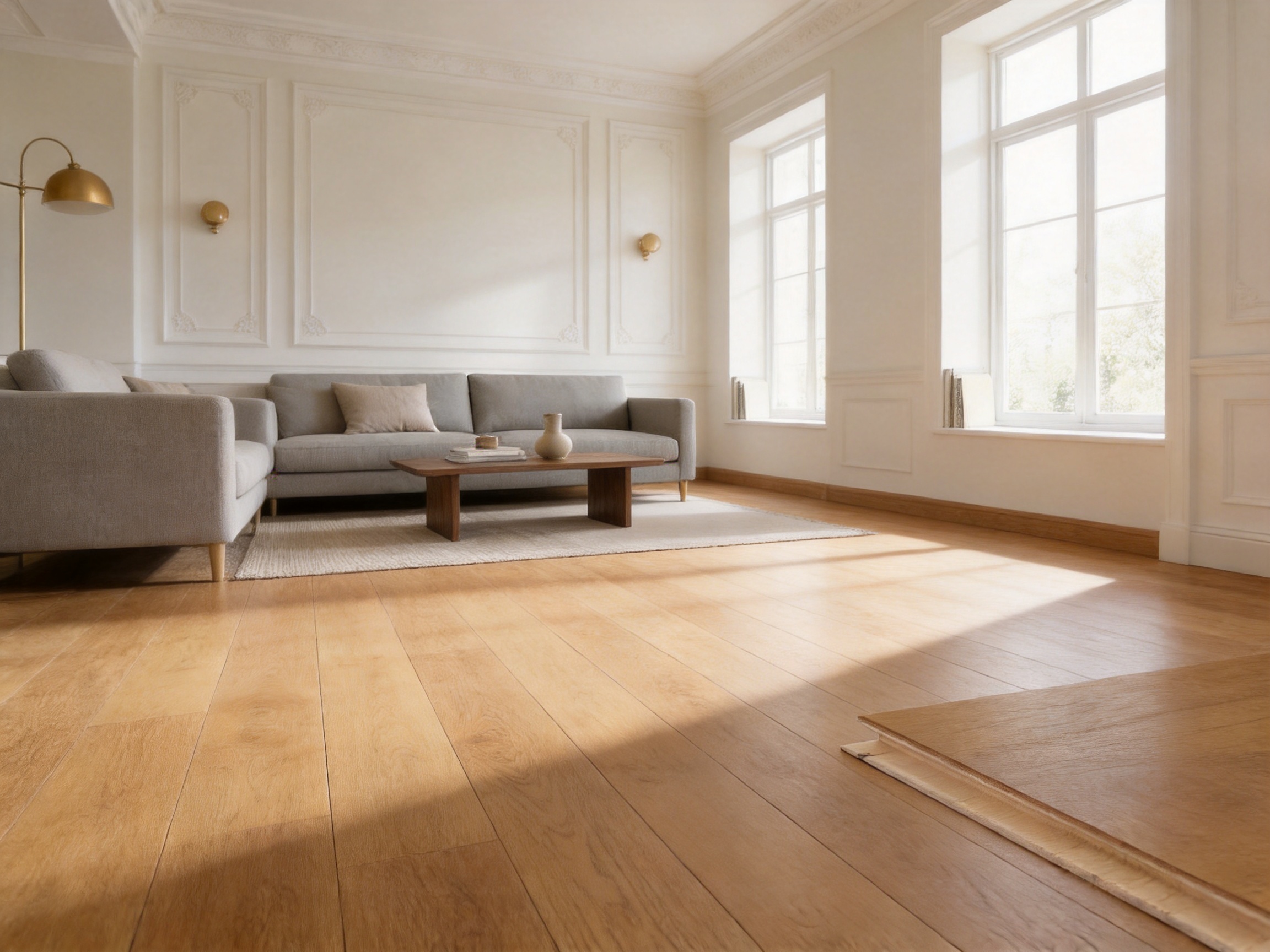
DC-YB112 is well suited to living rooms, bedrooms, studies, dining areas, hallways, and open-plan residential interiors. Its warm oak tone can visually connect separate zones within an apartment or house. In a living room, the flooring can provide a calm foundation for light upholstery, cream walls, natural fabrics, and soft decorative finishes.
In a study, the natural grain can create an environment that feels focused and comfortable. The light tone helps reflect available light, while the oak pattern introduces enough texture to keep the room visually engaging. In bedrooms, the surface can contribute to a warmer underfoot experience than hard mineral flooring.
For residential projects using underfloor heating, the three-layer format is a practical option when installed in accordance with the heating manufacturer’s requirements. Surface temperature limits, moisture conditions, expansion allowances, and adhesive or underlay compatibility should be considered during design development.
The arc locking system can also benefit renovation projects. Faster installation may reduce the time a room is unavailable, and the floating method can be appropriate where the existing subfloor is prepared correctly. Nevertheless, the installer must verify subfloor flatness, moisture, soundness, and acoustic requirements before selecting the installation method.
The warm natural tone of the product can create a welcoming identity in cafés, restaurants, boutique hotels, serviced apartments, offices, showrooms, and selected retail environments. Oak flooring is often used to soften spaces dominated by glass, metal, stone, or concrete. The light brown-yellow color can make a commercial interior feel more approachable while maintaining a premium appearance.
Hotels may use the flooring in guest rooms, lounges, corridors, meeting areas, or private dining spaces, depending on traffic levels and maintenance requirements. The selected surface finish should correspond to the expected use. Areas with intense traffic may benefit from a protective lacquer system and a carefully planned cleaning program.
In cafés and restaurants, the texture and color can complement timber furniture, upholstered seating, ceramic surfaces, and warm lighting. Because commercial environments are exposed to spills and repeated cleaning, moisture control and prompt removal of liquid are particularly important. The flooring should not be treated as waterproof, and standing water must be avoided.
For office interiors, the flooring can help create a more residential and comfortable atmosphere. It may be used in reception spaces, executive rooms, meeting rooms, and collaborative zones. Acoustic underlay or glue-down installation may be considered where sound control is a priority.
Before installation, flooring cartons should be stored in a dry, protected environment. Boards should be inspected for visible damage, and the product should be acclimatized according to the site conditions and professional installation instructions. The building should be enclosed, wet trades should be complete, and the interior climate should be reasonably stable.
The subfloor must be level, clean, dry, and structurally sound. Uneven areas can create movement, noise, joint stress, or premature wear. Moisture testing is necessary for concrete, screed, wood, and other subfloor types. The correct moisture barrier or underlay should be selected according to the installation system.
For floating installation, the installer should use a compatible underlay and maintain the required perimeter expansion gap. Boards should be joined carefully to avoid damaging the locking profile. Heavy fixed furniture should be considered during installation because it can restrict the natural movement of a floating floor.
For glue-down installation, the adhesive must be compatible with both the flooring and the subfloor. The adhesive should be applied evenly, and the boards should be positioned before the adhesive begins to cure. For staple installation, the spacing, fastener type, and subfloor construction should follow professional recommendations.
Door frames, thresholds, transitions, stair interfaces, and heating registers require careful detailing. A professional installer can coordinate these junctions so that the finished floor maintains both visual continuity and functional movement allowances.
Routine care helps preserve the texture, color, and durability of the floor. Loose dust and grit should be removed regularly with a soft brush, vacuum suitable for wood flooring, or dry microfiber mop. Grit can act as an abrasive under footwear and furniture, particularly near entrances.
Cleaning should be performed with a lightly damp cloth or mop rather than excessive water. The flooring should never be left exposed to standing water, wet cleaning residue, or prolonged moisture. Spills should be removed promptly, especially in kitchens, dining areas, cafés, and entrances.
Furniture legs should be fitted with protective pads. Heavy furniture should be lifted rather than dragged across the surface. Entrance mats can reduce the amount of sand, grit, and moisture brought into the room. Rubber-backed mats should be checked for compatibility, as some materials may discolor finished wood over time.
Cleaning agents should be approved for the selected finish. A product suitable for UV lacquer may not be appropriate for hardwax oil, and strong chemicals can damage the surface or alter its sheen. Periodic professional inspection can help identify early signs of wear, moisture exposure, or localized damage.
The product is suitable for OEM and ODM programs where distributors, contractors, architects, and developers require a coordinated flooring specification. Customization can include wood species, veneer thickness, grade, color, surface finish, texture, dimensions, packaging, and installation profile.
A project may begin with a design brief describing the target interior style, expected traffic, preferred color family, board size, and budget. Samples can then be developed for review. The reported 72-hour rapid prototyping capability can support early design coordination, although final timing depends on the complexity of the sample and the required approval process.
For a residential development, a buyer may select a consistent AB oak grade with smooth sanding and UV lacquer. A boutique hotel may prefer a more expressive ABCD grade with wire brushing and hardwax oil. A restaurant concept may request a custom warm tone with a more textured surface. These examples show how one engineered flooring platform can be adapted to different design and performance goals.
Color matching should be assessed under the lighting conditions of the intended project. Natural daylight, warm artificial lighting, wall colors, furniture, and surrounding materials can all influence the perceived tone of the floor. Because real wood contains natural variation, an approved reference sample should define the acceptable range rather than expecting every board to appear identical.
The manufacturing organization has more than 20 years of wood industry experience, over 10 years of export experience, and reported annual production capacity of approximately 2,400,000 square meters of flooring. This scale can support distributors and project buyers who require repeat orders, stable specifications, and coordinated production planning.
The company also produces wooden doors and custom cabinet solutions. This broader capability can be valuable for projects seeking coordinated interior woodwork from one manufacturing partner. Flooring, doors, and cabinetry can be developed around compatible wood species, stains, finishes, and design details.
Global service coverage includes partners across Europe, North America, and Southeast Asia. For international buyers, supply support should include technical drawings, packing details, finish samples, inspection procedures, shipping documents, certification information, and after-sales communication. Clear documentation helps reduce misunderstandings when products are specified across different markets.
A three-step inspection system, automated quality control, and imported production equipment can contribute to stable manufacturing. However, every project should still establish clear acceptance criteria for color, grade, dimensions, finish, moisture, packaging, and allowable natural variation before production begins.
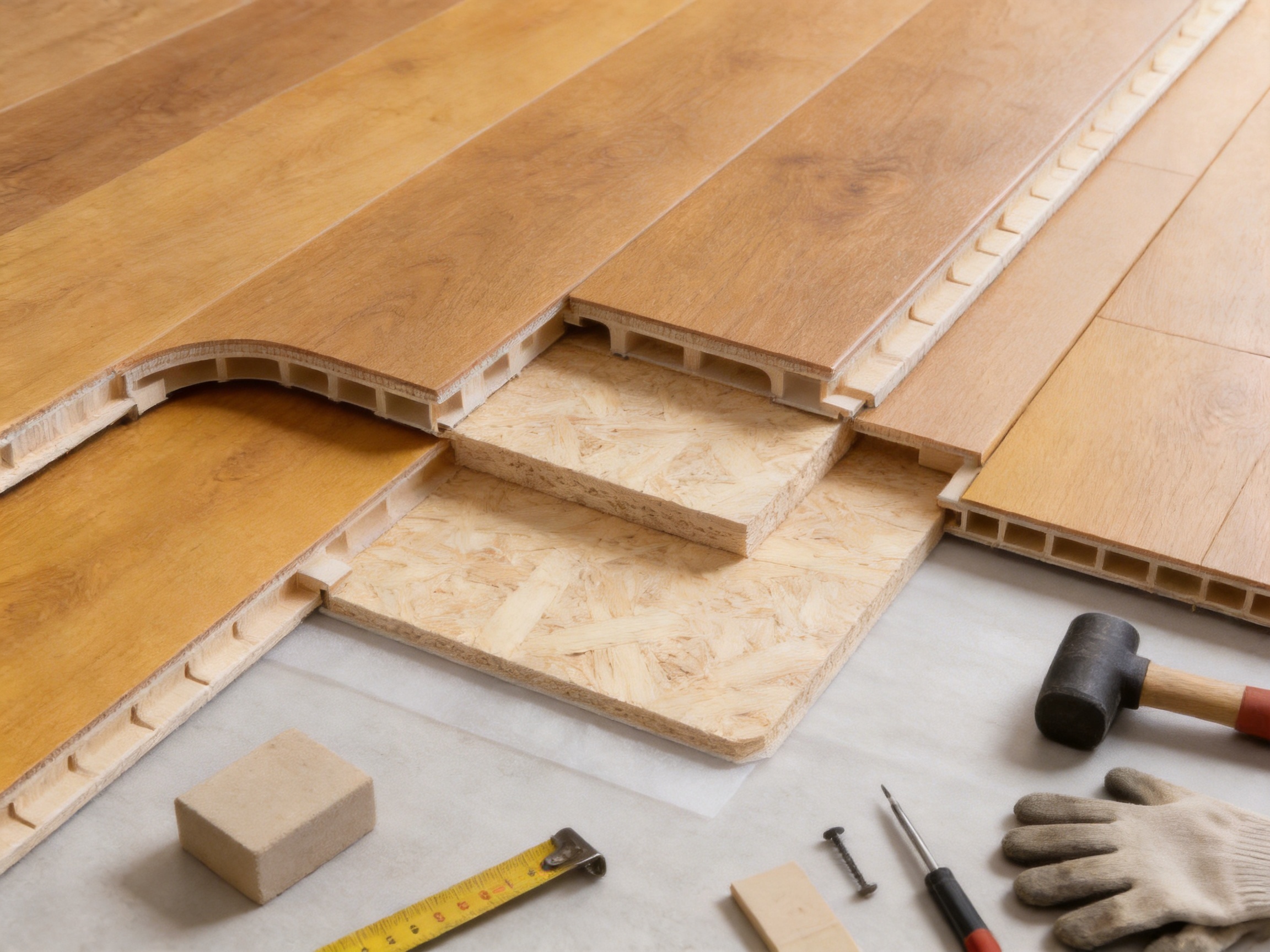
The product uses a natural oak veneer over a three-layer engineered wood core. This cross-layer structure is designed to improve dimensional stability and resistance to warping, cracking, and deformation compared with many single-piece solid wood boards. It retains a genuine oak surface while providing a more balanced engineered construction.
The three-layer format is suitable for selected underfloor heating applications when the flooring, heating system, subfloor, adhesive or underlay, and operating temperatures are compatible. Installation should follow the technical requirements of the heating system and be completed by a qualified professional.
No. Engineered construction improves stability but does not make the flooring waterproof. Standing water, prolonged moisture, flooding, and wet cleaning can damage wood flooring. Spills should be removed promptly, and areas exposed to frequent moisture should be designed with appropriate protection.
Available finish options include UV lacquer, UV oil, and hardwax oil. The correct selection depends on the desired appearance, tactile feel, maintenance program, and expected traffic level.
Yes. Customization may include wood species, veneer thickness, grade, surface color, finish, texture, board dimensions, and packaging. Oak is the featured species for DC-YB112, while walnut, ash, and teak are also available within the broader product platform.
The available grades include AB, ABC, ABCD, and CD. Cleaner grades generally provide a more consistent appearance, while lower grades may include more knots, variation, and natural character.
The flooring can be installed by floating, glue-down, or staple methods, depending on the subfloor, project conditions, acoustic requirements, and professional recommendation.
Use a soft cloth, dry microfiber mop, or suitable vacuum for routine cleaning. Use only a lightly damp cloth or mop when necessary, avoid excessive water, and select cleaning products compatible with the specified surface finish.
No. Natural oak contains variation in grain, tone, knots, and markings. A production order can be controlled within an approved visual range, but genuine wood flooring should not be expected to have the identical repetition found in printed materials.
Refinishing potential depends on the selected veneer thickness, surface condition, and professional assessment. A thicker veneer generally provides more material for future sanding, but the permitted sanding depth should be confirmed before any refinishing work.
The product information identifies EU CE and FSC certification for applicable products and reports broader compliance capabilities including CE, FSC, CARB P2, and ISO 9001. Buyers should request current certificates and confirm that they cover the exact product, finish, market, and order.
The color is particularly compatible with light French, cream-style, Scandinavian-inspired, natural contemporary, and warm minimalist interiors. It can also be used in hospitality and commercial settings that require a welcoming natural atmosphere.
Project buyers should begin by defining the intended application. A private residence, hotel, café, office, and retail space may require different surface finishes, grades, maintenance plans, and installation methods. Traffic level, exposure to moisture, furniture loads, cleaning frequency, and underfloor heating should all be considered before final specification.
The next step is to approve physical samples. Samples should be viewed under the actual or proposed lighting conditions and compared with wall finishes, cabinetry, doors, stone, textiles, and furniture. For large projects, a larger sample panel or mock-up can provide a more accurate understanding of plank variation and installation appearance.
Technical approval should address the board dimensions, veneer thickness, core material, locking profile, finish, texture, moisture requirements, packaging, carton coverage, and installation instructions. The project team should also agree on inspection standards, acceptable natural variation, replacement procedures, and warranty responsibilities.
Finally, supply planning should account for production lead time, quantity, batch control, shipping, storage, acclimatization, and installation sequencing. Ordering an appropriate reserve quantity can be useful for cutting waste, future repairs, and natural color selection during installation.
The DC-YB112 three-layer oak engineered wood flooring combines the visual authenticity of natural sliced oak veneer with the structural advantages of a balanced engineered core. Its light brown-yellow color creates a soft and welcoming foundation for light French, cream-style, residential, hospitality, and commercial interiors. The oak surface provides genuine grain and material character, while the selectable grades, textures, finishes, and colors support a wide range of design directions.
Its three-layer construction is designed to improve resistance to warping, deformation, and cracking, making it a practical alternative to less stable flooring formats in environments with normal temperature and humidity changes. The arc click system supports efficient installation, and the availability of floating, glue-down, and staple methods gives contractors greater flexibility.
Manufacturing strengths further support the product. Dedicated production facilities, imported equipment, automated quality control, a three-step inspection process, customization capabilities, and international supply experience provide a strong foundation for both standard orders and OEM or ODM projects. Certification and compliance documentation can help support global procurement when verified for the specific product and market.
For the best result, the flooring should be specified according to the building environment, installed over a suitable prepared subfloor, protected from prolonged moisture, and maintained with products compatible with its selected finish. When these requirements are respected, the flooring can deliver a durable, comfortable, and visually refined wood surface for a broad range of interior applications.
1. Product technical information for DC-YB112 three-layer oak engineered wood flooring, including dimensions, veneer options, core construction, finishes, textures, profile details, and installation methods.
2. Manufacturer-provided product descriptions concerning natural oak veneer, three-layer wood construction, arc locking installation, UV coating, customization, and applicable certification programs.
3. General engineered wood flooring installation and maintenance principles concerning subfloor preparation, acclimatization, moisture control, expansion allowances, cleaning, and underfloor heating.
4. General architectural material specification practices for residential flooring, commercial wood flooring, hospitality interiors, and customized OEM or ODM interior products.
5. General guidance on sustainable timber sourcing, chain-of-custody documentation, indoor air quality, surface finishes, and responsible wood product procurement.

We provide customers with sustainable and eco-friendly
engineered wood solutions and services.
Choose DEIF for the perfect blend of
performance and aesthetics.
