


 English
 Español
 عربى


Get Social
Choose DEIF for the perfect blend of
performance and aesthetics.
 Get Free Sample

Content
Flooring is one of the most influential elements in an interior space. It affects how a room looks, feels, sounds, and performs over time. While furniture, lighting, and wall finishes can be changed relatively easily, a wood floor is a long-term architectural surface that must combine visual appeal, structural reliability, practical maintenance, and environmental responsibility. For this reason, buyers, architects, contractors, and developers increasingly seek flooring that offers more than an attractive color.
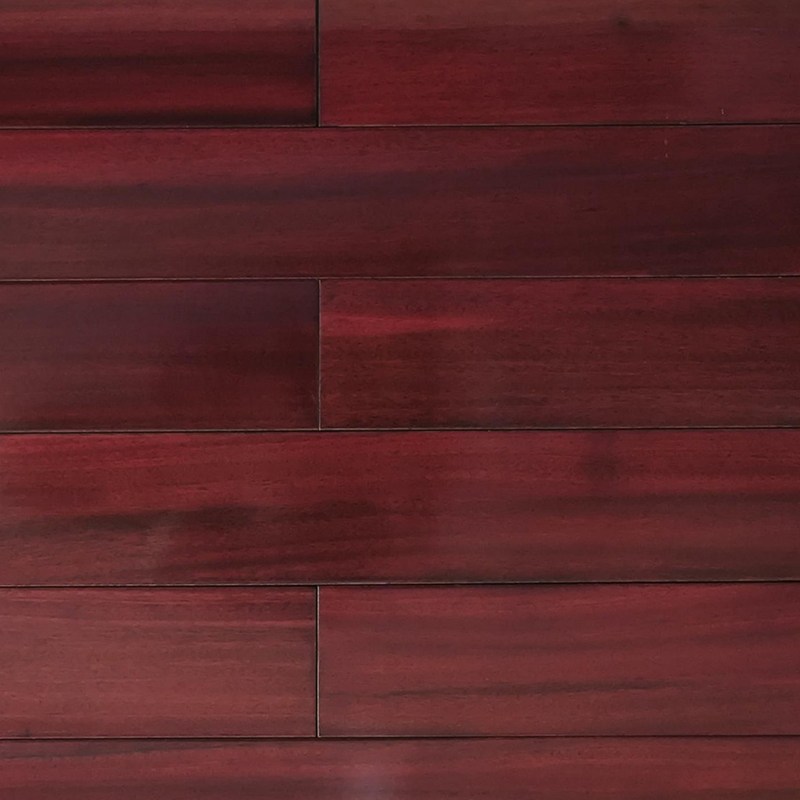
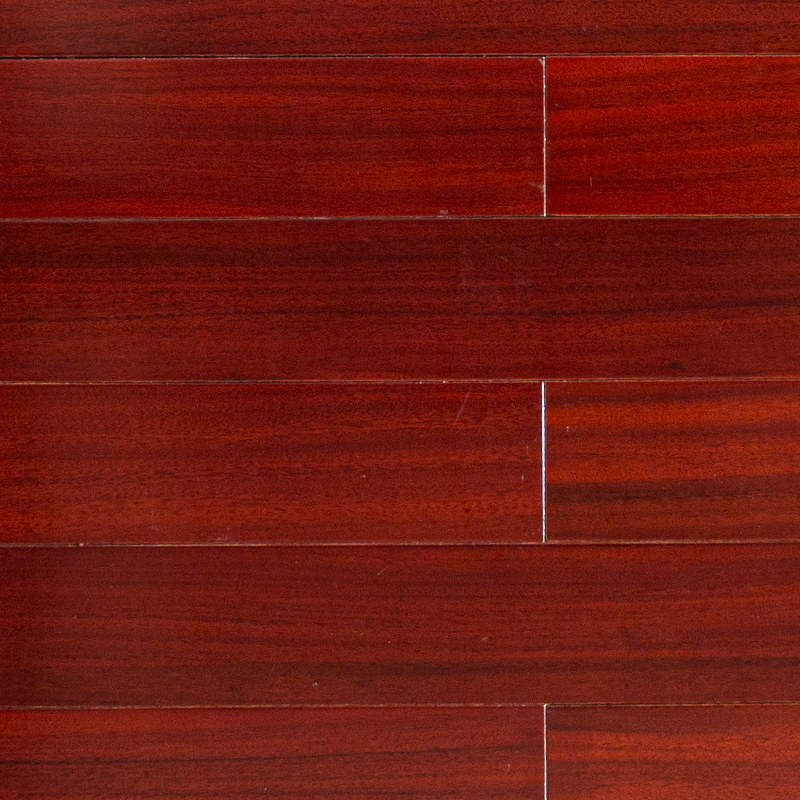
The Padauk Red Brown High-Gloss Solid Wood Flooring is designed for projects that require a strong visual identity and dependable everyday performance. Its vivid red-brown appearance, reflective high-gloss surface, carefully engineered profile, and solid hardwood construction create a flooring solution suitable for luxury residences, boutique commercial environments, showrooms, lounges, and other design-led spaces.
The product is identified by the model reference DS-R003 and belongs to the Solid Taun Wood Flooring collection. It is marketed with a Padauk-inspired red-brown visual effect, while the detailed product specification identifies Taun, or Pometia pinnata, as the wood species. Because wood species, stain, gloss level, and surface treatment can be customized, project buyers should confirm the final material and finish before production. This flexibility allows the product to serve a broad range of architectural concepts while maintaining a distinctive premium appearance.
Unlike ordinary flooring products that depend primarily on printed decoration or thin surface layers, this flooring is based on a solid hardwood core. The natural grain structure, deep red-brown tone, and high-gloss finish work together to create a floor with both visual depth and tactile character. The result is a surface that can become a central design feature rather than a background material.
Manufactured by an experienced wood solutions producer with dedicated facilities, automated quality control, imported production lines, and a three-step inspection process, the product is also supported by customization capabilities and international compliance. These strengths make it relevant not only to homeowners, but also to distributors, flooring contractors, interior designers, architects, and commercial project developers.
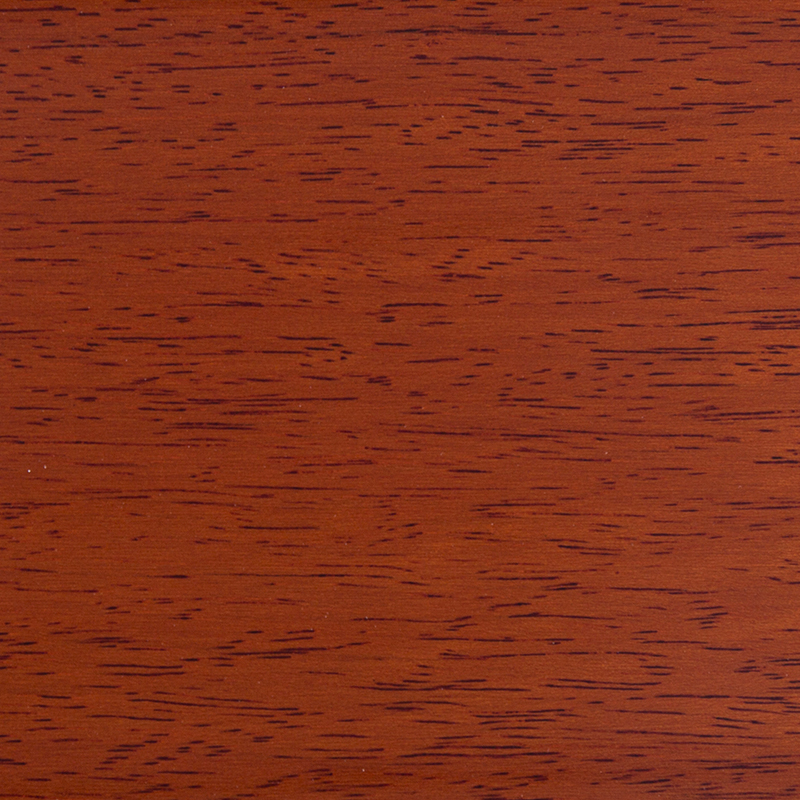
Padauk Red Brown High Gloss Solid Wood Flooring
The Padauk Red Brown High-Gloss Solid Wood Flooring is developed for customers who want a bold, warm, and luxurious interior surface. Its principal visual characteristics are a rich red-brown tone, a bright reflective surface, and a natural wood grain pattern. The combination gives the room a sense of warmth while also introducing a polished and refined appearance.
The flooring is available in a plank format measuring approximately 35.43 inches in length, with widths of approximately 4.53 or 4.61 inches and a thickness of 0.71 inches. In metric terms, the thickness is approximately 18 millimeters. The 18-millimeter construction provides a substantial presence underfoot and contributes to dimensional stability when the product is installed and maintained according to recommended procedures.
The standard product specification includes a four-sided click system and a V-beveled edge profile. The click system supports efficient panel connection, while the V-bevel creates a defined visual line between planks. This profile can emphasize individual boards and enhance the rhythm of the floor, particularly in large rooms where the natural plank layout becomes part of the design language.
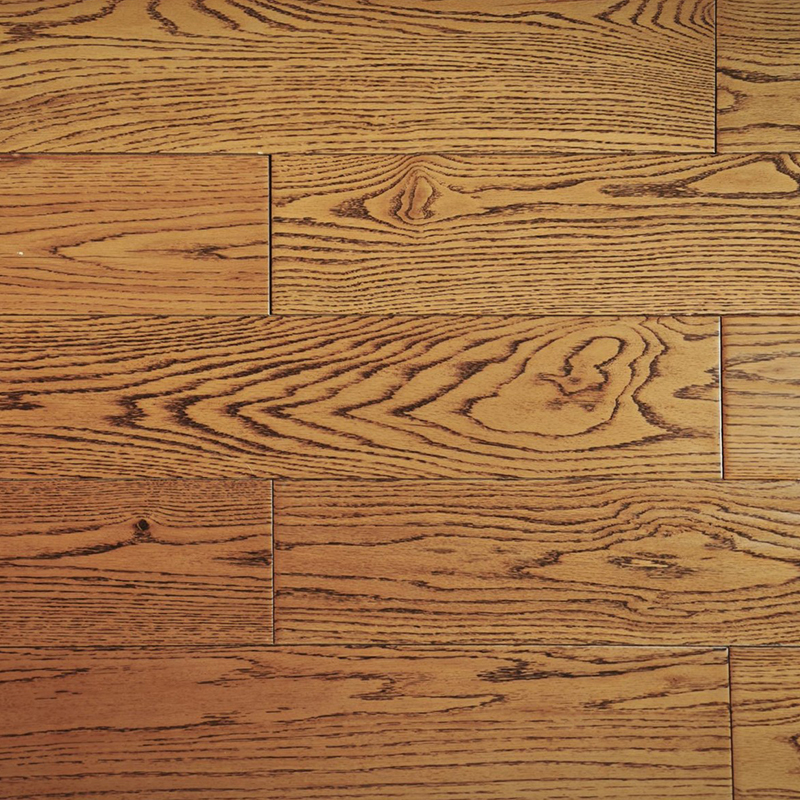
The product is listed with an AB selective grade. This grading approach is intended to provide a balanced appearance while preserving selected natural wood characteristics. Depending on the final order, the surface texture may be wire brushed, handscraped, or smoothly sanded. The surface finish may be supplied as UV lacquer, UV oil, or hardwax oil. These options allow the buyer to coordinate the flooring with different interior styles and performance expectations.
| Specification | Product Information |
|---|---|
| Product model | DS-R003 |
| Marketing collection | Solid Taun Wood Flooring |
| Marketed appearance | Padauk red-brown, high-gloss visual effect |
| Specified wood species | Taun, Pometia pinnata |
| Construction | Solid hardwood core |
| Thickness | 0.71 inch, approximately 18 mm |
| Length | Approximately 35.43 inches |
| Width | Approximately 4.53 or 4.61 inches |
| Grade | AB Grade, selected |
| Profile | Four-sided click system with V-bevel |
| Surface texture options | Wire brushed, handscraped, or smooth sanded |
| Surface finish options | UV lacquer, UV oil, or hardwax oil |
| Pieces per carton | 16 |
| Coverage per carton | Approximately 1.67 square meters or 17.98 square feet |
| Approximate carton weight | 21 kilograms |
| Moisture content | 8% to 10%, with a tolerance of approximately plus or minus 2% |
| Installation options | Glue or staple installation, subject to project configuration |
The most immediate advantage of this flooring is its visual character. Many wood floors are selected for neutral oak, pale ash, or soft natural tones. Those options remain popular, but they may not provide the dramatic impact required by luxury interiors, hospitality venues, branded commercial spaces, or statement residential rooms. The red-brown surface of this product offers a more expressive alternative.
Red-brown wood tones can introduce visual warmth without appearing overly rustic. They work effectively with dark metals, warm brass, cream upholstery, natural stone, deep green textiles, black furniture, and rich leather. In a luxury living room, the floor can support a layered material palette. In a boutique showroom, it can create a memorable backdrop for products and displays. In an upscale lounge, it can contribute to an atmosphere of exclusivity and comfort.
The high-gloss finish enhances the natural brightness of the red-brown tone. Light from windows, chandeliers, pendant fixtures, and concealed lighting is reflected across the surface, creating a dynamic appearance that changes throughout the day. This reflective quality can also make carefully planned interiors appear more open and visually connected.
High-gloss flooring requires careful preparation and maintenance, but it offers a level of visual richness that is difficult to obtain with a low-sheen surface. The coating process specified for this product includes an eight-layer UV high-gloss lacquer system. This multilayer approach is designed to create a consistent appearance while improving resistance to daily surface wear and simplifying routine cleaning.
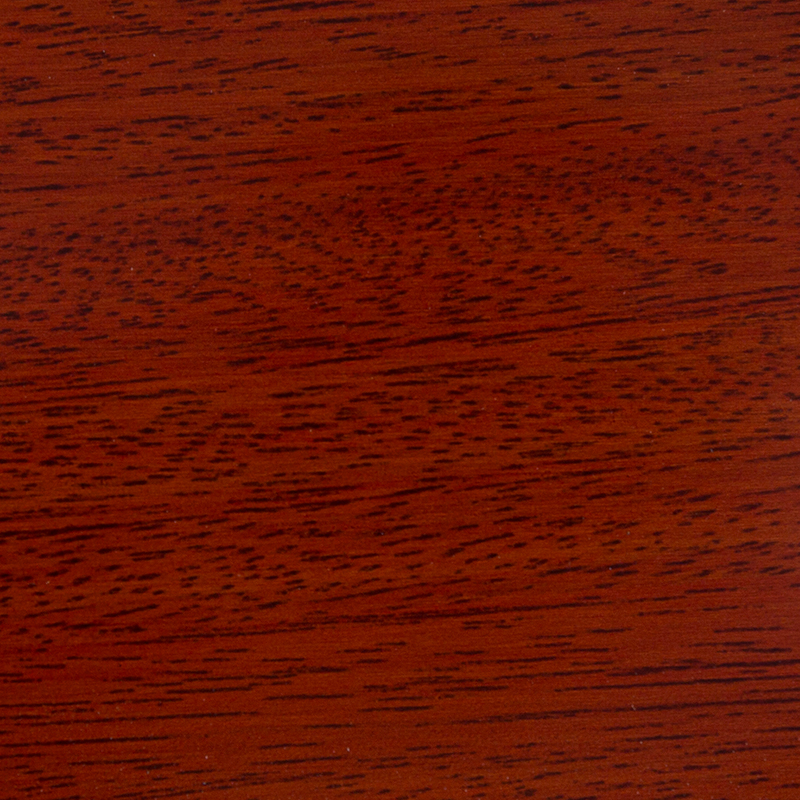
The visual result is not limited to color alone. Grain structure remains an important part of the design. The natural pattern of the wood adds movement and prevents the red-brown tone from appearing flat or artificial. Depending on the selected surface treatment, the grain may appear more tactile and pronounced or more refined and uniform.
The flooring uses a 100 percent solid hardwood core. This is a major point of difference compared with many composite, laminate, or multilayer flooring products. A solid wood core provides the authentic density, touch, and natural response associated with hardwood flooring. There are no composite layers intended to imitate the substance of wood.
When people walk across a solid hardwood surface, they experience a particular combination of firmness and warmth. The floor feels substantial underfoot, while the natural wood material helps create a more comfortable interior atmosphere than many hard mineral or synthetic surfaces. This quality is particularly desirable in residential bedrooms, living rooms, reading areas, and premium hospitality settings.
Solid wood also offers a strong relationship between material authenticity and long-term design value. The floor is not simply a decorative printed layer applied to a base. The visible material and the structural material are closely connected. This can help give the interior a more credible architectural quality, especially where the flooring is visible across a large continuous area.
However, all solid wood products must be installed and managed with an understanding of natural wood behavior. Wood responds to changes in moisture and temperature. The specified moisture content of approximately 8% to 10%, with a tolerance of plus or minus 2%, supports appropriate preparation for many interior applications. Site acclimatization, subfloor inspection, humidity control, expansion planning, and professional installation remain essential.
The product is suitable for residential and light commercial applications when the installation environment is properly prepared. It should not be treated as a maintenance-free surface or installed in unsuitable wet areas. A quality hardwood floor performs best when indoor humidity, cleaning practices, furniture movement, and exposure to water are controlled.
Printed laminate and decorative synthetic flooring can reproduce the general appearance of wood, but they do not provide the same natural depth or material authenticity. The grain on a solid hardwood floor is part of the wood itself. It has subtle variation, tactile response, and visual complexity that can be appreciated from different angles and distances.
The Padauk red-brown appearance is particularly effective when natural grain is allowed to remain visible beneath the high-gloss finish. Rather than presenting a completely uniform image, the flooring combines color consistency with organic wood variation. This balance is useful for high-end projects where designers want an intentional appearance without creating an overly artificial effect.
Stone and ceramic floors can provide excellent durability and a strong architectural presence, but they are often harder and cooler underfoot. Solid wood offers a warmer tactile experience, making it more suitable for areas where people sit, walk barefoot, or spend extended periods of time.
The product’s warm natural texture contributes to comfort in residential spaces and helps soften the atmosphere of commercial interiors. In hospitality environments, this can be especially valuable because the floor becomes part of the visitor experience rather than simply a technical surface.
Pale wood flooring is versatile, but it can sometimes appear visually quiet in large or highly decorated rooms. The red-brown tone of this product provides greater contrast and a stronger focal point. It can anchor furniture groupings and help define areas within an open-plan interior.
The high-gloss surface further increases its presence. When combined with carefully selected lighting, it can create a polished, premium impression that supports luxury residential design, hospitality concepts, branded retail, and executive interiors.
Many flooring products are available only in one texture, finish, grade, and profile. The product described here offers a more flexible approach. Buyers can request different surface textures, including wire brushing, handscraping, and smooth sanding. They can also select from UV lacquer, UV oil, and hardwax oil finishes, subject to project requirements and production confirmation.
Custom sizes and colors are also available. This is an important advantage for distributors, designers, and project buyers who need a consistent material concept across different rooms or properties. Customization can support private-label programs, coordinated interior packages, renovation schemes, and special architectural applications.
The standard high-gloss concept uses an eight-layer UV lacquer coating. Ultraviolet curing allows the coating to harden efficiently during production and supports a consistent surface finish. The multilayer structure is intended to improve surface protection, visual clarity, and ease of cleaning.
A properly applied UV lacquer surface can help resist everyday scuffing and minor surface abrasion. It does not make the floor indestructible, and sharp objects, abrasive particles, dragged furniture, and excessive impact can still cause damage. Nevertheless, the coating provides a protective barrier that supports normal residential and light commercial use.
The high-gloss lacquer also helps emphasize the red-brown color. The reflective surface can make the grain appear deeper and more polished, creating a finish suitable for high-end spaces. Because gloss levels can affect the perception of color, buyers should request production samples before confirming a large order.
UV oil is an alternative finish option for buyers who want a more natural surface appearance while retaining factory-applied protection. Compared with a highly reflective lacquer, UV oil may present a softer visual effect and a closer connection to the texture of the wood.
This option can be considered for interiors that combine natural materials, understated luxury, and tactile finishes. It may be suitable for residential projects, boutique hospitality spaces, and contemporary interiors where designers prefer a less mirror-like appearance.
Hardwax oil is another customizable finish. It is often selected when the desired design emphasizes natural touch, visible grain, and a low-to-moderate sheen. The product can therefore be adapted to both dramatic high-gloss schemes and more organic interior concepts, depending on the final specification.
Each finish has different cleaning and maintenance expectations. The selected finish should be documented in the purchase order, installation instructions, and care guide. Mixing maintenance products designed for one finish with another finish may reduce performance or alter the appearance.
The four-sided click system is designed to simplify plank connection and provide a clean, consistent installation pattern. Click systems can reduce the complexity of joining boards and help create a stable visual surface when the subfloor is properly prepared.
The V-bevel profile gives each plank a clear outline. This can be especially attractive for high-gloss flooring because the beveled edges create controlled shadow lines between boards. The result is a more defined plank pattern rather than a completely seamless visual field.
The product information identifies glue and staple installation as available methods. The final installation method depends on the project, subfloor, site conditions, and the configuration confirmed by the supplier. A professional installer should evaluate the subfloor level, moisture, flatness, expansion requirements, and transition details before work begins.
Glue installation may be selected where a project requires strong board contact with the subfloor and where the adhesive system is compatible with solid wood flooring. Staple installation may be appropriate for suitable wooden subfloors and approved installation conditions. The installation team should use the correct tools, fasteners, adhesives, spacing, and expansion provisions.
Although the product includes a click system, buyers should not assume that every project is automatically a floating installation. The permitted method should be confirmed before purchase. The use of the wrong installation technique can affect movement, sound, joint integrity, and warranty conditions.
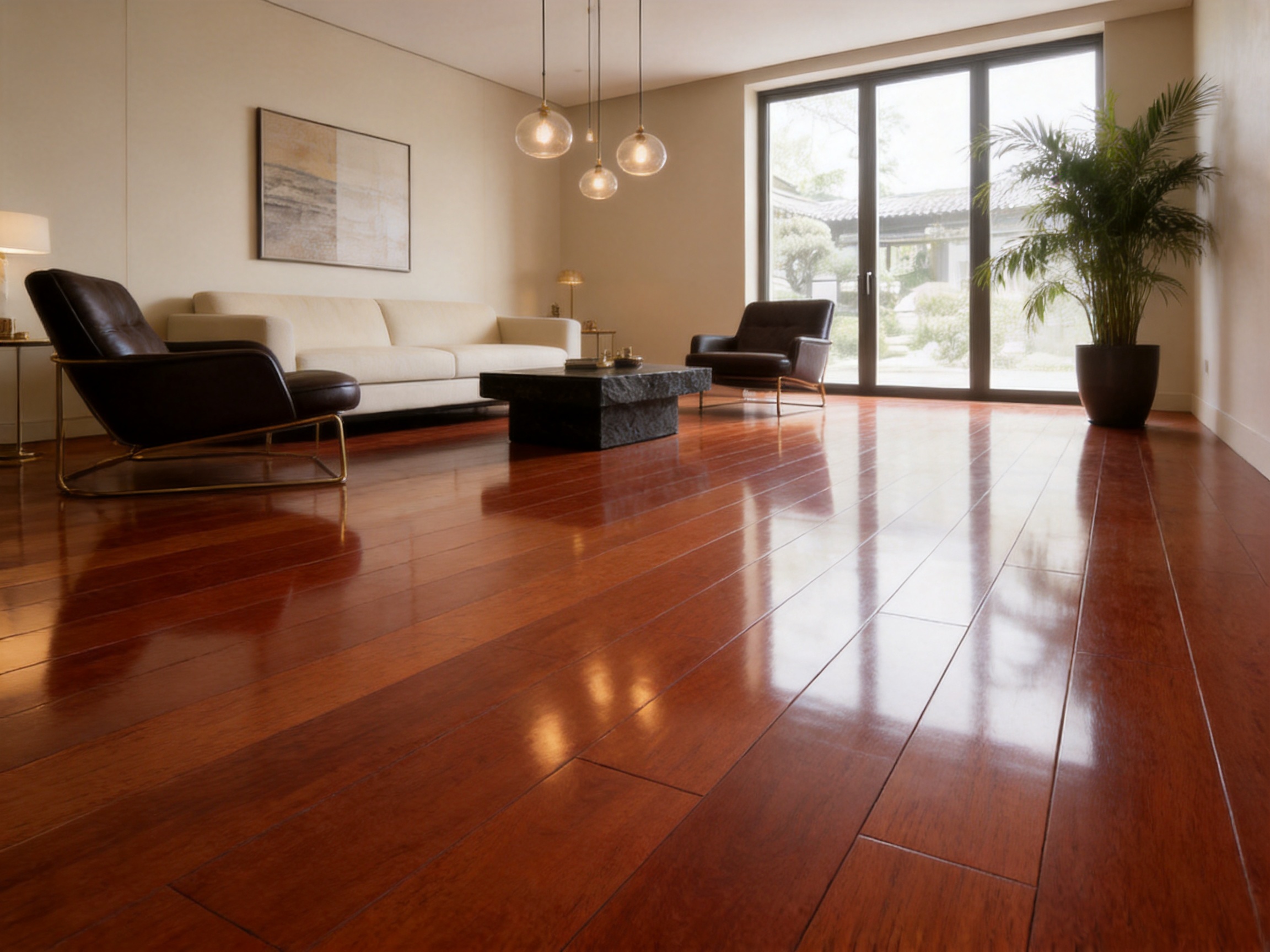
The living room is one of the strongest applications for this product. Its red-brown color can establish a rich foundation for sofas, lounge chairs, statement tables, art pieces, and decorative lighting. A high-gloss surface reflects light and can help create a formal, elegant atmosphere.
The flooring works particularly well with gold-tone furniture, velvet sofas, crystal lighting fixtures, dark wood accents, and warm neutral walls. It can also contrast effectively with contemporary white furniture, brushed metal details, and large-format stone surfaces.
In dining spaces, the deep wood color can complement dark tables, leather chairs, brass fixtures, and warm decorative elements. The finish provides a polished appearance suitable for both private dining rooms and open-plan dining zones.
Because food and drink spills are possible in dining areas, prompt cleaning is important. Liquids should not be allowed to remain on the floor for extended periods. Protective pads under chairs and tables can reduce scratching and localized wear.
Although a high-gloss finish creates a formal appearance, the natural warmth of solid wood can keep bedrooms comfortable and inviting. The product may be used in master bedrooms, dressing areas, luxury apartments, and private suites where the flooring needs to coordinate with textiles and upholstered furniture.
Area rugs can be used to define bedside zones or reading corners. Rug backings should be compatible with finished wood flooring and should not trap moisture. Furniture should be lifted rather than dragged when rearranging the room.
The product can also be used in carefully planned entry areas, feature corridors, and transition zones. However, these areas often experience greater exposure to outdoor grit and moisture. High-quality entrance mats, regular dust removal, and appropriate protective measures are necessary to maintain the surface.
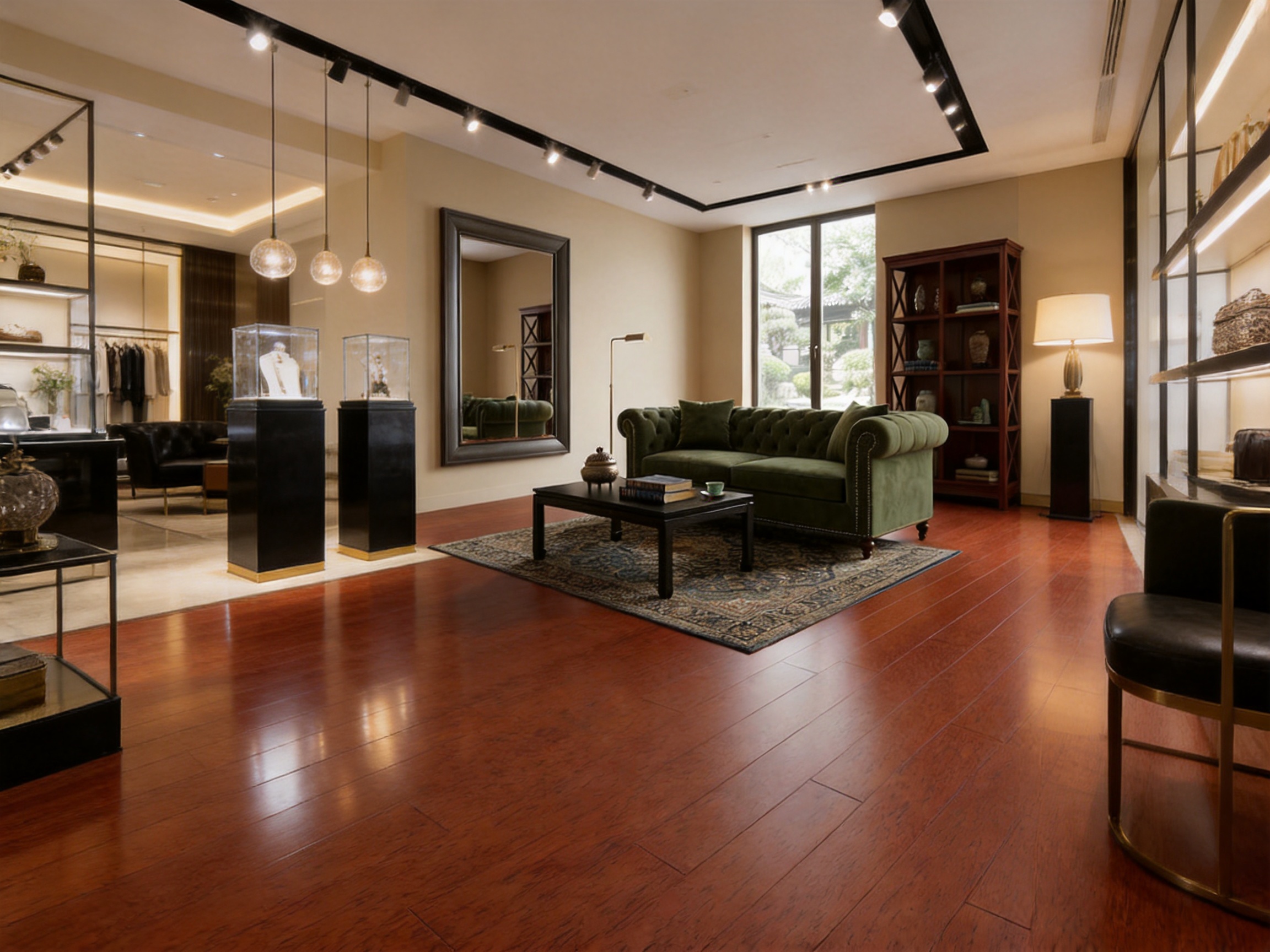
In boutique showrooms, flooring contributes to brand perception. A strong red-brown floor can create a memorable environment for fashion, jewelry, furniture, lighting, automotive accessories, or premium lifestyle products. The reflective surface can enhance display lighting and encourage a sense of exclusivity.
The floor should be coordinated with traffic patterns and display layouts. Areas receiving concentrated foot traffic may require additional protective planning, more frequent cleaning, and periodic professional inspection.
The warmth of solid hardwood is well suited to lounges, private clubs, executive waiting areas, and hospitality interiors. The product can soften the visual impact of metal, glass, and stone while adding a sense of permanence and comfort.
Its red-brown tone can be paired with leather, velvet, dark timber, blackened steel, bronze, and warm indirect lighting. In these applications, the flooring acts as part of the mood-setting strategy, helping define the interior as sophisticated and welcoming.
Selected offices and meeting rooms can benefit from the product’s premium visual character. It is particularly suitable for reception areas, boardrooms, private executive offices, and client presentation spaces where the interior needs to communicate quality and confidence.
For commercial use, the project team should evaluate expected foot traffic, rolling chair use, furniture loads, cleaning schedules, and maintenance budgets. The flooring is suitable for residential and light commercial use, but the final specification should be matched to the actual traffic level.
The product may also be considered for upscale dining environments and private dining areas where atmosphere is more important than extremely high-volume traffic performance. Proper entrance protection, spill management, furniture pads, and cleaning procedures are essential.
Wet areas, commercial kitchens, washrooms, and locations subject to continuous standing water should be specified separately. Solid wood flooring performs best in controlled interior environments where moisture can be managed.
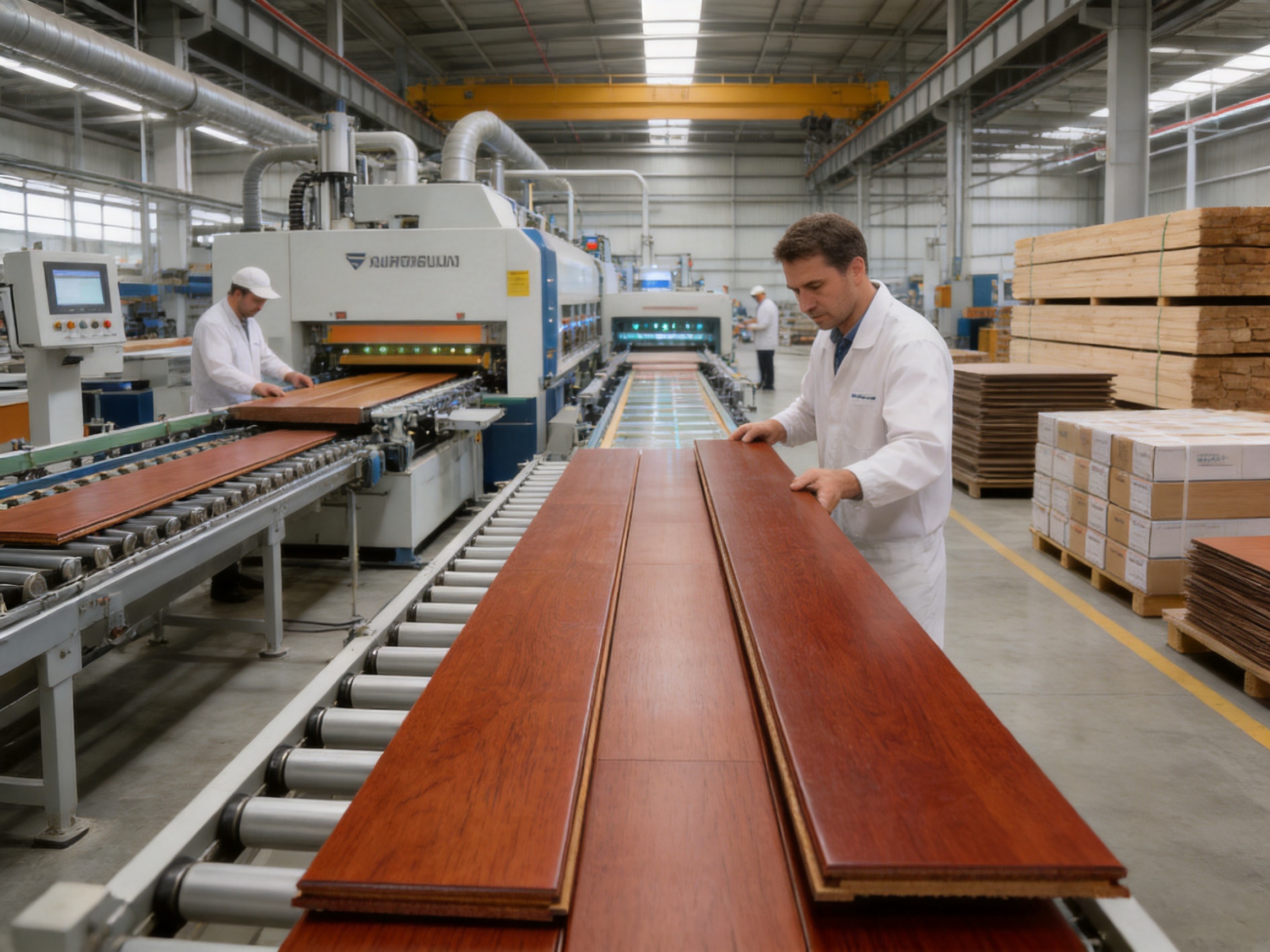
The performance and consistency of a flooring product depend not only on its visible design, but also on the manufacturing system used to produce it. The supplier behind this product operates as a wood solutions manufacturer with experience in flooring, wooden doors, and custom cabinet solutions.
The company was established in 1999 and has more than two decades of experience in wood manufacturing. It operates production facilities covering approximately 20,000 square meters and has more than ten years of export experience. This combination of manufacturing history and international market exposure supports a better understanding of packaging, documentation, project communication, and quality expectations.
Annual production capacity is reported at approximately 2,400,000 square meters of flooring and 5,000 sets of doors. Capacity at this level can be important for distributors, contractors, and developers who require repeat production, phased deliveries, or coordinated materials across multiple projects.
The use of German imported production lines supports controlled processing and repeatability. In flooring manufacturing, production accuracy affects plank dimensions, tongue-and-groove or click engagement, surface uniformity, coating consistency, and packaging quality.
Modern production lines can reduce variation between batches when properly calibrated and maintained. This is especially important for high-gloss flooring, where irregularities in sanding, coating thickness, or curing can become more visible under directional light.
Automated quality control systems support the inspection of dimensions, appearance, surface condition, and manufacturing consistency. Automation does not replace skilled personnel, but it can improve repeatability and provide a more systematic approach to quality management.
For project buyers, consistent quality is particularly valuable. A homeowner may purchase flooring for one room, while a developer or contractor may need material for hundreds or thousands of square meters. Batch consistency helps reduce visible differences between production lots and supports more predictable installation.
The supplier applies a three-step quality inspection process. While the exact internal checkpoints may vary by order, a structured inspection program generally helps identify issues before products reach the customer. Important inspection areas for solid wood flooring include moisture content, dimensional accuracy, profile quality, surface appearance, coating condition, packaging, and labeling.
Inspection is particularly important for customized orders. When a project includes a special color, custom width, selected texture, or unusual finish, the production team must verify that the final material corresponds to the approved sample and technical documentation.
The company offers OEM and ODM customization as well as rapid prototyping within approximately 72 hours for suitable development requirements. This can support distributors and design firms that need to evaluate a new color, surface texture, profile, or coordinated product concept before committing to mass production.
Rapid prototyping can reduce uncertainty during the design stage. Instead of selecting a flooring finish solely from a digital image or small color card, project teams can review a physical sample and compare it with furniture, lighting, wall finishes, and other materials.
Customization may include color development, surface treatment, dimensions, packaging, product labeling, and coordinated wood products. The exact options, minimum order quantities, and lead times should be confirmed for each project.
The product information identifies an E0 environmental standard, with formaldehyde emissions stated at no more than 0.05 milligrams per cubic meter where applicable to the solid wood flooring specification. Solid wood construction also means that the product does not depend on a composite core with added layers of wood-based panels.
The flooring is described as CE and FSC certified, and the company’s broader product compliance information also references CARB Phase 2 and ISO 9001. Certification scope can differ by product, production batch, market, and documentation package, so buyers should request the current certificates applicable to the exact product and destination country.
FSC-related certification supports responsible forest management claims when the relevant chain-of-custody requirements are met. For architects and developers working toward environmental building goals, certified wood can contribute to responsible material selection. It should be evaluated together with transportation, finish chemistry, service life, maintenance, and end-of-life considerations.
Low-emission materials are increasingly important in residential, hospitality, healthcare-adjacent, office, and educational interiors. The stated E0 performance provides useful information for indoor material planning, although project teams should still review the complete technical documentation and any local requirements.
ISO 9001 management systems can support documented quality procedures, corrective actions, traceability, and continuous improvement. Compliance marks and management certifications do not eliminate the need for project-specific inspection, but they provide a framework for more consistent manufacturing and communication.
Each carton contains 16 pieces and covers approximately 1.67 square meters, or 17.98 square feet. The approximate carton weight is 21 kilograms. These details help distributors and contractors plan storage, handling, loading, and delivery.
Because wood flooring is sensitive to moisture and physical damage, cartons should be transported and stored in dry, protected conditions. Packages should remain flat and supported, away from direct water exposure, and protected from impact. Before installation, the flooring should be inspected for visible damage and checked against the purchase order.
Large commercial projects may require staged delivery. In such cases, batch identification and delivery records become important. The project team should confirm whether flooring from different production lots can be installed together and whether color or finish matching has been approved.
For export projects, the supplier’s experience with Europe, North America, Southeast Asia, and other international markets can support documentation and communication. Buyers should confirm packing standards, moisture protection, shipping marks, customs requirements, and destination-specific compliance before dispatch.
Successful flooring performance begins before the first plank is installed. The subfloor should be clean, dry, flat, structurally sound, and suitable for the selected installation method. Irregularities in the subfloor can create movement, squeaking, joint stress, or uneven reflections across a high-gloss surface.
The product should be acclimatized according to the installer’s technical guidance and the conditions of the site. Indoor temperature and relative humidity should be reasonably stable. Installing wood flooring in a building that is still exposed to excessive construction moisture can increase the risk of later movement.
Expansion allowances should be planned around walls, columns, door frames, fixed cabinets, and other vertical obstructions. The exact allowance depends on the floor area, site humidity, installation method, and professional recommendations.
When a click system is used, boards should be joined without forcing damaged edges. The installer should follow the correct angle, tapping, and alignment procedures for the specific profile. Excessive force can damage the locking mechanism even when the board appears visually acceptable.
For glue installation, the adhesive should be compatible with solid wood flooring and the subfloor. The installer must follow the adhesive manufacturer’s coverage rate, open time, curing requirements, and moisture limitations. For staple installation, fastener selection and spacing should be suitable for the board profile and subfloor structure.
After installation, the floor should be protected from subsequent construction work. Breathable protective coverings may be used when appropriate, but impermeable materials that trap moisture should be avoided unless specifically approved. Heavy equipment, sharp tools, and unprotected ladders can damage the finish before the project is complete.
Dust, grit, and sand act as abrasives underfoot. Regular sweeping or vacuuming with a suitable hardwood floor attachment helps prevent fine particles from scratching the finish. A microfiber cloth or dry microfiber mop is recommended for routine dust removal.
Spills should be wiped immediately. Although the finish provides protection, standing liquid can penetrate joints or affect the surface if left in place. Soft absorbent cloths are preferred, and the area should not be saturated with water.
For stubborn stains, a compatible glass cleaner or mild neutral detergent may be used cautiously according to the care instructions for the selected finish. Cleaning products should first be tested in an inconspicuous area. Strong solvents, abrasive powders, scouring pads, and unapproved chemicals may dull or damage the surface.
Furniture legs should be fitted with clean protective pads. Chairs that move frequently should be monitored for grit and worn pads. Heavy furniture should be lifted rather than dragged. Rolling chairs may require a compatible protective mat if used regularly on the floor.
Maintaining reasonably stable indoor humidity helps reduce excessive expansion and contraction. Direct sunlight can gradually alter the appearance of natural wood and colored finishes. Curtains, blinds, UV-filtering glass, or planned furniture rotation can help reduce uneven exposure.
The appropriate renewal process depends on the finish. A UV lacquered surface, UV oiled surface, and hardwax oiled surface do not necessarily require the same products or procedures. Periodic professional assessment can help determine whether the floor needs cleaning, polishing, re-oiling, spot repair, or more extensive refinishing.
A successful floor should support the overall design rather than compete with every other element. The red-brown color is visually prominent, so the surrounding palette should be planned carefully. Neutral walls can allow the floor to become the focal point, while coordinated warm colors can create a layered and enveloping atmosphere.
In contemporary interiors, the flooring can contrast with white walls, black-framed glazing, brushed metal, and minimalist furniture. In classic interiors, it can complement decorative molding, upholstered seating, brass hardware, and crystal lighting. In hospitality settings, it can help communicate warmth, quality, and exclusivity.
The high-gloss finish is most effective when lighting is intentional. Directional spotlights can emphasize reflections, while diffuse lighting can create a softer appearance. Designers should consider glare in areas where occupants sit, work, or use digital screens for extended periods.
The V-beveled profile can make the plank layout more noticeable. This is an advantage when the design uses the floor as a visual pattern, but it should be coordinated with other lines in the room. Door orientations, furniture placement, ceiling details, and wall paneling can all influence how the floor is perceived.
International buyers need more than a visually attractive product. They require stable specifications, reliable communication, production capacity, quality control, compliance documentation, and the ability to adapt products to local market needs.
The supplier’s experience in flooring, wooden doors, and custom cabinet solutions enables coordinated sourcing for broader interior woodwork programs. A project may require flooring together with doors, wall elements, cabinetry, or other wood components. Working with a manufacturer capable of supporting several product categories can simplify design coordination and procurement.
OEM and ODM services can help importers develop market-specific collections. A distributor may require a particular plank width, packaging design, color family, surface treatment, or private label. An architect may need a custom finish that coordinates with a furniture package. A contractor may require repeat production across multiple project phases.
The combination of production capacity and customization is also useful for residential developers. Standardized flooring can be supplied across a group of homes or apartments, while selected premium units can receive upgraded colors or finishes. The same manufacturing partner may be able to support doors and cabinets for a more complete interior package.
Before ordering, buyers should confirm the exact wood species, because the product marketing name references Padauk while the technical collection identifies Taun, or Pometia pinnata. The final product name, species, color formula, and finish should be stated clearly in the quotation and purchase order.
Buyers should request a physical sample showing the actual red-brown color, gloss level, grain character, bevel detail, and surface texture. Digital images can vary because of lighting, display settings, photography, and surrounding colors.
The installation method should also be confirmed. The technical information references a click system and lists glue or staple installation. The appropriate method depends on the project conditions and should be documented by the supplier and installer.
For large projects, buyers should request information about batch consistency, acceptable natural variation, replacement quantities, packaging, lead time, and inspection procedures. An agreed approval sample can provide a practical reference for production and delivery.
Finally, customers should obtain the relevant certification and technical documents for the exact product. These may include environmental declarations, emissions information, certification scope, finish data, installation instructions, cleaning guidance, and warranty terms.
The main visual feature is its vivid red-brown color combined with a reflective high-gloss finish. The natural wood grain adds depth and prevents the surface from appearing flat.
Yes. The product specification identifies a 100 percent solid hardwood core with no composite layers. The detailed collection information identifies Taun, or Pometia pinnata, as the specified species.
The product title describes a Padauk red-brown appearance, while the technical collection identifies Taun as the wood species. The color and finish may be developed to achieve a Padauk-inspired visual effect. Buyers should confirm the final wood species and color specification before placing an order.
The listed dimensions are approximately 35.43 inches long, 4.53 or 4.61 inches wide, and 0.71 inch thick. The thickness is approximately 18 millimeters.
Yes. The product is specified with a click system on four sides and a V-beveled profile. The final installation method should still be confirmed because glue and staple installation are also listed as available options.
Yes. Available texture options include wire brushed, handscraped, and smooth sanded surfaces, subject to production confirmation.
Yes. The listed options are UV lacquer, UV oil, and hardwax oil. The high-gloss red-brown concept is associated with the UV lacquer finish, while other options can provide different levels of sheen and tactile character.
The product information states that the flooring is suitable for underfloor heating. The heating system must be designed and operated within the requirements for solid wood flooring, with controlled temperature changes, suitable moisture conditions, and professional installation.
It is suitable for luxury living rooms, bedrooms, dining areas, selected entry zones, boutique showrooms, upscale lounges, executive interiors, and other residential or light commercial environments. Wet areas and spaces exposed to continuous moisture require separate evaluation.
Use a microfiber cloth, dry mop, or suitable vacuum attachment for routine dust removal. Wipe spills immediately and avoid excessive water. A mild neutral detergent or compatible glass cleaner may be used carefully for stubborn marks after checking the finish instructions.
Each carton contains 16 pieces and covers approximately 1.67 square meters, or 17.98 square feet.
The listed carton weight is approximately 21 kilograms.
The product information identifies an E0 environmental standard with formaldehyde emissions of no more than 0.05 milligrams per cubic meter where applicable. The supplier also references CE, FSC, CARB Phase 2, and ISO 9001 compliance or certification across its product and management systems. Buyers should request documents applicable to the exact product and market.
Yes. Custom sizes and colors are available, subject to technical feasibility, minimum order requirements, approval samples, and production scheduling.
The manufacturer has operated since 1999, has approximately 20,000 square meters of production facilities, more than ten years of export experience, annual flooring capacity of approximately 2,400,000 square meters, imported production lines, automated quality control, OEM and ODM capabilities, rapid prototyping support, and a three-step quality inspection process.
Padauk Red Brown High-Gloss Solid Wood Flooring is designed for interiors that require a strong combination of natural material quality, visual impact, customization, and practical performance. Its solid hardwood construction provides authentic substance, warmth, and natural grain character. Its red-brown high-gloss appearance creates a bold premium impression that can distinguish luxury residences, boutique showrooms, upscale lounges, executive interiors, and selected commercial projects.
The product’s 18-millimeter thickness, four-sided click system, V-bevel profile, selected AB grade, and available glue or staple installation options provide a flexible technical foundation. Surface choices such as wire brushing, handscraping, smooth sanding, UV lacquer, UV oil, and hardwax oil allow the flooring to adapt to different design concepts.
Its advantages over conventional alternatives include genuine solid wood construction, a warmer tactile experience than stone or ceramic, greater visual depth than printed flooring, a stronger design identity than many pale wood products, and a higher level of customization than fixed-specification collections.
Behind the product is a manufacturer with more than two decades of wood industry experience, international export capability, substantial production capacity, German imported production lines, automated quality control, rapid prototyping, OEM/ODM services, and a structured inspection process. These manufacturing strengths are important for customers who require not only an attractive product, but also repeatability, documentation, supply stability, and project support.
For the best result, buyers should confirm the final wood species, color, finish, dimensions, installation method, certification scope, and maintenance requirements before production. When correctly specified, professionally installed, and properly maintained, this flooring can provide a durable and visually distinctive foundation for sophisticated interior spaces.
1. Product specification sheet for DS-R003 Padauk Red Brown High-Gloss Solid Wood Flooring.
2. Technical information for Solid Taun Wood Flooring, including dimensions, species, profile, packaging, moisture content, and installation options.
3. Manufacturer-provided information on solid hardwood construction, E0 environmental performance, surface finishing, click systems, and customization.
4. Manufacturer company information covering production facilities, export experience, production capacity, OEM/ODM services, quality inspection, and compliance systems.
5. General professional guidance for solid wood flooring installation, acclimatization, moisture control, cleaning, and maintenance.

We provide customers with sustainable and eco-friendly
engineered wood solutions and services.
Choose DEIF for the perfect blend of
performance and aesthetics.
